When does a quote from an analyst, a well-known founder or an unnamed buyer help a pitch deck?
Outside Quotes on a Pitch Deck: Use Them as Evidence About You, Not Decoration
Many pitch decks borrow someone else's words: a line from an industry analyst, a well-known founder, a news site or a large prospective buyer. A quote in big italic type looks authoritative, and founders often add one to make a claim feel settled. Investors read these quotes differently. They ask who said it, when, whether it is about this company, and whether the speaker had any reason to know. This guide uses four real slides to show when an outside quote works as evidence and when it is only decoration.
TL;DR
Use an outside quote only when it says something specific about your company or your buyer's problem, from a source with a reason to know, with the source and date on the slide. Alation does this: "Alation started the ML Data Catalog trend." credited to "Forrester Wave, Machine Learning Data Catalogs, 2018", beside the analyst rankings that back it. A quote about a general trend from a famous person, like Buffer's "Zuckerberg's Law", adds atmosphere but no evidence. An unnamed buyer's estimate, like Ardoq's "$10 million" from a "Fortune 100, Cable and Entertainment Company", can be strong, but say whether it is a customer and how the figure was reached.
Four slides that quote an outside source, read in full
Each slide was rendered from the original deck at full size and read in full. We did not check any quote against its original source.
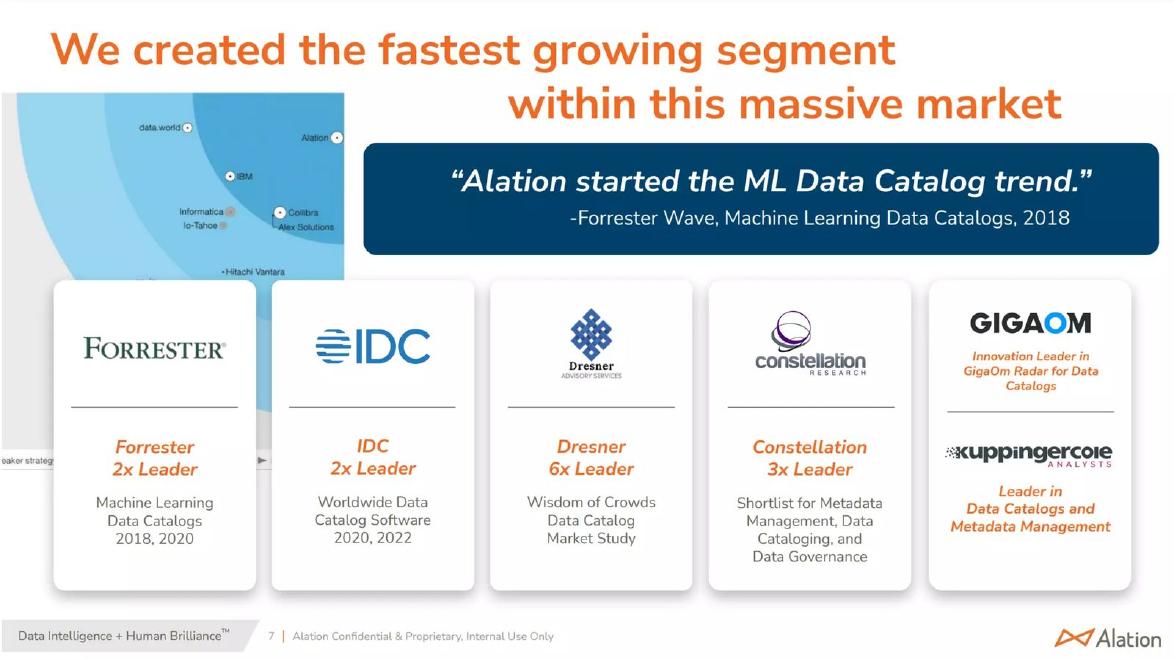
Alation testimonial slide — slide 7
Data catalog software. Market-position slide.
Alation deck, slide 7. Exact stored slide matched to this analysis.
Our analysis: An outside quote used as a summary of checkable evidence.
Evidence and limitation: An analyst statement about the company, with report and year, backed by rankings from five firms.
What a founder can adapt: State the growth figure behind the headline and drop the unreadable background chart.
Supporting analysis
What the deck claims: "We created the fastest growing segment within this massive market"; "Alation started the ML Data Catalog trend." -Forrester Wave, Machine Learning Data Catalogs, 2018; tiles for Forrester, IDC, Dresner, Constellation, GigaOm and KuppingerCole leader placements.
Presentation choice: Shows the strongest form of outside quote.
When it does not fit: Quoting an analyst without naming the report and year.
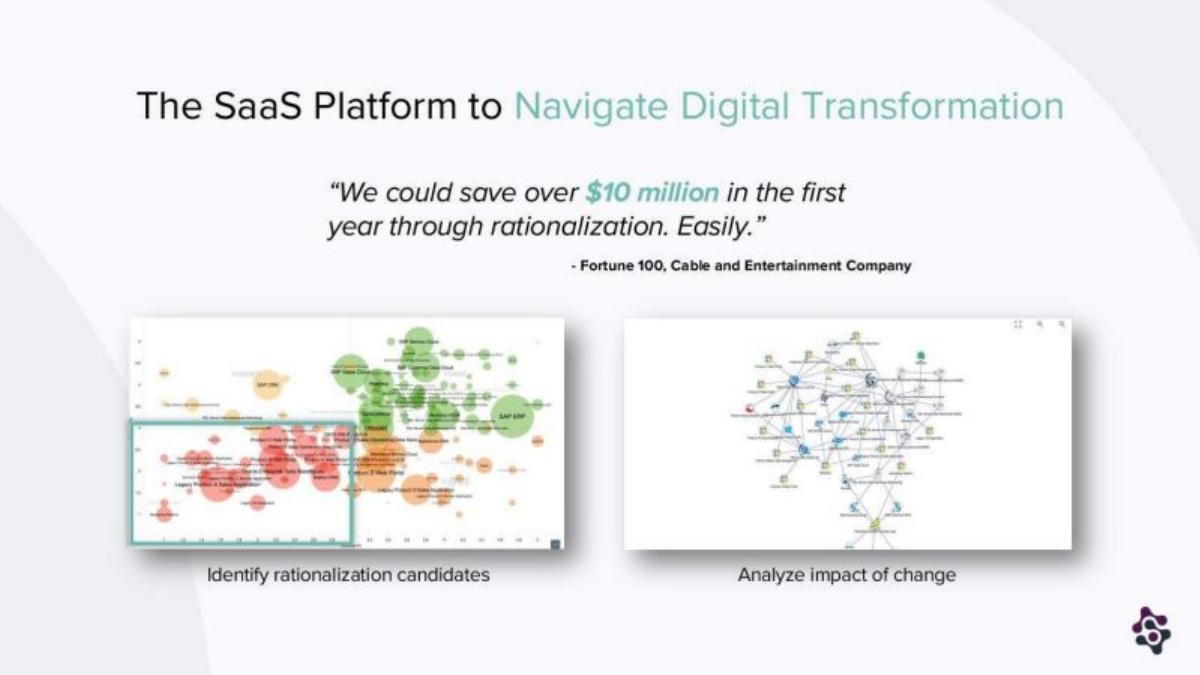
Ardoq deck, slide 3. Exact stored slide matched to this analysis.
Our analysis: Strong in substance, hard to check.
Evidence and limitation: A target buyer's money estimate, placed above the product screens; speaker unnamed, relationship and method not given.
What a founder can adapt: Add whether the buyer is a customer and how the estimate was reached.
Supporting analysis
What the deck claims: "The SaaS Platform to Navigate Digital Transformation"; "We could save over $10 million in the first year through rationalization. Easily." - Fortune 100, Cable and Entertainment Company.
Presentation choice: Shows how much an unnamed buyer quote needs a stated relationship and method.
When it does not fit: Presenting a buyer's forecast as if it were a measured saving.
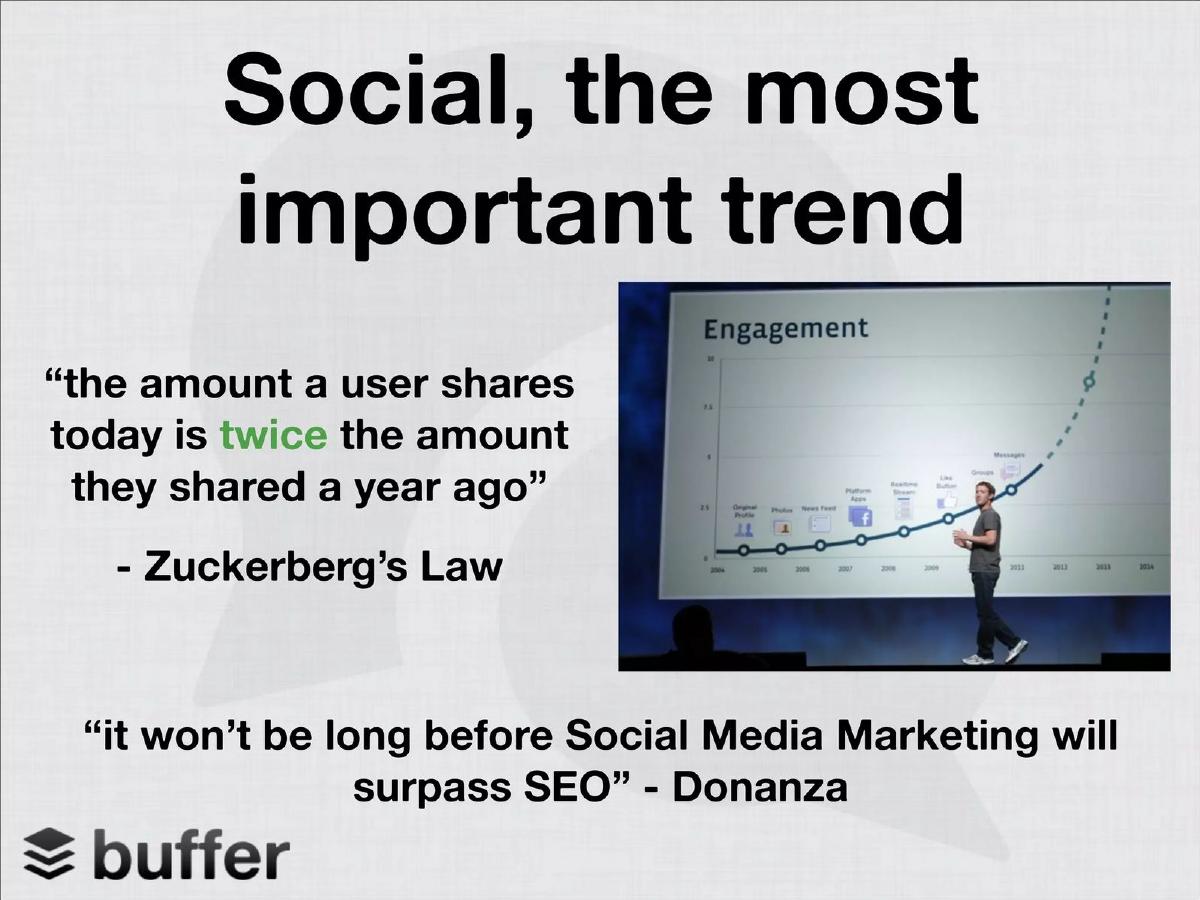
Social media scheduling. Early deck; market-trend slide.
Buffer deck, slide 2. Exact stored slide matched to this analysis.
Our analysis: Sets a mood for the market; carries no evidence about the company.
Evidence and limitation: Two general trend quotes, undated, neither about Buffer.
What a founder can adapt: Keep one sourced, dated trend figure and link it to your own users.
Supporting analysis
What the deck claims: "Social, the most important trend"; "the amount a user shares today is twice the amount they shared a year ago" - Zuckerberg's Law; "it won't be long before Social Media Marketing will surpass SEO" - Donanza.
Presentation choice: Shows the limit of famous-person trend quotes.
When it does not fit: Quoting a source the reader won't recognise without saying who it is.
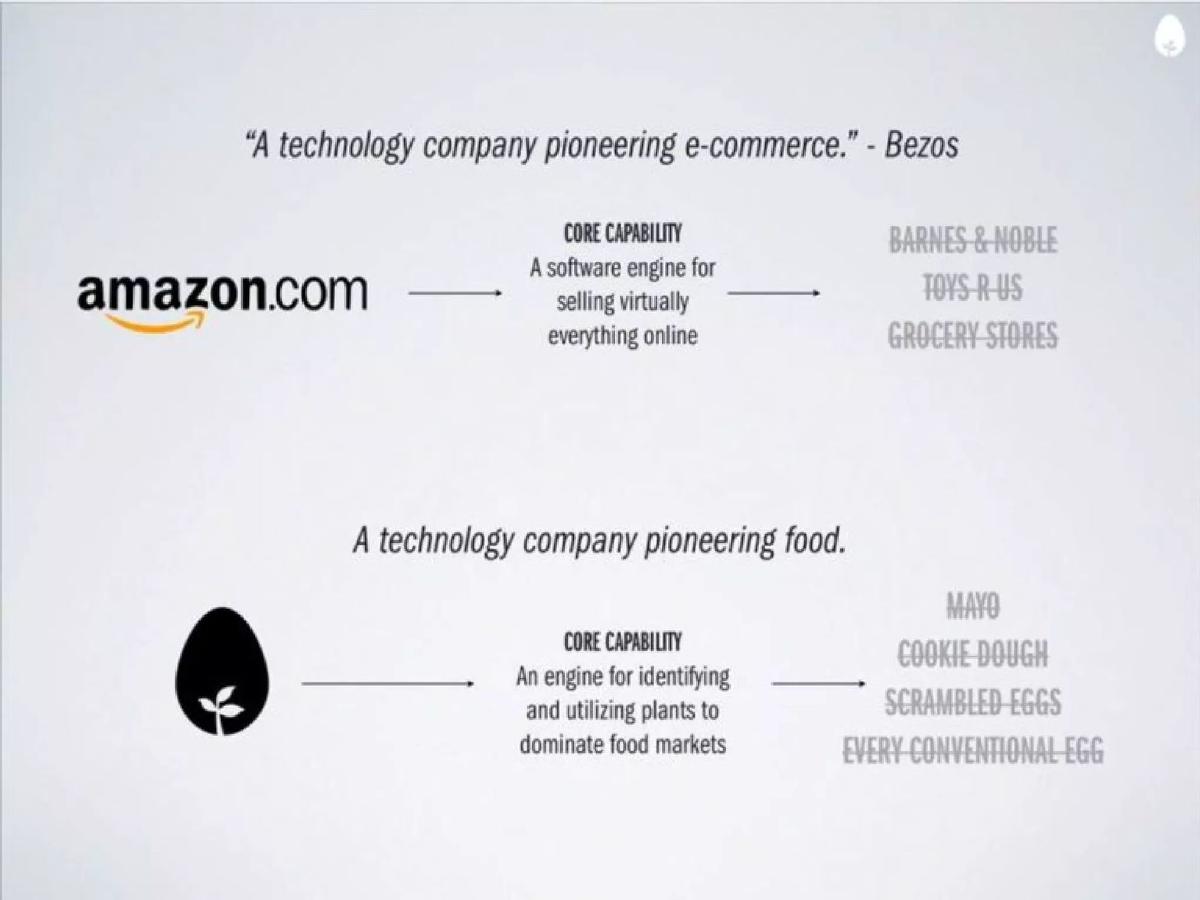
Hampton Creek deck, slide 2. Exact stored slide matched to this analysis.
Our analysis: A framing device, not evidence.
Evidence and limitation: A famous founder's description of another company, used as a template.
What a founder can adapt: Follow the framing with slides that prove the capability.
Supporting analysis
What the deck claims: "A technology company pioneering e-commerce." - Bezos; Amazon's core capability and displaced retailers; "A technology company pioneering food."; Hampton Creek's core capability and struck-through egg products.
Presentation choice: Shows a legitimate non-evidence use of a famous quote.
When it does not fit: Letting a borrowed line stand in for proof.
Whether the quote is about the company, whether its source and date are shown, and whether the slide backs it.
Example
Quote type
About the company
Source and date
Backed on slide
Carries
Alation
Analyst finding
Yes
Yes
Yes, five rankings
Positioning
Ardoq
Unnamed buyer
About the product's value
Role only, no date
Product screens
Value claim, unverified
Buffer
Famous trend line
No
No date
Photo only
Market mood
Hampton Creek
Famous founder on another company
No
Name only
Template
Framing
Key Takeaways
A quote is evidence only if it is about you or your buyer's problem.
Name the source, its role and the date on the slide.
Back an analyst quote with the report or ranking it comes from.
Famous-person trend quotes set a mood; they prove nothing about the company.
For an unnamed buyer, say whether they are a customer and how their number was reached.
Test an outside quote before it goes on a slide
Answer each prompt for every quote you plan to use.
About. Is the quote about your company or your buyer's problem, or about the world in general?
Source. Who said it, in what role, and why would they know?
Date. When and where was it said or published?
Backing. What on the same slide supports it?
Permission. Do you have the exact wording and permission to use it?
Copyable framework: "[Specific statement about us or our buyer's problem]." [Name or role], [organisation or description], [report or setting], [year]. Backed by: [ranking, figure or screen on the same slide].
Illustrative example 1 — written by us
Before: "Healthcare is broken." - famous investor
After: "We cut our prior-authorisation time from 9 days to 2." Operations director, 40-clinic group, customer since 2023. Backed by: before-and-after chart from the customer's own records.
What improved: Our illustrative rewrite; the details are invented for the example. It replaces a general line with a specific, attributed, dated claim about the product, backed on the slide.
The question this guide answers
Founders often ask whether they should put a quote on a slide, and whose. Our testimonial guide covers quotes from paying customers. Our press guide covers media logos and coverage. Neither answers a common, different decision: whether to quote an outside authority, such as an analyst firm, a famous founder, a journalist or an unnamed large company, to support a claim about the market, the problem or the company's position.
The decision matters because outside quotes are easy to add and hard for an investor to check. A quote that is specific, attributed and dated can save a paragraph of argument. A quote that is generic or vague uses one of the most visible spots on a slide and leaves the reader with nothing they can verify.
How we chose and read the examples
We searched saved slide text in the teardown library for quoted sentences followed by an attribution, then read the matching slides. We left out listed companies, investor presentations from listed firms, mining and resource companies, and quotes from paying customers, which the testimonial guide covers. We kept four slides that show four different kinds of outside quote: an analyst finding about the company, an unnamed large buyer's estimate, a famous person's trend claim, and a famous founder's description of another company.
The examples are Alation (data catalog software), Ardoq (enterprise architecture software), Buffer (social media scheduling, an early deck) and Hampton Creek (plant-based food, later renamed Eat Just). All four slides were rendered from the original decks at full size and read in full; Ardoq's slide is small, so its quote and attribution were enlarged further before we used them. We did not check any quote against the original report, speech or company, so the guide treats each quote as what the deck claims, not as a verified fact.
An analyst quote that works: Alation
Alation's slide is headed "We created the fastest growing segment within this massive market". Beneath it, a dark banner reads "Alation started the ML Data Catalog trend." credited to "-Forrester Wave, Machine Learning Data Catalogs, 2018". Below the banner are five tiles: "Forrester 2x Leader" (Machine Learning Data Catalogs 2018, 2020), "IDC 2x Leader" (Worldwide Data Catalog Software 2020, 2022), "Dresner 6x Leader", "Constellation 3x Leader", and GigaOm and KuppingerCole leader mentions. Behind them sits a cropped image of an analyst chart with Alation and competitors such as IBM, Informatica and Collibra plotted on it.
This works for three reasons. The quote is about Alation, not about the market in general. It names the source, the report and the year, so an investor can look it up. And it is not alone: the tiles show the same firm and four others placing Alation in their top group across several years, so the quote reads as a summary of evidence, not a single kind word.
What it cannot establish: an analyst saying Alation "started" a trend is a view about history, not a measure of sales or share. The headline's "fastest growing segment" claim has no figure on this slide. And the cropped chart in the background is too small to read and is partly hidden by the tiles, so it decorates rather than informs. Someone checking the deck would want the growth figure stated and the chart either shown properly or removed.
An unnamed buyer's estimate: Ardoq
Ardoq's slide is titled "The SaaS Platform to Navigate Digital Transformation". Above two product screenshots ("Identify rationalization candidates" and "Analyze impact of change") sits a quote: "We could save over $10 million in the first year through rationalization. Easily." The attribution reads "- Fortune 100, Cable and Entertainment Company".
This is the strongest kind of outside quote in substance. It comes from the kind of buyer the product is for, it ties the product to a money outcome, and it puts a figure on it. Placing it directly above the screens that do the work connects the claim to the product.
Two things weaken it. First, the speaker is unnamed, which is often necessary for a large company but means the investor cannot tell whether this is a paying customer, a trial user or a prospect in a sales meeting. Second, "could save" is the buyer's forecast, not a measured result, and the slide does not say how the $10 million was worked out. A footnote such as "customer since 2019; estimate from its own review of retired applications" would turn a strong line into a checkable one without naming the company.
A famous person's trend claim: Buffer
Buffer's slide is titled "Social, the most important trend". On the left: "the amount a user shares today is twice the amount they shared a year ago" credited to "- Zuckerberg's Law", with "twice" in green. On the right, a photo of Mark Zuckerberg on stage in front of a Facebook chart titled "Engagement". At the bottom: "it won't be long before Social Media Marketing will surpass SEO" credited to "- Donanza".
The slide makes the case for its market quickly, and in an early deck, before a company has its own numbers, a recognisable claim from a well-known figure can help a reader place the idea. But neither quote is about Buffer. The first is a general rule of thumb attributed to a famous person, with no date or source for where it was said. The second comes from a source most investors would not recognise, with no explanation of who Donanza is or why its view matters.
What it cannot establish: that Buffer's users share more, that the people sharing more will pay for scheduling tools, or that marketing budgets are moving. The slide would be stronger if it kept one trend figure, gave its source and date, and added one line linking the trend to Buffer's own users.
A famous founder describing someone else: Hampton Creek
Hampton Creek's slide opens with "A technology company pioneering e-commerce." credited to "- Bezos". Below it, the Amazon logo leads to "CORE CAPABILITY A software engine for selling virtually everything online" and then to struck-through names: Barnes & Noble, Toys R Us, grocery stores. The lower half repeats the pattern for Hampton Creek: "A technology company pioneering food.", its egg logo, "CORE CAPABILITY An engine for identifying and utilizing plants to dominate food markets", and struck-through mayo, cookie dough, scrambled eggs and "EVERY CONVENTIONAL EGG".
Here the quote is not evidence at all, and the slide does not pretend it is. Bezos is describing Amazon, and the quote sets up a template that Hampton Creek then fills in for itself. Used this way, a famous line is a framing device: it tells the reader how the founders want the company to be understood.
What it cannot establish: anything about Hampton Creek's capability or results. The comparison invites the reader to give the startup Amazon's credibility, and the struck-through products are aims, not markets already won. A framing quote like this is fine when the following slides supply the proof; on its own it asks for belief.
Four kinds of outside quote and what each can carry
Across the four slides, the useful test is not how famous the speaker is but what the quote can carry. An analyst finding about your company, with a named report and year, can carry a positioning claim, especially when the slide shows the ranking behind it. A buyer's statement about money or time saved can carry a value claim, if the reader knows the buyer's relationship to you and how the figure was reached. A famous person's statement about a trend can carry a market mood, but not a market size or your share of it. A famous founder describing another company can carry a framing, and nothing more.
Most weak outside quotes fail in one of three ways: they are about the world rather than the company, they leave out the date or the source's role, or they sit alone with nothing on the slide to back them. Each is easy to fix before the deck goes out.
Choosing which quote to keep
If you have several candidate quotes, rank them by closeness to your company and by how checkable they are. A dated analyst or industry-body finding that names you comes first. A quote from a named buyer, or an unnamed one with a stated relationship, comes next. A quote about your buyer's problem from someone who deals with it daily, such as a regulator or an industry head, comes third. Trend lines from famous people come last and are usually the first to cut when a slide is crowded.
Keep one outside quote per slide. Two quotes from different kinds of sources, as on Buffer's slide, make the reader weigh them against each other. If a quote needs a paragraph to explain why it matters, it is the wrong quote for a slide; put it in an appendix or the data room instead.
Permissions, accuracy and dates
Before using a named quote, check the exact wording against the original report, transcript or email, and keep a copy. Investors who look it up and find different words will question the rest of the deck. Analyst firms often have rules about how their reports may be quoted in marketing, so check them before putting a firm's name or logo on a fundraising slide.
For buyer quotes, get written permission even when the buyer is unnamed, and make sure the description cannot be traced to a company that has not agreed. Date every quote, and remove or replace quotes that are more than a few years old unless the age is the point, as with a claim that you started a category.
Common mistakes
Quotes about the world, not you. Prefer statements about your company or your buyer's problem.
No date or source role. Show who said it, in what capacity, and when.
A forecast shown as a result. Label "could save" as an estimate and say how it was reached.
Unknown sources. Explain who a source is or cut it.
A borrowed line as proof. Use famous quotes for framing only, then show evidence.
Diagnostic checklist
Quote is about the company or the buyer's problem.
Source, role and date shown.
Something on the slide backs it.
Exact wording checked and permission held.
One outside quote per slide.
Frequently asked questions
Is it worth quoting a famous founder or investor?
Only as framing. A famous person's view of a trend or another company says nothing about yours.
Can I use a quote from a company that won't be named?
Yes, with written permission. Describe the buyer, say whether they are a customer, and explain any figure.
Do analyst quotes impress investors?
They help when they name your company, cite a report and year, and sit beside the ranking behind them.
How is this different from a testimonial?
A testimonial comes from a paying customer about their experience. Outside quotes come from analysts, public figures or prospects.
How we chose these examples
Corpus: published pitch deck teardowns on StartupFundraising.com. Founder-uploaded private decks are excluded.
Selection (2026-10-01): we searched extracted slide text for quoted sentences with an attribution, excluded listed-company presentations, resource companies and paying-customer testimonials, and kept four slides showing four kinds of outside quote.
Review: the four slides were rendered from the source decks at full size on 2026-10-01 and read in full against company, deck and page number, with Ardoq's quote enlarged further (editorial model review, with AI assistance in drafting). No quote was checked against its original source. No person has yet completed a human editorial review of this draft.