Customer References on a Pitch Deck: How to Offer Reference
'References available' is one of the cheapest lines on a deck. Four real decks show how to offer customer reference calls so investors know who they can.
Customer References on a Pitch Deck: Say Who Will Take the Call and What They Can Confirm
Before investing, most investors call some of a startup's customers. Founders know this, and many decks say so in advance: 'references available', 'reference calls are available', 'ask us for references'. The offer signals confidence, but on its own it tells the investor very little. It doesn't say who will take the call, what kind of customer they are, how long they have used the product, or what they can speak to. This guide looks at four real decks that offer or cite customer references and shows how to turn the offer into something an investor can plan diligence around.
TL;DR
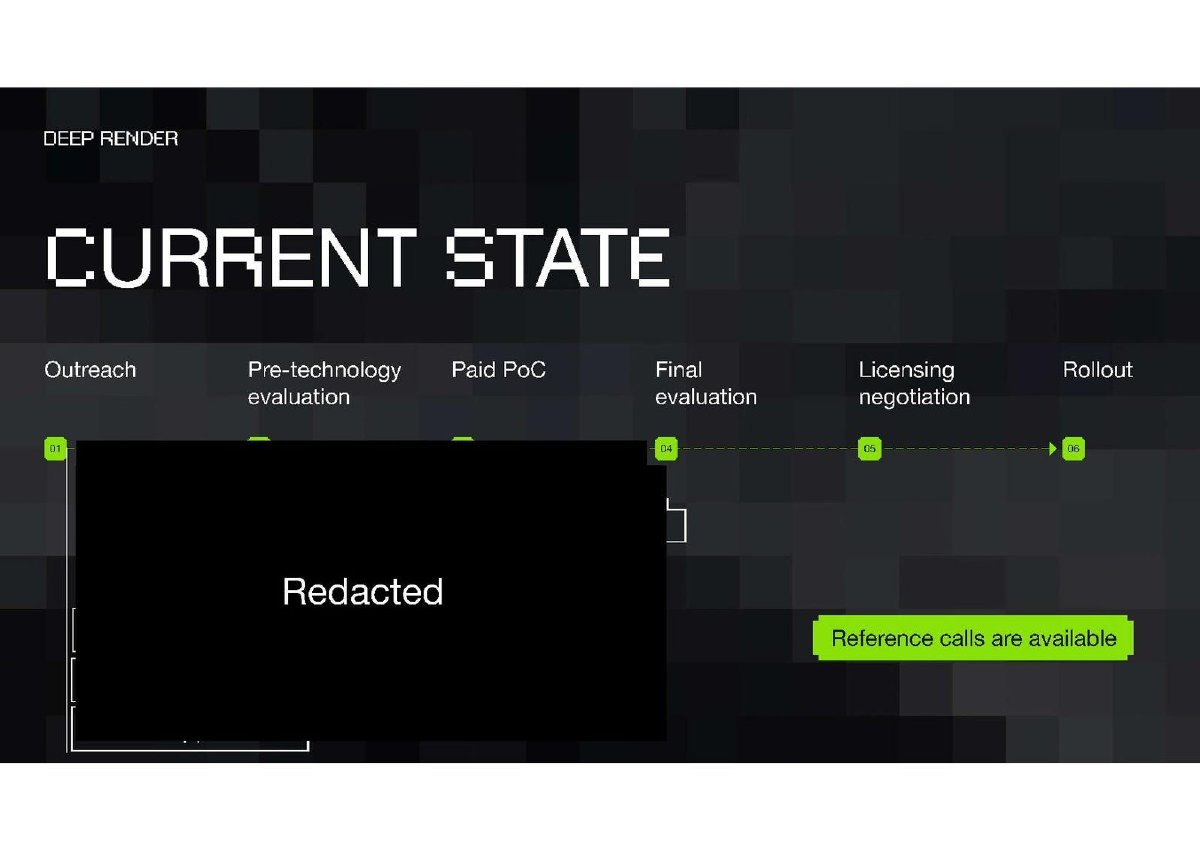
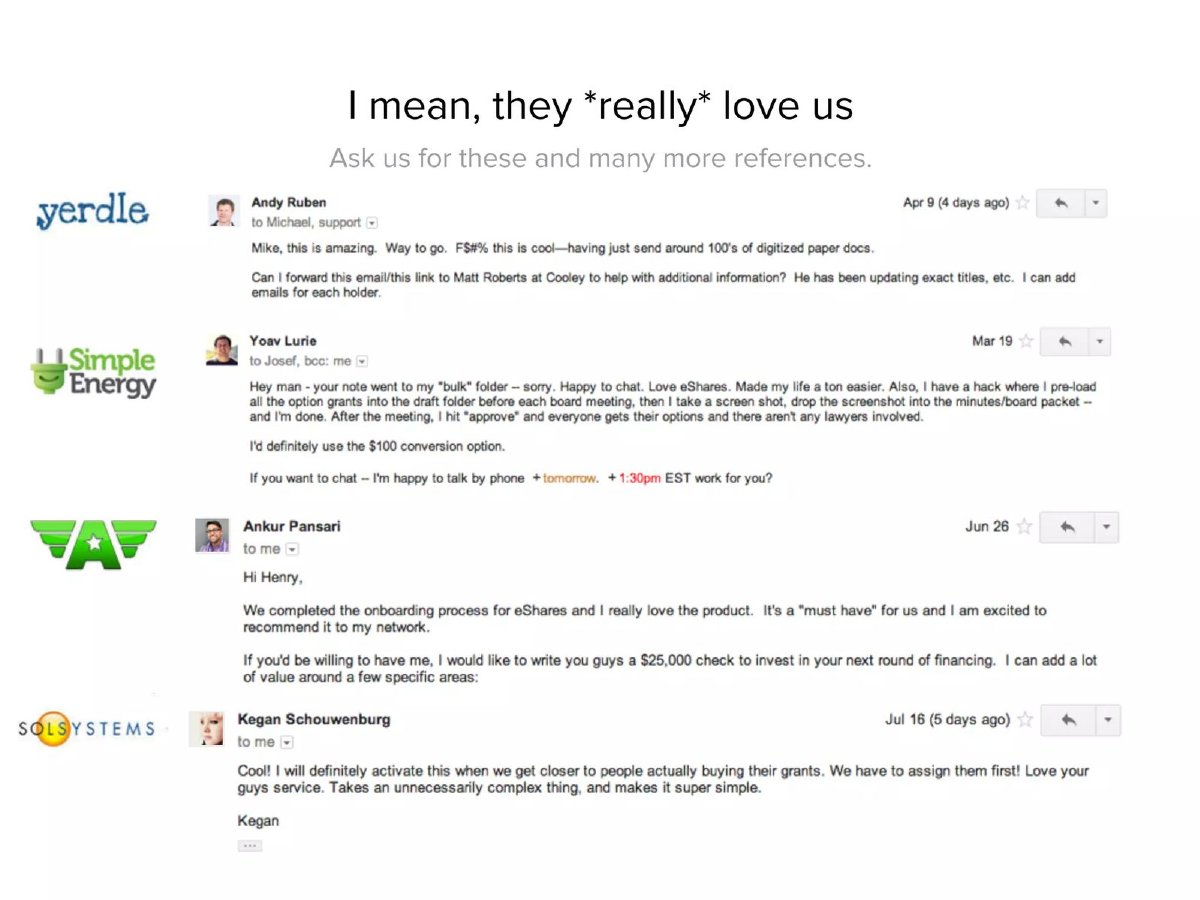
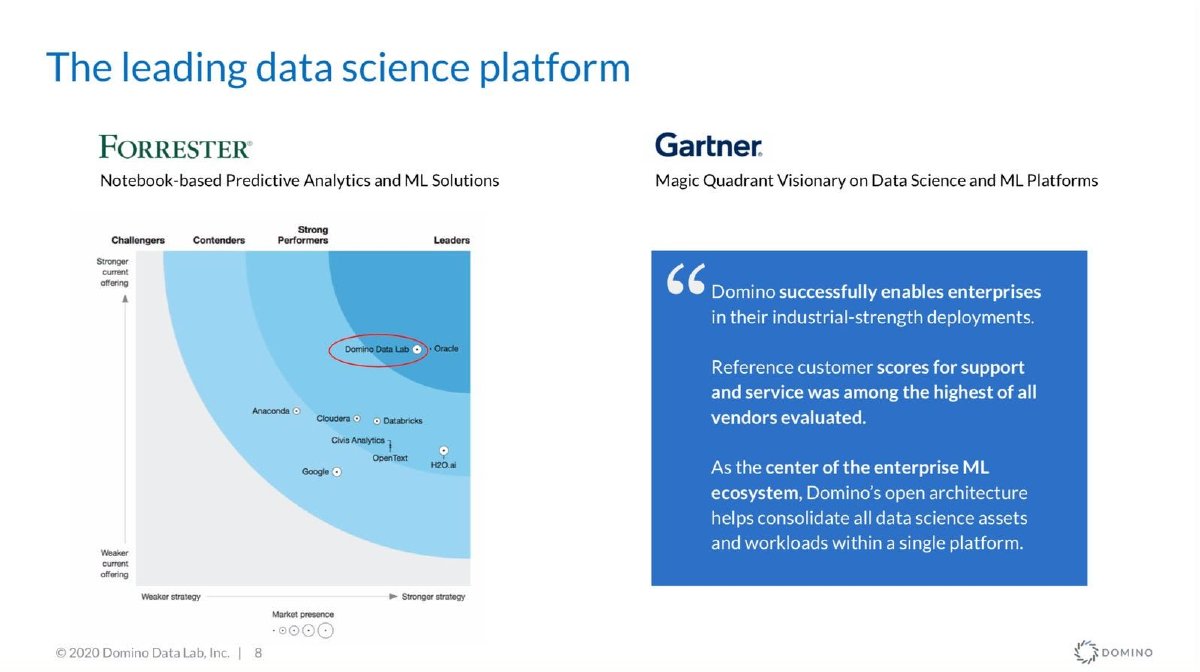
Say who the references are (named, or by segment and size), what each can speak to (results, rollout, support, buying decision), how long they have been customers, and how and when the investor can reach them. Cleary closes its fundraise slide with 'Data-room, references available', a confident offer that names no one. Deep Render puts a box reading 'Reference calls are available' on a sales-stage slide whose customer details are redacted, so the offer stands in for evidence the reader can't see. eShares shows four customer emails under 'Ask us for these and many more references', which tells the reader exactly who would take the call and what they already said, including one customer offering by phone to chat. Domino cites an outside reference check instead: a Gartner quote that 'Reference customer scores for support and service was among the highest of all vendors evaluated', which shows results from references someone else already called, but not who they were.
Four decks that offer or cite customer references
Each page is read at full size. Quotes are exact.
Cleary traction slide — slide 13
Employee experience platform. Fundraise slide.
Cleary deck, slide 13. Exact stored slide matched to this analysis.
Our analysis: Right place for the offer; nothing to plan calls around.
Evidence and limitation: Reference offer next to the data room; no customer named.
What a founder can adapt: Say how many references and what they can confirm.
Supporting analysis
What the deck claims: "Data-room, references available".
Presentation choice: Shows the common one-line offer.
'References available' alone tells the investor almost nothing.
Say who: named customers, or segment, size and tenure.
Say what each reference can speak to.
Show the reference already exists: a quote, an email, a named contact.
If an analyst or third party checked references, say who and when.
Don't use a reference offer in place of evidence you have redacted.
Plan your reference offer
Answer these before writing the line.
Who. Which customers have agreed to take calls? Can you name them?
Claim. Which claim on your deck should each reference confirm?
Tenure. How long has each been a customer, and how large are they?
Access. When and how will investors get contact details?
Copyable framework: "Reference calls available with [n] customers, including [segment] live since [year], who can speak to [claim]."
Illustrative example 1 — written by us
Before: "Data-room, references available"
After: "Data room ready; reference calls with [n] customers, including [n] that expanded in [year]."
What improved: Our illustrative rewrite of Cleary's line. Bracketed details are not stated on the slide.
The question this guide answers
This guide answers one founder question: should my pitch deck offer customer references, and if so, how should I present them so investors actually use them?
Our testimonial guide covers customer quotes as evidence on the slide itself. Our customer-switching draft covers showing why customers moved from another product. Our design-partners draft mentions reference customers only as a go-to-market step. None of these is about the reference call: the conversation an investor has with a customer during diligence, and how the deck sets it up. A testimonial is something the investor reads; a reference is someone the investor can question. The advice here is about making that offer specific enough to be useful.
How we chose and read the examples
We searched extracted text across the library for phrases such as 'reference customers', 'reference calls', 'references available' and 'happy to talk'. There were sixteen matches. We set aside duplicates of the same deck, pages where 'reference customers' is only a sales target, and pages where 'happy to talk' is part of a product mock-up rather than a customer offer. Four remained: a fundraise slide that offers references in one line, a sales-stage slide that offers reference calls beside redacted customer details, a slide of customer emails offered as references, and an analyst quote that reports reference customer scores.
Each page was rendered from the source document and read at full size. Deep Render's redaction is in the source file as published; we describe only what is visible. eShares and Carta are the same company at different times; we use the eShares deck. We did not contact any reference or check any customer, quote or score against outside sources.
Why a bare reference offer carries little weight
Every founder makes it. Almost any company can find two or three happy customers. Investors know that the references a founder chooses are the best ones, so the offer alone says little about the typical customer.
It is unspecific. Without names or descriptions, the investor can't tell whether the references are large or small customers, recent or long-standing, users or buyers. Those differences decide what a call can confirm.
It can replace evidence. A slide that hides its numbers and offers calls instead asks the investor to do the work the slide should have done. That may be necessary for confidentiality, but it should be stated as a trade-off, not presented as proof.
It doesn't say what the call is for. Investors use reference calls to check specific claims: that the product is in use, that results are real, that the customer will renew or expand. A reference that can't speak to the deck's main claim adds little.
One line on the fundraise slide: Cleary
Cleary, an employee experience platform, has a slide headed 'The Fundraise'. Four bullets: 'Growing >3x ARR + 50 new logos in next 4 quarters'; 'Raising $4-5Mwith use of funds to expand the GTM team and hit our aggressive growth targets'; 'Led by MoonShots Capital with participation from Liberty City Ventures, SeaChange, current investors CrossLink and Quiet Capital, and numerous Angels like Hiten Shah'; and 'Data-room, references available'. Investor logos sit below.
Putting references on the fundraise slide is a sensible place for the offer: it is part of how the round will run, next to the data room. It tells the investor that diligence materials are ready and that the company expects to be checked, which is a reasonable signal in a round that already has a lead.
The offer names no customer and says nothing about what the references can confirm. The slide's main claim is a forecast, '>3x ARR + 50 new logos', so a useful reference would be one who can speak to expansion or to how quickly a new customer signs. 'References available: [n] customers, including [segment] customers live since [year] and two who expanded in [year]' would let the investor choose calls that test the forecast.
A reference offer in place of redacted evidence: Deep Render
Deep Render, a video compression company, has a slide headed 'Current State'. A six-stage sales process runs across the top: 'Outreach', 'Pre-technology evaluation', 'Paid PoC', 'Final evaluation', 'Licensing negotiation', 'Rollout'. Most of the slide below is covered by a black box reading 'Redacted'. To the right, a highlighted box reads 'Reference calls are available'.
The slide shows a sensible use of references for a company selling long, staged enterprise deals. When customer names and deal stages can't be printed, offering a call lets an investor confirm progress privately. The sales stages also tell the investor what a reference could speak to: where in the process a customer is and whether a paid proof of concept is under way.
In the version we can read, the offer is the only evidence left on the slide. We can't tell whether the redaction was applied for publication or was in the deck investors saw, and the guide doesn't assume either. Either way, the lesson for founders is the same: if confidentiality forces you to hide customers, say how many references there are and which stages they are at, for example 'Reference calls available with [n] customers: [n] in paid PoC, [n] in licensing negotiation'. That keeps names private and still tells the reader what the calls will cover.
References the reader can already see: eShares
eShares, a cap table and equity management company that later became Carta, has a slide headed 'I mean, they *really* love us', with the subtitle 'Ask us for these and many more references.' Four customer emails follow, each beside the customer's logo: Yerdle, Simple Energy, a third company shown by logo only, and Sol Systems. The Simple Energy email ends: 'If you want to chat -- I'm happy to talk by phone'. The third email reads: 'We completed the onboarding process for eShares and I really love the product. It's a "must have" for us and I am excited to recommend it to my network.' It goes on to offer a '$25,000 check to invest in your next round of financing'.
This is the most specific reference offer of the four. The investor sees who the references are, what each has already said, and in one case that the customer has offered a call. The emails also say what each customer can speak to: digitising paper documents, running option grants before board meetings, onboarding. An investor can pick the call that tests the claim they care about.
The emails are screenshots of private messages and are partly informal; some founders would want permission before showing them. The slide doesn't say how long each company has been a customer or how large they are, and 'many more references' isn't a number. A line under the emails such as 'All four live since [year]; [n] further references available on request' would close those gaps. A customer offering to invest is a strong signal but a different one; it belongs with the round, not counted as a reference.
References someone else already called: Domino Data Lab
Domino Data Lab, a data science platform, has a slide headed 'The leading data science platform'. On the left is a Forrester chart titled 'Notebook-based Predictive Analytics and ML Solutions' with Domino circled among the leaders. On the right, under 'Gartner' and 'Magic Quadrant Visionary on Data Science and ML Platforms', a quote reads: 'Domino successfully enables enterprises in their industrial-strength deployments. Reference customer scores for support and service was among the highest of all vendors evaluated.'
This is a different way to use references: instead of offering calls, the slide reports that an analyst firm spoke to the company's reference customers and how they scored it. For a later-stage company, that is a useful shortcut. It tells the investor that an outside party has already done a version of the reference check and compared the results with competitors.
Who. Name references if they agree. If not, give segment, size and tenure: 'a 2,000-employee logistics company, customer since 2022'. Two or three described references are worth more than 'many more'.
What they can speak to. Tie each reference to a claim on the deck: rollout time, results, renewal, expansion, support. If the deck's main claim is growth, offer a customer who expanded.
Evidence that they exist. A short quote, a named contact title or an email the customer agreed to share shows the reference is real and willing.
How to reach them. 'Reference calls on request after first meeting' or 'contacts in the data room' tells the investor when in the process they will get access.
Outside checks. If an analyst or customer review site checked references, name the source and year, and say who nominated the customers.
Redactions. If confidentiality hides customers, say how many references there are and what stage they are at, so the offer complements the evidence rather than replacing it.
Where references go in the deck
On the fundraise or closing slide, as Cleary does, when the offer is part of how the round runs. On the traction or customer slide when the references support a specific claim there. In the appendix or data room when there is a full reference list.
Offer references once, in the place where the investor will act on them. Repeating 'references available' on several slides reads as filler.
Templates
Closing slide: 'Reference calls available with [n] customers, including [segment] live since [year] and [n] that expanded in [year].'
Confidential customers: 'Reference calls with [n] customers under NDA: [n] in paid PoC, [n] in rollout.'
Named reference: '[Customer] ([size], since [year]) can speak to [claim]. Contact via data room.'
These four pages show how founders have offered or cited customer references. They can't show whether any reference was called, what the references said, or how investors weighed the offers. We did not contact any reference or check any customer, quote or score against outside sources.
Treat them as patterns. Cleary makes the offer in the right place but names no one. Deep Render offers calls where its visible evidence is redacted. eShares shows the references and what they already said. Domino reports an outside reference check without saying how it was run.
Common mistakes
Bare offer. 'References available' with no names, count or description.
Wrong reference. A reference that can't speak to the deck's main claim.
Offer as evidence. Hiding the numbers and offering calls instead, without saying why.
Undated outside check. An analyst quote with no report name or year.
'Many more'. A vague count instead of a number.
Diagnostic checklist
References named, or segment, size and tenure given.
Each reference tied to a claim on the deck.
Access stated: when and how investors reach them.
Outside checks dated and sourced.
Reference offer appears once, where it will be used.
Frequently asked questions
Should I put customer names on the deck before they agree to be references?
No. Ask first. A customer surprised by an investor call is a worse reference than none.
How many references should I offer?
Two or three well-chosen ones, each able to confirm a different claim, are usually enough for a first round of calls.
How we chose these examples
Corpus: published pitch deck teardowns on StartupFundraising.com. Founder-uploaded private decks are excluded.
Selection (2026-10-01): we searched extracted text for reference-offer phrases, set aside duplicates, sales-target uses and product mock-ups, and kept four private-company pages each handling references differently.
Review: the four pages were rendered from the source documents on 2026-10-01 and read in full at full size against company, document and page number (editorial model review, with AI assistance in drafting; not human-reviewed). No reference was contacted and no customer, quote or score was checked against outside sources.