Does a startup pitch deck need a disclaimer or confidentiality slide? Six real disclaimer, confidentiality and safe harbor slides compared.
Pitch Deck Disclaimer Slide: Confidentiality Notices and Forward-Looking Statements
Many decks put a legal page straight after the cover: a confidentiality notice, a "not an offer" statement, or a forward-looking statements warning. The six real slides below range from two sentences to a full page of small print, and show what each kind of text is for and where founders go wrong.
TL;DR
A private startup deck usually needs at most a short notice: that the deck is confidential, that it is not an offer to sell securities, and that projections may not come true. ATEC does the first in two sentences. Every and BitRush add "not an offer" and forward-looking wording on one page. Long safe harbor pages such as Alteryx's are written for public companies under securities law. Whatever you include, check it names your company: BitRush's disclaimer names a different business. This guide describes what appears on real slides; it is not legal advice, so ask a lawyer what your round requires.
Disclaimer slides from real pitch decks
Each example shows the exact stored slide above its analysis and links to the full teardown. Text is quoted as shown on the slides. Stage and year are given only where the slide or deck states them.
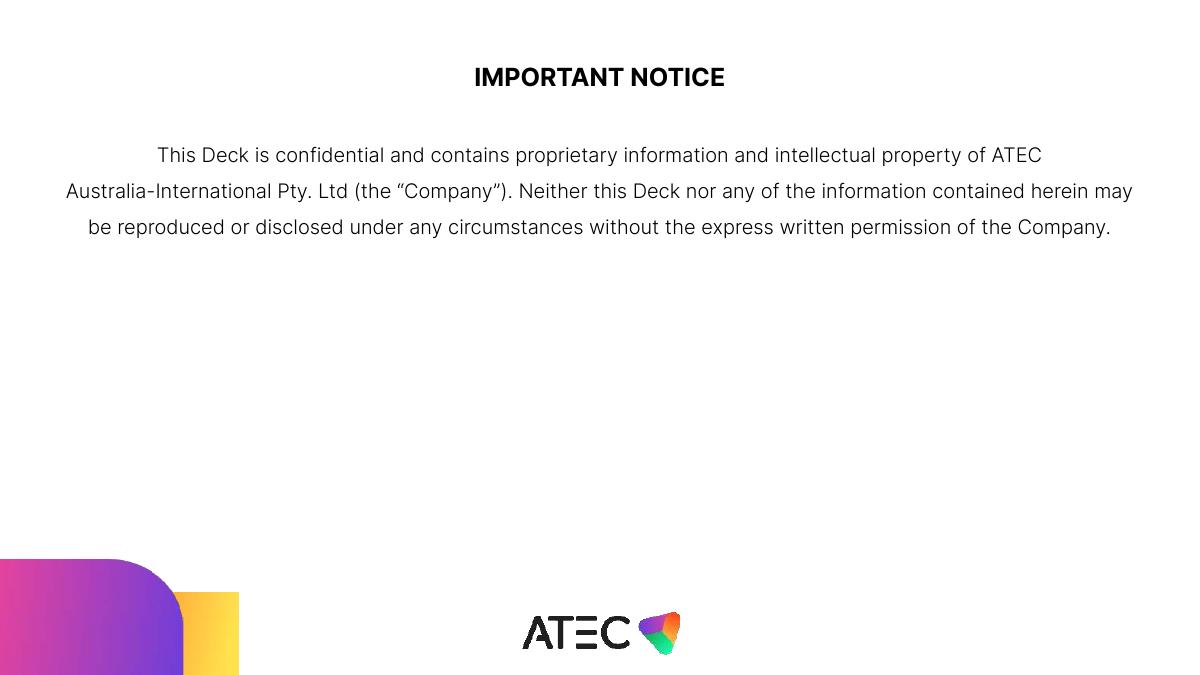
ATEC cover slide — slide 2
Australian company (ATEC Australia-International Pty. Ltd). Stage and year are not stated on the slide.
ATEC deck, slide 2. Exact stored slide matched to this analysis.
Our analysis: Two sentences, large type, the full legal entity name. The reader knows the rule and moves on.
Evidence and limitation: It says nothing about the deck not being an offer or about forecasts. If your deck has projections, add one line on each.
What a founder can adapt: If you want a notice, this length is enough for a first-meeting deck. Use your registered company name.
Supporting analysis
What the deck claims: "Important Notice": "This Deck is confidential and contains proprietary information and intellectual property of ATEC Australia-International Pty. Ltd (the "Company"). Neither this Deck nor any of the information contained herein may be reproduced or disclosed under any circumstances without the express written permission of the Company."
Presentation choice: Two sentences, large type, the full legal entity name. The reader knows the rule and moves on.
When it does not fit: It says nothing about the deck not being an offer or about forecasts. If your deck has projections, add one line on each.
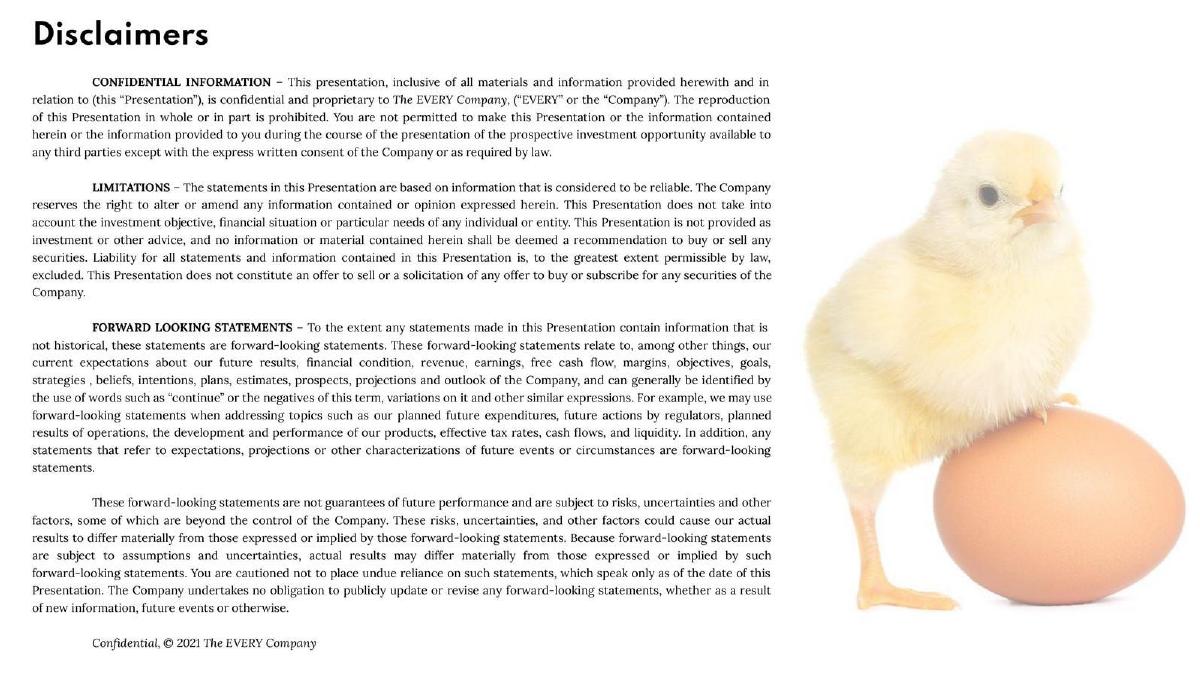
The EVERY Company deck, slide 2. Exact stored slide matched to this analysis.
Our analysis: The three headings let a reader find each point, and the brand image keeps the page in the deck's style.
Evidence and limitation: The text is very small on a presentation slide. If it is not meant to be read in a meeting, move it to the appendix or the email.
What a founder can adapt: Label each paragraph (confidentiality, not an offer, forecasts) so the page can be scanned.
Supporting analysis
What the deck claims: "Disclaimers" in three labelled paragraphs. Confidential Information: the presentation "is confidential and proprietary" and may not be shared "except with the express written consent of the Company". Limitations: "This Presentation does not constitute an offer to sell or a solicitation of an offer to buy or subscribe for any securities of the Company." Forward Looking Statements: projections "are not guarantees of future performance". A photo of a chick on an egg fills the right side.
Presentation choice: The three headings let a reader find each point, and the brand image keeps the page in the deck's style.
When it does not fit: The text is very small on a presentation slide. If it is not meant to be read in a meeting, move it to the appendix or the email.
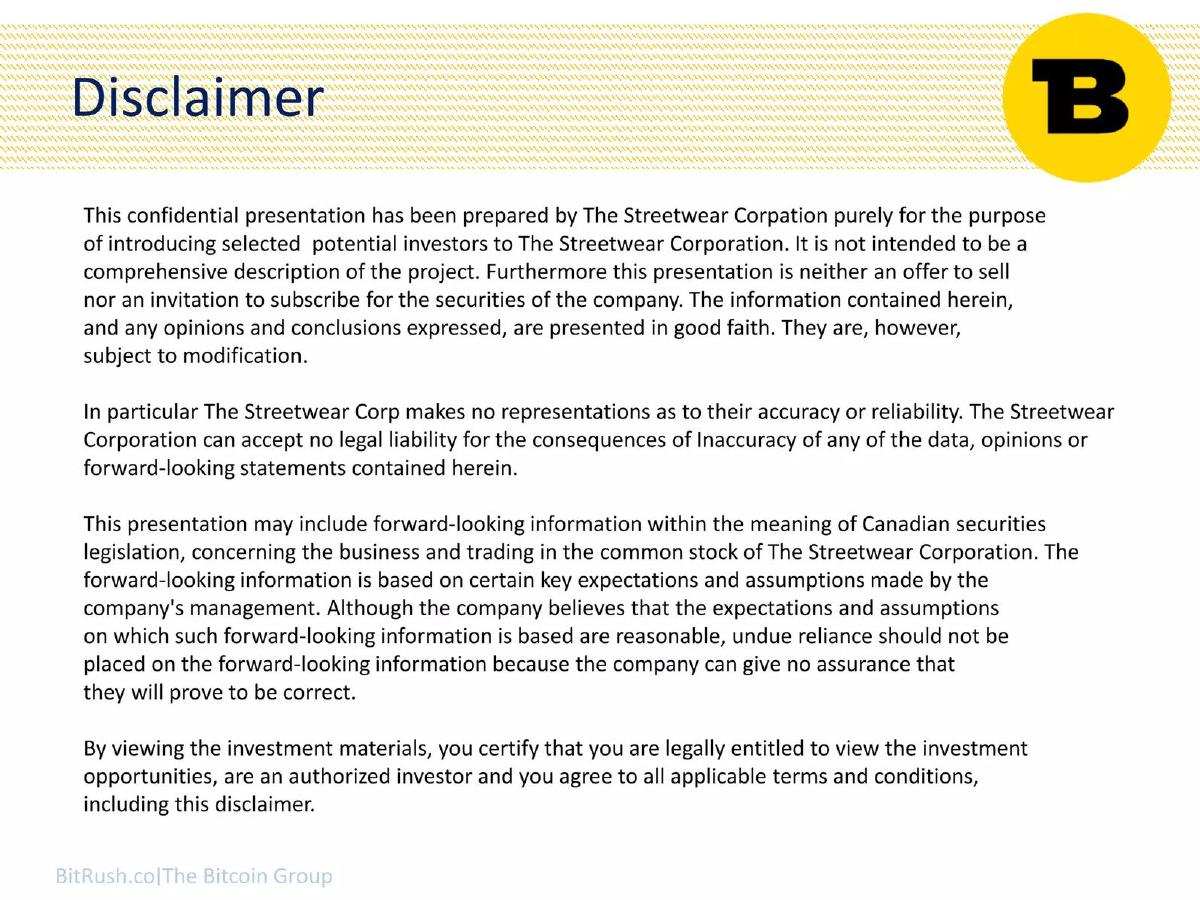
Bitcoin company; the footer reads "BitRush.co | The Bitcoin Group". Stage and year are not stated on the slide.
BitRush deck, slide 2. Exact stored slide matched to this analysis.
Our analysis: It covers the usual points in plain paragraphs: confidential, not complete, not an offer, forecasts may be wrong.
Evidence and limitation: The disclaimer names The Streetwear Corporation (misspelled once as "Corpation"), not BitRush. An investor who notices will wonder what else was copied.
What a founder can adapt: Treat this as a warning. Search any copied legal text for other company names before sending.
Supporting analysis
What the deck claims: "This confidential presentation has been prepared by The Streetwear Corpation purely for the purpose of introducing selected potential investors to The Streetwear Corporation." It states the deck is "neither an offer to sell nor an invitation to subscribe", "may include forward-looking information within the meaning of Canadian securities legislation", and that by viewing it "you certify that you are legally entitled to view the investment opportunities".
Presentation choice: It covers the usual points in plain paragraphs: confidential, not complete, not an offer, forecasts may be wrong.
When it does not fit: The disclaimer names The Streetwear Corporation (misspelled once as "Corpation"), not BitRush. An investor who notices will wonder what else was copied.
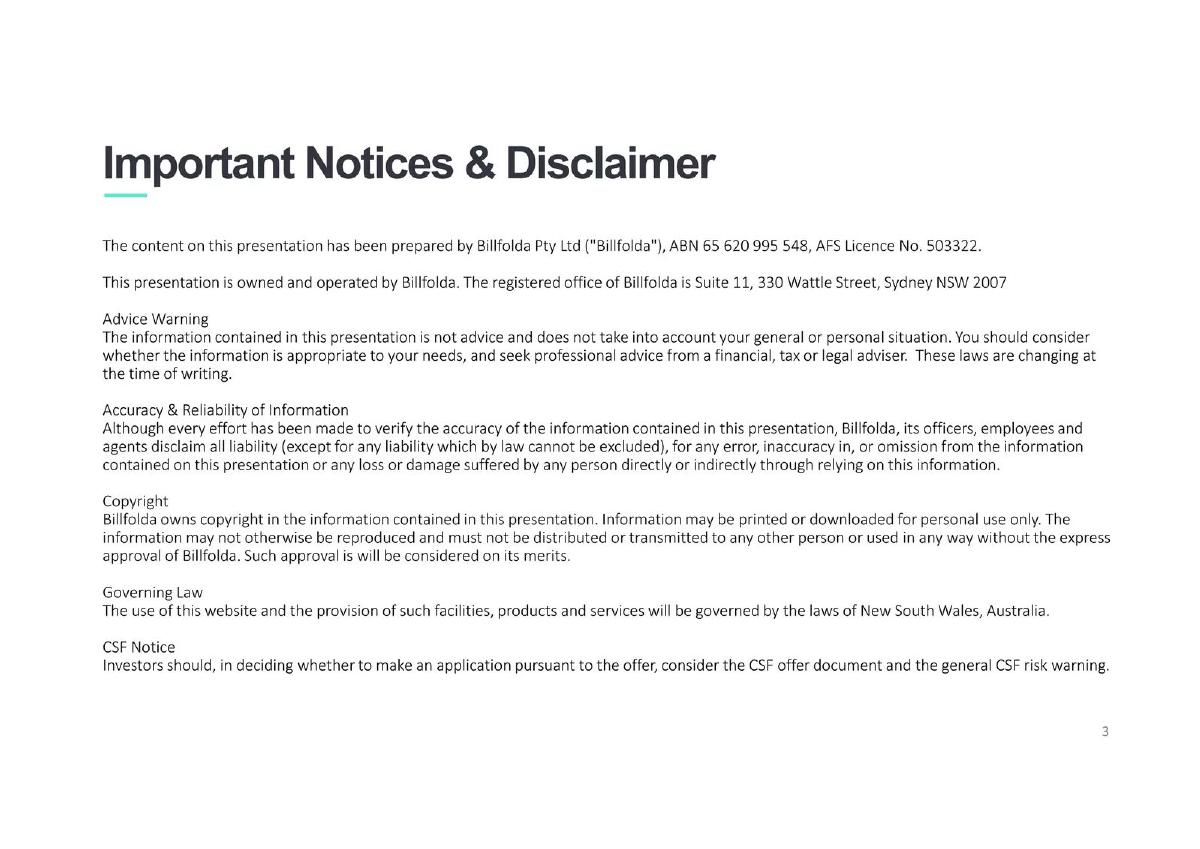
Australian equity crowdfunding platform; the deck was presented to Melbourne Angels.
Billfolda deck, slide 3. Exact stored slide matched to this analysis.
Our analysis: A licensed business in a regulated activity shows its licence and the warnings that come with it.
Evidence and limitation: Most of this page is specific to a licensed crowdfunding business; copying it into an ordinary seed deck adds length without purpose.
What a founder can adapt: If your raise runs through a regulated route such as crowdfunding, use the wording your platform or adviser requires.
Supporting analysis
What the deck claims: "Important Notices & Disclaimer" with labelled sections: the company's ABN and "AFS Licence No. 503322"; Advice Warning ("not advice and does not take into account your general or personal situation"); Accuracy & Reliability of Information; Copyright; Governing Law (New South Wales); and a CSF Notice telling investors to "consider the CSF offer document and the general CSF risk warning".
Presentation choice: A licensed business in a regulated activity shows its licence and the warnings that come with it.
When it does not fit: Most of this page is specific to a licensed crowdfunding business; copying it into an ordinary seed deck adds length without purpose.
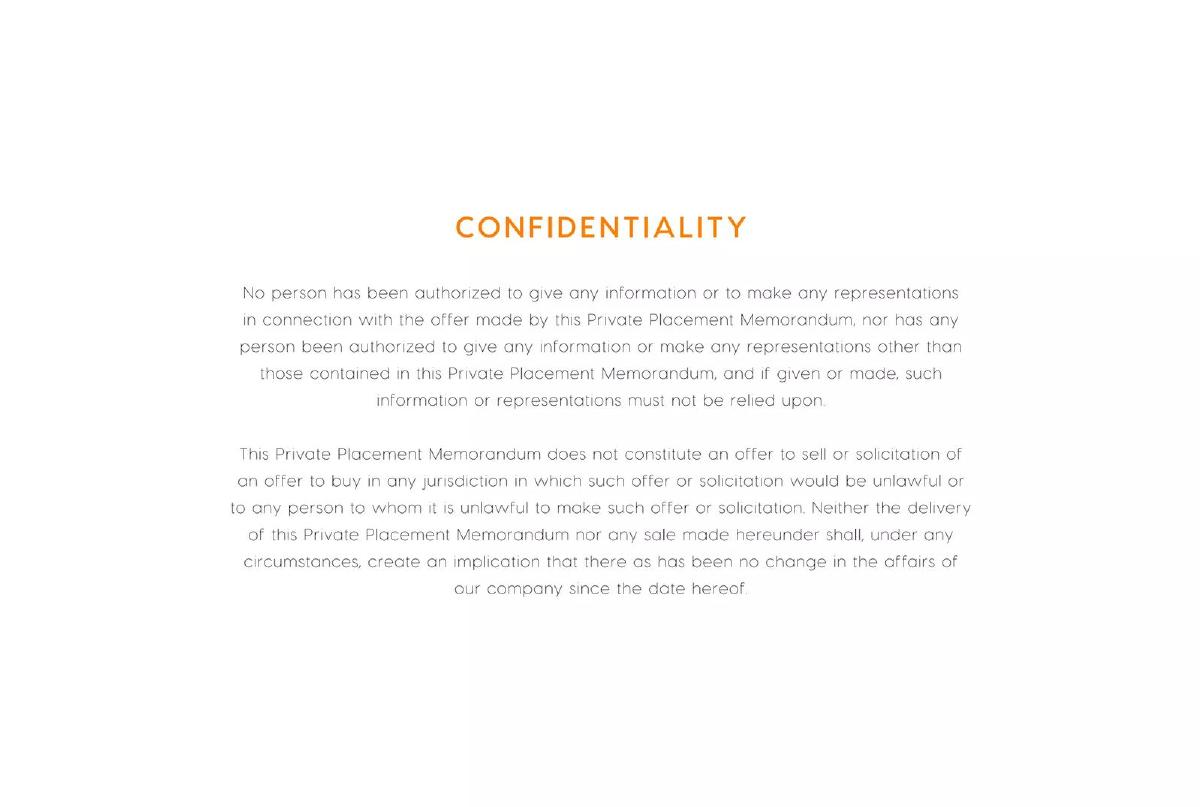
Music festival company. The page is part of a private placement memorandum, a formal offering document rather than a first-meeting deck.
Fyre Festival deck, slide 3. Exact stored slide matched to this analysis.
Our analysis: It shows the formal language used when a document accompanies an actual securities offer.
Evidence and limitation: Despite the heading, the text says little about confidentiality. Make the heading match what the paragraph says.
What a founder can adapt: Language like this belongs in offering documents your lawyer prepares, not in the deck you send to start a conversation.
Supporting analysis
What the deck claims: "Confidentiality": "No person has been authorized to give any information or to make any representations in connection with the offer made by this Private Placement Memorandum ... This Private Placement Memorandum does not constitute an offer to sell or solicitation of an offer to buy in any jurisdiction in which such offer or solicitation would be unlawful".
Presentation choice: It shows the formal language used when a document accompanies an actual securities offer.
When it does not fit: Despite the heading, the text says little about confidentiality. Make the heading match what the paragraph says.
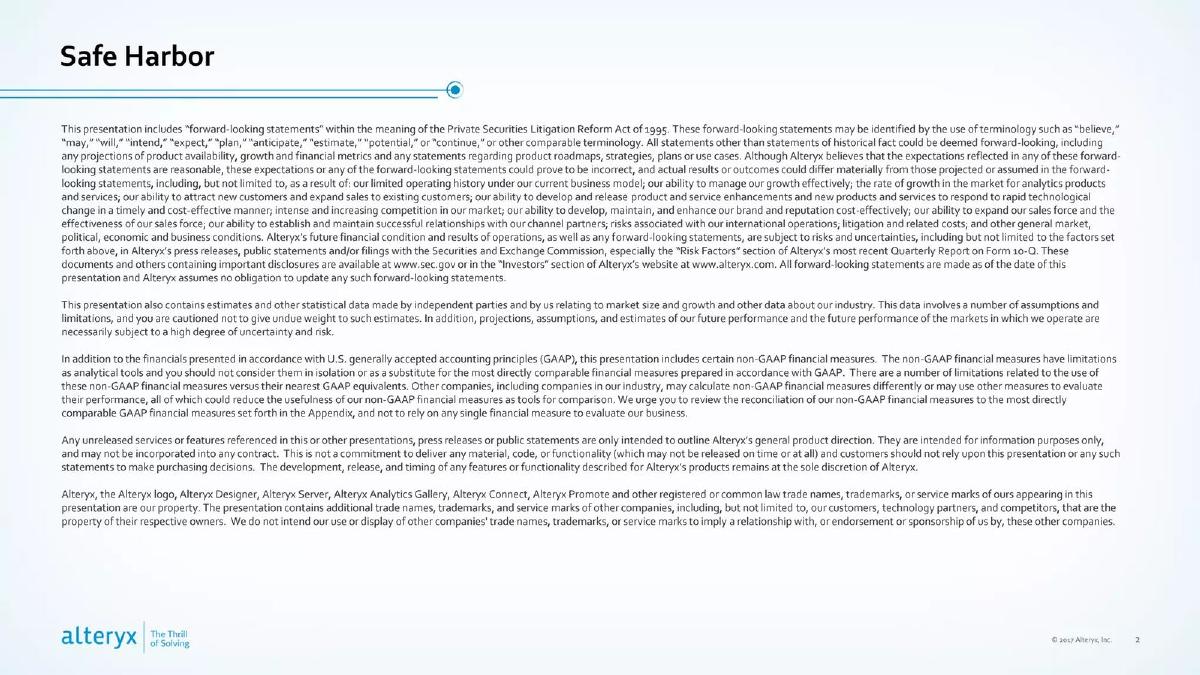
Analytics software company presenting as a listed company; the slide cites its Quarterly Report on Form 10-Q.
Alteryx deck, slide 2. Exact stored slide matched to this analysis.
Our analysis: For a public company, each paragraph answers a specific rule: forecasts, non-GAAP numbers, product roadmap statements.
Evidence and limitation: A private startup copying this page cites laws that may not apply and fills a slide nobody reads. It is the contrast example here.
What a founder can adapt: Use it as a reference for what public-company decks carry, not as a template for a private round.
Supporting analysis
What the deck claims: "Safe Harbor": "This presentation includes "forward-looking statements" within the meaning of the Private Securities Litigation Reform Act of 1995." Further paragraphs cover market data from third parties, non-GAAP financial measures, unreleased features ("not a commitment to deliver") and trademarks.
Presentation choice: For a public company, each paragraph answers a specific rule: forecasts, non-GAAP numbers, product roadmap statements.
When it does not fit: A private startup copying this page cites laws that may not apply and fills a slide nobody reads. It is the contrast example here.
The right amount of legal text depends on the document: a first-meeting deck, a regulated offer, or a public company's presentation.
Example
Confidential
Not an offer
Forecast warning
Length
ATEC
Yes
No
No
Two sentences
The EVERY Company
Yes
Yes
Yes
Full page, small type
BitRush
Yes
Yes
Yes
Full page (wrong company named)
Billfolda
Copyright only
Via CSF notice
No
Full page, regulated offer
Fyre Festival
Heading only
Yes
No
Two paragraphs, offering document
Alteryx
No
No
Yes, under US law
Full page, public company
Key Takeaways
Keep it short. ATEC's two-sentence notice covers confidentiality without taking a reader's attention from the deck.
Match the text to your situation. Alteryx's safe harbor cites US securities law for listed companies; a pre-seed deck rarely needs that.
Say it is not an offer. Every, BitRush and Fyre Festival's memorandum all state the document is not an offer to sell securities.
Proofread copied boilerplate. BitRush's slide names "The Streetwear Corporation" while the footer says BitRush.
Regulated offers carry their own wording. Billfolda's equity crowdfunding deck includes its licence number and a risk warning.
Decide what your disclaimer slide needs
Answer four questions before adding a legal page, and confirm the answers with your lawyer.
Document. Is this a first-meeting deck, a formal offering document, or a public-company presentation?
Confidential. Is anything in the deck damaging if forwarded? If so, can it wait until a later meeting?
Forecasts. Does the deck contain projections that need a one-line warning?
Proofread. Does every name, entity and jurisdiction in the text match your company?
Copyable framework: Confidential. Prepared by [registered company name] for discussion with prospective investors. Not an offer to sell securities. Projections are estimates and may not be achieved.
Illustrative example 1 — written by us
Before: A full page of copied safe harbor text citing securities laws, naming another company.
After: Confidential. Prepared by [Company Ltd] for prospective investors. Not an offer to sell securities. Forecasts are estimates.
What improved: Our illustrative rewrite, not any company's text and not legal advice. It keeps the three common points, names the right company and fits in a footer or a short slide.
What the disclaimer slide is for
The disclaimer slide sets conditions on how the deck may be used: keep it private, don't treat it as an offer, and don't rely on forecasts as promises. It sits right after the cover, before any content. For the cover itself, see the cover slide guide.
A disclaimer does not make inaccurate statements elsewhere in the deck acceptable, and a confidentiality notice is not a signed agreement. Many investors will not sign an NDA to read a deck, so leave out anything you could not afford to see forwarded.
The examples run from the shortest notice to the longest, and end with two slides written for formal offerings rather than a first pitch.
Common mistakes
Wrong company named. Copied boilerplate that names another business, as on the BitRush slide.
Public-company text in a seed deck. Safe harbor pages cite rules written for listed companies.
Unreadable small print. A full page of tiny text on a presentation slide is skipped.
Relying on the notice. A disclaimer is not an NDA and does not fix inaccurate claims elsewhere.
Diagnostic checklist
The text names your registered company and nobody else.
It says the deck is confidential only if that matters, and is not an offer to sell securities.
Projections carry a one-line warning.
Regulated offers use the wording your platform or lawyer requires.
The page is short enough to read, or sits in the appendix.
Frequently asked questions
How we chose these examples
Corpus: published pitch deck teardowns on StartupFundraising.com. Founder-uploaded private decks are excluded.
Selection (2026-09-28): we grouped the opening words of extracted slide text for slides 2–25 and found about 150 slides among the first four of each deck that begin with Disclaimer, Forward-looking statements, Safe harbor, Confidential or Important notice. Most are public-company pages; we chose four private-company slides, one offering memorandum and one public-company page as a contrast, each with a stored image not used in another guide.
Overlap check: the cover slide guide covers the title slide; the agenda guide covers tables of contents. No existing guide covers disclaimer slides, and none of these six slides appears in another guide.
Review: all six stored slide images were inspected on 2026-09-28 and matched to company, deck and slide number (editorial model review). No person has yet completed an editorial review of this page.
This page describes real slides; it is not legal advice. We make no claim that any slide caused a fundraising outcome.