How manufacturing, industrial and robotics startups present the solution in a pitch deck: show what replaces today's method, what it costs.
Manufacturing & Robotics Solution Slide: Real Pitch Deck Examples
Eight solution slides from manufacturing, industrial-robotics and factory-software startups, shown in full, compare whether each slide says what it replaces, shows the product, and gives a price or measured gain.
TL;DR
A manufacturing solution slide should say what it replaces and what the plant gets back. Limis does this in two sentences: its software "replaces archaic paper logsheets as the last line of defense against unplanned downtime", and "At $40 per person per month, our solution costs the equivalent of 1% of a company's annual downtime costs, and will reduce downtime by 10% or more." Endeavor AI sets itself beside ERP, Excel and ChatGPT row by row, ending "Implementation for 4-5 years" against "Ingest and implementation in days not years." Lincode's "no-code deep tech platform" with an icon and no result is the weaker pattern.
Manufacturing and robotics solution slides from real pitch decks
Each example shows the exact stored slide above its analysis and links to the full teardown. Claims are as shown on the slides; we have not verified them.
Limis solution slide — slide 3
Software to prevent factory shutdowns. Two short paragraphs beside a shield graphic.
Limis deck, slide 3. Exact stored slide matched to this analysis.
Our analysis: The strongest example here: what it replaces, who uses it, the price, and the return, in two sentences.
Evidence and limitation: Price, cost comparison and expected gain; the gain is a forecast.
What a founder can adapt: Put your price next to the cost it saves.
Supporting analysis
What the deck claims: "Value Proposition." "Limis provides software that replaces archaic paper logsheets as the last line of defense against unplanned downtime. It increases the visibility of production critical information and provides real time feedback to operators and plant decision makers." "At $40 per person per month, our solution costs the equivalent of 1% of a company's annual downtime costs, and will reduce downtime by 10% or more."
Presentation choice: "1% of... downtime costs" against "10% or more" less downtime makes the return obvious.
When it does not fit: Say whether "10% or more" comes from a pilot or is a target.
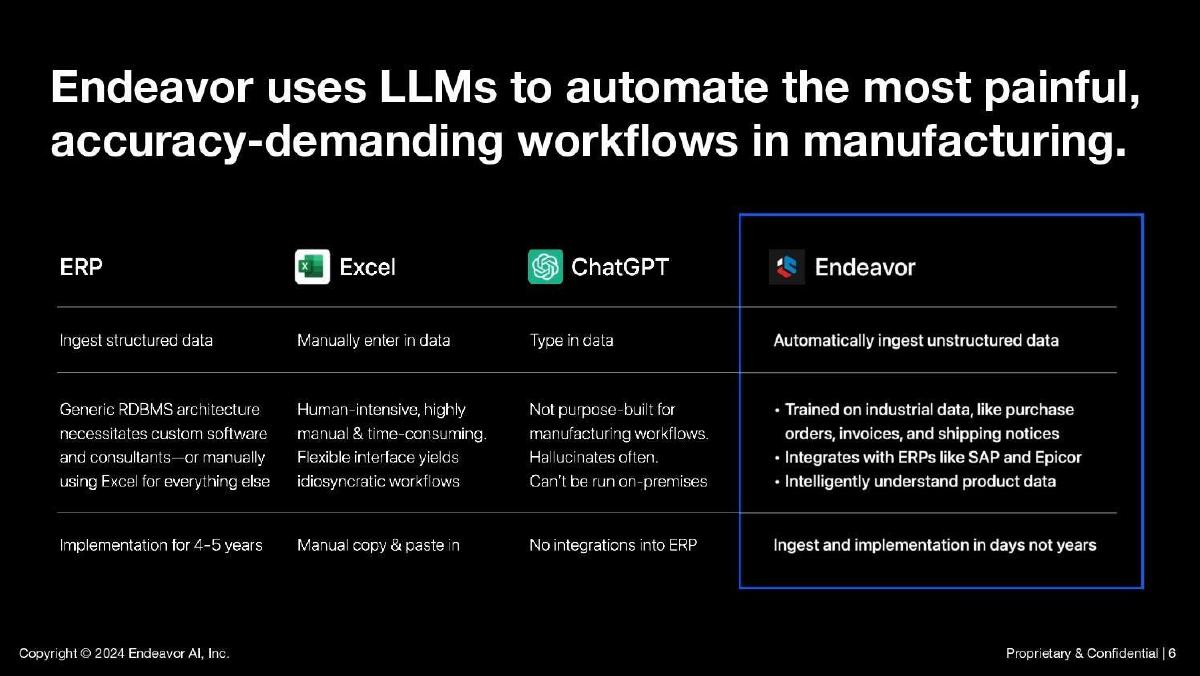
AI for manufacturers' back-office work. A four-column comparison.
Endeavor AI deck, slide 6. Exact stored slide matched to this analysis.
Our analysis: It sets itself against the three things a buyer uses today, row by row.
Evidence and limitation: Comparison; one time claim.
What a founder can adapt: Compare with what your buyer actually uses, including the free option.
Supporting analysis
What the deck claims: "Endeavor uses LLMs to automate the most painful, accuracy-demanding workflows in manufacturing." ERP: "Ingest structured data", "Generic RDBMS architecture necessitates custom software and consultants—or manually using Excel for everything else", "Implementation for 4-5 years". Excel: "Manually enter in data", "Human-intensive, highly manual & time-consuming". ChatGPT: "Type in data", "Not purpose-built for manufacturing workflows. Hallucinates often. Can't be run on-premises", "No integrations into ERP". Endeavor: "Automatically ingest unstructured data", "Trained on industrial data, like purchase orders, invoices, and shipping notices", "Integrates with ERPs like SAP and Epicor", "Ingest and implementation in days not years".
Presentation choice: Including ChatGPT answers the question an investor is most likely to ask.
When it does not fit: Add a number for "days", such as the average go-live time.
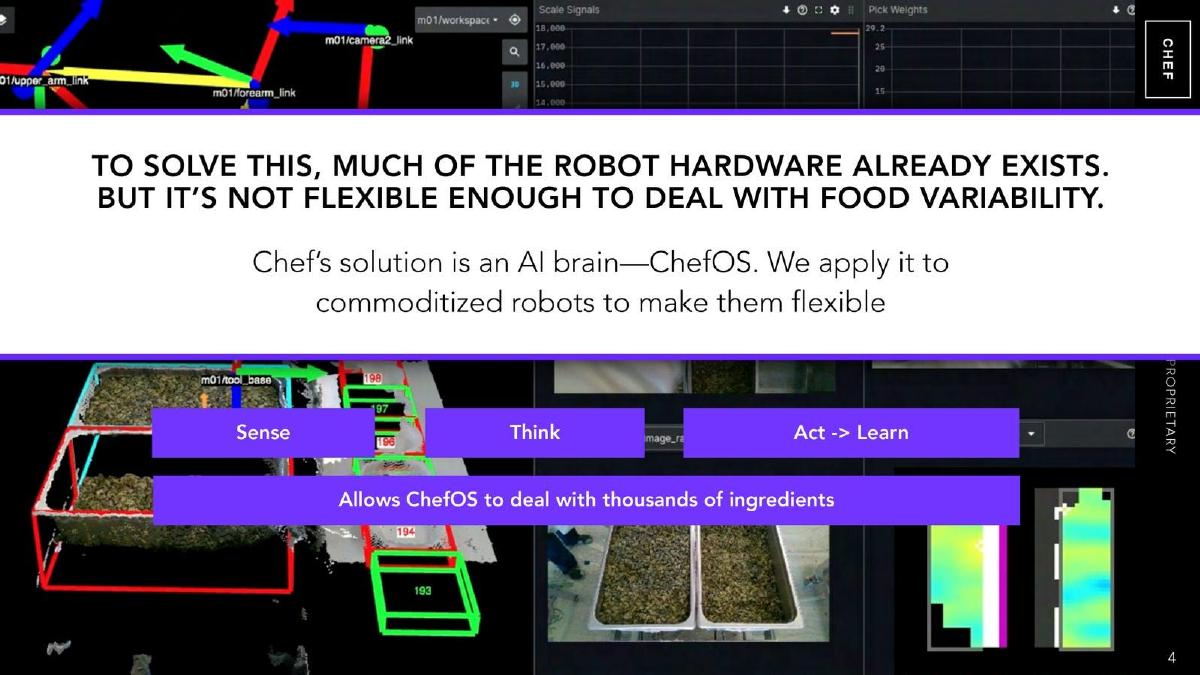
Food-assembly robots. A headline over robot camera views.
Chef Robotics deck, slide 4. Exact stored slide matched to this analysis.
Our analysis: It says exactly what's new (the software) and what isn't (the arms), which sharpens the claim.
Evidence and limitation: Robot views; "thousands of ingredients".
What a founder can adapt: Say which part is yours and which you buy.
Supporting analysis
What the deck claims: "To solve this, much of the robot hardware already exists. But it's not flexible enough to deal with food variability." "Chef's solution is an AI brain—ChefOS. We apply it to commoditized robots to make them flexible." "Sense", "Think", "Act -> Learn". "Allows ChefOS to deal with thousands of ingredients."
Presentation choice: Admitting the hardware exists makes the software claim more believable.
When it does not fit: Add a result: meals per hour or staff freed per line.
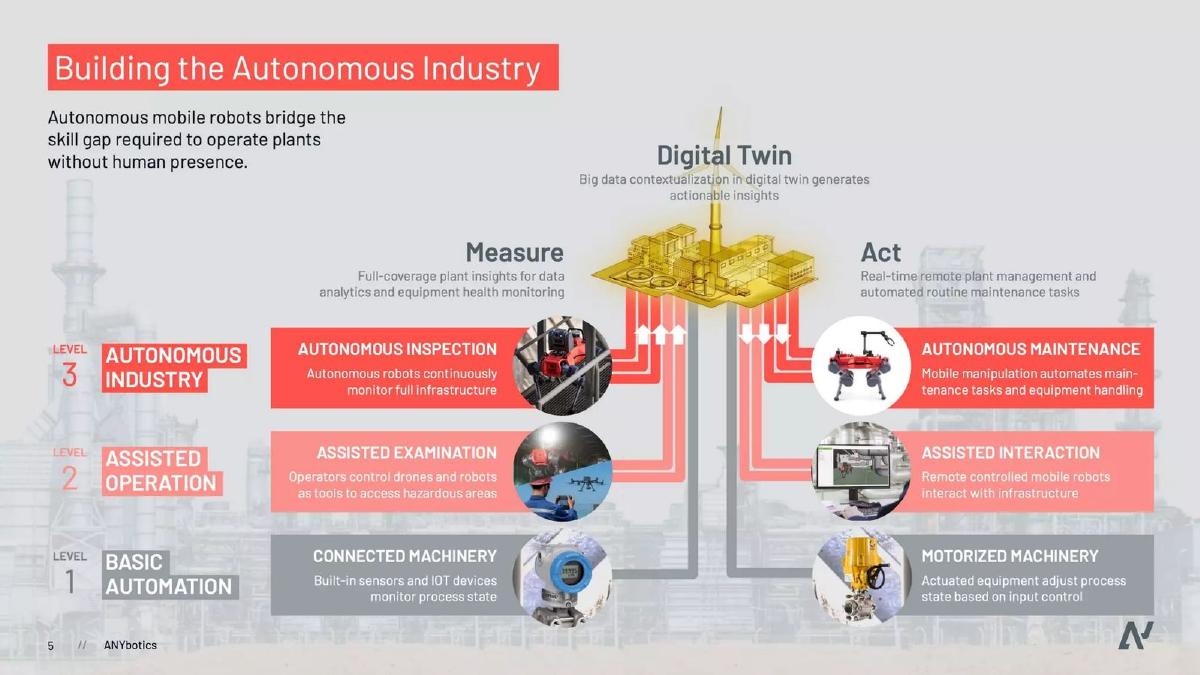
Inspection robots for industrial plants. Three levels of automation with robot photos.
ANYbotics deck, slide 5. Exact stored slide matched to this analysis.
Our analysis: It answers "workforce shortage" from its problem slide and shows where it sits among other automation.
Evidence and limitation: Robot photos; no figures.
What a founder can adapt: Show where you sit among today's options.
Supporting analysis
What the deck claims: "Building the Autonomous Industry." "Autonomous mobile robots bridge the skill gap required to operate plants without human presence." "Digital Twin: Big data contextualization in digital twin generates actionable insights." "Measure: Full-coverage plant insights..."; "Act: Real-time remote plant management and automated routine maintenance tasks." Levels: "1 Basic Automation" (connected, motorized machinery), "2 Assisted Operation", "3 Autonomous Industry" ("Autonomous Inspection", "Autonomous Maintenance").
Presentation choice: The three levels show the step change from sensors to robots that move.
When it does not fit: Dense; one robot photo and one result would say more.
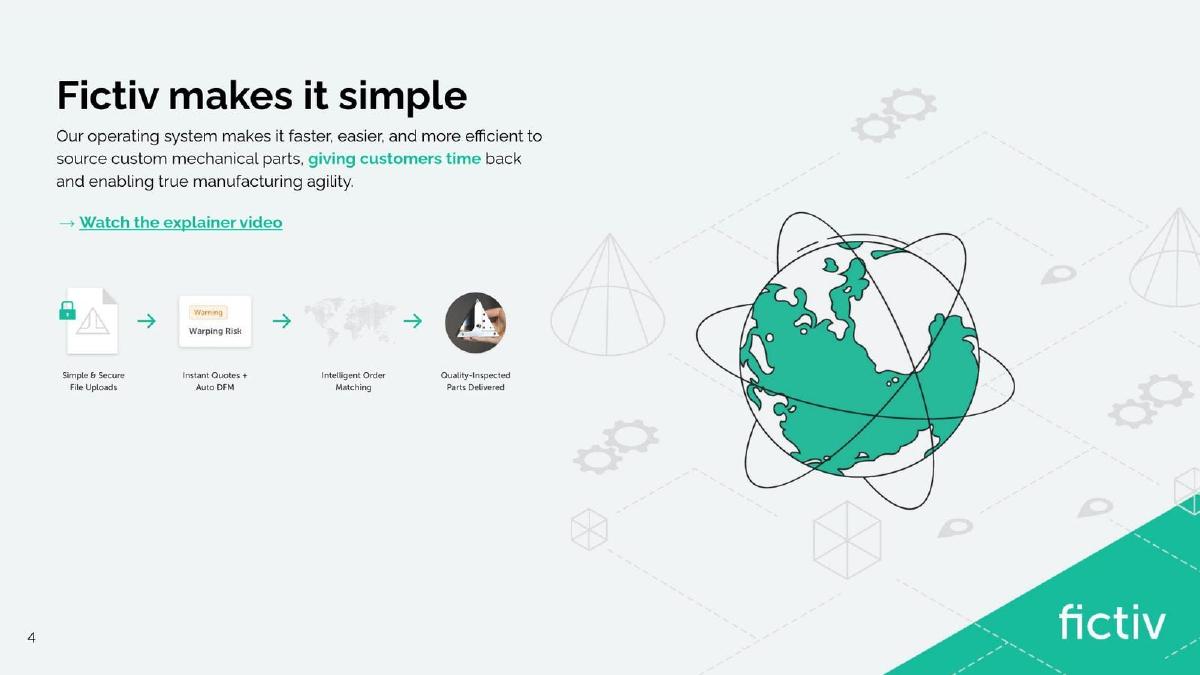
On-demand manufacturing platform. Four steps and a globe.
Fictiv deck, slide 5. Exact stored slide matched to this analysis.
Our analysis: Four steps make the service easy to follow, which its problem slide was not.
Evidence and limitation: No figures.
What a founder can adapt: Show the customer's steps, and how long each takes with you.
Supporting analysis
What the deck claims: "Fictiv makes it simple." "Our operating system makes it faster, easier, and more efficient to source custom mechanical parts, giving customers time back and enabling true manufacturing agility." Steps: "Simple & Secure File Uploads" → "Instant Quotes + Auto DFM" → "Intelligent Order Matching" → "Quality-Inspected Parts Delivered". "Watch the explainer video."
Presentation choice: "Instant Quotes" names the step customers wait longest for today.
When it does not fit: "Faster, easier, more efficient" without a number.
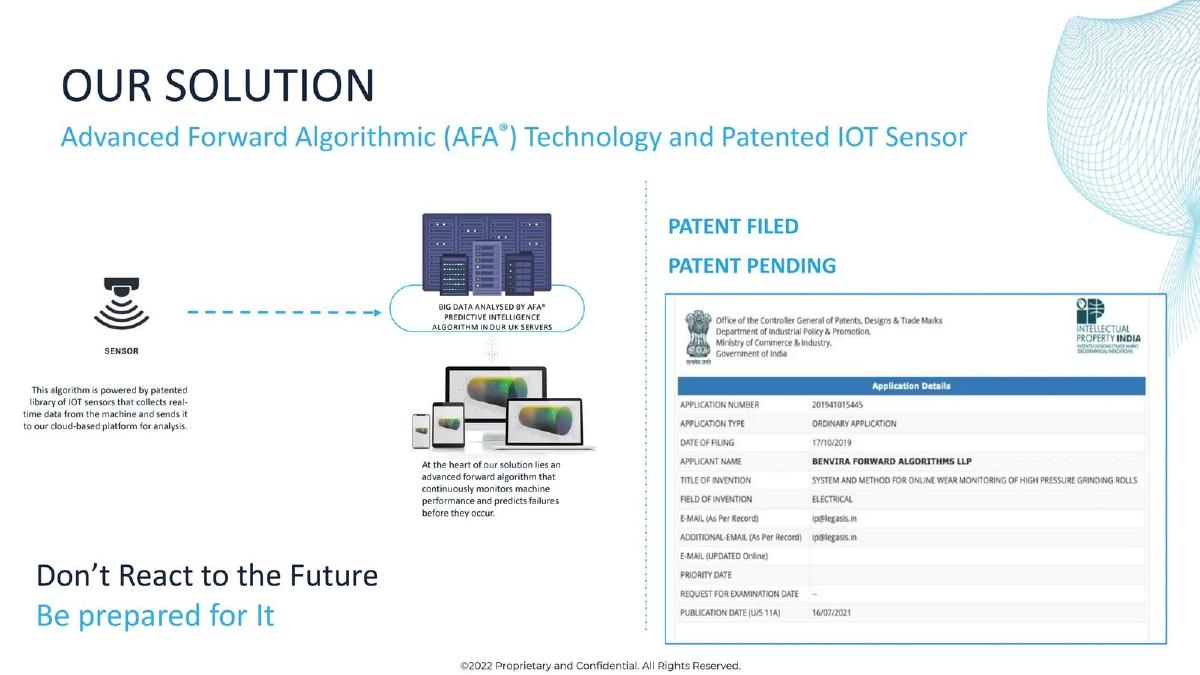
Predictive maintenance for heavy machinery. Sensor-to-cloud diagram and a patent filing.
Benvira deck, slide 4. Exact stored slide matched to this analysis.
Our analysis: Partial: the diagram shows how it works, but half the slide is a patent document and there's no result.
Evidence and limitation: Patent filing; no results.
What a founder can adapt: Replace the filing with one prediction the system got right, and how early.
Supporting analysis
What the deck claims: "Our Solution: Advanced Forward Algorithmic (AFA®) Technology and Patented IOT Sensor." "This algorithm is powered by patented library of IOT sensors that collects real-time data from the machine and sends it to our cloud-based platform for analysis." "Don't React to the Future. Be prepared for It." "Patent Filed", "Patent Pending", with an image of the filing.
Presentation choice: Kept to show patents crowding out what the product achieves.
When it does not fit: A patent document as the main picture.
Visual inspection software for factories. One banner and an icon.
Lincode deck, slide 4. Exact stored slide matched to this analysis.
Our analysis: Weak on purpose: it names the buyer but shows no product and measures nothing.
Evidence and limitation: No product image; no figures.
What a founder can adapt: Show a defect the system caught and the inspection time or error rate before and after.
Supporting analysis
What the deck claims: "About Product (LIVIS)." "LIVIS is our proprietary NO-CODE deep tech platform that can be utilised to solve complex visual inspection problems with a simple user interface." "Enabling manufacturers to create their own visual inspection systems at ease." "Reducing cost of deployments and assuring more control over customisations, resulting in a quicker turnaround time."
Presentation choice: Kept as a contrast; compare Limis, which gives price and gain in the same space.
When it does not fit: "Deep tech", "no-code" and "quicker" without evidence.
Whether each slide says what it replaces, shows the product, and gives a price or measured gain.
Example
What it replaces
Product shown
Price or gain
Limis
Yes (paper logsheets)
Partly (graphic)
Yes (price, 1%, 10%)
Endeavor AI
Yes (ERP, Excel, ChatGPT)
No (table)
Partly (days not years)
Chef Robotics
Yes (inflexible robots)
Yes (robot views)
Partly
ANYbotics
Partly (human rounds)
Yes (robots)
No
Fictiv
Partly
Partly (steps)
No
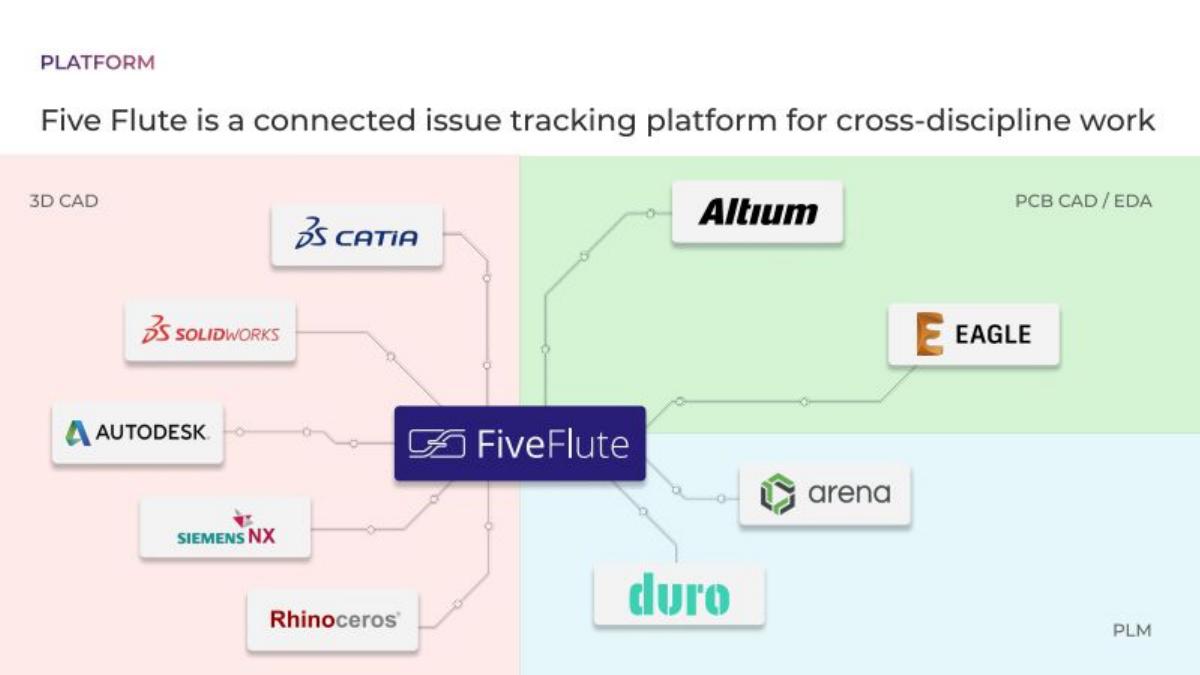
Five Flute
No
Partly (integrations)
No
Benvira
No
Partly (diagram)
No
Lincode
No
No
No
Key Takeaways
Say what it replaces: paper logsheets, Excel, a person walking the plant.
Show the product working: the robot, the screen, the sensor.
Give the price next to the cost it saves.
Give one measured gain: downtime, setup time, hours saved.
Patents and "no-code" are features, not the answer to the problem.
Build your manufacturing solution slide
What it replaces, show it, price and gain.
Replaces. Paper, spreadsheets, an old system, a manual inspection?
Show. Robot, screen or sensor in a real plant.
Price. What it costs per site, line or user.
Gain. Downtime, hours, defects or staff freed, measured or labelled as a target.
Copyable framework: [Product] replaces [today's method] for [buyer]. At [price], it [gain] ([measured or target]).
Illustrative example 1 — written by us
Before: LIVIS is our proprietary no-code deep tech platform for visual inspection.
After: LIVIS replaces manual end-of-line inspection. In a 3-month pilot at one bottling line, it caught 98% of labelling defects and freed two inspectors per shift (pilot data).
What improved: Our illustrative rewrite; the figures are invented for the example. It names what it replaces, where, and a labelled result.
What this guide adds
This is the companion to the manufacturing problem guide. Seven of its eight decks appear there too (Chef Robotics, ANYbotics, Limis, Benvira, Endeavor AI, Fictiv, Five Flute), so you can read each company's problem and solution side by side. Lincode is new to the library.
Three things a manufacturing solution slide proves
What it replaces: "archaic paper logsheets" (Limis); ERP, Excel and ChatGPT (Endeavor AI); "commoditized robots" that aren't "flexible enough to deal with food variability" (Chef Robotics).
It is real: robot views (Chef Robotics), robot photos by task (ANYbotics), screens (Limis, Fictiv).
What it's worth: "$40 per person per month", "1% of... annual downtime costs", "reduce downtime by 10% or more" (Limis); "days not years" (Endeavor AI).
Common mistakes
Not saying what it replaces. Name today's method.
Patent filings as the picture. Show the product working.
"No-code" and "deep tech" as benefits. Say what the plant gets.
Forecasts shown as results. Label targets.
"Faster, easier" without numbers. Give minutes, hours or percent.
Diagnostic checklist
It says what it replaces.
The product is shown working.
It gives a price or a measured gain.
Targets are labelled.
It answers the problem slide before it.
Frequently asked questions
How we chose these examples
Corpus: published pitch deck teardowns on StartupFundraising.com. Founder-uploaded private decks are excluded.
Selection (2026-09-25): we searched slides 3–6 of the manufacturing problem guide's decks, plus Lincode, for solution slides. Exotec's solution sits inside its problem slide (already in the problem guide), so no separate Exotec slide is used. Benvira is marked partial; Lincode is kept as a weaker contrast.
Overlap check: none of these eight slides appears in another guide. Other slides from the same decks do: Chef Robotics slide 5 (data moat guide), Fictiv slide 6 (customer slide guide), Limis slide 6 (go-to-market guide), Five Flute slide 2 (SaaS team guide), and each company's problem slide in the manufacturing problem guide.
Review: all eight stored slide images were inspected on 2026-09-25 and matched to company, deck and slide number (editorial model review). No person has yet completed an editorial review of this page.
Claims are as shown on the slides; we have not verified them. We make no claim that any slide caused a fundraising outcome.