How to show venture debt, credit facilities and loans alongside equity in your raise: amount, lender, cost, what the debt pays for and how it is repaid.
How to Present Debt Financing on Your Pitch Deck
Ten slides from ten real pitch decks show how founders present debt next to equity: venture debt, credit facilities, bank and government loans. The best name the amount, the lender, the cost and what the debt pays for. The weakest say "equity and/or debt" and leave the investor to guess.
TL;DR
Show debt as a separate line from equity, and give five facts: the amount, the lender or type of lender, the cost (interest rate or fee), what the debt pays for, and how it will be repaid. Equity investors care because debt is paid back before they are, so they want to know how much there is and what it is secured on. Opendoor's 2014 Series A deck sets out three stages of debt, each with lenders, a target rate (8-10%, then 7-8%, then 5-6%) and a size ($15-25m, $100m+, $500m+), and says it already holds three term sheets at its target terms. ImaliPay places a $1.5m "extended seed raise or venture debt" between $2.9m raised and a planned $20m Series A. 40Seas lists a $17M seed next to a $100M credit facility. Skeleton Technologies footnotes that its €200m+ of funding includes €67m of grants and €15m of venture debt. One Mobility puts loans, repayments and government funding into its financing table. Ark and Go-Go Cannabiz mention debt with no amount or terms, and Clearbanc's comparison table is a contrast from a company selling an alternative.
Debt financing slides from real pitch decks
Each example shows the exact stored slide above its analysis and links to the full teardown. Stage and year are given only where the deck or public records state them. Figures are the company's own claims.
Opendoor ask slide — slide 17
Home-buying company; 2014 Series A deck.
Opendoor deck, slide 17. Exact stored slide matched to this analysis.
Our analysis: Lenders, cost and size at each stage, plus term sheets as evidence.
Evidence and limitation: Debt plans with no rates.
What a founder can adapt: Say what equity is needed alongside each stage.
Supporting analysis
What the deck claims: Validate: local banks, HNWIs, 8-10%, $15-25m. Growth: family funds, PE/hedge funds, brokers, 7-8%, $100m+. Scale: banks, family funds, 5-6%, $500m+. 3 term sheets for debt financing at target terms.
Presentation choice: Lenders, cost and size at each stage, plus term sheets as evidence.
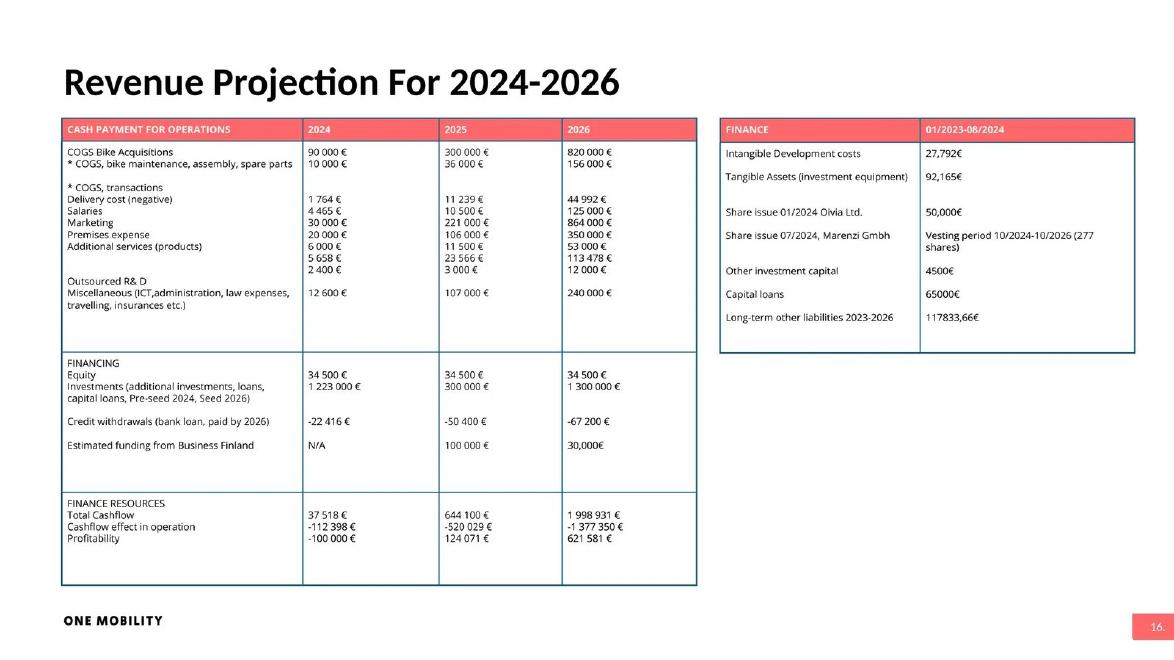
One Mobility deck, slide 17. Exact stored slide matched to this analysis.
Our analysis: Repayments appear as real cash outflows.
Evidence and limitation: One row mixing debt and equity.
What a founder can adapt: Separate loans from equity rounds.
Supporting analysis
What the deck claims: Equity 34,500 € a year; investments incl. loans and capital loans 1,223,000 / 300,000 / 1,300,000 €; bank loan repayments -22,416 / -50,400 / -67,200 €; Business Finland N/A / 100,000 / 30,000 €.
Presentation choice: Repayments appear as real cash outflows.
When it does not fit: One row mixing debt and equity.
Say what the debt pays for: lending, assets, inventory or runway.
Show how it is repaid and what it is secured on.
Signed term sheets beat intentions.
Test your debt line before you send it
Answer these with numbers.
Amount. How much debt, separate from equity?
Lender. Who is lending, and is there a term sheet?
Cost. Interest rate or fee, on an annual basis?
Use. What does the debt fund?
Repayment. How is it repaid, and what is it secured on?
Copyable framework: Equity: [amount] for [uses]. Debt: [amount] [instrument] from [lender], [rate]%, secured on [asset], funds [use], repaid from [source]
Illustrative example 1 — written by us
Before: The company is seeking to raise equity and/or debt financing.
After: Raising [amount] equity for [uses] and [amount] debt from [lender type] at [rate]% for [use]
What improved: Our illustrative rewrite, not Go-Go Cannabiz's text. Bracketed parts are placeholders, not company facts.
What this guide covers
Most startup raises are equity: investors buy shares. But many companies also borrow. Venture debt is a loan from a specialist lender to a venture-backed company, usually taken alongside or just after an equity round. A credit facility is an agreed amount a company can draw on, often used by lending and property businesses to fund the loans or homes they buy. Bank loans, government-backed loans and quasi-equity loans from public banks are other forms.
Debt matters to equity investors for two reasons. It is cheaper than equity in one sense, because it does not dilute ownership. But it must be repaid, it is paid before shareholders if the company fails, and it often carries covenants, which are conditions the company must meet. So when debt appears on a deck, investors want to see it clearly: how much, from whom, at what cost and for what.
Our grant funding guide mentions venture debt in passing, but no guide covers how to present debt. We searched the corpus for venture debt, credit facility, term loan, bank loan and similar terms. Many hits were listed companies, property funds or acquisition financing, which we excluded. We read the remaining startup candidates from images of the original deck pages and kept ten slides from ten private companies.
Present debt as a plan, not a footnote
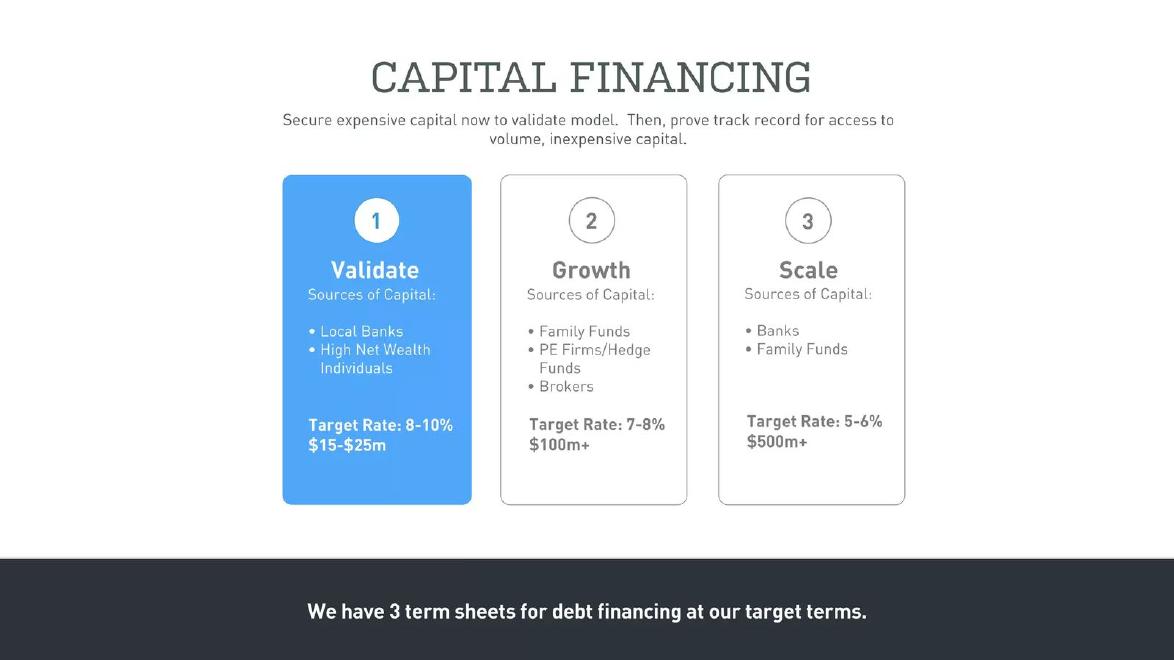
For companies whose business is buying assets, debt is not a side issue; it is how the business scales. Opendoor, which buys homes from sellers and resells them, is the clearest example. Its 2014 Series A deck has a slide titled Capital Financing with the line "Secure expensive capital now to validate model. Then, prove track record for access to volume, inexpensive capital." Three boxes follow. Validate: local banks and high net worth individuals, target rate 8-10%, $15-25m. Growth: family funds, private equity and hedge funds, brokers, target rate 7-8%, $100m+. Scale: banks and family funds, target rate 5-6%, $500m+.
A banner at the bottom reads: "We have 3 term sheets for debt financing at our target terms." That line turns a plan into evidence. A term sheet is not a signed loan, but it shows lenders have looked at the business and offered terms. The slide also tells equity investors what their money is for: proving the model so that debt becomes cheaper. The shape of the plan, with cost falling as the company grows, is exactly the argument an asset-heavy business needs to make.
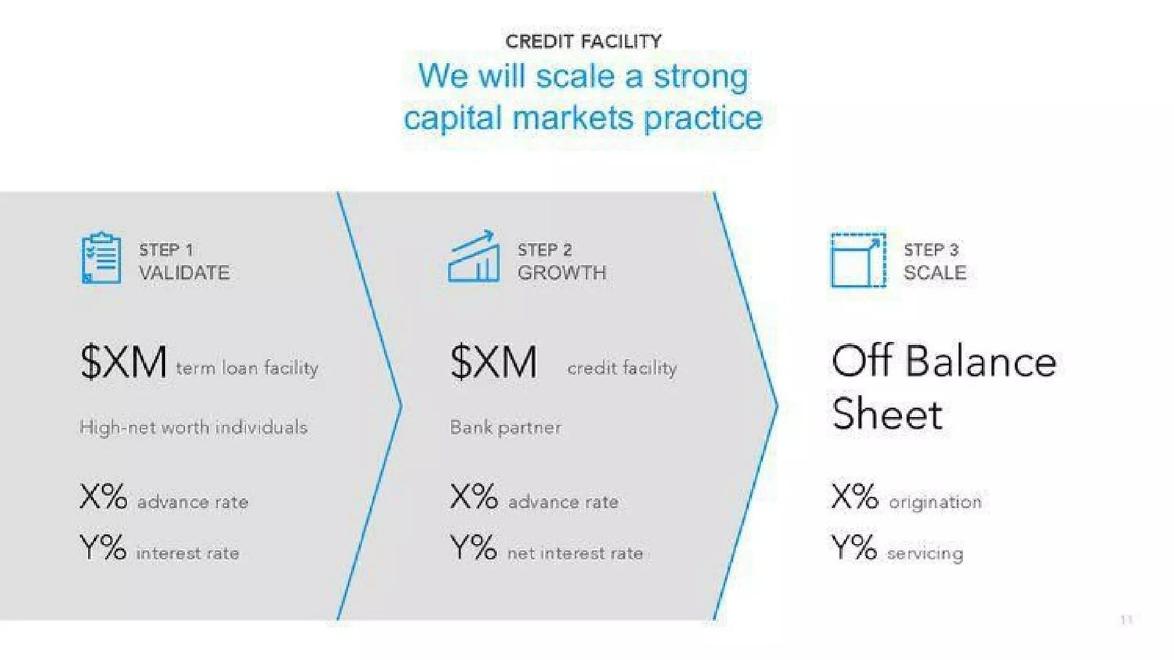
Divvy Homes, a rent-to-own company, uses the same three-step shape under the heading Credit Facility: We will scale a strong capital markets practice. Step one is a term loan facility from high net worth individuals with an advance rate and interest rate. Step two is a credit facility from a bank partner. Step three is off balance sheet funding, with origination and servicing fees. But every figure is a placeholder: $XM, X% and Y%. The version in our library has the numbers removed, perhaps deliberately before sharing. The structure is still useful to learn from, but an investor reading it cannot judge the cost of capital, which is the single most important number for a business like this.
The advance rate in Divvy's slide is worth explaining. It is the share of an asset's value the lender will fund; the company funds the rest with equity. If a lender advances 80% on a $200,000 home, the company needs $40,000 of its own money per home. That is why equity and debt are linked: the equity round decides how many homes the debt can buy.
Show debt on the funding timeline
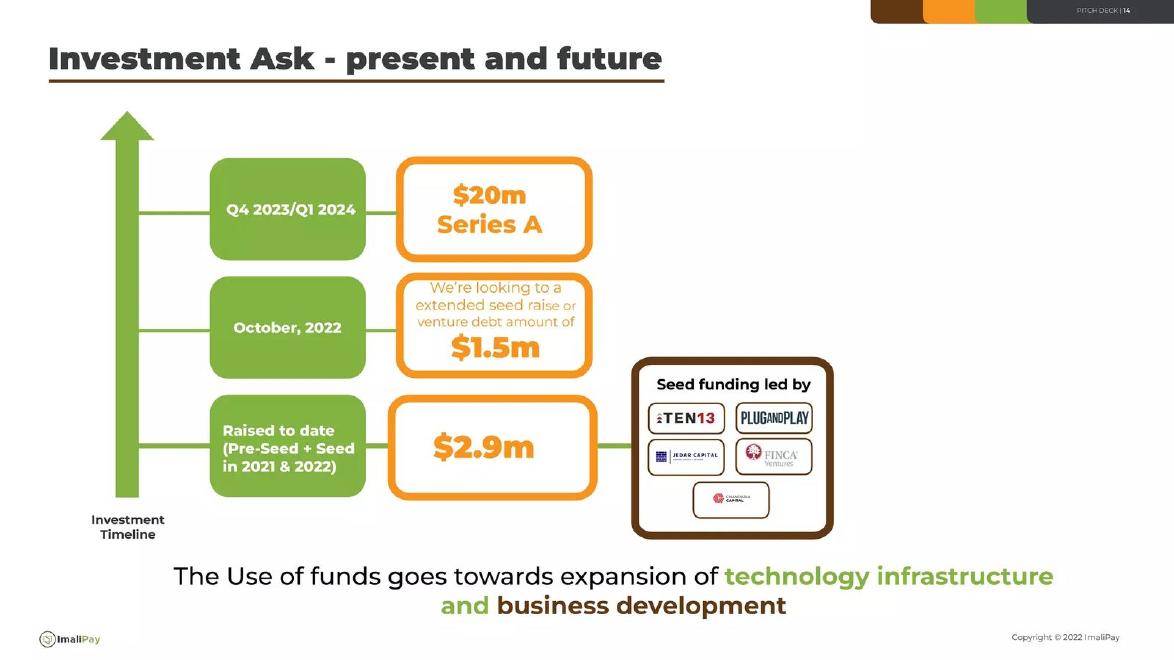
ImaliPay, a financial services company for gig workers in Africa, has a slide titled Investment Ask - present and future. A rising timeline shows $2.9m raised to date (pre-seed and seed in 2021 and 2022), then October 2022: "We're looking to a extended seed raise or venture debt amount of $1.5m", then Q4 2023/Q1 2024: a $20m Series A. A box lists the seed investors.
Placing debt on the same timeline as equity is helpful: the investor can see the whole funding plan at once. Being open that the $1.5m could be either equity or debt is honest, though it leaves the terms undecided. For a lending business, the slide could also say what venture debt would fund. Press reports from April 2022 describe ImaliPay's $3m seed as a combination of debt and equity; the slide's $2.9m does not separate the two, which a reader would want to know.
The use of funds line, "expansion of technology infrastructure and business development", is generic. For a debt line in particular, it helps to say whether the money funds loans to customers or the company's own costs, because lenders and equity investors judge those differently.
Separate equity raised from credit available
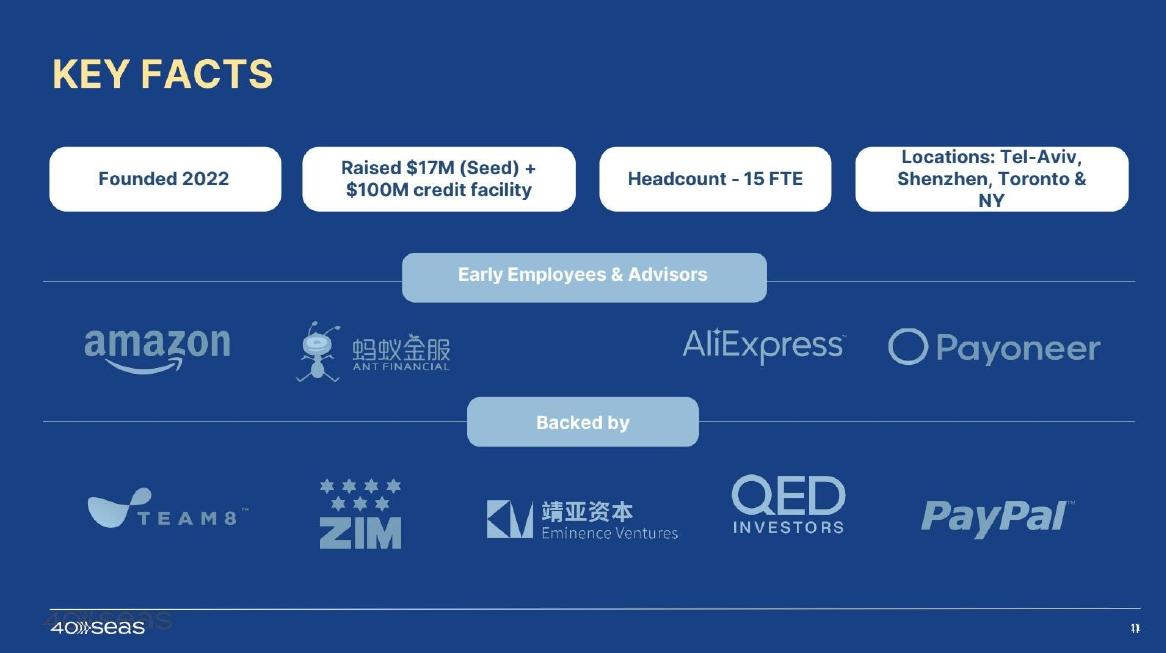
40Seas, a trade finance company, puts its funding in a key facts box: "Raised $17M (Seed) + $100M credit facility". It is clear and prominent, and it keeps the two kinds of money separate with a plus sign. Public announcements give the detail the slide leaves out: an $11M seed in January 2023 led by Team8, extended to $17M in August 2023, and a three-year, senior secured, receivables-based revolving credit facility of about $100M from ZIM, the shipping company, with an option to extend it to $200M.
The slide is a good model of separation but would be stronger with one more line saying what the facility funds. A $100M credit facility at a trade finance company funds the invoices it finances for customers, not salaries or product. A reader who adds $17M and $100M together and thinks the company raised $117M has misread it. Saying "$100M facility to fund customer invoices" removes that risk.
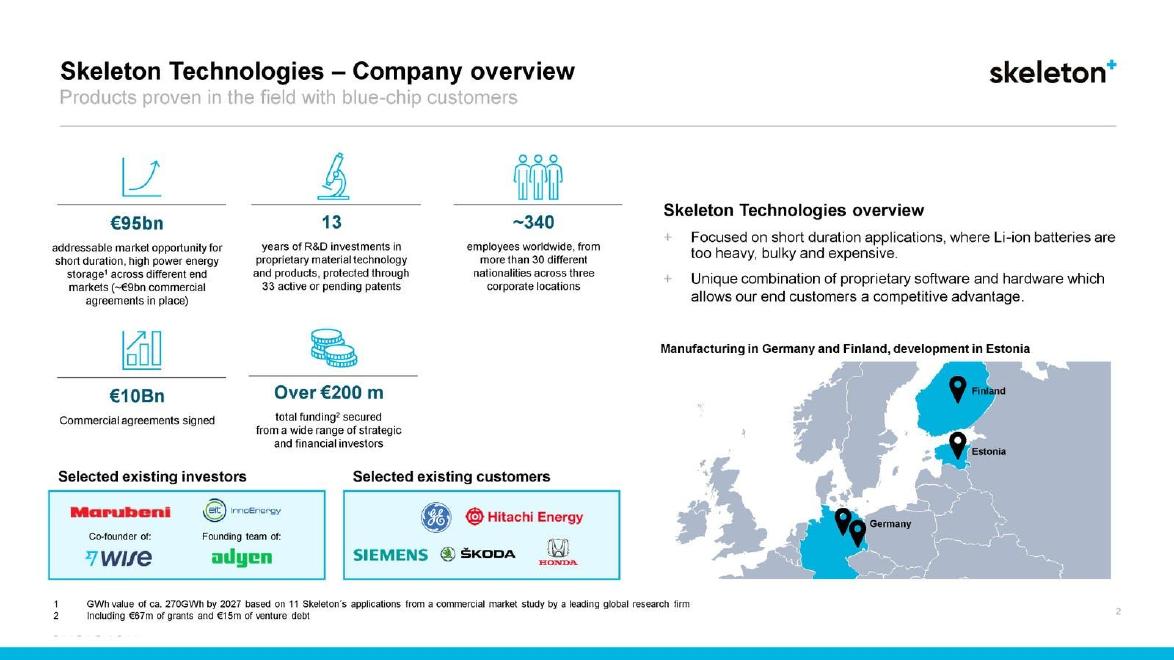
Skeleton Technologies, a maker of ultracapacitors, does the separation in a footnote. Its company overview says "Over €200 m total funding secured from a wide range of strategic and financial investors", with a footnote: "including €67m of grants and €15m of venture debt". That is honest disclosure: the headline includes non-equity money, and the footnote says how much. The €15m matches a 2017 European Investment Bank quasi-equity loan. Putting the split in the main text rather than small print would make the honesty more visible; investors who find a split in a footnote may wonder what else is there.
Put debt in the financial plan
One Mobility, a children's bike subscription company in Finland, includes a financing block in its 2024-2026 revenue projection. Equity is 34,500 € each year. Investments, a row covering additional investments, loans, capital loans and planned pre-seed and seed rounds, are 1,223,000 €, 300,000 € and 1,300,000 €. Credit withdrawals, described as a bank loan paid back by 2026, are -22,416 €, -50,400 € and -67,200 €, the minus signs showing repayments. Estimated funding from Business Finland, the government innovation agency, is N/A, 100,000 € and 30,000 €.
Putting debt into the projection is the right instinct: it shows the repayments as a real cash outflow. The weakness is the Investments row, which mixes loans and equity rounds into one figure, so a reader cannot tell how much of the 1,223,000 € is borrowed. Debt and equity should be separate rows. The table is also dense; a short summary of total debt, total equity and grant funding would help an investor see the plan at a glance.
Debt as history
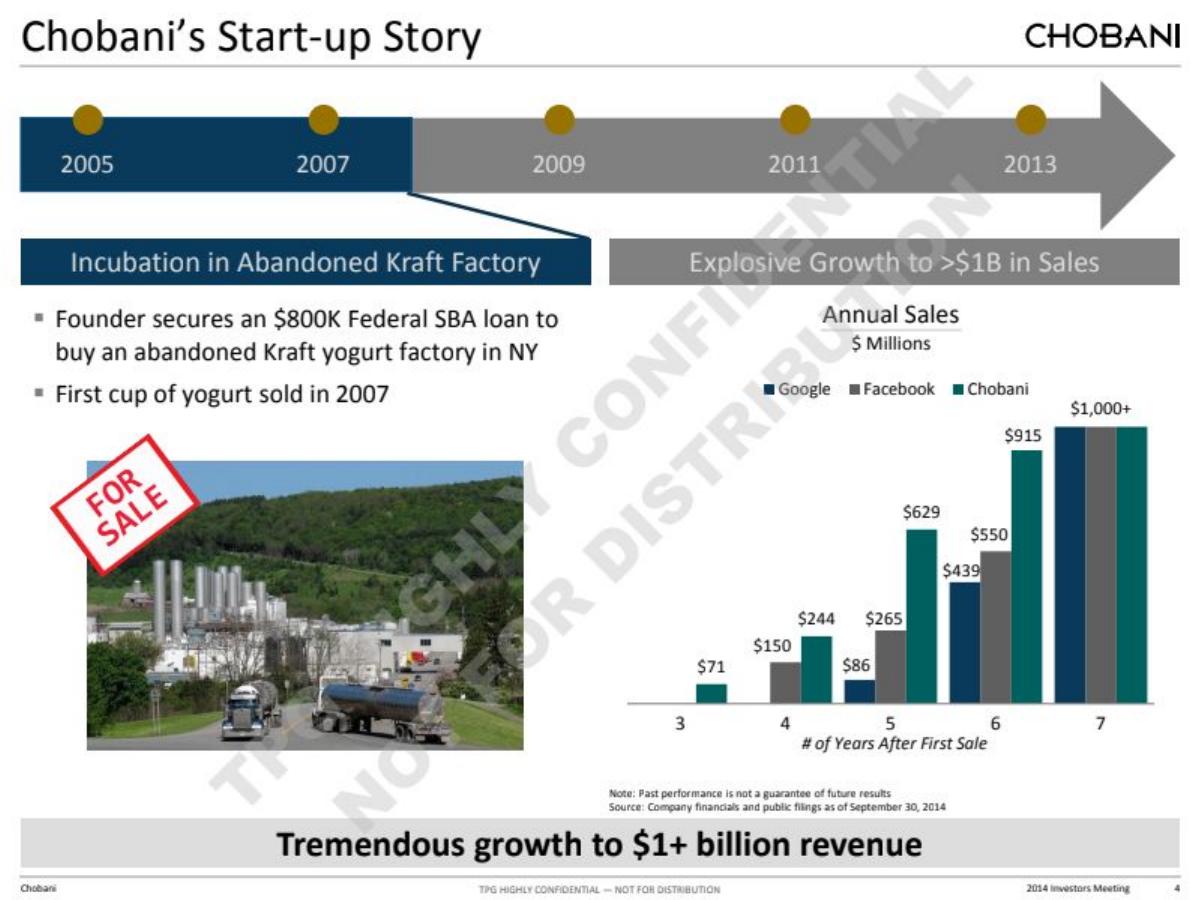
Chobani's founder story, from a 2014 investor meeting deck, shows debt as part of the company's origin: "Founder secures an $800K Federal SBA loan to buy an abandoned Kraft yogurt factory in NY", followed by the first cup of yogurt in 2007 and growth to more than $1 billion in sales. The slide is not an ask, but it shows something useful: a government-backed small business loan paid for the key asset without giving up ownership.
The same year, Chobani borrowed $750 million from TPG rather than selling shares, according to press reports, chiefly to avoid dilution; the founder owned all of the equity. That context is not on the slide, but it illustrates the trade-off every founder weighs: debt keeps ownership but must be repaid; equity does not need repaying but costs ownership. The growth chart on the same slide compares Chobani's sales after first sale with Google and Facebook, an unusual comparison that invites scepticism; the loan story is the stronger part.
The weak version: debt mentioned without detail
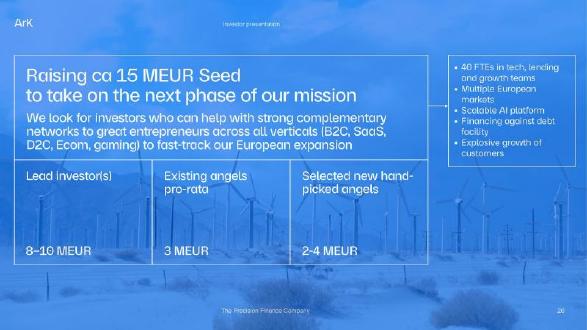
Ark, a European fintech, asks for about 15 MEUR of seed funding: 8-10 MEUR from lead investors, 3 MEUR from existing angels pro-rata and 2-4 MEUR from new angels. Those add up to 13-17 MEUR, consistent with about 15. A side list of highlights includes "Financing against debt facility", with no amount, lender or terms. For a lending business, the debt facility is as important as the equity, yet it gets one bullet.
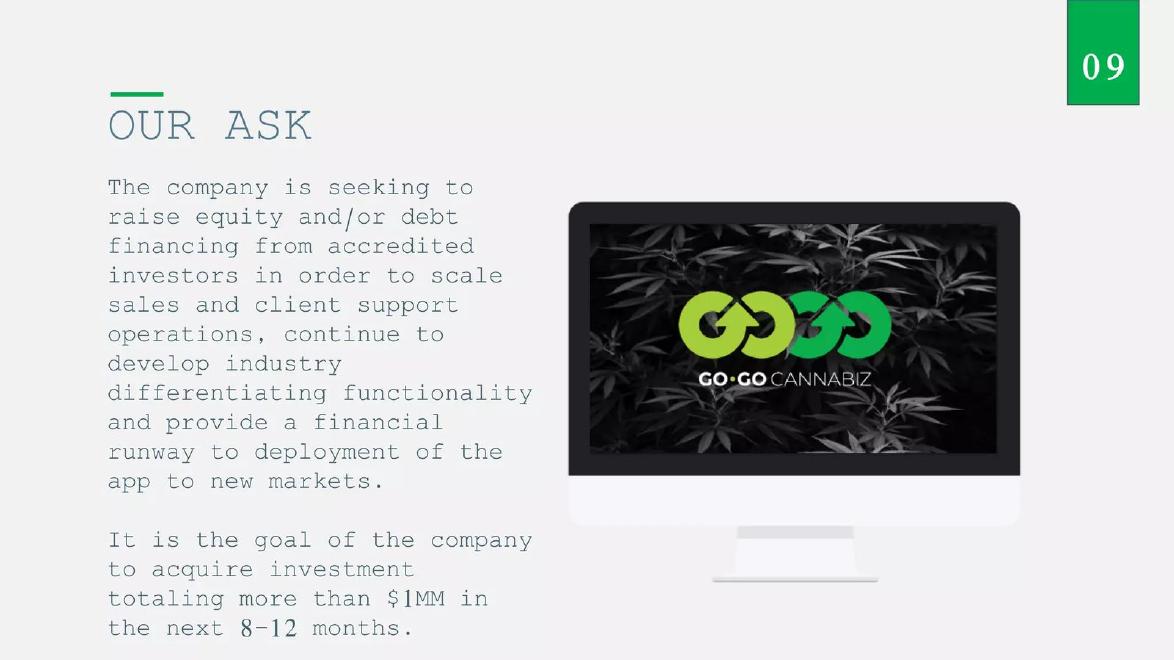
Go-Go Cannabiz, a cannabis industry app, says under Our Ask: "The company is seeking to raise equity and/or debt financing from accredited investors" to scale sales, develop features and provide runway, with a goal of more than $1MM in the next 8-12 months. "Equity and/or debt" tells an investor nothing about the instrument they are being offered. A company that is open to either should say what terms it would accept for each.
A contrast: the seller's comparison
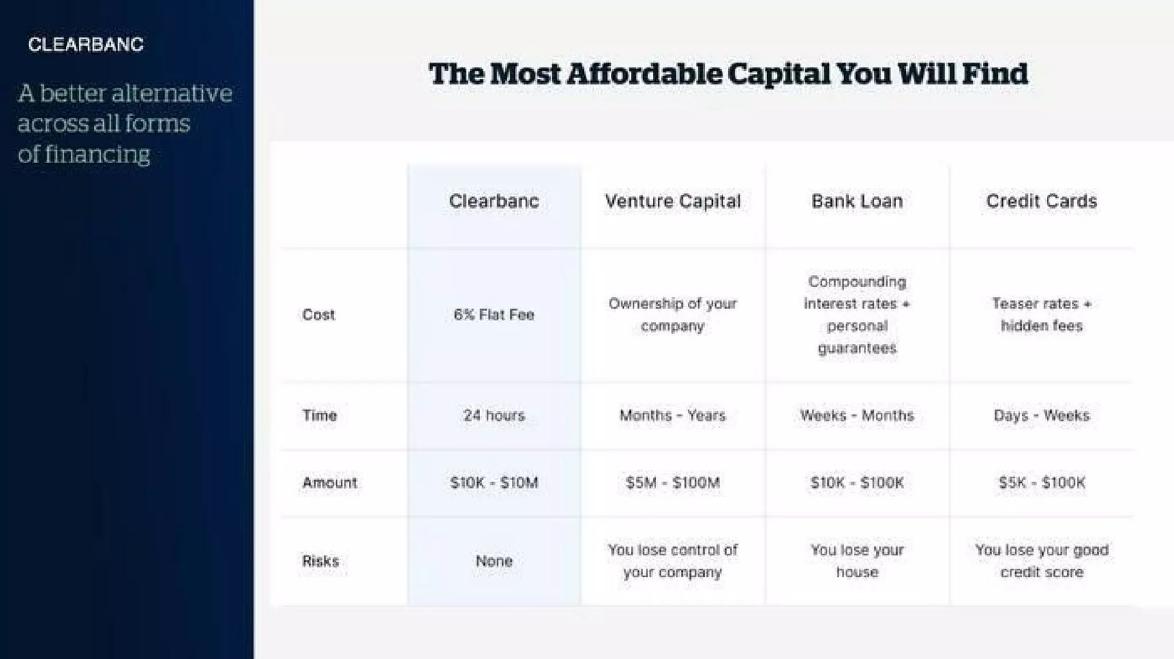
Clearbanc, which provides revenue-based funding to e-commerce businesses, compares itself with venture capital, bank loans and credit cards in a table titled The Most Affordable Capital You Will Find. Clearbanc: 6% flat fee, 24 hours, $10K-$10M, risks: none. Venture capital: ownership of your company, months to years, $5M-$100M, you lose control. Bank loan: compounding interest and personal guarantees, weeks to months, $10K-$100K, you lose your house. Credit cards: teaser rates and hidden fees.
The table is a useful reminder of the questions founders should ask about any financing: cost, time, amount and risk. But it is a vendor's comparison. A flat 6% fee repaid over a few months can cost more per year than a bank loan, and "risks: none" is a marketing claim. If you include a financing comparison on your own deck, use neutral terms and state the cost on the same basis, such as an annual rate.
A worked example
Here is how a lending startup might set out debt and equity on one slide. All figures are illustrative, not from any company in this guide.
Raising: $4M seed equity for team, product and losses until break-even. Debt: $20M credit facility term sheet from a specialist lender, 11% interest, 85% advance rate, secured on the loan book, used only to fund customer loans. Equity needed for the facility: 15% of $20M is $3M of first-loss capital, of which $1.2M comes from this round. Repayment: from customer loan repayments; the facility is not used for operating costs.
Check the arithmetic: an 85% advance rate means the company funds 15% of each loan itself, and 15% × $20M = $3M. That covers what an investor needs: separate amounts, lender type, cost, security, use and repayment.
Common mistakes
Debt mixed with equity. Show them on separate lines.
No cost. Give the rate or fee.
No use. Say what the debt funds.
Footnote only. Put the split in the main text.
Vague instrument. Avoid "equity and/or debt".
Diagnostic checklist
Debt amount separate from equity.
Lender and any term sheet.
Cost on an annual basis.
What the debt funds.
Repayment and security.
Frequently asked questions
How we chose these examples
Corpus: published pitch deck teardowns on StartupFundraising.com. Founder-uploaded private decks are excluded.
Selection (2026-10-01): we searched extracted slide text for venture debt, credit facility, term loan, bank loan and debt financing, excluded listed companies, property funds and acquisition financing, and read each remaining candidate from images made from the original deck files.
Eligibility: each company was private when its deck was made. Opendoor (2014 Series A deck; listed only in 2020), ImaliPay, 40Seas, Chobani, Skeleton Technologies, Clearbanc and Divvy Homes were checked against public funding records. One Mobility, Ark and Go-Go Cannabiz rest on their own decks, with no sign of a listing.
Not used: Sharps Compliance (listed); an Alodmd slide already used in another guide.
Arithmetic: Ark 8-10 + 3 + 2-4 = 13-17 MEUR. The worked example's 15% × $20M = $3M.
Overlap check: the grant funding guide mentions venture debt in passing; no guide covers debt financing. None of these slides appears in another guide.
Review: all ten slide images were inspected on 2026-10-01 and matched to company, deck and slide number (AI editorial model review). No person has yet completed an editorial review of this page. The worked example uses illustrative figures, not company data.
Figures are the companies' own claims; we did not verify underlying data. We make no claim that any slide caused a fundraising outcome.