Clearbanc's 19-slide deck from 2018 is a masterclass in narrative-driven fundraising. It identifies a specific, massive pain point—founders using expensive equity to fund predictable ad spend—and offers a 'third way' between debt and equity. The deck leverages strong market tailwinds in the Direct-to-Consumer (DTC) space, citing the rise of brands like Casper and Harry's. With a 940% CAGR and a goal to fund $1B in 2019, the traction slides demonstrate a product-market fit that is hard to ignore. The team slide highlights deep expertise in e-commerce and fintech, while the case studies provide…
Key takeaways
- Clearbanc positions itself as a 'third way' of funding, sitting between traditional equity and debt (Slide 4).
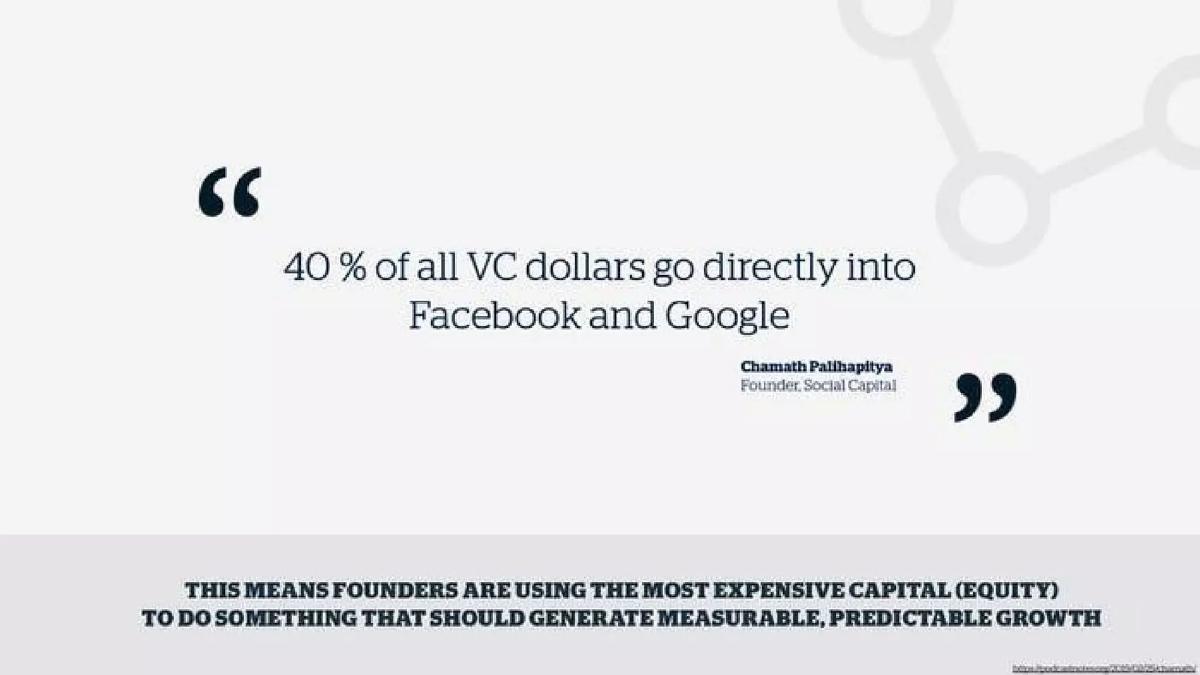
- The deck identifies a massive inefficiency: 40% of all VC dollars go directly to Facebook and Google for customer acquisition (Slide 5).
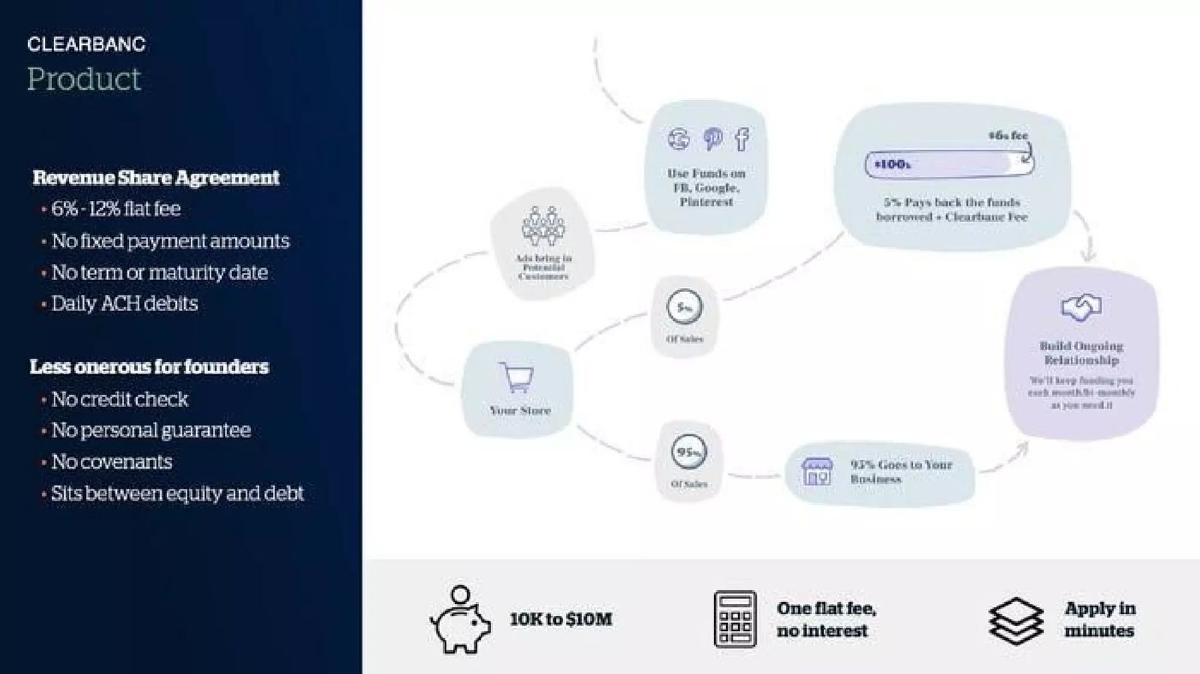
- The core product is a Revenue Share Agreement with a 6%-12% flat fee and no personal guarantees (Slide 6).
- Traction is significant, with $143M funded in 2018 and a projected $1B for 2019 (Slide 7).
- The company claims to have funded 8X more women than the venture capital industry average (Slide 13).
- Data-driven underwriting has led to a consistently declining loss rate from Q1 2018 to Q1 2019 (Slide 14).
- The Total Addressable Market for e-commerce is cited at $2.3T globally, with $504B in the USA (Slide 10).
- Case studies like Vinebox show an 1101% ROI on capital invested through Clearbanc (Slide 18).
Clearbanc Series A Teardown: The Rise of Revenue-Based Financing
In 2018, Clearbanc (now Clearco) set out to raise its Series A to scale a radical idea: what if you could fund your startup's growth without giving up equity or risking your house? This 19-slide deck was the vehicle for that $70M raise. It is a textbook example of how to frame a new financial product by attacking the status quo and aligning with massive, undeniable market shifts.
The Macro Narrative: Why Now?
Slide 1: Title The deck opens with a simple, bold title: "CLEARBANC: Growth Capital for the New Economy." The imagery of a bridge suggests a transition or a connection between the old way of doing things and a new era of commerce.
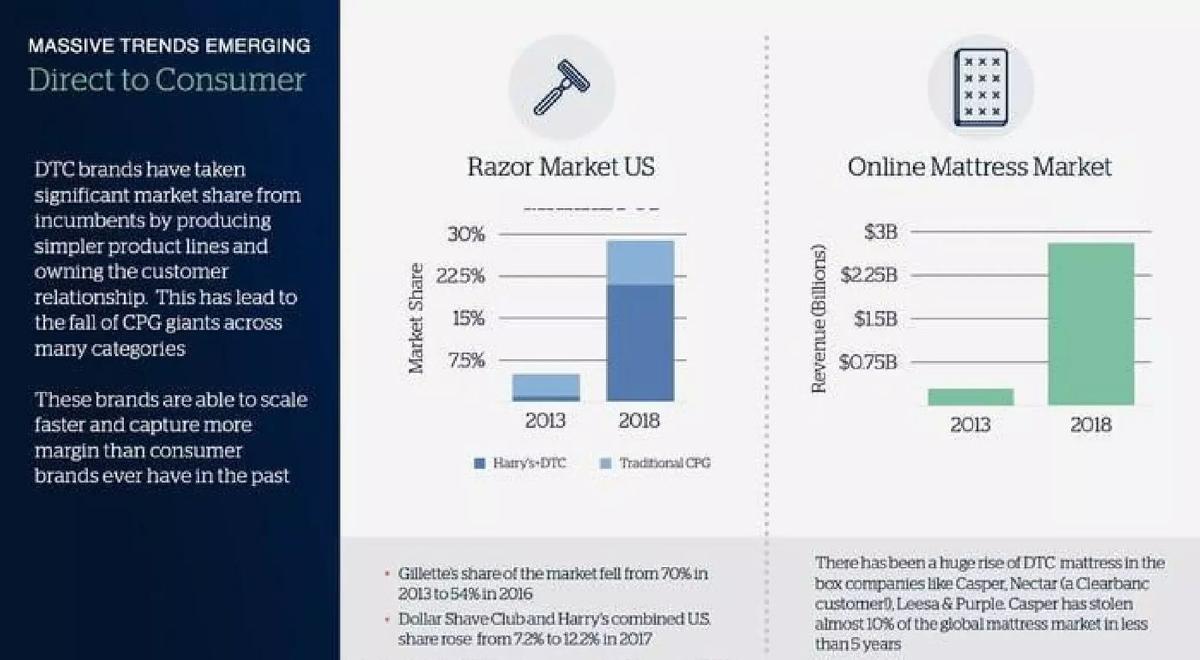
Slide 2: Massive Trends Emerging - Direct to Consumer Clearbanc immediately anchors its thesis in the explosion of DTC brands. It uses the Razor Market (Gillette vs. Dollar Shave Club/Harry's) and the Online Mattress Market (Casper, Nectar) as proof points. Key figures include Gillette's market share falling from 70% in 2013 to 54% in 2016, while DTC competitors rose from 7.2% to 12.2% in a single year (2017). This slide establishes that the target customer base is large and growing rapidly.
Slide 3: Capital Markets are Changing for Entrepreneurs This slide pivots from the customer to the funding environment. It lists several shifts: founders building large businesses without traditional VC, companies staying private longer, and the rise of mega-funds like Softbank. The inclusion of headlines like "More Start-Ups Have an Unfamiliar Message for Venture Capitalists: Get Lost" sets the stage for Clearbanc's alternative solution.
The Problem: The Inefficiency of Equity
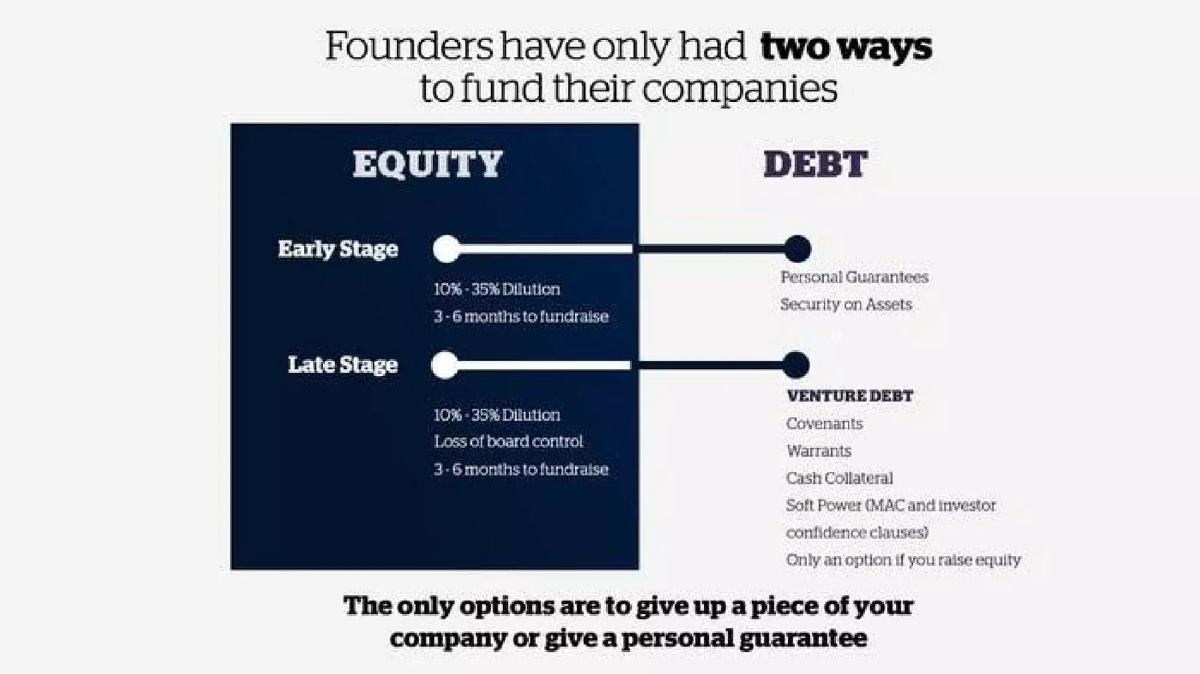
Slide 4: Founders have only had two ways to fund their companies Clearbanc identifies a binary choice that they believe is broken: Equity (10%-35% dilution, 3-6 months to raise) or Debt (personal guarantees, security on assets). The takeaway is clear: "The only options are to give up a piece of your company or give a personal guarantee."
Slide 5: The 40% Problem This is perhaps the most famous slide in the deck. Quoting Chamath Palihapitiya, it states that "40% of all VC dollars go directly into Facebook and Google." Clearbanc argues that founders are using their most expensive capital (equity) to fund measurable, predictable growth—an inherently inefficient use of funds.
The Solution: A New Asset Class
Slide 6: Product - Revenue Share Agreement Clearbanc introduces its "third way." The product features a 6%-12% flat fee, no fixed payments, no maturity date, and daily ACH debits. Crucially, it requires no credit check, no personal guarantee, and no covenants. It is positioned as sitting "between equity and debt." The slide also notes funding amounts from $10K to $10M, accessible in minutes.
Slide 7: Traction - Founders LOVED it The data here is compelling. Clearbanc reports a 21% CMGR and a staggering 940% CAGR. They funded $143M in 2018 and projected $1B for 2019. Having already funded over 1,000 companies, the product-market fit is presented as a settled matter.
Slide 8: The Most Affordable Capital You Will Find A comparison table pits Clearbanc against VC, Bank Loans, and Credit Cards. Clearbanc wins on every row: Cost (6% flat fee), Time (24 hours), Amount ($10K-$10M), and Risk (None). While the "None" under risk is a bold claim for any financial product, it emphasizes the lack of personal liability compared to other options.
Slide 9: Clearbanc is creating a whole new asset class This slide uses a graph to show the "Value of Lost Equity" over time. It uses Uber as a cautionary tale, noting that a $250,000 seed investment became worth over $1.1B. The message to founders: don't use equity for predictable growth like ad spend, or you'll regret it when your valuation skyrockets.
Market Opportunity and Social Impact
Slide 10: Total Addressable Market - E-Commerce Clearbanc defines its current vertical as E-Commerce, with a global TAM of $2.3T and a US market of $504B. They note that 300k qualified businesses in the US alone meet their criteria (>$100k revenue, >6 months operating, 2:1 ROAS). The kicker: these brands spend 40%-60% of revenue on customer acquisition.
Slide 11: Founders - Who do we fund? A logo wall of funded companies, including Vinebox, Nectar, and Public Goods. This provides social proof and shows the diversity of DTC categories they serve, from wine to mattresses to smart padlocks.
Slide 12: Why founders love us Five pillars of value: Fast (24 hours), Transparent (know cost before signing), Scale ($10k to $10M), Network (VC-like benefits), and Discounts (cash back and perks). This slide rounds out the value proposition beyond just the capital itself.
Slide 13: Democratizing access to capital Clearbanc leans into a strong ESG (Environmental, Social, and Governance) narrative. They claim to have funded 8X more women than the VC industry average (where only 2.2% of capital goes to female-founded companies). This is a powerful differentiator that appeals to both founders and limited partners.
Underwriting and Team
Slide 14: Traction - Lower Loss Rate For a fintech company, the loss rate is everything. This slide shows a line graph of a steadily declining loss rate from Q1 2018 to Q1 2019. The logic is simple: "More Data = Better Underwriting = Lower Loss Rate." This demonstrates that their algorithm is learning and becoming more profitable over time.
Slide 15: Supported by Venture Partners A list of high-profile advisors and partners, including Gary Vaynerchuk (VaynerMedia), Ryan Hoover (Product Hunt), and Michele Romanow herself (listed here as a Venture Partner before the team slide). This adds significant industry weight and "cool factor" to the brand.
Slide 16: Clearbanc's Team - Co-Founders The team slide is exceptionally detailed. Michele Romanow's bio highlights her role on Dragons' Den and her previous successful exits (SnapSaves, Buytopia). Andrew D'Souza's bio emphasizes his experience raising $50M+ for previous startups and his leadership at high-growth companies like Top Hat. The logos on the right (McKinsey, Groupon, etc.) reinforce their professional pedigree.
Appendix and Case Studies
Slide 17: Appendix A simple transition slide to the deep-dive data.
Slide 18: Case Study - Vinebox A detailed look at a Y-Combinator backed company that used $150,000 from Clearbanc to fund marketing. Results: 596% revenue growth in Q4 2017, 1101% ROI on capital, and 900 new subscribers. Crucially, it notes that Vinebox was able to secure a Series A at "double the expected valuation" because they didn't dilute themselves early on.
Slide 19: Case Study - Coastal Co. Another example showing $300k in funding leading to $4M in LTV gained. The slide calculates an "effective cost margin of 0.45%" for the capital, making it a "no-brainer" for the founder.
What Works and What is Missing
What Works: The deck is masterful at reframing the problem . By highlighting the "40% VC tax" paid to Google and Facebook, Clearbanc makes traditional venture capital look like a poor financial decision for certain types of spend. The traction data is also undeniable; a 940% CAGR is exactly what Series A investors want to see. Finally, the social proof from high-profile advisors and successful case studies builds immediate trust in a new and potentially confusing financial product.
What is Missing: The most glaring omission is a specific Ask slide . While we know from external sources they raised $70M, the deck itself does not state the amount sought or how the funds will be allocated (e.g., hiring, geographic expansion, R&D). There is also a lack of detailed unit economics for Clearbanc itself—while they show declining loss rates, they don't explicitly show their own margins or CAC (Customer Acquisition Cost). Lastly, the competitive landscape is ignored; while they compare themselves to "Bank Loans" and "VC," they don't mention other emerging revenue-based financing players.
What a Founder Should Copy
1. The "Third Way" Positioning: If you are launching a product in a crowded or binary market, use a slide like Slide 4 to show why the existing options are insufficient and how you occupy a unique middle ground. 2. The "Inefficiency" Hook: Find a stat like the "40% of VC goes to ads" that makes your solution feel like a logical necessity rather than just a nice-to-have. 3. Data-Backed Case Studies: Don't just list logos; show the actual ROI your customers achieved. Slides 18 and 19 are excellent examples of how to prove value. 4. ESG as a Competitive Advantage: Clearbanc's mention of funding 8X more women (Slide 13) isn't just a feel-good stat; it's a demonstration of a superior, unbiased underwriting engine that captures a market others are missing.
Frequently asked questions
- What is Clearbanc's primary value proposition to founders?
- Clearbanc offers 'Growth Capital for the New Economy' (Slide 1), specifically targeting e-commerce brands. Their primary value proposition is providing non-dilutive capital for repeatable growth activities, like digital ad spend, without requiring personal guarantees, credit checks, or board seats. This allows founders to maintain control and avoid the high 'effective APR' of equity (Slide 9).
- How does Clearbanc's revenue share model work?
- As detailed on Slide 6, Clearbanc charges a 6%-12% flat fee. There are no fixed payment amounts or maturity dates; instead, payments are made via daily ACH debits as a percentage of sales (typically 5%). This 'Revenue Share Agreement' is designed to be less onerous than traditional debt or equity, sitting between the two as a new asset class.
- What market trends is Clearbanc capitalizing on?
- The deck highlights two massive trends: the explosion of Direct-to-Consumer (DTC) brands and changes in capital markets (Slides 2 & 3). It notes that DTC brands are capturing significant market share from incumbents and that founders are increasingly looking for alternatives to traditional VC to maintain control and avoid excessive dilution.
- What evidence of traction does the deck provide?
- Clearbanc shows impressive growth on Slide 7, including a 21% CMGR and a 940% CAGR. They funded $143M in 2018 and set a target of $1B for 2019. Additionally, Slide 14 shows a declining loss rate over five quarters, suggesting that their data-driven underwriting is becoming more accurate as they scale.
- Who are the key people behind Clearbanc according to the deck?
- The deck features co-founders Michele Romanow and Andrew D'Souza (Slide 16). Romanow is highlighted as a 'Dragon' on CBC's Dragons' Den and a serial entrepreneur with multiple exits. D'Souza's background includes leadership roles at Top Hat and Nymi, as well as experience at McKinsey. The deck also lists high-profile 'Venture Partners' like Gary Vaynerchuk and Ryan Hoover (Slide 15).