ANDi Games LTD presents a pitch for a mobile gaming assistant designed to bridge the gap between players looking for high-quality content and developers struggling with discovery. The deck relies heavily on analogies to Spotify and Netflix to explain its value proposition: an automated recommendation engine that pushes games to users based on behavioral profiles. With a business model centered on cost-per-install (CPI) fees ranging from £0.15 to £3.00 and premium analytics for developers, the company seeks £350,000 to fund a 12-18 month runway. While the deck provides a clear product timeline…
Key takeaways
- The company positions itself as a 'mobile gaming assistant' using a machine learning stack built on Google Cloud SQL and Java/Python (Slide 3).
- ANDi utilizes a B2B2C business model, charging developers £0.15 - £3.00 per install depending on the country (Slide 6).
- The market slide projects the mobile gaming industry to grow at 8% year-on-year, with AR/VR expected to reach £17 billion in revenue by 2020 (Slide 5).
- The product roadmap shows a transition from a 'Base App' in August 2016 to automated recommendations in January 2018 (Slide 4).
- The funding ask is £350,000 for a 12-18 month runway, with plans to raise a subsequent £1.5m to £2m round (Slide 9).
- The deck proposes aggressive horizontal expansion into non-gaming sectors, including an 'Investment Assistant' that scrapes AngelList and Crunchbase (Slide 8).
- There is a notable omission of a team slide, current user numbers, or specific retention data in the provided slides.
- Revenue streams include fixed-fee 'Featured Section' slots and tiered marketing analytics packages for advertisers (Slide 6).
Slide-by-Slide Analysis
Slide 1: Title Slide
The deck opens with the company logo: 'ANDi' with a mascot—a blue spherical character wearing a gaming headset and holding a controller. The tagline is 'Your mobile gaming assistant.' It establishes the brand identity immediately as consumer-facing and friendly.
Slide 2: The Value Proposition (The 'Spotify' Comparison)
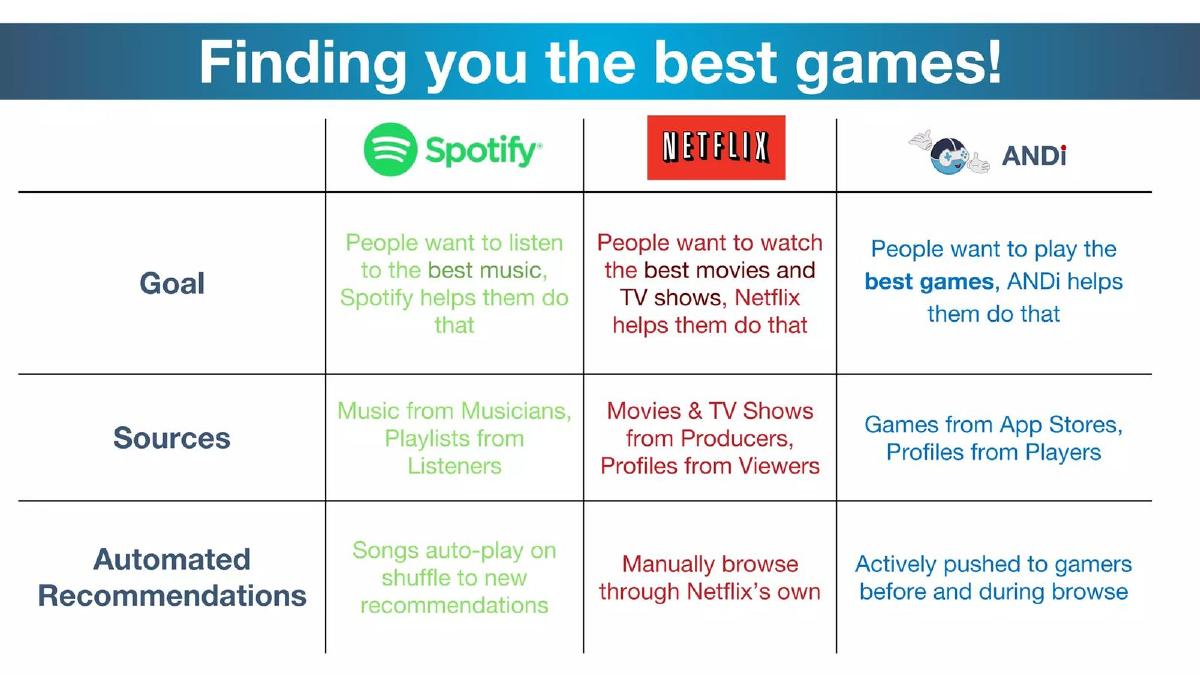
This slide uses a comparison table to position ANDi alongside Spotify and Netflix. It defines the 'Goal' as helping people find the best games, just as Spotify does for music and Netflix for movies. The 'Sources' for ANDi are listed as 'Games from App Stores' and 'Profiles from Players.' Crucially, it differentiates its 'Automated Recommendations' by stating they are 'Actively pushed to gamers before and during browse,' contrasting this with Netflix's manual browsing model.
Slide 3: Technology Stack
ANDi provides a high-level overview of its infrastructure. The stack is split into two components: 'Data Collection' using Google Cloud SQL (Database) and a 'Recommendation Engine' powered by Machine Learning written in Java and Python. This slide is intended to signal technical competence and scalability to investors, though it lacks specific details on the algorithms or data points used.
Slide 4: Product Timeline
The timeline tracks development from March 2016 to a future outlook of 18-24 months. Key milestones include:
August 2016: V1 - Base App · April 2017: Beta Test Suite · January 2018: Automated Recommendations · March 2018: Developer Campaigns · 12-18 months: Apple iOS launch · 18-24 months: AR & VR integration
One notable error on this slide is the placement of 'User Engagement' in March 2016, which appears out of chronological order after December 2016 milestones.
Slide 5: Global Mobile Gaming Market
This slide presents market sizing data. It lists 825 million active gamers on Android (out of 1.1 billion users) and 350 million on iOS. Revenue figures for 2016 are cited at £11 billion for Android and £10 billion for iOS. By 2020, the company projects these will grow to £18 billion and £17 billion respectively. A callout box notes that gaming revenue is growing at 8% year-on-year, which they claim is faster than the Chinese and Indian economies.
Slide 6: Business Model
Industry Recommendations: Charging a fixed fee (£x) for slots in the 'Featured Section' for a set number of days. · Marketing Campaigns: A CPI (Cost Per Install) model charging developers £0.15 to £3.00 per install. · Marketing Analytics: A tiered data service where the 'Premium package' provides demographics like age, gender, and even location-based context (travelling, at home, at work).
Slide 7: Why Now?
This slide addresses the market timing. It argues that 'Game discovery is a growing problem' that is getting worse for both users and developers. It also claims that AI and Machine Learning have finally 'advanced to provide us with the capability' to make these recommendations at scale. This is a standard 'market tailwinds' slide designed to create urgency.
Slide 8: Further Applications of ANDi
ANDi suggests that their recommendation engine is horizontal. They propose three future verticals:
Other Apps: Targeting education and lifestyle apps, noting that 60% of app installs are not games. · Investment Assistant: A B2B tool to match startups with investors by scraping AngelList and Crunchbase, taking a commission on investments. · Gambling/Food & Drink: Suggesting bets in real-time or recommending festival food by syncing with user calendars.
This slide may be perceived as 'visionary' by some, but others might see it as a lack of focus for a seed-stage startup.
Slide 9: The Ask (12-18 Months Runway)
The final slide in this set details the funding requirement: £350,000. The funds are intended to:
Hire a part-time designer and a video intern. · Expand the technical team for faster iOS development. · Run business and gaming events. · Prepare for a subsequent round of £1.5 million to £2 million in 12-18 months.
What Works Well
Clear Analogies: By comparing themselves to Spotify and Netflix, the founders bypass a long explanation of how recommendation engines work. Investors immediately understand the user experience they are aiming for. Specific Pricing: Unlike many early-stage decks that remain vague on revenue, ANDi provides specific CPI ranges (£0.15 - £3.00) and a clear tiered structure for their analytics product. Visual Roadmap: The timeline, despite a chronological typo, gives a clear sense of the product's evolution from a simple app to a complex AI-driven platform.
What Is Missing
The Team: In the provided slides, there is no mention of the founders, their backgrounds, or their technical expertise. For a seed round, the 'who' is often as important as the 'what.' Traction Metrics: While the roadmap mentions a 'Beta Test Suite' and 'User Engagement,' there are no hard numbers. Investors would want to see current monthly active users (MAU), retention rates (Day 1, Day 7, Day 30), and the number of developer partners already signed up. Competitive Landscape: The deck identifies the problem of discovery but does not acknowledge existing competitors like the App Store's own editorial teams, specialized discovery apps, or social media advertising (Facebook/Instagram), which are the primary ways developers currently solve the discovery problem.
Founder Takeaways
Focus the Vision: Slide 8 (Further Applications) attempts to show a massive TAM by suggesting the tech can work for gambling and venture capital. However, for a £350k seed round, this can look like a distraction. Founders should ensure their 'future vision' doesn't undermine the credibility of their 'current execution.' Validate the 'Why Now': The claim that AI has 'now advanced' to make this possible is a common trope. A stronger slide would explain what specifically changed in the last 12 months (e.g., specific API access or new ML libraries) that makes this viable today when it wasn't two years ago. Connect the Ask to Milestones: Slide 9 does a good job of listing what the money will buy, but it should more explicitly state what metrics that money will achieve (e.g., 'Reach 100k MAU' or 'Onboard 50 developers') to justify the next £1.5m round.
Frequently asked questions
- What is the core problem ANDi Games is trying to solve?
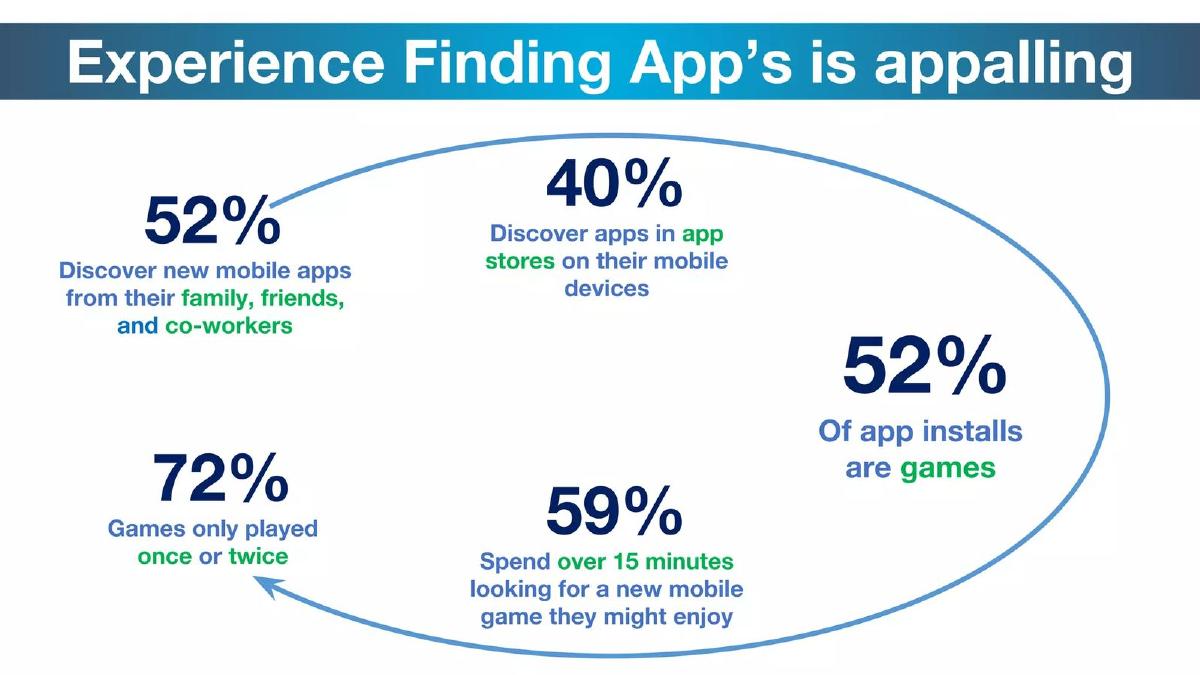
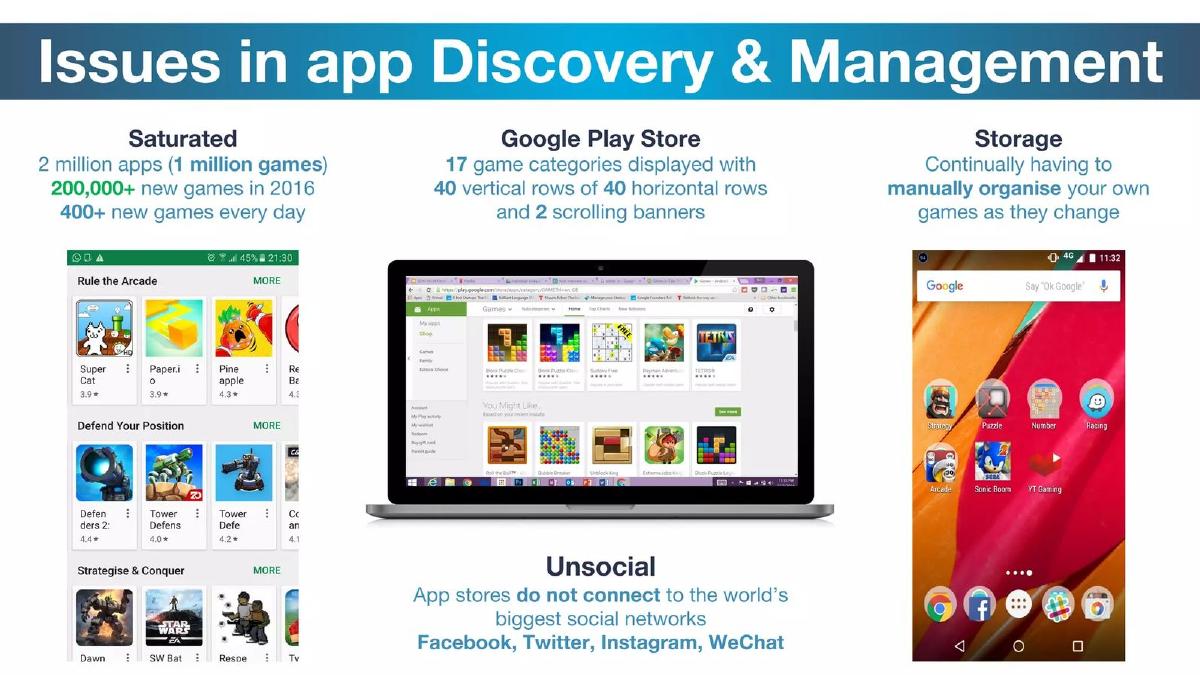
- According to Slide 7, the company identifies 'game discovery' as a growing, suboptimal problem for both mobile users and developers. They argue that as the volume of apps increases, finding quality content becomes harder for players, while developers struggle to reach their target audience effectively. ANDi aims to solve this by using AI and machine learning to provide personalized recommendations at scale.
- How does ANDi Games plan to make money?
- The business model detailed on Slide 6 is three-fold. First, they charge developers a cost-per-install (CPI) fee between £0.15 and £3.00. Second, they offer 'Featured Section' slots for a fixed fee. Third, they provide marketing analytics, with a 'Premium package' that offers deep demographic breakdowns, including user location (e.g., at home vs. at work) and other installed games.
- What is the technical foundation of the product?
- Slide 3 outlines a relatively standard technology stack. Data collection is handled via Google Cloud SQL databases. The core intellectual property, the 'Recommendation Engine,' is built using Machine Learning frameworks in Java and Python. This engine is designed to 'actively push' recommendations to gamers rather than requiring manual browsing (Slide 2).
- What are the company's plans for the £350,000 investment?
- As shown on Slide 9, the funds are earmarked for a 12-18 month runway. Specific allocations include hiring a part-time designer and a video intern, expanding the technical team to accelerate the Apple iOS launch, and running gaming events. The goal is to reach a position where they can raise a larger Series A round of £1.5m to £2m.
- Does the deck show any proof of market traction?
- The provided slides focus more on market potential and product roadmap than historical performance. Slide 4 mentions 'User Engagement' in March 2016 and a 'Beta Test Suite' in April 2017, but the deck does not list specific numbers for Daily Active Users (DAU), total downloads, or actual revenue generated to date.