Miche is an online contact directory designed to streamline the event planning process within the MICE industry. The 9-slide deck, published in 2021, identifies core pain points such as time-consuming vendor searches and outdated information. It positions itself as a bridge between millennial planners and seasoned practitioners. However, the presentation is structurally incomplete for a professional fundraise. It provides global market figures, such as a £150 billion MICE market value, but fails to explain how the platform generates revenue. There are no slides covering unit economics, compet…
Key takeaways
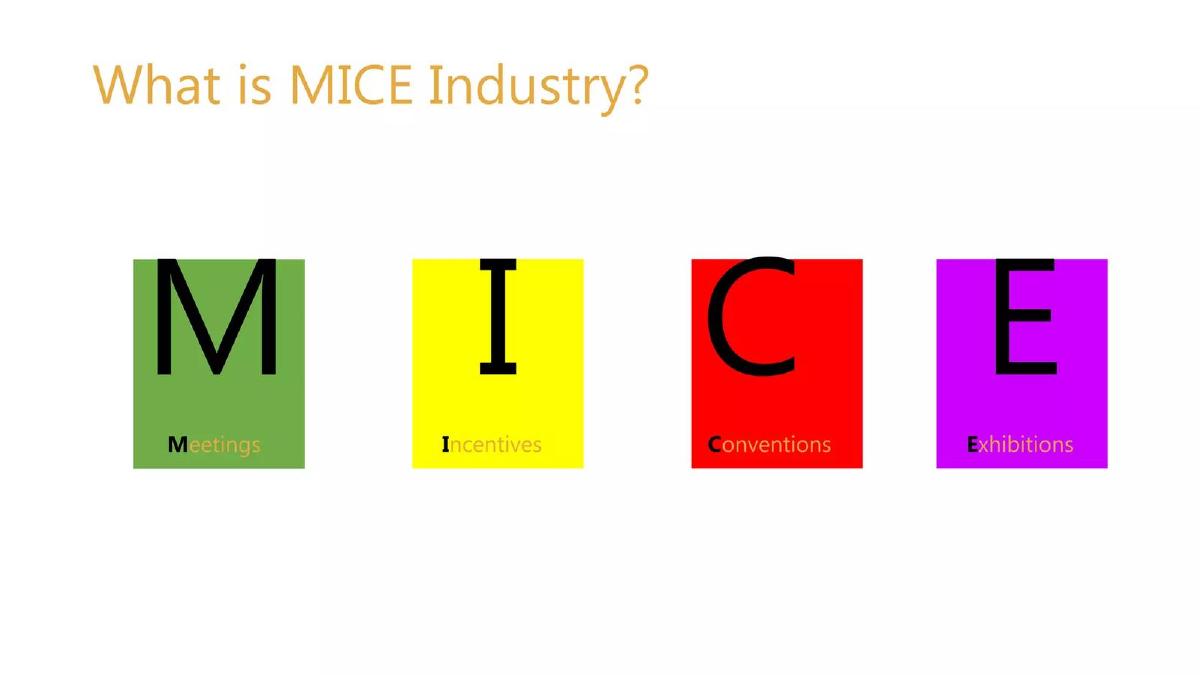
- The company identifies the MICE industry as its target, defined on slide 5 as Meetings, Incentives, Conventions, and Exhibitions.
- Miche positions itself as a solution to the 'lack of information' and 'too many steps' involved in traditional event planning (slide 6).
- The deck claims a global MICE market value of £150 billion and identifies 200,000 suppliers globally (slide 8).
- The platform's value proposition relies on daily data updates and filtered information to ensure vendor safety (slide 7).
- The founder, Andrea Wiwandhana, cites experience in music events and activation agencies as the primary team qualification (slide 9).
- The deck contains no information regarding a business model, revenue streams, or monetization strategy.
- There is a total absence of a 'The Ask' slide, leaving investors unaware of the funding goal or use of proceeds.
- No competitive analysis is provided beyond a general statement that 'most event directories fail to engage' (slide 2).
Executive Summary
Miche is a niche directory platform targeting the MICE (Meetings, Incentives, Conventions, and Exhibitions) sector. The deck, authored by Andrea Wiwandhana, serves as an introductory overview of the company's mission to modernize event planning. While the deck successfully identifies a large global market and specific workflow pain points, it functions more as a project proposal than a professional investment vehicle. It lacks the financial rigor, competitive positioning, and monetization strategy required by institutional investors.
Slide 1: Title Slide
The deck opens with the company logo—a stylized mouse icon—and the text "MICHE - A Pitch Deck." It attributes the presentation to Andrea Wiwandhana. The branding is consistent but minimalist, providing no immediate hint at the industry or value proposition other than the name.
Slide 2 & 3: The Concept Overview
These slides are identical in content but differ in visual layout. Slide 2 uses a clean white background, while Slide 3 uses a yellow text box that obscures the logo. The content defines Miche as an "online contact directory for event organisers to share and search for expertise on destinations, venues, and suppliers." It identifies the target audience as all parties in the planning process, including caterers and decorators. The "secret sauce" is described as bridging the gap between millennials and seasoned practitioners through an easy-to-use interface and up-to-date contact information.
Slide 4: Contact Information
Slide 4 functions as a business card slide. It labels Miche as an "Event Marketplace" and provides a URL (www.miche.com), an email address, and a phone number with an Indonesian country code (+62). It also features a headshot of the CEO, Andrea Wiwandhana. Placing contact information this early in a deck is unconventional, as it usually appears at the end after the pitch has been made.
Slide 5: Industry Definition
Titled "What is MICE Industry?", this slide uses a colorful block layout to define the acronym: Meetings, Incentives, Conventions, and Exhibitions. This is an educational slide intended to ensure the investor understands the specific vertical Miche is targeting. While helpful for those outside the travel and events space, it does not provide proprietary insight.
Slide 6: The Problem
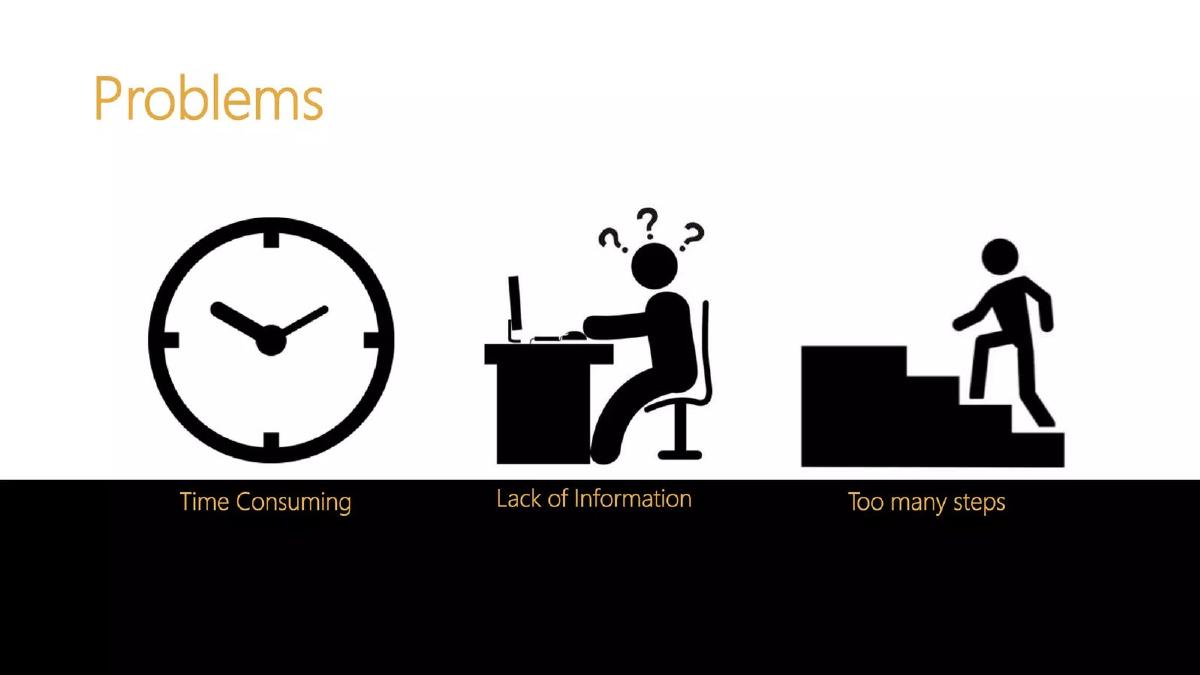
This slide uses three icons to illustrate the core issues Miche aims to solve: "Time Consuming," "Lack of Information," and "Too many steps." The imagery is generic (a clock, a person at a computer with question marks, and a person climbing stairs), but it effectively communicates that the current event planning workflow is inefficient and frustrating for users.
Slide 7: The Solution
Miche proposes a three-pillar solution: "Up-to-date" data (updated daily), "Filtered" information to meet specific user needs, and "Safety." The safety component is defined as having "no secret additional cost to scam either user or customer." This implies that transparency and data verification are the primary value drivers of the platform.
Slide 8: Market Size
Slide 8 provides the most quantitative data in the deck. It lists the global MICE market value at £150 Billion . It also provides top-of-funnel metrics: 309,500 people with 'Event' in their job title on LinkedIn, 25,000 agencies globally, and 200,000 suppliers globally. The bottom half of the slide features a collage of travel and event-related imagery (airplanes, catering, venues) to reinforce the industry focus.
Slide 9: The Team
The final slide introduces the founder, Andrea Wiwandhana. His credentials include working on music events, serving as an account executive for an activation agency, and managing an online shop (tablet.co.id) with over 120,000 Facebook likes. Notably, the slide states he is "Currently unemployed, focus on his business" and has "No social media, focus on his life." While intended to show dedication, the mention of unemployment and lack of social media presence may be viewed as unusual in a tech-focused fundraising context.
What Miche Does Well
The deck is successful in its simplicity. It does not overwhelm the reader with technical jargon and clearly identifies a massive, often overlooked industry (MICE). By focusing on the "millennial vs. seasoned practitioner" gap, it suggests a demographic shift that could justify a new, modern interface for a legacy industry. The market slide (Slide 8) provides specific, albeit high-level, numbers that give a sense of the scale of the opportunity.
Missing Elements
The most critical omission is the Business Model . There is no explanation of how Miche generates revenue. Without a clear path to profitability—whether through commissions, subscriptions, or lead generation fees—investors cannot evaluate the startup as a viable business. Furthermore, the deck lacks a Competitive Landscape . It mentions that "most event directories fail," but it does not name specific competitors or explain why Miche’s technology or network effect is superior. There is also no Financial Projections slide or Product Roadmap , leaving the current state of the software (MVP vs. concept) unclear. Finally, there is no Ask ; the deck does not state how much money is being raised or how it will be spent.
Founder Takeaways
Define the Revenue Stream: Never leave an investor guessing how you make money. Even a simple "Revenue Model" slide listing three potential streams is better than silence. · Quantify Traction: If the platform is live, include user numbers, vendor sign-ups, or search volume. If it is not live, include a timeline for the MVP launch. · Professionalize the Team Slide: While personal anecdotes can show character, phrases like "currently unemployed" should be replaced with "Full-time Founder" to sound more professional. Highlight specific skills (coding, sales, operations) rather than social media habits. · Include an 'Ask': A pitch deck is a tool for a transaction. Clearly state the amount of capital required and the milestones that capital will help the company achieve.
Frequently asked questions
- What is the primary problem Miche is trying to solve?
- According to slide 6, Miche addresses three main problems in the event planning industry: the time-consuming nature of vendor searches, a general lack of reliable information, and the excessive number of steps required to finalize event logistics. The deck suggests that existing directories fail to drive return traffic because they are not engaging or up-to-date.
- How does Miche plan to make money?
- The deck does not contain a business model or revenue slide. While slide 4 refers to Miche as an 'Event Marketplace,' there is no explanation of whether the company intends to charge subscription fees to vendors, take a commission on bookings, or utilize an advertising-based model. This is a significant omission for a pitch deck.
- What is the size of the market Miche is targeting?
- Slide 8 values the global MICE market at £150 billion. It further breaks down the market opportunity by noting there are 309,500 people with 'Event' in their job title on LinkedIn, 25,000 agencies globally, and 200,000 suppliers globally. These figures represent the Total Addressable Market (TAM) but lack a Serviceable Obtainable Market (SOM) calculation.
- Who is behind the company?
- The team consists of a single founder, Andrea Wiwandhana, who serves as CEO and 'Chief Travel Itinerary Maker.' His background includes work on music events, experience as an account executive for an activation agency, and running an online shop with 120,000 Facebook likes. Slide 9 notes he is currently focusing on the business full-time.
- What is missing from this pitch deck to make it investment-ready?
- The deck lacks several essential components: a business model, a competitive landscape analysis, a financial forecast, a product roadmap, and a clear funding ask. Additionally, there is no mention of current traction, user numbers, or a technical co-founder, which are typically required for a seed-stage technology startup.