HiBob’s Series D deck is a masterclass in narrative positioning, moving away from granular feature lists to focus on the 'World of Work' transformation. By framing the HRIS evolution as a shift from 1990s 'Systems of Record' to 2020s 'Systems of Engagement' (Slide 6), HiBob justifies its premium placement in the mid-market. The deck leans heavily on social proof, citing third-party data from Gallup (Slide 7) and a glowing testimonial from VaynerMedia (Slide 8). While it lacks the raw financial metrics typically expected in a late-stage round, the deck succeeds by selling a vision of global, h…
Key takeaways
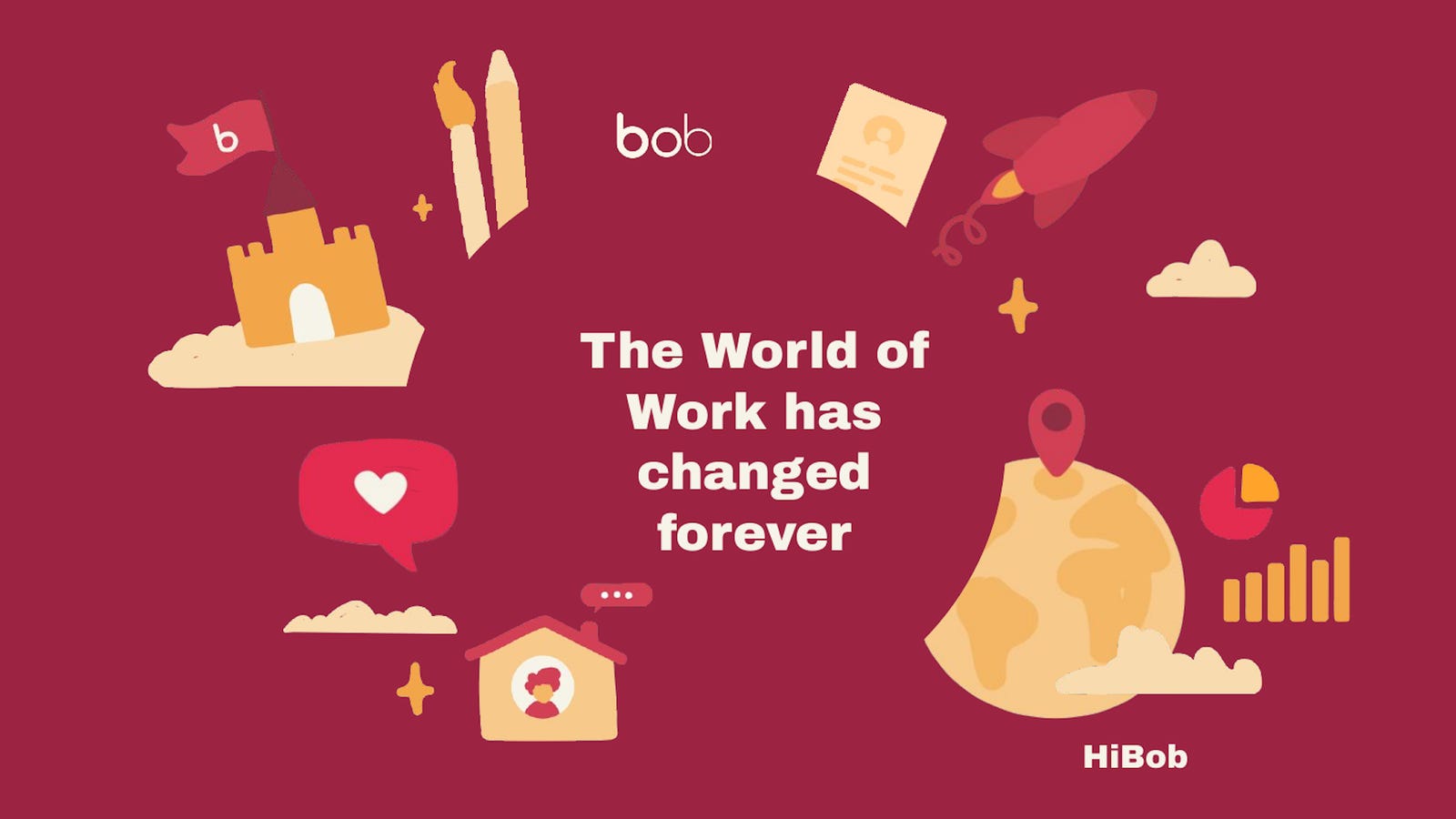
- The deck frames the market opportunity around the permanent change in the 'World of Work' (Slide 1).
- HiBob defines its target market specifically as 'M-M-M companies' (Slide 2).
- The company positions itself as a 'System of Engagement' for the 2020s, contrasting it with 1990s 'Systems of Record' (Slide 6).
- Third-party validation is used to quantify impact, citing a 23% increase in profitability from HR tech (Slide 7).
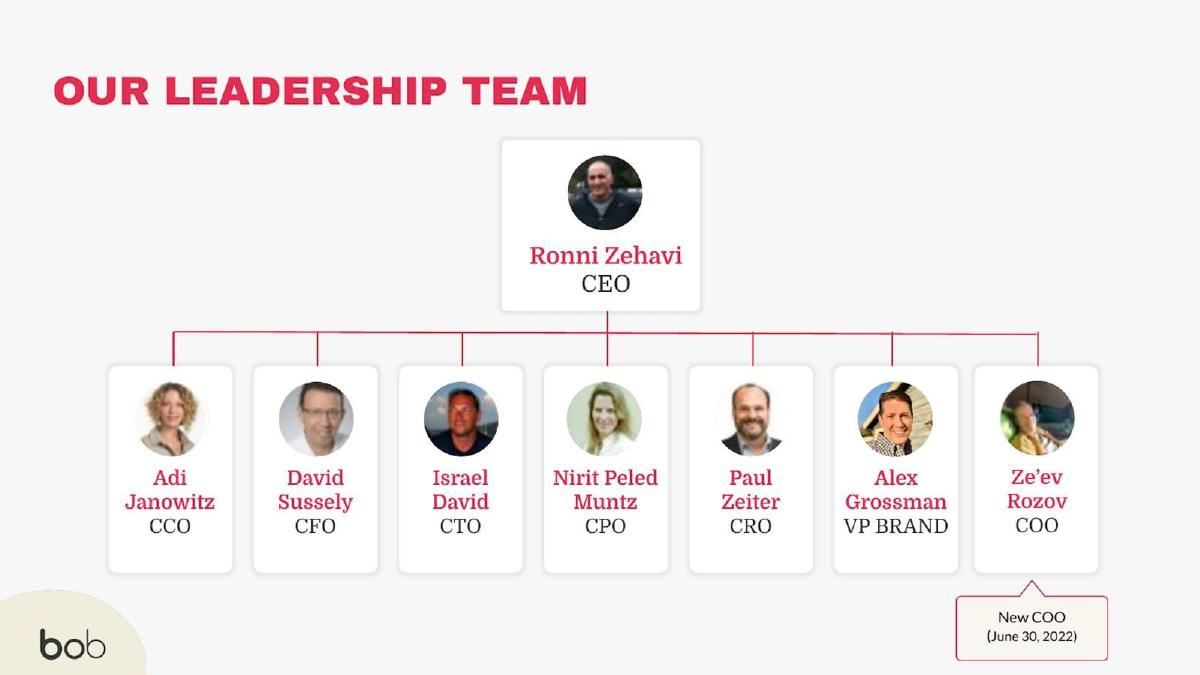
- The leadership slide highlights a new COO appointment as of June 30, 2022, signaling organizational scaling (Slide 5).
- Geographic diversity is a core theme, with physical hubs in New York, London, Tel Aviv, Amsterdam, Sydney, and Berlin (Slide 4).
- The deck emphasizes 'Culture focus' as a key differentiator, moving beyond standard administrative HR functions (Slide 3).
- A high-profile testimonial from VaynerMedia’s Chief Heart Officer provides qualitative proof of product-market fit (Slide 8).
The Narrative Power of the HiBob Series D Deck
HiBob’s 2022 Series D deck, which preceded a $150M raise, is a departure from the metric-heavy presentations often seen in late-stage fundraising. Instead of leading with ARR growth or NRR, HiBob leads with a thesis: the world of work has fundamentally changed, and legacy software is no longer fit for purpose. This teardown examines how they used narrative positioning to secure one of the largest HR tech rounds of the year.
Slide 1: The Thesis Statement
The deck opens with a bold, illustrative slide stating, "The World of Work has changed forever." The imagery—rockets, globes, and home icons—immediately signals a focus on the remote/hybrid transition. By starting here, HiBob isn't just selling software; they are selling a solution to a global cultural shift. This sets the stage for why their platform is a necessity rather than a luxury.
Slide 2: The Mission and the 'M-M-M' Target
Slide 2 defines the mission: "Be the global leader of the M-M-M companies, replacing legacy HRIS, and modernizing the way people work." The use of 'M-M-M' (likely Mid-Market Modern) is a strategic choice to narrow their focus. It tells investors exactly who their customer is: companies that have outgrown basic tools but find enterprise legacy systems too cumbersome. The illustration of diverse employees across different flags (Iceland, USA, Germany, Sweden) reinforces their global capability.
Slide 3: Key Differentiators and Industry Validation
Slide 3 attempts to answer "Why HiBob?" through six pillars: Core HR, Made for all, Best-in-class UX/UI, Advanced analytics, High configurability, and Culture focus. Notably, "Culture focus" is highlighted as a core engagement engine. The bottom of the slide is anchored by five industry awards from 2021 and 2022, including "Mid-Market Leader Europe Winter 2022" from G2. This provides immediate third-party validation for the claims made in the text boxes.
Slide 4: Global Footprint
To justify a Series D valuation, a company must demonstrate global scale. Slide 4, titled "WHERE WE (HYBRID) WORK," lists New York, London, Tel Aviv, Amsterdam, Sydney, and Berlin. This geographic spread shows that HiBob has the infrastructure to support global enterprises and the local presence to navigate different regulatory environments, a key requirement for HR software.
Slide 5: Leadership and Organizational Maturity
The leadership slide features CEO Ronni Zehavi and seven other executives. A specific callout is made for the "New COO (June 30, 2022)," Ze'ev Rozov. In a Series D round, investors look for 'adults in the room' who can scale a company toward an IPO. Highlighting a new COO appointment suggests the company is actively strengthening its operational backbone for the next stage of growth.
Slide 6: The Evolution of HRIS
This is perhaps the most important strategic slide in the deck. It visualizes the history of HR software as three concentric circles:
System of record (1990s): Back-office employee ID records. · System of resources (2010s): HR automation of payroll and time management. · System of engagement (2020s): People and team-centric tools for communication.
By positioning HiBob as the "System of engagement (2020s)," they relegate competitors to the '90s or 2010s, making legacy systems look obsolete by definition.
Slide 7: Quantifying the Business Impact
Slide 7 moves from theory to business outcomes, citing a 2021 Gallup report. It claims HR tech leads to:
18% Turnover reduction. · +18% More productivity. · +23% Higher profitability.
While these are industry-wide figures rather than HiBob-specific metrics, they serve to expand the Total Addressable Market (TAM) in the investor's mind by showing that HR software is a profit driver, not just a cost center.
Slide 8: The Power of the Testimonial
The deck concludes its narrative arc with a quote from Claude Silver, Chief Heart Officer at VaynerMedia. She states that 2020 pushed HR into the spotlight and that HiBob enabled them to keep "1,000 employees" informed and engaged. Citing a well-known brand like VaynerMedia and a specific headcount (1,000) proves that HiBob can handle the 'M-M-M' companies they targeted on Slide 2.
Slide 9: The Closing
The final slide is a simple "Thank you" with a brand-aligned illustration. It maintains the clean, modern aesthetic that the company claims as a differentiator (UX/UI) on Slide 3.
What HiBob Does Exceptionally Well
HiBob excels at category creation . Instead of fighting for a share of the 'HR Software' market, they are defining a new category: the 'System of Engagement.' This is a classic move for high-valuation SaaS companies. By framing the problem as a generational shift (Slide 6), they make the transition to their platform feel inevitable.
The visual consistency of the deck is also noteworthy. The use of custom illustrations rather than stock photos or screenshots creates a 'premium' feel that aligns with their claim of having 'Best-in-class UX/UI.' For an HR tool, where employee adoption is the primary hurdle, looking 'friendly' and 'modern' is a legitimate competitive advantage.
What is Missing from the HiBob Deck
As a Series D deck, the most glaring omission is hard financial data . There is no mention of:
Annual Recurring Revenue (ARR) or growth rates. · Net Revenue Retention (NRR) or churn figures. · Customer acquisition costs (CAC) or LTV/CAC ratios. · A specific 'Ask' or use of funds.
While it is common for these details to be moved to a secondary 'Data Room' for late-stage rounds to prevent leaks, their total absence in the primary narrative deck is a bold choice. It suggests that HiBob was in a position of strength where they could lead with vision and let the numbers speak for themselves in the follow-up meetings.
Founder Takeaways: What to Copy
1. Use the 'Evolution' Framework: If you are entering a crowded market, don't just say you are better. Use a slide like HiBob’s Slide 6 to show how the entire category has evolved and why your competitors are stuck in a previous era.
2. Anchor with Third-Party Data: If your own case studies are still developing, use macro-data from reputable sources like Gallup (Slide 7) to prove the value of the problem you are solving. It builds a logical bridge for the investor before you present your specific solution.
3. Target a Specific Persona: HiBob didn't say they were for 'everyone.' They said they were for 'M-M-M companies.' Defining your 'Ideal Customer Profile' (ICP) so clearly helps investors understand your go-to-market strategy and how you will win against broader, less-focused incumbents.
Frequently asked questions
- Why does the deck focus so much on the 'Evolution of HRIS'?
- At Series D, investors need to know why a new player can unseat incumbents like Workday or SAP. By categorizing legacy tools as 'Systems of Record' from the 1990s (Slide 6), HiBob creates a logical gap in the market for a 'System of Engagement' designed for the 2020s hybrid workforce.
- What are 'M-M-M companies' mentioned on Slide 2?
- While not explicitly defined in the text, this typically refers to 'Mid-Market Modern' companies. HiBob is signaling that they aren't chasing micro-businesses or massive legacy enterprises, but rather the fast-growing, tech-forward mid-market that needs sophisticated but agile tools.
- Is it normal for a Series D deck to lack financial data?
- It is unusual for a full due diligence deck, but common for a 'teaser' or 'narrative' deck used to anchor the vision. HiBob likely shared detailed financials in a separate data room, using this deck to align investors on the cultural and market shift they are leading.
- How does HiBob use social proof to build credibility?
- They use a three-pronged approach: industry awards (G2, HR Tech Awards on Slide 3), macro-economic data (Gallup on Slide 7), and a specific customer success story (VaynerMedia on Slide 8). This validates the product from the perspective of analysts, the market, and the user.
- What does the 'Where we (Hybrid) Work' slide communicate to investors?
- Slide 4 shows offices in major global hubs like Sydney, London, and New York. This demonstrates that HiBob is not a regional player but a global entity capable of supporting multi-national clients, which justifies a higher valuation multiple.