This teardown analyzes SendGrid’s 2009 seed deck, which successfully raised $750k by defining the 'transactional email' category. Despite dated design, the deck excels through its B2D focus, structured storytelling, and undeniable traction data. It serves as a masterclass in turning technical complexity into a simple, scalable SaaS business model that eventually led to a $3 billion acquisition by Twilio.
Key takeaways
- Focus on a painful niche by targeting a specific user and a specific, costly problem like transactional email deliverability.
- Use a repetitive 'Problem -> Solution' structure to hammer the value proposition home until it is impossible to ignore.
- Present a clear, tiered SaaS pricing model to show investors a predictable, recurring revenue machine with expansion potential.
- Leverage traction as the ultimate argument to de-risk the investment by confirming product-market fit and momentum.
- Tie the fundraising ask to specific, measurable milestones like customer count and monthly recurring revenue targets.
The Moment: Late 2009, The Dawn of the API Economy
To understand the SendGrid deck, you have to place yourself in late 2009. The world was crawling out of the Global Financial Crisis, but the tech sector was buzzing with a new paradigm: the cloud. Amazon Web Services (AWS) was no longer a novelty; it was becoming the default infrastructure for ambitious startups. This gave rise to the API economy and the Platform-as-a-Service (PaaS) movement. Companies like Heroku (founded 2007) were making it easy to deploy applications, while Twilio (founded 2008) was turning complex telecom infrastructure into a few lines of code. This was the era of Business-to-Developer (B2D).
Developers were being empowered as key decision-makers. They would rather swipe a credit card for a simple, reliable API than wait for IT to configure an internal server. SendGrid stepped directly into this zeitgeist. They saw that while developers were building amazing applications, a crucial and surprisingly difficult piece was being neglected: making sure critical emails—password resets, shipping notifications, welcome messages—actually made it to the inbox. This was not a glamorous problem, but it was a costly and painful one.
This deck, or a very similar version, was used to raise a $750,000 Seed round in December 2009. The round was led by Foundry Group and included Highway 12 Ventures and prominent angels like David Cohen of Techstars. The deck itself asks for a modest $300k, a common strategy to anchor the conversation, demonstrate capital efficiency, and create competitive tension that can increase the final round size. It's a document perfectly tailored for its moment: a technical solution for a technical audience, delivered with the straightforward clarity that engineers—and smart investors—appreciate.
Slide-by-Slide Teardown
The Problem: It's Not Just Email, It's Transactional Email
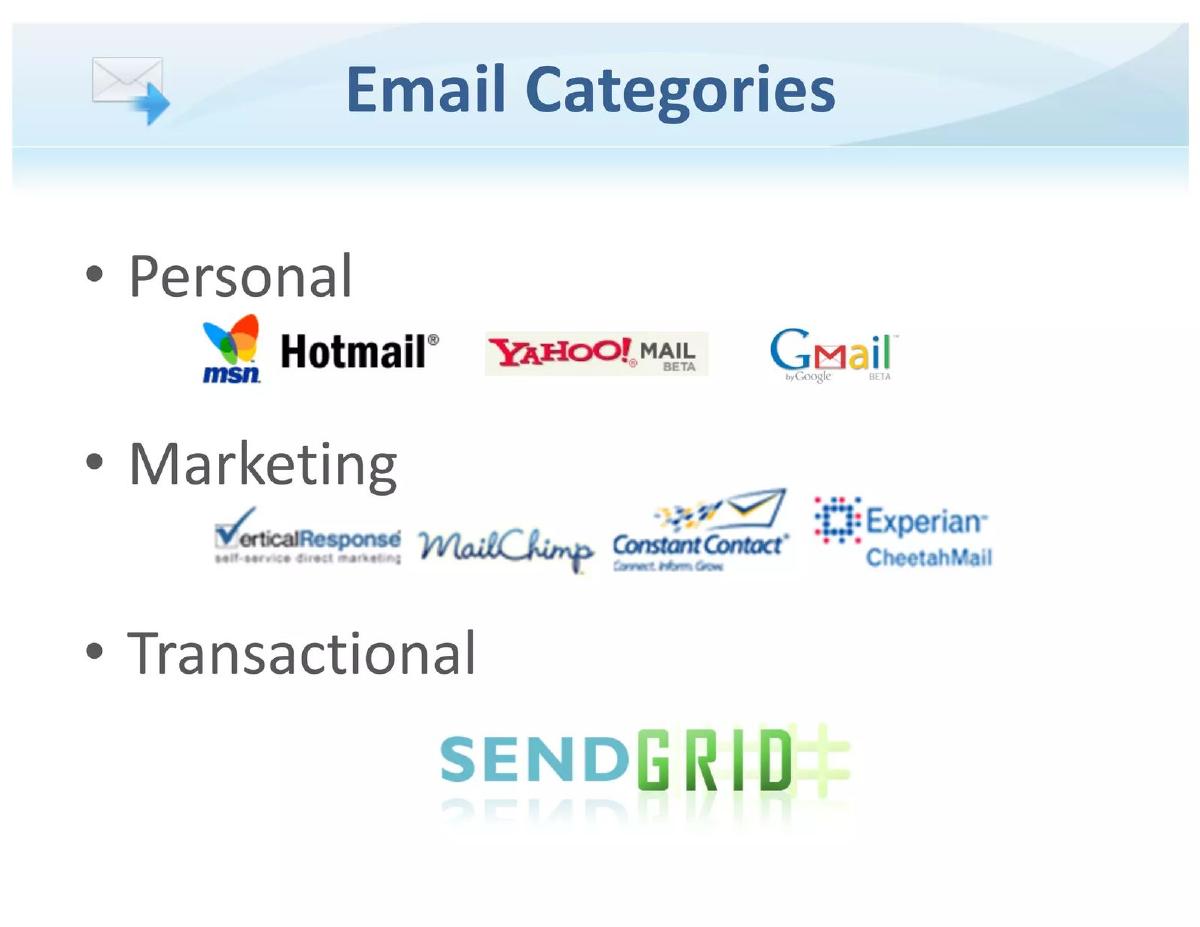
The deck begins with masterful framing. Instead of just saying "email is hard," Slides 2-7 carefully educate the investor and create a new category that SendGrid can own. The first move is segmentation: email isn't a monolith, but is composed of Personal, Marketing, and a third, crucial category: Transactional. This immediately narrows the focus and signals expertise.
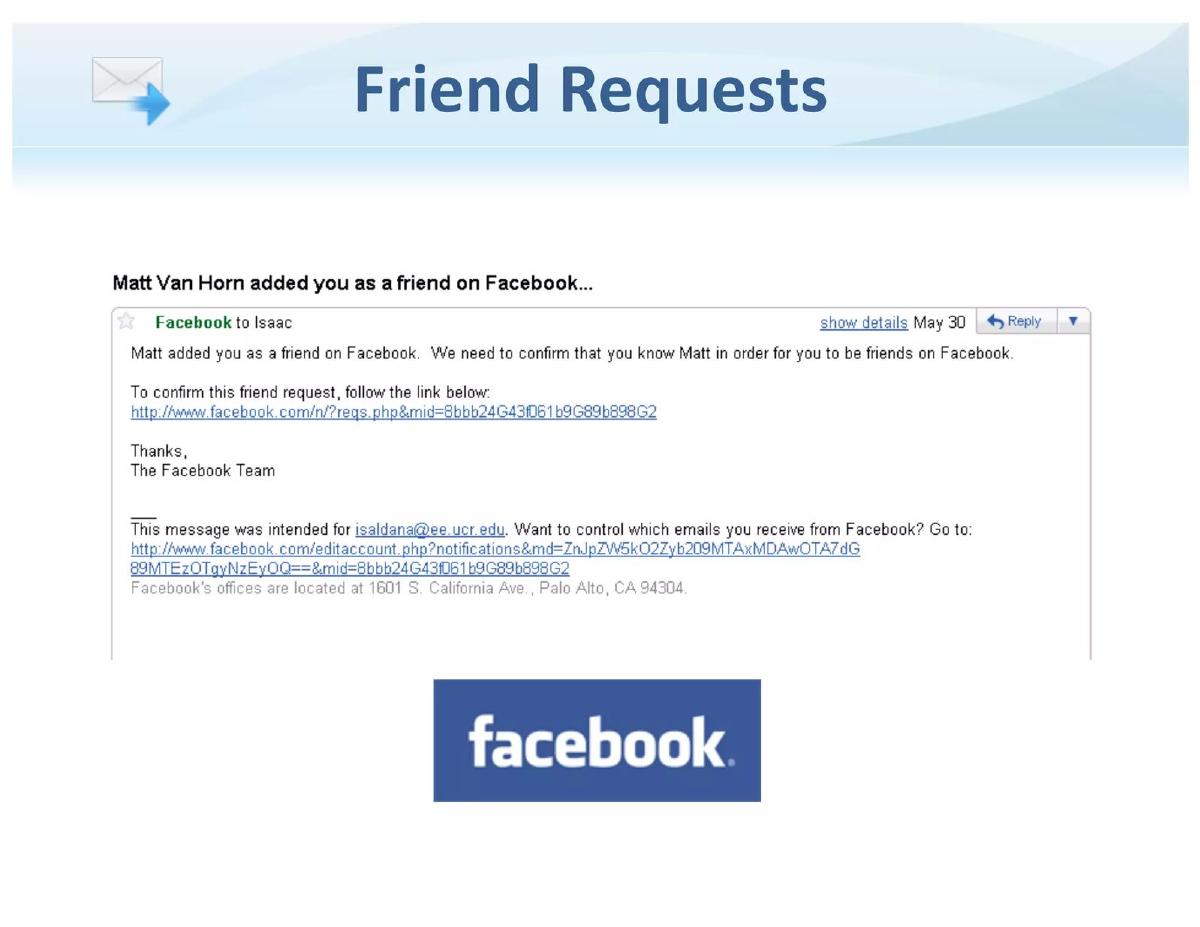
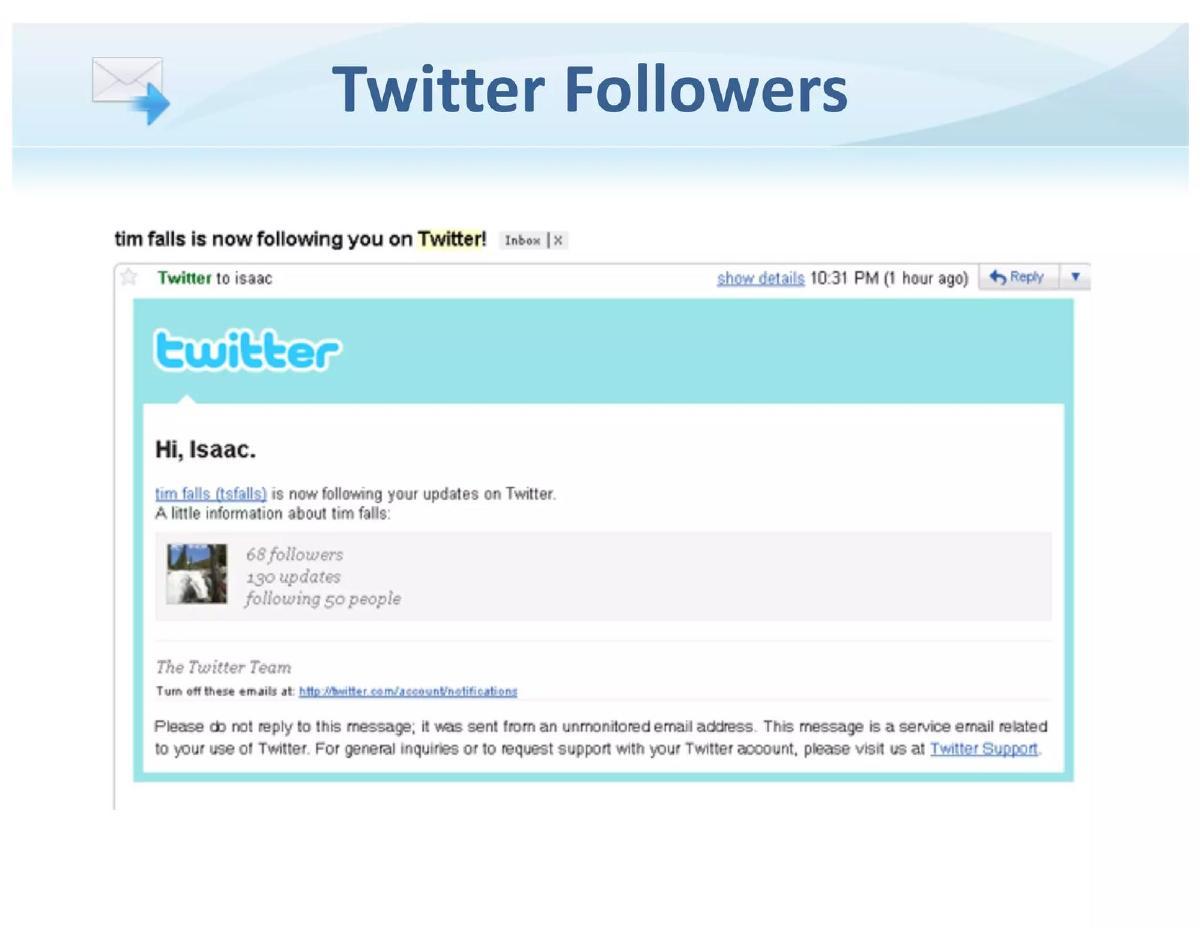
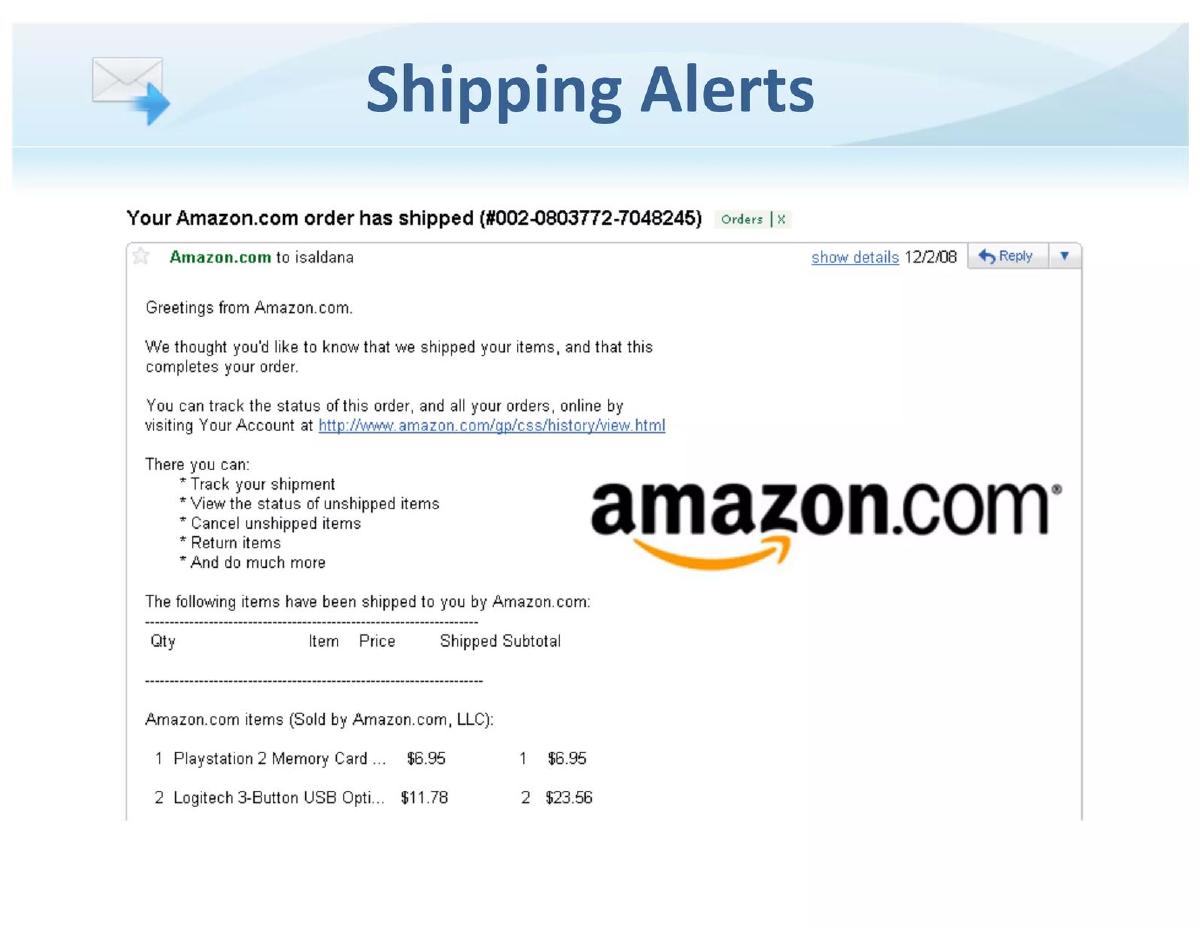
The deck doesn't assume the audience knows what "transactional email" means. It uses three full slides with visual examples that everyone in the room would recognize: a Facebook friend request, a Twitter follower alert, and an Amazon shipping notification. This makes the concept concrete and implicitly establishes its high value. These aren't spam; they are mission-critical communications that users expect and rely on.
With the stage set, Slide 7 delivers the payload on a single, clean slide. The problems with transactional email are fourfold:
Deliverability: Emails getting lost or sent to spam. · Scalability: The infrastructure headache of sending more emails. · Lack of insight: Not knowing what happens after you hit 'send'. · Time consuming: The engineering overhead of managing this mess.
This slide is the foundation for the entire pitch. It’s a clear, concise, multi-faceted problem statement that the rest of the deck will systematically dismantle and solve. Every subsequent solution slide maps directly back to one of these four pain points.
The Solution: A Four-Pronged Attack on a Technical Nightmare
The core of the deck (Slides 8-18) is a brilliant exercise in structured storytelling. Rather than a single, monolithic solution slide, SendGrid presents four mini-narratives, each echoing the "Problem -> Solution" pattern established earlier. It’s repetitive in structure, which makes it incredibly effective and easy to follow.
1. Deliverability (Slides 9-10): They start with the most expensive problem. They quantify the pain with a statistic—"20% non-delivery is typical"—and then attach a dollar value with the eBay example: a 1% failure rate could cost $14 million. This anchors the problem in real financial terms. The solution slide is a stroke of genius. It presents a word cloud of technical jargon (SPF, DKIM, DomainKeys, Feedback Loop). This visual complexity serves a specific purpose: it tells the investor, "This is a chaotic, specialized mess that you do not want to understand or manage." SendGrid positions itself as the "expert system" that absorbs this complexity. The payoff is a simple, powerful promise: "On average users increase 20% deliverability by using SendGrid." They've turned a liability into a measurable asset.
2. Scalability (Slides 11-12): Here, they tap directly into the cloud computing trend. The problem is framed in terms of physical and operational burdens: more hardware, more software configuration, more server maintenance. The solution is elegant and perfectly timed for 2009: "SendGrid is a cloud-based service that scales on demand." This was the modern answer to infrastructure problems, and it positioned them as forward-thinking and aligned with developer preferences.
3. Insight (Slides 13-14): This is a classic case of "show, don't tell." The problem slide states the obvious: there's a lack of insight after an email is sent. The solution slide is simply a screenshot of their metrics dashboard. This is infinitely more powerful than a list of bullet points. It makes the abstract benefit of "metrics" tangible. An investor can immediately see the value of tracking opens, clicks, bounces, and spam reports in a clean interface.
4. Time (Slides 15-18): This section targets the direct engineering cost. The problems are specific developer chores: complying with CAN-SPAM, managing unsubscribes, and adding corporate branding to plain-text emails. The solution is demonstrated with a simple "Before/After" sequence. The deck shows how their "filters" can automatically enhance a basic email with proper branding and tracking links. This is essentially a mini product demo embedded in the pitch, showing a tangible, time-saving feature that any CTO would instantly appreciate.
Market & Model: Proving the Opportunity
After establishing the pain and the solution, the deck pivots to the business case.
Market Size (Slide 19): Objectively, this is the weakest slide in the deck. Instead of a traditional TAM/SAM/SOM analysis in dollars, it presents email volume: 600 million transactional emails per day. This is a proxy metric, not a true market size. For a modern pitch, this would be a red flag. However, it achieved its primary goal: communicating that the scale of the activity was astronomically large. The implicit argument is that by monetizing even a tiny fraction of this massive stream, you can build a venture-scale business. The sheer size of the number, combined with the traction slide to come, made it a passable argument.
Competition (Slide 21): This slide uses the classic quadrant/grid format to great effect. By defining the axes as "Services," "Products," and "SendGrid," they carve out a new category for themselves where they are, by definition, the leader. It pits them against consultants ("Services") and on-premise software ("Products"), and visually communicates that only SendGrid offers the best of both worlds: deliverability, scalability, metrics, affordability, and more, all in one package. It's a powerful positioning statement that tells investors SendGrid has no direct, comparable competitors.
Revenue Model (Slide 22): This is a phenomenal slide. It lays out the entire business model on one page with absolute clarity. The tiered SaaS model (Basic, Silver, Gold, Platinum) is easy to understand. Investors could immediately see the path to revenue. Key details are included: monthly price, per-email price, and feature-gating for higher tiers (like Custom IP and White Labeling). This demonstrates a clear understanding of SaaS mechanics and shows a built-in mechanism for expansion revenue as customers grow. For an investor, this is a blueprint for a predictable, recurring revenue machine.
Traction & The Ask: The Undeniable Proof
This is where the pitch goes from "interesting idea" to "investable business."
Progress (Slide 24): For a seed-stage company in 2009, these numbers were stellar.
Nearly 100 paying customers · Over 150 million emails sent · 3 million emails per day
This slide single-handedly proves product-market fit. People were not just kicking the tires; they were paying. The product didn't just work in a lab; it worked at a significant scale (150M emails is not trivial). And the business had momentum (3M emails/day). This data de-risks the entire investment by confirming the problem is real, the solution works, and the target market is willing to pay for it.
The Ask (Slide 25): The deck concludes with a thoughtful and disciplined ask. Requesting $300k is tied to specific, measurable milestones: achieving 400 customers and reaching $60k in monthly recurring revenue. This shows they have a plan for the capital and aren't just raising money for the sake of it. It grounds the investment in operational targets. Furthermore, they outline what they're looking for in an investor beyond capital: email experience, contacts with hosting providers, and mentorship. This is a power move, signaling that they are seeking strategic partners, not just a dumb check.
Why It Worked: The B2D Playbook Defined
SendGrid's 2009 seed deck became a quiet legend because it was a perfect artifact of the emerging B2D playbook. Its success wasn't an accident; it stemmed from several core principles.
Focus on a Painful Niche: They resisted the temptation to solve everything for everyone. They targeted a specific user (the application developer) and a specific, costly, and annoying problem (transactional email deliverability). This focus allowed them to build a product that was 10x better for that one use case. · Simplicity and Clarity: The deck's design is spartan, but its message is ruthlessly efficient. Every section has a purpose. The repeated "Problem -> Solution" structure hammers the value proposition home until it's impossible to ignore. · Traction as the Ultimate Argument: While the story was good, the data was undeniable. The traction slide transformed the pitch from a speculative bet on a concept to a growth investment in a proven, albeit early, business. · A Scalable, Self-Service Model: The combination of an API-first product and a clear, tiered SaaS pricing model painted a picture of a high-margin business that could scale efficiently without a massive sales force. This is the dream for venture investors.
What Was Weak or Missing?
Despite its effectiveness, the deck isn't perfect, especially by today's standards.
Visual Design: Let's be honest, the deck is ugly. The default PowerPoint templates and clipart-style images would be seen as unprofessional and low-effort in 2024. Today, design is table stakes. · TAM Calculation: The market size slide is a significant weakness. Relying on a proxy metric like email volume instead of a dollar-based TAM analysis (either top-down or bottom-up) wouldn't fly in most partner meetings today. They were saved by their traction. · No Team Slide: This is the most glaring omission. The founders' names are on the cover, but there is no dedicated slide detailing their backgrounds, relevant experience, and why they are uniquely suited to solve this problem. At the seed stage, investors are betting on the team above all else. This was almost certainly covered verbally, but its absence from the document itself is a major flaw.
Lessons for Today's Founders
Solve a "Painkiller," Not a "Vitamin": Email going to spam costs businesses real money. That’s a painkiller. Find a problem that is causing your target customer demonstrable, measurable pain. · Traction Trumps Everything: A beautiful deck is nice, but a slide with real usage metrics and paying customers is 100x more valuable. Before you ask for a big check, prove someone will pay for your solution, even on a small scale. · Make Your Business Model Obvious: Don’t make investors guess how you’ll make money. SendGrid’s pricing slide is a masterclass in clarity. A VC should be able to sketch out your revenue potential on a napkin in 30 seconds. · Frame the Market to Your Advantage: SendGrid didn’t try to compete in the broad "email" market. They defined and owned the "transactional email" niche. Control the narrative and create a category where you are the leader. · Turn Complexity into Your Moat: Don't be afraid to show that the problem is hard. SendGrid's slide of technical terms wasn't to educate, but to intimidate. It showed they were tackling a complex domain, which itself is a barrier to entry for competitors. Sell your expertise. · Your "Ask" Slide Is a Plan, Not a Wish: Tie your fundraising amount to specific, tangible business milestones. This demonstrates capital efficiency and operational discipline.
Epilogue: From $750k Seed to $3 Billion Exit
The 2009 deck wasn't just a successful fundraising tool; it was an accurate blueprint for the future. SendGrid executed on its promise, using its initial capital to hit the milestones it laid out. The company went on to raise over $80 million in total venture funding, systematically expanding its product offerings from a simple email delivery API to a comprehensive communication platform including marketing campaigns, email validation, and advanced analytics.
The journey culminated in a successful IPO on the New York Stock Exchange in 2017 (NYSE: SEND). But the story didn't end there. In a move that felt both surprising and inevitable, SendGrid was acquired by Twilio in early 2019 for approximately $3 billion in stock. The acquisition was a perfect bookend, uniting two of the foundational pillars of the API economy. The deck promised to make email delivery easy; it ultimately delivered a multi-billion dollar outcome by staying true to that simple, powerful premise.
Frequently asked questions
- Why was this deck so effective despite its 'ugly' design?
- Because it prioritized substance over style, which was perfectly acceptable for a B2D company in 2009. The deck ruthlessly focused on articulating a painful technical problem, a working solution with real traction, and a simple SaaS business model. The traction slide did most of the heavy lifting, making the aesthetics secondary.
- Isn't the email volume-based market size slide a fatal flaw?
- By today's standards, it would be heavily scrutinized. However, the proxy metric (600 million daily emails) was so astronomically large that it accomplished its main goal: convincing investors the market was big enough to support a venture-scale business. This, combined with their strong traction, allowed them to overcome the lack of a proper dollar-based TAM.
- What's the biggest mistake a founder could make by copying this deck today?
- Omitting the team slide. SendGrid likely had a strong founding story they told in person, but in a world where decks are frequently shared asynchronously via email, you cannot afford to skip this. Investors invest in people first, especially at seed. You must explain why you are the uniquely qualified team to win.
- How did they prove 'product-market fit' with only ~100 customers?
- Product-market fit is a spectrum, not a binary switch. For a seed-stage B2D company, having nearly 100 *paying* customers was exceptional proof. It demonstrated that the pain point was real enough for developers—a notoriously frugal audience—to pull out a credit card to solve it. This validated the core business hypothesis and significantly de-risked the investment.
- Why did they ask for $300k in the deck but raise $750k?
- This is a common fundraising tactic. Anchoring with a lower number can make the company seem capital-efficient and get more meetings. As you build momentum and attract interest from multiple investors, you create a competitive dynamic that allows you to increase the round size. They likely found much more demand than they initially pitched for, which is the best possible position for a founder.