8Merch.com is a music commerce platform designed to simplify the business side of an independent artist's career. By offering a 'zero-commission' model for direct-to-fan sales, the company aims to undercut established competitors like Bandcamp and Big Cartel. The deck shows steady growth in user acquisition and sales volume from 2012 to 2014, positioning the platform as a one-stop shop for webstores, digital distribution, and physical merch manufacturing (including vinyl and apparel). While the deck is clear on its value proposition and revenue drivers, it lacks detailed unit economics and a…
Key takeaways
- The company targets the independent segment of the global music industry, valued at $15 billion in 2013 according to IFPI (Slide 4).
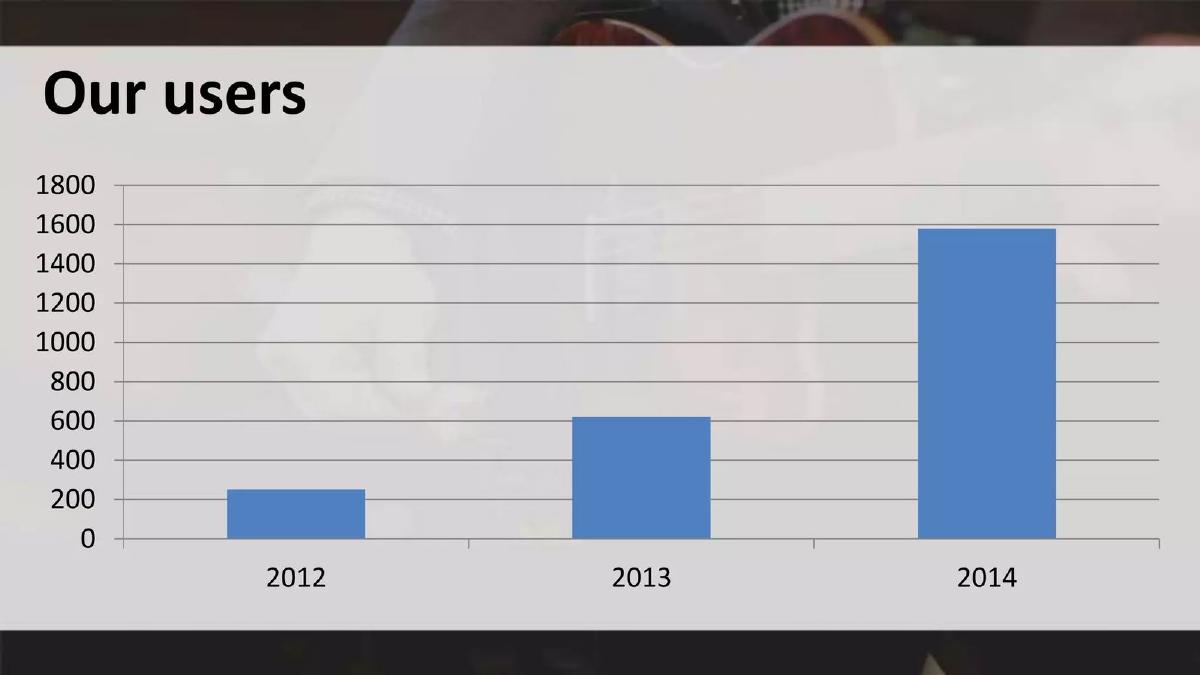
- User growth increased from approximately 250 in 2012 to nearly 1,600 by 2014 (Slide 2).
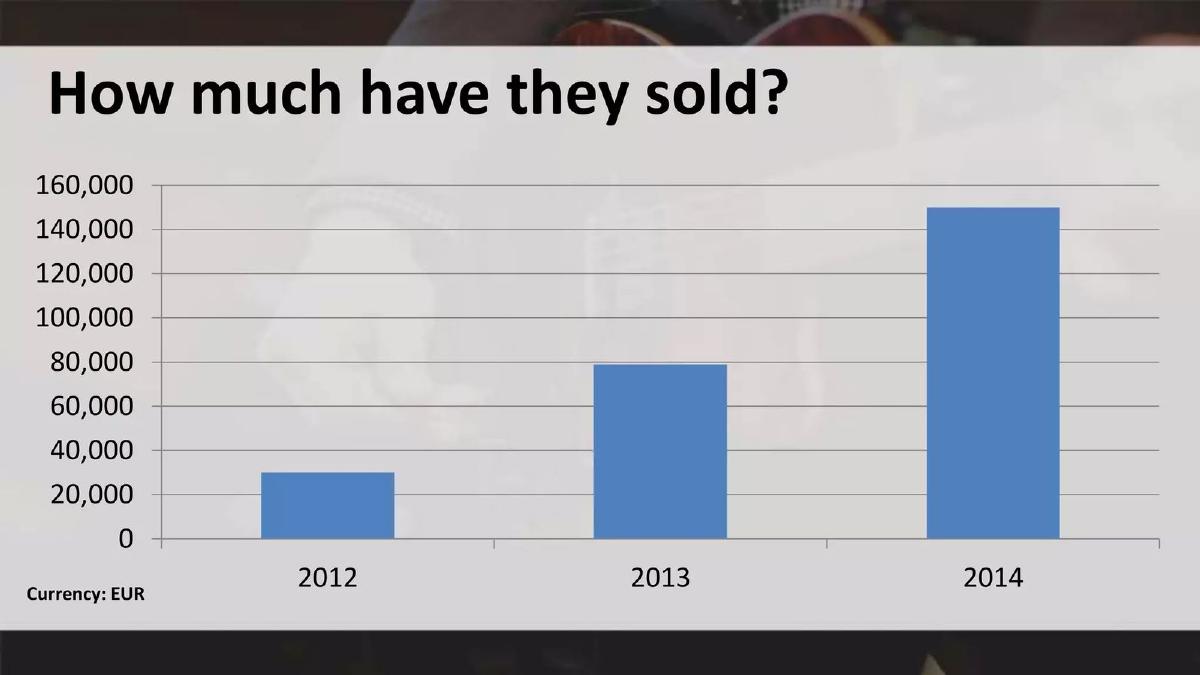
- Total sales volume through the platform reached 150,000 EUR in 2014, up from 30,000 EUR in 2012 (Slide 3).
- The core competitive advantage is a zero-commission model for direct-to-fan commerce, whereas competitors charge fees or commissions (Slide 9).
- Revenue is generated through secondary services including merch manufacturing, fulfillment, and publishing deals (Slide 15).
- The platform supports physical media production including 7", 10", and 12" vinyl, tapes, and CD/DVD replication (Slide 13).
- The competitive matrix claims 8Merch is the only player offering free physical/digital sales, social integration, digital distribution, and merch printing in one place (Slide 18).
- The team consists of four key members led by CEO Arkadiusz Młyniec, with dedicated heads for Marketing, Art, and IT (Slide 17).
Executive Summary and Vision
8Merch.com positions itself as a comprehensive ecosystem for independent musicians. The opening slide (Slide 1) establishes a four-pillar value proposition: selling music, worldwide distribution, merchandise printing, and reaching a global audience. The deck is structured to highlight the friction in the existing music industry and present 8Merch as the streamlined alternative.
Traction and Market Opportunity
The deck leads with traction, which is a strong choice for a company with two years of history. Slide 2 shows a bar chart of users, growing from roughly 250 in 2012 to nearly 1,600 in 2014. Slide 3 mirrors this growth in sales volume, showing an increase from 30,000 EUR to 150,000 EUR. By placing these slides early, the founders attempt to prove product-market fit before explaining the mechanics of the business.
Slide 4 defines the market, citing the IFPI to value the independent part of the global music industry at $15 billion in 2013. This provides a clear 'Total Addressable Market' (TAM) context, though it does not break down the 'Serviceable Obtainable Market' (SOM) specifically for merch or distribution.
The Problem Statement
The problem is broken down into three distinct slides (Slides 5, 6, and 7). The first problem is financial: independent artists must pay fees to sell their own music. The second is operational: artists have to coordinate with too many disparate companies (distributors, printers, web hosts). The third is personal: artists lack the time to manage the 'business side' of their careers. This sets up the 'all-in-one' solution as the logical remedy.
The 8Merch Solution and Differentiation
Slide 8 asks 'Why are we different?' and delivers the deck's most aggressive claim: while existing platforms charge fees or commissions, 8Merch 'charges nothing' for direct-to-fan commerce. This is a classic 'disruptive' pricing strategy designed to lure users away from incumbents like Bandcamp.
Slides 9 and 10 expand on the 'plethora of complimentary services' that allow artists to make and save money simultaneously. The deck emphasizes that by consolidating these services, the artist regains time and reduces overhead.
Product Deep Dive
Slides 11, 12, and 13 showcase the actual product. Slide 11 displays screenshots of 'fully customizable music webshops' integrated with social media. Slide 12 highlights the 'professional business portal' for merch and fulfillment. Slide 13 is particularly detailed, listing specific manufacturing capabilities: t-shirts, CD/DVD replication, 7"/10"/12" vinyl, tapes, and marketing collateral. This slide proves that 8Merch is not just a software layer but a logistics and manufacturing partner.
Slide 14 summarizes the product into four icons: Free website/webstore, direct-to-fan tools, worldwide digital distribution with no upfront costs, and full-range merch printing/fulfillment.
Business Model and Financials
Slide 15 clarifies how the company survives the 'zero-commission' storefront. Revenue is driven by seven streams: merch manufacturing, webstore fulfillment, tour fulfillment, digital distribution, publishing deals, promotional campaigns, and special features. This indicates a 'freemium' or 'loss-leader' strategy where the storefront is the hook for higher-margin services.
Slide 16, titled 'Numbers speak for themselves,' shows revenue growth reaching nearly 190,000 EUR in 2014. It is important to note the distinction between Slide 3 (what users sold) and Slide 16 (what 8Merch earned). The proximity of these figures suggests a high take-rate through their manufacturing services.
Go-to-Market and Team
Slide 16 (duplicated title in source) covers Marketing & Growth. It lists standard digital channels (AdWords, Social) alongside more boots-on-the-ground efforts like music meet-ups and 'country branches/reps.' This suggests a localized approach to scaling a global platform.
The team slide (Slide 17) introduces four members: Arkadiusz Młyniec (CEO), Maciej Stankiewicz (Marketing), Mateusz Młyniec (Art), and Maciej Walusiak (IT). The slide provides photos and titles but lacks professional biographies or past successes, which is a notable omission for an investor deck.
Competition and The Ask
Slide 18 features a competitive matrix. It pits 8Merch against Bandcamp, Big Cartel, Bandzoogle, Topspin, and CD Baby. According to the chart, 8Merch is the only platform that checks every box, particularly 'Free sales' and 'Merch printing platform.' While effective, these charts are often viewed with skepticism by investors unless the 'Free' claim is backed by sustainable unit economics.
The deck concludes with Slide 19, stating a funding requirement of 300,000 EUR. There is no mention of valuation, use of proceeds (e.g., 50% for engineering, 50% for marketing), or milestones this funding will help achieve. Slide 20 provides contact information for the CEO.
What 8Merch.com Does Well
Clear Value Proposition: The 'zero-commission' hook is easy to understand and highly attractive to the target demographic (independent artists). · Traction-First Approach: Showing growth in both users and sales in the first three slides builds immediate credibility. · Visualizing the Product: Including screenshots of the webshops and a grid of physical products makes the platform feel 'real' and functional rather than theoretical. · Revenue Transparency: Explicitly listing the seven ways they make money helps alleviate investor concerns about the 'free' storefront model.
What is Missing from the 8Merch.com Deck
Unit Economics: The deck does not explain the margins on a t-shirt or a vinyl record. Investors need to know if the 190,000 EUR in revenue is profitable or if the cost of fulfillment is too high. · Team Pedigree: There are no bios for the founders. Knowing if the Head of IT has built scalable platforms before or if the CEO has music industry connections is vital. · Use of Funds: 300,000 EUR is a specific number, but the deck fails to explain what that money buys. Does it go toward a printing press? A larger marketing budget? New hires? · Roadmap: The deck shows what has been built 'so far' but doesn't outline the future. Investors look for the vision of where the company will be in 3-5 years. · Churn and Retention: While user growth is shown, there is no data on how many artists stay on the platform or their lifetime value (LTV).
Founder's Guide: What to Copy from this Deck
The 'Why are we different?' Slide: Slide 8 is a masterclass in simplicity. It identifies the industry standard (fees/commission) and presents a stark alternative (nothing). This kind of clarity is rare and effective. · The Capability Grid: Slide 13 uses icons and brief text to show a massive range of services. It makes the company look like a powerhouse of production without requiring pages of text. · The Multi-Stream Revenue List: Slide 15 is excellent for platforms that offer free core services. It preemptively answers the 'How do you make money?' question with a diverse list of options.
Frequently asked questions
- How does 8Merch.com make money if it charges zero commission?
- According to slide 15, the company drives revenue through high-margin value-added services rather than transaction fees. These include merchandise manufacturing (printing shirts and pressing vinyl), webstore and tour fulfillment, digital distribution fees, publishing deals, and promotional campaigns. By making the storefront free, they act as a top-of-funnel lead generator for their manufacturing and logistics business.
- What is the current scale of the platform based on the deck?
- As of the 2014 data provided in the deck, the platform had approximately 1,600 users (Slide 2). These users generated 150,000 EUR in sales (Slide 3). Total revenue growth for the company itself followed a similar trajectory, reaching nearly 190,000 EUR in 2014 (Slide 16).
- Who are the primary competitors identified by 8Merch?
- Slide 18 lists Bandcamp, Big Cartel, Bandzoogle, Topspin, and CD Baby as primary competitors. 8Merch differentiates itself by claiming these platforms do not offer 'free' sales of physical or digital products and lack the integrated merchandise printing platform that 8Merch provides.
- What physical products can artists create through the platform?
- Slide 13 details a wide range of physical manufacturing capabilities. This includes apparel (men's and women's t-shirts), various vinyl formats (7", 10", and 12" records), cassette tapes, and CD/DVD replication. They also offer marketing materials like flyers, posters, and postcards.
- What is the marketing strategy for acquiring new artists?
- Slide 16 outlines a three-pronged strategy: Active advertising (Google AdWords, social media), Event marketing (meet-ups, live events, talent workshops), and Reference-based marketing (country reps and discount-driven recommendations). They also mention using 'middlemen' for sales and marketing efforts.