4DStory, a production of Marble Media, Inc., positions itself at the intersection of AI, Web3, and digital storytelling. The deck introduces 'Kinetic Avatars' and 'Friendship Pods' as tools to help brands and individuals connect with communities in a '4D era.' While the presentation leans heavily on abstract terminology like the 'Aethereal realm' and 'Personaware,' it provides concrete market data, citing a projected digital avatar market size of $283.47 billion by 2032. The company showcases early beta projects, such as 'Night Shades' and 'Bloodvein Valet,' to demonstrate the application of…
Key takeaways
- The digital avatar market is projected to grow from $7.55 billion in 2022 to $283.47 billion by 2032 (Slide 4).
- The company utilizes proprietary concepts including 'Personaware' technology and 'Friendship Pod' Web3 communities (Slide 3, 4).
- 4DStory aims to transition its current rudimentary ecosystem into a blockchain-based Dapp (Slide 4).
- Revenue strategies are split between primary B2B services like campaign management and secondary streams like NFT analytics (Slide 8).
- The platform offers a 'Lightbender Token' which grants users access to four distinct training sets for avatar creation (Slide 6).
- A long-term partnership with Key Difference Media is highlighted, claiming $550M raised to date for their clients (Slide 9).
- The deck features beta case studies for a local pub (The Dawghouse) and a New York furniture design house (Artifact Timber Company) (Slide 5, 7).
- There is no specific funding amount requested or a clear breakdown of how capital will be deployed in the provided slides.
Executive Summary: The Dawn of Web4
4DStory presents a highly conceptual pitch deck that attempts to define a new category of digital interaction. The company, a production of Marble Media, Inc., uses the term "Web4" to describe a future where AI, quantum computing, and blockchain merge to create the "Aethereal realm." While the language is often abstract, the underlying business model focuses on the creation and management of digital avatars for brands and causes. The deck moves from high-level philosophy to specific beta case studies, aiming to prove that their narrative-driven approach can drive real-world business results.
Slide 1: Title and Introduction
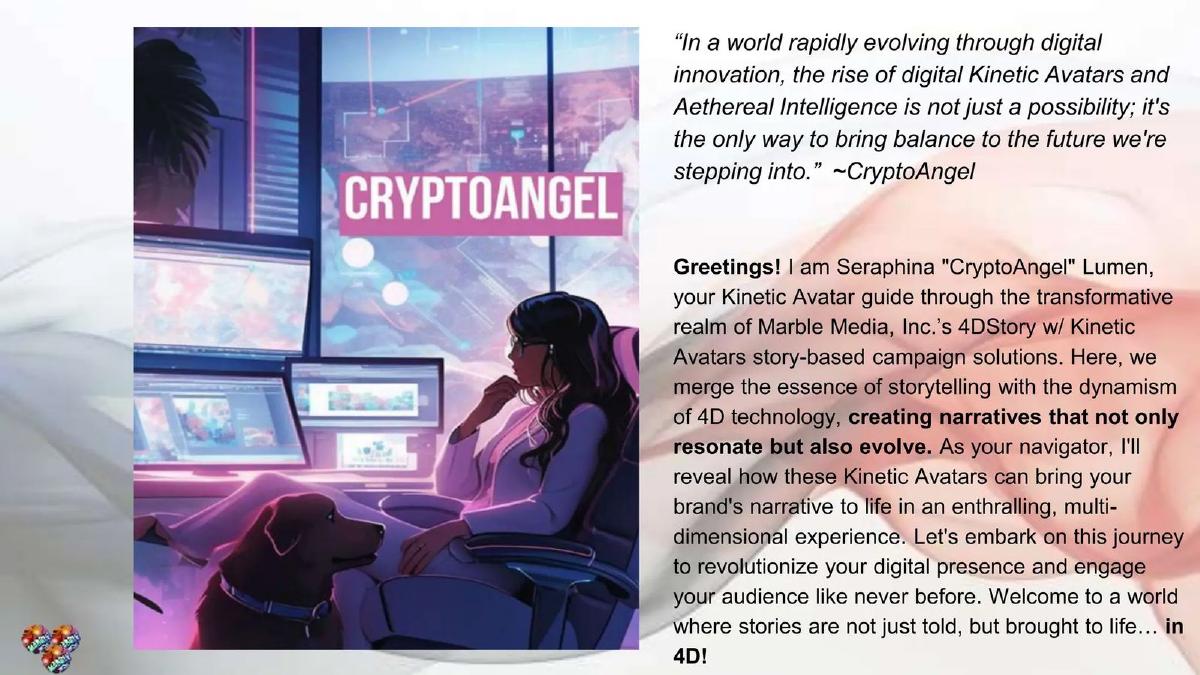
The cover slide introduces 4DStory as an "Overview" and uses the tagline "This time it's for all the marbles," referencing the parent company, Marble Media . It features a play button for a video (not accessible in this format) and the phrase "Time to perform." The imagery includes a puzzle piece asking "Is it worth it?" and a monk-like figure holding a glowing orb, setting a mystical and high-stakes tone for the presentation.
Slide 2: The Aethereal Realm and 4D Era
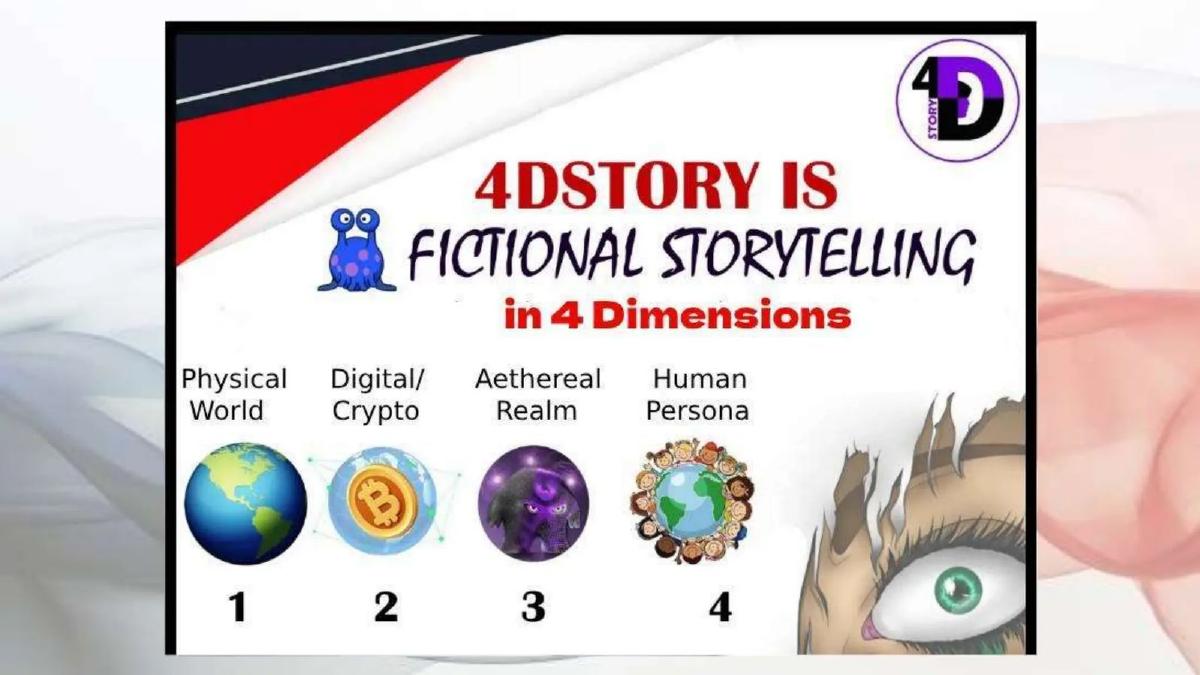
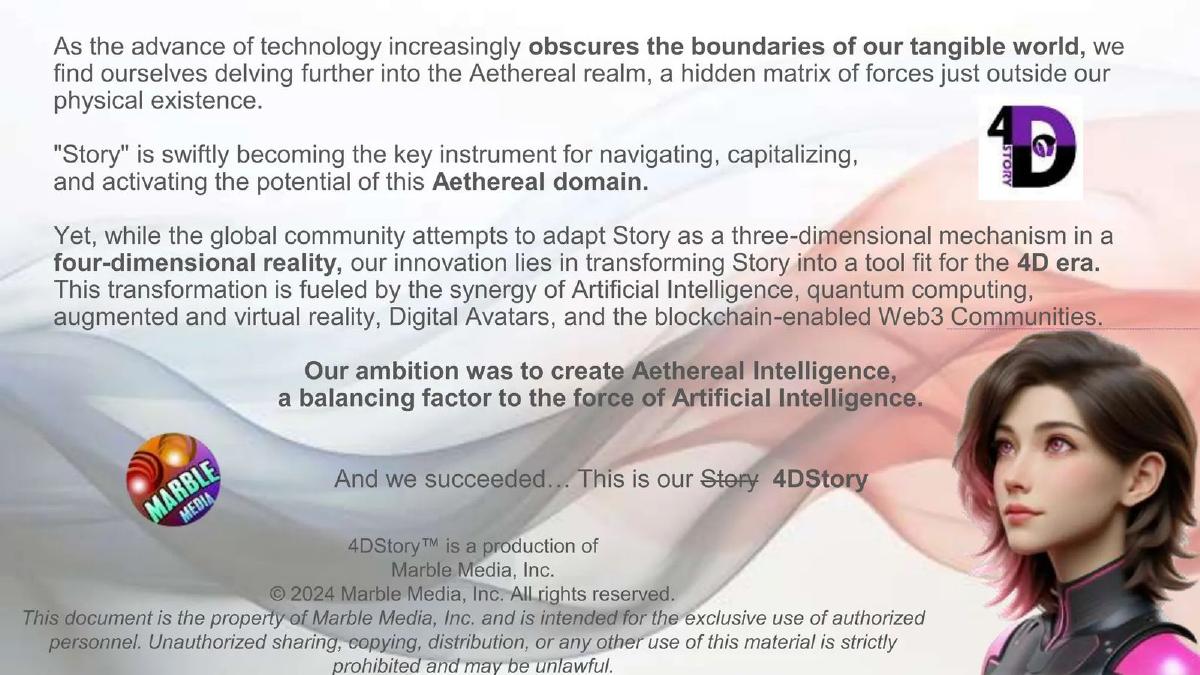
This slide serves as the philosophical foundation of the deck. It claims that technology is obscuring the boundaries of the tangible world, leading us into the "Aethereal realm." The company defines its innovation as transforming "Story" into a tool fit for the "4D era," powered by AI, quantum computing, AR/VR, and blockchain. It introduces the concept of Aethereal Intelligence as a balancing factor to Artificial Intelligence. The slide includes a 2024 copyright for Marble Media, Inc. and a legal disclaimer regarding the document's property rights.
Slide 3: Value Proposition for Creators
Slide 3 answers the question "When you produce a 4DStory, you can..." with three pillars: Promote Your Cause , Share Your Dreams , and Inspire & Relate . It mentions a proprietary Web3 community blueprint called "Friendship Pods" and a model of "Personaware" designed to attract like-minded fans. The imagery shifts from the mystical to the practical, showing people cleaning up a park and a child looking at a sunset, attempting to ground the high-tech concepts in human emotion and social impact.
Slide 4: Market Opportunity and Problem Statement
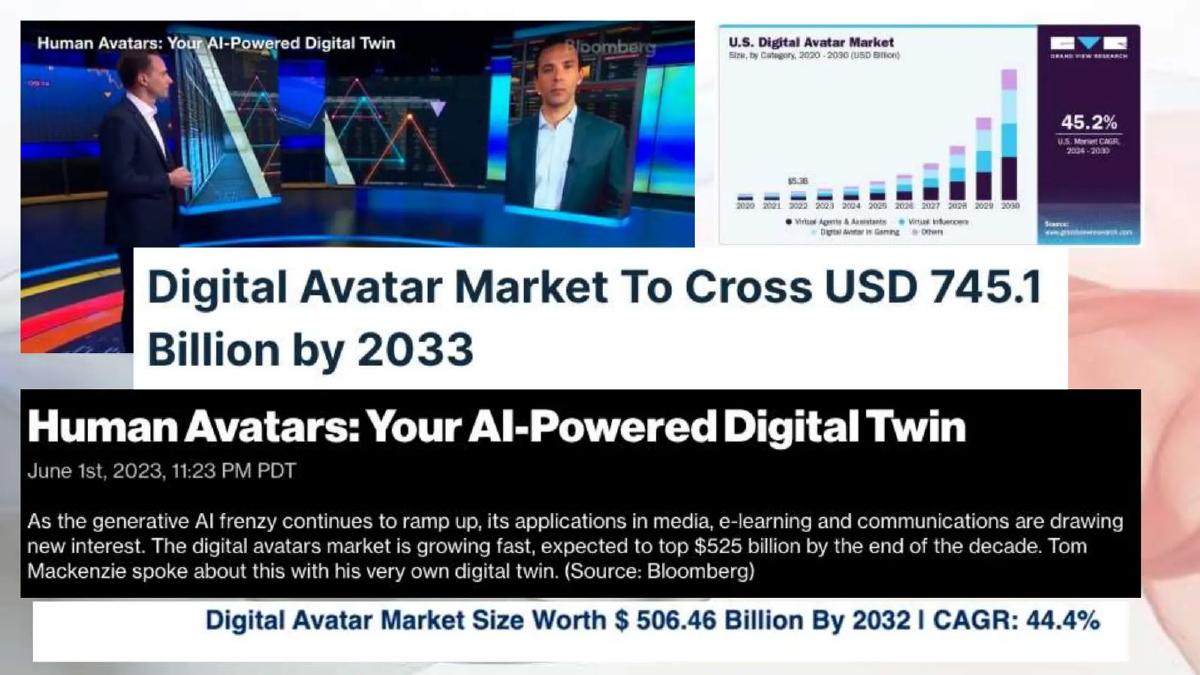
This is the most data-heavy slide in the deck. It cites Spherical Insights & Consulting , stating the Digital Avatar Market was valued at USD 7.55 Billion in 2022 and is expected to reach USD 283.47 Billion by 2032 . The "Problem" identified is that AI-driven content (Sora, ChatGPT, Dall-E) threatens authenticity. The "Solution" is the creation of Kinetic Avatars that engage people via an "Aethereal Network of color and hex codes." Crucially, it notes the current status: a rudimentary ecosystem exists at 4DStory.com, but it needs to transition into a blockchain Dapp to reach full potential.
Slide 5: Case Study - Night Shades
Slide 5 provides a concrete example of the platform in use. "Night Shades" is described as a beta 4DStory set around a local pub called The Dawghouse . The narrative involves a boy, his dog, and musicians saving their town from an alien invasion. The slide emphasizes the "art of intertwining a business within a 4DStory campaign," suggesting that 4DStory acts as a narrative-driven marketing agency for small to medium-sized enterprises.
Slide 6: The Lightbender Token and Training Sets
This slide introduces the Lightbender Token , which acts as a key to four training sets. These sets cover:
Set 1: Personaware Integration (metaphysically aligning characters to target customers). · Set 2: Digital Character Creation (using AI to sculpt avatars). · Set 3: NFTs, Crypto, & NFC (registering characters on the Ethereum blockchain). · Set 4: 4DStory Platform (enhancing avatar presence).
The slide also mentions support via Zoom calls and various resources, indicating a service-heavy onboarding process.
Slide 7: Case Study - Bloodvein Valet
Another case study is presented, featuring Bloodvein Valet , created for Artifact Timber Company , a furniture design house in New York. The slide claims the campaign helped "birth a whole new galaxy of corporate tables." It reinforces the idea that any brand or product can be transformed into a compelling narrative through the 4DStory ecosystem. The slide notes that the original URL for this project is no longer valid, which may raise questions about the longevity of these beta campaigns.
Slide 8: B2B Revenue Strategies
The business model is clearly delineated here. Primary revenue comes from services: initial design/consultation, campaign management, monthly ad-spend, and content creation. Secondary revenue is more speculative, involving revenue sharing, merchandising, and NFT analytics to identify profitable tokens to create or buy. This suggests a hybrid model of a traditional agency and a Web3 investment/tech platform.
Slide 9: Partnerships - Key Difference Media
4DStory highlights a 9+ year relationship with Key Difference Media , a Web3 incubator. The slide includes impressive metrics for the partner: $550M raised to date , 114 client projects, and an 88% successful exchange listing rate. By showcasing a team of "112+ Enthusiastic Punks," 4DStory attempts to borrow credibility and scale from an established player in the crypto marketing space.
Slide 10: Testimonials
The final slide in this selection features testimonials from three individuals: Steven Hartov (NYT Best-Selling Author), Steven Memel (Celebrity Performance Coach), and David T. Fagan (Co-Author of Guerrilla Rainmakers). The quotes focus on the "amazing creativity" and "rainmaker" status of James Craddock , who appears to be the lead inventor/founder, though his specific title is not explicitly stated on this slide.
What Works in This Deck
The inclusion of third-party market data on Slide 4 is a strong point, providing a multi-billion dollar context for what might otherwise seem like a niche creative project. The case studies (Slides 5 and 7) are essential for explaining a product that is otherwise very abstract; they show that the "Aethereal realm" translates to marketing campaigns for pubs and furniture stores. Furthermore, the revenue strategy slide (Slide 8) shows a clear path to monetization that doesn't rely solely on token appreciation, which is a common pitfall in Web3 decks.
What Is Missing
The most significant omission is a clear financial ask . There is no mention of how much capital is being raised or how it will be used. Additionally, while the partner company (Key Difference Media) has a team slide, 4DStory's internal team is only hinted at through testimonials for James Craddock. Investors need to see the core team's pedigree and technical capabilities, especially for a project claiming to use AI and quantum computing. There is also a lack of unit economics ; while revenue streams are listed, the cost of customer acquisition and the margins on "campaign management" are not addressed. Finally, the roadmap is vague, stating only a need to transition to a Dapp without providing a timeline or technical milestones.
Founder Takeaways
Balance the abstract with the concrete: If your product involves "Aethereal realms" or "4D eras," you must provide immediate, real-world examples of how a customer uses it today. 4DStory does this well with their beta case studies. Leverage established partners: If your startup is small, showing a long-term relationship with a successful incubator (as seen on Slide 9) can provide the "social proof" needed to get a second meeting. Define your revenue early: Don't wait until the end of the deck to explain how you make money. Slide 8 provides a good template for showing both immediate service revenue and long-term scalable tech revenue.
Frequently asked questions
- What exactly is a 'Kinetic Avatar' according to 4DStory?
- According to slide 4, a Kinetic Avatar is a digital character that has been transformed through the 4DStory ecosystem and Friendship Pod Web3 communities. These avatars are designed to engage people via an 'Aethereal Network of color and hex codes' using proprietary 'Personaware' technology. The goal is to harmonize digital and human interactions, eventually allowing these entities to inhabit robotic forms as technology evolves.
- How does 4DStory plan to generate revenue?
- Slide 8 outlines a two-tiered B2B revenue strategy. Primary revenue comes from initial design and consultation, campaign management, monthly ad-spend, and content creation. Secondary revenue streams include client revenue sharing, merchandising through a central store, and using analytics to identify and trade profitable 4D NFTs. They also mention '4D revenue streams' as a future component of their business model.
- What is the 'Lightbender Token' mentioned in the deck?
- The Lightbender Token is an access mechanism described on slide 6. Holders gain entry to four training sets: Personaware Integration, Digital Character Creation, NFTs/Crypto/NFC, and 4DStory Platform development. This suggests a gamified or educational onboarding process where users are taught to 'breathe life' into digital alter egos and transform them into NFTs on the Ethereum blockchain.
- Who are the key partners and what is their track record?
- The primary partner listed is Key Difference Media, with whom 4DStory claims a 9+ year relationship (Slide 9). Key Difference Media is described as a Web3 incubator and marketing partner that has been active since 2013. The slide claims they have worked on 114 client projects, achieved an 88% successful exchange listing rate, and helped clients raise $550 million.
- What is the current development status of the 4DStory platform?
- Slide 4 describes the current status as a 'rudimentary 4D Ecosystem' located at 4DStory.com. It currently features several 'Beta Friendship Pods.' The company admits the ecosystem is in its nascent stages and states that the platform needs to transition into a blockchain Dapp (Decentralized Application) to fully realize its potential and scale its ability to connect human personas with digital characters.