Bitdharma's 12-slide deck, exported on 16 August 2018 as version five, pitches tokenised small-business equity ('Crypto-Shares-Contracts'), an exchange to trade it, and a suite of business-management dApps. It contains no team slide, no funding ask, no valuation, no use of funds, no roadmap and no regulatory section - remarkable for a product that is, by its own description, a security. Its financial projection targets $10,000,000 of daily exchange volume by January 2019 and correctly computes the result as $365,000 a year at a 0.01% fee, then draws that same revenue line in the millions on t…
Key takeaways
- Bitdharma's 12-slide August 2018 deck has no team slide, no funding ask, no valuation, no use of funds and no regulatory section - the only person named appears as the attribution under a closing quotation.
- The core product is tokenised company equity - a 'Crypto-Shares-Contract' sold to investors with a dashboard of the issuer's numbers - and the deck never mentions securities law, a jurisdiction, a licence or counsel.
- Slide 10's own arithmetic is correct and damning: $10,000,000 of daily exchange volume at a 0.01% fee is $365,000 a year, roughly ten to twenty-five times below the fees comparable exchanges charged in 2018.
- The projection chart contradicts the slide before it - it draws exchange revenue in the millions by 2023, which at an unchanged 0.01% fee would require about $219 million of daily volume, 22x the stated goal.
- The five-year projection has no cost line at all: no salaries, no infrastructure, no compliance, no marketing, and therefore no burn, no runway and no break-even date.
- 'Actual Income' is mining hardware sales, course credits, trading signals and software contracts - none of it related to the product being pitched, and none of it given a dollar figure.
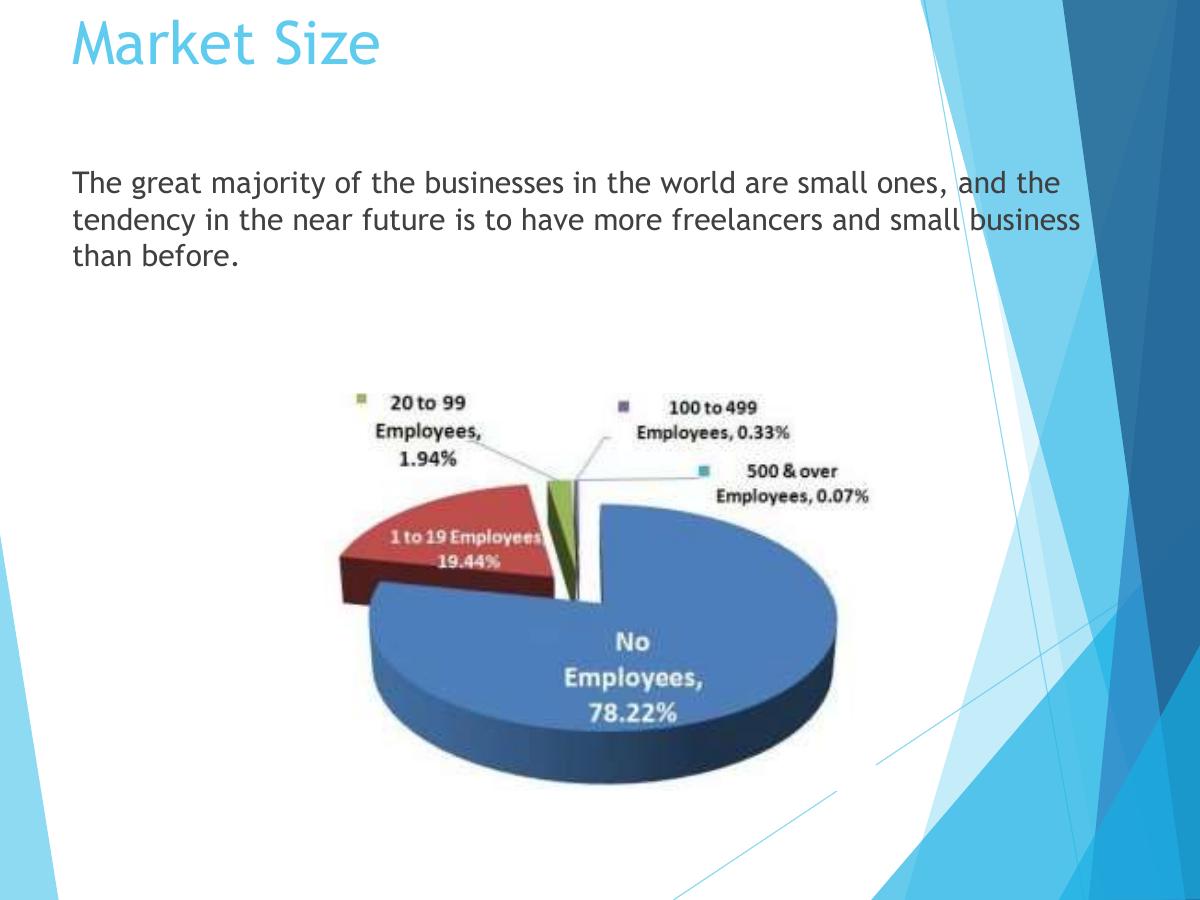
- The market-size pie shows 78.22% of businesses have no employees, a segment with no shareholders and no equity to tokenise; the addressable slices total 2.34% of the count and the slide contains no money at all.
- The competition grid gives Bitdharma a green square on all six of its own criteria, marks SAP 'no' on all six, and omits every funded tokenised-securities platform of the era - Polymath, Securitize, tZERO, Harbor.
What this deck actually is
Twelve slides, built in PowerPoint 2013 and exported to PDF on 16 August 2018. The file is named investorpitchdeck5 — the fifth version — and the cover carries the date 08/20/2018, four days after the file was written. It is the fundraising deck for Bitdharma, a blockchain venture proposing to tokenise the equity of small and medium businesses into instruments it calls Crypto-Shares-Contracts, list them on its own exchange, and surround them with an ecosystem of business-management dApps.
The running order is cover, opportunity, problem, solution, market, market size, competitive analysis, business model, revenue model, financial projection (text), financial projection (chart), and a closing quote-and-social-media slide.
Read that list again. There is no team slide. There is no ask. There is no valuation, no instrument, no use of funds, no roadmap, no token distribution table, no legal or regulatory section, and not one number describing anything that has already happened. The only human name in twelve slides appears on the final slide, as the attribution under a quotation.
This is a deck built in August 2018 — the tail of the ICO cycle, after the token market had already lost most of its value and after the U.S. Securities and Exchange Commission had spent a year explaining that tokens representing an interest in a business are securities. The product being pitched is, by its own description, tokenised company equity. The deck never mentions a regulator.
Slide-by-slide walkthrough
Slide 1 — Cover
The Bitdharma logo — a wheel of coloured blocks, a nod to the dharmachakra — over the words "Investor Pitch Deck" in large type, with "08/20/2018" set in low-contrast grey against the background pattern.
"Investor Pitch Deck" is not a title. It is a file description. The cover of a circulated PDF is the single most-viewed slide in the document and the only one guaranteed to be seen, and this one spends its entire headline telling the reader what kind of document they have already opened. What belongs there is the company's one-line proposition — "tokenised equity for small businesses, and the exchange to trade it" — plus the round, the stage, and a contact.
There is also no contact anywhere on the cover, and the date is nearly illegible against the graphic. Small things, but this is version five; five drafts is enough passes to notice that the date cannot be read.
Slide 2 — The Opportunity
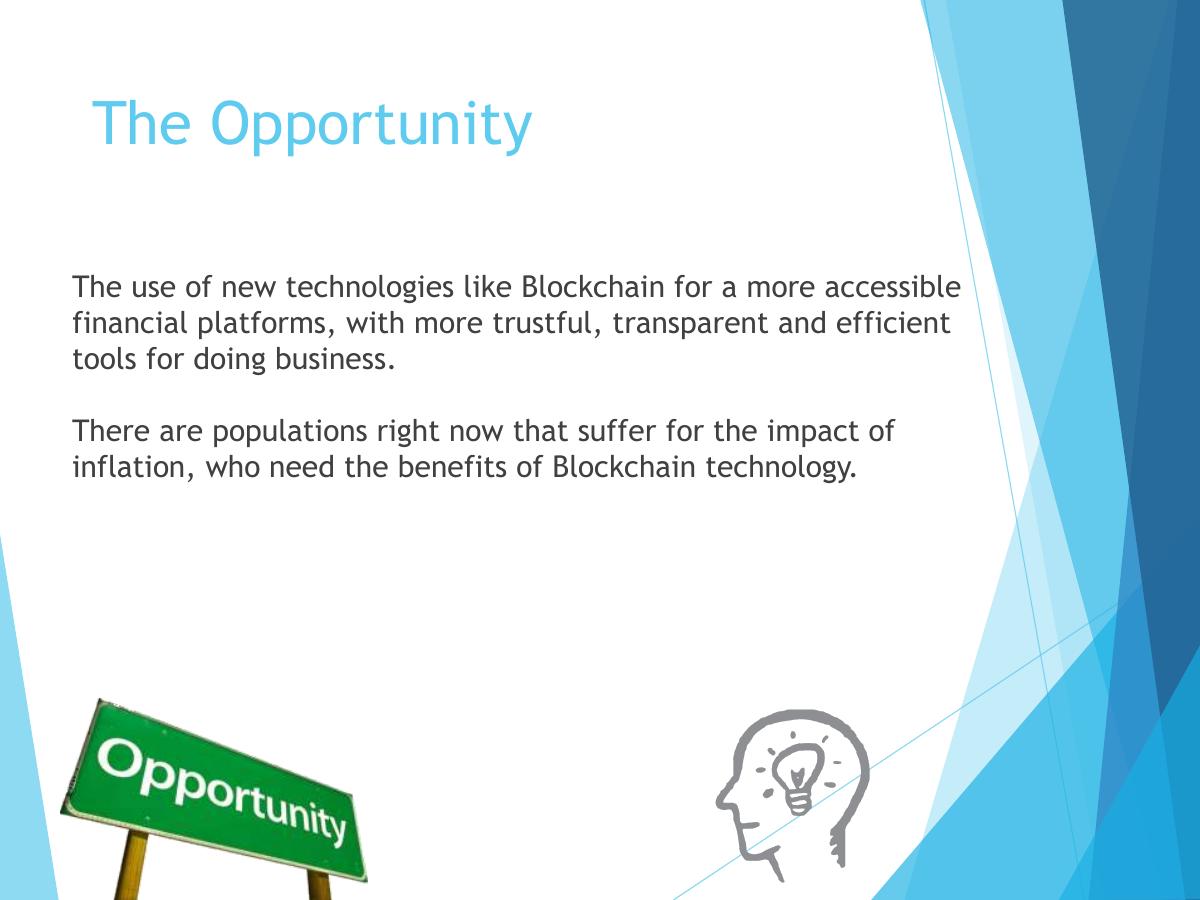
Two paragraphs. "The use of new technologies like Blockchain for a more accessible financial platforms, with more trustful, transparent and efficient tools for doing business." And: "There are populations right now that suffer for the impact of inflation, who need the benefits of Blockchain technology." Two clip-art images: a green road sign reading "Opportunity", and a line drawing of a head with a lightbulb.
The second sentence is the interesting one, and the deck abandons it immediately. Populations living under high inflation — and in 2018 the founders' own region had one of the most extreme cases in modern history — genuinely do reach for dollar-denominated and crypto instruments, and a business built on that observation would have a real customer, a real urgency and a real geography. It is named once and never mentioned again. No country, no currency, no inflation figure, no evidence that anyone in that situation has used the product.
The first sentence is the failure mode of the entire deck in miniature: an abstract noun stack with no subject. Accessible to whom, trustful compared with what, efficient by what measure. An opportunity slide should state a change in the world that has just made something possible. This one states that blockchain exists.
Slide 3 — The Problem
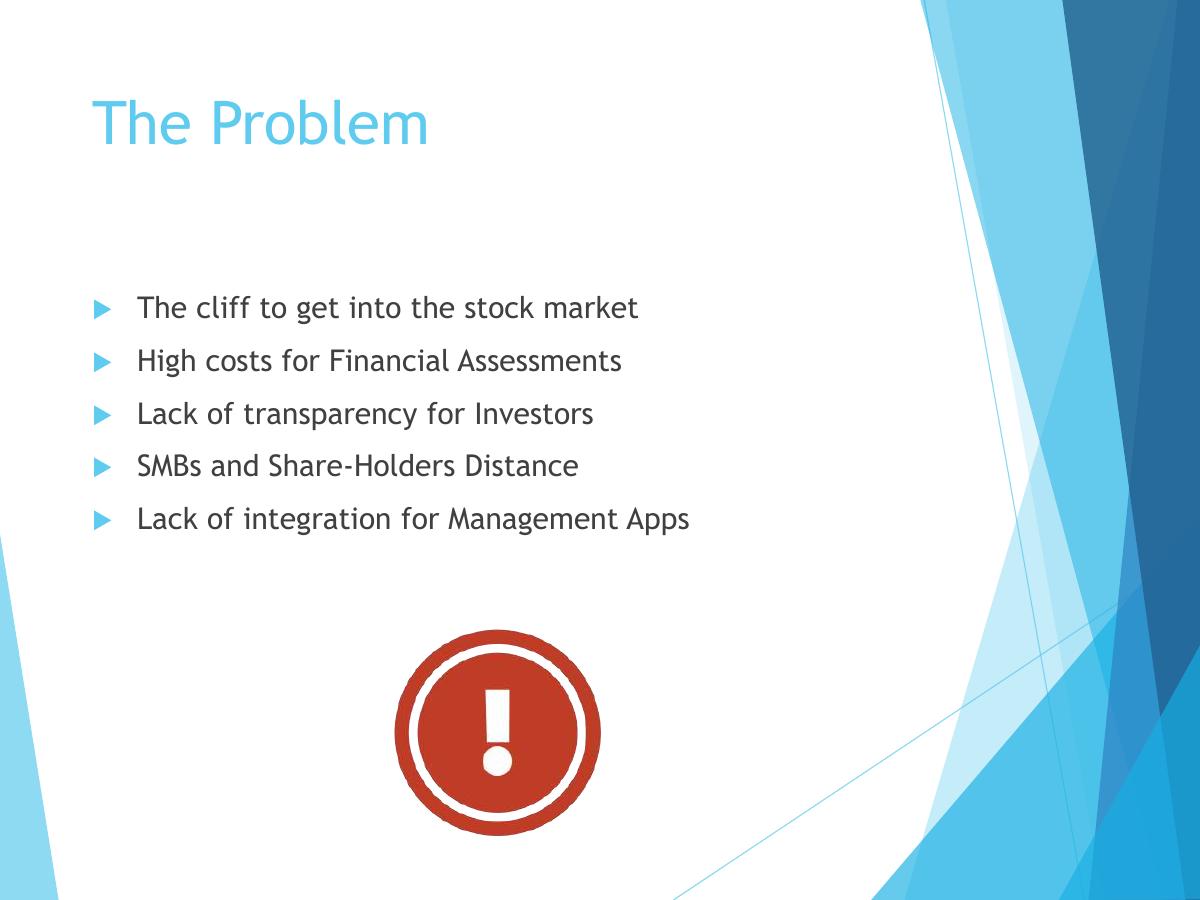
Five bullets: the cliff to get into the stock market; high costs for financial assessments; lack of transparency for investors; SMBs and share-holders distance; lack of integration for management apps. A red exclamation icon underneath.
The first bullet is a real and well-chosen problem. Public listing is prohibitively expensive for a small company, private equity in a small business is close to unsellable, and the gap between those two states is genuine. "The cliff" is a good phrase for it.
But five bullets with nothing under them is a list of topics, not an argument. Not one carries a number, a source, or a person. How much does a small-company listing actually cost, in the market Bitdharma is targeting? What does a financial assessment cost today, and who pays it? How many SMBs have tried to raise equity and failed? The strongest version of this slide is one bullet — the cliff — with the price of the cheapest legal path to tradeable equity next to it, and a founder quoted saying they gave up.
The fifth bullet, "lack of integration for management apps", also does not belong on the same list. It is a software-convenience complaint sitting beside a capital-markets access problem, and its presence is the first sign that the deck is describing several companies at once.
Slide 4 — The Solution
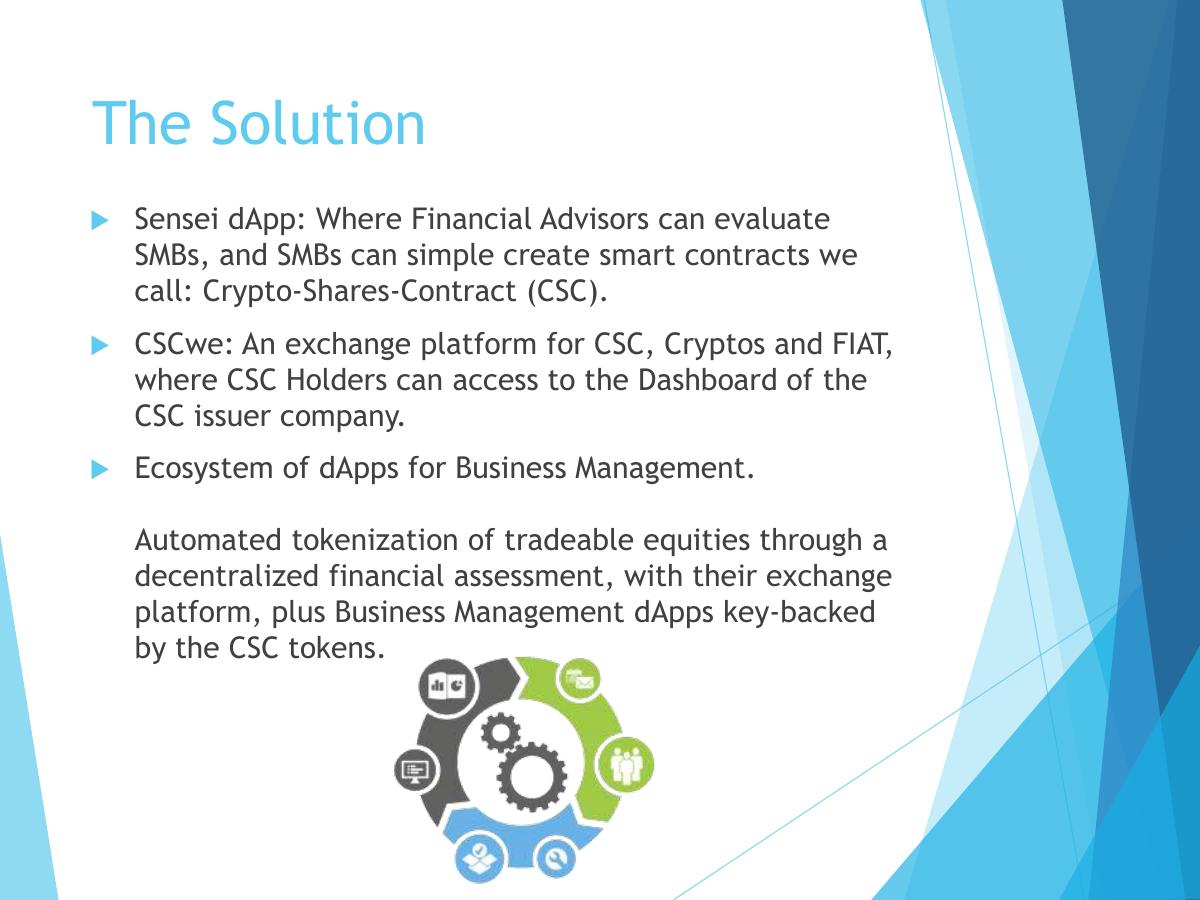
Three bullets and a summary paragraph. "Sensei dApp: Where Financial Advisors can evaluate SMBs, and SMBs can simple create smart contracts we call: Crypto-Shares-Contract (CSC)." "CSCwe: An exchange platform for CSC, Cryptos and FIAT, where CSC Holders can access to the Dashboard of the CSC issuer company." "Ecosystem of dApps for Business Management." Then: "Automated tokenization of tradeable equities through a decentralized financial assessment, with their exchange platform, plus Business Management dApps key-backed by the CSC tokens."
This is three companies on one slide, and each is among the hardest businesses in the sector.
The first is a regulated financial-assessment marketplace: strangers evaluating private companies whose books nobody has audited, with the resulting rating driving a tradeable price. The second is a crypto and fiat exchange — a business defined almost entirely by licensing, banking relationships, custody, market surveillance and security, none of which appear anywhere in the deck. The third is a suite of business-management software applications competing with everything from spreadsheets to SAP.
A seed-stage venture that has not shown a single customer cannot credibly propose to build all three, and the deck never says which one comes first. Worse, they are sequentially dependent in the hardest possible order: nobody trades a Crypto-Share-Contract until issuers exist, issuers do not tokenise until assessments are trusted, and assessments are not trusted until someone with a licence stands behind them.
Then there is the sentence the deck does not write. A Crypto-Shares-Contract is, by its own description, a tokenised claim on the equity of a company, sold to investors who expect to profit from the issuer's performance and given a dashboard of the issuer's numbers. In the United States that is a security under the Howey test; in most other jurisdictions the analysis lands in the same place. Nothing in that is fatal — regulated tokenised-securities businesses exist — but a deck proposing it must show which jurisdiction it will operate in, which exemption or licence it will use, who its counsel is, and how transfer restrictions will be enforced on-chain. Bitdharma's twelve slides contain no jurisdiction, no licence, no lawyer and no mention of the word "regulation". "Legal Team" appears once, as a cell in the business-model grid.
The typographical errors — "SMBs can simple create", "can access to the Dashboard" — are a small thing on their own. On a document version five, sent to investors, describing a regulated financial instrument, they read as a proxy for how much care went into everything the reader cannot check.
Slide 5 — The Market
Five bullets: small and medium business; financial advisors; investors; traders; blockchain users in general. Three clip-art images.
This is a list of audiences, not a market. There is no size, no geography, no segmentation and no priority, and the final bullet — "blockchain users in general" — is the tell. A market slide that ends with "everyone in the category" has not chosen a customer.
It also does not resolve the two-sided problem the business actually has. Bitdharma needs issuers and it needs buyers, and those are different acquisition problems with different economics. Which side does the company acquire first, at what cost, and with what incentive? A marketplace deck that does not name its cold-start strategy has skipped its hardest question.
Slide 6 — Market Size
One sentence — "The great majority of the businesses in the world are small ones, and the tendency in the near future is to have more freelancers and small business than before" — above a 3D pie chart. The slices: no employees 78.22%; 1 to 19 employees 19.44%; 20 to 99 employees 1.94%; 100 to 499 employees 0.33%; 500 and over 0.07%. No source, no year, no country, no total.
The chart is unsourced, but the deeper problem is that it argues against the business. Seventy-eight per cent of the pie is firms with no employees — sole traders and freelancers. Those businesses do not have shareholders, do not have equity worth splitting into tradeable instruments, and cannot support the price discovery an exchange requires. The segment that could plausibly tokenise equity is the top three slices, which together are 2.34% of the count, and the deck's own sentence celebrates the growth of the segment it cannot serve.
There is also no money on the money slide. A market-size page with no dollar figure, no unit economics and no addressable subset is a demographic observation. What an investor needs is the count of companies of the right size in one named jurisdiction, the share that would plausibly issue, the average raise, and the fee Bitdharma earns on it. Every input to that calculation is missing, including the fee — which appears three slides later and turns out to be one hundredth of one per cent.
Slide 7 — Competitive Analysis
A six-column grid with six rows. Columns: automatic tokenization, exchange platform, financial assessments, legacy banking with crypto, funding projects and business, business management with dApps. Rows: Waves (yes, yes, no, no, no, no); Monaize (no, no, no, yes, no, yes); Binance (no, yes, no, no, yes, no); "Crowfunding & Incubators" (no, no, yes, no, yes, yes); SAP (no, no, no, no, no, "No yet"); Bitdharma dApps (yes, yes, yes, yes, yes, yes).
Bitdharma is green on all six criteria it chose. That is the oldest anti-pattern in pitch decks, and it costs the slide its credibility — including on the rows where a real difference might exist.
Two entries make it worse. Binance is marked "no" on automatic tokenization at a time when it was the largest crypto exchange in the world, listing tokens continuously and with a launchpad for new issuances; whatever the intended distinction, it needs defining, because as printed it is not believable. And SAP — a company with tens of billions in revenue and a large blockchain division — is marked "no" on all six, with "No yet" in the final cell. Awarding six noes to the incumbent whose product category you propose to enter, from a company with no disclosed team, tells a reader that competition was assessed by list-making rather than by use.
The four columns that matter are absent. Bitdharma's real competitors in August 2018 were the tokenised-securities platforms — Polymath, Securitize, tZERO, Harbor — all funded, all working the identical problem, and all with the compliance layer Bitdharma does not mention. Not one appears. Either the founders did not know about them, which is disqualifying in itself, or they left them out, which is worse.
Nowhere on the slide, or anywhere in the deck, is there a defensibility claim: no patent, no exclusive relationship, no proprietary data, no network effect articulated. Six green squares with nothing behind them.
Slide 8 — Business Model
A dense business-model canvas rendered as a spreadsheet: six customer segments (SMBs, financial advisors, miners, investors and traders, crypto users, blockchain-focused enterprises) crossed with customer relationships, channels, value propositions, key activities, key resources, key partners, cost structure and revenue streams.
The canvas is a planning tool, not a pitch slide, and pasting one into a deck transfers the founders' internal work to the reader without doing any of the interpretation. But the content is more revealing than the format.
"Miners" is one of six customer segments, with the channel listed as "Online Store", key activities "Monitoring, Selling & Manufacture", key partners "Reseller & Courier", and revenue from "Technical Service & Sells". That is a hardware retail business — buying, assembling and shipping mining rigs — sitting inside a deck about tokenised equity. It has physical inventory, logistics, warranty exposure and a courier partner. It shares no customer, no technology and no economics with the exchange.
The revenue row is where the model collapses. Across six segments it reads: advertising; 5% of the Sensei tokens; technical service and sales; an exchange fee of 0.01%; "None specific"; development contracts. One segment pays nothing at all, one pays in the company's own token, two pay for services that have nothing to do with the platform, and the platform's actual transaction fee is one basis point.
Every cell in this grid is an intention. Not one is a price a customer has paid.
Slide 9 — Revenue Model
Two lists. "Actual Income": mining sales and technical service; course credits; trading signals and cryptofund management; software development contracts. "Future Income": exchange fee on the CSCwe platform; advertising on the business-management dApps; Sensei utility tokens income by staking.
This is the most honest slide in the deck and the most damaging, because of what it admits. Everything Bitdharma earns money from today — selling mining hardware, running courses, selling trading signals, managing a crypto fund, and doing contract software development — is unrelated to the product the previous eight slides described. Everything in the pitch is in the second list.
So the company is an agency-plus-hardware-plus-education business that would like to be a tokenised-securities exchange. That is not disqualifying — services revenue funding a product build is a legitimate path, and one plenty of good companies have taken. But it has to be said out loud, with numbers, and framed as a strategy: here is what the services business earns, here is the runway it buys us, here is the date the product overtakes it.
Instead there are four bullets with no revenue figures attached. "Actual Income" is the one place in twelve slides where the deck could have shown a real number from a real customer, and it lists categories. Even a small figure — a few thousand dollars a month from courses and contracts — would have been the most persuasive content in the file, because it would be the only thing in it that had already happened.
The third future item deserves its own flag. "Sensei utility tokens income by staking" describes the company earning yield on the tokens it issued itself. That is not revenue in any sense an investor recognises; it is an internal accounting entry denominated in an asset the company controls the supply of.
Slide 10 — Financial Projection (text)
Three bullets. "Our goal is to achieve a $10,000,000 exchange volume per day on CSCwe by 01/25/2019, that means a revenue of at least $365,000 per year." "Plus the 5% of all the Sensei Utility Tokens, which easily could value more than $22M on Market Cap." "Software development contracts could give $5,000,000 per year, understanding that Blockchain development is on highly demand."
The arithmetic in the first bullet is correct and it is devastating. Ten million dollars of daily volume at a 0.01% fee is $1,000 a day, which is $365,000 a year. The deck has done the multiplication properly and appears not to have noticed what the result says: even if this venture hits a volume target that would have placed it among the more active exchanges of its era, the fee it has chosen produces less annual revenue than three engineers cost. Competing exchanges at the time charged in the range of 0.1% to 0.25% per side — ten to twenty-five times more. Either the fee is wrong or the business is, and the deck does not appear to have asked which.
The date makes it worse. The deck is dated 20 August 2018 and the target date is 25 January 2019 — five months and five days to build an exchange, attract issuers, list tokens, and reach ten million dollars of daily turnover, from a company that has not disclosed a product, a user, or a team. No intermediate milestone is offered, and no assumption behind the number is stated: no user count, no average trade size, no listed assets.
The second bullet does not survive reading. "5% of all the Sensei Utility Tokens, which easily could value more than $22M on Market Cap" is ambiguous by construction — 5% of a $22M market capitalisation is $1.1M, but the sentence is positioned so a skimming reader banks $22M. Then "easily could value" is doing work no verb should be asked to do in a financial projection: there is no token sale, no listing, no float, no distribution schedule and no comparable, and the word "easily" is offered in place of all of them, in August 2018, when the token market had fallen roughly 80% from its January peak. A token the company mints cannot be counted as income until someone outside the company pays for it.
The third bullet projects $5,000,000 a year of software development contracts, supported by the clause "understanding that Blockchain development is on highly demand". No current contract value, no client, no rate, no headcount. Five million dollars of annual services revenue at a typical blockchain contracting rate implies something on the order of twenty to thirty full-time engineers, in a company that never shows a team slide.
Slide 11 — Financial Projection (chart)
A stacked column chart, 2019 to 2023, with a y-axis running to $16,000,000. Three series: exchange fee, development contracts, Sensei tokens staking. The columns rise from roughly $0.7M in 2019 to roughly $13.8M in 2023, with the exchange fee band growing to something in the region of $8M by the final year.
The chart contradicts the slide before it. Slide 10 puts exchange revenue at $365,000 a year at a $10M daily volume; slide 11 draws that same line item at multiple millions. At an unchanged 0.01% fee, $8M of annual exchange revenue requires roughly $219 million of trading volume every single day — twenty-two times the target the previous slide called the goal. Nothing on either slide reconciles the two, so the reader must either assume a fee increase nobody mentioned or a volume assumption nobody wrote down.
There is no cost line anywhere. Five years of projected revenue with no salaries, no infrastructure, no compliance, no marketing, no headcount plan and therefore no profit, no burn and no runway. A projection without costs cannot answer the only question a financial projection exists to answer: how much money does this company need, and for how long.
And the axis tops out at $16,000,000 while the tallest column reaches about $13.8M — the chart is scaled with room to grow into, which is a small aesthetic choice that reads, in context, as the same optimism the numbers already carry.
Slide 12 — Closing
A network-graphic background, a quotation — «Financial revolution is happening, and we are being part of it» — attributed to Fritz Wagner, and six social media handles: @bitdharma on Twitter, BitdharmaIO on Facebook, @bitdharma2.0 on Instagram, bitdharma.info, and a Telegram group.
Fritz Wagner is the only person named in the entire document. He appears as the source of a quotation, with no role, no title, no biography and no photograph, and the reader is left to infer that this is the founder. A deck can survive many omissions; the person who will spend the money is not one of them.
The absence of a team slide is the single largest gap in this file. Everything else in the deck is a claim about the future, and the only evidence an investor has at pre-product stage is who is making it. Twelve slides propose a securities exchange, a financial-assessment marketplace, a software suite and a hardware business, and never say who has built anything before.
The closing slide is also the wrong close for an investor deck. Six social channels and a Telegram group are a community-recruitment call to action — the standard ICO-era ending, aimed at retail token buyers. An investor deck ends with a name, a title, a direct email, the amount being raised, and the next step. There is no email address anywhere in this document.
Eight things worth copying
"The cliff to get into the stock market." Five words that name a real structural gap in capital markets. The phrase is better than most of the sentences around it. · The inflation observation. Naming populations that suffer under inflation as the natural first users of a dollar-adjacent instrument is a genuine wedge — geographically specific, urgent, and underserved. · Separating the issuance layer from the trading layer. Sensei for creating instruments, CSCwe for trading them, is the correct architectural split for a securities business, and most decks in this category blur it. · Building the competitive grid across capability columns rather than company logos. The columns chosen — tokenisation, exchange, assessment, banking, funding, management software — describe the category properly, even though the fills do not. · Admitting current revenue is unrelated to the pitch. Separating "Actual Income" from "Future Income" is more honest than most decks manage, and it gave the founders a page they could have made into their strongest asset. · Doing the fee arithmetic correctly. $10M a day at 0.01% really is $365,000 a year. The multiplication is right; only the conclusion drawn from it is missing. · Naming a dated target. "By 01/25/2019" is a commitment with a calendar attached, which is rarer in decks than it should be — even when the date is implausible. · The dashboard idea. Giving token holders access to the issuing company's operating dashboard is a real answer to the transparency problem the deck raises on slide 3, and it is worth an entire slide rather than half a bullet.
Twenty things to fix
Add a team slide. Names, roles, faces, what each person built before, who is full-time. This is the largest gap in the file. · Add the ask. Amount, instrument, valuation or cap, use of funds by category, and the runway it buys. · Add a regulatory slide. Jurisdiction of issuance, the exemption or licence relied on, counsel retained, transfer restrictions, and KYC/AML approach. A tokenised-equity product without this page is unfundable by any professional investor. · Pick one product. Assessment marketplace, exchange, or business-management dApps. Ship one, and put the others on a roadmap with dates. · Remove the mining hardware business from the pitch , or reframe it explicitly as the services revenue funding the build. · Put a number on "Actual Income." Monthly revenue by line for the last six months. Small real numbers beat large invented ones. · Fix the fee. Model 0.1% to 0.25% like every comparable venue, or explain why one basis point is a deliberate acquisition strategy and what replaces the revenue. · Reconcile slide 10 with slide 11. One revenue figure for the exchange, one volume assumption, one fee, stated once. · Add costs to the projection. Headcount, salaries, infrastructure, compliance, marketing — and therefore burn, runway and a break-even date. · Delete token appreciation from revenue. A token the company mints is not income, and "easily could value" is not a projection method. · Rebuild market size in money. Companies of qualifying size in one named jurisdiction, share that would issue, average raise, fee per raise, resulting reachable revenue. · Drop "no employees" from the market chart or explain how a sole trader with no shareholders issues tradeable equity. · Cite the market chart. Source, year, country, total. · Add the real competitors. Polymath, Securitize, tZERO, Harbor — the funded platforms working the same problem in 2018 — and concede at least one row. · Explain the Binance and SAP rows or remove them. As printed they are not credible. · Answer the cold start. Which side of the marketplace gets acquired first, at what cost, with what incentive, and what the first ten issuers look like. · Replace the business-model canvas with one page: who pays, for what, how much, how often. · Show the product. One screenshot of the Sensei flow or the exchange interface would prove more than any of the projection slides. · Retitle the cover. The company's proposition, the round, the date in readable contrast, and a contact. · Rewrite the closing slide. Name, title, direct email, the ask repeated, the next step. Move the social handles to a footnote.
The transferable lesson
Bitdharma's deck fails in a way that has nothing to do with blockchain. Strip the vocabulary out and what remains is a company describing four businesses, none of which has a customer, projecting five years of revenue with no costs, and never naming the people who would do the work. The same document with "marketplace" substituted for "dApp" would read exactly the same way.
The specific lesson sits on slide 10, and it is one any founder can use. The deck does its own arithmetic honestly — $10M a day at 0.01% is $365,000 a year — and then presents the result as an achievement rather than reading it as a warning. That number is the business model failing its own test in public. A five-month sprint to a volume figure that most exchanges never reach yields less than the cost of a small engineering team, and nobody in five drafts stopped to ask what that implied about the fee.
Do the arithmetic on your own model before an investor does, and then interrogate the answer rather than formatting it. If the number that comes out the other side is small, the pricing is wrong, the market is wrong, or the product is wrong — and finding out at your desk is free. Finding out on slide 10, in front of someone who multiplies faster than you do, costs the round.
The second lesson is quieter. A deck earns the right to project by first showing something that has already happened. Bitdharma had that — real income from courses, contracts, trading signals and hardware — and spent one bullet list on it while devoting two full slides to a five-year chart with no costs in it. The smallest true number in a deck is worth more than the largest invented one, and this file had true numbers available and chose not to print them.
Frequently asked questions
- What is Bitdharma?
- Bitdharma is a blockchain venture that pitched in August 2018 to tokenise the equity of small and medium businesses into instruments it called Crypto-Shares-Contracts (CSC). The deck describes three products: Sensei, a dApp where financial advisors assess SMBs and issuers mint CSC tokens; CSCwe, an exchange for trading CSC, cryptocurrencies and fiat where holders can view the issuing company's dashboard; and an ecosystem of business-management dApps. Its disclosed current revenue came from unrelated activities - selling mining hardware, courses, trading signals and contract software development.
- What is the biggest problem with Bitdharma's pitch deck?
- There is no team slide and no ask. Twelve slides propose a securities exchange, an assessment marketplace, a software suite and a hardware business, and never name the people who would build any of them - the only human name in the file is the attribution under a quotation on the final slide. The deck also never states how much money it wants, on what terms, or what the money would be spent on, so an investor who finishes it has no action available.
- Why is the 0.01% exchange fee a problem?
- Because the deck's own arithmetic exposes it. Slide 10 targets $10,000,000 of exchange volume per day and correctly calculates the resulting revenue as $365,000 per year - one basis point of ten million dollars is a thousand dollars a day. That means hitting a volume target most exchanges never reach would generate less than the annual cost of a small engineering team. Comparable venues in 2018 charged roughly 0.1% to 0.25% per side, ten to twenty-five times more. The following slide then draws exchange revenue in the millions without changing the fee, which the deck never reconciles.
- What should founders copy from the Bitdharma deck?
- Two things. First, the phrase 'the cliff to get into the stock market' - five words that name a real structural gap between private illiquidity and the cost of a public listing. Second, the honesty of splitting the revenue slide into 'Actual Income' and 'Future Income'. Separating what you earn today from what you hope to earn is more candid than most decks manage; the mistake was listing categories instead of dollar amounts, which turned the deck's strongest available evidence into another list.
- What does a tokenised-equity deck need that this one lacks?
- A regulatory page. A token representing a claim on a company's equity, sold to investors who expect to profit from that company's performance, is a security in most jurisdictions. A fundable deck in this category states the jurisdiction of issuance, the exemption or licence it relies on, the counsel retained, how transfer restrictions are enforced on-chain, and the KYC/AML approach for the exchange. Bitdharma's twelve slides contain no jurisdiction, no licence, no lawyer and no use of the word regulation - 'Legal Team' appears once, as a cell in a business-model grid.