Direct Dairy Holding (DDH) proposes a radical shift in the dairy industry by moving processing and packaging directly to the farm using automated milking systems (AMS). Their 2019 deck highlights a significant inefficiency in the current industrial milk cycle, which takes 4 days to reach a package, compared to their 20-minute 'Cow-to-Package Milk Flow 3.0.' The business model, described as 'Dairy as a Service,' relies on selling hardware, licenses, and collecting royalties from farmers. While the deck provides granular unit economics—showing farm gross margins increasing from €0.05 to as much…
Key takeaways
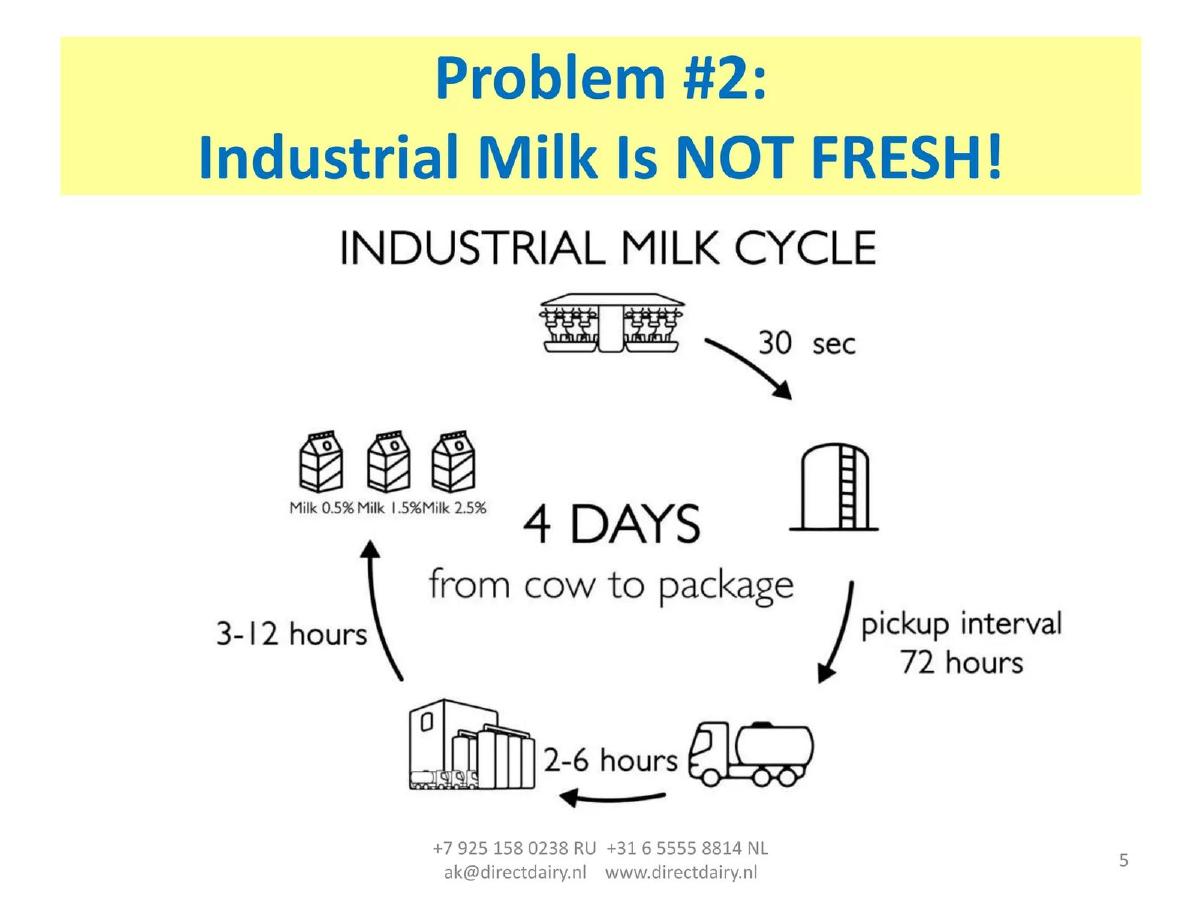
- The current industrial milk cycle takes 4 days from cow to package, involving a 72-hour pickup interval (Slide 5).
- DDH claims their technology reduces the cow-to-package time to just 20 minutes (Slide 7).
- The product is a 720 ml stand-up pouch featuring cow-specific QR triggers for digital interactivity (Slide 9).
- Farm gross margins for A2 milk are projected to rise from €0.05 in the industrial model to €0.26-€0.49 under the DDH model (Slide 15).
- The 'Dairy as a Service' model charges farmers a €60K license fee and €169K-€219K for hardware (Slide 19).
- Revenue streams include a royalty of €0.16 on each pack of milk produced (Slide 19).
- The company identified a serviceable obtainable market of approximately 60 dairy farms in the Netherlands with two or more milking robots (Slide 21).
- Expansion plans projected growing from 1 operational farm in 2019 to 89 farms by Year 3 (Slide 25).
Direct Dairy Holding Pitch Deck Teardown
Slide 1: Title Slide
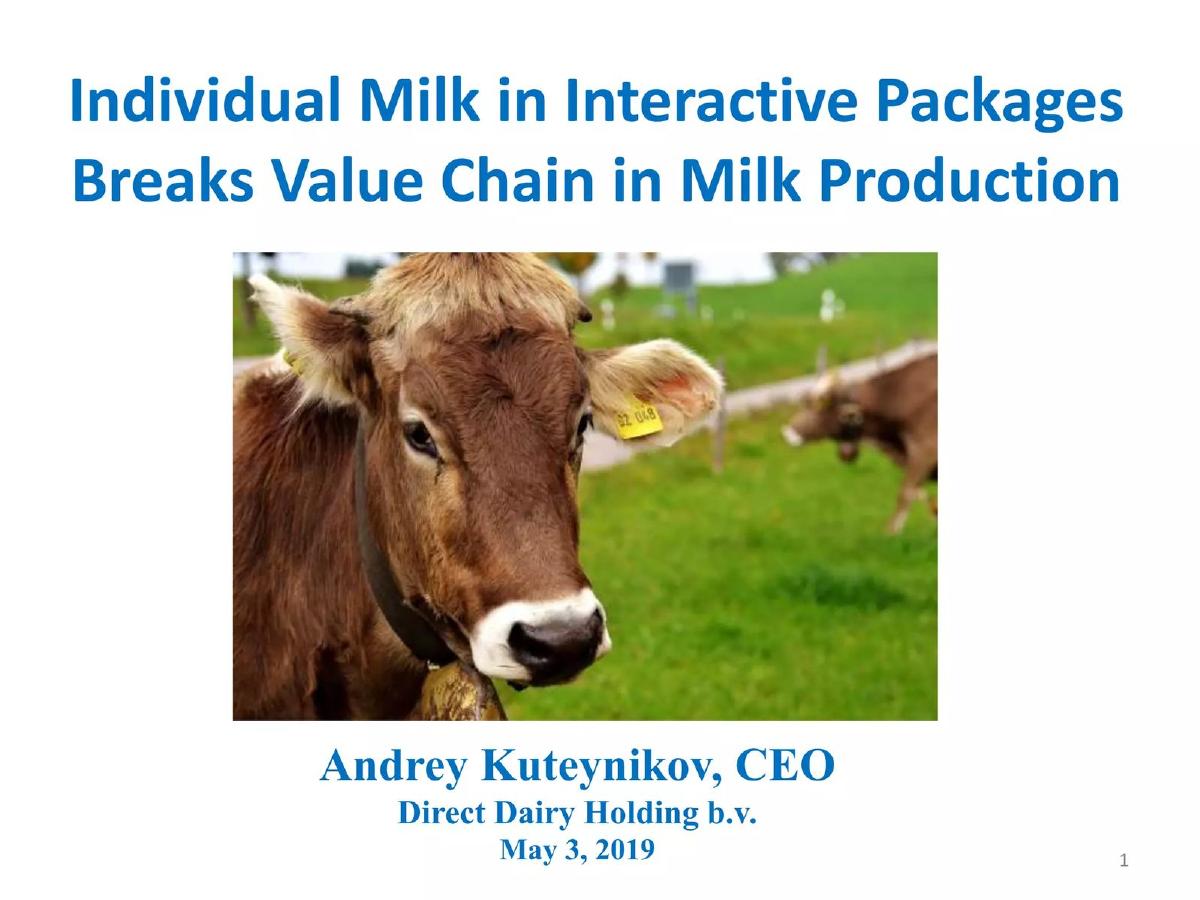
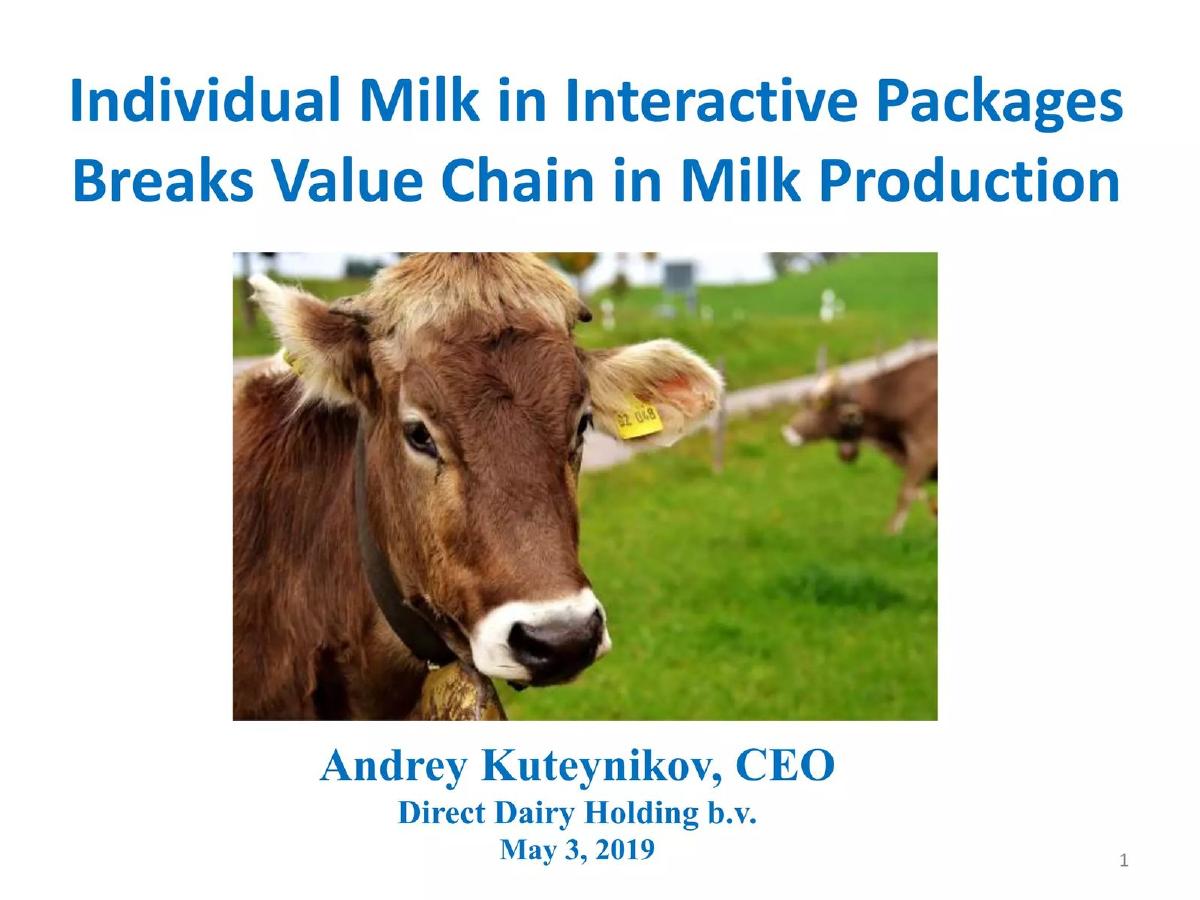
The deck opens with a clear value proposition: 'Individual Milk in Interactive Packages Breaks Value Chain in Milk Production.' It identifies Andrey Kuteynikov as CEO of Direct Dairy Holding b.v. and dates the presentation May 3, 2019. The imagery of a cow with an ear tag immediately grounds the pitch in the agricultural sector.
Slide 3: The Problem - Unhappy Actors
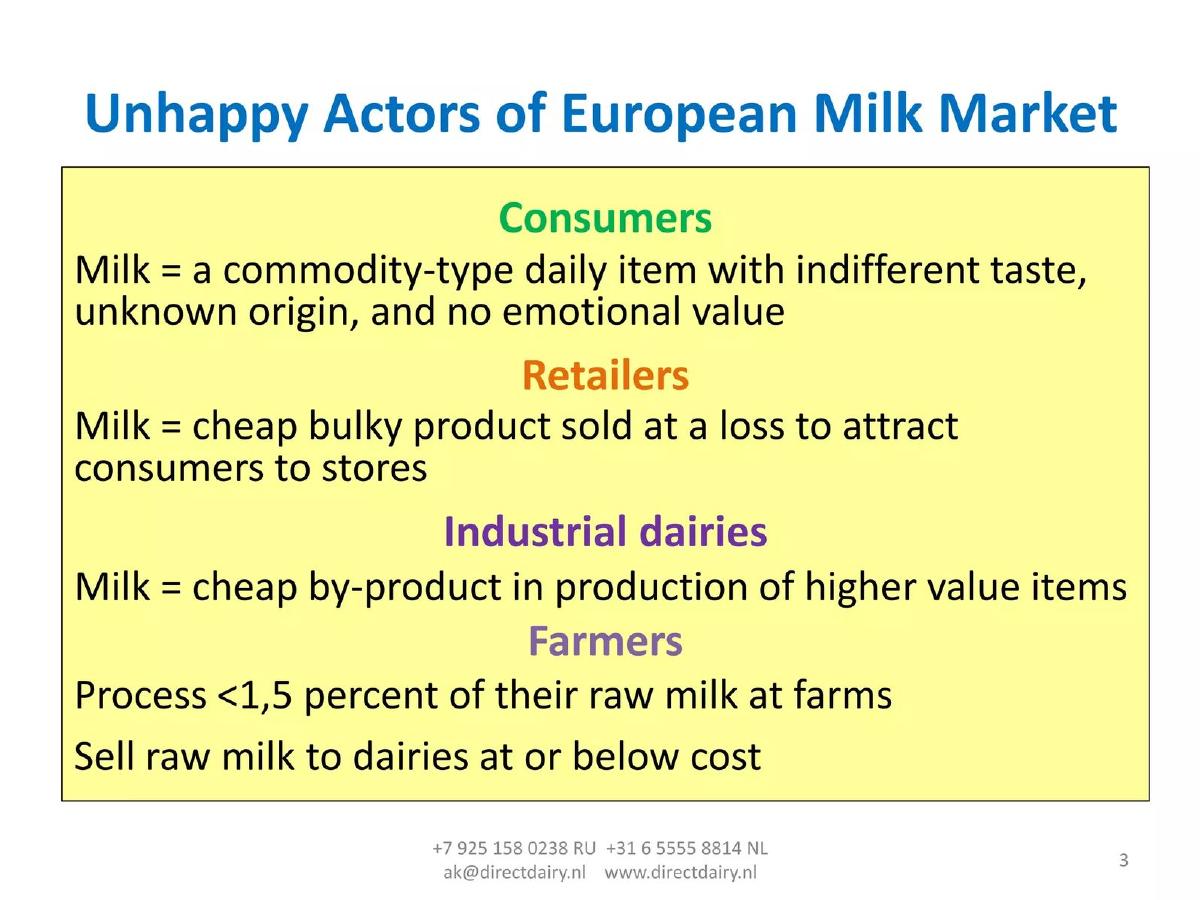
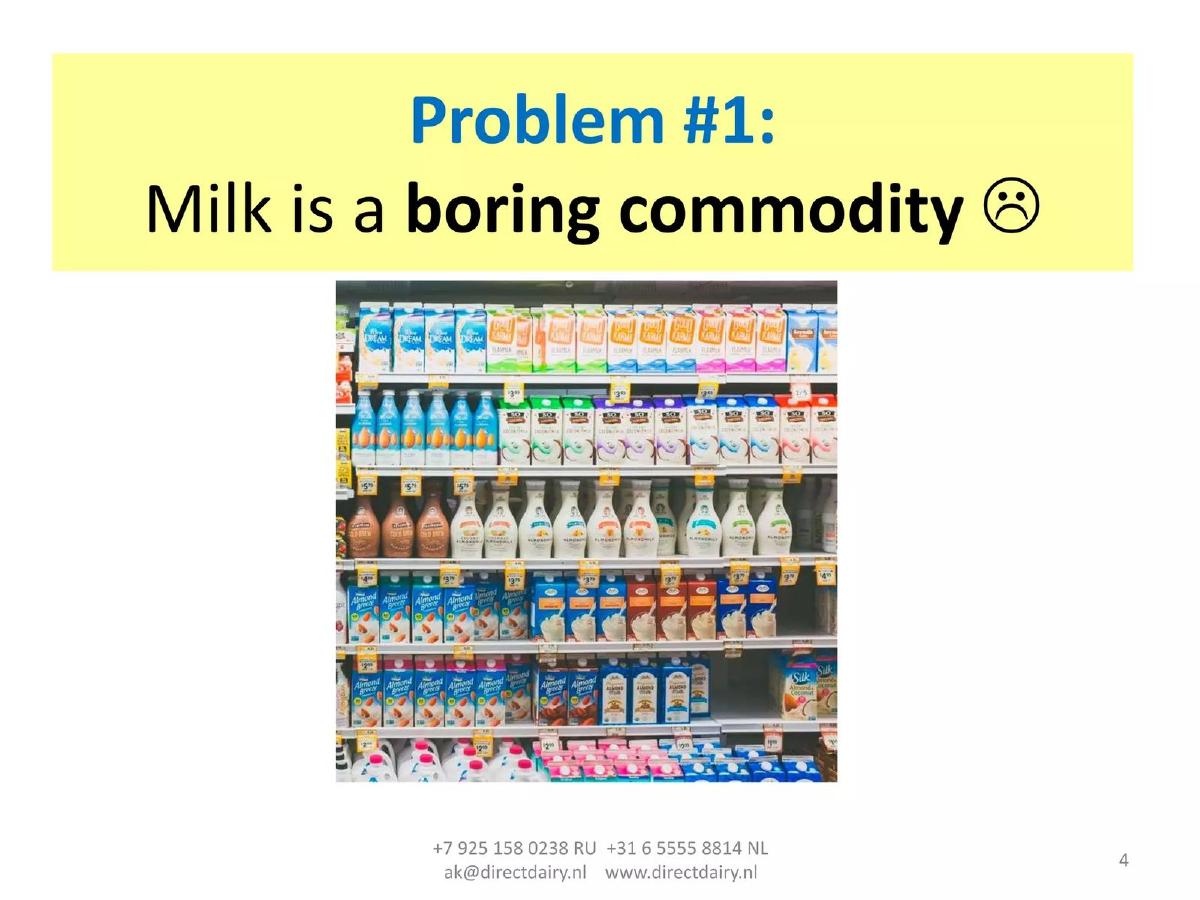
This slide categorizes the pain points for four key stakeholders in the European milk market. Consumers view milk as a commodity with no emotional value. Retailers sell it at a loss to drive foot traffic. Industrial dairies treat it as a low-value byproduct. Most importantly, Farmers process less than 1.5 percent of their raw milk on-farm and sell the rest at or below cost. This sets the stage for a disruptive solution that reallocates value.
Slide 5: Problem #2 - The Freshness Gap
Slide 5 quantifies the inefficiency of the 'Industrial Milk Cycle.' It illustrates a process that takes 4 days from cow to package, primarily due to a 72-hour pickup interval and 2-6 hours of transport. The headline 'Industrial Milk Is NOT FRESH!' uses bold, capitalized text to emphasize the perceived failure of the status quo.
Slide 7: The Solution - Milk Flow 3.0
Direct Dairy Holding introduces 'Cow-to-Package Milk Flow 3.0.' The diagram shows milk moving from cows equipped with sensors through a processing facility and into packages in just 20 minutes . This is a 288x improvement in speed over the industrial cycle shown on the previous slide. The use of QR codes on the packages is introduced here as a key feature.
Slide 9: Product Basics
The product is defined as a 720 ml stand-up pouch with a screw-off cap. Key features include:
Co-branded design (Wingy Lindy brand + farm brand). · Cow ID and exact milking time printed on each package. · Digital interactivity via cow-specific QR triggers. · Customizability for business clients and households.
Slide 11: Blue Ocean Strategy
Using a standard strategy canvas, DDH compares 'Wingy Lindy' milk against industrial and farm-packaged milk. The chart claims superior performance in taste, consumer value, value for farmers, variety, and interactivity. Notably, it admits a higher 'Cow-to-consumer cost' than industrial milk, positioning the product as a premium offering.
Slide 13: The Earnings Calculator
This slide shows a screenshot of an interactive 'Farmer's income calculator' available at their website. It demonstrates transparency in their business model, allowing farmers to input variables like cow count (typically 50 to 70 per milking robot) and logistics costs. The example shown results in €23,118 in monthly earnings before taxes for a farm producing 133,023 packages.
Slide 15: Unit Economics - Price Decomposition
This is a critical slide for understanding the value shift. For Dutch pasteurized A2 milk, the Farm gross margin increases from €0.05 per liter in the industrial model to €0.26 (retail sale), €0.49 (vending), or €0.32 (subscription) for a 720 ml Wingy Lindy pack. The consumer price remains comparable at €1.59, suggesting the extra margin comes from removing industrial processing and transport layers.
Slide 17: Product Matrix
The deck outlines a pricing matrix for Natural vs. Organic and A1 vs. A2 milk types. Prices range from €1.35 for Natural A1 to €2.29 for Organic A2. The slide also includes projected sales weights, with Natural A1 expected to make up 70% of the volume.
Slide 19: Dairy as a Service (DaaS) Details
The business model is explicitly detailed here. DDH generates revenue through:
€60K license price per farm. · €169K to €219K hardware price for R1/R2 models. · €90K-100K building and installation costs. · €990 monthly royalty per milking robot. · €0.16 royalty on each pack of milk.
Slide 21: Market Segmentation
The market analysis for the Netherlands identifies a potential available market of 18,000 dairy farms. The Serviceable & Obtainable Market (SOM) is narrowed down to approximately 60 dairy farms that already possess two or more milking robots and are located near consumption areas.
Slide 23: Competition Landscape
The deck acknowledges three processing options for farmers: industrial dairies (98.5% of the market), on-farm artisan processing (mostly fermented products), and individual milk processing. DDH explicitly states that Wingy Lindy milk is positioned against industrial milk rather than other artisan producers.
Slide 25: Expansion Plan
The timeline covers 2017 through 2022. It projects growing from zero operational farms in early 2019 to 89 operational farms by Year 3. Corresponding milk sales are projected to reach 50.3 million packages by the end of Year 3.
Slide 27: Income Source Dynamics
This slide visualizes the revenue mix over three years. Total sales are projected to grow significantly, with 'Royalties on milk produced' (the green segment) growing from a negligible amount in Year 1 to a major revenue driver ( €6.8M ) in Year 3. This indicates a classic 'razor and blade' model where hardware sales lead to high-margin recurring royalties.
Slide 29: The Team
Dr. Andrey Kuteynikov (CEO): PhD in economics, former pharmaceutical executive, and angel investor. · Valentin Sergeev (CTO): Master's in engineering, former Gazprom technical developer. · Roman Pirog (Process Engineer): 10+ years in dairy, formerly with Pepsico. · Vlad Troshin (System Engineer): 10+ years in R&D and flexible systems.
The slide also mentions over 30 contractors and subcontractors involved in the project.
Slide 31: Budgeting Options
Rather than a single 'Ask,' this slide presents a Gantt chart of 'Budgeting options for 2019-2020.' Items include €360K for team payroll, €150K for market tests, and €200K for a Dutch demo farm. The timeline is categorized by 'Urgent' vs. 'Moderate' priority. This is an unconventional way to present a funding requirement and may confuse investors looking for a specific round size.
Slide 33: The Next 20 Years
The deck concludes with a 'Basics' slide, reiterating that milk is an essential diet element and that consumers increasingly demand to know the origin of their food. It serves as a macro-justification for the company's long-term relevance.
What Direct Dairy Holding Does Well
The deck excels at identifying a specific, quantifiable inefficiency in a legacy industry. By contrasting the 4-day industrial cycle with a 20-minute automated cycle, the founders create a compelling 'why now' narrative based on the proliferation of automated milking robots. The unit economics on Slide 15 are exceptionally detailed, showing exactly how value is redistributed from the middle of the supply chain back to the producer (the farmer) and the technology provider (DDH).
What is Missing from the Deck
The most glaring omission is a clear Investment Ask . While Slide 31 lists various costs, it doesn't state how much capital is being raised in the current round, what the valuation is, or what the specific milestones for that capital will be. Additionally, there is no Exit Strategy or discussion of the competitive moat beyond the 'interactive' packaging. While the hardware is expensive, the deck doesn't explain if the processing technology is patented or if a larger dairy equipment manufacturer (like DeLaval or Lely) could easily replicate the on-farm packaging component.
What a Founder Should Copy
Founders should emulate the Income Source Dynamics (Slide 27). It clearly shows how the business transitions from one-time hardware and license revenue to high-margin, recurring royalties. This is the 'holy grail' for hardware-enabled service businesses. Furthermore, the Price Decomposition (Slide 15) is a masterclass in showing how a startup can offer a 'win-win'—keeping consumer prices stable while drastically increasing margins for the primary producer by cutting out middle-market inefficiencies.
Frequently asked questions
- What is the core technology behind Direct Dairy Holding?
- The technology centers on on-farm processing and packaging integrated with automated milking systems (AMS). By eliminating the need for milk to be transported to industrial dairies for processing, DDH reduces the time from milking to packaging from 4 days to 20 minutes. This allows for 'individual milk' tracking, where each package can be traced back to a specific cow via QR codes.
- How does the business model work for farmers?
- DDH operates a 'Dairy as a Service' model. Farmers pay an upfront license fee of €60K and purchase hardware costing between €169K and €219K. Additionally, farmers pay monthly royalties of €990 per milking robot and a per-unit royalty of €0.16 per milk pack. In exchange, the farmer's gross margin per unit is projected to increase significantly compared to selling raw milk to industrial dairies.
- What is the 'Wingy Lindy' brand mentioned in the deck?
- Wingy Lindy is the consumer-facing brand name for the milk produced using DDH's technology. The deck positions this brand as a 'Blue Ocean' product, focusing on freshness, transparent origin, and personalization. The packaging is a 720 ml stand-up pouch that is co-branded with both the Wingy Lindy name and the specific farm's brand.
- What are the projected financials for the company?
- DDH projected rapid revenue growth from Year 1 to Year 3. By Year 3, they estimated €3.24M from license sales, €8.55M from hardware sales, and €6.8M from royalties on milk produced. The revenue mix shifts from being hardware-heavy in Year 1 to being driven largely by recurring milk royalties by Year 3, representing nearly 40% of total sales.
- Is there a clear investment ask in the deck?
- No, the deck does not contain a standard 'Ask' slide with a specific dollar amount and equity offer. Instead, slide 31 provides a 'Budgeting options' timeline for 2019-2020. This includes various costs such as €360K for international team formation, €150K for market tests, and €200K for a mobile milk factory, but it does not aggregate these into a single fundraising goal.