Dear Deer is a Lithuanian-based startup tackling the inefficiencies of the traditional eyewear market. Their deck highlights a significant consumer pain point: 94% of glasses are still bought in retail environments that rely on 'caveman-like' searching through thousands of non-custom options. Dear Deer proposes a 'Mass Personalized Production' model, leveraging 3D printing to create tailor-made frames based on digital auto-measurements. The company operates a dual-track business model, serving 20 B2B companies across 9 countries and 180 B2C customers across 5 countries. While the deck lacks a…
Key takeaways
- The company identifies a massive fit issue, noting that 25% of consumers struggle to find glasses that fit properly (Slide 7).
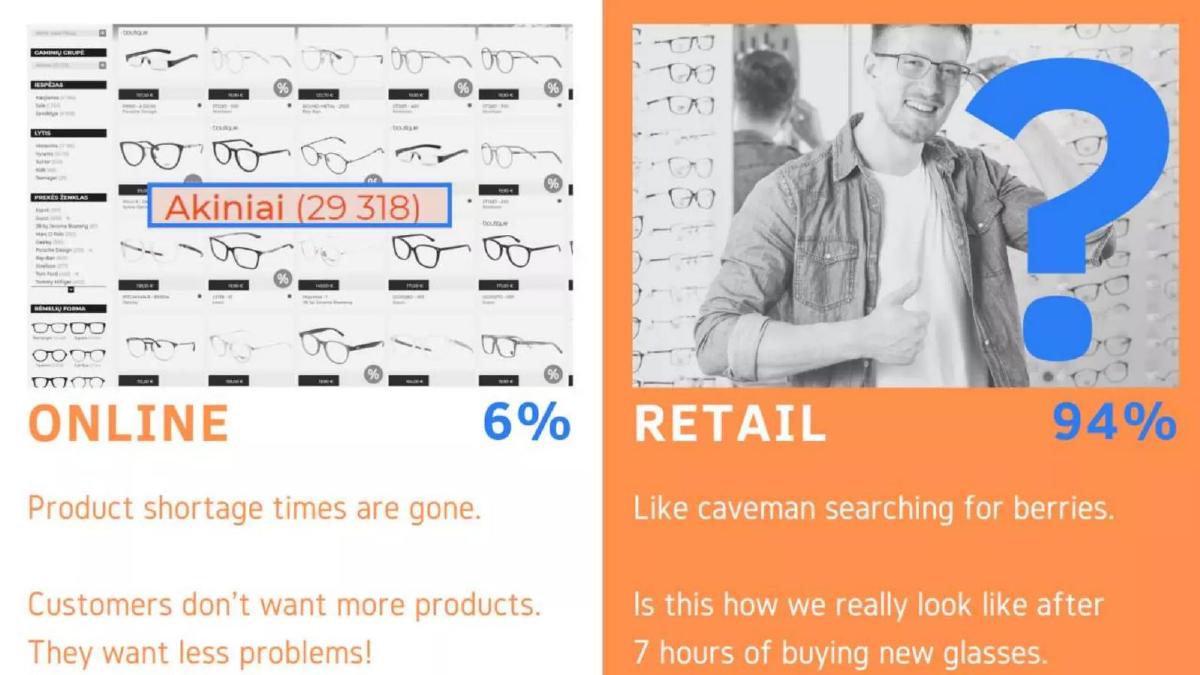
- Retail dominates the current market at 94%, while online sales represent only 6% (Slide 5).
- Dear Deer utilizes 3D printing for retail frames, a segment they project will grow from 37% in 2019 to 72% by 2023 (Slide 16).
- The technology stack includes virtual try-on, auto-measurement, and personalization features (Slide 11).
- Current B2B traction includes 20 companies across 9 countries generating 240 orders per month (Slide 13).
- The B2C segment has reached 180 customers in 5 countries (Slide 13).
- Financial targets include reaching 200,000 EUR in 12 months with a 20,000 EUR MRR to achieve breakeven (Slide 17).
- The deck omits a specific funding request, valuation, or detailed competitive landscape analysis.
Executive Summary: The Personalization Pivot
Dear Deer is positioning itself as the modern answer to a stagnant optical industry. The deck, presented at the 'Changer Club' in December 2019, argues that the traditional method of buying glasses—browsing thousands of mass-produced frames in a retail store—is obsolete. By combining 3D printing with digital measurement tools, Dear Deer claims to offer 'Mass Personalized Production' where every pair is tailor-made for the individual user. With early traction in both B2B and B2C channels across Europe, the company seeks to capitalize on the rapid growth of 3D printing in the eyewear sector.
Slides 1-3: The Emotional Hook
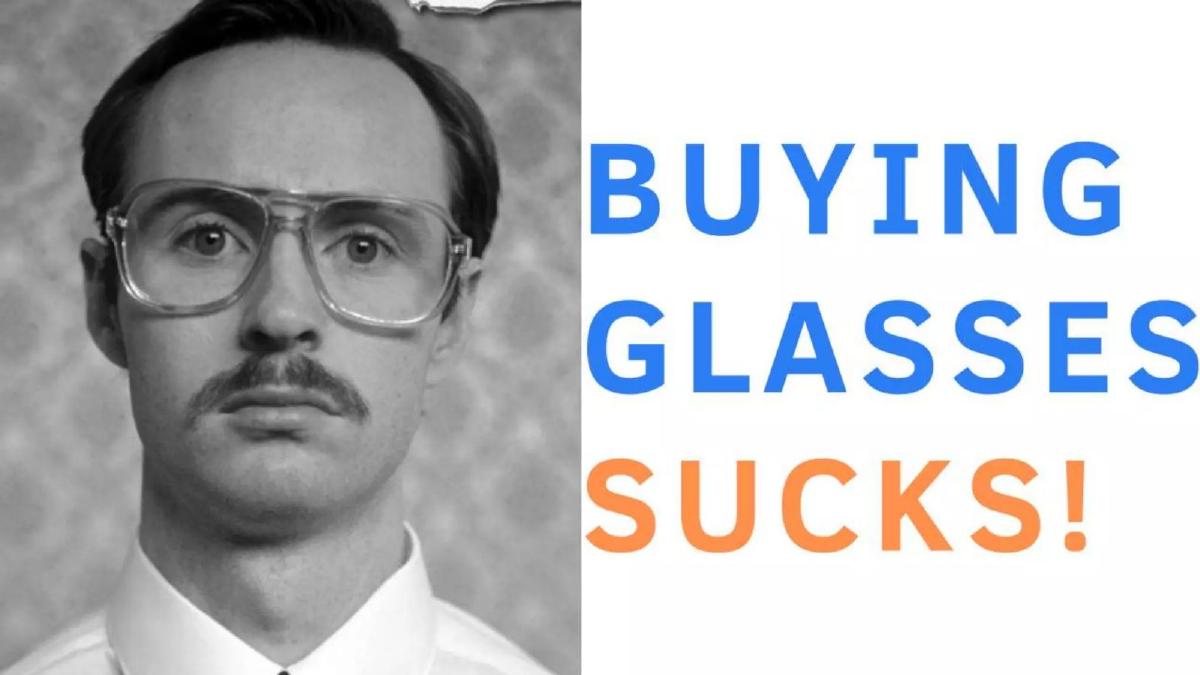
The deck opens with a bold visual style, using high-contrast black and white photography and vibrant orange and blue text. Slide 2 makes a blunt declaration: "BUYING GLASSES SUCKS!" This is followed by Slide 3 , which clarifies the sentiment: "THEY ARE MADE FOR SOMEONE ELSE, NOT YOU." This opening sequence successfully identifies a universal consumer frustration—the lack of personalization in mass-market retail—and sets the stage for a disruptive solution.
Slides 4-6: The Market Inefficiency
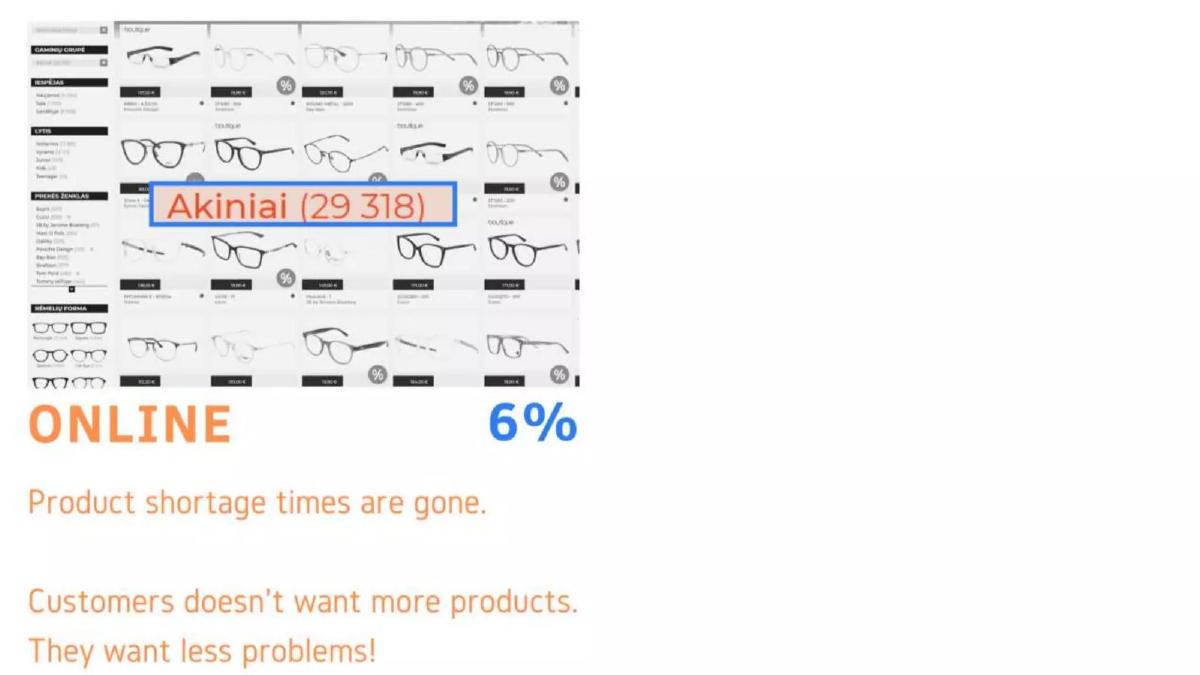
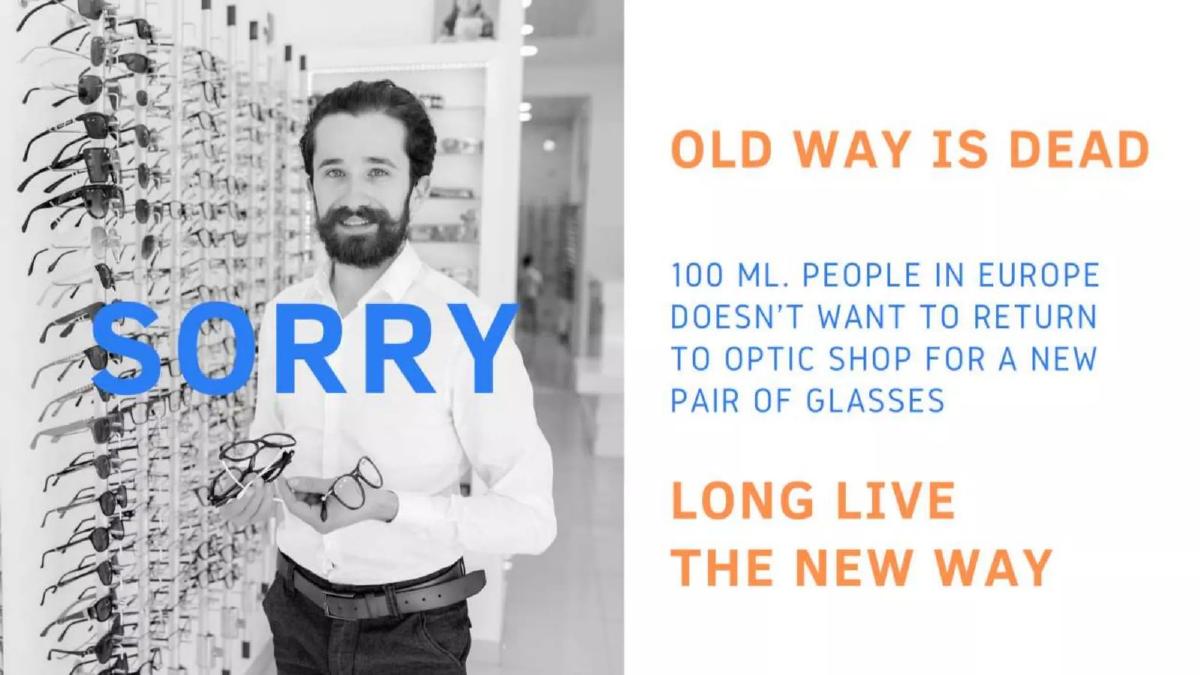
Slide 4 and Slide 5 contrast the current state of online vs. retail shopping. The deck points out that while online stores offer massive variety (citing a screenshot with 29,318 products), they only account for 6% of the market. Conversely, 94% of sales happen in retail, which the deck describes as "Like caveman searching for berries." Slide 6 summarizes this by stating the "OLD WAY IS DEAD," claiming that 100 million people in Europe do not want to return to traditional optic shops for new glasses. This section uses hyperbole to emphasize the gap between consumer desire and market reality.
Slide 7: Data-Driven Validation
To move beyond emotional claims, Slide 7 introduces three key statistics: 25% of people struggle to find glasses that fit, 44% believe fit is the most important factor, and 81% want personalized products. This is one of the strongest slides in the deck because it anchors the company's value proposition in specific consumer pain points that their technology is designed to solve.
Slides 8-10: The Manufacturing Solution
Slide 8 dismisses standard manufacturing, and Slide 9 introduces "MASS PERSONALIZED PRODUCTION." The core of the Dear Deer solution is 3D printing, which allows for every pair to be "tailor made for each customer." Slide 10 reinforces this as the "Modern age of optic industry." By focusing on the manufacturing process, the founders are signaling that their innovation isn't just a better website, but a fundamental change in how the physical product is created.
Slides 11-12: Technology and Process
Slide 11 breaks down the user experience into four pillars: eCommerce , Virtual try on , Personalize , and Auto measure . The slide includes screenshots of their interface, showing a face being digitally measured with red lines and numerical values (e.g., 59.69mm). Slide 12 is a placeholder for a "CREATION PROCESS" video or animation, which likely demonstrated the transition from digital scan to 3D-printed frame.
Slide 13: The Dual-Track Business Model
This slide provides a clear view of how the company generates revenue. The B2B side involves 20 companies in 9 countries, utilizing a pre-payment model. The B2C side serves 180 customers in 5 countries via their website. This dual approach is a common strategy for hardware/manufacturing startups, as B2B partnerships provide volume and stability while B2C allows for higher margins and direct brand building.
Slides 14-15: The Team and Origin
The "FACES" slides introduce the leadership: Justas Šidlauskas (CEO), Eglė Šidlauskienė (COO), and Audrius Lučiūnas (CMO). The slides also prominently feature the Startup Wise Guys logo and a map highlighting Lithuania, indicating the company's geographic base and accelerator backing. Including the accelerator logo adds a layer of institutional credibility to the founding team.
Slide 16: Market Timing and Growth
Slide 16 addresses the "Why Now?" question. It notes that in 2019, 64% of 3D printing in eyewear was for prototyping, but predicts that by 2023, 72% will be used for retail frames. The accompanying chart shows the global 3D printed glasses market growing from 244 million EUR in 2019 to 951 million EUR in 2023, with the EU market reaching 285 million EUR . This slide effectively communicates the urgency of the opportunity.
Slide 17: Traction and Targets
The penultimate slide provides the hard numbers. The company reports 240 B2B orders per month and 60 B2C orders per month (with a 1% conversion rate). Their 12-month target is 200,000 EUR in total revenue, aiming for a 20,000 EUR MRR to reach breakeven. These figures are modest but realistic for a seed-stage startup in a niche manufacturing vertical.
Slide 18: The Closing
The deck ends with a stylized blue unicorn wearing sunglasses and the phrase "READY OR NOT HERE WE COME." While playful, it lacks a final call to action or contact information, which is a missed opportunity to capture investor interest immediately after the pitch.
What Works in This Deck
The deck excels at problem identification . By using relatable imagery and strong statistics about fit and personalization, the founders make a compelling case that the current eyewear market is failing a significant portion of its customer base. The dual B2B/B2C model is also a highlight, showing that the company has already tested multiple go-to-market strategies and found early success in both. Finally, the market timing slide (Slide 16) provides a strong macro-economic reason for investors to pay attention to 3D printing in this specific sector.
What Is Missing
The most glaring omission is a specific financial ask . The deck mentions a target for MRR and breakeven, but it never states how much capital is being raised, what the valuation is, or how the funds will be allocated (e.g., R&D, marketing, scaling production). Additionally, there is no competitive analysis . The eyewear space is crowded with incumbents like Luxottica and digital disruptors like Warby Parker; failing to mention how Dear Deer differentiates itself from these players—other than through 3D printing—is a significant gap. Lastly, the unit economics (CAC, LTV, and COGS per frame) are not detailed, which is crucial for a manufacturing-heavy business.
Founder's Playbook: What to Copy
Founders should emulate the visual clarity of the early slides. Using a consistent color palette and high-quality, relevant imagery helps maintain engagement. The way Dear Deer quantified the problem on Slide 7 is also a best practice; don't just say people are unhappy, show the percentage of people who are struggling. Finally, the traction slide (Slide 17) is a good example of how to present multi-channel data simply. By separating B2B and B2C metrics, the founders show they understand the different levers required to grow each side of the business.
Frequently asked questions
- What is Dear Deer's core product offering?
- Dear Deer offers custom-made, 3D-printed eyewear. Their platform uses auto-measurement and virtual try-on technology to ensure a perfect fit for every customer, addressing the fact that 44% of consumers consider fit the most important factor when buying glasses.
- How does the business model work for B2B and B2C?
- For B2B, they partner with online and offline retailers, requiring pre-payment before manufacturing and shipping. For B2C, they sell directly via an eCommerce website. They currently have 20 B2B partners and 180 B2C customers.
- What is the market opportunity for 3D printed glasses?
- The deck cites a global market size for 3D printed glasses reaching 951 million EUR by 2023, with the EU market accounting for 285 million EUR. They emphasize that 3D printing is shifting from prototyping to retail frame production.
- Who are the founders of Dear Deer?
- The leadership team consists of Justas Šidlauskas (Founder & CEO), Eglė Šidlauskienė (Founder & COO), and Audrius Lučiūnas (CMO). The company is associated with the Startup Wise Guys accelerator program.
- What financial metrics are shared in the deck?
- The deck shows a target of 200,000 EUR in revenue over 12 months. It lists current B2B volume at 240 orders per month and B2C at 60 orders per month, with a goal of reaching a 20,000 EUR MRR to hit breakeven.