Vira Health’s 2022 Series A deck is a lean, 9-slide presentation that successfully leveraged the 'menopause wave' to secure $12M. Rather than overwhelming investors with dense financial tables or complex technical diagrams, the company focused on three core pillars: a massive, underserved market ($600 billion), high-caliber founder-market fit, and a clear product evolution from behavioral change to integrated medical care. By positioning their app, Stella, as the 'central place of guidance' for menopause, they moved beyond simple symptom tracking into the realm of digital therapeutics. The de…
Key takeaways
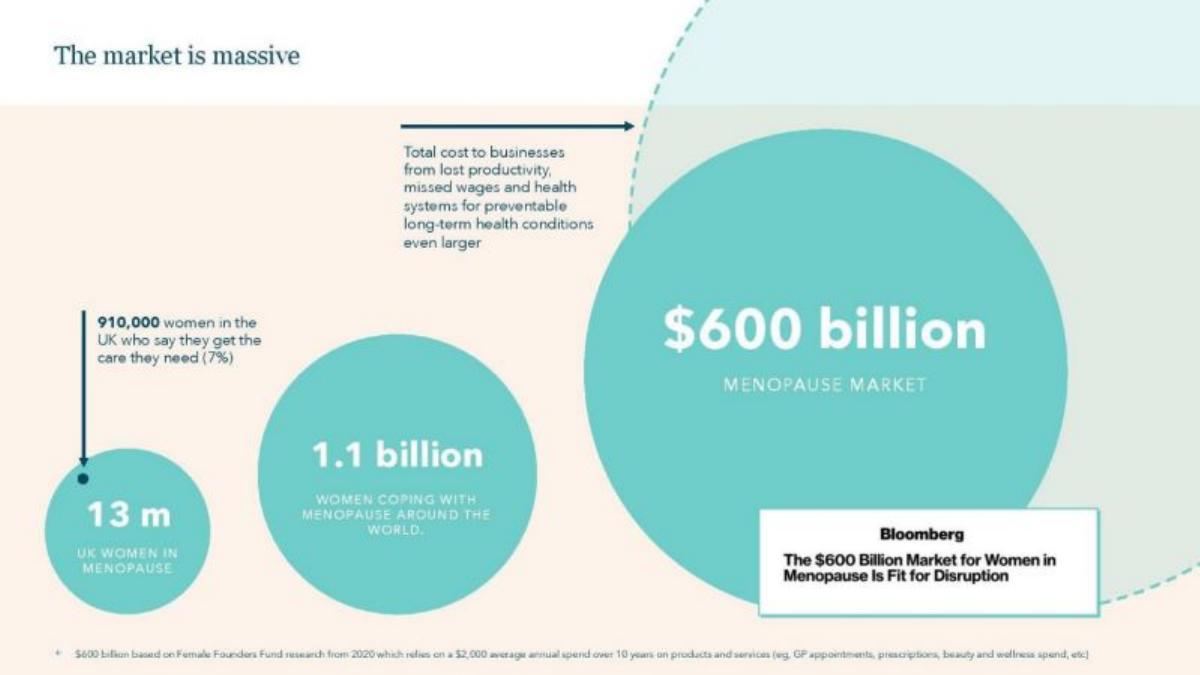
- The deck identifies a $600 billion menopause market based on research from the Female Founders Fund (Slide 5).
- Vira Health highlights a significant care gap, noting only 7% of the 13 million UK women in menopause say they get the care they need (Slide 5).
- The founders possess high-level institutional credibility, with backgrounds at McKinsey, the Gates Foundation, and Cambridge (Slide 3).
- Product strategy follows a staged approach, starting with 'Behaviour change' and moving toward 'Telemedicine' and 'Pharmaceuticals' (Slide 6, Slide 8).
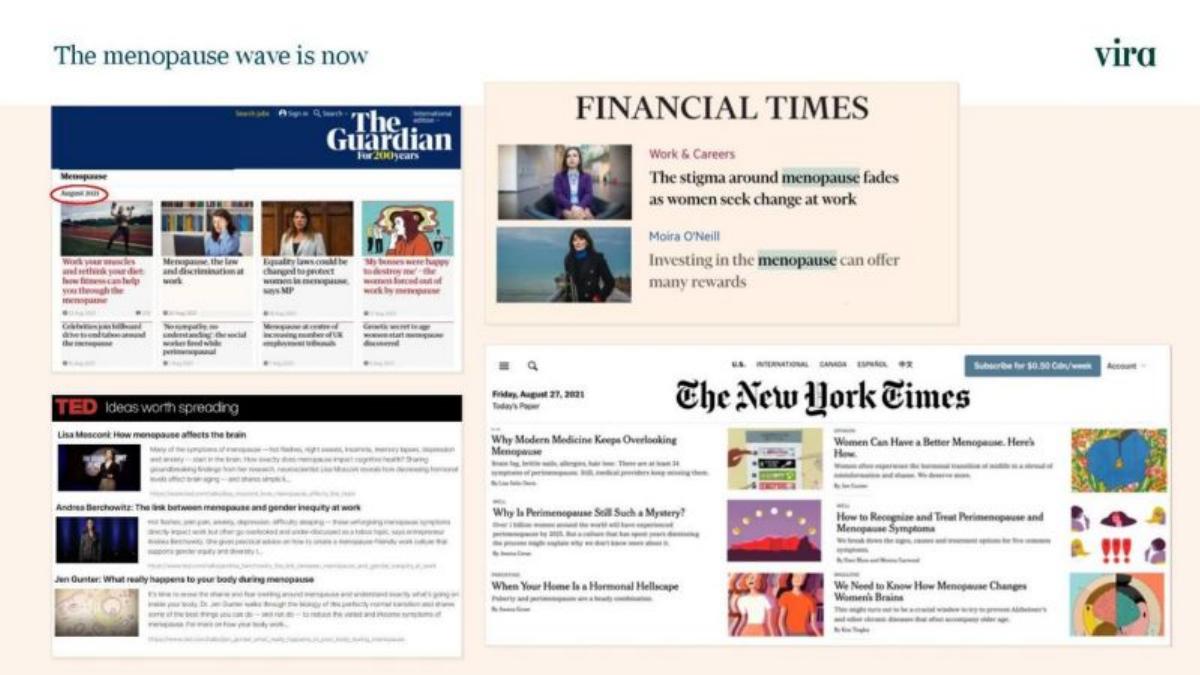
- The 'menopause wave' is validated through high-profile media coverage from The New York Times, Financial Times, and The Guardian (Slide 4).
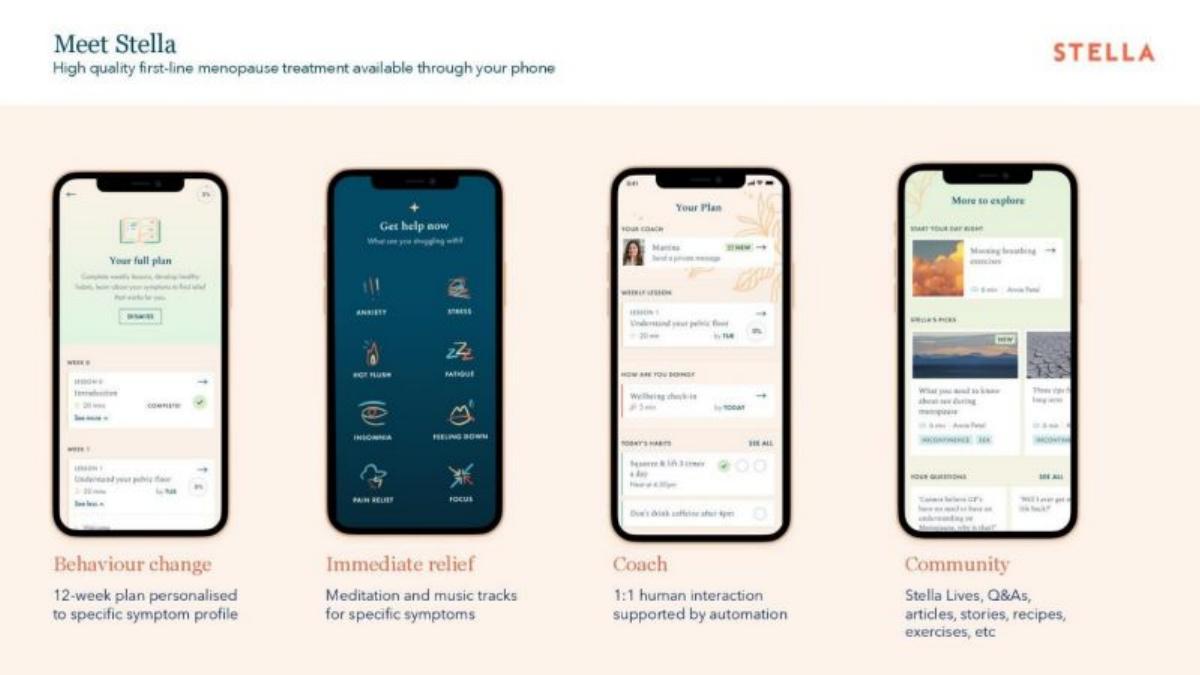
- The app, Stella, offers a 12-week personalized plan supported by 1:1 human coaching (Slide 6).
- Future monetization and clinical depth involve automatic HRT prescriptions and delivery (Slide 8).
- The deck omits traditional venture slides such as a detailed competition matrix, financial projections, and a specific use-of-funds breakdown.
The Narrative Power of the 9-Slide Deck
Vira Health’s Series A deck is a masterclass in brevity. In an era where many founders feel compelled to produce 25-slide behemoths filled with data visualizations, Vira Health raised $12 million using a presentation that is essentially a high-level narrative summary. This teardown examines how they used that space to establish a sense of inevitability around their mission.
Slide 1: The Vision Statement
The cover slide is minimalist, featuring the Vira logo and a single sentence: "Extending healthy life expectancy. Starting with better menopause care." This is a sophisticated framing. By positioning menopause care as the starting point for a broader mission of longevity, the company immediately signals that its ambitions go beyond a single niche app. It suggests a platform play in women’s health and aging.
Slide 2: Mission and Vision
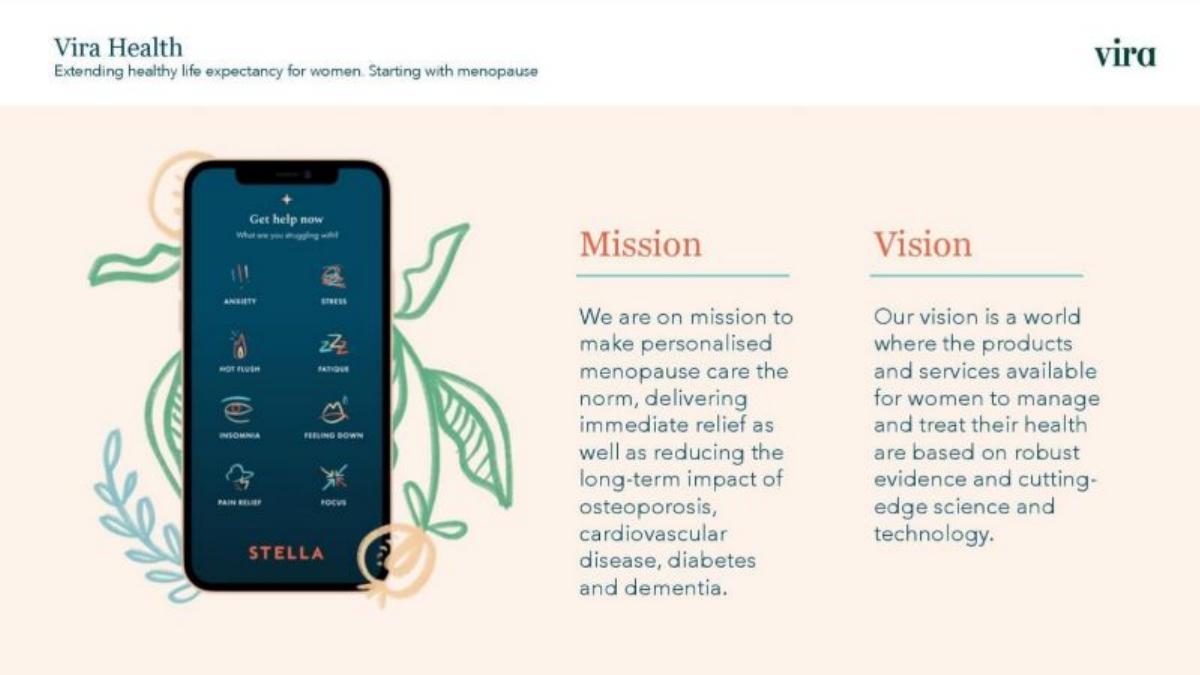
Slide 2 introduces the app, Stella , via a smartphone mockup. The mission is stated as making "personalised menopause care the norm," while the vision focuses on "robust evidence and cutting-edge science." Crucially, the text mentions reducing the long-term impact of "osteoporosis, cardiovascular disease, diabetes and dementia." This connects the immediate symptoms of menopause (hot flushes, insomnia) to high-cost chronic conditions, which is a key value proposition for healthcare investors and insurers.
Slide 3: The Founder-Market Fit
This is arguably the strongest slide in the deck. Andrea Berchowitz (CEO) and Dr. Rebecca Love (CPO) present a formidable combination of commercial and clinical expertise. Berchowitz’s 10+ years at McKinsey and the Bill & Melinda Gates Foundation suggest operational excellence and an ability to navigate complex global health systems. Dr. Love’s Medical Science PhD from Cambridge and consulting roles for the WHO and UNICEF provide the clinical 'moat' necessary for a digital therapy startup. In venture capital, this level of pedigree often offsets the need for early-stage revenue data.
Slide 4: Validating the "Menopause Wave"
Slide 4 uses a 'wall of news' strategy to prove market timing. It features headlines from The Guardian, Financial Times, The New York Times, and TED . One specific headline from August 2021 is circled, emphasizing that the cultural conversation around menopause is happening now . This slide answers the 'Why Now?' question by showing that the stigma is fading and the market is ready for disruption.
Slide 5: The $600 Billion Opportunity
Vira Health quantifies the market with three distinct circles. They cite 1.1 billion women coping with menopause globally and a $600 billion menopause market based on Female Founders Fund research from 2020. The most compelling data point on this slide is the UK-specific stat: out of 13 million UK women in menopause, only 910,000 (7%) say they get the care they need. This 93% gap represents the immediate 'low-hanging fruit' for the Stella app.
Slide 6: Product Deep Dive (Meet Stella)
This slide breaks the product down into four pillars: Behaviour change (12-week personalized plans), Immediate relief (meditation/music), Coach (1:1 human interaction), and Community (Q&As and articles). By including 'human interaction supported by automation,' Vira Health shows they understand that pure software solutions often struggle with engagement in healthcare, while pure service models don't scale. The hybrid approach is a standard Series A play.
Slide 7: Social Proof and Qualitative Traction
Instead of a chart showing Monthly Active Users (MAU), Slide 7 provides six detailed testimonials from women aged 45 to 60. The quotes are strategically chosen to highlight different product benefits: Yvonne (56) calls it a 'one-stop shop,' Laura (60) mentions it as an alternative to HRT, and Nikki (48) notes that the app helped her identify symptoms she didn't know were related to menopause. This 'early feedback' slide serves as a proxy for product-market fit in the absence of hard retention data.
Slide 8: The Roadmap to Full-Stack Care
The final content slide is the most aggressive in terms of business model. It states, "Behaviour change was our first step – we will complete the care pathway next year." It outlines the move into Telemedicine (phone/video consultations) and Pharmaceuticals (automatic prescription and delivery of HRT). This transition from a wellness/coaching app to a regulated medical provider is what justifies a Series A valuation, as it significantly increases the Average Revenue Per User (ARPU).
Slide 9: External Resource
The final slide is a standard placeholder for the platform hosting the deck, providing no additional company information.
What Works in This Deck
1. The Credibility Bridge: The deck successfully bridges the gap between a 'wellness app' and a 'medical platform.' By leading with the founders' institutional backgrounds and ending with a pharmaceutical roadmap, they convince the investor that this is a serious healthcare play, not just another meditation app.
2. Clear Market Gap: Slide 5 is exceptionally effective. By showing that only 7% of women feel they are getting the care they need, Vira Health turns a large, vague market ($600B) into a specific, underserved population. This makes the opportunity feel urgent and attainable.
3. Aesthetic Consistency: The deck uses a soft, sophisticated color palette and botanical illustrations. This branding is likely reflective of the app itself, signaling a user-centric design approach that respects the target demographic (women 45-60) rather than using clinical, cold medical imagery.
What Is Missing
1. Competitive Landscape: There is no mention of other players in the 'FemTech' or menopause space. Investors would typically want to see how Stella differentiates itself from competitors like Peppy or Kindra. Vira Health relies on its 'science-first' narrative to imply superiority without naming rivals.
2. Unit Economics and Financials: The deck is entirely devoid of numbers regarding CAC (Customer Acquisition Cost), LTV (Lifetime Value), or even current revenue. While common in early Seed rounds, a Series A deck usually includes at least a high-level summary of the financial engine. Its absence suggests this was a narrative-led round driven by the founders' reputations.
3. The Ask: There is no slide detailing how much money is being raised or what the specific milestones for the next 18 months are. While we know from the catalogue facts that they raised $12M, a founder using this as a template should remember to include a slide on how they intend to deploy the capital.
What a Founder Should Copy
1. The 'Why Now' Slide: Slide 4 is a perfect example of how to use external validation to create a sense of market momentum. If your industry is currently being covered by major publications, let the journalists do the work of convincing the investor that the problem is real.
2. The Roadmap Framing: If you are starting with a simple product but have complex ambitions, use Slide 8’s format. Label your current product as 'Step 1' and clearly show how adding new layers (like prescriptions or telemedicine) completes the 'care pathway.' This shows you have a long-term vision for capturing more of the value chain.
3. Founder Bio Layout: Slide 3 is a gold standard for bio slides. It uses high-quality photography, clear titles, and three bullet points of 'heavy-hitter' credentials. It doesn't list every job the founders ever had; it lists the ones that prove they can win this specific market.
Frequently asked questions
- How much did Vira Health raise with this deck?
- Vira Health raised $12 million in a Series A round in 2022. The deck served as the primary narrative tool to convince investors of the scalability of their digital therapy platform, Stella, and the massive untapped potential of the menopause market.
- What is the core product described in the deck?
- The core product is an app called Stella. According to Slide 6, it provides a 12-week personalized behavior change plan, immediate relief through meditation and music, 1:1 human coaching, and a community platform. The roadmap in Slide 8 shows this evolving into a full-stack telemedicine and pharmaceutical delivery service.
- Who are the founders of Vira Health?
- The company was co-founded by Andrea Berchowitz (CEO) and Dr. Rebecca Love (CPO). Berchowitz brings over 10 years of experience from McKinsey and the Bill & Melinda Gates Foundation. Dr. Love holds a Medical Science PhD from Cambridge and has consulted for the WHO and UNICEF (Slide 3).
- How does the deck define the market size?
- Slide 5 cites a $600 billion global menopause market. It breaks this down further by noting 1.1 billion women globally are coping with menopause, yet in the UK, only 910,000 out of 13 million women feel they receive adequate care, representing a massive service gap.
- What is missing from the Vira Health pitch deck?
- The deck is remarkably brief at only 9 slides. It lacks a traditional 'Competition' slide, 'Unit Economics' (CAC/LTV), 'Financial Projections,' and a 'The Ask' slide detailing how the $12M would be spent. It relies heavily on the strength of the founders and the market timing.