Vind is a mobile application focused on the intersection of social networking and personal safety, specifically targeting families and close-knit groups. The pitch deck, comprised of seven slides, emphasizes a rapid growth trajectory, claiming over 200,000 registered users within four months of its May 2018 launch. The product suite includes secure location sharing, geofencing, driving analysis, and emergency alerts. Vind proposes a dual-track business model: a freemium subscription for individuals with an expected 5% conversion rate, and a white-label enterprise solution for field team monit…
Key takeaways
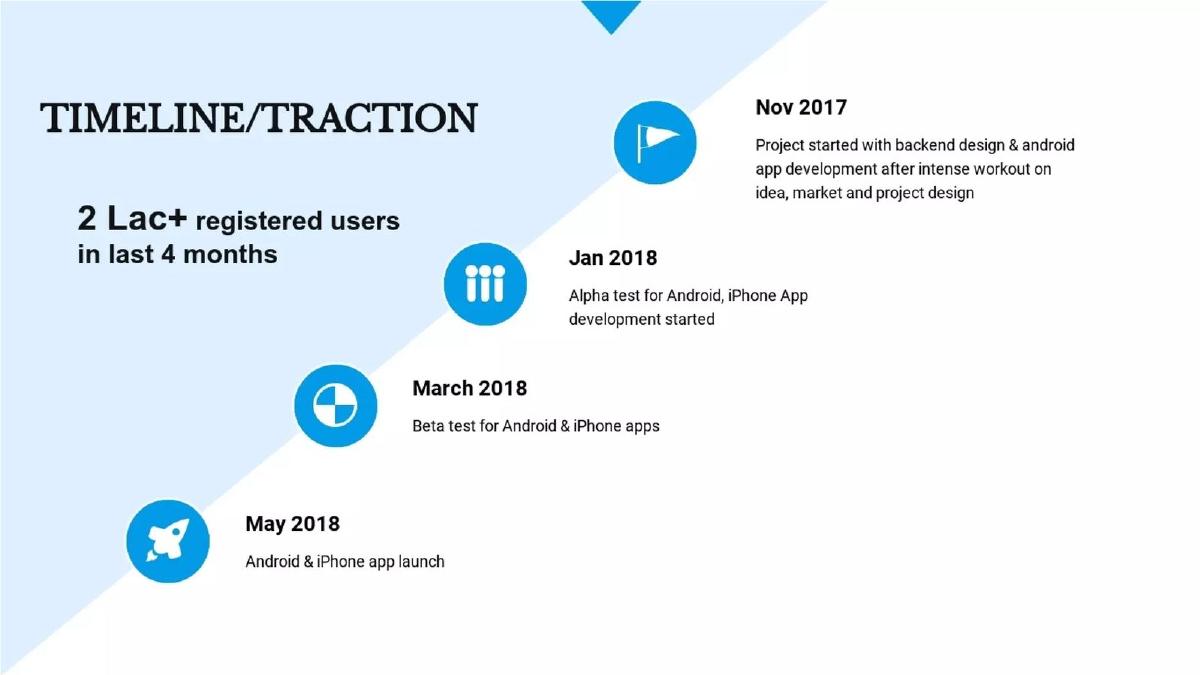
- The company achieved 2 Lac+ (200,000+) registered users within four months of its May 2018 launch (Slide 2).
- The development timeline shows a rapid transition from project start in November 2017 to full app launch in May 2018 (Slide 2).
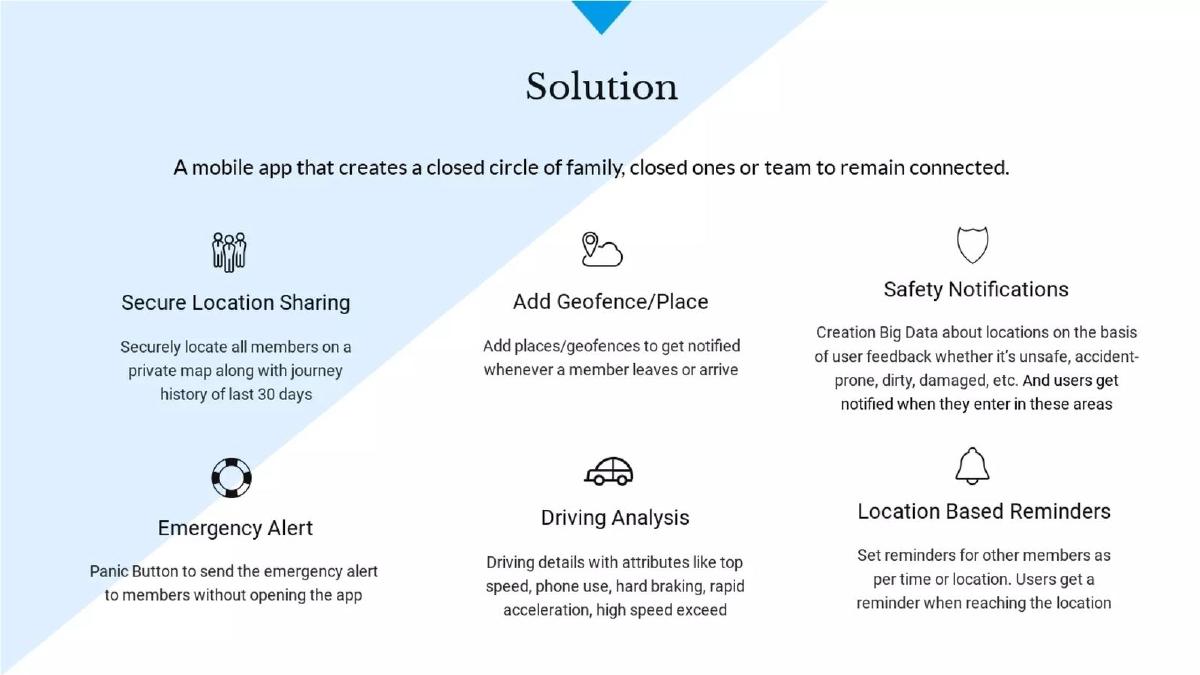
- The product includes a 'Panic Button' that allows users to send emergency alerts without opening the app (Slide 4).
- Vind utilizes 'Big Data' to notify users when they enter areas flagged as unsafe, accident-prone, or damaged based on user feedback (Slide 4).
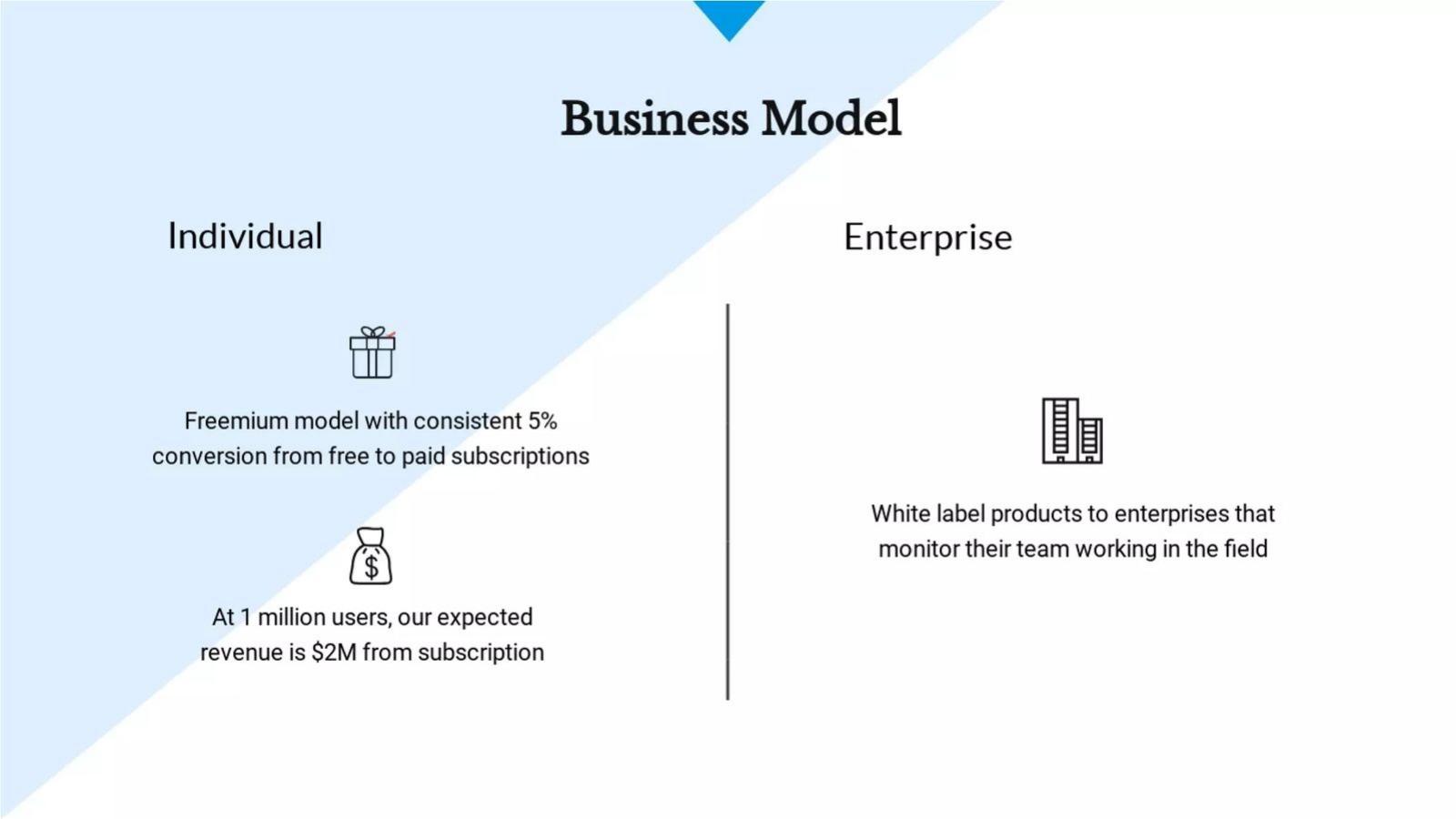
- The business model projects $2M in revenue once the platform reaches 1 million users, based on a 5% paid conversion rate (Slide 5).
- The startup targets two distinct segments: B2C via freemium subscriptions and B2B via white-label products for enterprise field teams (Slide 5).
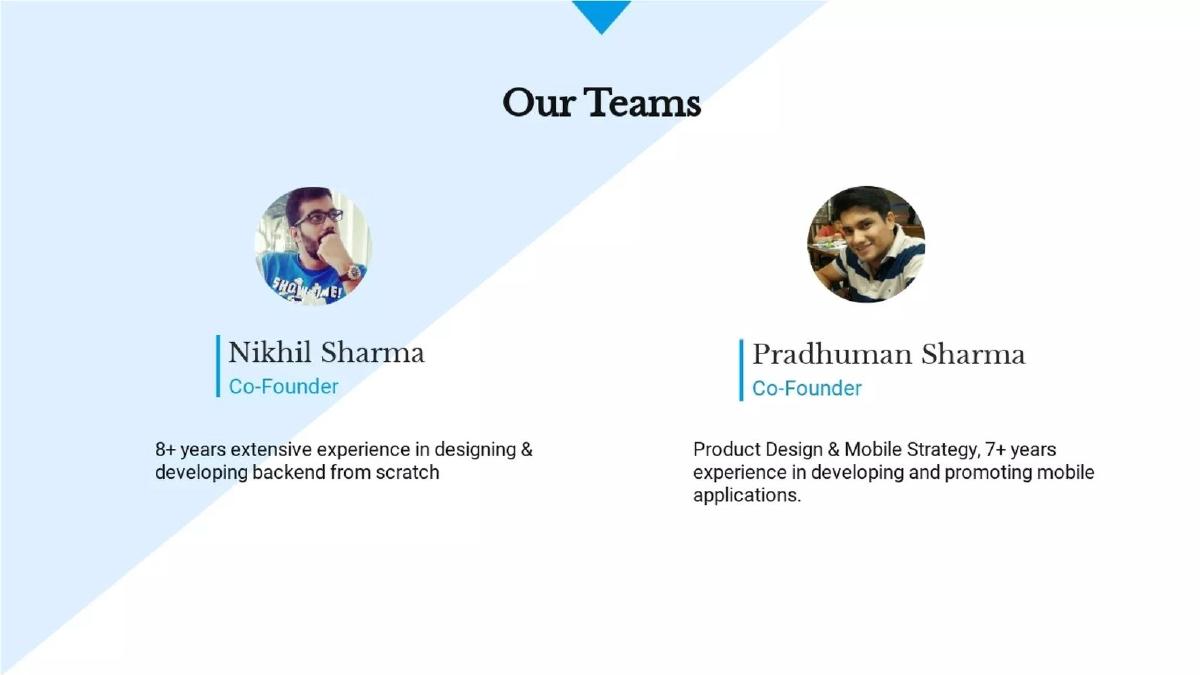
- The founding team consists of Nikhil Sharma and Pradhuman Sharma, who bring a combined 15+ years of experience in backend development and mobile strategy (Slide 6).
- The deck completely omits a financial 'Ask' slide, leaving potential investors without knowledge of the capital required or the intended use of funds (Slide 7).
Vind Pitch Deck Teardown
Vind is a mobile application that attempts to bridge the gap between social networking and personal safety. By focusing on 'closed circles' of family and friends, the platform aims to reduce the anxiety associated with the safety of loved ones. The following is a slide-by-slide analysis of their 7-slide pitch deck.
Slide 1: Title and Vision
The cover slide introduces Vind with the tagline: "Stay connected, synchronized & safe with your loved ones, no matter how far you are!" The background image features a family, immediately signaling the target demographic. It is a standard, clean opening that establishes the emotional core of the product.
Slide 2: Timeline and Traction
This slide is the strongest in the deck from a momentum perspective. It outlines a clear development path:
Nov 2017: Project start, backend design, and Android development. · Jan 2018: Alpha testing and start of iPhone development. · March 2018: Beta testing for both platforms. · May 2018: Official launch.
The standout metric is "2 Lac+ registered users in last 4 months." In the Indian numbering system, 2 Lac equals 200,000. Achieving this volume of registrations shortly after launch suggests a strong product-market fit or an effective initial growth strategy.
Slide 3: The Problem
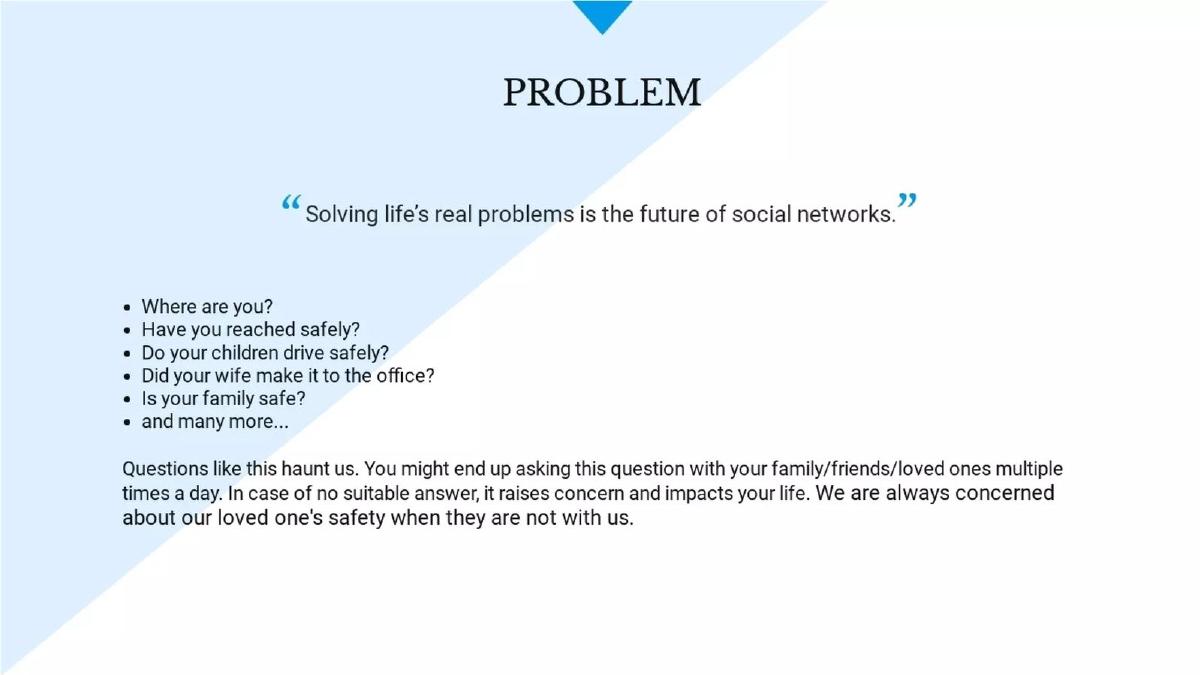
Vind frames its problem statement through a series of common parental and familial anxieties. The slide lists questions such as "Where are you?" , "Do your children drive safely?" , and "Did your wife make it to the office?" The core argument is that the lack of immediate answers to these questions impacts quality of life and raises unnecessary concern. The slide includes a quote: "Solving life's real problems is the future of social networks."
Slide 4: The Solution
The solution slide breaks down the app's functionality into six key features:
Secure Location Sharing: A private map with a 30-day journey history. · Add Geofence/Place: Notifications for arrivals and departures. · Safety Notifications: Using 'Big Data' to warn users about unsafe or accident-prone areas based on user feedback. · Emergency Alert: A panic button that works without opening the app. · Driving Analysis: Monitoring top speed, phone usage, hard braking, and rapid acceleration. · Location Based Reminders: Setting reminders for other members based on their location.
This slide effectively demonstrates that the product is more than just a simple GPS tracker; it is a comprehensive safety suite.
Slide 5: Business Model
Vind divides its revenue strategy into two categories: Individual and Enterprise . For individuals, they utilize a freemium model. They state an expectation of a "consistent 5% conversion from free to paid subscriptions." Based on this, they project "$2M from subscription" once they reach 1 million users. For enterprises, they offer "White label products" for monitoring field teams. This dual-revenue stream provides a hedge against the high churn often seen in consumer safety apps.
Slide 6: Our Teams
Nikhil Sharma: 8+ years of experience in backend design and development. · Pradhuman Sharma: 7+ years of experience in product design, mobile strategy, and app promotion.
The team appears to be product-heavy, which aligns with the rapid development timeline shown on Slide 2. However, there is no mention of advisors or a broader executive team.
Slide 7: Contact Information
The final slide provides a website (vindapp.com), an email address, two phone numbers with the +91 (India) country code, and a Twitter handle (@AppVind). Notably, this slide does not include a call to action regarding a funding round.
What Works in This Deck
1. Clear Traction: Leading with 200,000 users is a powerful way to validate the concept. It proves that there is a demand for this specific type of safety-oriented social networking.
2. Feature Specificity: Slide 4 does an excellent job of detailing exactly what the app does. Features like 'driving analysis' and 'location-based reminders for others' differentiate it from basic location-sharing tools like Google Maps.
3. Logical Progression: The deck follows a standard narrative flow: Problem, Solution, Traction, Business Model, and Team. It is easy to follow and doesn't overwhelm the reader with unnecessary fluff.
What is Missing
1. The Ask: This is the most significant omission. A pitch deck is a fundraising tool, yet there is no mention of how much capital is being sought, the valuation, or what the funds will be used for (e.g., marketing, scaling the team, infrastructure).
2. Market Size (TAM): There is no data on the total addressable market. Investors need to know if this is a niche tool or a multi-billion dollar opportunity.
3. Competitive Landscape: Vind operates in a crowded space. Apps like Life360 are well-established incumbents. The deck fails to explain why a user would choose Vind over existing, well-funded competitors.
4. Unit Economics: While the deck mentions a 5% conversion rate, it does not discuss Customer Acquisition Cost (CAC) or Lifetime Value (LTV). For a freemium app, these metrics are vital to proving the business model's sustainability.
What a Founder Should Copy
1. The Traction Timeline: Slide 2 is a great example of how to show speed-to-market. Highlighting the transition from 'Idea' to '200k Users' in under a year is a compelling narrative for any early-stage startup.
2. Visual Simplicity: The deck uses a consistent color palette and clean icons. It avoids the 'wall of text' trap that many founders fall into, making the slides highly readable during a quick skim.
3. Use Case Questions: The way Slide 3 uses relatable questions to define the problem is very effective. It forces the reader to empathize with the user's pain point immediately.
Final Thoughts
The Vind deck is a solid 'Product and Traction' deck, but it is an incomplete 'Fundraising' deck. It proves the founders can build and grow a product, but it fails to articulate the investment opportunity. To move from a project to a venture-backed company, the founders would need to add significant detail regarding their financials, market positioning, and capital requirements.
Frequently asked questions
- What is the primary value proposition of Vind?
- Vind positions itself as a 'safety-first' social network. Unlike traditional social media, it focuses on solving real-world concerns like 'Where are you?' and 'Is your family safe?' through real-time location tracking, driving behavior analysis (speed, hard braking, phone use), and automated geofence notifications when members arrive at or leave specific locations.
- How does Vind plan to generate revenue?
- Vind employs a two-pronged strategy. For individual users, it uses a freemium model, targeting a 5% conversion rate to paid subscriptions. They project $2 million in revenue upon reaching 1 million users. For the enterprise market, they offer white-label versions of the software for companies needing to monitor field teams.
- What specific traction does the deck demonstrate?
- The deck highlights significant early adoption, stating the app reached over 200,000 (2 Lac+) registered users within four months of its May 2018 launch. This follows a development cycle that included alpha testing in January 2018 and beta testing in March 2018.
- Who are the founders and what is their background?
- The company was co-founded by Nikhil Sharma and Pradhuman Sharma. Nikhil has over 8 years of experience in backend design and development. Pradhuman has over 7 years of experience in product design and mobile strategy, specifically in developing and promoting mobile applications.
- What critical information is missing from the Vind pitch deck?
- The deck is missing several standard venture capital components. Most notably, there is no 'Ask' slide detailing how much money they are raising. It also lacks a market size (TAM/SAM/SOM) analysis, a competitive landscape comparison (e.g., against Life360), and a detailed breakdown of unit economics or customer acquisition costs.