Virios Therapeutics (Nasdaq: VIRI) utilizes this Q1 2021 investor update to position their lead asset, IMC-1, as a paradigm-shifting treatment for Fibromyalgia (FM). The deck centers on the hypothesis that HSV-1 activation is an underlying cause of FM, offering a synergistic antiviral combination of famciclovir and celecoxib. With a completed Phase 2a trial showing significant pain reduction (p=0.001 for 50% reduction) and an FDA Fast Track designation, the company focuses heavily on the clinical validation and the massive unmet need in a market where 85% of prescribers are dissatisfied with…
Key takeaways
- The company identifies HSV-1 virus activation as a potential underlying cause of Fibromyalgia on slide 1.
- Lead asset IMC-1 is a combination of famciclovir and celecoxib with patent coverage until 2033 as stated on slide 3.
- Fibromyalgia affects up to 8% of the US population and carries a 3x higher suicide risk than the general population according to slide 5.
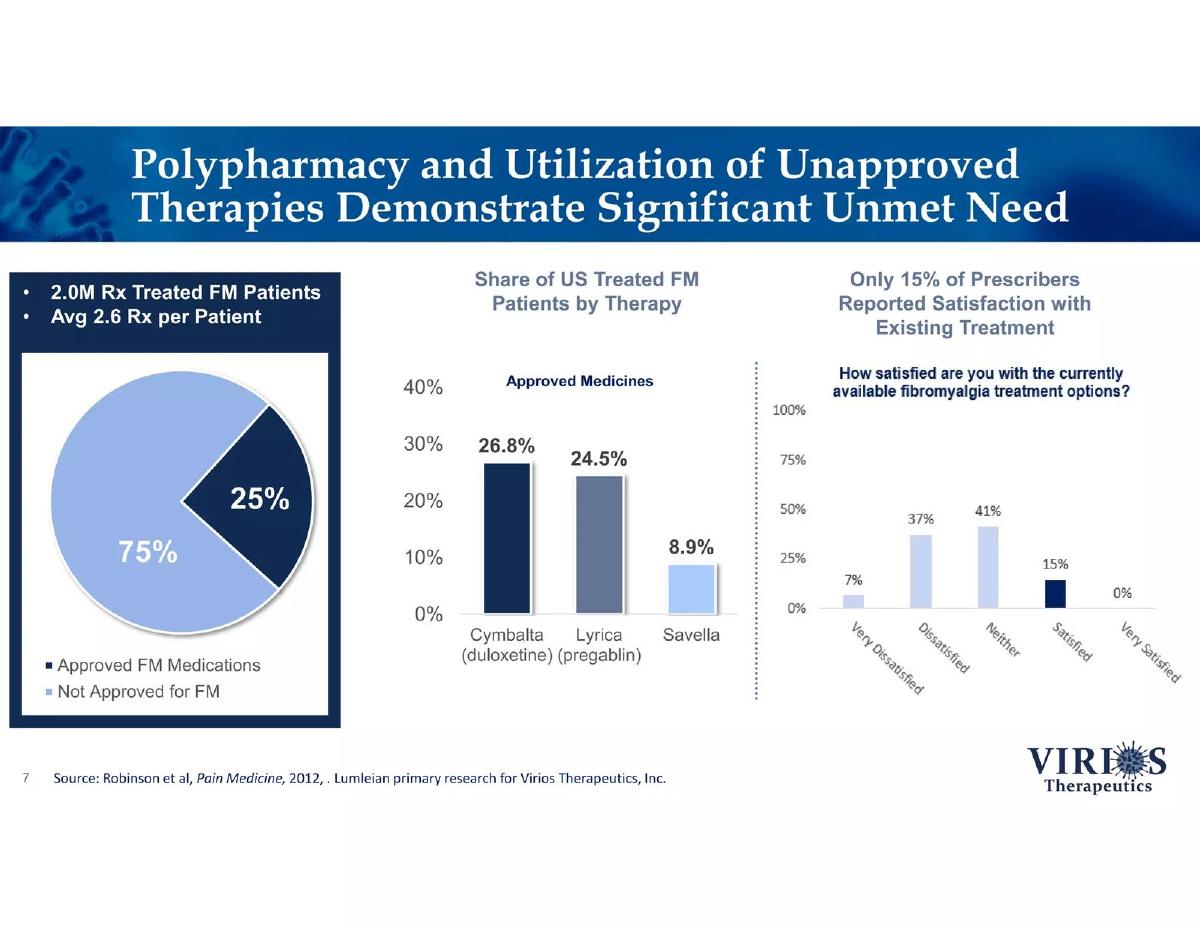
- Market research on slide 7 shows that 75% of FM patients are treated with medications not specifically approved for the condition.
- Phase 2a clinical trials for IMC-1 achieved a P-value of 0.001 for 50% pain reduction over 16 weeks as shown on slide 13.
- The company anticipates Phase 2b topline results in Q2 2022 following a 460-patient study detailed on slide 15.
- Total US market potential for FM is estimated at 10 million patients, with an existing diagnosed market of 3.6 million on slide 17.
- Prescriber satisfaction is critically low, with 0% of surveyed providers reporting they are 'Very Satisfied' with current options on slide 7.
Executive Summary and Paradigm Shift
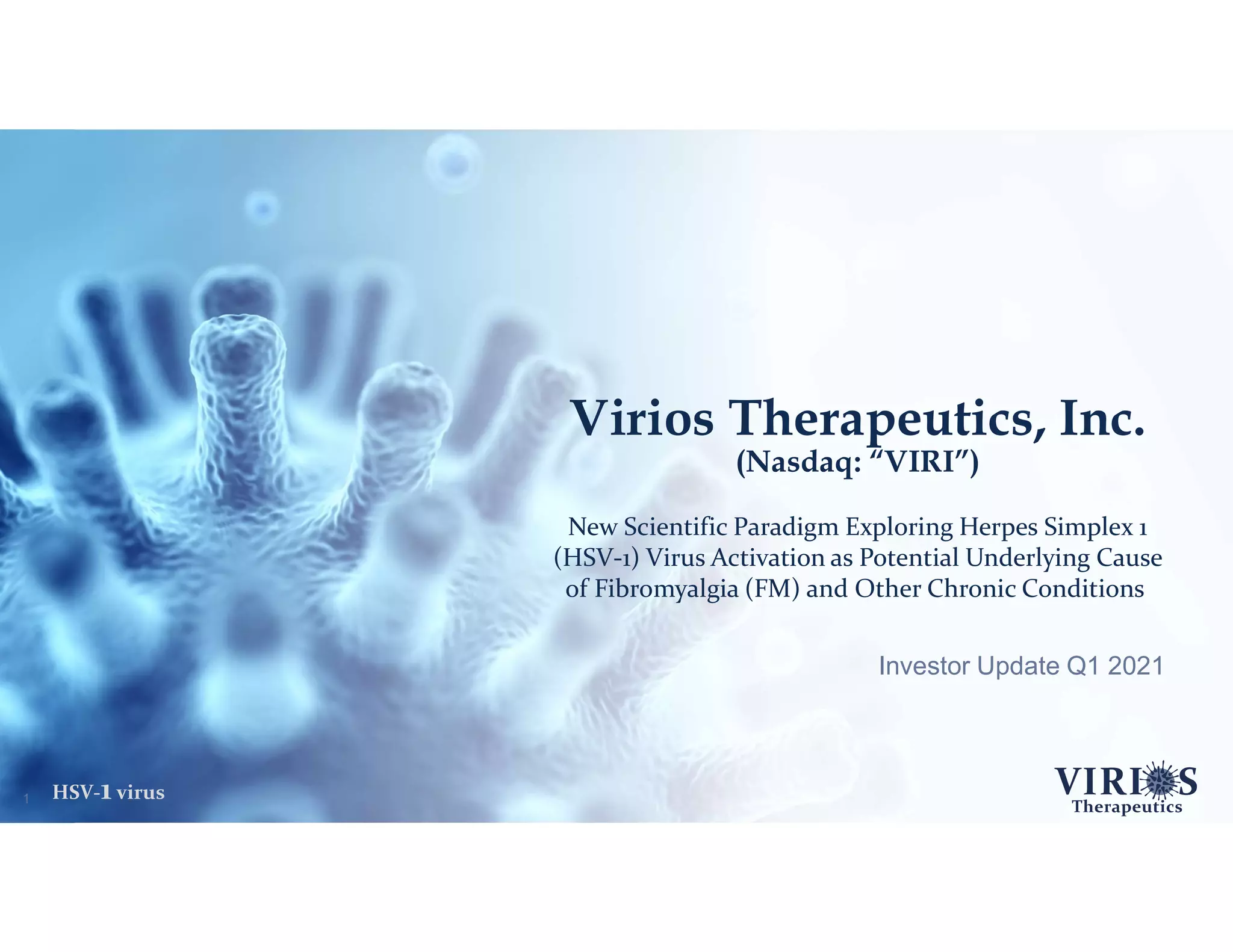
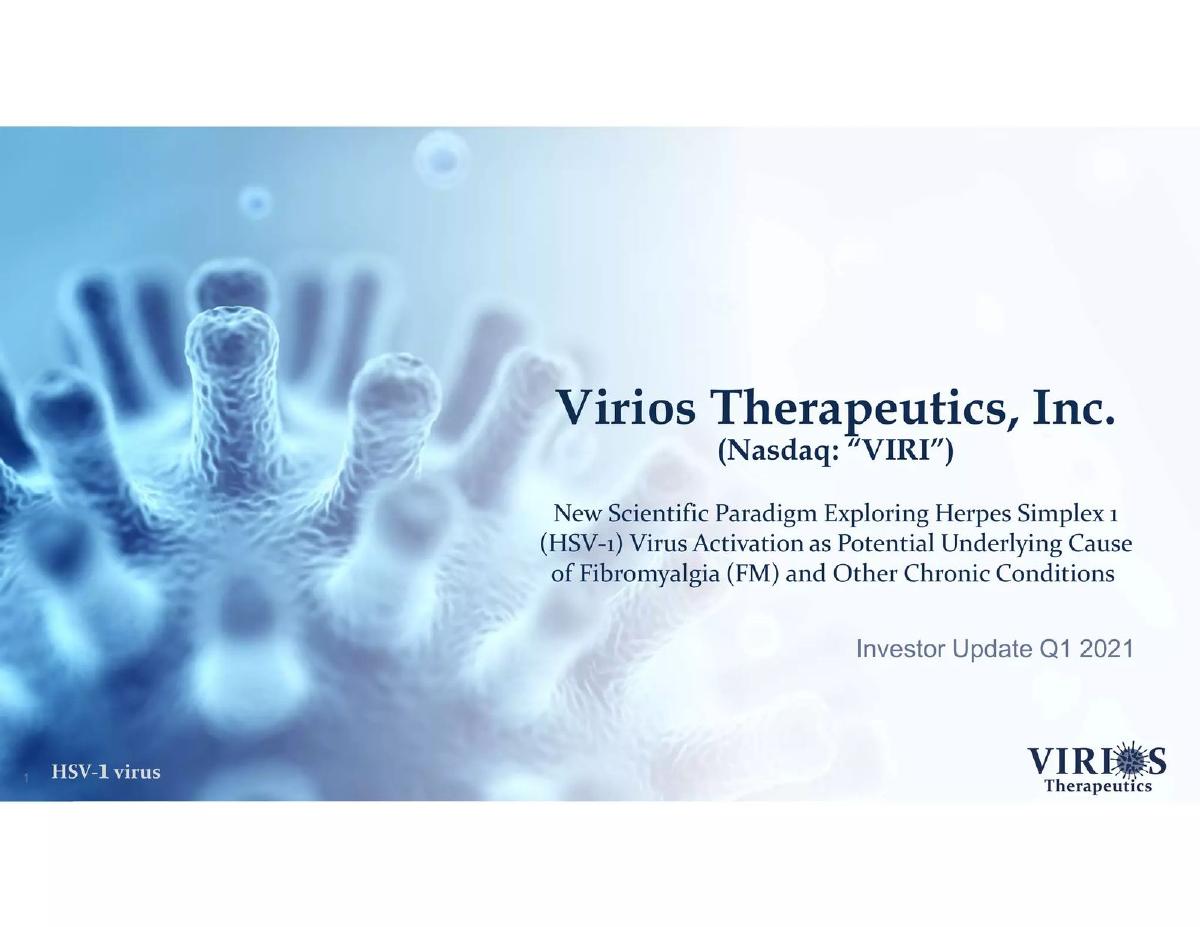
Slide 1: Title Slide
The deck opens with a clear identification of the company as Virios Therapeutics, Inc., noting its Nasdaq ticker "VIRI." The subtitle immediately establishes the value proposition: a "New Scientific Paradigm" linking Herpes Simplex 1 (HSV-1) activation to Fibromyalgia (FM). This is a bold positioning strategy, moving the conversation from symptom management to a specific viral etiology. The visual of the HSV-1 virus reinforces the biological focus of the company.
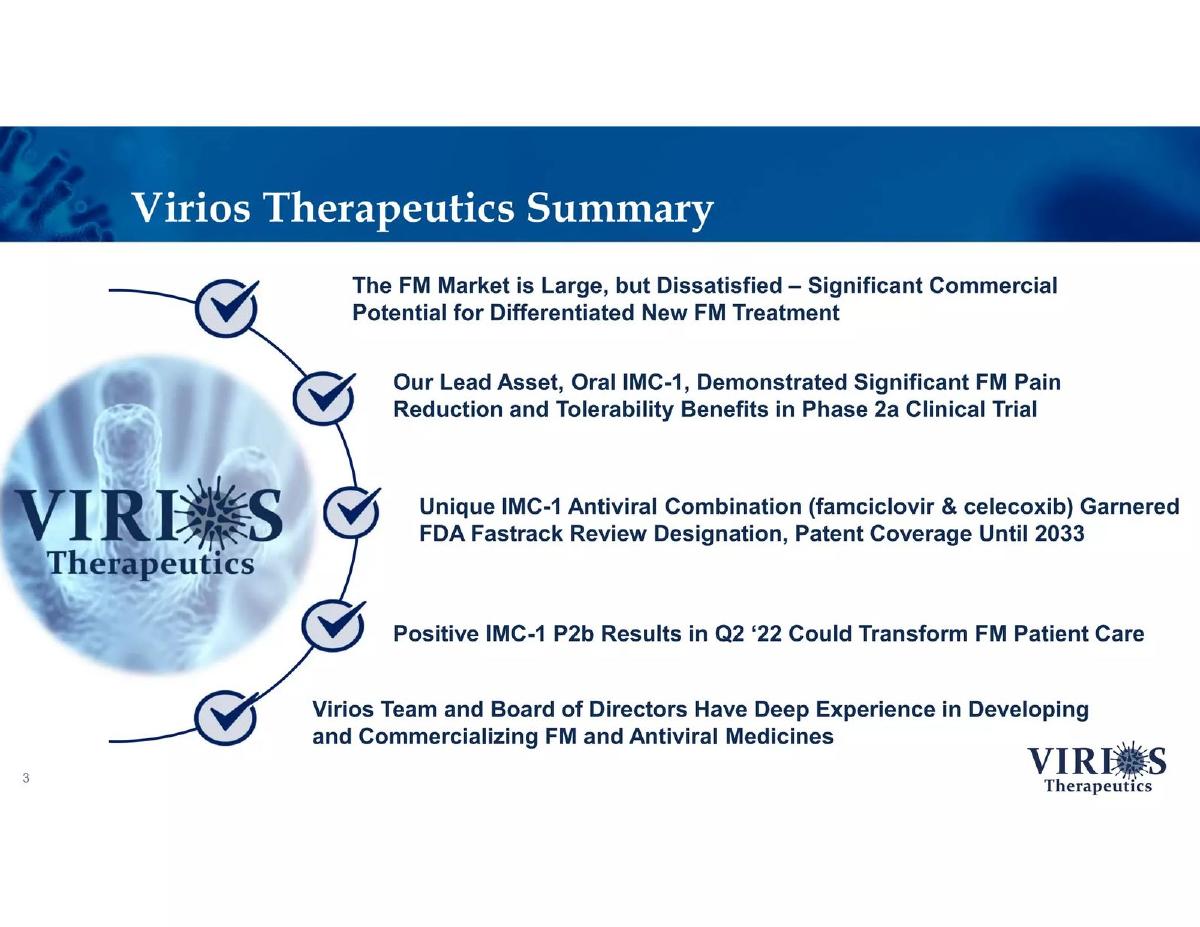
Slide 3: Virios Therapeutics Summary
This slide serves as the executive summary, utilizing a circular checklist graphic to highlight five key pillars. First, it identifies the FM market as large but dissatisfied. Second, it names the lead asset, Oral IMC-1, and cites significant pain reduction in Phase 2a trials. Third, it details the composition of IMC-1 as a combination of famciclovir and celecoxib, noting FDA Fast Track status and patent protection through 2033. Fourth, it points to the upcoming Q2 2022 Phase 2b results as a catalyst. Finally, it mentions the deep experience of the team and board, though specific names are not listed on this summary slide.
The Disease and Market Opportunity
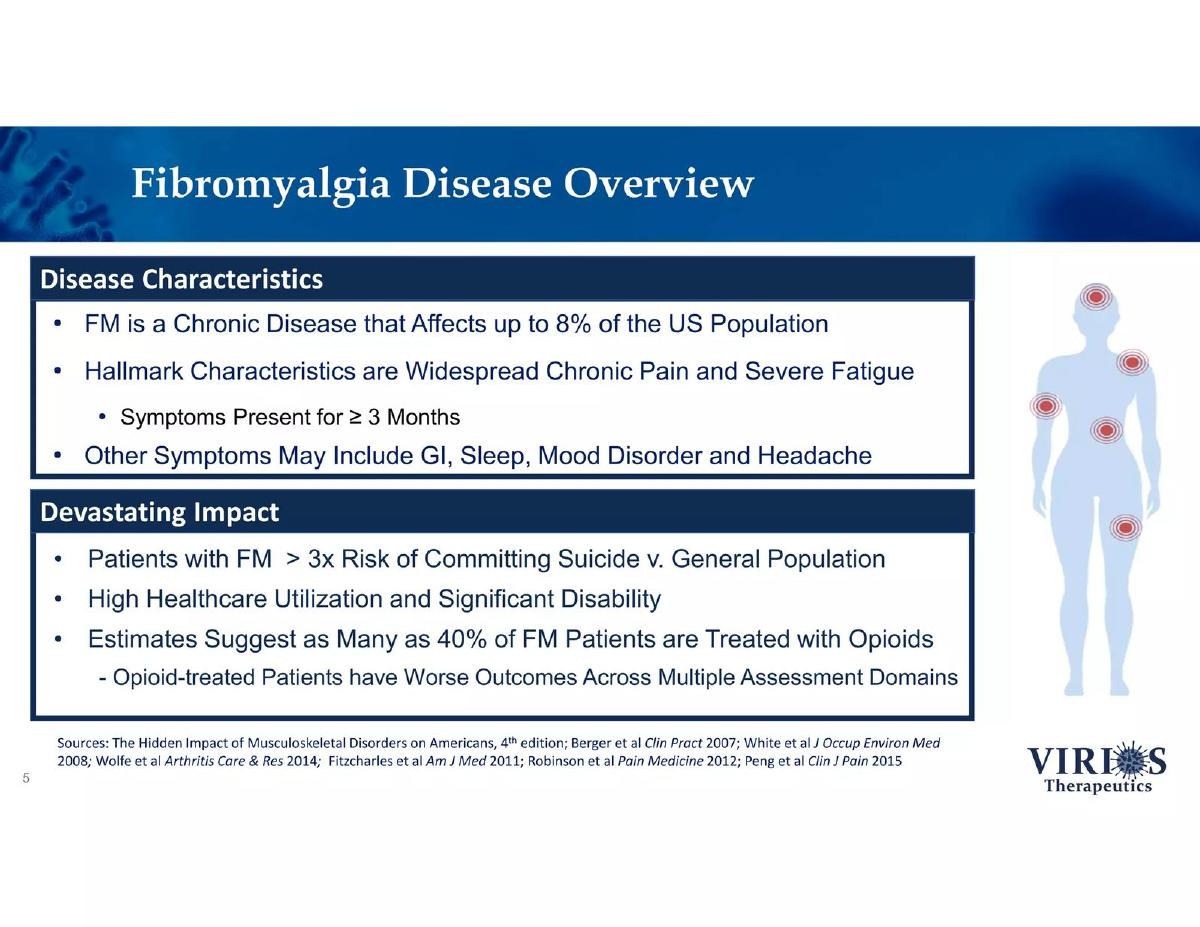
Slide 5: Fibromyalgia Disease Overview
This slide defines the problem. It states that FM is a chronic disease affecting up to 8% of the US population, characterized by widespread chronic pain and severe fatigue lasting at least three months. The deck emphasizes the "Devastating Impact," noting that FM patients have a 3x higher risk of suicide compared to the general population. A significant data point here is that 40% of FM patients are treated with opioids, despite these patients having worse outcomes across multiple assessment domains. This sets up a clear need for non-opioid, targeted therapies.
Slide 7: Polypharmacy and Unmet Need
Slide 7 uses three charts to demonstrate market failure. The first pie chart shows that 75% of FM patients are treated with medications not approved for FM. The second bar chart shows the market share of approved medicines: Cymbalta (26.8%), Lyrica (24.5%), and Savella (8.9%). The most striking data is the third chart, which shows that only 15% of prescribers are "Satisfied" with current options, and 0% are "Very Satisfied." This quantitative evidence of provider dissatisfaction is a powerful driver for the necessity of a new treatment like IMC-1.
Scientific Mechanism and Clinical Evidence
Slide 9: IMC-1 Synergistic Antiviral Mechanism
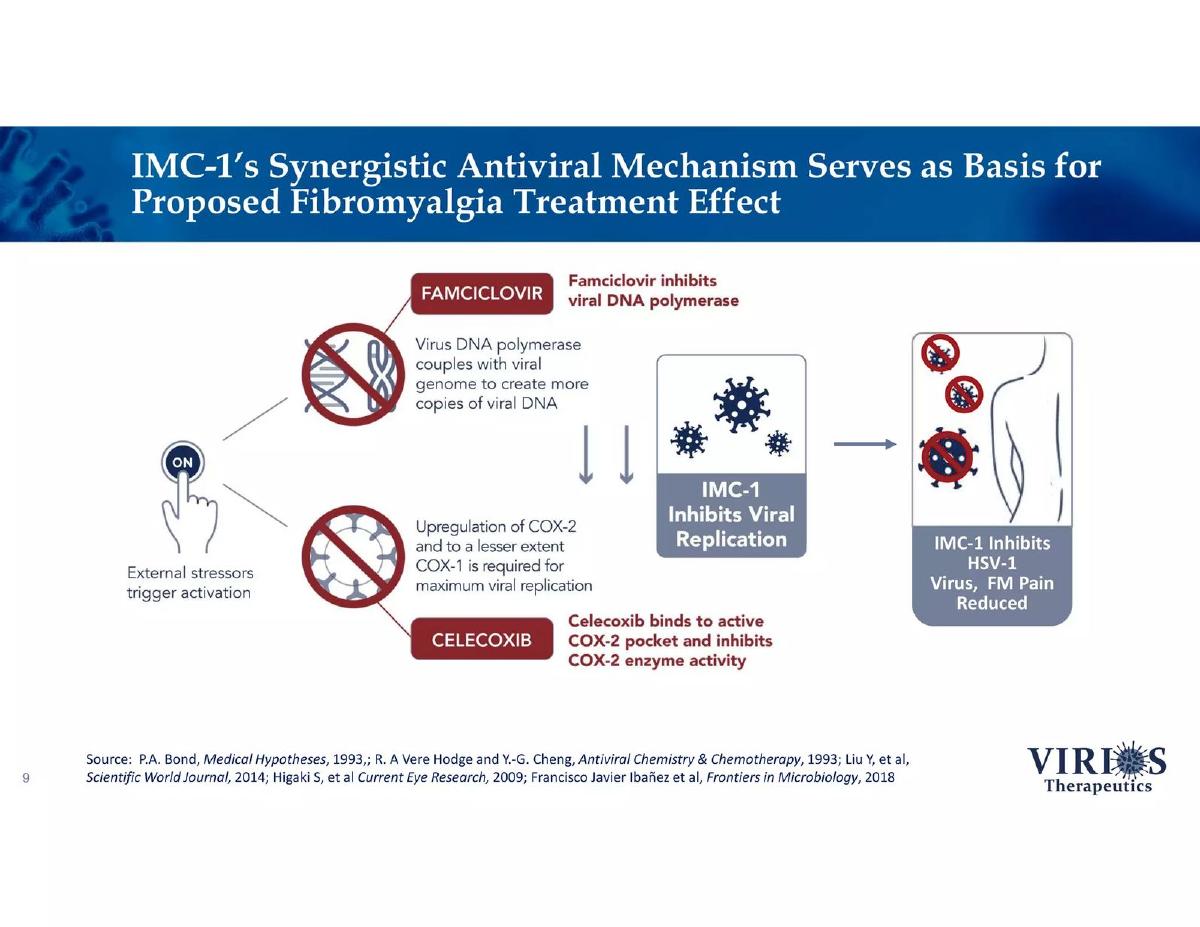
This slide explains the "How." It illustrates a pathway where external stressors trigger viral activation. The drug IMC-1 works through two components: Famciclovir, which inhibits viral DNA polymerase, and Celecoxib, which inhibits COX-2 enzyme activity required for viral replication. The slide argues that this dual action inhibits HSV-1 replication, leading to reduced FM pain. This mechanical explanation is crucial for a biotech deck to bridge the gap between a hypothesis and a clinical outcome.
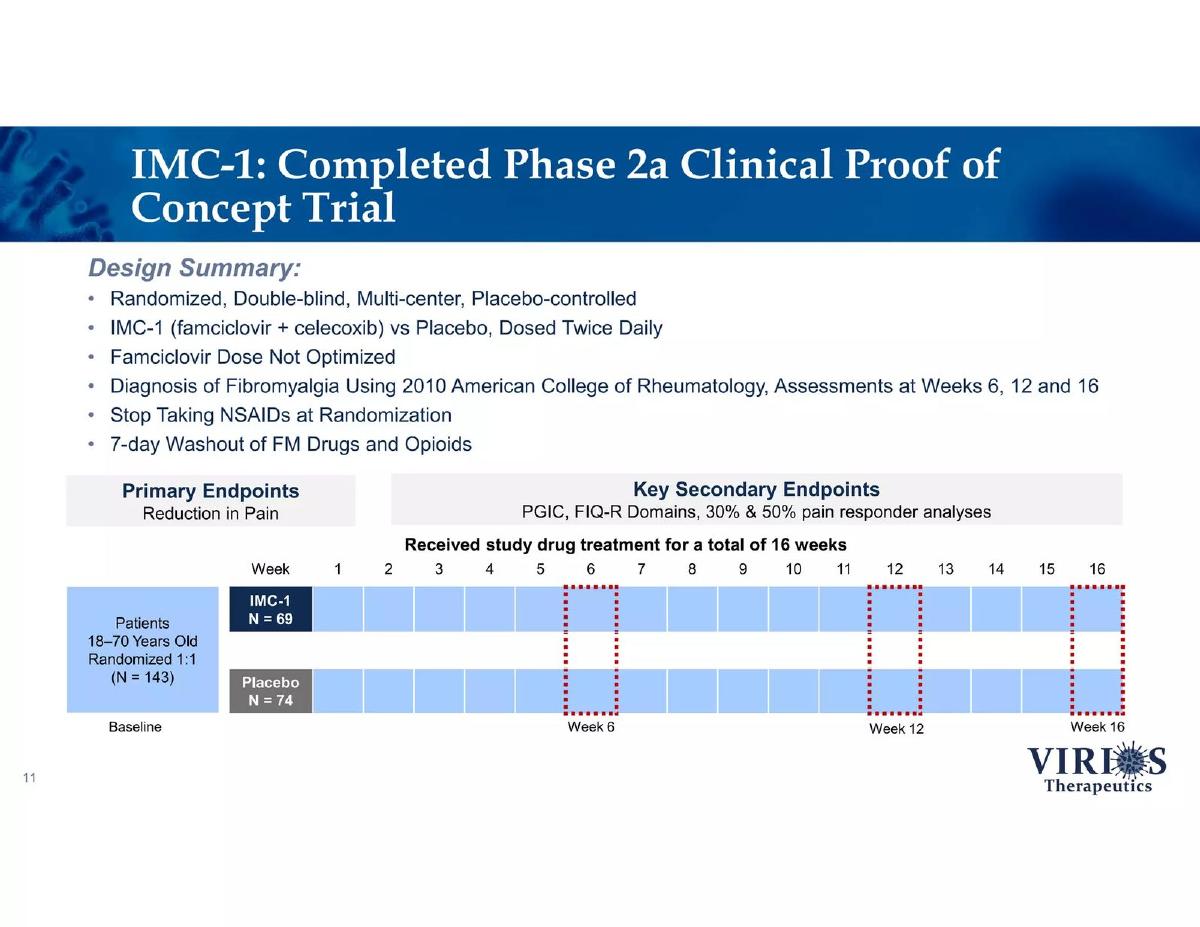
Slide 11: Phase 2a Clinical Proof of Concept Trial
Virios provides the design parameters for their completed Phase 2a trial. It was a randomized, double-blind, placebo-controlled study involving 143 patients (69 on IMC-1, 74 on placebo). The slide notes that the famciclovir dose was not yet optimized in this trial, which implies that future results could potentially be even stronger. The primary endpoint was reduction in pain, with secondary endpoints including PGIC and FIQ-R domains. The 16-week study duration is clearly mapped out in a blue and white timeline.
Slide 13: Phase 2a Consistent Treatment Effects
This is the most data-dense slide in the deck, listing P-values for various endpoints. A P-value below 0.05 is generally considered statistically significant. Virios shows exceptional results: PROMIS Fatigue Assessment (p=0.001), FIQ-R Total Score (p=0.002), and 50% Pain Reduction (p=0.001 for 7-day recall). Even the use of rescue medication was significantly lower (p=0.037). By presenting a table of consistent "wins" across different metrics, the company builds a robust case for the efficacy of IMC-1.
Future Milestones and Commercial Potential
Slide 15: Phase 2b Design and Timeline
Looking forward, this slide details the Phase 2b trial. The sample size is significantly larger (n=460) and uses an "Optimized IMC-1 Dosage." The primary endpoint remains reduction in pain. The timeline shows manufacturing and start-up in Q1-Q2 2021, with enrollment spanning Q2-Q4 2021. The critical milestone—Topline Results—is scheduled for Q2 2022. This gives investors a clear window for when the next major valuation inflection point will occur.
Slide 17: Commercial Potential in the US Market
The deck quantifies the financial upside. It estimates the annual cost of FM to the US at $12-14 billion. The "Full Market Potential" is cited at 10 million patients, with an "Existing Market" of 3.6 million diagnosed patients. Virios targets a 25% share of the treated population, or 500,000 unique patients. They use Lyrica's 2019 pricing ($16/day) and a 60% compliance rate to estimate an annual sales potential of $1.75 billion. This bottom-up market sizing helps investors visualize the revenue scale.
Slide 19: Summary
The deck concludes by repeating the summary slide from the beginning. This reinforces the key takeaways: a large dissatisfied market, strong Phase 2a data, a unique patented combination, an upcoming Phase 2b catalyst, and an experienced team. It acts as a final anchor for the investor's memory.
What Virios Therapeutics Does Well
The deck is exceptionally strong in its use of clinical data. Slide 13, in particular, is a masterclass in presenting statistical significance across a broad range of symptoms, which is vital for a complex condition like Fibromyalgia. The company also does an excellent job of quantifying the "unmet need." Rather than just saying doctors want better drugs, they provide a chart on slide 7 showing that 0% of doctors are very satisfied. This creates a compelling vacuum that their product is designed to fill. The scientific explanation on slide 9 is also clear and accessible, making a complex viral theory understandable for non-scientists.
What is Missing from the Deck
The most notable omission in these 10 slides is a dedicated Team slide. While slide 3 mentions that the team has "Deep Experience," there are no biographies, photos, or specific mentions of past successful drug launches or exits. In biotech, the pedigree of the management team is often as important as the data. Additionally, there is no "Ask" slide in this selection. While it is an investor update for a public company, a clear statement on current cash runway or how the Phase 2b trial is being funded would be standard. Finally, there is no mention of the competitive landscape beyond the three main approved drugs; a discussion of other drugs in the clinical pipeline would provide a more complete picture of the future market.
Founder Takeaways: What to Copy
Use P-Values to Build Credibility: If you have clinical or beta test data, don't just say it "worked." Use specific statistical markers of success as seen on slide 13. It removes subjectivity from the pitch.
Quantify Dissatisfaction: Virios didn't just list competitors; they showed how much those competitors are failing the users. If you are entering a crowded market, find a way to survey or cite the lack of satisfaction with current incumbents.
Visualizing the Mechanism: Slide 9 is a great example of a "Mechanism of Action" slide. It uses simple icons (a light switch, a virus, a human silhouette) to explain how a product solves a problem at the root level. This is highly effective for technical products.
Clear Milestone Mapping: Slide 15 provides a very specific timeline. Founders should always provide a Gantt-style chart for upcoming milestones so investors know exactly when to expect news and how the capital will be deployed over time.
Frequently asked questions
- What is the core scientific hypothesis of Virios Therapeutics?
- Virios operates on the 'New Scientific Paradigm' that the activation of the Herpes Simplex 1 (HSV-1) virus is a primary underlying trigger for Fibromyalgia and other chronic conditions. As shown on slide 9, they believe external stressors trigger viral replication, which their lead asset IMC-1 aims to inhibit through a synergistic combination of an antiviral and a COX-2 inhibitor.
- How does IMC-1 differ from existing Fibromyalgia treatments?
- Unlike current treatments like Cymbalta or Lyrica, which often focus on neurotransmitters or pain signaling, IMC-1 is a synergistic antiviral combination. Slide 3 notes it has received FDA Fast Track Review Designation. Slide 7 highlights that current treatments leave 85% of prescribers dissatisfied, suggesting IMC-1 targets a biological root cause rather than just managing symptoms.
- What were the key findings from the Phase 2a clinical trial?
- The Phase 2a trial was a randomized, double-blind, placebo-controlled study of 143 patients. According to slide 13, the treatment showed consistent effects across multiple endpoints, including a highly significant reduction in fatigue (p=0.001) and a 50% pain reduction (p=0.001 for 7-day recall). It also showed a significant reduction in the use of rescue medication (p=0.037).
- What is the projected market size for Virios' lead candidate?
- Slide 17 estimates the full US market potential at 10 million patients. The company specifically targets a 25% share of the currently treated FM population, which equates to 500,000 unique patients. They note that the annual FM market costs the US $12-14 billion, with existing drugs like Lyrica generating approximately $1.75 billion in annual sales.
- What are the next major milestones for the company?
- The primary milestone identified in the deck is the Phase 2b clinical trial. Slide 15 outlines a timeline where enrollment and study duration occur throughout 2021 and early 2022, culminating in Topline Results in Q2 2022. A chronic toxicology study is also scheduled to run in parallel with this trial.