MessageBird’s 13-slide deck is a study in 'traction over fluff.' Raised in 2017 (though the catalogue lists 2020), this $60M Series A round was backed by Accel and Atomico. The deck succeeds because it doesn't spend time convincing investors that cloud communications is a good market; instead, it proves that MessageBird has already won a significant portion of it. With a $75 million USD run rate and a 'bootstrapped and profitable' status stated on slide 3, the company shifted the conversation from 'if' they could succeed to 'how fast' they could scale. The inclusion of high-quality net revenu…
Key takeaways
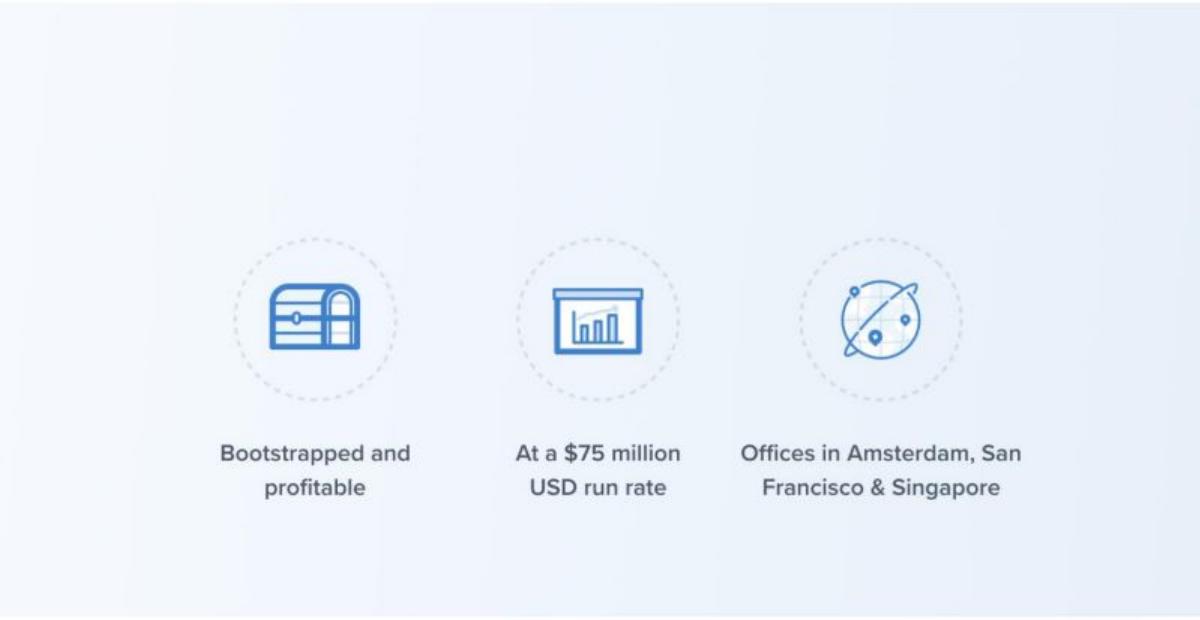
- The company led with a $75 million USD run rate and profitability on slide 3, immediately establishing themselves as a de-risked investment.
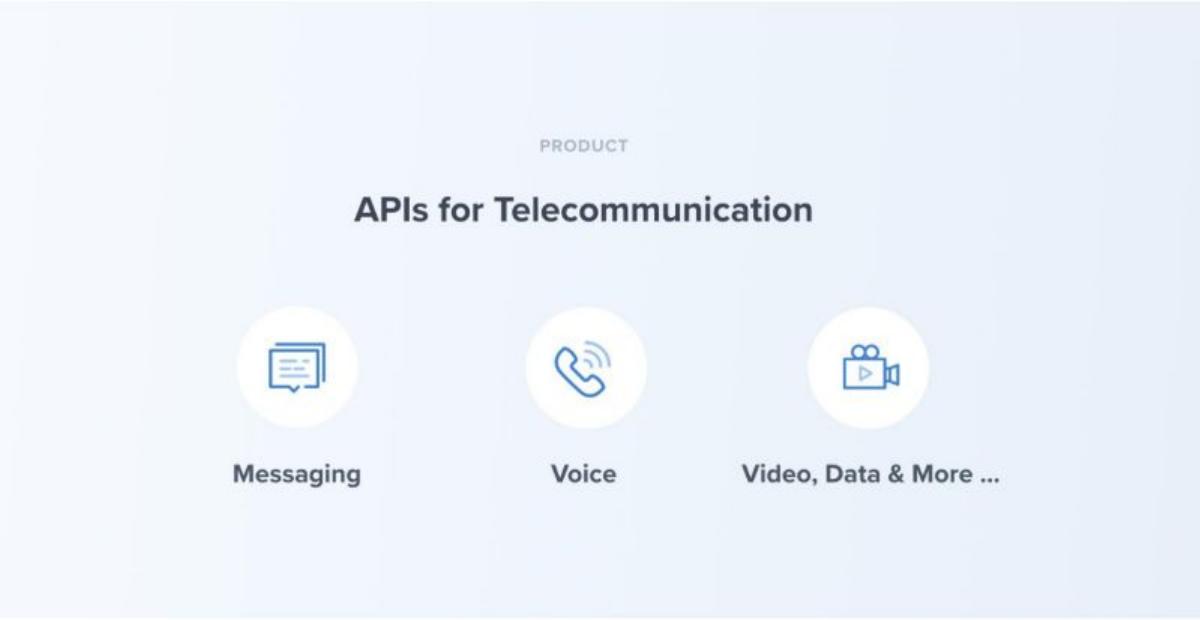
- MessageBird defined their product simply as 'APIs for Telecommunication' covering Messaging, Voice, and Video on slide 2.
- The deck leverages massive brand names like Google, Uber, and DoorDash as active customers on slide 5.
- Market size is presented as a multi-trillion dollar opportunity, with Mobile Telecom alone estimated at $1T on slide 7.
- The 'Trifecta of Routing' on slide 8 identifies Speed, Quality, and Price as their core competitive advantages.
- A Net Revenue Expansion Rate chart on slide 10 shows consistent growth above 100%, peaking near 175% in Q1 2017.
- Revenue by Sign Up Cohort on slide 11 demonstrates that even their oldest cohorts from 2007-2010 continue to contribute and grow.
- The expansion plan on slide 12 is specific, targeting a 3x increase in sales headcount across US, APAC, and Europe.
The Power of a Traction-First Narrative
MessageBird’s Series A deck is an anomaly in the world of venture capital. Most startups at this stage are selling a vision of what could be; MessageBird was selling a reality of what already was. By the time they sought this $60 million round, they had already achieved what most Series C companies struggle with: a $75 million run rate and sustained profitability while being entirely bootstrapped.
The deck is remarkably short at only 13 slides. It avoids the traditional 'problem/solution' framework that occupies the first half of most decks. Instead, it moves rapidly into the mechanics of their growth. This is a strategy only available to founders with undeniable numbers. If your metrics are this strong, the less you say, the more powerful the message becomes.
Slides 1-3: The Hook and the Numbers
Slide 1 is a minimalist title slide featuring only the MessageBird logo. There is no tagline or mission statement here, which sets a tone of efficiency.
Slide 2 introduces the product under the heading 'APIs for Telecommunication.' It breaks the offering into three clear buckets: Messaging, Voice, and Video, Data & More. This simplicity is intentional. It tells the investor exactly what they are buying: a developer-centric communications platform.
Slide 3 is the most important slide in the deck. It contains three icons and three short sentences: 'Bootstrapped and profitable,' 'At a $75 million USD run rate,' and 'Offices in Amsterdam, San Francisco & Singapore.' In three bullet points, MessageBird has answered the three biggest questions an investor has: Is there a market? (Yes, $75M worth). Is the business model sustainable? (Yes, profitable). Is it global? (Yes, three continents). This slide effectively ends the 'pitch' and begins the 'due diligence' phase of the presentation.
Slides 4-6: Social Proof and Technical Complexity
Slide 4 provides a brief nod to the company's origins: 'It started with a pain we experienced ourselves.' This is the only 'story' element in the deck, used to bridge the gap between the raw numbers and the customer use cases.
Slide 5 is a high-impact 'Our Customers' slide. It features the logos of DoorDash (Delivery), Google (2FA), and Uber (Driver Acquisition). By tying their API to specific, mission-critical functions like Two-Factor Authentication and driver onboarding for the world's largest tech companies, MessageBird proves that their infrastructure is enterprise-grade and essential.
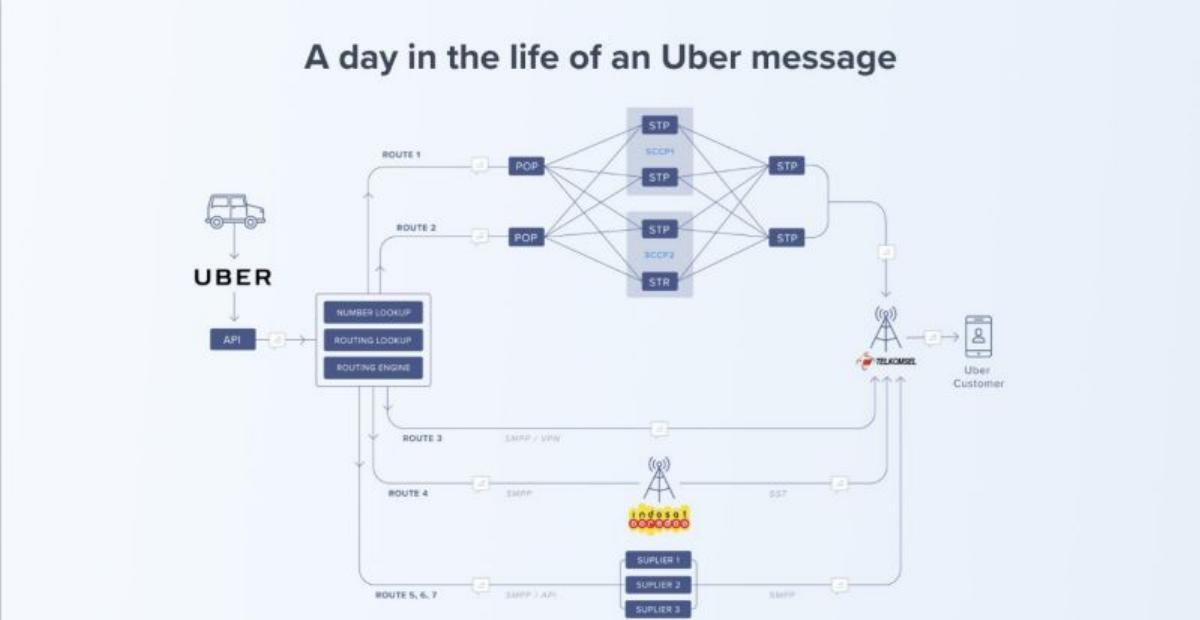
Slide 6 , titled 'A day in the life of an Uber message,' is the most complex visual in the deck. It shows a technical routing diagram involving POPs, STPs, and various carriers like Telkomsel and Indosat Ooredoo. This slide serves to prove the 'moat.' It demonstrates that while an API is easy to use, the underlying global telecommunications infrastructure required to deliver a message anywhere in the world is incredibly difficult to build.
Slides 7-8: Market Opportunity and Competitive Edge
Slide 7 addresses the market size. Instead of a traditional TAM/SAM/SOM pyramid, it uses four circles to represent 2020 Market Size Estimates. The largest is 'Mobile Telecom' at $1T, followed by 'VoIP' at $130B, 'MVNO' at $75B, and 'Messaging' at $34.3B. This positioning suggests that MessageBird isn't just a messaging company; they are a software layer eating the entire trillion-dollar telecom industry.
Slide 8 introduces 'The Trifecta of Routing.' It claims that routing is about Speed, Quality, and Price, and that MessageBird excels at all three. This is a direct challenge to the industry standard, where companies usually have to sacrifice one (e.g., low price usually means lower delivery quality). It’s a bold claim that sets up the growth charts to follow.
Slides 9-11: The Mathematical Proof
Slide 9 shows 'Revenue Year over Year' from 2011 to 2017. The chart shows a classic 'hockey stick' curve, with a massive inflection point starting in 2014. The 2017E (estimated) figure shows a continued aggressive upward trajectory. Note that there are no Y-axis numbers, but the previous mention of a $75M run rate provides the necessary context.
Slide 10 displays the 'Net Revenue Expansion Rate.' This is a critical metric for API businesses. The chart shows that from Q1 2016 to Q1 2017, the expansion rate grew from approximately 125% to nearly 175%. This means that even if MessageBird stopped signing new customers, their revenue would still grow by 75% annually just from existing customers using the service more. This is the definition of a 'money machine.'
Slide 11 is the 'Revenue by Sign Up Cohort' for SMS revenue. This stacked area chart shows revenue layers from 2007 through 2016. The key takeaway here is that the older cohorts (the bottom layers) are not shrinking; they are staying flat or growing. This proves that the product is 'sticky' and that customer churn is virtually non-existent over a ten-year horizon.
Slide 12: The Ask and the Plan
Slide 12 outlines the 'Expansion Plan.' It is remarkably specific. They don't just say 'hire more people.' They specify 'Dedicated SDR, AE, CSM teams' and a '3x sales headcount' in specific regions. They also mention 'M&A opportunities' and 'Investment in low-level infrastructure.' This shows investors that the founders have a clear roadmap for where the $60M will be deployed to generate the next 10x return.
What MessageBird Omitted
It is just as important to look at what is NOT in this deck. There is no Team Slide in this version of the deck. While the founders (Robert Vis and Adriaan Mol) are well-known in the European ecosystem, it is highly unusual for a Series A deck to omit the backgrounds of the leadership team. This suggests that the metrics were so overwhelming that the individual resumes were secondary to the business's performance.
There is also no Competitor Slide . In a market dominated by Twilio, many founders would feel the need to provide a feature-by-feature comparison. MessageBird chose to ignore the competition entirely, focusing instead on their own profitability and global infrastructure. This is a 'power move' that signals they are a market leader in their own right.
Finally, there is no Exit Strategy or 'Why Now' slide. The 'Why Now' is implicit in the $1T market shift, and the exit strategy for a company with these metrics is obviously an IPO or a multi-billion dollar acquisition.
What Other Founders Should Copy
The 'Metric First' Approach: If you have a $75M run rate and you are profitable, put it on slide 3. Do not bury your lead. · Cohort Analysis: If you are a SaaS or API company, a cohort chart (Slide 11) is the most persuasive way to prove long-term value and low churn. · Visualizing the Moat: Slide 6 does a great job of showing that their business isn't just 'code'—it's a complex physical and contractual network of global telecom connections. · Simplicity: The deck uses very little text. It relies on clear headers and data-driven visuals. This prevents the 'wall of text' that causes investors to lose focus.
In conclusion, MessageBird’s deck is a masterclass in using data to create an air of inevitability. They didn't ask for permission to scale; they showed that they were already scaling and invited investors to provide the fuel for the next stage of the journey.
Frequently asked questions
- How did MessageBird raise $60M with only 13 slides?
- The brevity of the deck is a reflection of the strength of their metrics. When a company is already profitable with a $75M run rate, they do not need to spend dozens of slides explaining the problem or the solution. The data on slides 9, 10, and 11 does the heavy lifting, proving product-market fit and scalable unit economics through cohort analysis.
- What is the 'Trifecta of Routing' mentioned in the deck?
- On slide 8, MessageBird identifies Speed, Quality, and Price as the three pillars of telecommunications routing. In the CPaaS (Communications Platform as a Service) industry, most providers struggle to balance these. MessageBird claims to excel at all three, which is a bold competitive claim that they back up with their high net revenue expansion rates.
- Why is the cohort analysis slide so important?
- Slide 11 shows 'Revenue by Sign Up Cohort.' This is the 'holy grail' for SaaS and API investors. It proves that customers who signed up in 2014 or earlier are not only still using the platform but are spending more money over time. This 'layer cake' effect indicates extremely low churn and high organic growth within the existing customer base.
- Does the deck mention specific competitors like Twilio?
- No. The deck completely omits a competitor slide. While Twilio is the obvious incumbent, MessageBird chose to focus on their own growth and the massive $1T market size (slide 7). By highlighting their global footprint and profitability, they positioned themselves as a viable, efficient alternative without needing to engage in direct comparison.
- What was the primary use of funds for the Series A?
- According to slide 12, the 'Expansion Plan' focused on scaling the 'global team of birds.' Key initiatives included creating dedicated SDR, AE, and CSM teams, tripling sales headcount in the US, APAC, and Europe, pursuing M&A opportunities, and investing in low-level infrastructure and brand awareness.