MentorCloud’s 10-slide deck is a textbook example of how to leverage enterprise traction to secure seed funding. Rather than getting bogged down in the mechanics of their mentoring software, the founders focus on the 'who' and the 'how much.' By Slide 4, the deck has already established a $200k ARR and a list of marquee clients including Nvidia and Stanford GSB. The narrative is built on a massive 750% pipeline growth over just three months, moving from $150k to $1.5M. While the deck lacks a formal 'Ask' slide or detailed unit economics, it compensates with overwhelming social proof and a cle…
Key takeaways
- The deck leads with a clear value proposition: 'Peer-to-Peer Learning Solution For Enterprises' on Slide 1.
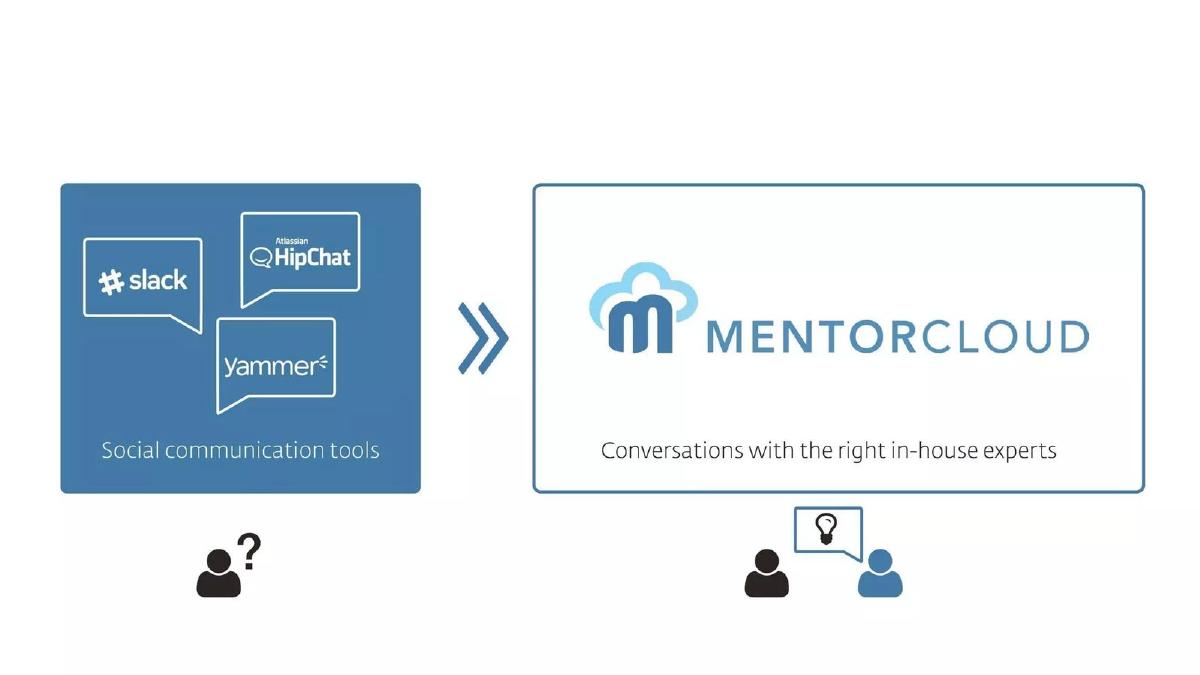
- MentorCloud positions itself as the purposeful alternative to generic social tools like Slack and Yammer on Slide 2.
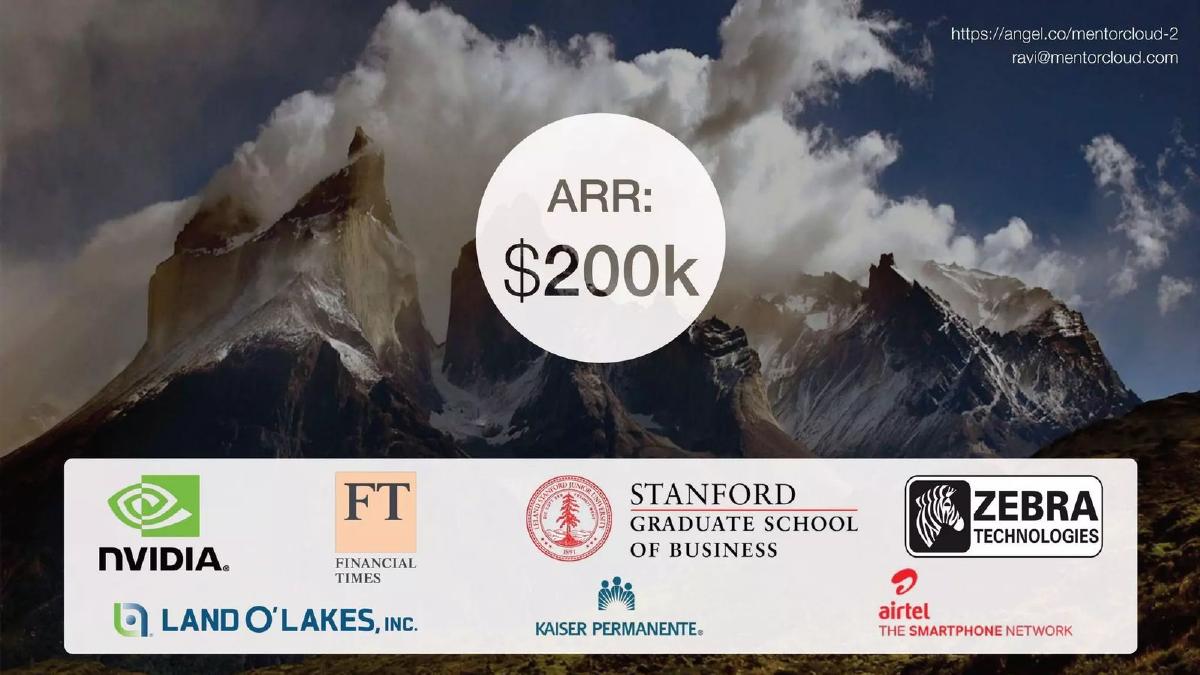
- Traction is the centerpiece, with Slide 4 explicitly stating an ARR of $200k.
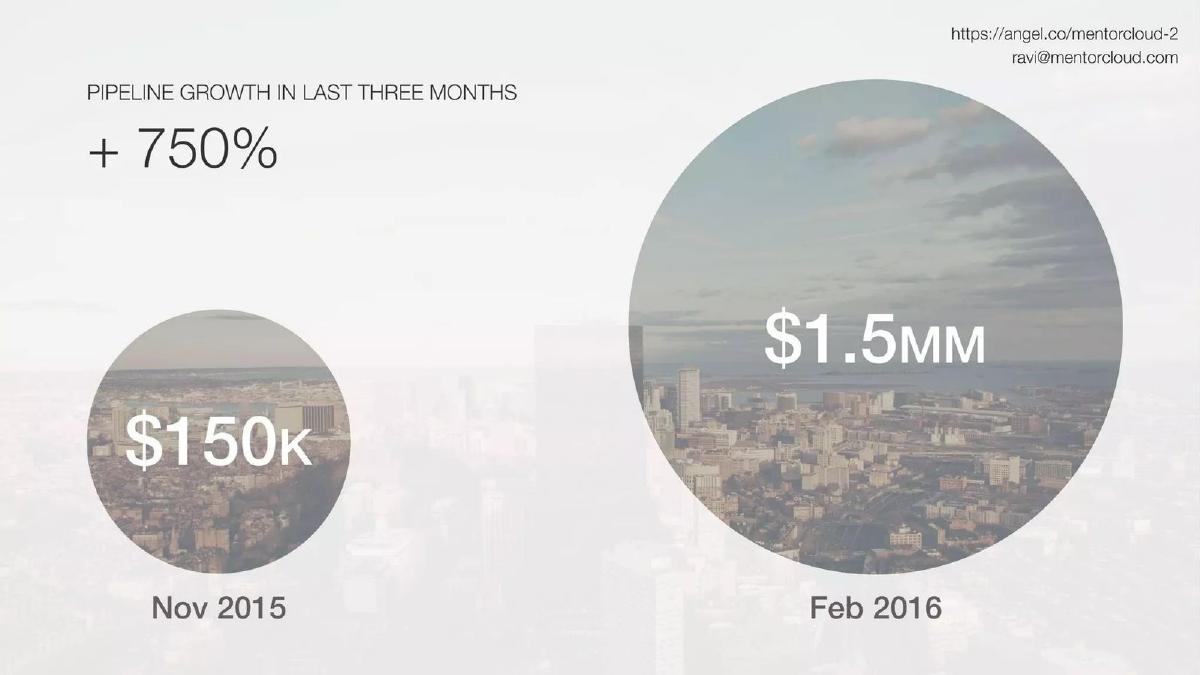
- The company demonstrates massive sales velocity, showing a 750% pipeline increase from $150k to $1.5M in three months on Slide 6.
- Social proof is exceptionally strong, featuring logos from Nvidia, Stanford GSB, Nestle, and Marriott across Slides 4 and 5.
- The market opportunity is quantified as a $16B global sector on Slide 7.
- The team slide (Slide 8) highlights deep domain expertise, including experience with the Boeing 787 supply chain and 25 years in financial services sales.
- The deck concludes with a bold, time-bound vision to connect 100 million professionals by 2020 on Slide 9.
The Power of Enterprise Validation
MentorCloud’s pitch deck is a masterclass in brevity and high-impact signaling. At only 10 slides, it avoids the common pitfall of over-explaining the 'how' and focuses relentlessly on the 'who' and the 'how much.' This is a deck designed for a Seed round where the product is already live, revenue is flowing, and the primary goal is to prove that the sales engine is primed for a massive injection of capital.
The Hook and the Differentiation (Slides 1-3)
Slide 1: Title The deck opens with a clean, professional image of corporate employees and a clear sub-header: "Peer-to-Peer Learning Solution For Enterprises." It immediately identifies the target customer (Enterprise) and the core service (Peer-to-Peer Learning). Contact info and an AngelList link are tucked in the top right corner.
Slide 2: The Gap This slide uses a simple 'Before vs. After' visual. On the left, it groups Slack, HipChat, and Yammer under the label "Social communication tools" with a silhouette of a confused user. On the right, MentorCloud is positioned as the solution for "Conversations with the right in-house experts." This framing is clever; it doesn't fight the giants but suggests they are insufficient for structured knowledge transfer.
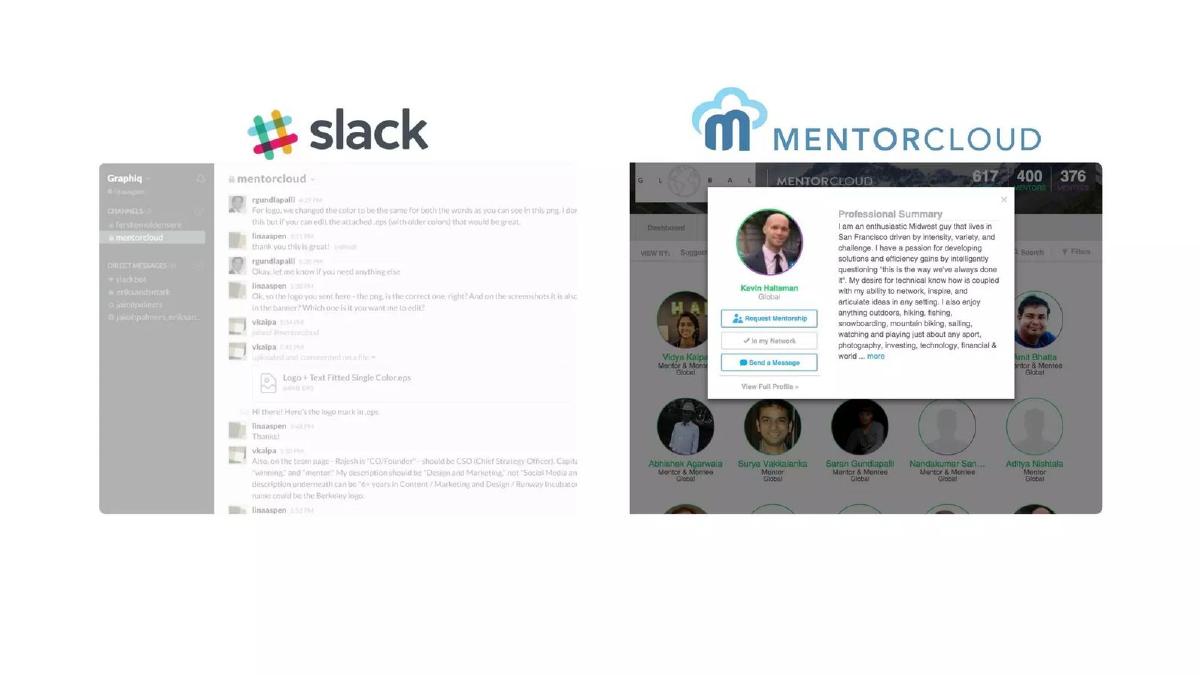
Slide 3: Product UI Comparison Instead of a long list of features, Slide 3 shows a side-by-side of a Slack chat versus a MentorCloud profile. The MentorCloud side highlights a "Professional Summary" for an employee named Kevin Halteman and a prominent "Request Mentorship" button. This slide serves as a subtle product demo, proving the software is built and functional without needing a dedicated 'Features' slide.
Traction and Social Proof (Slides 4-6)
Slide 4: The Revenue Milestone This is the 'money slide.' Set against a dramatic mountain backdrop, it simply states "ARR: $200k." Below this, it lists heavy-hitting logos: Nvidia, Financial Times, Stanford Graduate School of Business, Zebra Technologies, Land O’Lakes, Kaiser Permanente, and Airtel. For a Seed round, this level of logo density is exceptional.
Slide 5: Customer Expansion Slide 5 reinforces the momentum. It shows a timeline from November 2015 to February 2016. The number of logos grows significantly in just four months, adding names like Nestle, Moody’s, Cognizant, and Calvin Klein. This slide isn't just about who they have; it’s about how fast they are acquiring them.
Slide 6: Pipeline Velocity If Slide 4 shows where they are, Slide 6 shows where they are going. It reports a "+ 750%" pipeline growth in the last three months, moving from $150k in November 2015 to $1.5MM in February 2016. This is the most compelling argument in the deck for an investor: the sales team has figured out how to fill the top of the funnel.
The Market and the Team (Slides 7-8)
Slide 7: Market Opportunity The deck keeps the macro-economic argument simple. A world map with a large "$16B" overlay. While it lacks a bottom-up TAM/SAM/SOM breakdown, the preceding traction slides make this large number feel attainable rather than aspirational.
Slide 8: The Team The team slide features four key members: Ravi Gundlapalli (Founder & CEO), Rajesh Setty (Strategy), Donovan Lazar (Sales), and Vidya Kaipa (Design & Marketing). The credentials are high-signal: "787 Supply Chain," "7 Startups," "25 years in Sales," and "Runway Incubator." Logos for Forbes, Harvard Business Review, and Berkeley add further institutional credibility to the individuals.
The Vision and Summary (Slides 9-10)
Slide 9: The Big Goal The penultimate slide sets a deadline: "Connect 100 MM professionals by 2020." It’s a bold vision that frames the company as a future category leader rather than just a niche HR tool.
Slide 10: Closing The final slide repeats the most important data points: the marquee logos, the $200k ARR, and the $1.5MM pipeline. It’s a strong closing that ensures the last thing an investor sees is the company’s commercial success.
What Works
Extreme Brevity: By sticking to 10 slides, the founders ensure that every slide carries significant weight. There is no 'filler' content. · Logo Dominance: The use of high-tier enterprise logos (Nvidia, Nestle, Stanford) does the heavy lifting for the company's credibility. · Pipeline Transparency: Showing the specific dollar value of the pipeline ($1.5MM) and the growth rate (750%) provides a clear look at the company's near-term revenue potential. · Focus on ARR: Leading with $200k ARR immediately separates this from 'idea-stage' seed pitches.
What is Missing
The Ask: The deck never specifies how much money is being raised or what the funds will be used for (e.g., hiring more sales reps, product development). · Unit Economics: There is no mention of Customer Acquisition Cost (CAC), Lifetime Value (LTV), or churn rates, which are critical for evaluating an enterprise SaaS business. · Competition Detail: While Slide 2 mentions social tools, it ignores direct competitors in the mentoring and coaching space (which the catalogue description notes includes 50 other platforms). · Business Model: The deck assumes the investor understands the 'Cloud-based' subscription model but doesn't detail pricing tiers or seat-based costs.
What a Founder Should Copy
The Pipeline Slide: If you have a rapidly growing sales funnel, dedicate a full slide to the dollar value and the percentage growth. It is the best way to show 'future' traction. · The Logo Timeline: Showing customer acquisition over a specific, short window (like the 4-month span on Slide 5) demonstrates momentum better than a static logo cloud. · The UI Comparison: Instead of showing 10 screenshots of your app, show one screenshot that highlights your most important 'action' button compared to a tool the investor already uses. · Repeating Key Metrics: Ending the deck with a summary of your best numbers (Slide 10) ensures the 'takeaway' is clear and memorable.
Frequently asked questions
- How much did MentorCloud raise with this deck?
- According to the catalogue facts, MentorCloud raised $3,000,000 in a Seed round in 2013. However, the deck itself does not state the specific 'Ask' or the terms of the round, focusing instead on the business's existing traction and growth potential.
- What was MentorCloud's revenue at the time of this pitch?
- Slide 4 and Slide 10 both explicitly state that MentorCloud had an Annual Recurring Revenue (ARR) of $200,000. This is a significant figure for a seed-stage company, providing strong evidence of product-market fit.
- Who are MentorCloud's primary competitors according to the deck?
- Slide 2 identifies 'Social communication tools' like Slack, HipChat, and Yammer as the current landscape. MentorCloud differentiates itself by moving from general 'social communication' to specific 'conversations with the right in-house experts.'
- What is the most impressive metric in the MentorCloud deck?
- The most striking metric is the pipeline growth shown on Slide 6. It illustrates a 750% increase in the sales pipeline, growing from $150,000 in November 2015 to $1.5 million by February 2016.
- Does the deck explain how the mentoring platform actually works?
- The deck is very light on product mechanics. Slide 3 shows a brief UI comparison between Slack and MentorCloud, highlighting a professional summary and a 'Request Mentorship' button, but it does not detail the underlying algorithm or methodology.