Mero Technologies’ pitch deck is a masterclass in translating a hardware solution into a compelling financial narrative. By focusing on the $500,000 wasted per commercial building due to inefficient cleaning routes and supply mismanagement, the company moves the conversation away from 'smart dispensers' toward 'workforce optimization.' The deck highlights a rapid 8-month growth trajectory from $0 to $400k ARR and a 40% month-over-month growth rate. While it lacks a formal 'Ask' slide or detailed financial projections, the strength of its early traction with blue-chip clients like Hilton and C…
Key takeaways
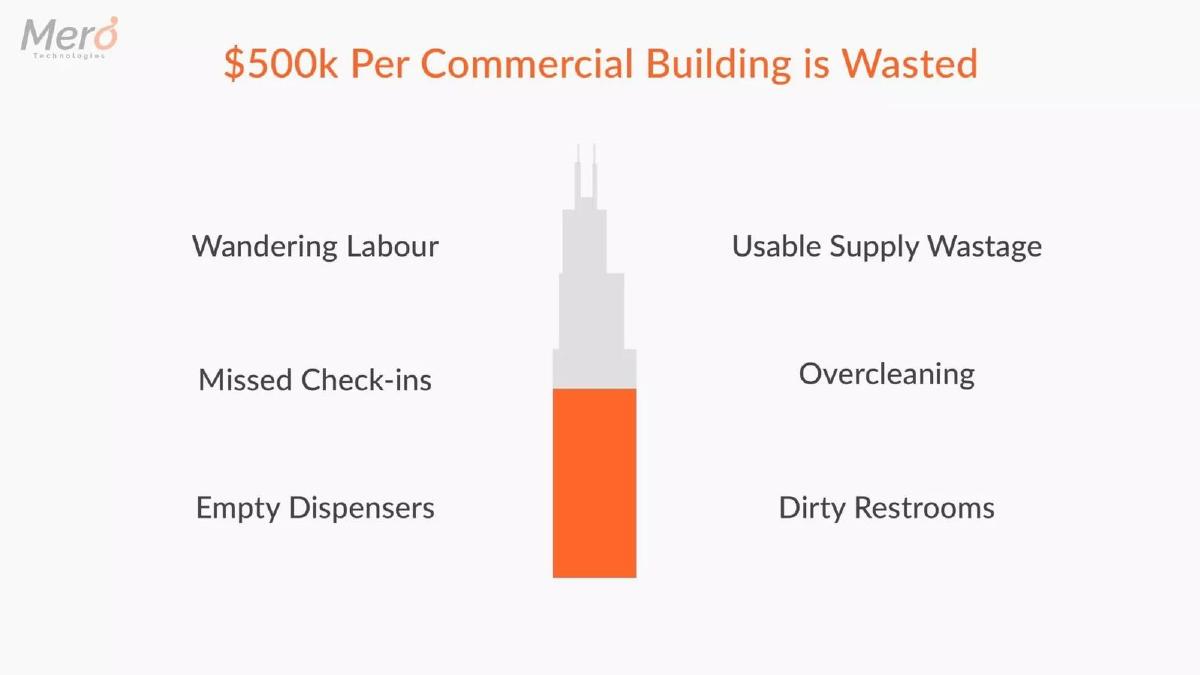
- The deck identifies a specific $500,000 waste per commercial building across six categories including wandering labor and supply wastage (Slide 4).
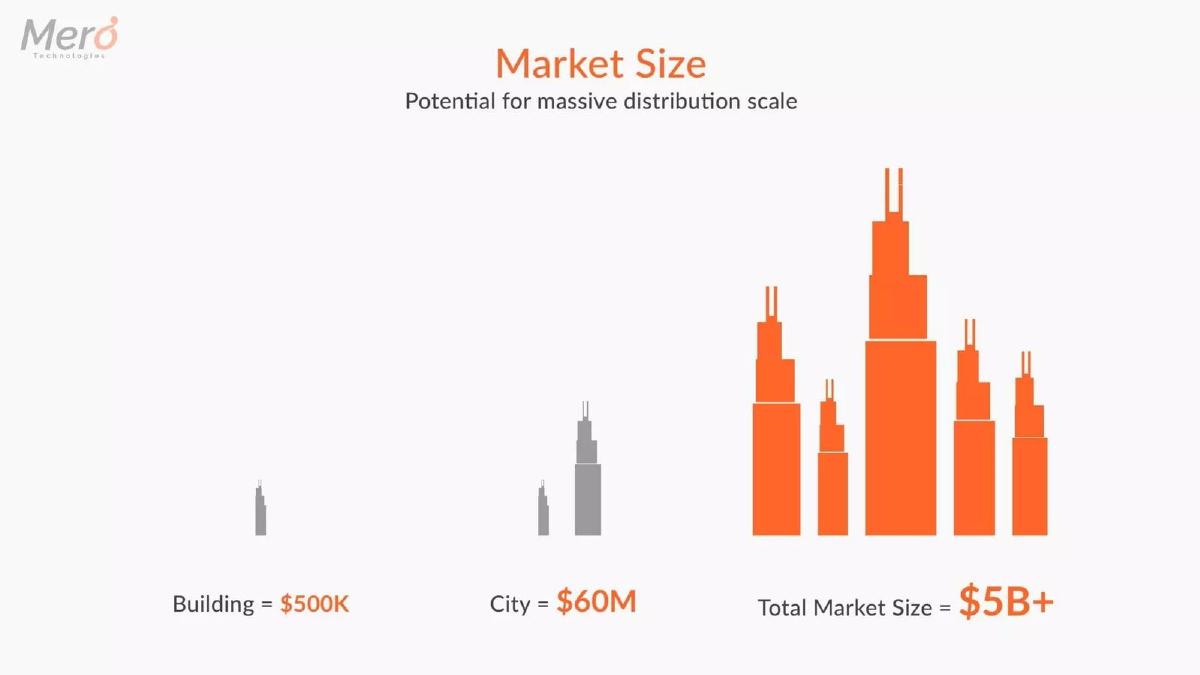
- Mero calculates a total market size of $5B+ based on building-level inefficiencies (Slide 5).
- The solution is presented as a 'peel-and-stick' hardware retrofit, emphasizing low installation friction (Slide 8).
- Labor utilization metrics suggest a potential $120,000 in value by reducing just one cleaning trip per day (Slide 9).
- Real-life data claims a 35% reduction in supply waste, moving from 40% waste to 5% waste (Slide 10).
- Traction is the deck's strongest point, showing a jump from $0 to $400k ARR in just 8 months (Slide 12).
- The company reports 40% month-over-month growth with 2,600 sensors deployed across 15 buildings (Slide 12).
- The deck claims a rapid 3-month payback period for customers, a critical metric for facility managers (Slide 13).
The Hook: Visualizing the Invisible Problem
Slides 1-3: The Context
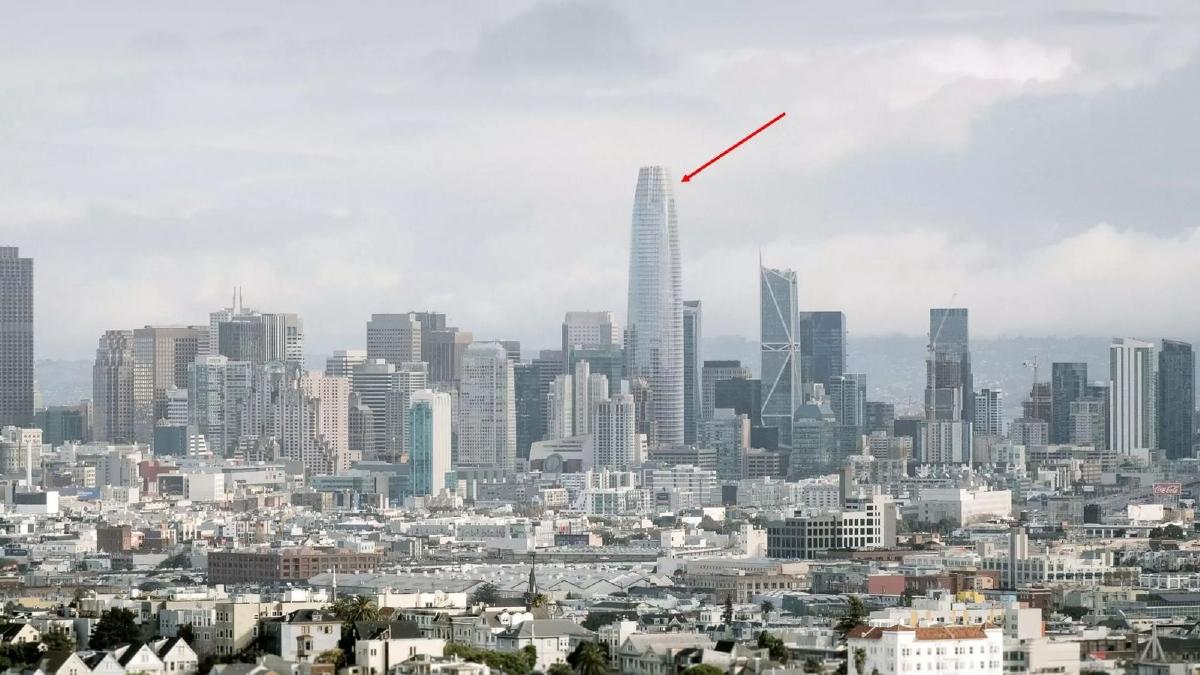
Mero Technologies opens with a standard title slide (Slide 1) that positions them as "Real-Time Intelligence for Commercial Buildings." This is a broad, high-level category that appeals to the 'PropTech' (Property Technology) boom. Slides 2 and 3 use a clever visual narrative: a skyline shot of a major city, followed by the same shot with a red arrow pointing to a single skyscraper. This sets the stage for a 'bottom-up' analysis—focusing on the economics of one building before scaling to the city and the world.
The Problem: Quantifying Inefficiency
Slides 4-6: The Financial Drain
Slide 4 is the most important slide in the first half of the deck. It puts a hard number on the problem: $500k Per Commercial Building is Wasted . It breaks this waste down into six logical buckets: Wandering Labour, Missed Check-ins, Empty Dispensers, Usable Supply Wastage, Overcleaning, and Dirty Restrooms. By quantifying the pain, Mero moves from being a 'nice-to-have' gadget to a 'must-have' financial tool.
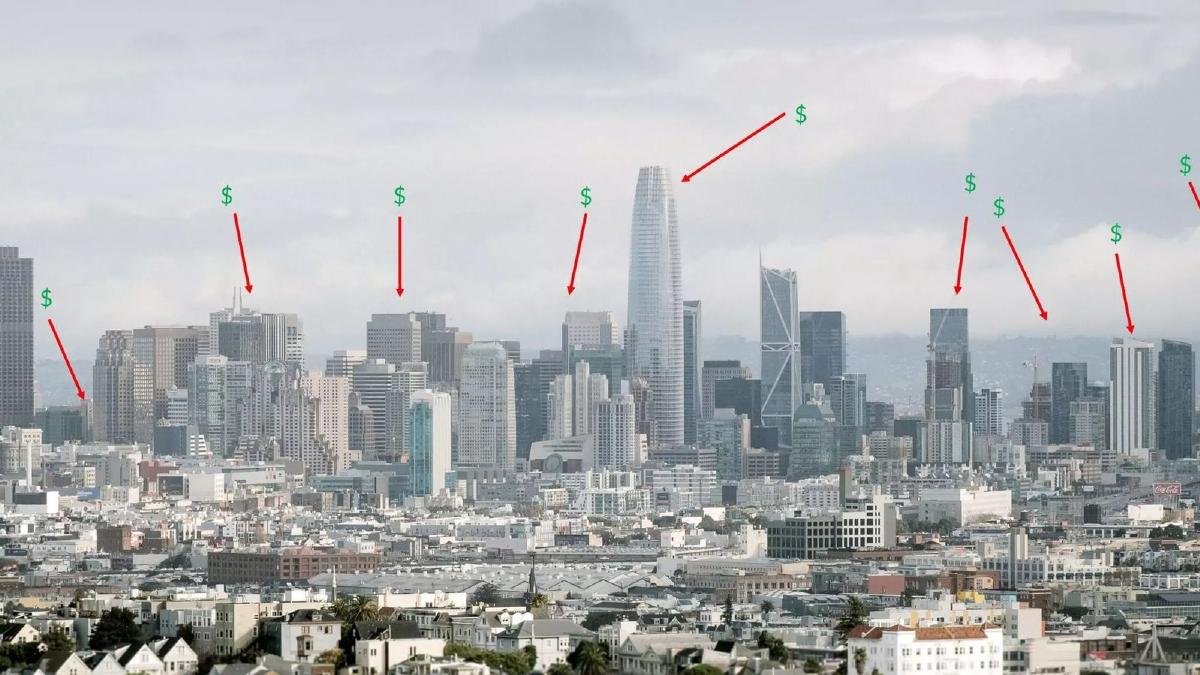
Slide 5 scales this logic. If one building wastes $500k, a city wastes $60M, and the global market represents a $5B+ opportunity. This is a classic TAM (Total Addressable Market) slide, though it technically measures the size of the problem rather than the revenue potential for Mero. Slide 6 returns to the skyline, now peppered with green dollar signs, reinforcing the idea that every building is a source of untapped savings.
The Solution: Frictionless Hardware
Slides 7-8: The Product
Hardware is notoriously difficult to sell to VCs because of installation friction. Mero addresses this head-on in Slide 7 and 8. Slide 7 shows a hand holding a small, sleek black device, establishing its compact form factor. Slide 8 uses three photos to demonstrate the "Peel-and-stick install." This is a critical selling point—it implies that building managers don't need to hire electricians or plumbers to deploy the system. The slide also mentions "Supply and traffic alerts" and "Cash savings every roll change," linking the physical device directly back to the financial problem established earlier.
The ROI: Hard Data and Labor Utilization
Slides 9-10: Proving the Value
Slide 9 focuses on "Better Labour Utilization." It claims that by reducing only one trip per day, a building can save 8,000 hours and $120,000 in value, leading to a 20% productivity boost. This is a powerful argument for facility managers who struggle with rising labor costs. Slide 10 provides "Real-life data" on supply savings. It shows a bar chart where waste is reduced from 40% to 5%, resulting in a 35% total saving on supplies. Using the phrase "Real-life data" adds a layer of credibility that theoretical projections lack.
The Proof: Team and Traction
Slides 11-12: Why Now and Who
Slide 11 introduces the "Core Team": Cole MacDonald (Technology), Nathan Mah (Business), and Erik Berkun-Drevnig (Lead Software Developer). While the slide includes logos like Oxford and Creative Destruction Lab, it lacks specific biographical details. Investors usually want to see past exits or deep industry experience here.
Slide 12 is the 'Money Slide.' It shows $0 to $400k ARR in 8 months and 40% MoM Growth . It also lists impressive stats: 2,600 sensors, 15 buildings, and 2 distributors. The bottom of the slide is a 'logo wall' featuring heavy hitters like Hilton, Toronto Pearson, and Colliers International. This level of traction for a Seed stage company is exceptional and likely did most of the heavy lifting in the fundraise.
The Conclusion: Summary and Payback
Slides 13-14: Closing the Loop
Slide 13 provides a summary of the business model: Mero monitors consumables to route cleaners, providing a payback to customers in just 3 months . Including the payback period is a pro move—it speaks the language of the CFOs who ultimately approve these budgets. The final slide (Slide 14) is a simple contact slide with a background image of a modern glass building, maintaining the professional, corporate aesthetic of the deck.
What Works in This Deck
The $500k Anchor: By starting with a massive, specific number for waste per building, Mero makes the cost of not buying their product feel high. · Frictionless Installation: The "peel-and-stick" messaging directly counters the biggest objection to IoT (Internet of Things) hardware. · Traction Velocity: Going from zero to $400k ARR in 8 months is a clear signal of product-market fit. · Blue-Chip Social Proof: Logos like Hilton and Scotiabank Arena prove that the product can handle the scale and security requirements of enterprise-grade facilities.
What Is Missing
The Ask: There is no slide stating how much money is being raised or what the milestones for the next 18 months are. · Unit Economics: While they show customer ROI, they don't show their own margins. How much does a sensor cost to make vs. the SaaS fee they charge? · Competition: The deck ignores the existence of other smart dispenser companies (like Tork or Kimberly-Clark). A slide explaining why a retrofit is better than a native smart dispenser would have been valuable. · Team Depth: The team slide is very thin on actual experience. It relies on the logos of organizations they've been associated with rather than their individual accomplishments.
What a Founder Should Copy
The ROI-First Approach: Don't sell features; sell the money the customer is currently losing. Mero doesn't talk about 'infrared sensors'; they talk about '$120,000 in labor value.' · Visual Narrative: The use of the skyscraper and the red arrow to ground the problem in reality is a great way to make an abstract concept (IoT data) feel tangible. · Simple Traction Metrics: Use a single, high-impact slide for traction. The "$0 to $400k in 8 months" is a perfect example of a 'mic drop' slide. · Focus on Payback Period: For B2B hardware/SaaS, the time it takes for the customer to break even is the most important metric for the sales cycle. Highlight it prominently.
Frequently asked questions
- What is the primary value proposition of Mero Technologies?
- The primary value proposition is workforce and supply chain optimization for commercial buildings. Mero uses sensors to monitor restroom traffic and consumable levels (paper towels, soap), allowing cleaners to follow 'smart routes' rather than fixed schedules. This reduces labor costs by up to $120,000 per building and cuts supply waste by 35%.
- How does Mero's hardware differ from competitors?
- Mero emphasizes a 'peel-and-stick' installation model. Unlike integrated 'smart' dispensers that require replacing entire fixtures, Mero’s sensors are designed to retrofit into any existing liquid or paper dispenser. This significantly lowers the capital expenditure and time required for a building to adopt the technology.
- Is the $5B market size realistic?
- The deck calculates the $5B+ total market size by aggregating the $500,000 in annual waste found in individual large commercial buildings. While this represents the 'problem' size rather than the 'serviceable' revenue for Mero, it effectively communicates the scale of the inefficiency they are targeting.
- What traction did Mero have at the time of this deck?
- Mero demonstrated significant early-stage momentum, growing from $0 to $400,000 in Annual Recurring Revenue (ARR) within 8 months. They achieved a 40% month-over-month growth rate and had 2,600 sensors active across 15 buildings, including high-profile sites like Toronto Pearson Airport and the Scotiabank Arena.
- What is missing from the Mero pitch deck?
- The deck is missing a clear 'Ask' slide detailing how much capital they are raising and how it will be used. It also lacks a detailed competitive landscape and long-term financial projections. The team slide is also quite thin, providing names and titles but no background on why this specific team is qualified to win the market.