Destiny Robotics presents a high-concept vision for the future of domestic robotics, focusing on the emotional and social utility of humanoid interfaces. The deck outlines a mission to solve loneliness by creating robots that are indistinguishable from humans, positioned as a superior alternative to non-humanoid AI like Amazon Alexa. While the deck succeeds in establishing a strong emotional hook and showcases a team with impressive institutional pedigree (including the U.S. Department of Defense and Tesla), it lacks critical financial depth. There are no detailed unit economics, manufacturin…
Key takeaways
- The company defines its mission as solving loneliness through socially intelligent humanoid assistants (Slide 2).
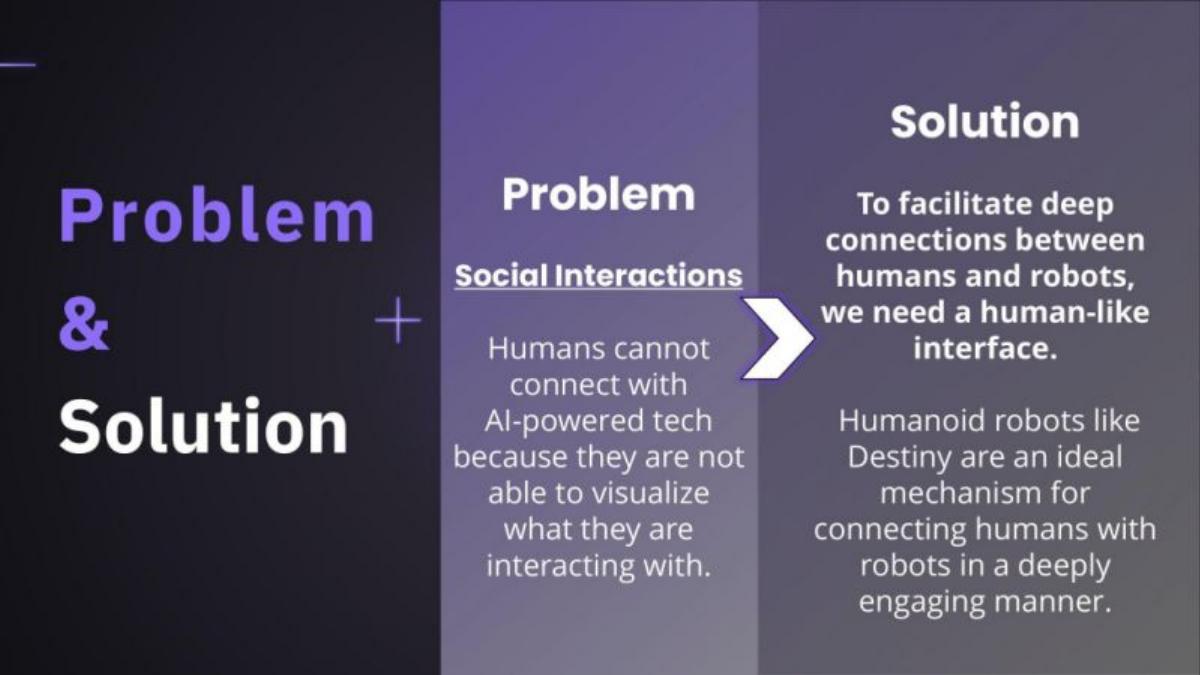
- Destiny Robotics identifies a lack of human-like interfaces as the primary barrier to deep human-AI connection (Slide 4).
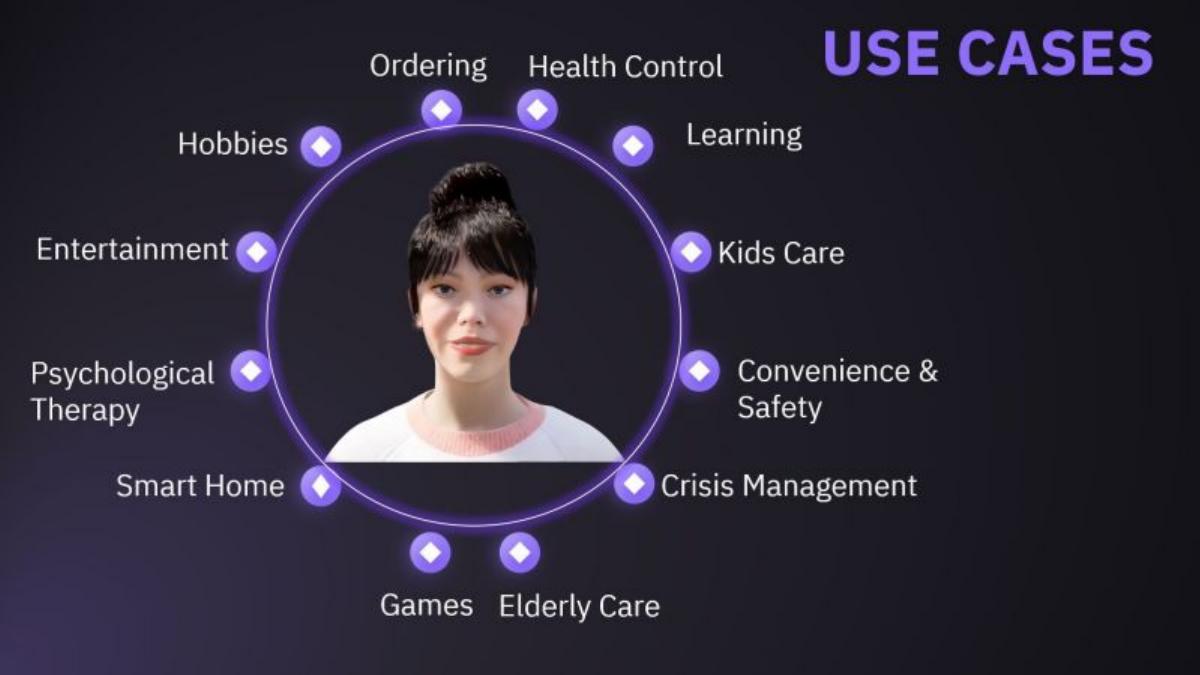
- The deck lists 11 distinct use cases, ranging from psychological therapy to crisis management (Slide 5).
- Market size is projected to grow from $62 billion in 2020 to $189 billion by 2027 (Slide 7).
- The competitive landscape positions Destiny Robotics as the only player combining 'Humanoid AI' with 'Home Assistant' functionality (Slide 8).
- Revenue is structured in two stages: Stage I for pre-orders and Stage II for per-household sales (Slide 9).
- The startup reports approximately $140,000 in 'potential worth' from its total number of pre-orders (Slide 10).
- The team includes members with experience at the U.S. Department of Defense, Tesla, Huawei, and Motorola (Slides 11-12).
Executive Summary: The Emotional Hardware Play
Destiny Robotics entered the market in 2022 with a pitch that leans heavily on the 'social' aspect of artificial intelligence. Unlike industrial robotics companies focusing on efficiency or logistics, Destiny Robotics targets the domestic sphere, specifically addressing the psychological state of the user. Their deck is a classic example of a vision-led hardware pitch, designed to capture the imagination of retail investors through crowdfunding platforms.
Slide-by-Slide Analysis
Slide 1: Title Slide
The deck opens with the tagline: "The First Humanoid Robot As Home Assistant." It immediately sets a high bar for the product, claiming to create the "standard for robot to human interaction." The branding is futuristic, utilizing purple and neon tones common in the AI and robotics sectors.
Slide 2: Mission Statement
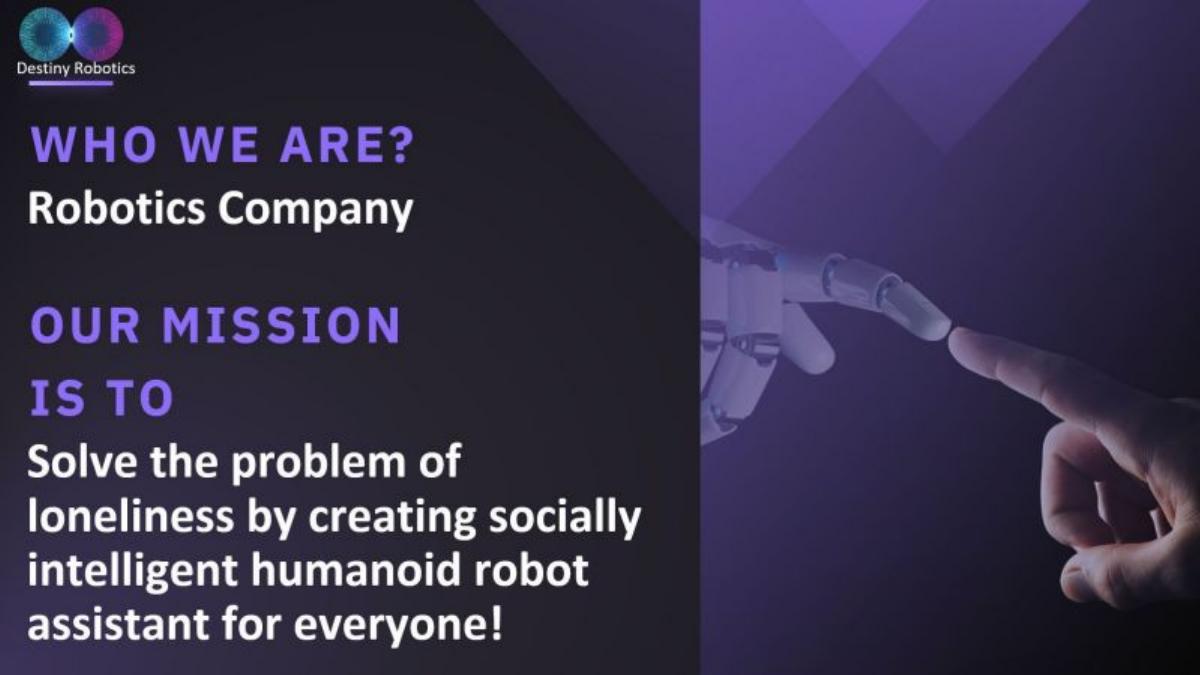
The company defines itself simply as a "Robotics Company." The mission is stated clearly: "Solve the problem of loneliness by creating socially intelligent humanoid robot assistant for everyone!" This is a bold social claim, moving the product from a utility (like a vacuum) to a companion.
Slide 3: Vision
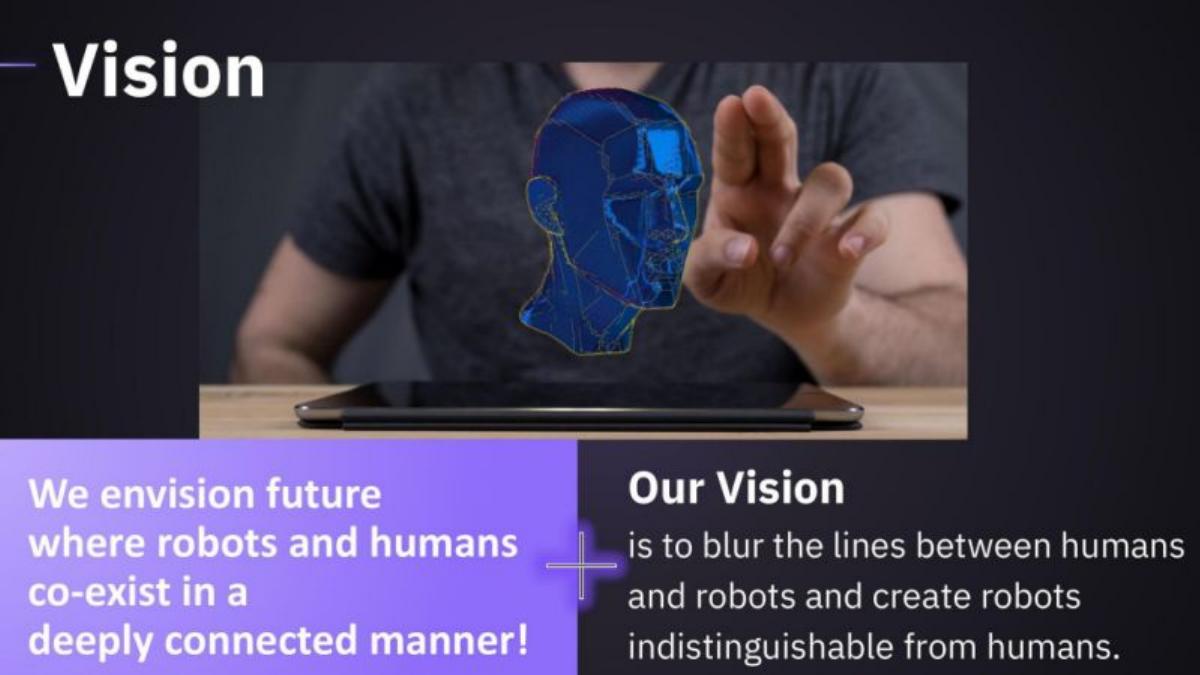
Slide 3 expands on the mission, stating a vision to "blur the lines between humans and robots." The goal is to create robots that are "indistinguishable from humans." This indicates a focus on high-fidelity aesthetics and social mimicry rather than just functional movement.
Slide 4: Problem & Solution
The problem is identified as a lack of connection. The slide argues that humans cannot connect with AI because they cannot "visualize what they are interacting with." The solution is a "human-like interface." This slide attempts to justify the high cost and complexity of building a humanoid form factor over a simple smart speaker.
Slide 5: Use Cases
This slide presents a wheel of 11 use cases. These include: Psychological Therapy , Elderly Care , Kids Care , Health Control , and Crisis Management . By listing such a broad range of applications, the company suggests a horizontal platform, though it risks appearing unfocused for an early-stage startup.
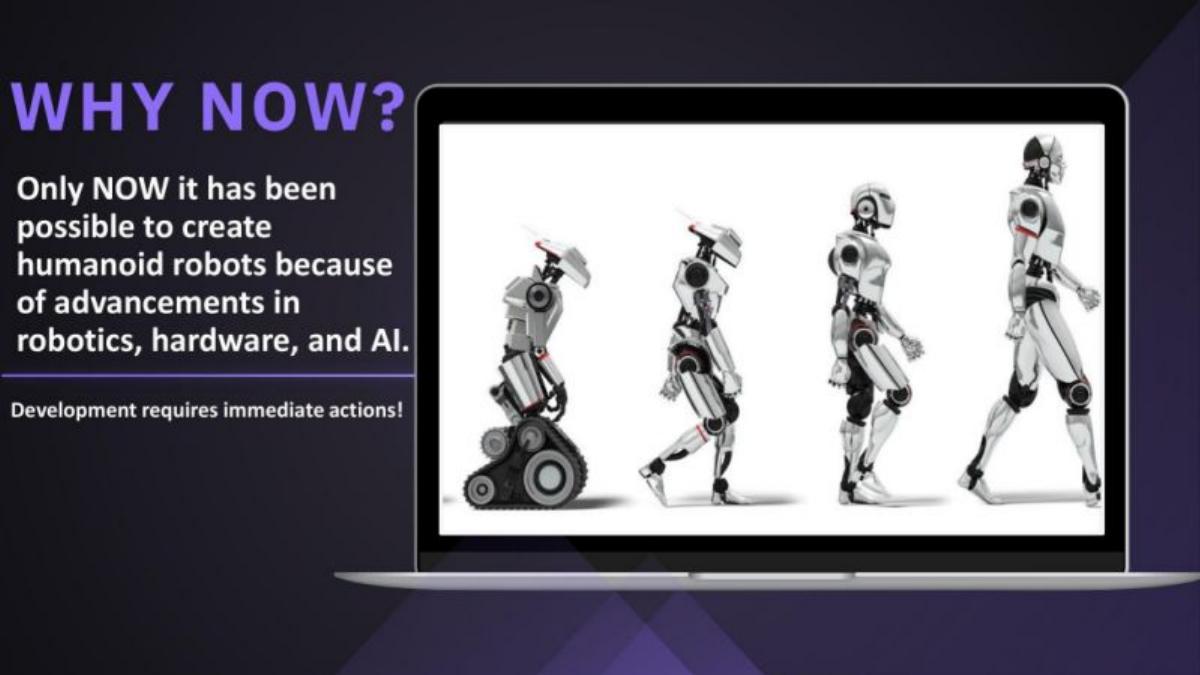
Slide 6: Why Now?
The "Why Now?" slide attributes the current opportunity to "advancements in robotics, hardware, and AI." It features an evolution graphic showing a robot transitioning from a treaded base to a bipedal human form. It lacks specific technological milestones (e.g., specific sensor cost reductions or LLM breakthroughs) that make this moment unique.
Slide 7: Market Size
Citing Allied Market Research, the deck quotes a $62 Billion market for Robotics Technology in 2020, projected to reach $189 Billion by 2027. While these numbers are large, they represent the entire robotics sector, not specifically the humanoid home assistant niche, which is a much smaller subset.
Slide 8: Competitors
The competitive matrix compares Destiny Robotics to Amazon Alexa and Hanson Robotics. Destiny positions itself as the only entity that is both a "Home Assistant" and "Humanoid AI." This is a standard positioning tactic, though it ignores other emerging humanoid players like Tesla (Optimus) or Figure, which were gaining prominence around the same time.
Slide 9: Revenue Streams
The business model is split into two stages. Stage I: Pre-orders and Stage II: Robot Sales per Household . The deck does not mention recurring revenue models, such as software-as-a-service (SaaS) subscriptions for the AI, which is common in modern hardware pitches.
Slide 10: Traction
The company highlights ~$140,000 in "Potential Worth from Total Number of Pre-orders." This figure matches the amount raised in their crowdfunding round mentioned in the catalogue facts. Using the term "potential worth" suggests these may not be fully paid or non-refundable orders.
Slide 11 & 12: The Team
The team slides are the strongest part of the deck in terms of credibility. Megi Kavtaradze (CEO) is noted as a speaker at Harvard and Yale. Jason Jordan (CRO) brings U.S. DoD and Whirlpool experience. George Q. (Marketing) is credited with experience at Tesla. The technical team (Slide 12) includes a Chief Scientist with visiting professorships at Cambridge and Berkeley, and engineers with backgrounds at Huawei and Motorola. This suggests a high level of technical and institutional knowledge.
What Destiny Robotics Does Well
The deck is exceptionally clear about its "Why." By anchoring the product in the universal human problem of loneliness, the founders create an emotional hook that transcends technical specifications. The team slides are also well-executed, using recognizable corporate logos (Tesla, DoD, Huawei) to de-risk the technical challenge of building a humanoid robot. The visual design is consistent and professional, fitting the 'high-tech' aesthetic expected of a robotics firm.
Critical Omissions
The most glaring omission is the lack of a Product Slide showing a functional prototype. While Slide 5 shows a digital render of a face, there are no photos of actual hardware, actuators, or the robot in a real-world environment. For a hardware company, the absence of a "State of the Product" slide is a significant red flag for professional VCs.
Furthermore, there is no Ask Slide . A pitch deck is a tool to raise money; failing to state how much is being raised and what the milestones are for that capital is a missed opportunity. The deck also lacks Unit Economics . Investors need to know the estimated Bill of Materials (BOM) and the target retail price to understand if the business is scalable.
Founder Lessons
1. Sell the vision, but show the work: Destiny Robotics sells a compelling vision of solving loneliness. However, founders must balance this with evidence of physical progress. If you are building hardware, include photos of your latest prototype, even if it is just a "mule" or a sub-assembly.
2. Be specific about the market: Using a $189 billion total addressable market (TAM) for all robotics is often seen as a "lazy" metric. Founders should calculate the Serviceable Obtainable Market (SOM)—how many households can actually afford a humanoid assistant in the next 5 years?
3. Don't forget the 'Ask': Every deck should end with a clear call to action. Tell the investor exactly what you need to get to the next major milestone (e.g., "We are raising $2M to complete our Beta prototype and secure 500 paid pre-orders").
Conclusion
Destiny Robotics successfully used this deck to tap into the crowdfunding market, raising $141k by selling a futuristic solution to a relatable social problem. While the team's pedigree is impressive, the deck functions more as a vision document than a comprehensive business plan. To attract institutional venture capital, the company would need to provide significantly more detail on manufacturing logistics, hardware performance, and the path to profitability.
Frequently asked questions
- What is the primary problem Destiny Robotics aims to solve?
- According to Slide 2 and Slide 4, the primary problem is loneliness. The company argues that humans cannot deeply connect with current AI-powered technology because they lack a visual, human-like interface to interact with. They propose humanoid robots as the ideal mechanism to facilitate these emotional connections.
- How does Destiny Robotics differentiate itself from Amazon Alexa?
- On Slide 8, the company uses a 2x2 matrix to position itself against Amazon Alexa and Hanson Robotics. While Alexa is categorized as a Home Assistant, it lacks the 'Humanoid AI' component. Destiny Robotics claims to occupy the top-right quadrant, offering both home assistance and a humanoid form factor.
- What is the current commercial traction for the company?
- Slide 10 indicates that the company has generated approximately $140,000 in 'potential worth' from pre-orders. However, the deck does not specify the number of units pre-ordered, the price per unit, or whether these pre-orders are paid deposits or non-binding expressions of interest.
- Who are the key technical leaders mentioned in the deck?
- The technical team is led by Jason Jordan (Chief Robotics Officer), who has experience with the U.S. Department of Defense and Whirlpool. Other key members include Erekle Shishniashvili (Senior AI Engineer, formerly Huawei) and Irakli Datashvili (Head Software Engineer, formerly Motorola and HSBC), as shown on Slides 11 and 12.
- What financial information is missing from the pitch deck?
- The deck is missing several standard financial components, including a detailed breakdown of the 'Ask,' a burn rate analysis, unit economics (COGS vs. MSRP), and a multi-year financial forecast. It also lacks a clear roadmap for manufacturing and shipping the physical hardware.