Devanthro’s 2022 seed deck is a masterclass in narrowing a broad, futuristic technology into a specific, high-pain-point market: elder care. By branding their technology as 'Robodies' rather than robots, they bypass the current limitations of AI autonomy, instead leveraging human intelligence via remote telepresence. The deck highlights significant technical progress, including three complete humanoids and 14 corporate PoCs, while identifying a €2BN market opportunity in Germany and Switzerland. The ask is 3M€ to move from research to in-home pilots. While the deck lacks a detailed competitiv…
Key takeaways
- The company has already sold 6 robots to prestigious institutions like Oxford and KTH (Slide 2).
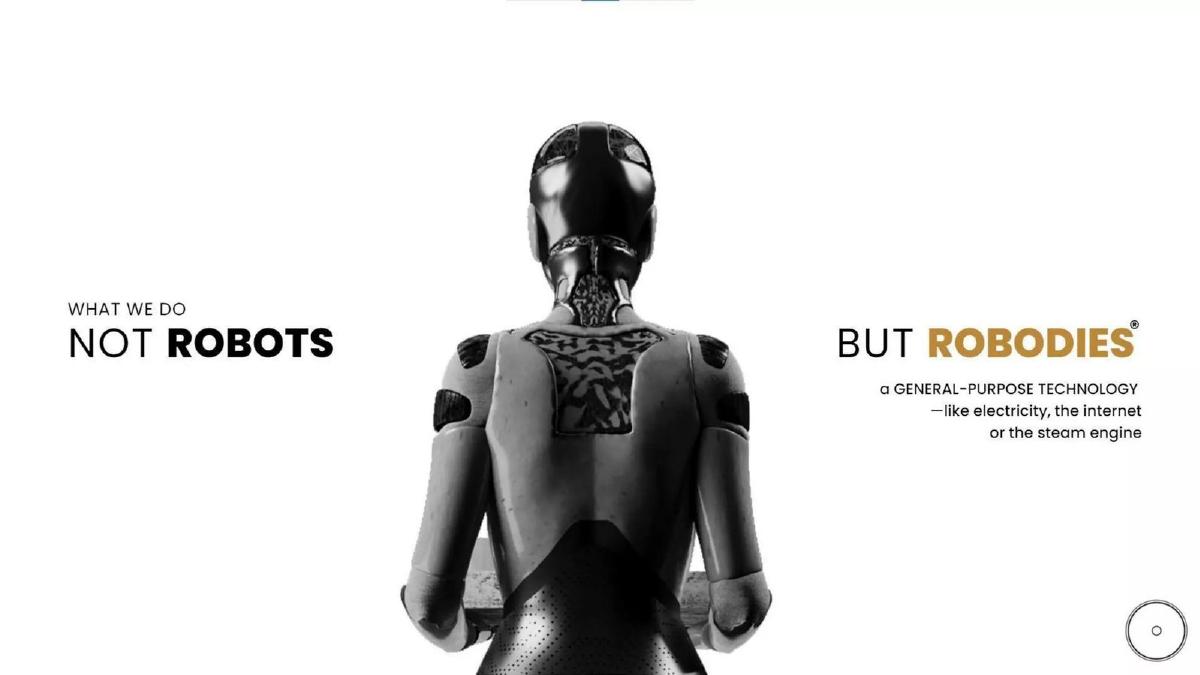
- Devanthro distinguishes 'Robodies' from robots, calling them a general-purpose technology comparable to the internet (Slide 4).
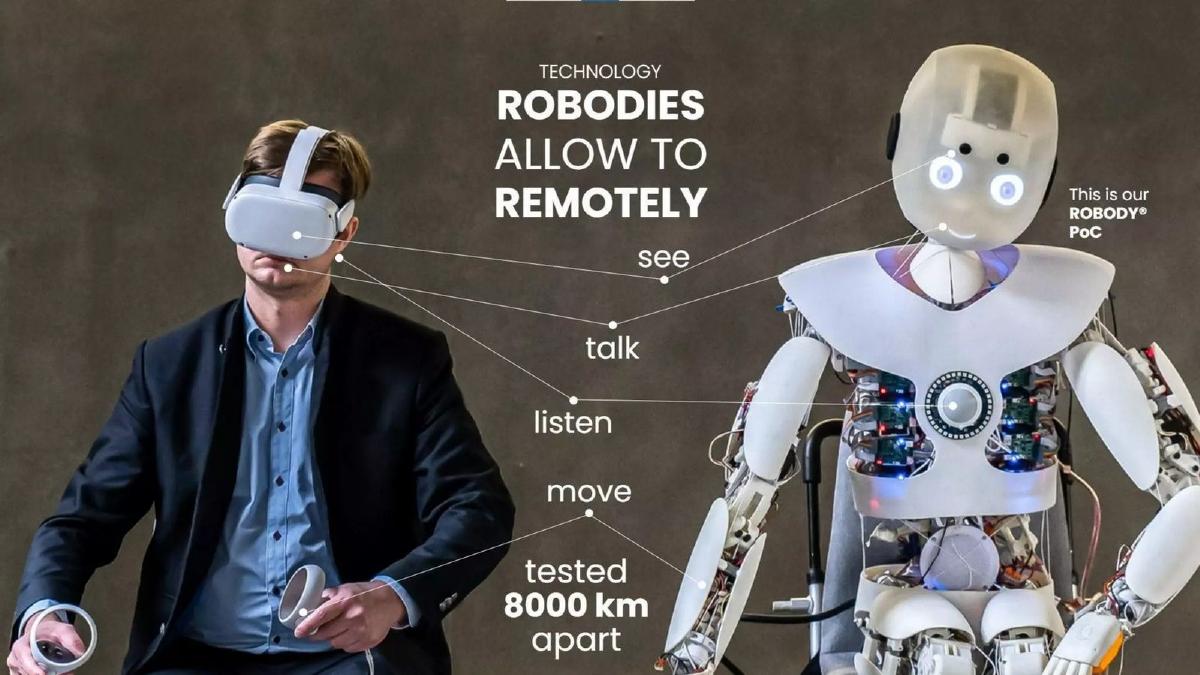
- The technology has been tested with the operator and the robot 8,000 km apart (Slide 5).
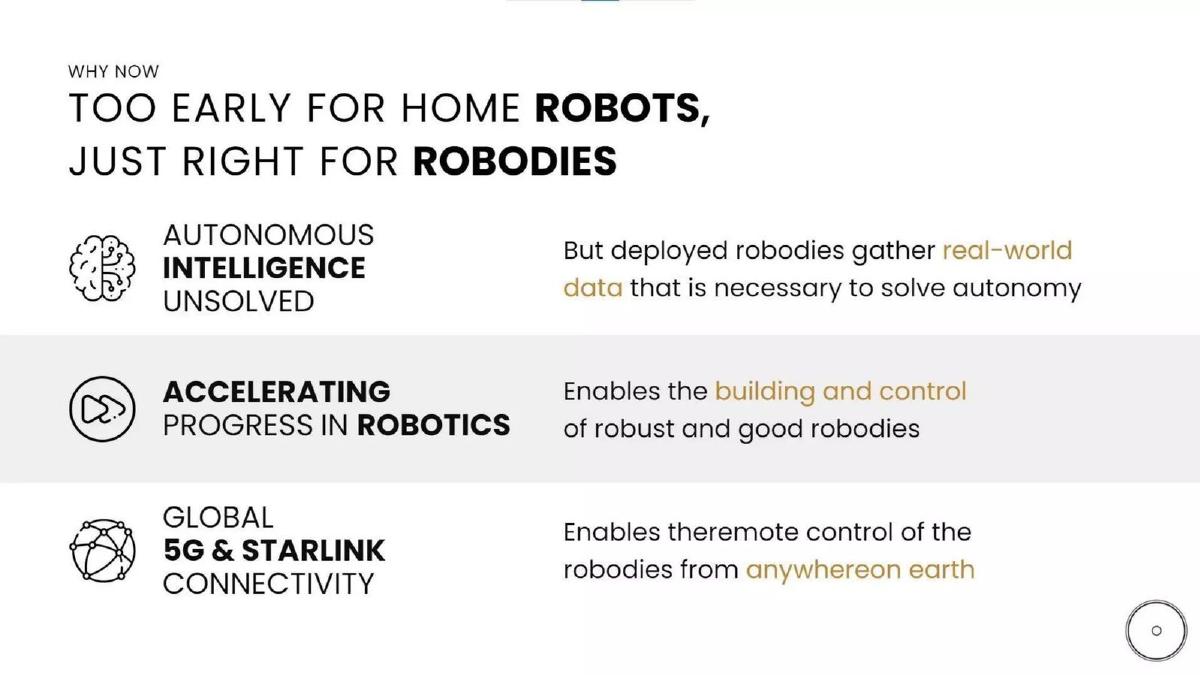
- The deck identifies a specific 'Why Now' based on the failure of autonomous intelligence to handle home environments (Slide 6).
- The target market is 'Premium Care' in Germany and Switzerland, valued at €2BN with a 7.1% CAGR (Slide 9).
- A key cost-saving metric is reducing the CHF 20 per hour spent on caregiver commutes (Slide 9).
- The 3M€ seed round is intended to fund pilots in 10 homes and a design validation prototype (Slide 10).
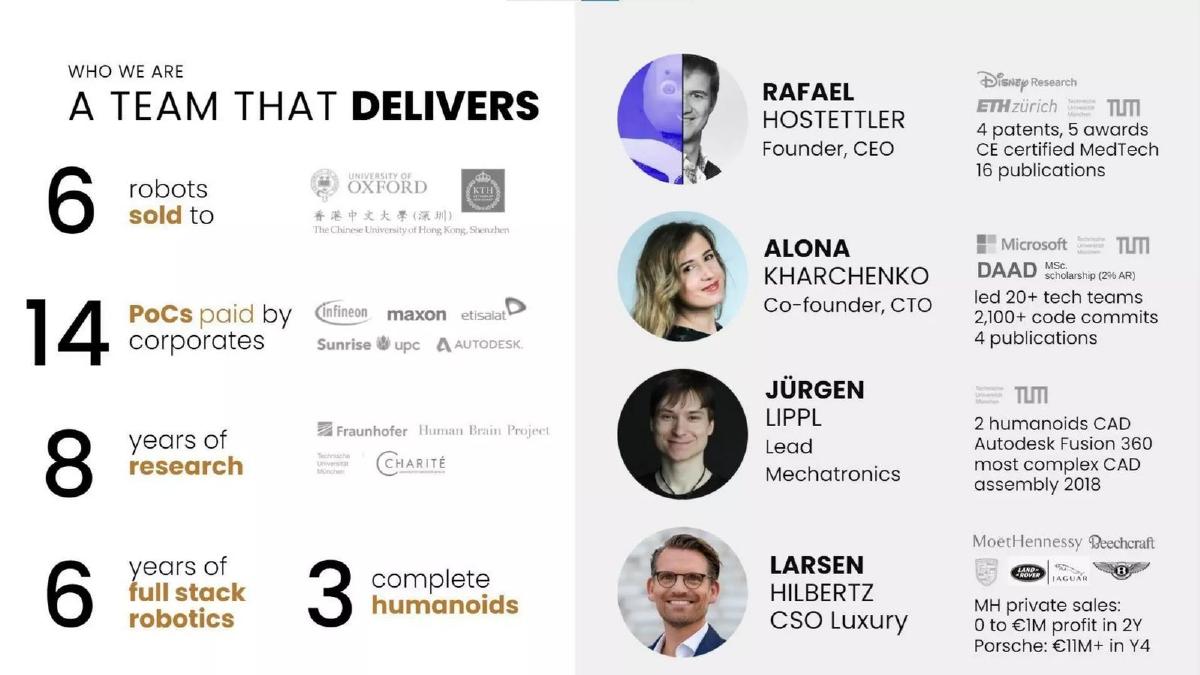
- The team includes a CSO of Luxury who previously grew Moët Hennessy private sales from 0 to €1M profit in two years (Slide 2).
Introduction: The Teleportation of Presence
Devanthro’s seed deck, dated February 2022, represents a pivot from general robotics research to a targeted healthcare solution. The company positions its 'Robodies' not as autonomous AI agents, but as human-controlled avatars. This distinction is the core of their investment thesis: that human intelligence is ready to solve the care crisis today, even if autonomous AI is not. With 11 slides, the deck is concise, visually driven, and focused on the immediate application of a high-tech platform.
Slide 1: The Vision and The Hook
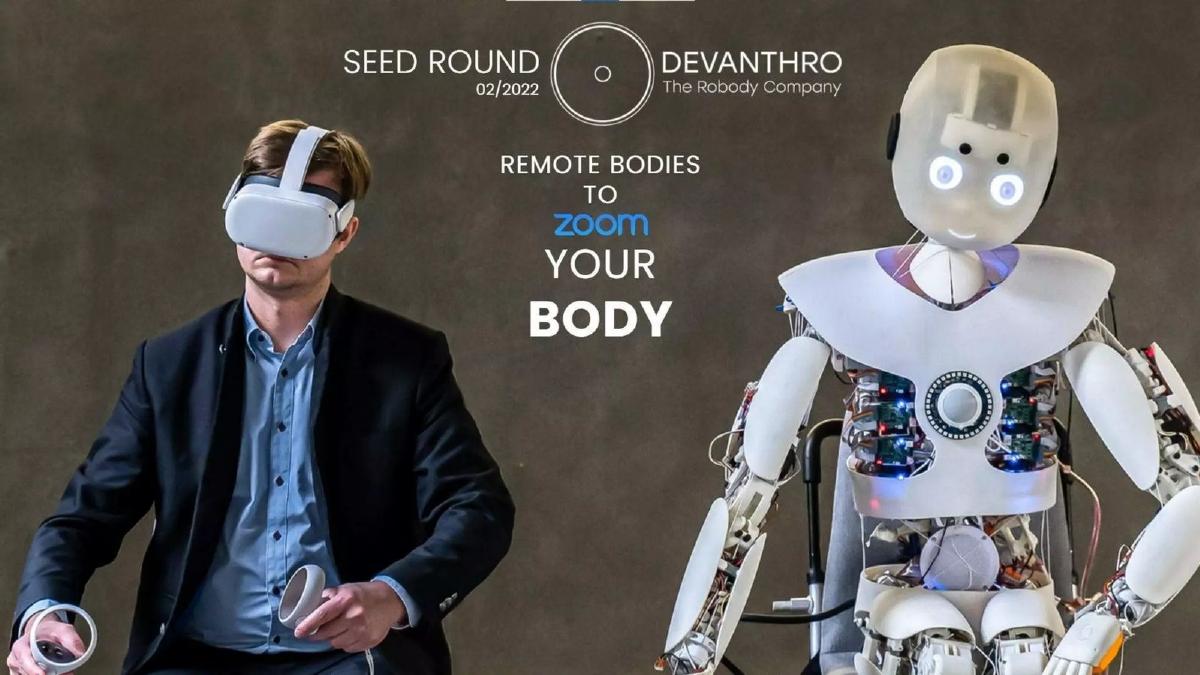
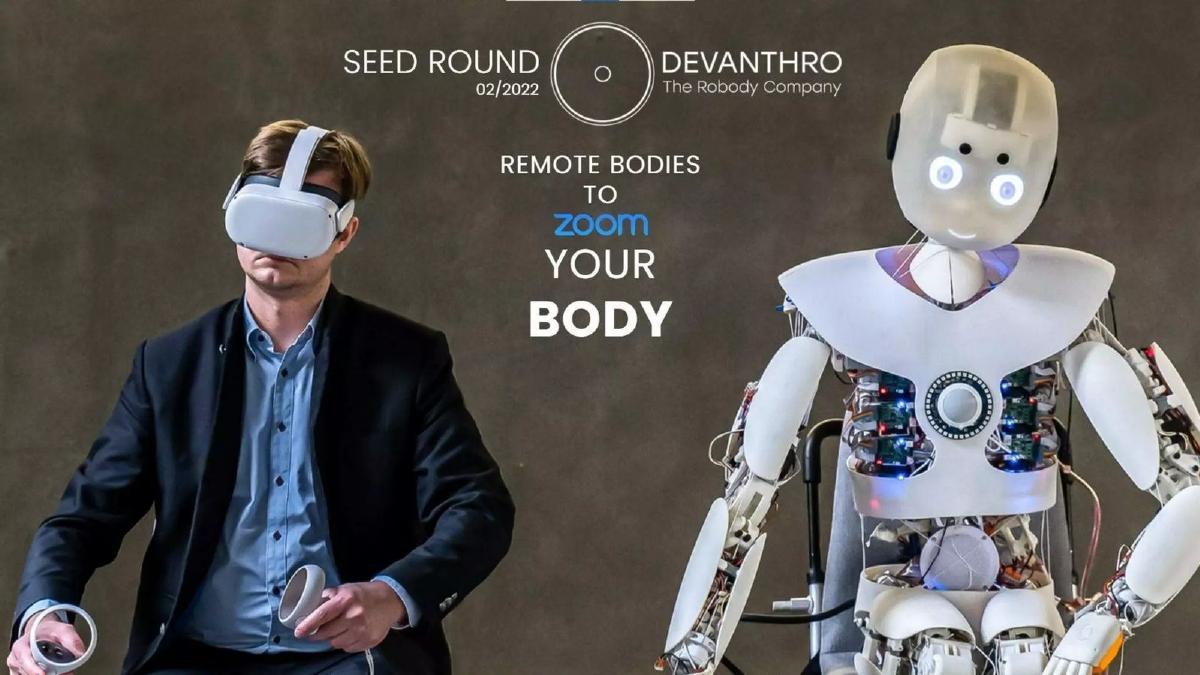
The cover slide immediately establishes the product-user relationship. It features a split image: on the left, a man wearing an Oculus Quest 2 VR headset and holding controllers; on the right, a humanoid robot with glowing eyes and a friendly, minimalist face. The tagline, "Remote Bodies to Zoom Your Body," uses a familiar verb ('Zoom') to explain a complex concept (telepresence). The slide clearly states the round ('Seed Round') and the date ('02/2022'), setting a professional tone from the outset.
Slide 2: A Team with Deep Technical Roots
The team slide is dense with credibility markers. It breaks down the company’s history into quantifiable achievements: 6 robots sold to universities like Oxford and KTH, 14 PoCs paid by corporates (including Autodesk and Infineon), and 8 years of research . The individual profiles are equally strong. CEO Rafael Hostettler is credited with 4 patents and 16 publications. CTO Alona Kharchenko brings experience from Microsoft and a DAAD scholarship. Notably, they include a 'CSO Luxury,' Larsen Hilbertz, whose track record includes growing Moët Hennessy private sales to €1M profit in two years. This suggests the company is already thinking about the high-end consumer market, not just academic research.
Slide 3: Proof of Execution
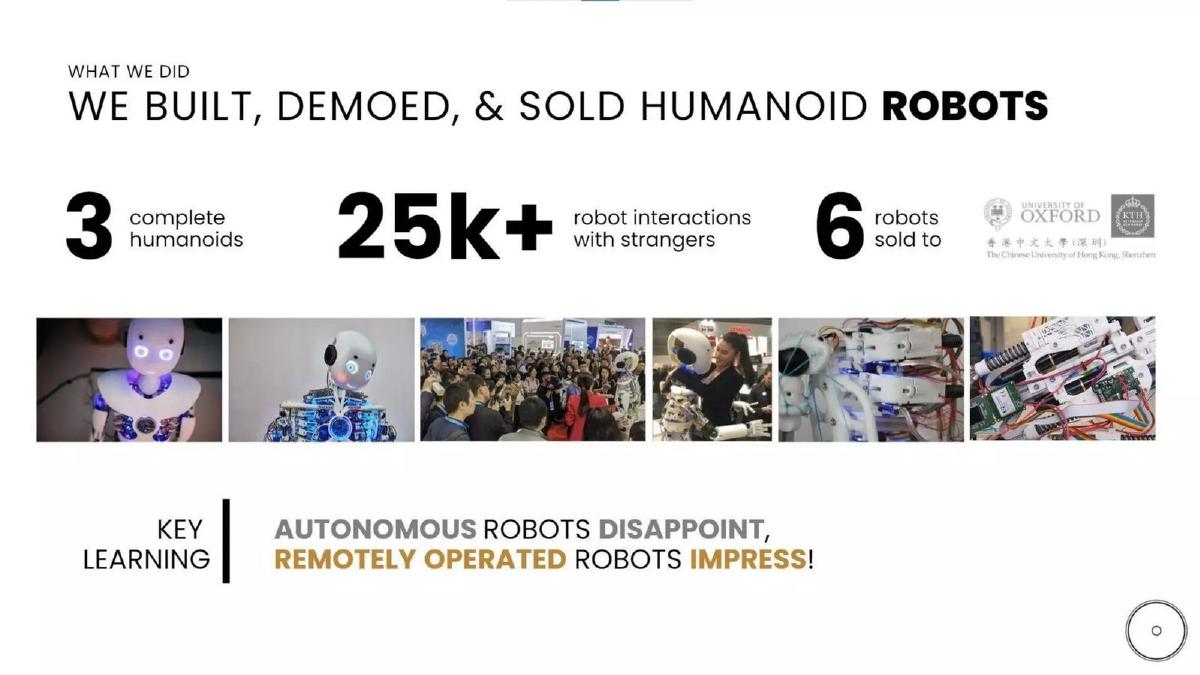
Slide 3, titled "What We Did," serves to de-risk the hardware. By stating they have built 3 complete humanoids and facilitated 25k+ robot interactions with strangers , they prove that their hardware is durable and socially acceptable. The 'Key Learning' at the bottom of the slide is a strategic pivot: "Autonomous robots disappoint, remotely operated robots impress!" This framing allows them to move forward without waiting for the 'Holy Grail' of fully autonomous AI, which many investors view as a distant and risky bet.
Slide 4: Defining the 'Robody'
This is a branding slide. It explicitly states "NOT ROBOTS BUT ROBODIES." It compares the technology to general-purpose breakthroughs like electricity or the steam engine. While high-level, this slide aims to shift the investor's mindset from seeing a 'gadget' to seeing a 'platform' that could eventually underpin various industries beyond just care.
Slide 5: The Technology in Action
Slide 5 provides a technical breakdown of the telepresence experience. Lines connect the VR headset to the robot’s sensors, showing how the user can "see, talk, listen, [and] move." The most impressive claim on this slide is that the system has been "tested 8000 km apart." This proves that latency issues—the primary enemy of telepresence—have been sufficiently managed to allow for transcontinental operation.
Slide 6: The 'Why Now'
The 'Why Now' slide addresses the market gap. It acknowledges that "Autonomous Intelligence [is] Unsolved," but argues that Robodies are the necessary precursor because they "gather real-world data that is necessary to solve autonomy." It also cites the convergence of 5G and Starlink connectivity as the infrastructure that finally makes remote control viable from anywhere on Earth. This creates a sense of urgency and technological readiness.
Slide 7 & 8: The Problem and Solution (The 'Ada' Story)
Slides 7 and 8 use a classic storytelling technique to humanize the technology. We meet Ada, 82 , who lives alone and is afraid of care homes. We also meet Liza, 37 , an exhausted, underpaid caregiver, and Lea, 48 , Ada’s daughter who is overwhelmed by the choice between her career and caregiving. Slide 8 introduces the solution: "Robody Cares." It depicts Liza as a "10x Nurse" who can visit many homes remotely. This solves the labor shortage and the 'commute' problem simultaneously, while giving the family peace of mind.
Slide 9: Market Size and Cost Optimization
The market slide focuses on Switzerland (CH) and Germany (DE). It identifies a €2BN SOM (Serviceable Obtainable Market) for 'Premium Care.' The data points are specific: home care in Switzerland costs 5,000 CHF/month , and the number of people in need of care is projected to grow by 88% in Germany by 2030 . The most compelling part of this slide is the breakdown of the CHF 140 cost per care hour , showing that CHF 20 is wasted on 'commute' and CHF 19 on 'admin.' Devanthro’s value proposition is the elimination of that commute cost.
Slide 10: The Ask and Milestones
The company is raising 3M€ via convertible notes. The stated outcomes for this funding are clear: a design validation prototype , pilots in 10 homes , and strategic partnerships with care providers. Interestingly, it mentions "Operators in Ukraine test delivering care in Germany," which highlights the global labor arbitrage potential of the platform—using skilled labor from lower-cost regions to provide high-value services in Western Europe.
Slide 11: Closing and Contact
The final slide features a photo of the man and the robot shaking hands. The closing sentiment, "It’s not about what robots can do, but about what people can do through robodies," reinforces the human-centric approach. Contact information includes a phone number, Telegram link, and email, suggesting an open and accessible founding team.
What Works in This Deck
Specific Market Focus: Many robotics startups fail by trying to be everything to everyone. Devanthro’s focus on the 'Premium Care' market in two specific countries (CH and DE) makes the business model feel attainable rather than speculative. Quantified Progress: Citing 14 paid PoCs and 25,000 interactions provides concrete evidence that this isn't just a lab experiment. The '10x Nurse' Concept: This is a powerful mental model. It reframes the robot from a job-replacer to a productivity-multiplier, which is a much easier sell to both investors and the public.
What Is Missing
Unit Economics: While the deck mentions the cost of care, it does not mention the cost of the Robody itself. Investors need to know if the hardware costs €10k or €100k to understand the payback period. Competitive Landscape: There is no mention of other humanoid companies (like Tesla’s Optimus or Figure) or existing telepresence solutions. Regulatory and Liability Roadmap: Operating a heavy robot in the home of a frail elderly person carries significant liability risks. The deck mentions 'care insurance' but doesn't detail the safety protocols or certifications required for home deployment.
What a Founder Should Copy
The 'Key Learning' Slide: Slide 3 is excellent. By sharing a specific insight gained from years of work, the founders demonstrate intellectual honesty and a willingness to pivot based on data. Visual Consistency: The use of high-quality, original photography featuring the actual founders and their hardware builds immediate trust. The Problem Persona: Using 'Ada, Liza, and Lea' to illustrate the three sides of the care crisis (patient, provider, family) is a highly effective way to explain a complex social issue in under 60 seconds.
Frequently asked questions
- What is a 'Robody' according to Devanthro?
- Devanthro defines a Robody as a humanoid robotic avatar that teleports a user's senses, actions, and presence. Unlike autonomous robots, a Robody is controlled by a human wearing a VR headset and using hand controllers. Slide 5 illustrates this by showing a user 'seeing, talking, listening, and moving' through the robot, effectively allowing a person to be physically present in a remote location.
- How does Devanthro plan to monetize this technology?
- The deck focuses on the home care market in Switzerland and Germany. Slide 9 highlights that home care costs are high (5,000 CHF/month in CH) and that a significant portion of the cost (CHF 20/hour) is wasted on caregiver commutes. By using Robodies, a single nurse can work in many homes remotely (a '10x Nurse'), eliminating travel time and allowing for more frequent, shorter check-ins.
- What is the current stage of their technical development?
- As of the February 2022 deck, Devanthro had completed 8 years of research and 6 years of full-stack robotics development. They have built 3 complete humanoids and conducted over 25,000 interactions with strangers. They have also successfully tested remote operation over a distance of 8,000 km, proving the viability of long-distance telepresence (Slides 2, 3, and 5).
- Who is the target customer for the initial rollout?
- The initial target is 'Senior households' with high income—specifically those earning >7,000 CHF/month in Switzerland (20% of households) and >5,000 EUR/month in Germany (4% of households). They are positioning this as a 'Premium Care' solution for seniors who are afraid of care homes and cannot find reliable in-person caregivers (Slide 9).
- What are the primary risks unaddressed in the deck?
- The deck does not detail the hardware cost per unit or the expected maintenance cycle for complex humanoid joints. It also omits a competitive analysis of other telepresence or social robotics companies. Furthermore, while it mentions qualifying for care insurance, the regulatory path for medical-grade robotic intervention in private homes is not fully mapped out (Slide 10).