Agile Wash is an Indian instant-laundry startup whose October 2024 pitch deck contains four founder-written slides and thirty-three pages of untouched Slidesgo template. Slide 2 — Roti, Kapda aur Makaan with a question mark over clothing — is excellent positioning. Slide 4 names the right four problems but leaves two of the four descriptions as template filler. After that the deck shows 333,000 placeholder users, a $4,000,000 placeholder revenue table, a competitor matrix comparing cars, an org chart of eleven fictional employees led by Jane Doe, and a contact slide listing youremail@freepik.…
Key takeaways
- Agile Wash is an instant-laundry startup in India; its pitch deck was exported from LibreOffice Impress on 17 October 2024 and runs 37 pages.
- Only four pages contain founder-written content: the cover, the Roti/Kapda/Makaan framing slide, a one-line thesis slide, and a problem slide that is half-finished.
- Slide 2 is genuinely strong positioning — food and housing have been rebuilt by technology in India, clothing care has not — but it never names the comparables it implies.
- Slide 4 lists the right four problems (turnaround, hygiene, customization, tracking) but two of the four body paragraphs are still Slidesgo marketing filler.
- The only real product insight in the deck is one sentence: existing services wash your laundry with other people's, with no ability to customize wash or dry settings.
- Slide 5 is a Slidesgo instruction slide titled 'Six recommendations' that teaches the founder how to build a pitch deck — left in the file that was sent.
- Placeholder metrics were shipped as if real: 333,000 users, 386,000 km travelled, a $4,000,000 revenue KPI table, and a $100M/$20M/$5M market-size diagram.
- The competition slide is the template's car comparison, with pricing rows of $23,000 to $45,000 and features like fuel economy and safety features.
What this deck actually is
This is a 37-page PDF titled Agile Wash — Instant laundry , exported from LibreOffice Impress on 17 October 2024. Of those 37 pages, four contain anything a founder wrote: the cover, a slide about "Roti, Kapda aur Makaan", a one-line thesis slide, and a problem slide where two of the four boxes are still template filler. Everything after that is an unedited Slidesgo pitch deck template — placeholder metrics, a competition table about cars, an org chart of invented employees, a Slidesgo credits slide with the email address youremail@freepik.com , and twenty-one pages of icon packs, font swatches and licensing instructions.
The idea underneath it is real and, in the Indian market, genuinely large. Urban laundry and dry cleaning in India is a fragmented, mostly informal category with a handful of venture-backed players and a very long tail of neighbourhood dhobis and press-wallahs. A company promising instant turnaround, hygienic isolated washes and live tracking is describing a business investors have funded repeatedly. Agile Wash had a positioning line — "the Kapda gap is waiting for disruption" — that is better than most seed decks manage on page three.
And then the deck stops. Not metaphorically: it literally hands the reader back to Slidesgo. Slide 5 is a Slidesgo slide called "Six recommendations" that instructs the founder to keep the deck simple, use visuals and test it with friends. That slide is still in the file that went out. The deck contains advice on how to make the deck, inside the deck.
We are tearing this one down because it is the most common failure mode in the seed decks we see, and the most fixable. There is no strategy error here, no broken unit economics to argue about, no over-claimed market. There is a founder with a decent thesis who ran out of time on slide four and shipped the template around it. The cost of that is not aesthetic. It is that a reader cannot tell whether the business exists.
Slide-by-slide walkthrough
Slide 1 — Cover
Clean and, honestly, the best-executed page in the file. A circular monogram mark in indigo, the words Agile Wash set large in Manrope, and the descriptor "Instant laundry" underneath. Gradient blocks anchor the top-right and left edge. It reads like a real company.
What is missing is what is missing on nearly every template cover: a date, a round, a location and a contact. An investor who downloads this on their phone has no way to know it is the October 2024 version, that the company operates in India, or who to reply to. The Slidesgo credits page later in the deck is the only page in the entire file that contains an email address, and it belongs to Freepik.
Verdict: good design, zero metadata. Two lines of small text under the logo would fix it permanently.
Slide 2 — "Roti, Kapda aur Makaan"
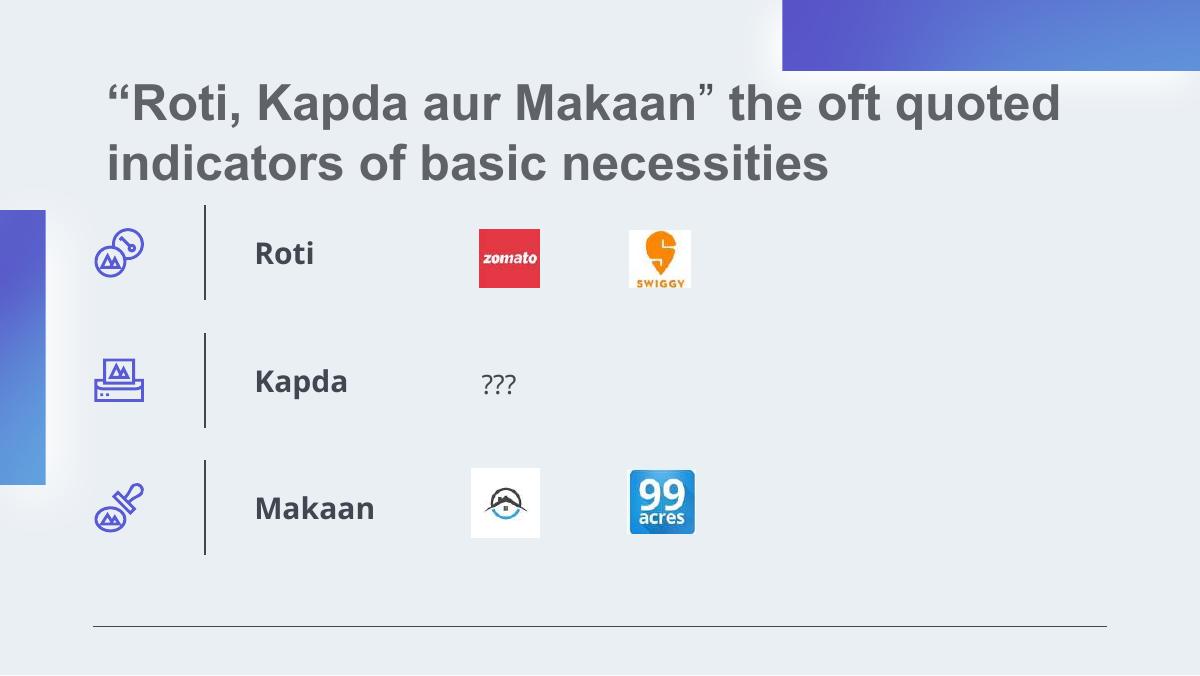
The framing slide, and the reason this deck is worth reading at all. It quotes the Indian shorthand for the three basic necessities — food, clothing, shelter — and lists them with icons. Roti gets a tick. Makaan gets a tick. Kapda gets three question marks.
This is a genuinely elegant piece of positioning. In one visual it says: two of these three needs have been rebuilt by technology in India — food delivery by Swiggy and Zomato, housing and rentals by NoBroker and the listing portals — and clothing care has not. Any Indian investor reads that instantly, without a market slide, without a TAM circle, without a single number. It is cultural shorthand doing the work of three slides.
The flaw is that it stays a metaphor. The slide never names the analogues it is implying. Saying "Roti was solved by a category that now does billions in GMV, Makaan by another, Kapda has no equivalent" converts a clever image into an investable claim. The founder had the insight and left it half-articulated.
Slide 3 — "The Kapda gap is waiting for disruption"
A single sentence on an otherwise empty slide. As a transition it works — a beat between the cultural framing and the problem. Big-type statement slides are a legitimate device and this one is well set.
The problem is placement in a deck this thin. When you only have four real slides, spending one of them on a sentence that restates the previous slide is a quarter of your content budget. If slides 6 through 15 were filled with the business, slide 3 would be a nice breath. In this file it is the point at which the reader starts to suspect there is nothing behind it.
Verdict: a luxury slide in a deck that cannot afford luxuries.
Slide 4 — "The Problem"
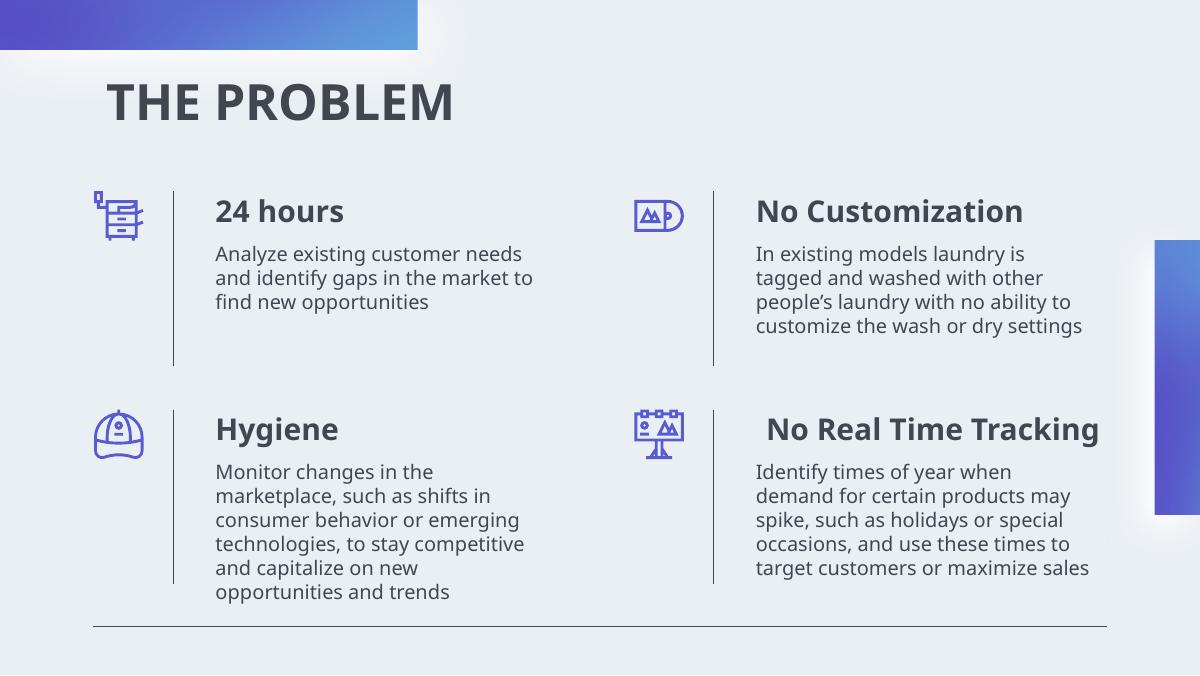
Four boxes in a two-by-two grid, each with an icon and a heading. This is the last slide anyone edited, and it is half-finished in a way that is visible to any reader who slows down.
Two of the boxes are real. No Customization reads: "In existing models laundry is tagged and washed with other people's laundry with no ability to customize the wash or dry settings." That is a specific, operationally credible complaint about how bulk laundry aggregators actually run, and it points directly at a product decision — isolated per-customer washes with selectable settings. It is the single most useful sentence in the whole deck.
The other two boxes are Slidesgo filler text left untouched. The box headed 24 hours says "Analyze existing customer needs and identify gaps in the market to find new opportunities." The box headed Hygiene says "Monitor changes in the marketplace, such as shifts in consumer behavior or emerging technologies, to stay competitive." And the box headed No Real Time Tracking says "Identify times of year when demand for certain products may spike, such as holidays or special occasions."
The headings are the founder's. The bodies are the template's. Someone typed four real problem headers — turnaround time, hygiene, customization, tracking — intended to come back and write the paragraphs, and never did. Three of the four are exactly the right problems for this category. The deck names them and then explains none of them.
Verdict: right diagnosis, unfinished sentences, and the mismatch is obvious on a two-second scan.
Slide 5 — "Six recommendations"
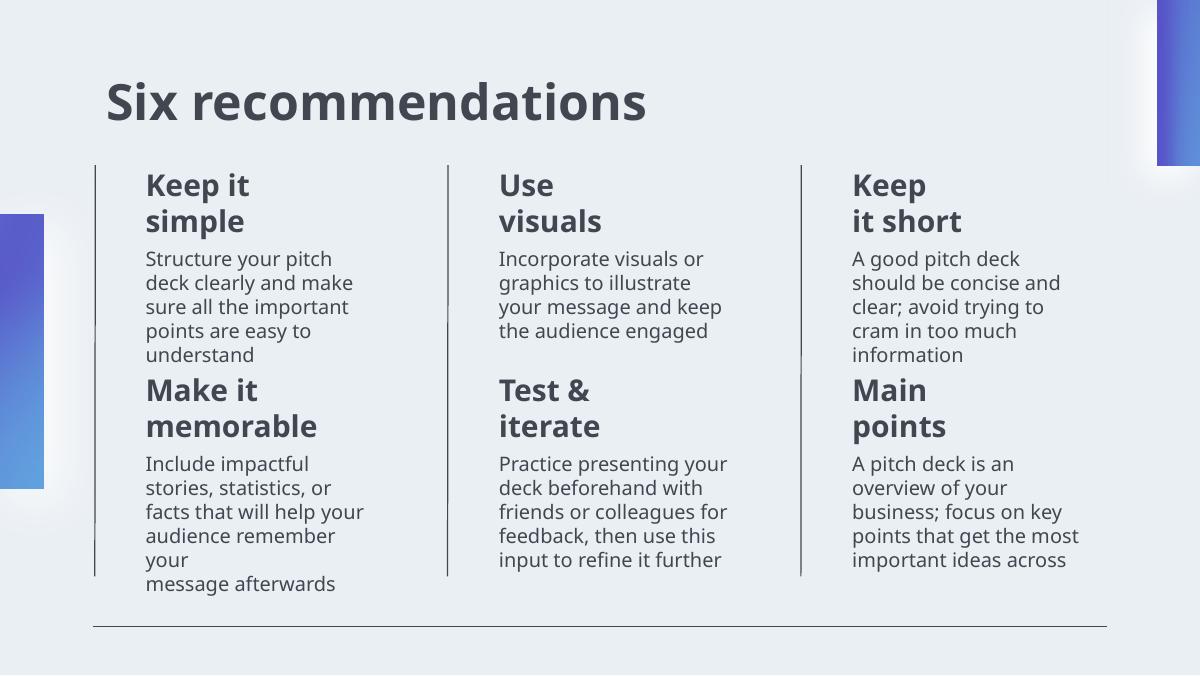
This is a Slidesgo instruction slide that ships inside the template to teach the founder how to build a pitch deck. It advises keeping it simple, using visuals, keeping it short, making it memorable, testing and iterating, and focusing on main points.
It was left in. It is slide 5 of a deck that has four real slides. The advice on it is correct and the deck violates all six items.
Verdict: the clearest possible signal that nobody read the file end to end before sending it.
Slide 6 — Placeholder metrics
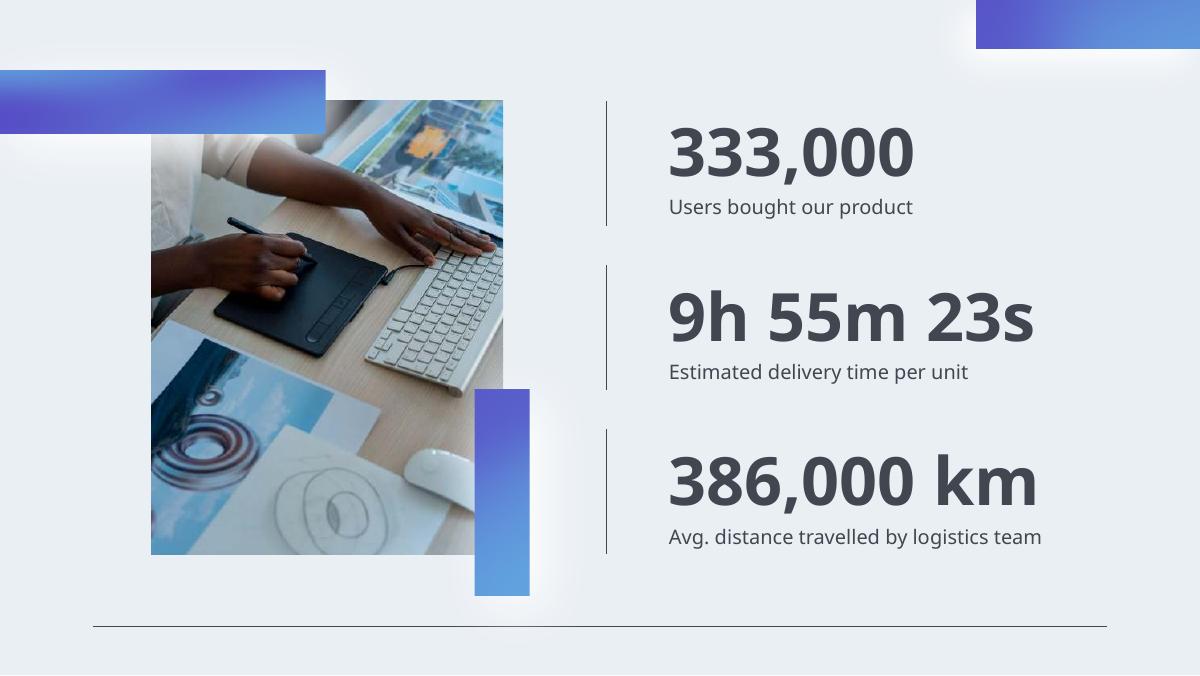
Three large numbers presented as company traction: 333,000 users bought our product, 9h 55m 23s estimated delivery time per unit, 386,000 km average distance travelled by logistics team.
None of these are Agile Wash's. They are Slidesgo's demo figures, and they are visibly wrong for a laundry business — a laundry startup does not measure "average distance travelled by logistics team" in hundreds of thousands of kilometres, and it does not have "users who bought our product" as its unit.
The damage here is worse than an empty slide. An investor skimming quickly may read 333,000 users, get interested, look at the next slide, see "Company X", and conclude the deck is fabricated. Placeholder numbers that look plausible are more dangerous than blank space.
Verdict: delete or fill. Never ship a number you did not compute.
Slide 7 — "190 M / Company X"
A market-research slide reading "Number of users analyzed in our market research", the figure 190 M , and the label Company X . Template, untouched, with the placeholder company name still on it.
This is the slide where the pretence fails completely. The deck now literally says the company is called Company X.
Slide 8 — "Revenue by quarter"
A four-quarter revenue chart with the axis labelled Q1 January–March through Q4 October–December, and a caption underneath that reads: "Follow the link in the graph to modify its data and then paste the new one here. For more info, click here."
The instruction to replace the chart is still printed on the slide, in the exported PDF, next to a revenue graph that shows numbers Agile Wash never earned.
Slide 9 — Competition comparison
A seven-row competitor matrix comparing Company A through Company G on Features, Value, Pricing, Trial, Competence and Share. The pricing column reads $23,000, $27,000, $30,000, $24,000, $32,000, $15,000 and $45,000. The feature column includes "Fuel economy", "Safety features", "Comfort" and "Performance".
This is a car comparison table. It is sitting in a laundry pitch deck as the competition slide.
The genuine loss here is large, because competition is the slide Agile Wash most needed. India has funded laundry-on-demand players before, several have struggled with exactly the unit economics this business faces, and a founder who can explain why isolated washes with live tracking survive where bulk aggregation did not has an argument worth hearing. Instead the slide argues about fuel economy.
Slide 10 — Product infographic
Six labelled prompts: Visuals ("Showcase the design of your product"), Features ("What makes your product unique?"), Price, Users, Availability ("When is the product expected to be ready?"), Updates. Every cell is a question the template is asking the founder. None are answered.
Read as a checklist it is a fairly accurate list of everything this deck fails to say: what the product looks like, what it costs, who buys it, and when it ships.
Slide 11 — Timeline of your presentation
A slide describing the structure the pitch deck should follow — overview, introduction, pain points, solution, value proposition, market size, funding needs, call to action. Another Slidesgo meta-slide, left in place. It is an outline of the deck the founder did not build, printed inside the deck they sent.
Slide 12 — Organizational chart
A full org chart with Jane Doe as CEO, reporting managers Steven Ander, Sarah Williams and Richard Taylor, department heads Maya Willson and John Smith, and employees Alan Turner, William Young, James Scott, Brian Clark, Emma Miller and Michelle García.
Every name is fictional. The team slide of this pitch deck contains eleven people who do not exist and does not contain the founder.
For a services business this is the most costly page in the file. Laundry at scale is an operations company — routing, capacity, staffing, quality control, damage claims. The team slide is where an operator founder wins. It has Jane Doe on it.
Slide 13 — Market size overview
Three concentric circles: $100M total market, $20M target market, $5M current market, each with the template's explanatory text still attached ("Include the total size of the market, which represents the entire potential customer base").
These are Slidesgo defaults. They are also, incidentally, absurd for the claim on slide 2 — a deck arguing that clothing care is one of three universal human necessities in a country of 1.4 billion people should not have a $100M TAM. The template undercuts the founder's own thesis by an order of magnitude or three.
Slide 14 — Roadmap infographic
A twelve-month Gantt chart with initiatives labelled Understanding, Conduct research, Brainstorm ideas, Develop a prototype, Test for usability, Analyze feedback — each with the template's generic objective text. It is a roadmap for building any product, on any timeline, by anyone.
Slide 15 — KPI dashboard
A KPI table listing Item 1 through Item 8 with units of 500, 1,000 and 250, revenue values of 2,000,000 and 50,750 repeated in a loop, and headline figures of $4,000,000 revenue, $100,000 general costs and $5,000 profit. Underneath, again: "Follow the link in the graph to modify its data and then paste the new one here."
A $4M revenue figure, sitting in a deck for a pre-launch laundry startup, that the founder did not write. This is the number an investor screenshots.
Slide 16 — Credits
"CREDITS: This presentation template was created by Slidesgo, and includes icons by Flaticon, and infographics & images by Freepik. Please keep this slide for attribution." Followed by the contact block: youremail@freepik.com , +34 654 321 432 , yourwebsite.com , Company X .
That Slidesgo attribution line is required only on the free tier — its presence tells the reader the deck was made on a free Slidesgo account and never edited past page four. The contact slide of Agile Wash's investor deck lists a Spanish phone number and a Freepik email.
Slides 17–37 — The Slidesgo back matter
Twenty-one further pages that were never meant to leave the editor: an icon pack index, two pages of "Alternative resources" and "Resources" linking to Freepik stock, two full pages of Slidesgo licensing terms for free and premium users, a fonts-and-colors reference page listing Manrope, Roboto and the hex codes #424651, #eaeff4, #a3abb7, #518cde, #595bd1 and #ffffff, a Storyset illustration page, editable graphic resource instructions, and eight pages of icon sets — Educational, Medical, Business, Teamwork, Help & Support, Avatar, Creative Process, Performing Arts, Nature, SEO & Marketing.
More than half the page count of this investor deck is a stock asset catalogue. Page 20 explains what the founder is not allowed to do with the template. Page 21 explains the premium licence. An investor scrolling a PDF viewer sees a 37-page file and assumes depth; what they find after page 16 is the vendor's terms of service.
What this deck gets right
Two things, and both are worth naming because they are the parts that cannot be taught.
The Roti/Kapda/Makaan frame is a strong piece of positioning. It compresses a market thesis into an image an Indian investor already carries in their head, it implies the comparables without listing them, and it makes the gap feel inevitable rather than argued. Most seed decks spend four slides failing to do what this one does in a single graphic. If the rest of the deck matched slide 2, this would be a good deck.
The customization insight is a real product wedge. "In existing models laundry is tagged and washed with other people's laundry with no ability to customize the wash or dry settings" is the observation of someone who has actually used or studied the incumbents. Hygiene concerns about mixed-load washing are a live consumer objection in Indian urban laundry, and building the product around isolated, configurable washes is a defensible answer to it. It is one sentence, buried in a grid, on the last slide anyone edited — and it is the seed of the whole company.
The visual identity is credible. The logo, the type and the colour system are consistent and professional. Nothing about the design says amateur. That is precisely why the placeholder content is so jarring: the packaging promises a company that the contents do not deliver.
Where it breaks
1. The deck cannot answer whether the business exists. No launch date, no city, no customers, no orders, no revenue, no pricing, no app screenshot, no photograph of a facility or a van. Nothing in 37 pages establishes that Agile Wash has ever washed a single item of clothing. That is the whole verdict; everything else is detail.
2. Placeholder numbers are worse than no numbers. 333,000 users. $4,000,000 revenue. A $100M TAM. 190M users analysed. Each of these is a specific, quotable figure the founder did not produce. If any of them travelled into an investor's notes, the founder would be defending a claim they never made.
3. The team slide is fictional. Eleven invented employees, a CEO named Jane Doe, and no founder. In an operations-heavy services business this is the slide that decides the meeting, and it is unfilled.
4. There is no ask. No amount, no round, no valuation, no use of funds, no runway, no milestones. The deck never asks for anything, so there is no action for the reader to take even if they liked slide 2.
5. There is no business model. For a laundry business the model is the pitch: price per kilo or per item, order frequency, average order value, cost per wash, delivery cost per order, contribution margin, and what happens to those numbers at density. None of it appears. The word "pricing" appears once, in a table about cars.
6. Competition is unaddressed. A category with prior venture failures demands an explicit "why now, why us" argument. The slide reserved for it compares fuel economy.
7. The problem slide contradicts itself. Two headings with the founder's problems, two bodies with the template's marketing-strategy boilerplate. Any careful reader spots the mismatch inside five seconds and reads the entire remaining deck with suspicion.
8. The instructional slides are still in the file. Slide 5's six recommendations, slide 11's presentation timeline, slide 10's list of questions to answer, and two chart captions telling the founder to paste new data. The deck is carrying its own build instructions.
9. The back matter is 57% of the page count. Twenty-one of thirty-seven pages are Slidesgo licensing, fonts and icon catalogues. The file's length is entirely borrowed.
10. There is no contact information anywhere. An investor who wanted to fund this on the strength of slide 2 could not find out how.
How to rebuild it
The good news for Agile Wash is that this is a one-weekend fix. The thesis is already there; what is missing is entirely material the founder already knows and has not written down. Twelve slides, in this order.
1. Cover. Agile Wash — Instant laundry. Add the city, the month, the round ("Raising ₹X crore seed"), and a founder email. Keep the logo exactly as it is.
2. Roti, Kapda, Makaan. Keep the slide, and add one line under each icon naming the company that solved it and one number showing the scale it reached. Then the third column's question marks stop being a metaphor and become a market-size argument.
3. The problem, finished. Keep the four headings. Write the four bodies. Turnaround: what the incumbent actually takes, in hours, sourced. Hygiene: what mixed-load washing means physically and what customers say about it. Customization: the sentence already written, expanded. Tracking: what the customer sees today when they ask where their clothes are.
4. The solution, shown. Three phone screenshots and one photo of the facility or the wash unit. If the product is not built, show the wireframes and label them as such — a labelled wireframe is credible, a placeholder infographic is not.
5. How it works. Pickup to delivery in four steps with the promised time at each. "Instant laundry" is a hard operational claim; the deck has to show the operation that makes it possible.
6. Unit economics. Average order value, cost of wash, cost of pickup and delivery, contribution margin per order, and the same figures at target density. This is the slide that replaces slides 8, 13 and 15 combined, and it is the one investors will actually study.
7. Traction. Whatever is real, dated. Orders in the last month. Repeat rate. A pilot in one neighbourhood. Ten paying customers with a photo of the WhatsApp thread. If the honest answer is zero, retitle the slide "Pilot plan" and put the next 90 days on it — an empty traction slide labelled honestly costs far less than a fake one.
8. Market. Indian urban laundry and dry cleaning, with a sourced number and a bottom-up build for the launch city: households in the target income bracket × orders per month × average order value. Delete the $100M/$20M/$5M circles.
9. Competition. Named Indian players — the funded on-demand apps, the offline chains, the neighbourhood dhobi — against three axes that matter: turnaround, hygiene isolation, price per kilo. Then one line on why previous attempts struggled and what is different now.
10. Go to market. First neighbourhood, acquisition channel, cost per acquired customer, and what expansion to the second neighbourhood requires.
11. Team. Real names, real photos, real backgrounds, and specifically who has run operations before. Delete Jane Doe.
12. The ask. Amount, allocation across capex, ops and marketing, the runway it buys, and the two milestones it reaches. Contact details repeated at the bottom.
Then delete pages 17 through 37 and check the export. Everything on that list is knowledge the founder already has. None of it requires new research, new traction or a designer. It requires opening the file and finishing it.
The lesson
Agile Wash's deck fails for a reason that has nothing to do with the quality of the business. A template is a container, and a container that is only 11% full advertises exactly how full it is. The investor's read is not "this founder used Slidesgo" — templates are fine, plenty of funded decks are built on them. The read is "this founder did not finish, and if the fundraise document is unfinished, the operation probably is too."
There is a version of this deck that is twelve honest slides, has no traction, admits it, and still gets a meeting on the strength of the Kapda insight and a credible unit-economics model. That version is shorter, plainer and much harder to dismiss. The 37-page version, with its 333,000 users and its $4M revenue and its CEO named Jane Doe, is easier to dismiss than a blank page — because a blank page cannot be misquoted back to you.
If you are sending a deck this week, do one thing before you attach it: open the PDF, not the editor, and read every page as if you had never seen it. Every founder who has shipped a template with the credits slide still in it skipped that step.
Frequently asked questions
- What is Agile Wash?
- Agile Wash is an instant-laundry startup positioned for the Indian market, pitching same-day turnaround, hygienic isolated washes rather than mixed loads, and real-time order tracking. Its pitch deck was exported on 17 October 2024. The deck contains no launch date, city, product screenshots or customer numbers, so its operating status cannot be verified from the document.
- How many slides in the Agile Wash pitch deck are real?
- Four. The cover, the 'Roti, Kapda aur Makaan' framing slide, the 'The Kapda gap is waiting for disruption' statement slide, and the problem slide — and even the problem slide has founder-written headings with two of four body paragraphs left as Slidesgo template filler. The remaining 33 pages are unedited template and back matter.
- Are the numbers in the Agile Wash deck real?
- No. The 333,000 users, 9h 55m 23s delivery time, 386,000 km travelled, 190M market research users, $4,000,000 revenue KPI table and the $100M / $20M / $5M market-size circles are all Slidesgo template defaults. Two of the chart slides still carry the template's caption instructing the founder to paste new data.
- Which Agile Wash slide should founders copy?
- Slide 2. Listing Roti, Kapda and Makaan — India's shorthand for food, clothing and shelter — with ticks against food and housing and question marks against clothing compresses a market thesis into a single image every Indian investor already understands. It does in one graphic what most seed decks fail to do in four slides.
- What is the biggest problem with the Agile Wash pitch deck?
- Nothing in the 37 pages establishes that the business exists. There is no product screenshot, no pricing, no order volume, no customer, no facility photo, no founder name and no ask. Worse, the placeholder figures left in the template — 333,000 users and $4,000,000 in revenue — are specific enough to be quoted back at a founder who never claimed them.
- What is the lesson from the Agile Wash pitch deck teardown?
- Templates are fine; unfinished templates are not. A container that is 11% full advertises exactly how full it is, and an investor reads an unfinished fundraise document as a signal about the operation behind it. Before sending, open the exported PDF rather than the editor and read every page — the credits slide, the licensing pages and the placeholder charts only survive because nobody did.