Aftersale, operating as Send4 at the time of this 2018 seed round, presents a textbook example of a 'traction-first' pitch. The deck is remarkably brief at just 10 slides, yet it manages to communicate a high-growth trajectory that is difficult for investors to ignore. By leading with a $400k ARR and zero churn on slide 2, the founders immediately de-risk the investment. The narrative then shifts to the inefficiency of manual return processes—specifically targeting the reliance on Excel—before showcasing a simple three-step mobile solution. While the deck lacks a formal 'Ask' slide or detaile…
Key takeaways
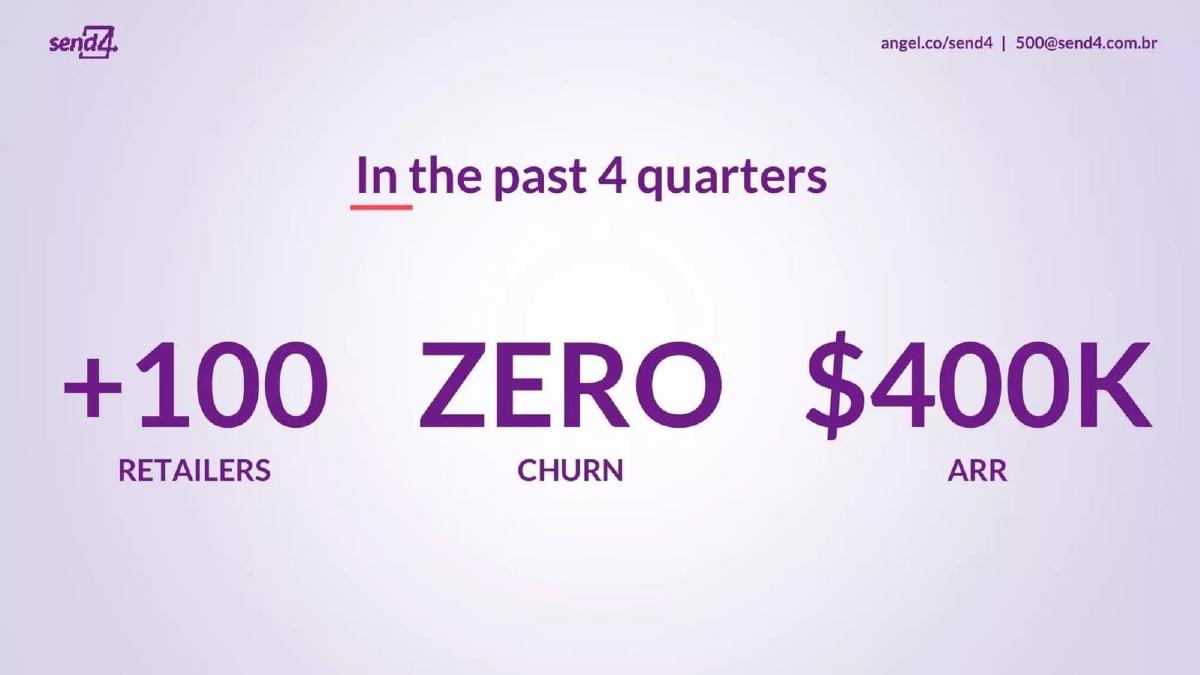
- The deck leads with heavy-hitting traction, citing +100 retailers and $400k ARR on slide 2.
- A 'Zero Churn' metric is highlighted early to demonstrate high product stickiness (slide 2).
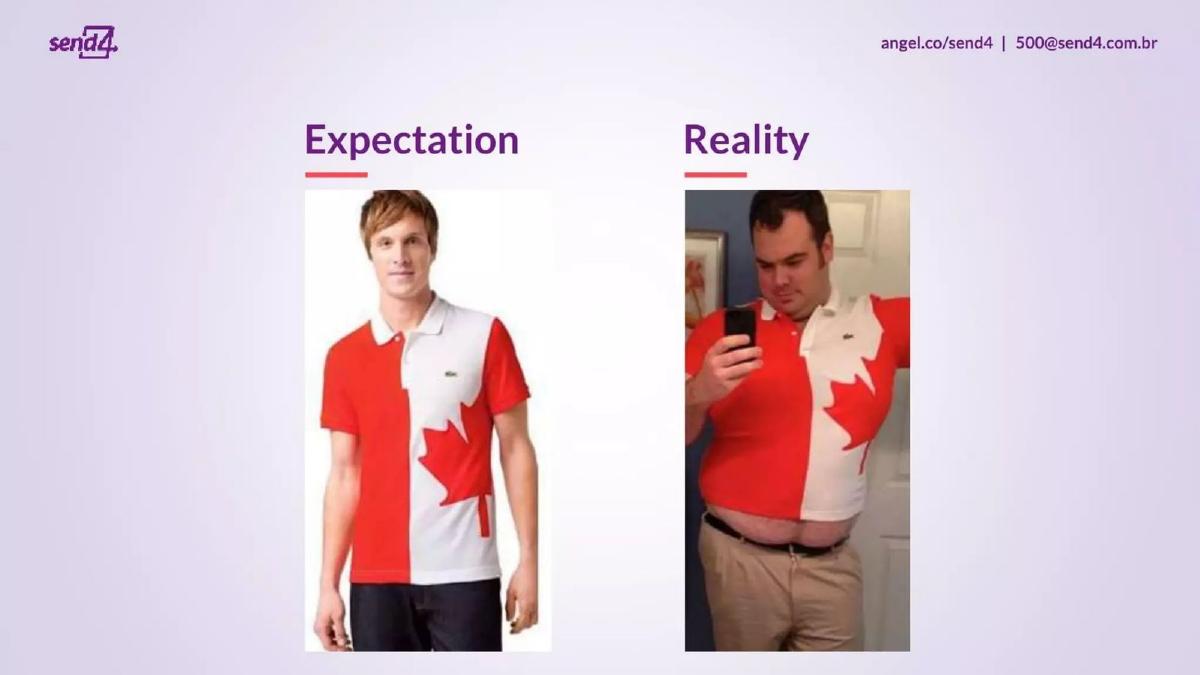
- The problem is visually defined through the 'Expectation vs. Reality' meme, making the pain point of online shopping immediately relatable (slide 3).
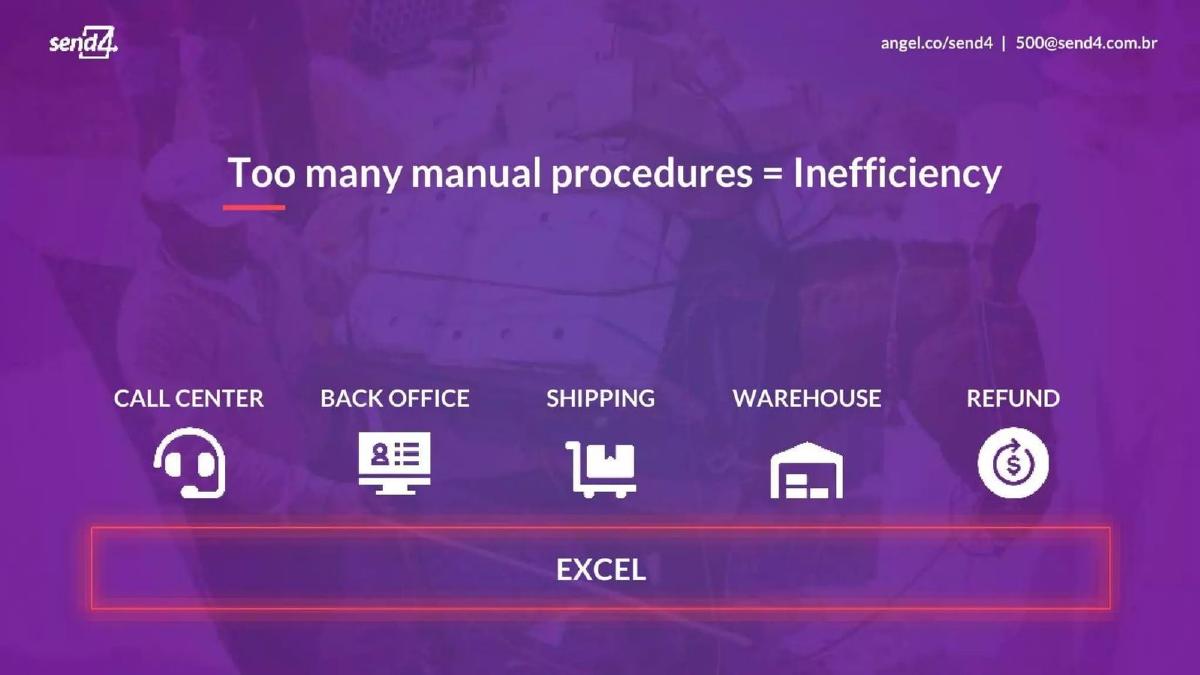
- The deck identifies 'Excel' as the primary competitor and source of inefficiency in manual return procedures (slide 5).
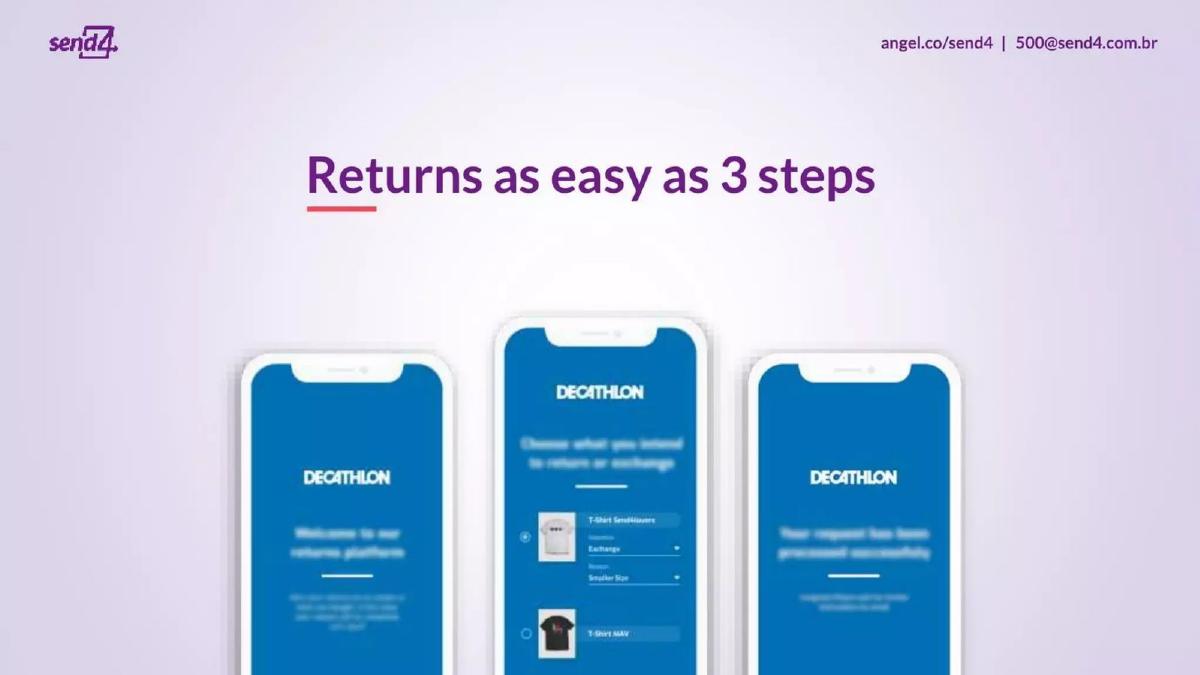
- Product simplicity is emphasized by showing a 3-step return process on a mobile interface (slide 6).
- The business model is validated by ROI metrics, claiming 21x ROI and 44% upsell for retailers (slide 7).
- Growth is visualized as a 121% ARR Quarter-over-Quarter increase (slide 8).
- The team slide emphasizes experience over education, noting '4 startups & 1 successful exit' (slide 9).
The Power of a Traction-First Narrative
The Aftersale (Send4) pitch deck is a lean, 10-slide presentation that prioritizes results over theory. In the world of seed-stage fundraising, founders often spend too much time explaining the 'how' and not enough time proving the 'who cares.' Aftersale flips this script. By the second slide, the investor already knows the company has 100 customers and $400,000 in recurring revenue. This teardown examines how a minimalist design and a focus on growth metrics allowed the company to raise $645,200 in 2018.
Slides 1-2: The Hook and the Proof
Slide 1: Title Slide The deck opens with the Send4 logo and the tagline: "The easiest way to automate online returns." The imagery is simple—a person working on a laptop—which keeps the focus entirely on the value proposition. It is a standard, clean entry point.
Slide 2: The Traction Teaser This is the most important slide in the deck. Before explaining the problem or the product, Aftersale presents three massive figures: "+100 Retailers," "ZERO Churn," and "$400K ARR." By stating these facts in the past four quarters, they immediately establish credibility. For a seed-stage company, $400k ARR is a significant milestone that suggests the product-market fit has already been achieved. The mention of zero churn is a powerful signal of product stickiness, which is a primary concern for SaaS investors.
Slides 3-5: Defining the Pain Point
Slide 3: Expectation vs. Reality Aftersale uses a well-known internet meme format to illustrate the problem with online shopping. The "Expectation" shows a fit model in a polo shirt, while the "Reality" shows a consumer for whom the shirt does not fit. This is a clever, low-friction way to explain why returns happen without using dense text. It humanizes the problem.
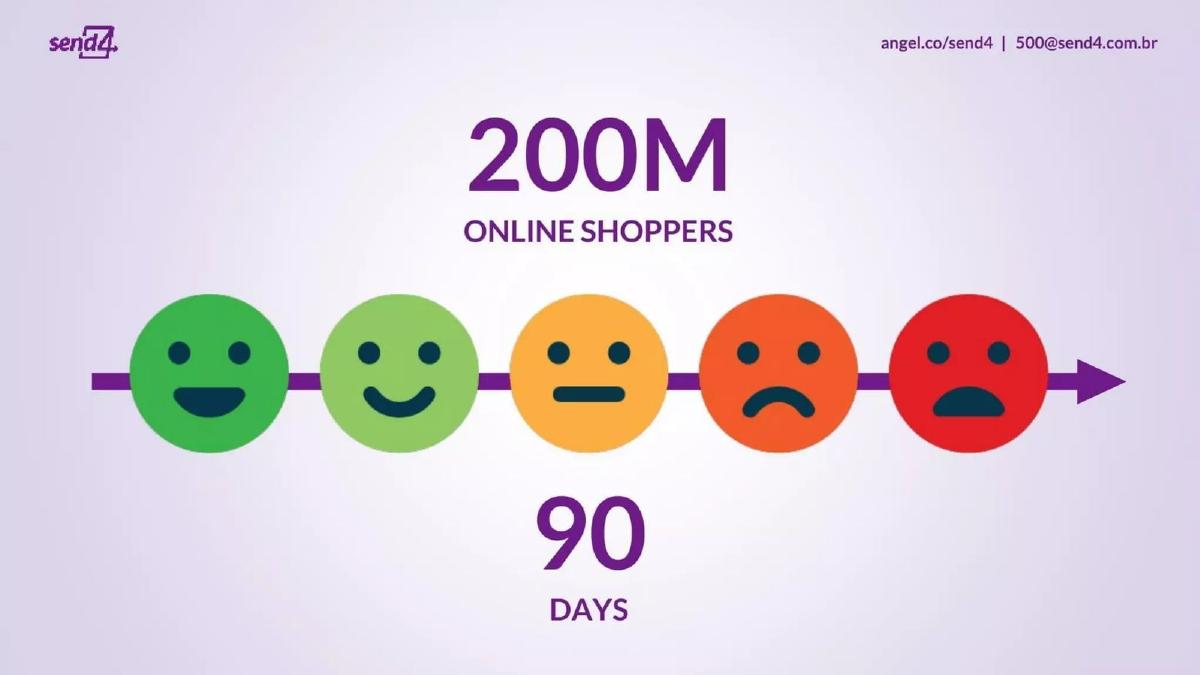
Slide 4: The Scale of Dissatisfaction This slide quantifies the problem. It cites "200M Online Shoppers" and uses a color-coded emoji scale from happy (green) to angry (red) over a "90 Days" timeline. While the slide is a bit abstract, it suggests that the current return process leaves a massive number of people unhappy for a long period. It frames the market opportunity in terms of human frustration rather than just dollars.
Slide 5: The Operational Bottleneck Here, the deck identifies the true enemy: manual procedures. It lists five departments—Call Center, Back Office, Shipping, Warehouse, and Refund—and places them all above a red-boxed word: "EXCEL." This is a classic "status quo" slide. It tells the investor that the current solution isn't a competitor's software; it's a fragmented, manual process managed in spreadsheets. This makes the potential for automation seem both obvious and necessary.
Slides 6-8: The Solution and the Economics
Slide 6: Product Simplicity The solution is presented as "Returns as easy as 3 steps." The slide shows three mobile screens featuring the brand Decathlon. This serves two purposes: it shows the UI/UX is mobile-first and simple, and it provides social proof by using a major global retailer as the example. The blurriness of the text on the screens is a minor design flaw, but the message of a 3-step flow remains clear.
Slide 7: The Value Proposition for Retailers This slide moves from the consumer experience to the business impact. It claims "Extra revenue through returns" and provides three metrics: "2x Store Credit," "21x ROI," and "44% Upsell." This is a critical pivot. It reframes returns from a cost center (something retailers hate) into a profit center (something retailers want to optimize). The 21x ROI figure is particularly aggressive and would likely be a primary topic during due diligence.
Slide 8: The Growth Curve To reinforce the traction shown on slide 2, slide 8 provides a visual bar chart of "121% ARR QoQ Growth." The chart shows a steady climb from 1Q to "NOW," ending at the $400K mark. The use of neon-pink outlines on a purple background makes the growth look modern and energetic. This slide answers the investor's question: "Is this a fluke or a trend?" The answer provided is a clear trend.
Slides 9-10: The Team and The Close
Slide 9: The Founders The team slide features Leo Frade (CEO) and Cristian Trentin (COO). Instead of focusing on degrees, the headline shouts "4 startups & 1 successful exit." This tells investors that these are not first-time founders; they have been through the full lifecycle of a startup before. Leo is credited with 18+ years in Product and Sales, while Cristian is highlighted as a Forbes 30 Under 30 recipient with 5+ years in e-commerce last mile. It is a high-authority team slide that matches the high-traction narrative of the rest of the deck.
Slide 10: The Final Ask (Or Lack Thereof) The final slide repeats the traction metrics from slide 2 under the question "Are you interested in returns?" Curiously, there is no "Ask" slide. The deck does not state how much money they are looking for or what they plan to do with it. This suggests the deck was used as a teaser to generate interest and start conversations, rather than a comprehensive document meant to stand alone.
What Works in This Deck
Metric-First Design: By putting the $400k ARR and zero churn on the very first content slide, Aftersale eliminates the skepticism that usually accompanies a seed pitch. They prove the business works before they even explain what the business is.
Reframing the Problem: Most return-tech companies focus on logistics. Aftersale focuses on revenue. By highlighting the "44% Upsell" and "21x ROI," they make their software a "must-have" for a CFO, not just a "nice-to-have" for a logistics manager.
Visual Simplicity: The deck uses very little text. It relies on large numbers, recognizable logos (Decathlon), and relatable imagery (the polo shirt meme). This makes the deck very easy to digest in under two minutes.
What Is Missing
The Ask: As noted, the lack of a funding goal is a significant omission. While this can work in a high-demand round to create a bidding war, most founders should include a slide detailing the amount they need and the milestones that capital will unlock.
Market Size (TAM): While they mention 200M shoppers, they don't explain the dollar value of the return market in Brazil or globally. Investors need to know if this can become a billion-dollar company, and this deck doesn't explicitly make that case.
Competitive Landscape: Identifying Excel as the competitor is clever, but it ignores other startups in the space (like Narvar or AfterShip). A sophisticated investor will know these exist, and failing to mention them can make a founder look uninformed.
What a Founder Should Copy
The Traction Slide: If you have revenue and zero churn, do not hide it on slide 12. Put it on slide 2. It changes the entire tone of the meeting from "convince me this works" to "tell me how big this can get."
The ROI Focus: If your B2B product saves money or makes money, quantify it. Aftersale’s use of "21x ROI" is a bold claim that demands attention. Founders should aim to find a similar "hero metric" that defines their economic value to the customer.
The Meme/Relatability Factor: Using the "Expectation vs. Reality" meme was a risky but effective choice. It instantly communicates the problem without a single bullet point. If your problem is a common human experience, find a visual way to show it rather than a text-heavy way to describe it.
Frequently asked questions
- What is the primary value proposition of Aftersale?
- Aftersale focuses on automating the online return process for e-commerce retailers. According to slide 7, the platform transforms a cost center into a revenue driver by generating a 21x ROI, increasing store credit usage by 2x, and facilitating a 44% upsell rate during the return flow. It aims to replace manual, Excel-based back-office work with a streamlined mobile interface.
- How does the deck handle competition?
- The deck does not include a traditional competitive matrix or a list of logos. Instead, slide 5 frames the competition as 'manual procedures' and specifically highlights 'EXCEL' as the tool causing inefficiency across call centers, shipping, and warehouses. This positions Aftersale as a digital transformation tool rather than just another software feature.
- Is the market size clearly defined in the slides?
- The deck uses a simplified approach to market sizing. Slide 4 mentions '200M Online Shoppers' but does not provide a traditional TAM/SAM/SOM breakdown or a dollar value for the total addressable market. It relies more on the volume of shoppers and the duration of their dissatisfaction (90 days) to imply a large opportunity.
- What metrics did Aftersale use to prove traction?
- The company relies on four key pillars of traction: customer count (+100 retailers), revenue ($400k ARR), retention (Zero Churn), and growth rate (121% QoQ). These figures appear on slides 2 and 8, creating a narrative of a product that has found immediate market resonance and is scaling rapidly.
- What is missing from this pitch deck?
- The deck is missing several standard elements, including a specific 'Ask' slide (how much they are raising), a 'Use of Funds' breakdown, a detailed business model/pricing slide, and a roadmap for future product development. It functions more as a high-level teaser designed to secure a meeting based on current momentum.