Afrocenchix’s 2021 seed deck is a masterclass in niche dominance and unit economics. By identifying a specific, high-spending demographic—Black and mixed-race women who spend 6x more on cosmetics—the company built a vertically integrated D2C brand that bypassed traditional retail limitations. The deck highlights a staggering 17:1 adjusted LTV:CAC ratio and 147x growth in online sales since 2017. While the version analyzed has many specific financial figures redacted, the structural narrative remains clear: they are using superior R&D cycles (6-12 months) and a community-first approach to disr…
Key takeaways
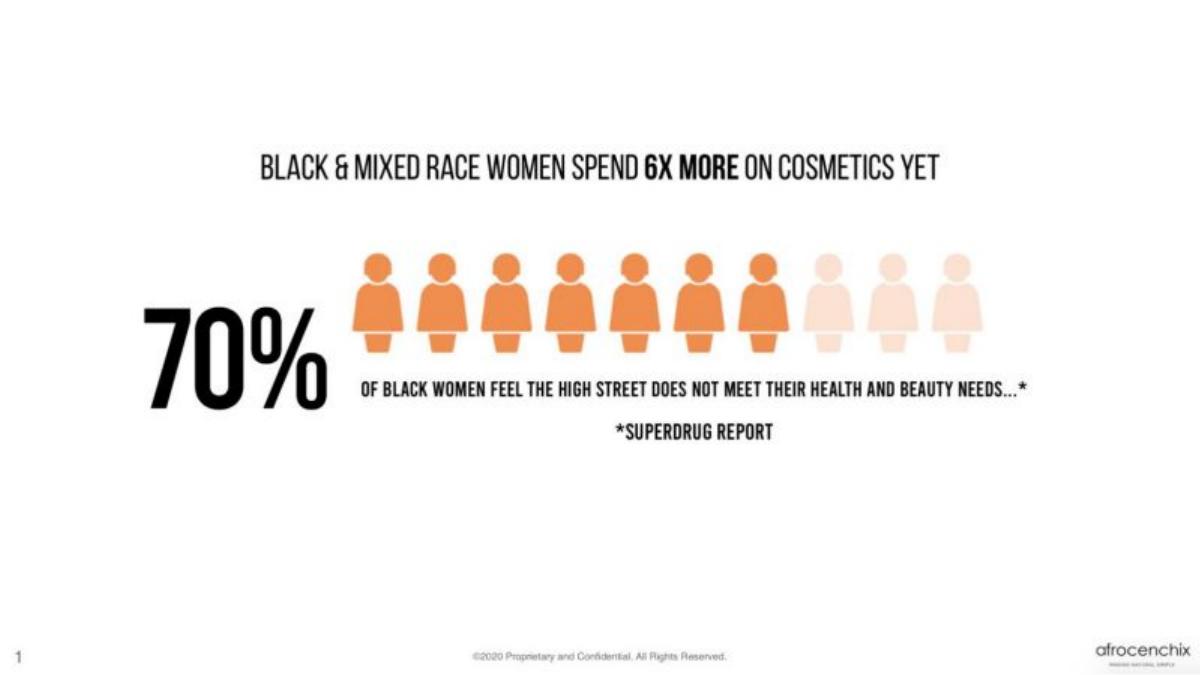
- The company identifies a massive market gap where 70% of Black women feel the high street does not meet their beauty needs (Slide 1).
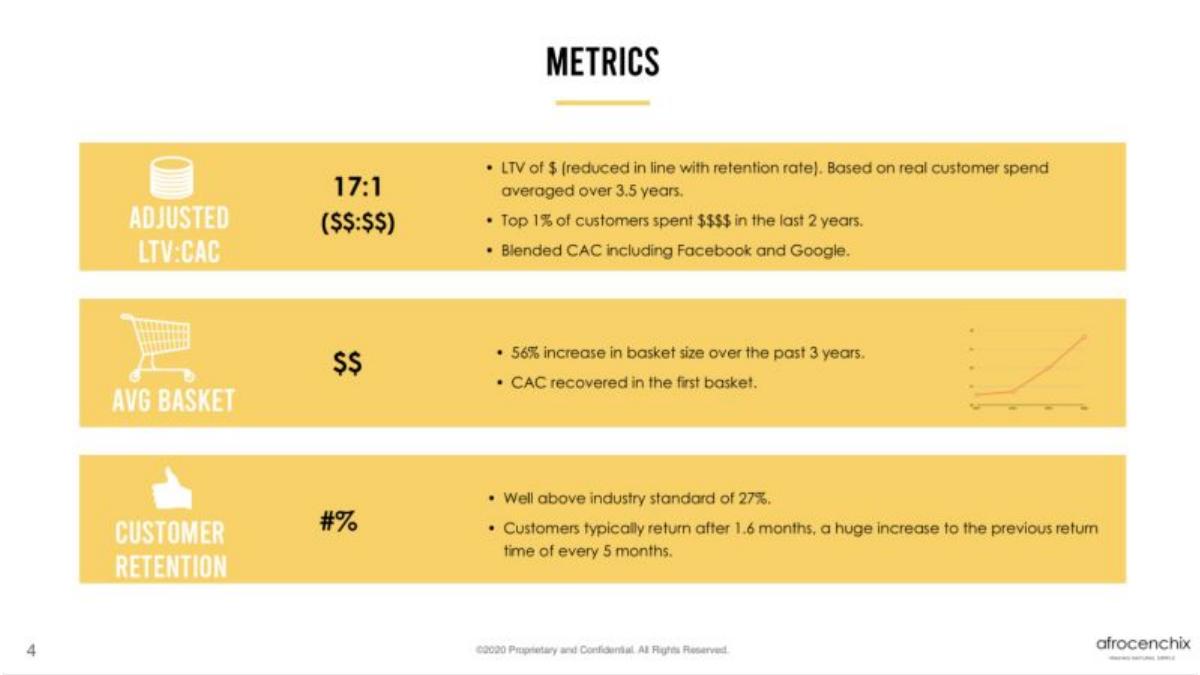
- Afrocenchix boasts an exceptional 17:1 adjusted LTV:CAC ratio, with CAC recovered in the very first basket (Slide 4).
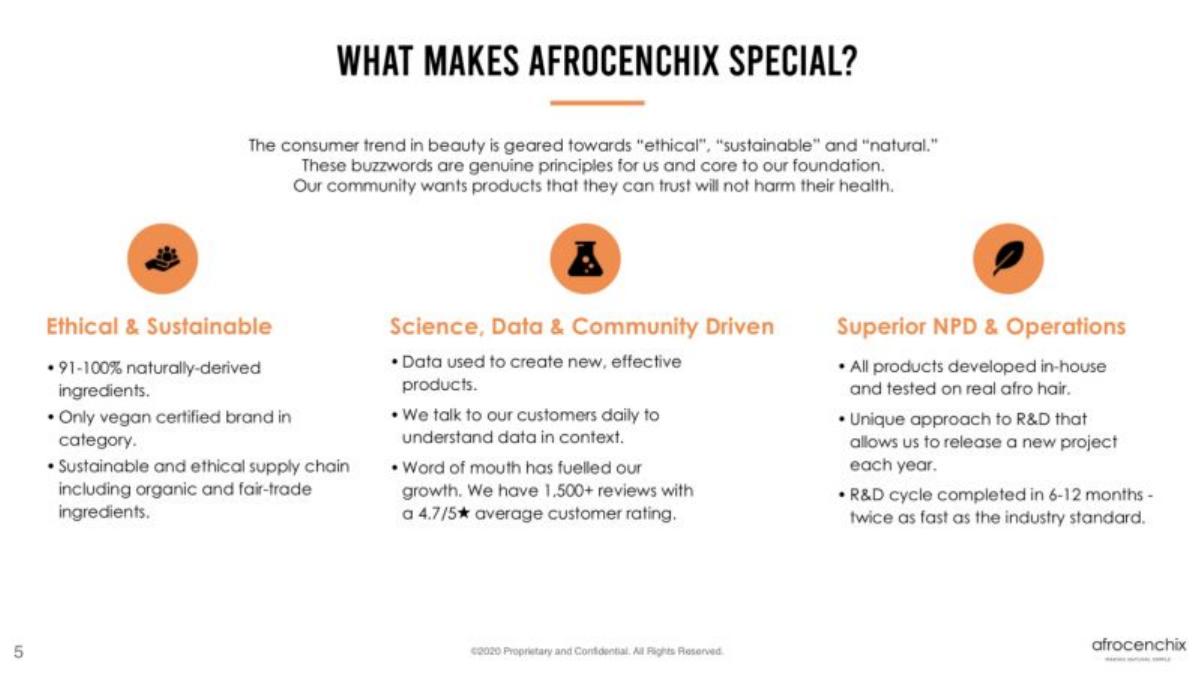
- The brand is vertically integrated, allowing for an R&D cycle of 6-12 months, which is twice as fast as the industry standard (Slide 5).
- Online sales grew 147x from Q1 2017 to Q1 2021, even after turning off paid ads for a period in 2020 (Slide 9).
- The global afro product market size is valued at $48.6 billion+, with 3.2 billion people having afro or curly hair (Slide 7).
- Customer retention is significantly higher than the industry standard of 27%, with return times dropping from 5 months to 1.6 months (Slide 4).
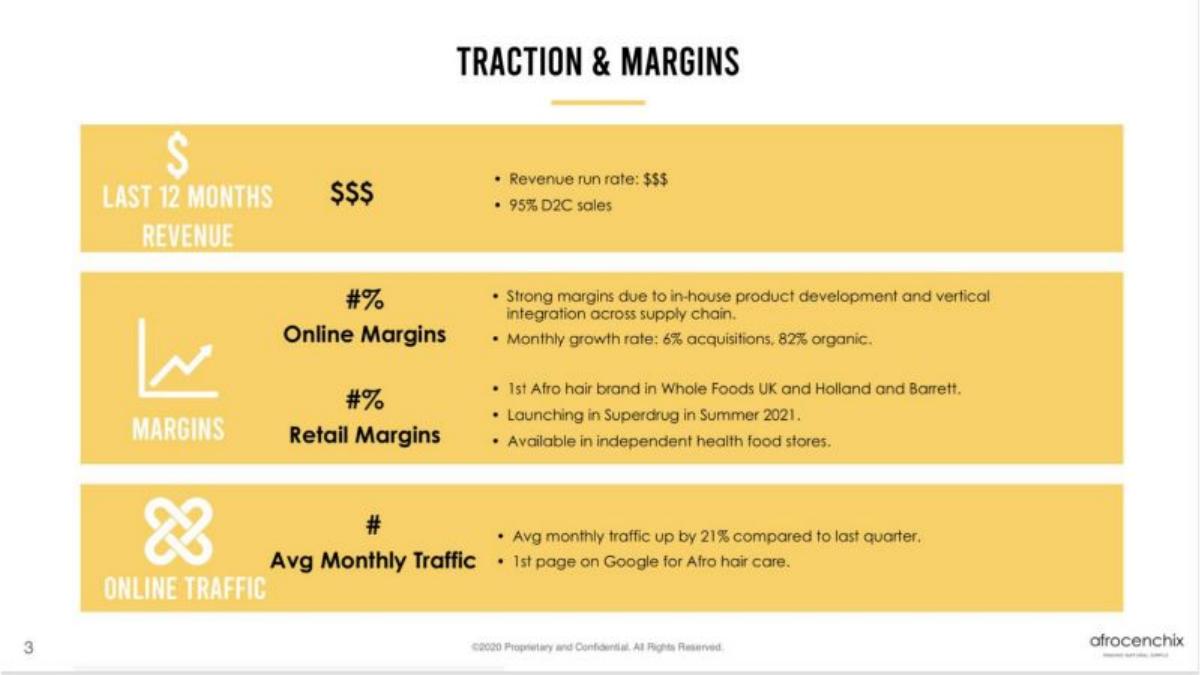
- The company has already secured placement in major retailers like Whole Foods UK and Holland & Barrett (Slide 3).
- The team is specifically built for the market, featuring founders with backgrounds in law, strategy, and retail logistics from firms like Tesco and Kraft (Slide 13).
The Cover and the Hook
Slide 0: Title Slide
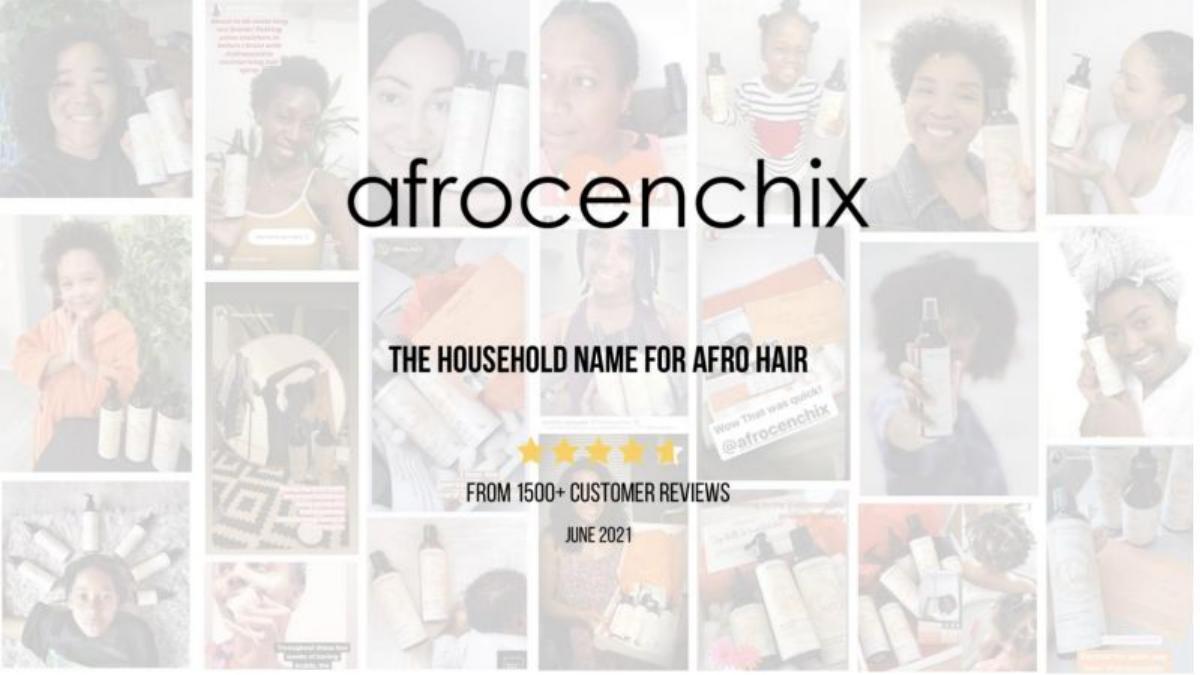
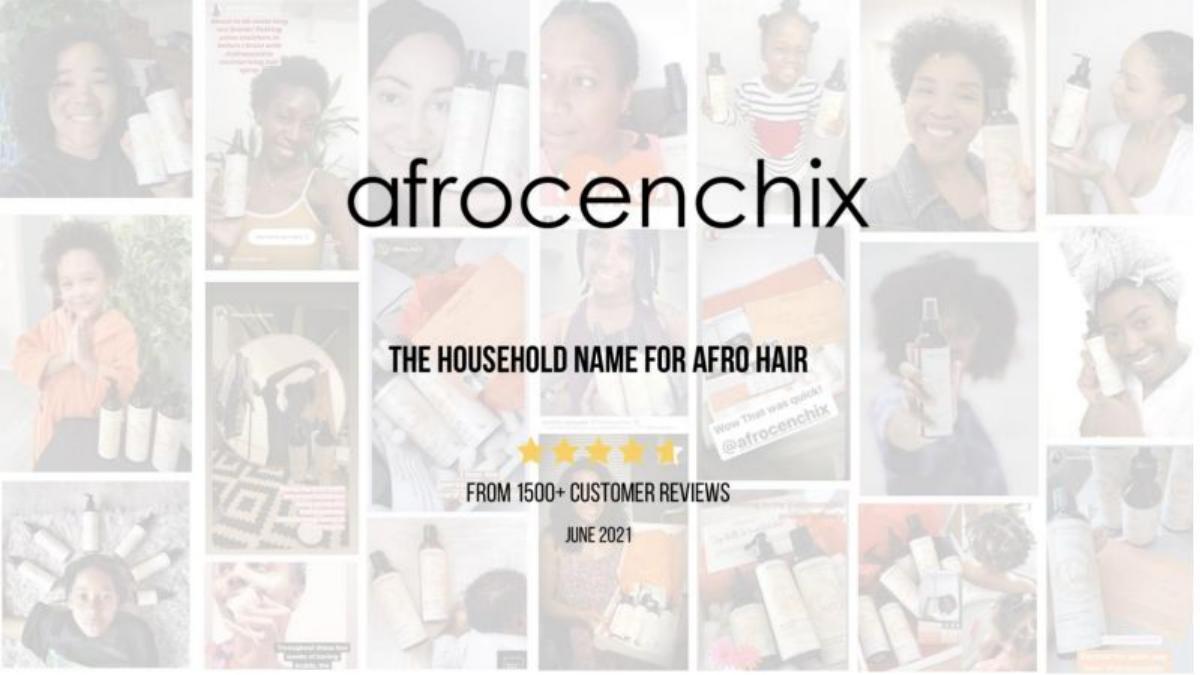
The cover slide for Afrocenchix is visually dense, using a collage of customer-submitted photos and social media screenshots. This immediately establishes the brand as community-focused. The central text, "THE HOUSEHOLD NAME FOR AFRO HAIR," is a bold statement of intent. It also highlights a key piece of social proof: "FROM 1500+ CUSTOMER REVIEWS" with a 5-star graphic. This slide sets the tone that the company is already established and loved by its user base.
Slide 1: The Problem
Afrocenchix uses a single, powerful statistic to define the problem: "BLACK & MIXED RACE WOMEN SPEND 6X MORE ON COSMETICS YET 70% OF BLACK WOMEN FEEL THE HIGH STREET DOES NOT MEET THEIR HEALTH AND BEAUTY NEEDS." This slide is effective because it highlights both a high-value customer segment and a massive failure in the current market. Citing a "Superdrug Report" adds third-party credibility to the claim.
Slide 2: The Solution
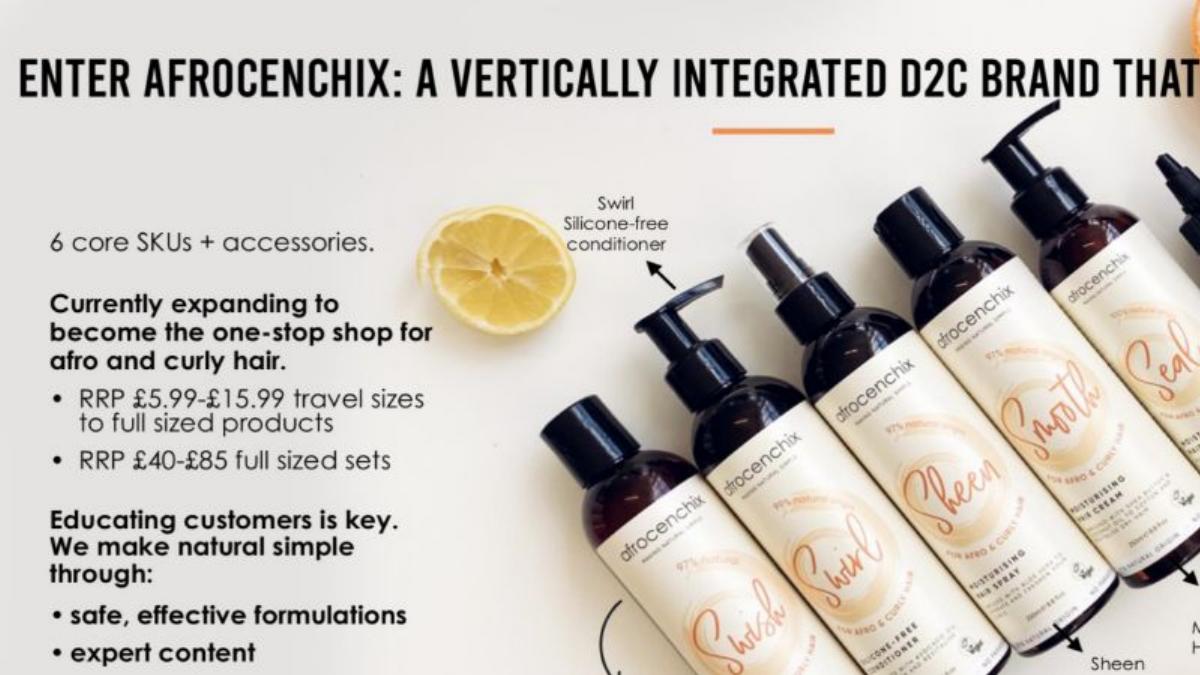
The solution is presented as a "VERTICALLY INTEGRATED D2C BRAND." The slide showcases their product line, which includes 6 core SKUs + accessories . Pricing is transparently listed: RRP £5.99-£15.99 for individual products and £40-£85 for full-sized sets. They emphasize that "Educating customers is key," positioning themselves as more than just a manufacturer, but a content-driven authority in the space.
Traction and Unit Economics
Slide 3: Traction & Margins
This slide uses placeholders for specific revenue figures, but the qualitative data is strong. They report 95% D2C sales and a monthly growth rate of 6% acquisitions , of which 82% are organic . This indicates a very healthy, low-cost acquisition model. They also note they were the "1st Afro hair brand in Whole Foods UK and Holland and Barrett," proving their ability to move from D2C into high-end physical retail.
Slide 4: Metrics
This is arguably the strongest slide in the deck. It highlights an Adjusted LTV:CAC of 17:1 . For a consumer goods company, this is an exceptional ratio. They also note a 56% increase in basket size over the past 3 years and a significant improvement in retention: customers now return every 1.6 months , compared to a previous return time of 5 months . The claim that "CAC recovered in the first basket" is a vital signal to investors that the business can scale efficiently.
Slide 5: What Makes Afrocenchix Special?
This slide breaks down their competitive advantages into three pillars: Ethical & Sustainable (91-100% naturally-derived), Science, Data & Community Driven (1,500+ reviews), and Superior NPD & Operations . The standout fact here is their R&D cycle of 6-12 months , which they state is "twice as fast as the industry standard." This speed to market is a significant moat in the fast-moving beauty industry.
Market Validation and Competition
Slide 6: Social Proof
Slide 6 is a wall of customer testimonials. While text-heavy, it serves to humanize the brand. Quotes like "It's also shown my children that we have products that show us off to our best by people who represent us so well" emphasize the emotional and cultural connection the brand has with its audience, which is a key driver for loyalty in this niche.
Slide 7: Market Opportunity
The deck quantifies the global opportunity: 3.2 billion people with Afro & Curly hair. They state the global afro product market size is $48.6 billion+ . A particularly interesting demographic insight is provided: 54% of Gen Z v 30% Baby Boomers in America identify as black & brown , suggesting that the market is not only large but growing as a percentage of the total population.
Slide 8: Competitive Landscape
The competitive matrix uses two axes: Wholesale vs. D2C and Toxic vs. Safe, sustainable & natural . Afrocenchix places itself in the top-right quadrant (D2C and Safe). They list major incumbents like Shea Moisture (acquired by Unilever for ~700M) and Carol's Daughter (acquired by L'Oreal for ~27M), as well as newer players like Pattern and CurlMix . This slide effectively shows that while there are many players, few are combining a D2C model with a clean-label profile.
Growth and Future Plans
Slide 9: 147x Growth in Online Sales
This bar chart shows quarterly growth from Q1 2017 to Q1 2021. Even with numbers redacted, the visual trend is a classic "hockey stick." A notable annotation shows they "Turned off paid ads" in Q3 and Q4 of 2020, yet sales remained significantly higher than pre-2020 levels, further proving the strength of their organic reach and customer retention.
Slide 10: The Ask
The slide titled "RAISING $$$" outlines the use of funds across three categories: Team (hiring a Cosmetic Chemist, Content Coordinator, and Customer Experience Coordinator), R&D + Manufacturing (3 product releases and scaling in-house operations), and Marketing (Influencers and Digital Ads). They specifically mention a goal of selling 379K bottles through outsourcing.
Slide 11: Projections
The projections slide includes a roadmap: 2021 (Seed) for styling butter and chatbot launch; 2023-24 (Series A) ; and 2024-25 (Global Expansion) . The roadmap specifically targets US & West Africa expansion in 2023, which aligns with the global market data presented earlier in the deck.
Slide 12: Press & Awards
This slide is a "logo cloud" of high-tier media outlets including Vogue, BBC, Forbes, and Cosmopolitan . It also highlights major accolades like the WeWork Creator Award 2018 and KPMG Black Entrepreneurs Award 2018 . This level of institutional recognition helps de-risk the investment for VCs.
The Team and the "Why Now"
Slide 13: The Team
The team slide features 10 individuals, led by co-founders Rachael Corson and Joycelyn Mate . The slide highlights a mix of academic credentials (LLB, MSc, BA hons) and professional experience at major corporations like Tesco, Kraft, and Unilever . This demonstrates that the founders have the professional rigor to match their entrepreneurial passion.
Slide 14: Why Now?
The "Why Now" slide cites three factors: the $48.6B market being limited by retail reliance, the growth of eCommerce , and the Black Lives Matter movement . They mention a specific success on "Black Pound Day," where they saw high sales with "no additional marketing spend." This ties the brand's success to broader cultural shifts, making the investment feel timely.
Slide 15: Closing and Contact
The final slide reiterates their 1670% YoY growth (June 19-20) and their goal to "lead the UK market by 2022." It provides direct contact information for both founders and their physical office address in London. It ends on a strong, mission-driven note: "HAIR TO STAY."
What Works / What is Missing / What to Copy
What Works
Unit Economics: The 17:1 LTV:CAC ratio is the most compelling data point in the deck. It proves that the company has found a highly efficient way to acquire and retain customers. · Vertical Integration: By highlighting their in-house R&D and manufacturing, they address potential concerns about supply chain margins and speed to market. · Cultural Context: The deck successfully explains why this specific niche is underserved and how current events have created a tailwind for Black-owned, D2C brands.
What is Missing
Specific Financials: While this is a public version of the deck, the redaction of turnover and expenditure figures makes it hard to evaluate the actual scale of the business at the time of the raise. · Detailed Product Roadmap: While they mention "3 new product launches," they don't specify what these products are or how they expand the total addressable market (TAM) beyond hair. · Unit Economics Breakdown: We see the LTV:CAC ratio, but not the breakdown of COGS (Cost of Goods Sold) or the specific contribution margin per bottle.
What a Founder Should Copy
The "6x Spend" Statistic: Finding a single, dramatic statistic that proves your target demographic is higher-value than the average consumer is a great way to grab attention. · The Growth Annotations: On Slide 9, marking when they "hired team" or "turned off ads" provides context to the revenue chart, explaining the "why" behind the numbers. · The Competitive Matrix Axes: Instead of just "Price vs. Quality," Afrocenchix used "Toxic vs. Natural" and "Wholesale vs. D2C," which are much more relevant to their specific disruption strategy.
Frequently asked questions
- How much did Afrocenchix raise with this deck?
- According to the catalogue facts, Afrocenchix raised $1.2M in a Seed round in 2021. The deck itself uses placeholders ($$$) for the specific amount being raised on Slide 10, but the outcome is confirmed by external funding data.
- What is the core business model of Afrocenchix?
- They operate as a vertically integrated D2C (Direct-to-Consumer) brand. Slide 3 notes that 95% of their sales are D2C, though they are expanding into retail through partnerships with Whole Foods and Superdrug. They handle product development in-house to maintain high margins.
- What makes their product development unique?
- As shown on Slide 5, they complete their R&D cycle in 6-12 months, which they claim is twice as fast as the industry standard. Their products are 91-100% naturally derived, vegan certified, and tested on real afro hair rather than synthetic substitutes.
- Who are the main competitors identified in the deck?
- Slide 8 provides a competitive matrix. They position themselves against 'Wholesale' and 'Toxic' brands like Luster's and Dark & Lovely, as well as 'Safe/Natural' but 'Wholesale' brands like Shea Moisture and Carol's Daughter. They claim a unique spot as a 'Safe, Sustainable & Natural' D2C brand.
- What are the primary drivers of their growth?
- Growth is driven by a combination of high organic traffic (82% organic acquisitions per Slide 3) and a growing consumer preference for eCommerce. Slide 14 also cites the Black Lives Matter movement and 'Black Pound Day' as significant cultural tailwinds that increased support for Black-owned brands.