AfriBlock.io (ABI) is an educational initiative aimed at fostering blockchain adoption in Africa by targeting the continent's youth. The deck identifies a significant knowledge gap, noting that 78% of respondents in their research have no idea what blockchain is. Their solution is a multi-pronged approach involving school chapters, ideation programs, and a 'Crypto-Simulator' tool. With 25+ active school chapters already established at institutions like the University of Cape Town and Strathmore University, the company is seeking $50,000 to cover marketing, operations, and team costs. While th…
Key takeaways
- The company identifies a massive education gap, stating that 78% of respondents have no knowledge of blockchain technology (Slide 8).
- ABI has achieved early traction with 25+ active school chapters and 51 registered chapters across African universities (Slide 11).
- The business model relies on a $249 annual subscription fee for school chapters and a $10 premium plan for their Crypto-Simulator (Slide 13).
- The founders are seeking a total of $50,000 to fund marketing, operations, team costs, and equipment (Slide 17).
- Long-term impact goals include reaching 12,500 youth in blockchain and fostering 50+ blockchain venture ideas within 3-5 years (Slide 12).
- The deck includes a dedicated educational section explaining blockchain basics, suggesting the target audience may include non-technical investors (Slides 2-6).
- Early project outcomes include a 'Youth in Blockchain Summit' and the 'First Blockchain Elections' at the African Leadership Academy (Slide 18).
- The team consists of two co-founders with previous startup experience in Kenya and agricultural tech (Slide 19).
Introduction and Educational Foundation
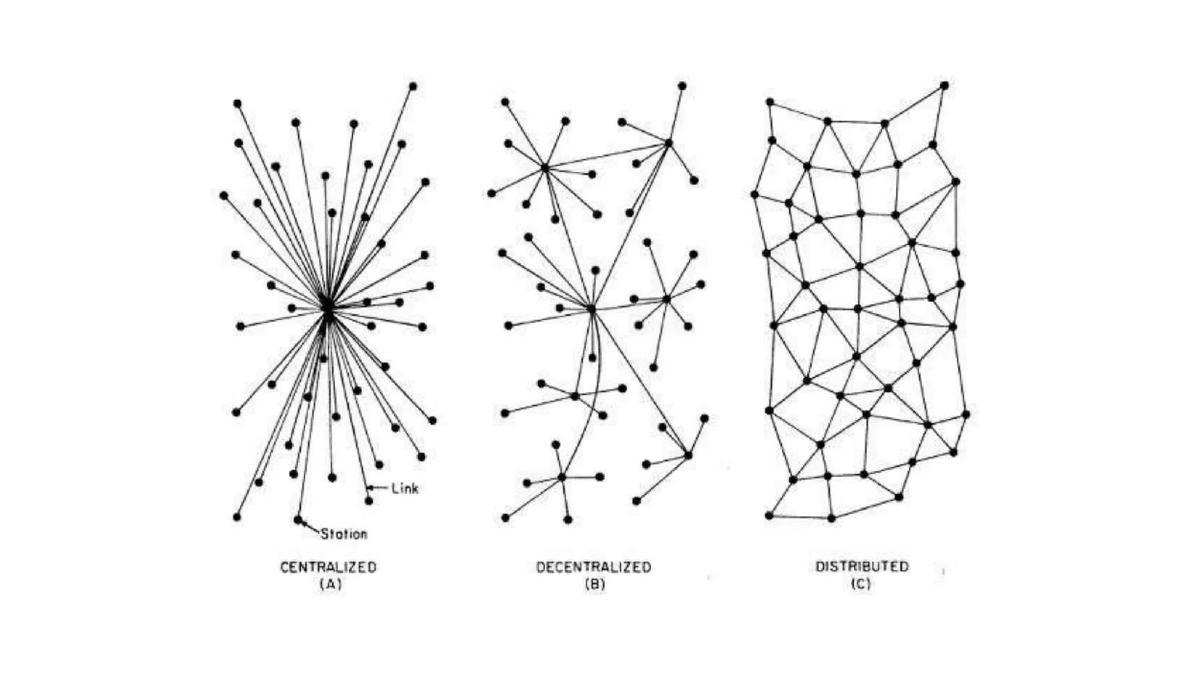
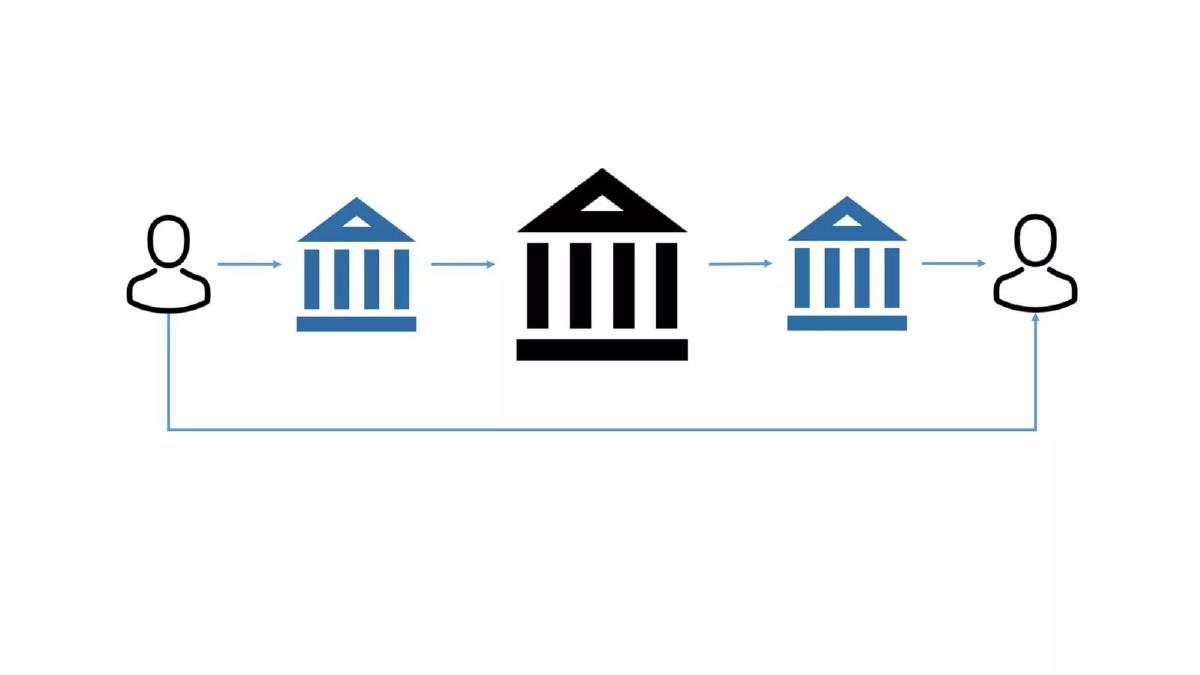
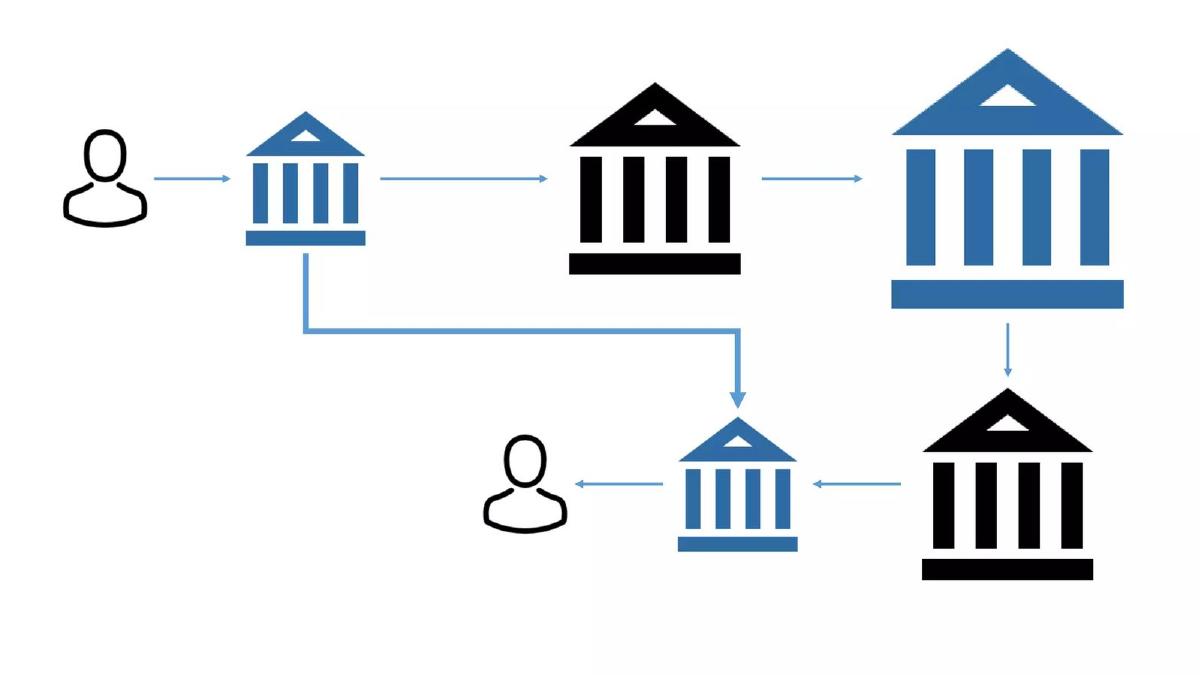
The AfriBlock.io (ABI) pitch deck begins with a clear mission statement: "Shaping Africa’s Blockchain Future." Unusually for a venture deck, the first several slides are dedicated to basic education. Slide 2 asks "What is Blockchain?" followed by Slide 3, which uses a classic diagram to illustrate the differences between centralized, decentralized, and distributed networks. Slides 4 and 5 use iconography to show how blockchain removes intermediaries (banks) from transactions, moving from a multi-step institutional process to a direct peer-to-peer link.
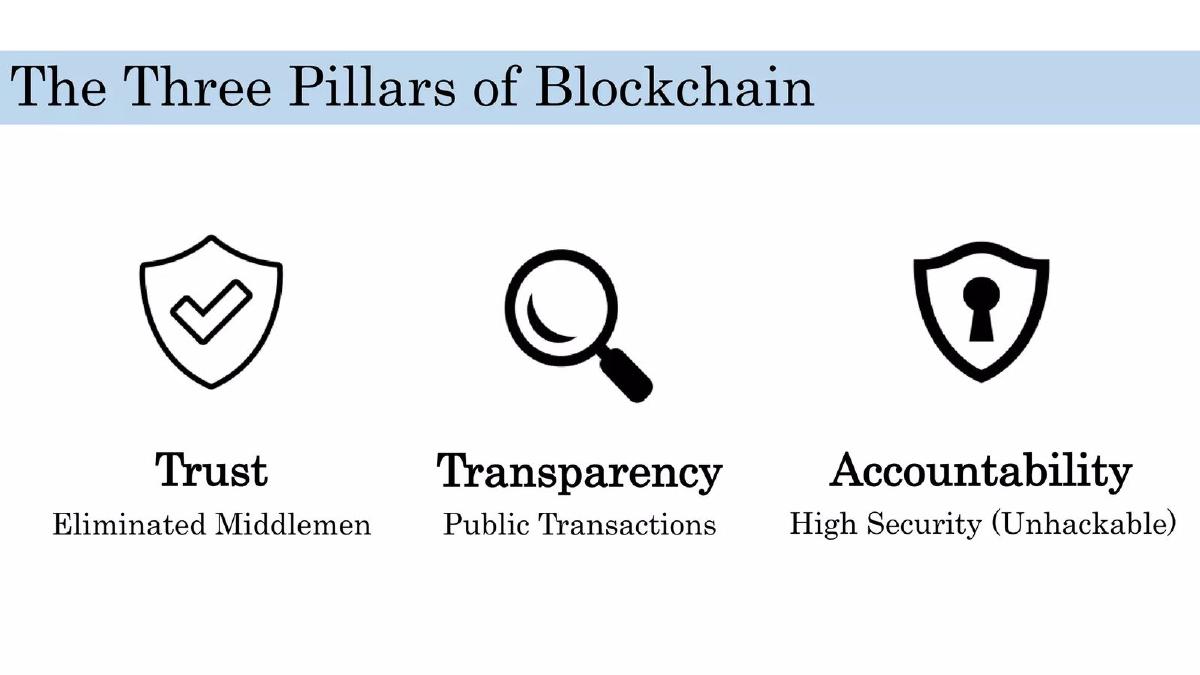
Slide 6 summarizes the "Three Pillars of Blockchain": Trust (eliminated middlemen), Transparency (public transactions), and Accountability (high security/unhackable). This heavy emphasis on education suggests that ABI views the lack of general knowledge as both their primary obstacle and their primary market opportunity.
The Problem and Market Gap
Slide 7 transitions into the core thesis with the question, "What exactly is the need?" The answer is provided in Slide 8, "The Need in Numbers." The data points are specific: the first African ICO ranked only 454th globally, there were fewer than 50 blockchain ventures in Africa as of September 2017, and fewer than five blockchain societies existed in the top 100 universities. Most critically, the slide claims that 78% of respondents have "no idea of Blockchain." This slide effectively establishes that while the global blockchain market is moving fast, Africa is being left behind due to a lack of foundational infrastructure and education.
The ABI Solution and Product Suite
Slide 9 introduces the solution: "EDUCATION Before EXECUTION." This is the central philosophy of the company. Slide 10 breaks down what ABI actually entails, using a three-step funnel: Learn, Ideate, and Connect. The product components are listed as School Chapters and a Crypto-Simulator. The simulator is depicted with a Bitcoin icon and a line graph, implying a trading or market simulation environment where students can practice without real capital risk.
Traction and Institutional Partnerships
Slide 11 is the strongest slide in the deck regarding proof of concept. It reports 25+ active school chapters and 51 registered chapters, with an annual target of 100 for the inaugural year. The slide features logos from several recognized African educational institutions, including the University of Cape Town, Strathmore University, United States International University (USIU), and the African Leadership Academy (ALA). This level of institutional penetration suggests that the "School Chapter" model has significant pull among the student demographic.
Future Impact and Projections
Slide 12 outlines the "Expected 3-5 Year Impact." The founders are aiming for scale, projecting 12,500 youth in blockchain, 2,500 blockchain jobs created, 50+ venture ideas, and over 500 chapters. While these are projections rather than current metrics, they provide a sense of the founders' ambitions for the ecosystem they are building.
Business Model and Revenue Streams
Slide 13 details the revenue model. It is a mix of B2B (institutional) and B2C (individual) software-as-a-service (SaaS) models:
School Chapters: $249 annual subscription fee. · Crypto-Simulator (Basic): Free but limited. · Crypto-Simulator (Premium): $10.00 for advanced features. · Enterprise Plan: Undefined/customized for larger organizations.
Slide 14, "Market Adoption," lists their go-to-market strategy: attending blockchain events and meet-ups, forming partnerships with other blockchain initiatives, and conducting campus talks. This is a standard grassroots approach for a community-focused startup.
Competitive Landscape and Value Proposition
Slide 15 identifies competitors such as Blockgeeks and ConsenSys. Slide 16 then defines ABI's value proposition against these players. The three pillars are Simplicity (content for beginners), Flexibility (market-responsive content), and Practicality (ideation tools). The slide concludes with a bold, large-font claim: "EXTREMELY CHEAP." This suggests that ABI is positioning itself as the low-cost entry point for the African market, undercutting global competitors who may price their certifications in USD at rates unaffordable for the average African student.
The Ask and Financials
Slide 17 contains the "Finances" or the "Ask." The company is seeking $50,000. The slide lists four categories for the use of funds: Marketing, Operations, Team/Employee Costs, and Equipment/Tools. No specific breakdown of percentages or a timeline for this runway is provided. For a venture capital audience, $50,000 is an extremely low figure, often falling below the minimum check size for institutional seeds, suggesting this deck might be targeted at angel investors or grant-giving bodies.
Case Studies and Outcomes
Slide 18, "Outcomes and Projects," provides concrete examples of what the chapters have already achieved. It highlights that two blockchain ideas have already become student enterprises at the African Leadership Academy: "Open Farm" and "Crypto-ID." It also mentions the "Youth in Blockchain Summit" and "First Blockchain Elections," providing evidence that the "Ideate" and "Connect" phases of their mission are already functioning.
Team and Advisors
Slide 19 introduces the co-founders. Cyril Michino is described as a former co-founder of Deliverus Kenya and a member of the African Blockchain Alliance. Amine Soufaih is noted as a former co-founder of X-Agriculture and a "Global Teen Leader 2018." The team appears young but with relevant early entrepreneurial experience. Slide 20 displays an "Advisors and Network" page with logos from Zebpay, ConsenSys, Contrary, and the Africa Blockchain Alliance, indicating a strong support network within the crypto industry.
What Works in This Deck
Clear Traction: The list of 25+ active university chapters is the most compelling part of the deck. It proves that there is a demand for this specific type of community and education among the target demographic.
Specific Problem Definition: By citing the 78% lack of awareness, the founders make a strong case for why an education-first approach is necessary before more complex blockchain products can succeed in the region.
Low-Cost Positioning: Acknowledging that they are "extremely cheap" shows an understanding of their local market's price sensitivity, which is a common pitfall for startups trying to port Western pricing models into emerging markets.
What Is Missing or Needs Improvement
Unit Economics: While the pricing is clear ($249/year), the deck does not explain the cost of acquiring a chapter or the lifetime value of a student user. With such low price points, the company needs to demonstrate that the model can eventually become self-sustaining or profitable at scale.
The Ask Detail: A $50,000 ask is very low. Investors would want to know how long that money lasts and what specific milestones it will unlock. Will $50k get them to 100 chapters or 500? The deck doesn't say.
Technical Depth: For a blockchain company, there is very little mention of the actual technology stack. It is unclear if the Crypto-Simulator is a proprietary build, what blockchain it might be simulated on, or if they plan to launch their own token or protocol in the future.
Founder Takeaways
Community First: Founders building in emerging markets should take note of ABI's chapter-based approach. Building a loyal community at the university level is a high-leverage way to create a future talent and customer pipeline.
Education as a Lead-Gen: ABI treats education not just as a product, but as a way to prime the market. If you are building in a sector with low consumer awareness, your pitch deck must address how you will bridge that knowledge gap.
Institutional Validation: Using the logos of prestigious universities (Slide 11) provides immediate social proof. Founders should always prioritize getting a few "big name" early adopters to anchor their traction slides.
Simplicity in Design: The deck uses a very simple, high-contrast layout. While not visually stunning, it is highly readable, which is essential when explaining complex topics like blockchain to potential investors who may not be experts in the field. Focus on Outcomes: Slide 18 is a great example of showing, not just telling. By listing actual student businesses that started in their chapters, they prove that their "Ideate" phase isn't just theoretical.
Frequently asked questions
- What is the primary product of AfriBlock.io?
- AfriBlock.io focuses on an educational ecosystem. Its core offerings include 'School Chapters' for universities, which operate on a subscription model, and a 'Crypto-Simulator' software tool designed to help students learn and ideate within the blockchain space without financial risk.
- How much money is AfriBlock.io raising and what for?
- The company is seeking $50,000. According to slide 17, these funds are earmarked for four specific areas: marketing expenses, operational expenses, team/employee costs, and equipment and tools. This is a relatively small seed-stage ask compared to typical tech startups.
- What evidence of traction does the deck provide?
- Slide 11 lists 25+ active school chapters and 51 registered chapters. It also displays logos from prominent institutions such as the University of Cape Town, Strathmore University, and the African Leadership Academy, indicating successful initial outreach and institutional interest.
- Who are the competitors listed in the deck?
- Slide 15 identifies several competitors in the blockchain education space, including Coin Ed, BECSA, coins2learn, Blockgeeks, and ConsenSys. ABI positions itself against these by emphasizing simplicity for beginners and an 'extremely cheap' price point.
- What are the projected impacts of the initiative?
- Over a 3-5 year horizon, ABI expects to engage 12,500 youth in blockchain, create 2,500 blockchain-related jobs, support 50+ venture ideas, and expand to over 500 chapters across the continent, as detailed on slide 12.