Wandercraft raised $45M in a 2024 Series C round to advance its mission of providing 'Ordinary life for extraordinary people.' The deck positions the company at the intersection of high-threshold robotics and massive market opportunity, specifically targeting the 30 million wheelchair users worldwide. By leveraging their existing success in the rehabilitation clinic market with the Atalante exoskeleton, Wandercraft presents a clear roadmap toward a 'Personal Exo' that is 60% less wide and 50% less deep than current clinical models. The narrative focuses on technical superiority—claiming to be…
Key takeaways
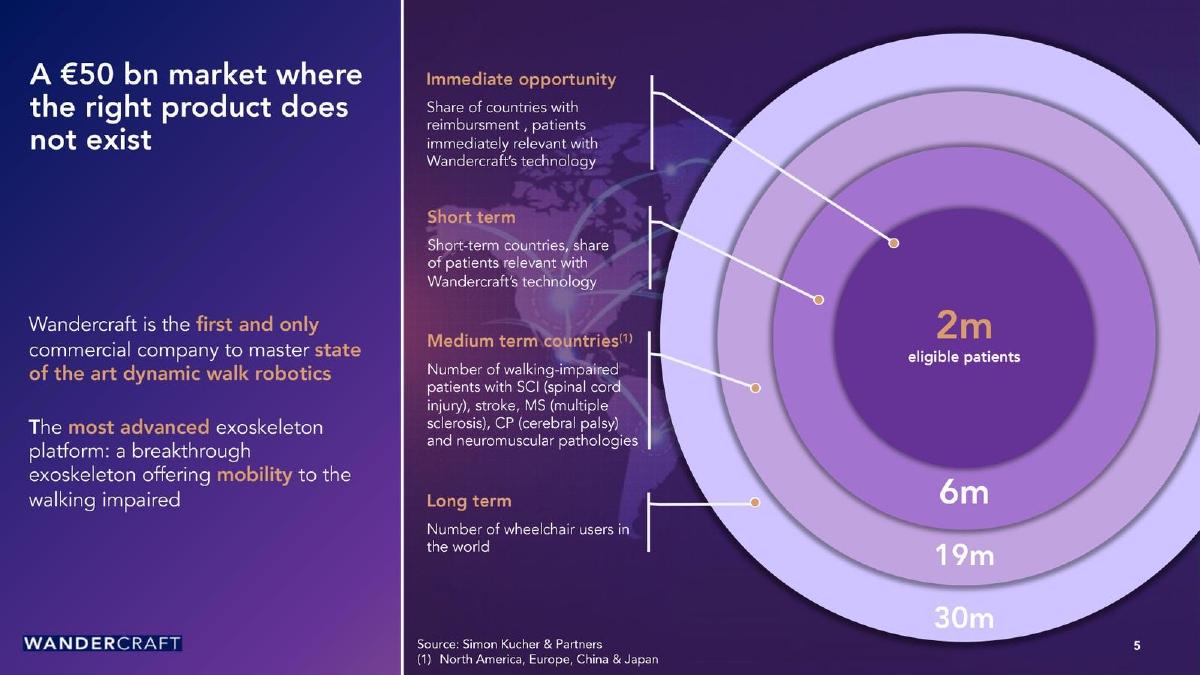
- The deck claims a total addressable market of 30 million wheelchair users worldwide on Slide 5.
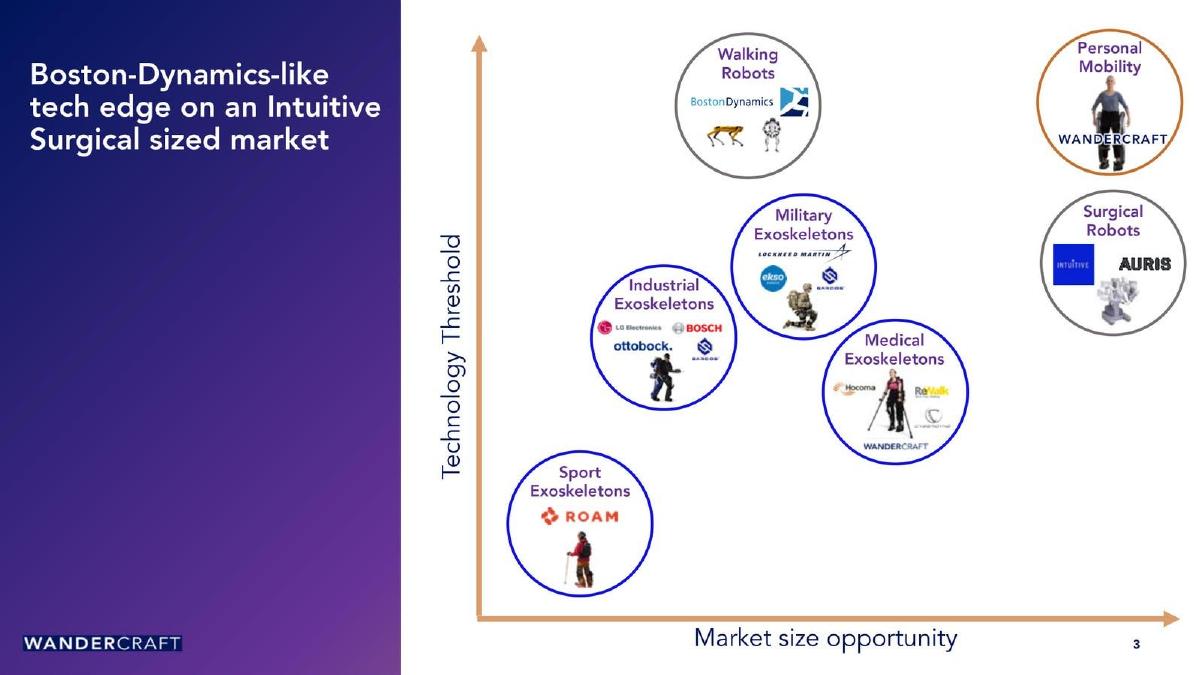
- Wandercraft positions itself as having a 'Boston Dynamics-like tech edge' while targeting an 'Intuitive Surgical sized market' on Slide 3.
- The company identifies 2 million 'eligible patients' as their immediate opportunity, focusing on SCI, stroke, MS, and CP on Slide 5.
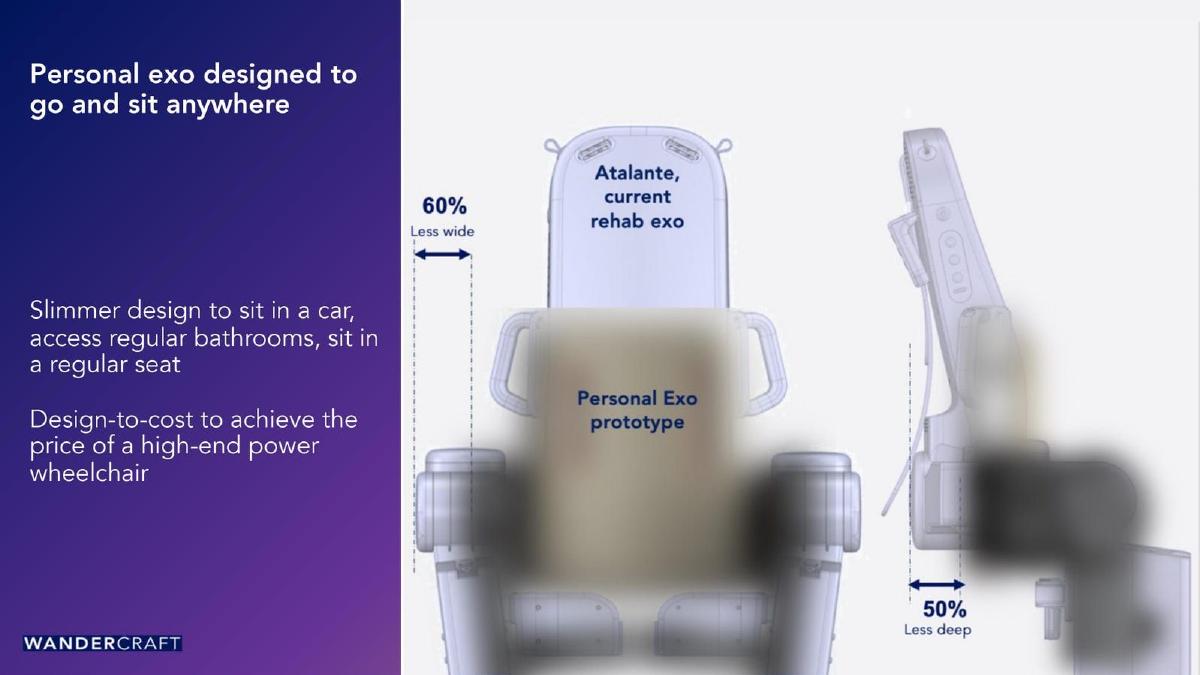
- Slide 11 highlights a significant hardware iteration, showing a Personal Exo prototype that is 60% less wide and 50% less deep than the Atalante rehab model.
- The team slide (Slide 7) emphasizes a multidisciplinary approach, combining world-class scientists from Stanford and Caltech with medical experts and FDA veterans.
- Slide 9 validates the technology through a partnership or deployment at Fondation Hopale, a rehabilitation hospital.
- The deck lacks a specific 'Ask' slide detailing the $45M round terms or a 'Roadmap' slide with specific dates for the personal exo launch.
- Wandercraft uses a 'Technology Threshold vs. Market Size' matrix on Slide 3 to differentiate itself from industrial, military, and sports exoskeleton competitors.
Wandercraft: Bridging the Gap Between Clinical Rehab and Personal Freedom
Wandercraft’s Series C deck is a compelling example of how a deep-tech hardware company can transition its narrative from a specialized medical tool to a mass-market mobility solution. With $45M raised in 2024, the company is moving beyond the four walls of rehabilitation clinics and into the streets. The deck focuses heavily on the 'why' and the 'how,' using sophisticated technical positioning to justify a high valuation in the healthcare and hardware sectors.
Slide 1: The Vision Statement
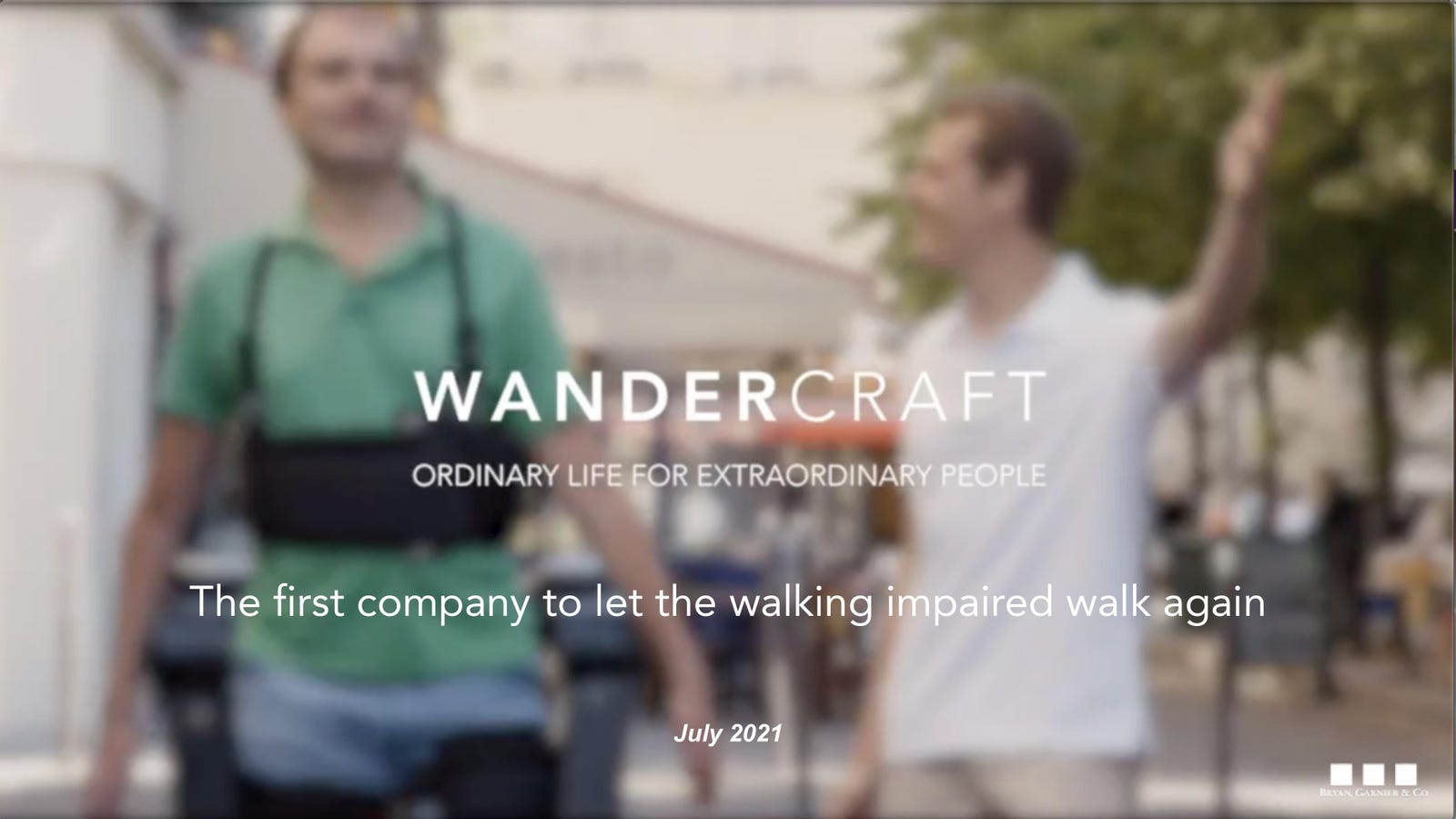
The deck opens with a high-contrast, emotive image of two men walking in an urban setting. The tagline, 'Ordinary life for extraordinary people,' immediately establishes the company's mission. By stating they are 'The first company to let the walking impaired walk again,' Wandercraft sets a high bar for the technical claims that follow. This slide is dated July 2021, suggesting this deck was part of a multi-year fundraising and development cycle leading up to the 2024 announcement.
Slide 3: Strategic Positioning and the Tech Edge
Slide 3 is perhaps the most important slide for investors. It uses a 2x2 matrix to plot 'Technology Threshold' against 'Market size opportunity.' Wandercraft positions itself in the top-right quadrant, labeled 'Personal Mobility.' They compare their technical sophistication to Boston Dynamics (Walking Robots) but argue that their market size is significantly larger, comparable to Intuitive Surgical. By grouping competitors like Lockheed Martin (Military), Roam (Sport), and Ekso Bionics (Medical) into lower-value or lower-tech quadrants, Wandercraft creates a category of one for their personal mobility solution.
Slide 5: The €50 Billion Market Opportunity
This slide breaks down the addressable market using a concentric circle diagram. It starts with a core of 2 million 'eligible patients' in the medium term, specifically those with Spinal Cord Injury (SCI), Stroke, Multiple Sclerosis (MS), and Cerebral Palsy (CP) in North America, Europe, China, and Japan. The outer ring expands to 30 million wheelchair users globally. The slide explicitly states that a '€50 bn market' exists where the 'right product does not exist,' framing Wandercraft as the sole solution for this unmet need. The citation of Simon Kucher & Partners adds a layer of third-party credibility to these figures.
Slide 7: The Multidisciplinary Team
Hardware of this complexity requires a diverse talent pool, and Slide 7 highlights this effectively. The team is categorized into four pillars: Software & Platform, Medical Affairs & Sales, Mechanic & Electronic, and Industrialisation & Supply Chain. They highlight pedigree from institutions like Stanford and Caltech, but more importantly, they mention a 'former lead scientist at the FDA.' For a medical hardware company, regulatory expertise is as critical as engineering prowess, and this inclusion addresses a major risk factor for Series C investors.
Slide 9: Clinical Validation
Slide 9 serves as a proof-of-concept and validation slide. It features the logo of 'Fondation Hopale,' a major rehabilitation center. The headline 'Atalante pioneering self-balance walk in rehab hospitals' confirms that Wandercraft is not just a research project; they have a functional product (Atalante) already deployed in clinical settings. This establishes the 'traction' necessary to justify a Series C round, proving they can navigate the complexities of hospital sales and patient safety.
Slide 11: The Product Evolution (Personal Exo)
This slide addresses the 'Personal Mobility' promise made earlier in the deck. It shows a side-by-side comparison (via wireframes) of the current Atalante rehab exo and the 'Personal Exo prototype.' The metrics are specific: the new design is '60% Less wide' and '50% Less deep.' The text explains the utility of these changes: the ability to sit in a car, access regular bathrooms, and sit in a regular seat. Crucially, it mentions a 'Design-to-cost' strategy to match the price of a 'high-end power wheelchair,' which addresses the affordability and scalability of the consumer product.
Slide 13: Closing Imagery
The deck concludes with a full-bleed image of a woman walking across tram tracks in a city, wearing the exoskeleton. It reinforces the 'Ordinary life' theme. There is no 'Ask' slide or 'Contact' slide in the provided sequence, which is unusual for a pitch deck but common in 'teaser' versions or decks used for late-stage rounds where the terms are negotiated in private placements.
What Wandercraft Does Well
Technical Differentiation: By comparing themselves to Boston Dynamics and Intuitive Surgical, Wandercraft bypasses the 'medical device' label and enters the 'robotics powerhouse' category. This is a strategic move to capture higher valuation multiples associated with tech companies rather than traditional med-tech manufacturers.
Clear Product Roadmap: The transition from the bulky Atalante (Slide 9) to the slim Personal Exo (Slide 11) is presented as a logical and necessary evolution. The specific percentage reductions in size (60% and 50%) provide concrete evidence of engineering progress.
Market Segmentation: Slide 5 does an excellent job of showing a path to market. Instead of just claiming a $50B market, they break it down by patient condition and geography, showing they understand the nuances of medical reimbursement and regulatory hurdles.
What is Missing from the Deck
Financial Performance: There is no mention of current revenue, the number of Atalante units sold, or the manufacturing cost per unit. For a Series C round, investors typically expect to see a clear path to profitability or at least a detailed look at the unit economics of the current product line.
The Ask: The deck does not specify how much capital is being raised or how it will be used. While we know from publisher reports that the round was $45M, a standard pitch deck should outline the milestones that this capital will enable (e.g., 'FDA approval for Personal Exo,' 'Scale manufacturing to 500 units/year').
Competitive Landscape: While Slide 3 mentions categories of competitors, it does not address specific direct competitors in the medical exoskeleton space like ReWalk or Cyberdyne. A more detailed comparison of battery life, weight, and 'dynamic walk' capabilities would strengthen the technical argument.
Lessons for Founders
Use Analogies Wisely: Wandercraft’s use of 'Boston Dynamics-like tech' is a powerful shorthand. If your startup operates in a complex field, find a well-known technical benchmark to help investors quickly grasp your level of sophistication.
Focus on the 'Personal' Utility: In hardware, specs are important, but the 'so what' is more important. Wandercraft doesn't just say the device is smaller; they say it allows a user to 'sit in a car' and 'access regular bathrooms.' These are the human outcomes that drive market adoption.
Pedigree Matters in Deep Tech: If you are building robots or medical devices, your team slide needs to scream 'competence.' Wandercraft’s mix of top-tier academic scientists and regulatory veterans from the FDA is a blueprint for building investor trust in high-risk hardware sectors.
Frequently asked questions
- What is the primary product mentioned in the Wandercraft deck?
- The deck highlights two main products: the Atalante, which is their current rehabilitation exoskeleton used in hospitals, and a 'Personal Exo' prototype. The Personal Exo is designed for daily use, featuring a slimmer profile—60% less wide and 50% less deep than the Atalante—to allow users to sit in cars and use regular bathrooms.
- How does Wandercraft define its market opportunity?
- Wandercraft defines its market in four tiers on Slide 5. The 'Immediate opportunity' targets countries with reimbursement and relevant patient profiles. The 'Medium term' targets 2 million eligible patients with specific conditions like SCI and MS in North America, Europe, China, and Japan. The 'Long term' vision encompasses all 30 million wheelchair users globally.
- What technical advantages does Wandercraft claim over competitors?
- On Slide 5, Wandercraft claims to be the 'first and only commercial company to master state of the art dynamic walk robotics.' They differentiate themselves from competitors on Slide 3 by placing their technology in the highest tier of the 'Technology Threshold,' comparable to Boston Dynamics, but with a much larger market opportunity than military or industrial exoskeletons.
- Who is on the Wandercraft leadership team?
- According to Slide 7, the team includes scientists from top universities like Polytechnique, Stanford, and Caltech. The medical side is led by an MD and includes a former lead scientist at the FDA. They also highlight experts in lean manufacturing and industrial scale-up to handle the transition to mass production.
- What is missing from the Wandercraft Series C deck?
- The deck is notably missing a specific financial slide showing revenue growth or unit economics for the Atalante. It also lacks a clear 'Ask' slide detailing the $45M round and how the funds will be allocated. Furthermore, there is no detailed competitive analysis beyond a high-level positioning matrix.