WalletKit's 2012 seed deck is a classic example of 'infrastructure-as-a-service' positioning during a platform shift. By targeting the friction points of Apple Passbook and Google Wallet, the company sought to replace expensive, month-long custom development projects with a simple API. The deck uses a high-contrast 'Before and After' narrative, claiming a reduction in cost from $100,000 to under $5,000 and a time-to-market shift from 32 days to just 3 hours. While the deck lacks detailed team biographies and specific unit economics in the provided slides, it successfully identifies a massive…
Key takeaways
- The deck identifies a high barrier to entry for businesses, citing a typical pass project cost of $100,000 on Slide 4.
- WalletKit claims to reduce development time from 32 days to just 3 hours as shown on Slide 11.
- The platform positions itself as a central hub connecting fragmented wallets like Google Wallet, Windows, and Apple Passbook on Slide 12.
- The total addressable market is quantified at over 500 billion passes in the US alone on Slide 15.
- The product offers a developer-first experience with SDKs for Java, Python, and Ruby as seen on Slide 7.
- The deck uses an iceberg metaphor on Slide 13 to suggest that digital passes are just the tip of a larger opportunity including NFC, receipts, and loyalty.
- A specific funding ask of $500,000 is stated on Slide 17.
- The team slide (Slide 16) includes four headshots but omits names, titles, and professional backgrounds.
Introduction: The Infrastructure for the Pocket
WalletKit’s 2012 seed deck arrived at a pivotal moment in mobile history. Apple had just announced Passbook (now Apple Wallet), and the industry was scrambling to understand how to move physical wallets into the digital realm. This teardown examines a 34-slide deck (17 of which are analyzed here) that positions WalletKit not as a consumer app, but as the essential plumbing for the mobile wallet ecosystem. The deck is a masterclass in identifying a high-friction 'status quo' and presenting a streamlined, API-driven alternative.
The Hook and the Status Quo
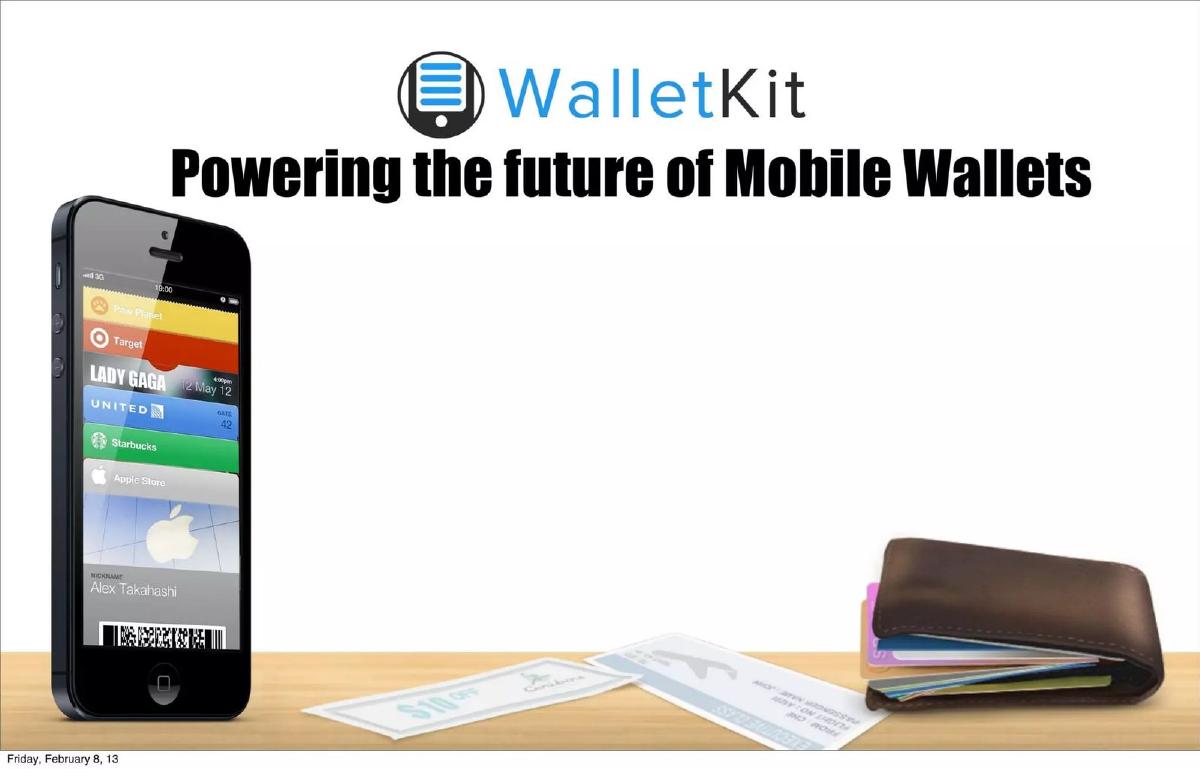
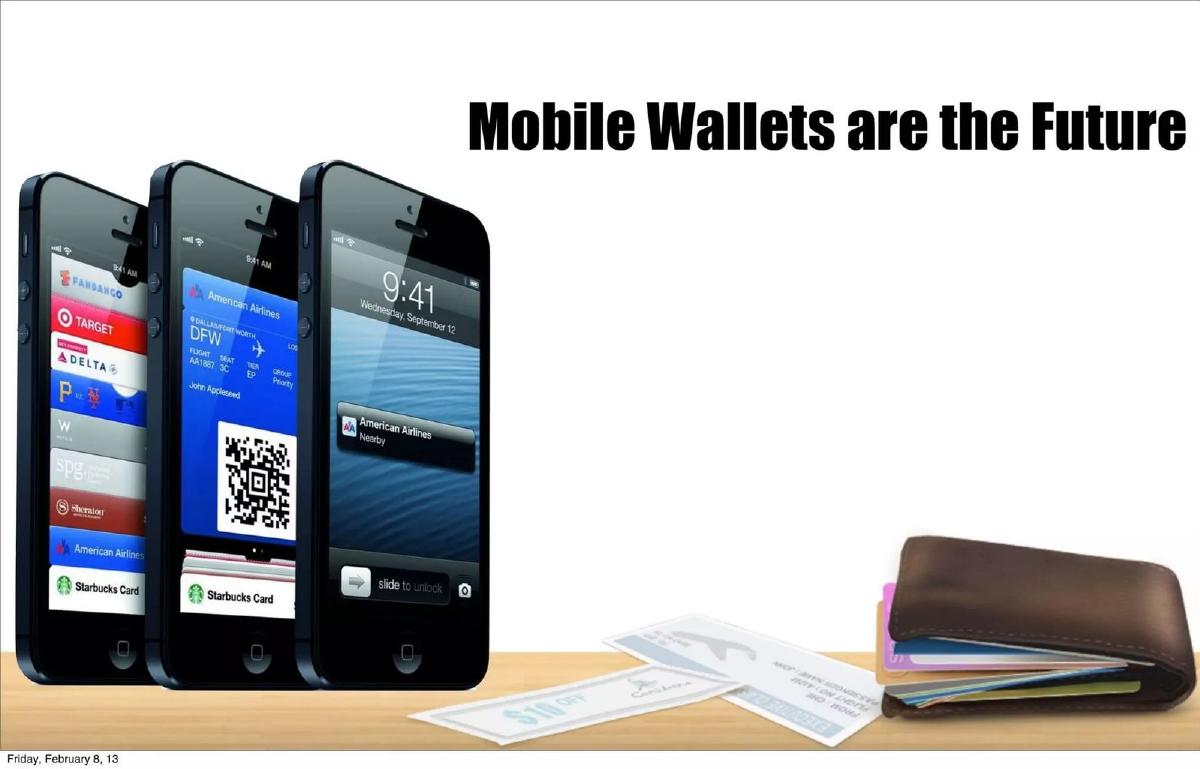
Slide 1 sets the stage with the tagline 'Powering the future of Mobile Wallets.' The visual contrast between a modern smartphone and a cluttered physical wallet establishes the core value proposition immediately. Slide 2 reinforces this with a simple, bold statement: 'Mobile Wallets are the Future.'
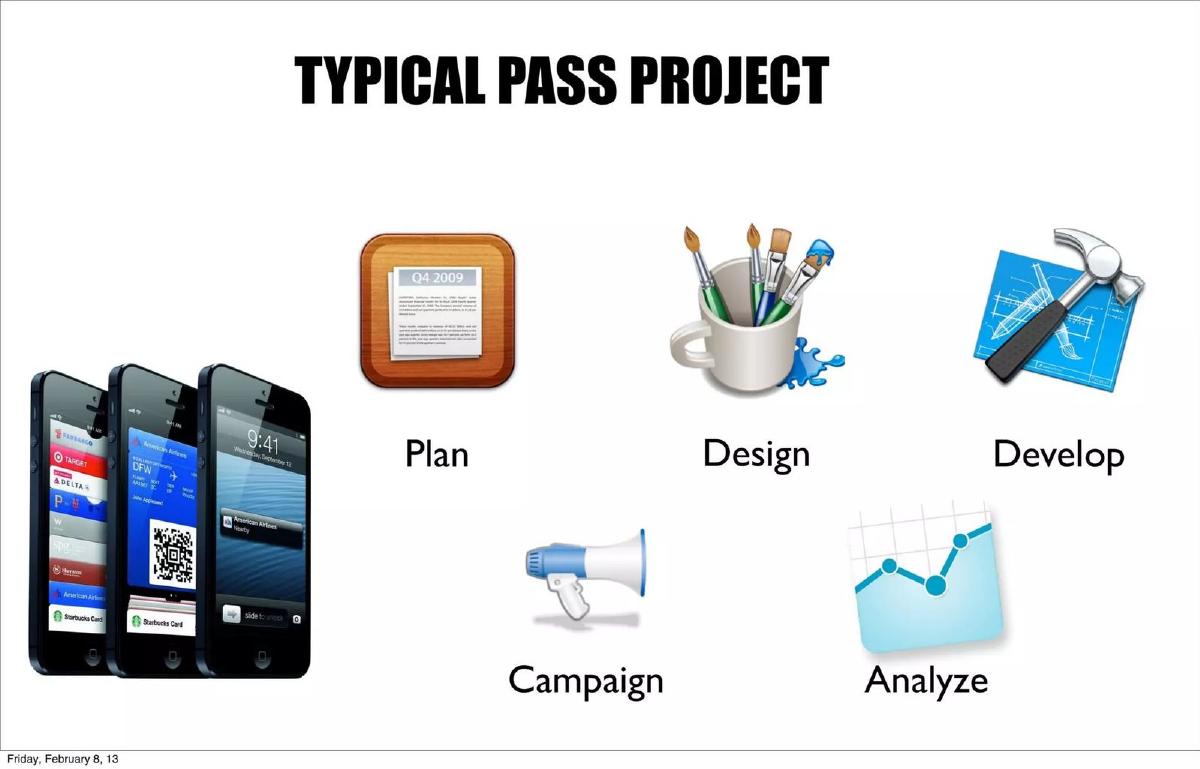
The narrative shifts quickly to the pain points of the current market. Slide 3 introduces the 'Typical Pass Project,' and Slide 4 attaches a staggering price tag and timeline to it: $100,000 and 32 days. By quantifying the pain of the status quo, WalletKit creates a benchmark against which their solution will be measured. This is a classic 'villain' slide, setting up the problem that the startup intends to solve.
The Solution: A Developer-First Platform
Slide 5 provides the first glimpse of the product, showing a digital ticket for 'Mark Zuckerberg' at a 'WDC' event. This use of a high-profile persona is a common trope in early 2010s decks to imply industry relevance. The slide shows the pass alongside a blurred background of code, signaling that this is a technical solution.
Slide 6 highlights the problem of fragmentation. It shows a central question mark surrounded by various wallet platforms, including Google Wallet, Windows, PayPal, and ISIS (a short-lived mobile payment joint venture). This slide effectively argues that a business shouldn't have to build separate integrations for every wallet provider.
Slide 7 , titled 'Simple Integration,' is the core of the developer pitch. It showcases a REST API and SDKs for Java, Python, and Ruby. By including a curl command and a JSON snippet, WalletKit speaks directly to the CTO or Lead Developer, promising that integration is as simple as a few lines of code. This moves the conversation from a 'project' to a 'feature.'
Product Capabilities and User Interface
The deck then walks through the administrative side of the platform. Slide 8 emphasizes the ability to 'Visualize before sending,' showing a WYSIWYG (What You See Is What You Get) editor. This addresses the marketing department's need for brand control. Slide 9 and Slide 10 show the analytics and management dashboards. Slide 9 is particularly important as it shows real (or realistic) metrics: 2708 passes sent, 8305 active passes, and 1420 downloads. These figures suggest that the platform is functional and capable of handling lifecycle management, not just initial creation.
The Value Proposition: Speed and Scale
Slide 11 is the 'Hero' slide of the deck. It revisits the $100,000 / 32-day figures from earlier and strikes them out, replacing them with ' Slide 12 returns to the fragmentation theme but replaces the question mark from Slide 6 with the WalletKit logo. This positions the company as the universal adapter for the mobile wallet world, a 'Stripe for Passes' approach that resonates well with investors looking for platform plays.
Market Opportunity and Vision
To justify a venture-scale investment, WalletKit uses Slide 13 to present the 'Iceberg' theory. They argue that while digital passes (tickets and coupons) are the current focus, the underlying opportunity includes NFC, payments, receipts, and loyalty programs. This suggests a roadmap that extends far beyond their initial product offering.
Slide 14 and Slide 15 focus on the Total Addressable Market (TAM). Using a map of the United States, Slide 15 claims a market of '500 + BILLION passes.' The slide includes icons for planes, trains, ships, hotels, and movies, illustrating the breadth of industries that rely on physical passes. While the 500 billion figure is an aggressive aggregate, it effectively communicates that the opportunity is not a niche market.
The Team and The Ask
Slide 16 is the team slide. It features four circular headshots. Notably, this slide is entirely devoid of text—no names, no titles, and no previous company logos. In a professional teardown, this is a significant omission. Investors invest in people at the seed stage, and failing to highlight the technical or commercial pedigree of the founders is a missed opportunity to build trust.
Finally, Slide 17 delivers the 'Ask.' It repeats the cover slide's branding but adds a large green '$ 500 k' in the center. This is a clear, unambiguous request for funding, though the slide does not specify the use of funds (e.g., hiring, marketing, or R&D).
What Works in This Deck
The 'Before and After' Narrative: The deck does an excellent job of quantifying the pain of building passes manually ($100k/32 days) and contrasting it with the WalletKit solution ($5k/3 hours). · Developer Focus: By showing SDKs and API snippets, the deck proves it is a technical product built for scale, not just a design tool. · Platform Neutrality: Positioning the company as the bridge between Apple, Google, and others addresses a major concern for businesses: 'Which wallet will win?' WalletKit’s answer is 'It doesn't matter; we support them all.'
What Is Missing
Business Model: There is no mention of how WalletKit actually generates revenue. Is it a SaaS subscription, a per-pass fee, or a percentage of transaction value? · Team Pedigree: The team slide is purely visual. Without names or backgrounds, it’s impossible for an investor to gauge the team's ability to execute. · Competition: The deck ignores other startups or internal dev teams that might be building similar tools. A competitive landscape slide would have helped define their unique advantage. · Unit Economics: While they mention the cost to the customer, they don't mention their own margins or the cost of customer acquisition (CAC).
What a Founder Should Copy
The Iceberg Metaphor: Use visuals to show that your current product is just the entry point into a much larger, more lucrative market. · Quantified Value Prop: Don't just say your product is 'faster' or 'cheaper.' Use specific numbers (even if they are estimates of the status quo) to show the magnitude of the improvement. · Visualizing the Product: Showing the dashboard and the end-user experience (the pass on the phone) makes the abstract concept of an 'API' feel tangible and real.
Frequently asked questions
- What problem was WalletKit solving in 2012?
- In 2012, mobile wallets like Apple Passbook were new. Businesses faced high technical hurdles and costs to create digital tickets or coupons. WalletKit identified that a 'typical pass project' cost $100,000 and took 32 days to build from scratch. They solved this by providing a SaaS platform and API that handled the backend complexity, allowing businesses to deploy passes in hours for a fraction of the cost.
- How does the deck demonstrate product-market fit?
- The deck focuses on the 'Developer Experience' as a proxy for market fit. By showing code snippets and SDK support for Java, Python, and Ruby, they targeted the actual implementers. Additionally, Slide 9 and 10 show a functional dashboard with metrics like 'Passes Sent' (2708) and 'Active Passes' (8305), suggesting the product was already live and tracking real-world usage data.
- What is the significance of the 'Iceberg' slide?
- Slide 13 uses an iceberg to illustrate the 'hidden' market. While 'Digital Passes' are the visible part above water, WalletKit argues that the real volume lies beneath in NFC, Payments, Receipts, Coupons, and Loyalty. This tells investors that while they are starting with tickets, the platform is built to capture the entire mobile commerce stack as it matures.
- Is the market size presented in the deck realistic?
- Slide 15 claims a market of '500 + BILLION passes' in the US. This figure likely aggregates every physical coupon, boarding pass, movie ticket, and loyalty card issued annually. While the number is massive, the deck uses it to emphasize the scale of the 'paper-to-digital' transition rather than providing a bottom-up revenue calculation, which is common in early-stage seed decks.
- What are the major weaknesses of this pitch deck?
- The most significant weakness is the lack of detail on the team and business model. Slide 16 shows four founders but gives no indication of their expertise or why they are the right people to build this. Furthermore, while the deck mentions a cost reduction for customers, it doesn't explicitly state how WalletKit makes money (e.g., per-pass fees vs. monthly SaaS subscription).