Progyny (formerly Apryl) successfully raised €4.1M in a 2022 Seed round led by Breega, utilizing a deck that focuses heavily on the 'why now' of fertility benefits. The presentation is notable for its clean aesthetic and clear articulation of the 'War for Talent' as a primary sales driver for HR departments. While the deck excels at establishing the emotional and economic stakes of infertility—citing that 15% of the population struggles with it—it is remarkably light on hard financial data. There are no slides dedicated to unit economics, revenue projections, or a specific capital ask. Instea…
Key takeaways
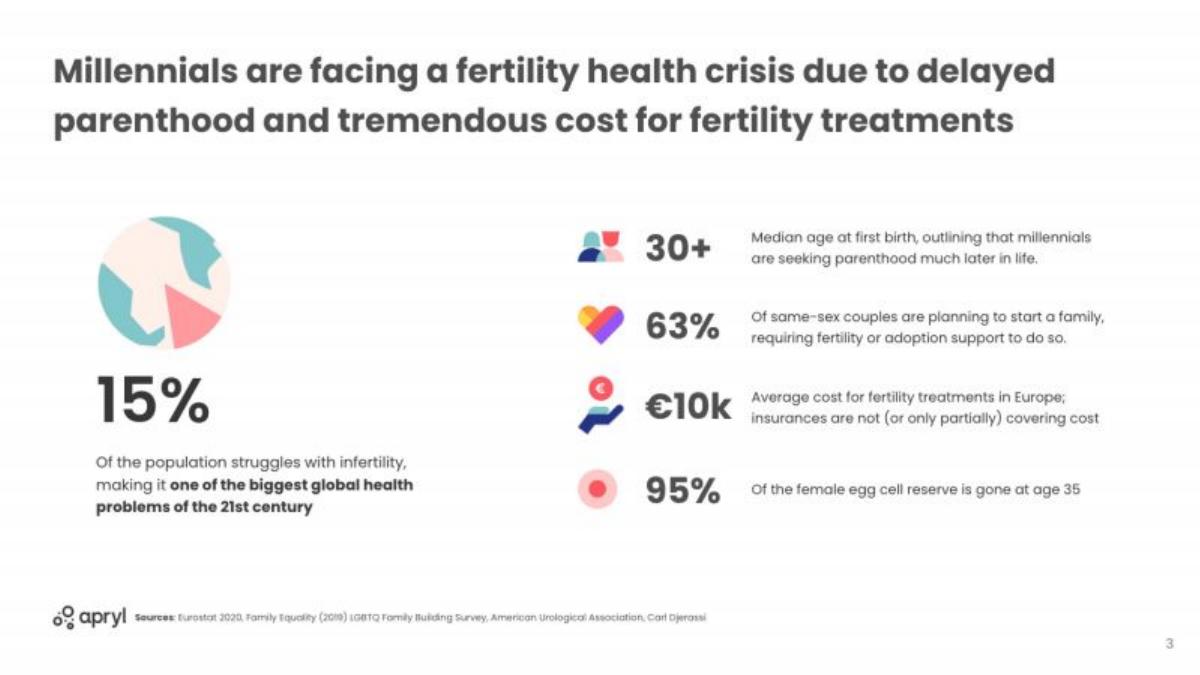
- The deck identifies a massive market gap by noting that 95% of the female egg cell reserve is gone by age 35, while the median age at first birth is rising (Slide 3).
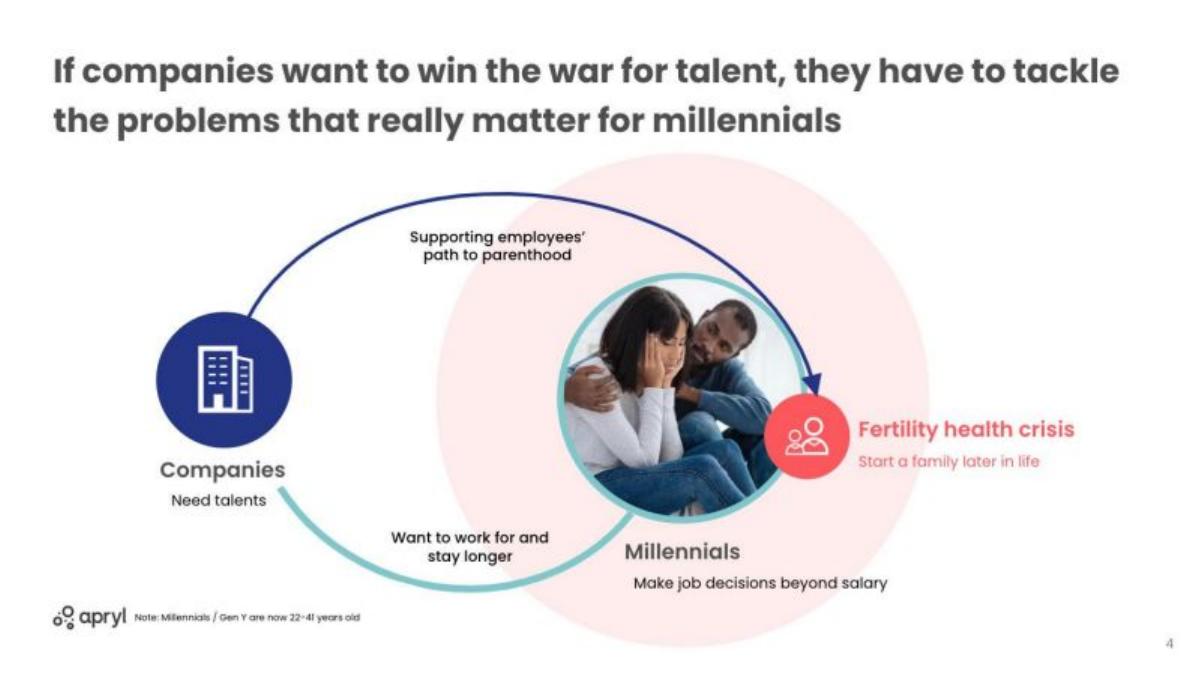
- It positions fertility benefits not just as healthcare, but as a strategic tool for companies to win the 'war for talent' among millennials (Slide 4).
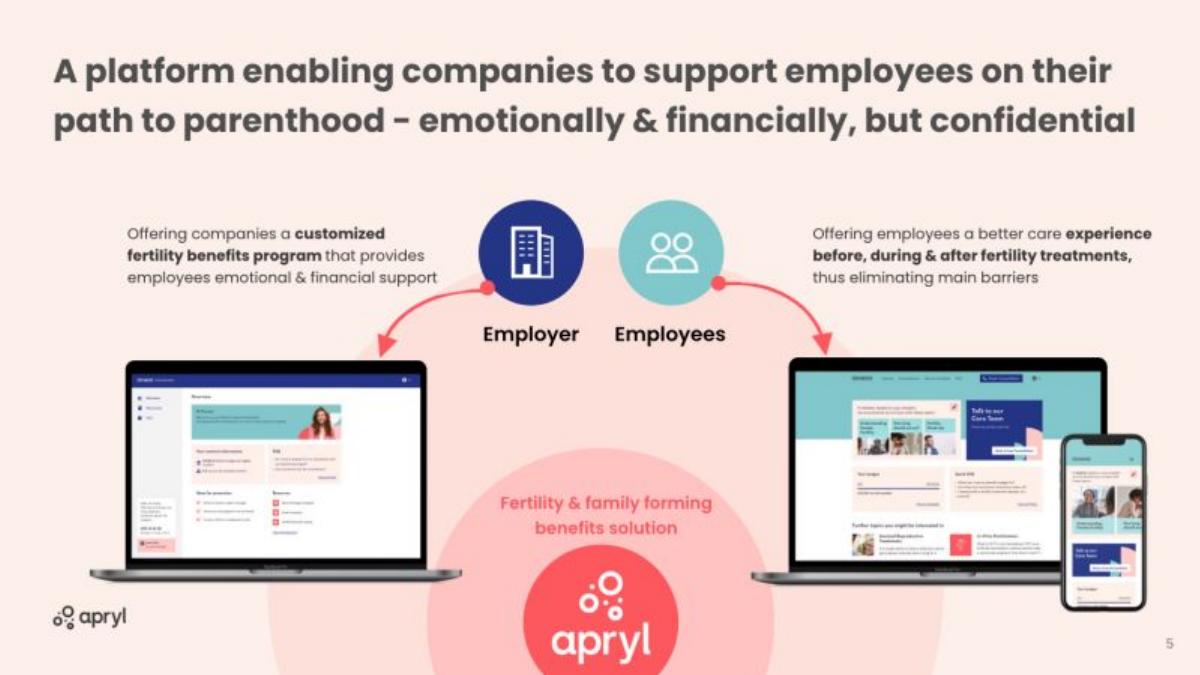
- The business model is presented as a dual-sided platform serving both the employer (customized programs) and the employee (care experience) (Slide 5).
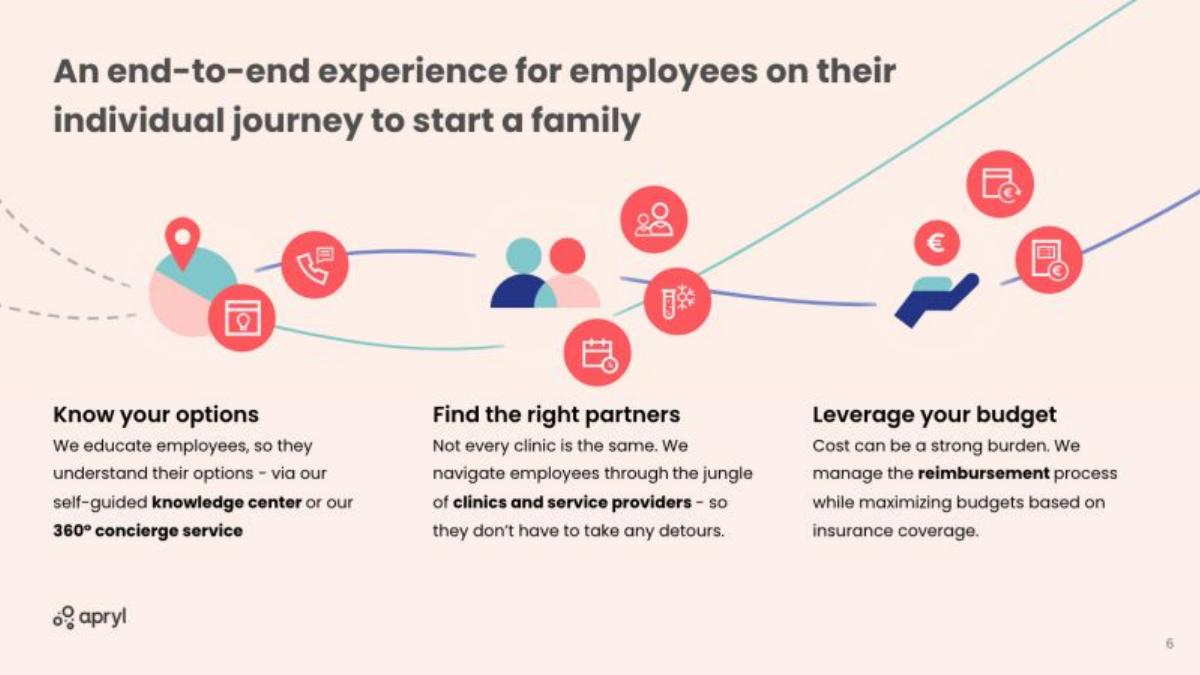
- Apryl utilizes a concierge model, offering a '360 degree concierge service' to guide users through the 'jungle of clinics' (Slide 6).
- Social proof is established early through user testimonials and a Trustpilot score of 4.8 out of 5 (Slide 8).
- The team slide highlights significant operational experience, specifically mentioning leadership roles at Adyen, Fyber, and OC&C Strategy Consultants (Slide 10).
- The deck completely omits a financial 'Ask' slide, leaving the €4.1M target and use of funds to the catalogue facts rather than the presentation itself.
- Competitive landscape and market sizing (TAM/SAM/SOM) are absent, focusing instead on the qualitative 'mission-driven' narrative.
The Narrative of Necessity: Apryl’s Seed Deck Analysis
The pitch deck for Apryl (now Progyny) is a study in minimalist persuasion. At only 12 slides, it avoids the common pitfall of over-explaining technical medical processes, instead focusing on the emotional and corporate urgency of fertility benefits. In the 2022 venture climate, this deck successfully secured €4.1M by framing a healthcare issue as a critical HR retention strategy.
Slide 1: The Vision Statement
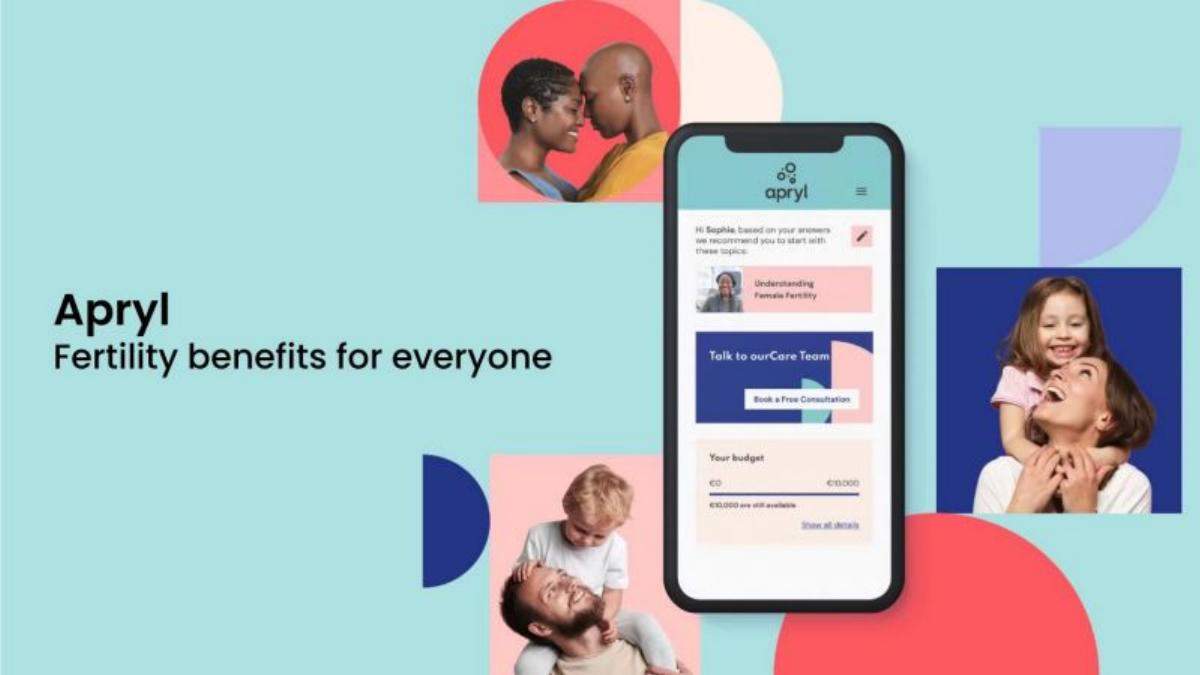
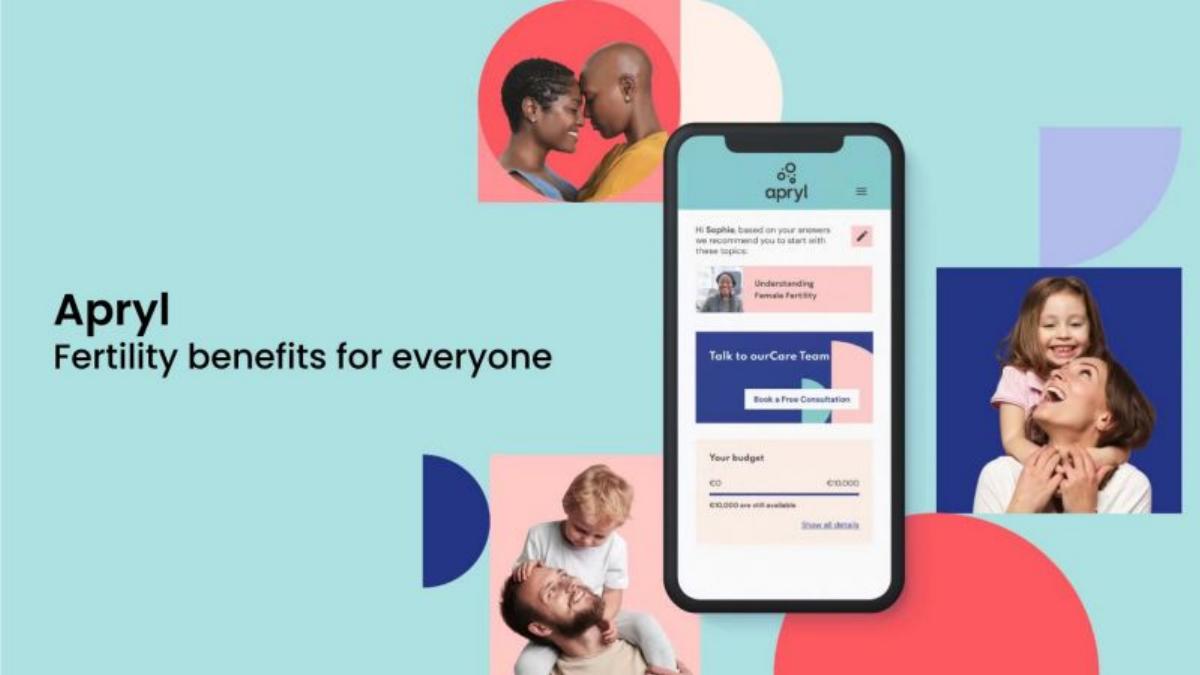
The cover slide is clean and lifestyle-oriented. It features the brand name 'Apryl' and the tagline 'Fertility benefits for everyone.' The imagery includes diverse family structures—same-sex couples and single parents—which immediately signals the inclusive nature of the product. A mobile mockup shows the user interface, emphasizing that this is a digital-first solution.
Slide 2: The Core Belief
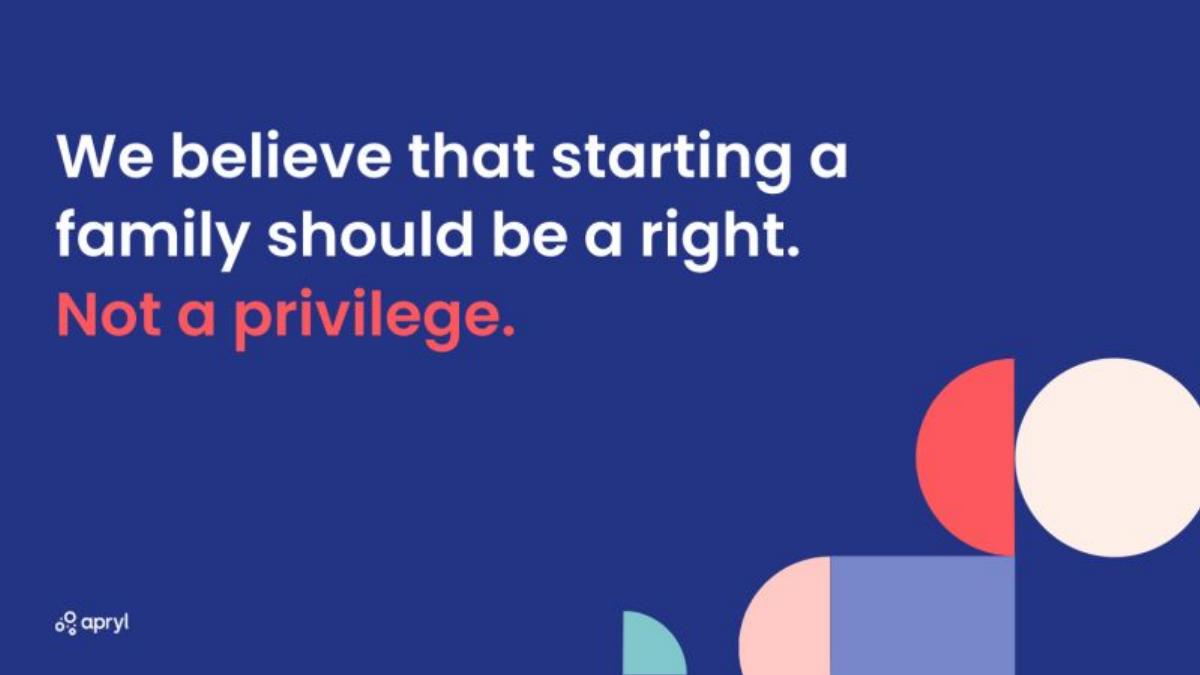
"We believe that starting a family should be a right. Not a privilege." This slide serves as the emotional hook. By using high-contrast text (white and coral on a navy background), it establishes the company's moral north star. It moves the conversation from a 'nice-to-have' benefit to a fundamental human right, which is a powerful way to align with ESG-focused investors.
Slide 3: The Fertility Health Crisis
This is the most data-dense slide in the deck. It provides four critical statistics to justify the market need:
15% of the population struggles with infertility. · 30+ is the median age at first birth for millennials. · 63% of same-sex couples plan to start a family, requiring support. · €10k is the average cost for fertility treatments in Europe, often not covered by insurance. · 95% of the female egg cell reserve is gone by age 35.
These figures effectively create a sense of biological and financial urgency.
Slide 4: The War for Talent
Slide 4 bridges the gap between the biological problem and the business solution. It uses a Venn diagram to show the intersection of 'Companies' (who need talent) and 'Millennials' (who make job decisions beyond salary). The central message is that supporting the path to parenthood is the key to winning the 'war for talent.' This is a classic B2B sales tactic: solving a CEO's problem (retention) by solving an employee's problem (fertility).
Slide 5: The Dual-Sided Platform
This slide explains the product architecture. It describes Apryl as a platform enabling companies to support employees 'emotionally & financially, but confidential.' It shows two distinct interfaces: a dashboard for the Employer to manage customized programs and a portal for the Employee to access care. The inclusion of 'confidential' is a subtle but vital nod to the privacy concerns inherent in reproductive health.
Slide 6: The End-to-End Journey
Slide 6 maps the user experience across three phases: Know your options (education via a knowledge center), Find the right partners (navigating the 'jungle' of clinics), and Leverage your budget (managing the reimbursement process). This demonstrates that Apryl isn't just a directory; it is an active participant in the financial and logistical execution of fertility care.
Slide 7: The Member Portal
This slide provides a deeper look at the product features. It highlights a 'Personalized knowledge center' that tailors information based on age, gender, and relationship status. It also introduces the '360 degree Concierge Service,' featuring a photo of a support agent. This humanizes the SaaS product, suggesting that while the platform is digital, the support is personal.
Slide 8: Social Proof and Satisfaction
Apryl leans heavily on qualitative validation here. The slide displays a Trustpilot score of 4.8 of 5 and four testimonials from users in Frankfurt, Munich, and Berlin. The quotes emphasize that the service is 'friendly,' 'knowledgeable,' and 'easy to talk to.' For a seed-stage company, this level of user love is a strong indicator of product-market fit.
Slide 9: Defining Corporate Culture
This slide acts as a sales pitch for the HR buyer. It lists three pillars: 'Demonstrate family-first culture,' 'Support women in critical life phases,' and 'Embrace liberal family concepts.' It explicitly states that they do not require marriage, heterosexual relationships, or even a partner. This reinforces the 'for everyone' claim from the cover slide and appeals to modern D&I (Diversity and Inclusion) mandates.
Slide 10: The Team
The team slide is impressive for a Seed round. It features Jenny Saft (Former VP Business Development at Adyen) and Tobias Kaufhold (Former Senior Consultant at OC&C). The supporting team includes members with backgrounds at Adobe, Fyber, and CoachHub. Highlighting 'more than 10 years of experience in building and selling digital products' helps mitigate the risk associated with a relatively new healthcare startup.
Slide 11 & 12: Closing and Attribution
Slide 11 is a simple closing slide with the logo and the mission statement: 'We make fertility services accessible for everyone.' Slide 12 is a standard attribution slide for the source of the deck. Notably, there is no 'Ask' slide in this version of the deck, which means the specific funding requirements were likely handled in a separate document or during the verbal pitch.
What Works in the Apryl Deck
The deck’s greatest strength is its clarity of purpose . It doesn't get bogged down in the science of IVF or egg freezing. Instead, it treats fertility as a logistics and finance problem that can be solved with software and a concierge layer. The branding is consistent, using a soft but professional color palette that feels appropriate for the healthcare sector without being clinical.
The market timing argument is also exceptionally strong. By citing the 'War for Talent' and the specific demographic shift of millennials delaying parenthood, the founders make a compelling case that this is a 'now' problem, not a 'future' problem.
What is Missing
From a purely analytical standpoint, this deck leaves several stones unturned:
The Ask: There is no mention of how much capital is being raised or how it will be spent. While we know from catalogue facts it was €4.1M, a pitch deck usually benefits from a clear roadmap of what that money buys (e.g., 'Hire 10 engineers,' 'Expand to UK market'). · Competition: The deck operates as if Apryl is in a vacuum. There is no mention of competitors like Carrot Fertility or Maven Clinic, which were already established in the US at the time. Investors want to know how a European player defends its home turf. · Unit Economics: There is no mention of the B2B pricing model. Is it a PEPM (Per Employee Per Month) fee? A percentage of the fertility spend? A flat implementation fee? The lack of a business model slide is a significant omission for a SaaS pitch. · Market Size: While the deck mentions that 15% of the population is affected, it doesn't translate that into a Total Addressable Market (TAM) in Euros.
Founder Takeaways
Sell the 'Why Now': Apryl excels at explaining why this business must exist today. If you are in a space that feels like a 'nice-to-have,' you must find the corporate pain point (like talent retention) that turns it into a 'must-have.'
Humanize the Tech: In sensitive industries like healthcare, pure automation can be scary. Apryl’s inclusion of the 'concierge' and real human testimonials (Slide 8) builds trust that a dashboard alone cannot.
Diversity as a Feature: Apryl doesn't just mention inclusivity; they bake it into their product description (Slide 9). For modern VCs, seeing a product that addresses non-traditional family structures is a sign of a forward-thinking, scalable business model.
Keep it Brief: 12 slides is plenty for a Seed round. If your team is strong and your problem is clear, you don't need 40 slides of filler. Focus on the narrative arc: Problem -> Market Shift -> Solution -> Product -> Proof -> Team.
Frequently asked questions
- How much did Apryl raise with this deck?
- According to the catalogue facts, Apryl raised €4.1M in a Seed round in 2022. The round was led by Breega and included participation from Atlantic Labs, Crista Galli Ventures, Myelin VC, Alliance For Impact Ventures, and Westtech Ventures.
- What is the core problem Apryl aims to solve?
- The deck identifies a 'fertility health crisis' driven by delayed parenthood and high costs. Slide 3 notes that fertility treatments in Europe average €10k and are often not covered by insurance, while 15% of the population struggles with infertility.
- Who is the primary customer for Apryl's platform?
- Apryl uses a B2B model. While the end-users are employees seeking fertility support, the primary customers are companies looking to improve their 'family-first culture' and retain millennial talent who make job decisions based on benefits beyond salary (Slide 4).
- Does the deck include financial projections or unit economics?
- No. The 12-slide deck focuses entirely on the problem, solution, product interface, and team. It lacks a slide for revenue growth, customer acquisition costs (CAC), lifetime value (LTV), or any forward-looking financial statements.
- What happened to Apryl after this raise?
- As noted in the editorial context, Apryl was formerly the name of the company now known as Progyny Global. The rebranding and integration suggest a transition into a larger global fertility benefits ecosystem.