Archera’s 2021 Series A deck is a masterclass in identifying a massive, quantifiable pain point—cloud waste—and presenting a technical solution backed by a high-pedigree team. With public cloud spend forecasted at $397B for 2022, Archera targets the estimated 33% of that spend lost to inefficiency. The deck moves quickly from the macro problem to a specific 4-month legacy process bottleneck, positioning Archera as an automated alternative. By combining historical usage data with external growth factors, Archera offers 'guaranteed buy-backs' on cloud commitments. While the deck is light on spe…
Key takeaways
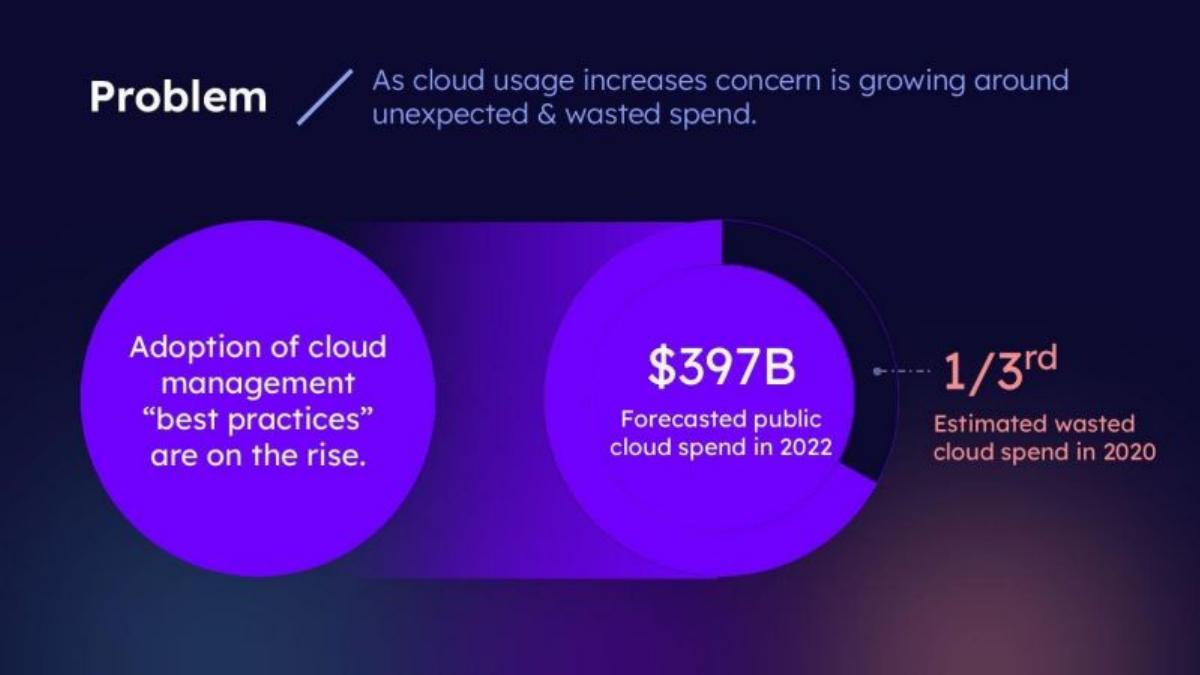
- The deck identifies a massive market opportunity with forecasted public cloud spend of $397B in 2022 (Slide 4).
- Archera estimates that 1/3rd of cloud spend was wasted as of 2020, creating a clear value proposition for cost savings (Slide 4).
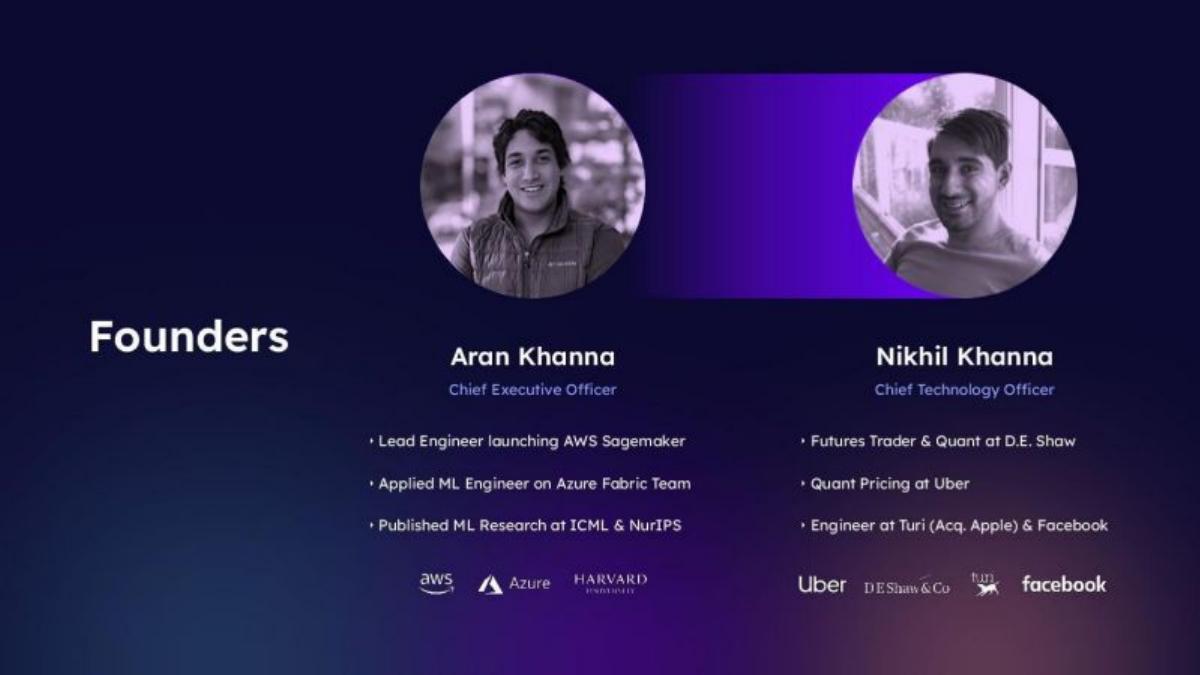
- The founders possess deep domain expertise, with backgrounds including lead engineering for AWS Sagemaker and quant pricing at Uber (Slide 2).
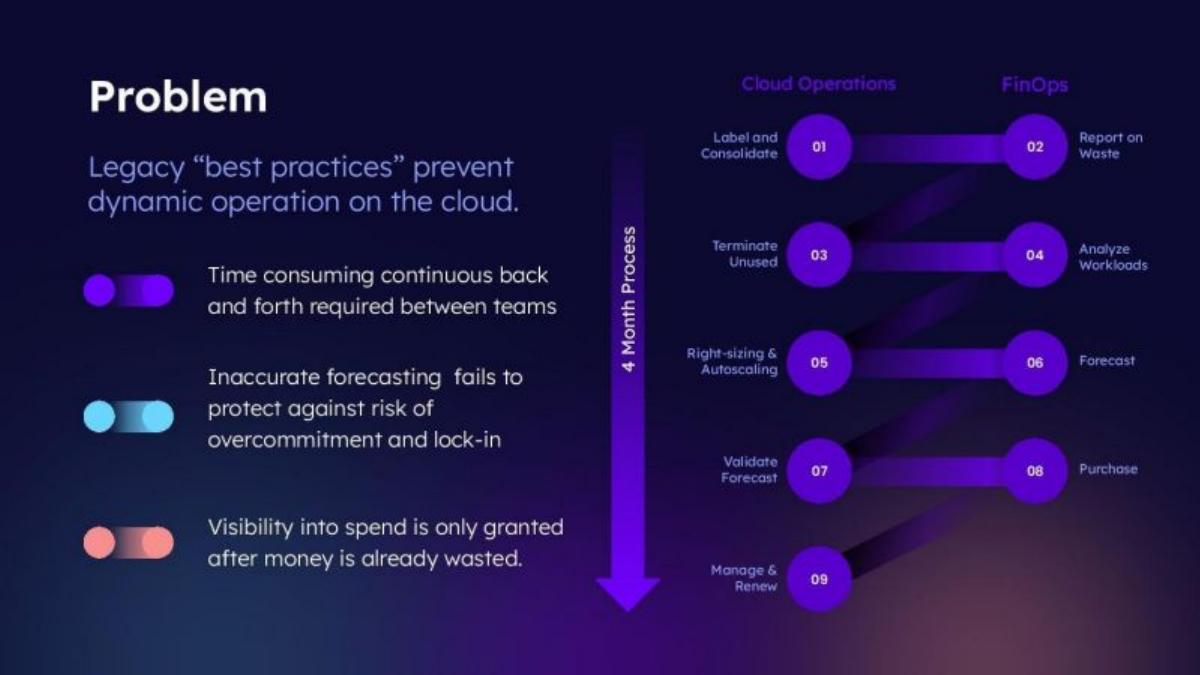
- The solution addresses a specific '4 Month Process' in legacy cloud operations that leads to overcommitment and lock-in (Slide 5).
- Archera differentiates by using external factors like growth and migrations, rather than just historical data, for forecasting (Slide 10).
- The product offers a unique 'guaranteed buy-back' model to de-risk long-term cloud resource commitments (Slide 13).
- The company had already secured 18 notable customers, including Pure Storage and Fortive, by the time of this raise (Slide 15).
- The deck omits specific financial metrics, such as ARR, churn, or the specific terms of the $7M Series A raise (Omitted).
The Archera Teardown: Automating the FinOps Lifecycle
Archera’s Series A deck is a focused, 16-slide presentation that leans heavily on the 'Problem/Solution' framework. In a crowded market of cloud cost management tools, Archera attempts to carve out a niche by moving beyond simple reporting and into automated risk management and 'insured' commitments. This teardown examines how they presented their case for a $7M round in 2021.
The Team and Company Foundation
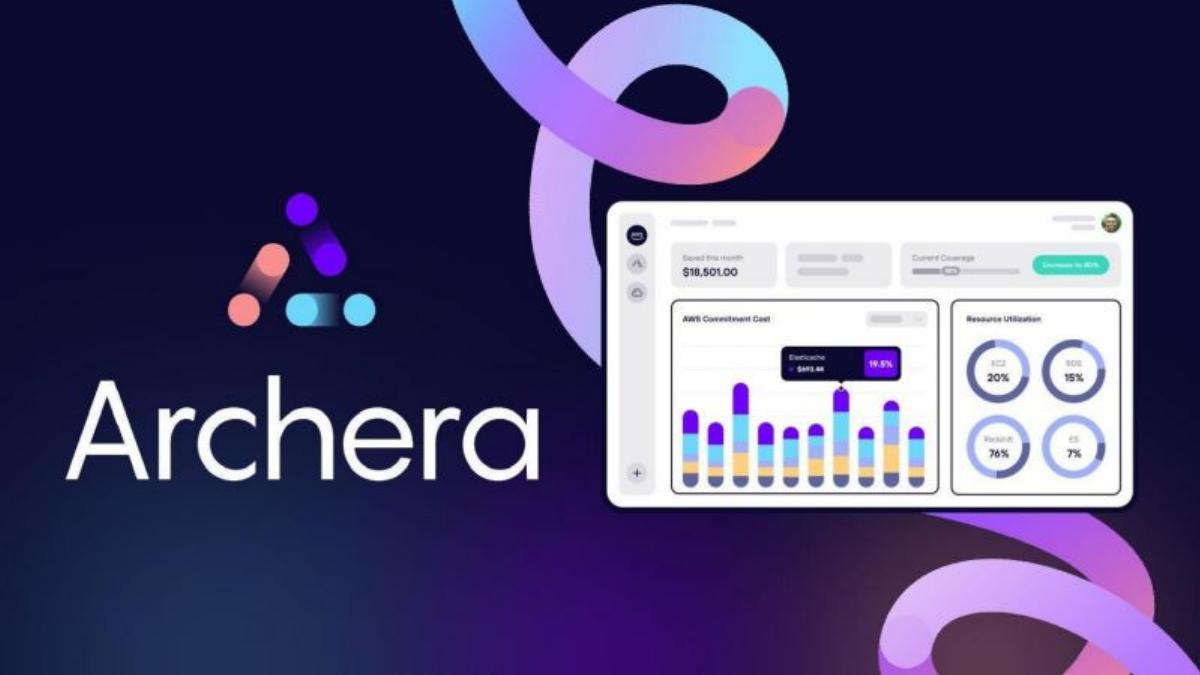
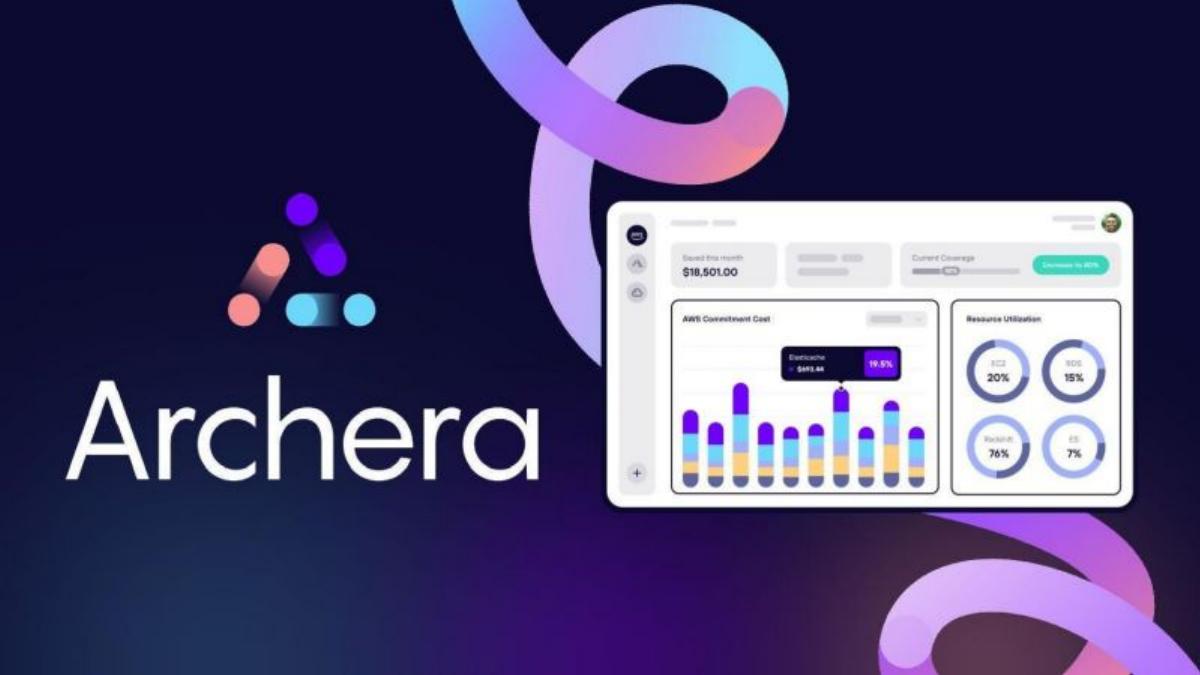
Slide 1: Title Slide The deck opens with a clean, dark-themed aesthetic. It features the Archera logo and a high-fidelity dashboard mockup showing a 'Saved this month' figure of $18,501.00. This immediately grounds the product in its primary value proposition: tangible cost savings.
Slide 2: Founders This is a high-pedigree team slide. CEO Aran Khanna is credited as the Lead Engineer launching AWS Sagemaker and an engineer on the Azure Fabric team. CTO Nikhil Khanna brings a 'Quant' perspective from D.E. Shaw and Uber. By listing AWS, Azure, Uber, and Facebook logos, the founders establish immediate technical credibility in the exact domain they are disrupting.
Slide 3: Company and Investors Archera was founded in 2018 and, at the time of this deck, had 18 employees across Seattle, the Bay Area, and remote locations. They disclose $10.3 million previously raised from Amplify Partners, Ridge Ventures, and PSL (Pioneer Square Labs). This slide serves to show that the company is already 'vetted' by institutional capital.
Defining the $400 Billion Problem
Slide 4: The Macro Problem Archera sets the stage with a massive TAM (Total Addressable Market). They cite a forecasted public cloud spend of $397B in 2022. Crucially, they point to an estimate that 1/3rd of cloud spend in 2020 was wasted. This creates a clear, multi-billion dollar opportunity for any tool that can reclaim even a fraction of that waste.
Slide 5: The Process Problem This is one of the most effective slides in the deck. It breaks down why current 'best practices' fail. It illustrates a '4 Month Process' consisting of 9 steps between Cloud Operations and FinOps—from labeling and consolidating to final purchase. They argue this lag leads to 'inaccurate forecasting' and 'visibility only after money is already wasted.'
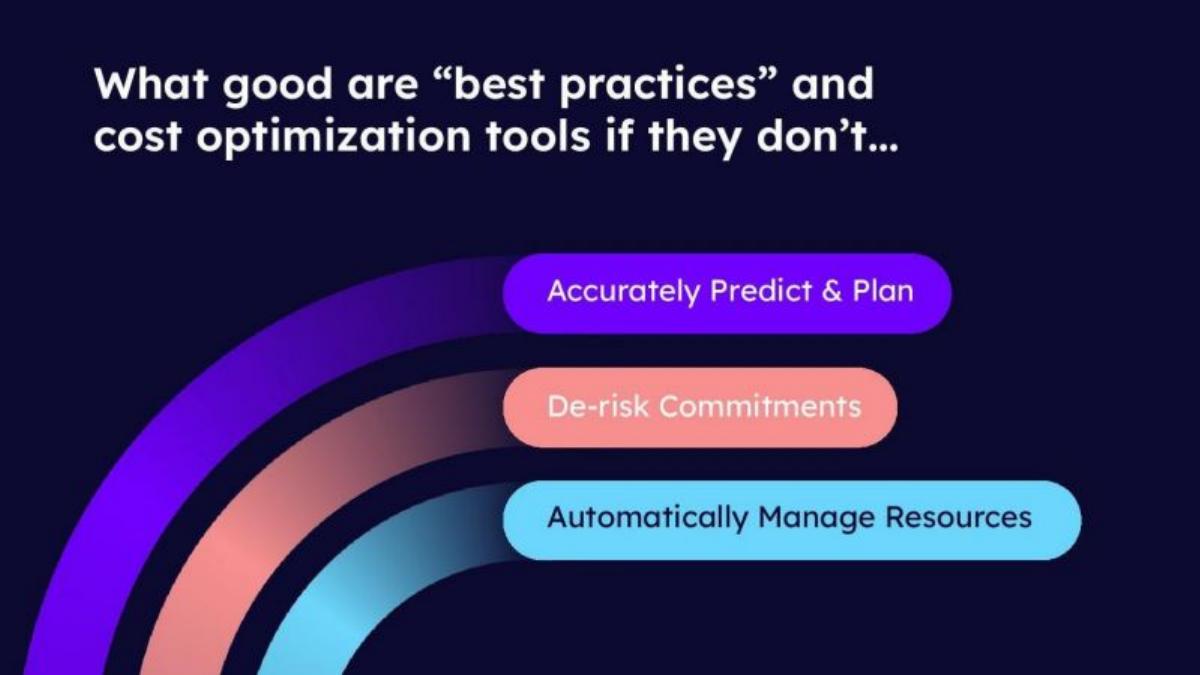
Slide 6: The Gap A transitional slide that asks what good tools are if they don't accurately predict, de-risk commitments, and automatically manage resources. This sets the criteria for the 'perfect' solution, which Archera is about to reveal.
The Archera Solution: Predictive and Automated
Slide 7: Meet Archera The formal reveal. Archera defines itself as a 'cloud resource automation solution that continuously manages and de-risks your cloud resources.' The keywords here are 'continuously' and 'de-risks,' moving the conversation from static reporting to active management.
Slide 8: Predictive Portfolio Approach This slide uses abstract bubble visualizations to represent a 'predictive portfolio approach.' While visually interesting, it is light on technical detail, serving more as a conceptual bridge to the product features.
Slide 9: Cross-Team Visibility The first product feature slide focuses on visibility. It shows a 'Commitment Inventory' and usage data. The text emphasizes 'cross-team visibility,' directly addressing the friction between engineering and finance mentioned in Slide 5.
Slide 10 & 11: Advanced Forecasting These slides explain the 'how.' Archera claims to forecast usage not just on historical data, but on 'external factors such as growth, price reductions & migrations.' Slide 11 shows a 'Forecasted Usage' UI mockup that breaks down savings plans, charges, and discounted usage. This is a critical differentiator; most legacy tools only look backward.
Slide 12: Optimal Purchasing Strategies This slide suggests that the platform arrives at an 'optimal blend' of purchasing strategies. It reinforces the idea that cloud buying is a complex optimization problem that humans (and legacy tools) are ill-equipped to solve manually.
The 'Insured' Differentiator
Slide 13: De-risking and Buy-backs This is the 'killer feature' of the Archera pitch. They mention 'guaranteed buy-backs.' In the cloud world, getting a discount usually requires a 1-year or 3-year commitment. If your needs change, you are stuck with the bill. Archera’s promise to 'de-risk' these through buy-backs is a powerful financial incentive for CFOs.
Slide 14: Automation and Innovation The final solution slide focuses on the 'why.' By automating the FinOps process, engineering teams can 'get back to innovating.' This appeals to the CTO/VP Engineering persona who doesn't want their developers spending time on billing spreadsheets.
Social Proof and Traction
Slide 15: Trusted By A strong logo wall featuring 18 companies. Notable names include Pure Storage, Fortive, Guardant Health, and Hiya. The diversity of these logos (from healthcare to storage) suggests that the problem of cloud waste is universal across industries.
Slide 16: Closing The deck ends with a standard call to action and a reference to bestpitchdeck.com. Note that the deck does not include a 'The Ask' slide or a 'Financials' slide, which are typically handled in a separate data room or a more detailed version of the Series A deck.
What Archera Does Well
Quantified Pain: By using the '$397B' and '1/3rd waste' figures, they make the problem feel urgent and massive. · Founder-Market Fit: The team slide is exceptionally strong. Having the person who launched AWS Sagemaker building a tool for AWS cost management is a compelling narrative. · Specific Process Critique: Slide 5’s breakdown of the 4-month lag is a great way to show they understand the day-to-day pain of their customers. · Financial Innovation: The mention of 'guaranteed buy-backs' moves the product from a 'nice-to-have' dashboard to a 'must-have' financial instrument.
What is Missing from the Deck
Revenue Traction: There is no mention of ARR (Annual Recurring Revenue), growth rates, or NRR (Net Revenue Retention). For a Series A, investors usually expect to see these numbers. · Unit Economics: The deck doesn't explain how Archera makes money. Is it a SaaS fee, a percentage of savings, or a premium on the 'insurance' aspect? · Competitive Landscape: The cloud cost management space is crowded (CloudHealth, Apptio, etc.). Archera doesn't explicitly name competitors or provide a 'feature check-list' comparison. · The Ask: The deck doesn't state how much they are looking to raise or how they plan to use the funds (e.g., hiring, sales expansion).
What Other Founders Should Copy
The 'Legacy vs. Modern' Slide: Use a slide like Slide 5 to visualize the current, broken process your customers endure. It makes your automated solution feel like a relief. · High-Fidelity Mockups: Instead of generic icons, Archera uses clean, realistic UI mockups that make the product feel 'real' and ready for enterprise use. · Focus on the Outcome: Every slide reinforces the outcome—savings, de-risking, and returning to innovation—rather than just listing technical features.
Frequently asked questions
- How much did Archera raise with this deck?
- According to the catalogue facts, Archera raised $7 million in a Series A round in 2021. However, Slide 3 of the deck notes that the company had raised a total of $10.3 million up to that point, which likely includes prior seed funding.
- What is Archera's core product offering?
- Archera is a cloud resource automation solution. As stated on Slide 7, it continuously manages and de-risks cloud resources. Its unique selling point is providing 'insured' cloud commitments and guaranteed buy-backs, allowing companies to commit to cloud discounts without the risk of being locked into unused capacity.
- Who are the founders of Archera?
- The company was founded by Aran Khanna (CEO) and Nikhil Khanna (CTO). Their backgrounds are highly relevant to the product: Aran was a lead engineer for AWS Sagemaker and worked on the Azure Fabric team, while Nikhil was a futures trader at D.E. Shaw and handled quant pricing at Uber (Slide 2).
- What specific problem does Archera solve in the cloud market?
- Archera targets 'unexpected and wasted spend.' Slide 5 highlights that legacy 'best practices' involve a manual 4-month process between Cloud Operations and FinOps teams, which leads to inaccurate forecasting and visibility into spend only after the money is already wasted.
- Which cloud providers does Archera support?
- The editorial context and the deck (Slide 2 logos) indicate that Archera enables cost savings across the major public cloud providers: Amazon Web Services (AWS), Microsoft Azure, and Google Cloud Platform (GCP).