Archgroup positions itself as an 'Expansion as a Service' platform designed to help startups enter new markets remotely. The deck reports a monthly growth rate of 60% in customers, reaching 27 paying clients and $17K in monthly revenue at the time of the presentation. Their model relies on a flat monthly fee of $1000 USD for services ranging from cultural product adaptation to full-stack expansion growth. While the deck provides clear traction metrics and a competitive analysis, it lacks a specific capital ask, detailed unit economics, and a technical roadmap for their platform integration. T…
Key takeaways
- The company defines its core offering as 'Expansion as a Service' to lower the cost and complexity of market entry (Slide 1, 2).
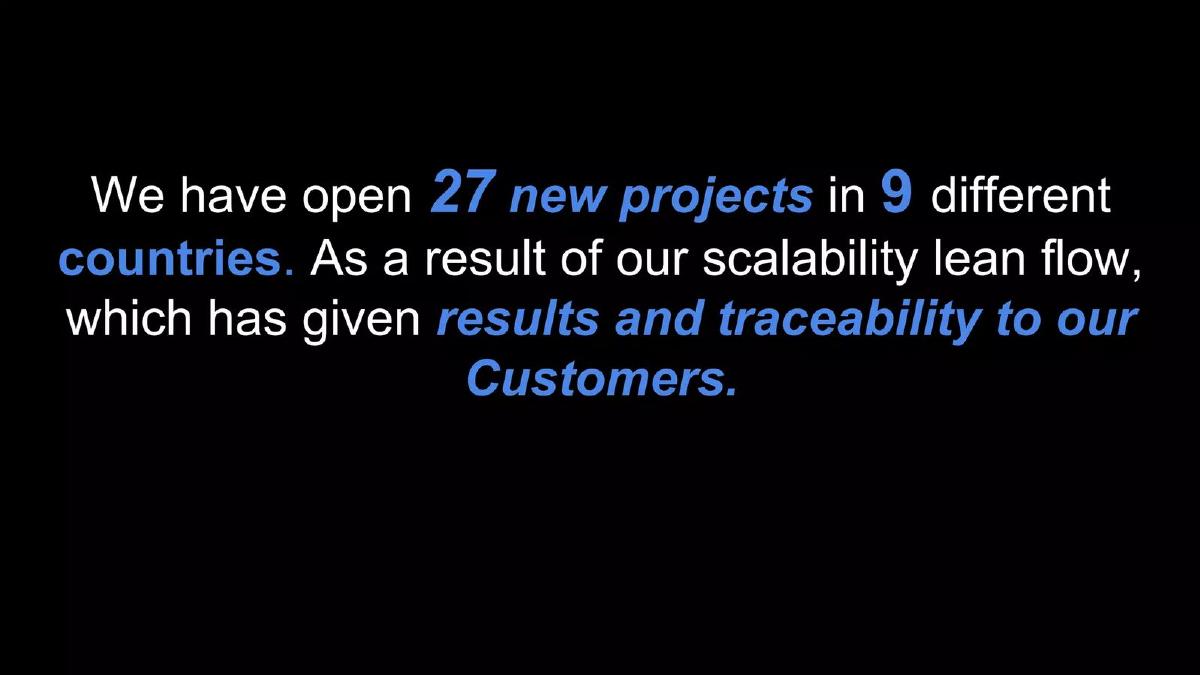
- Archgroup claims to have opened 27 new projects across 9 different countries (Slide 4).
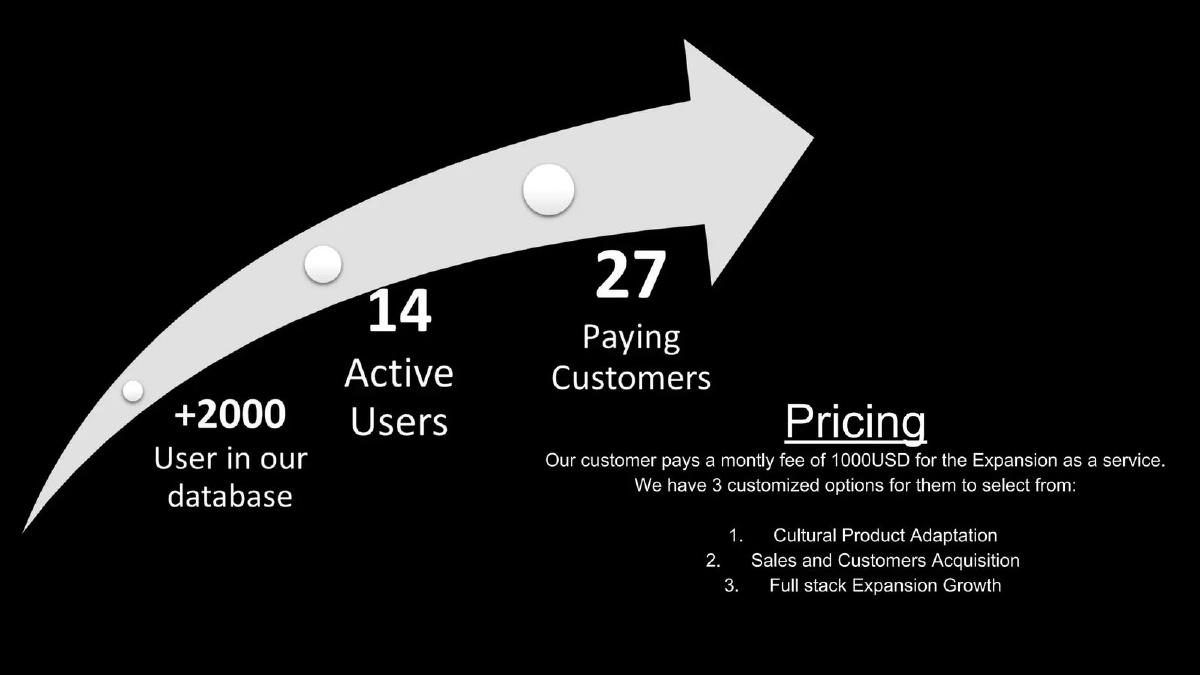
- The business model is based on a flat monthly fee of $1000 USD with three customized service tiers (Slide 5).
- Traction is represented by a database of over 2000 users and 27 paying customers (Slide 5).
- The deck reports a 60% monthly growth rate in customers over a five-month period (Slide 9).
- Current revenue is stated at $17K USD monthly, suggesting some customers may be on discounted or varied plans despite the stated $1000 fee (Slide 10).
- The team includes a COO with experience as a manager at Groupon and Mindvalley (Slide 8).
- The deck lacks a specific financial ask or valuation, focusing instead on goals for the Metavallon program (Slide 10).
Archgroup Pitch Deck Analysis
Archgroup presents a 10-slide deck focused on solving the friction points of international business expansion. By labeling their solution 'Expansion as a Service,' they attempt to productize a traditionally service-heavy consulting industry. The deck is characterized by a minimalist aesthetic—white and blue text on a black background—and focuses heavily on recent traction metrics rather than long-term financial projections.
Slide 1: Title Slide
The cover slide introduces Archgroup with the tagline 'Expansion as a Service.' It identifies Andrés Melero Solana as the CEO and Cofounder and provides a contact number. The branding is simple, establishing a professional if somewhat utilitarian tone from the outset.
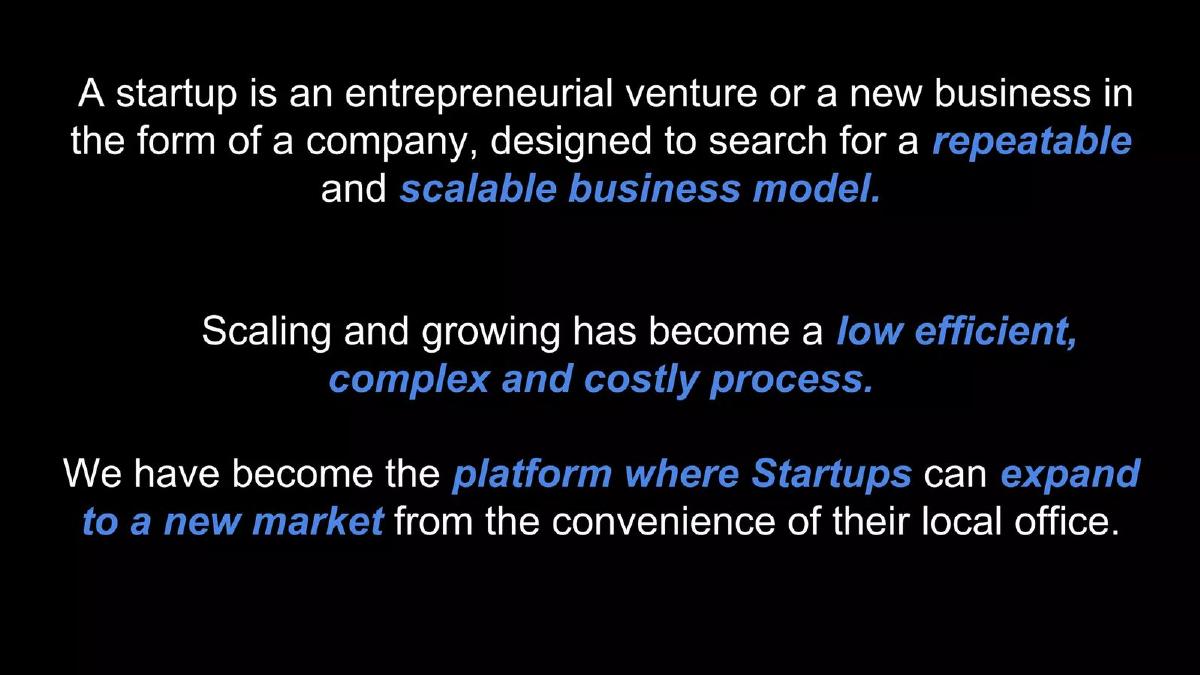
Slide 2: The Problem and Mission
Slide 2 defines a startup as a venture searching for a 'repeatable and scalable business model.' It identifies the core problem: scaling and growing has become a 'low efficient, complex and costly process.' Archgroup positions itself as the platform where startups can expand to new markets from their local office, emphasizing convenience and cost-reduction.
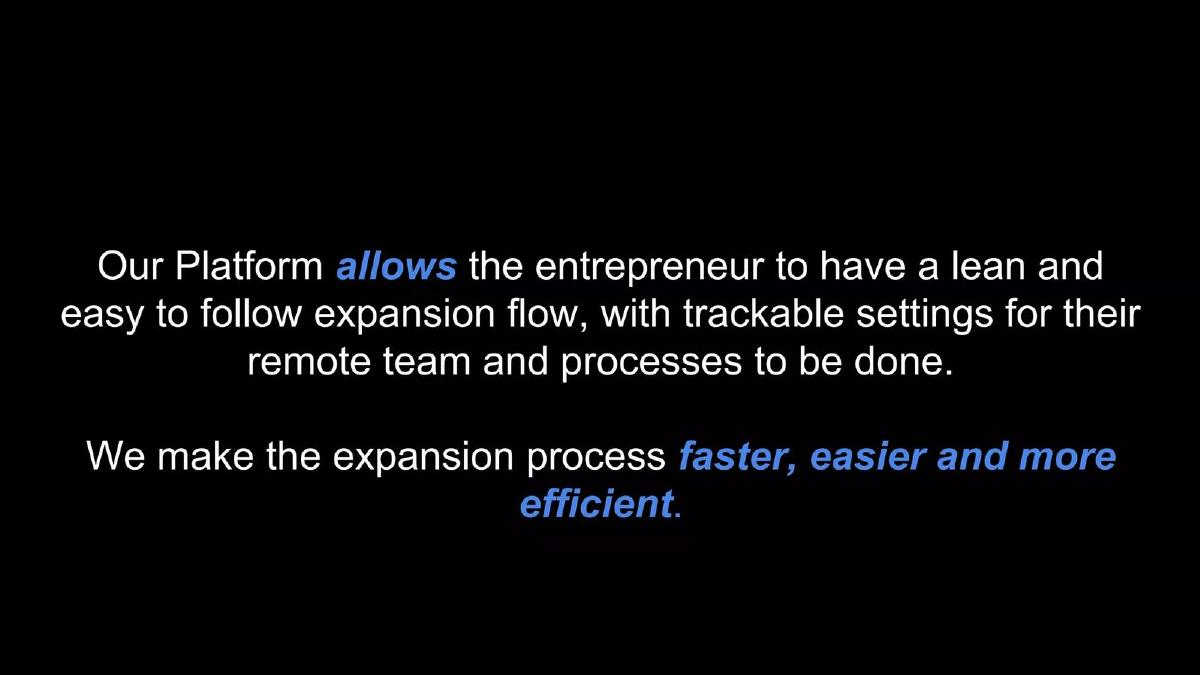
Slide 3: The Solution
This slide elaborates on the platform's functionality. It claims to allow entrepreneurs to have a 'lean and easy to follow expansion flow.' Key features mentioned include trackable settings for remote teams and processes. The stated goal is to make expansion 'faster, easier and more efficient.'
Slide 4: Initial Traction
Archgroup highlights its early success by stating they have opened '27 new projects in 9 different countries.' They attribute this to their 'scalability lean flow,' which they claim provides results and traceability to their customers. This slide serves to validate that the model works across multiple geographic borders.
Slide 5: Business Model and Pricing
This slide uses a growth arrow graphic to show a funnel: +2000 users in the database, 14 active users, and 27 paying customers. Note: The distinction between 'active users' and 'paying customers' is not fully explained, as the paying customer count is higher than the active user count. Pricing is transparently stated as a 'montly fee of 1000USD.' They offer three service tiers: 1. Cultural Product Adaptation , 2. Sales and Customers Acquisition , and 3. Full stack Expansion Growth .
Slide 6: Growth Strategy
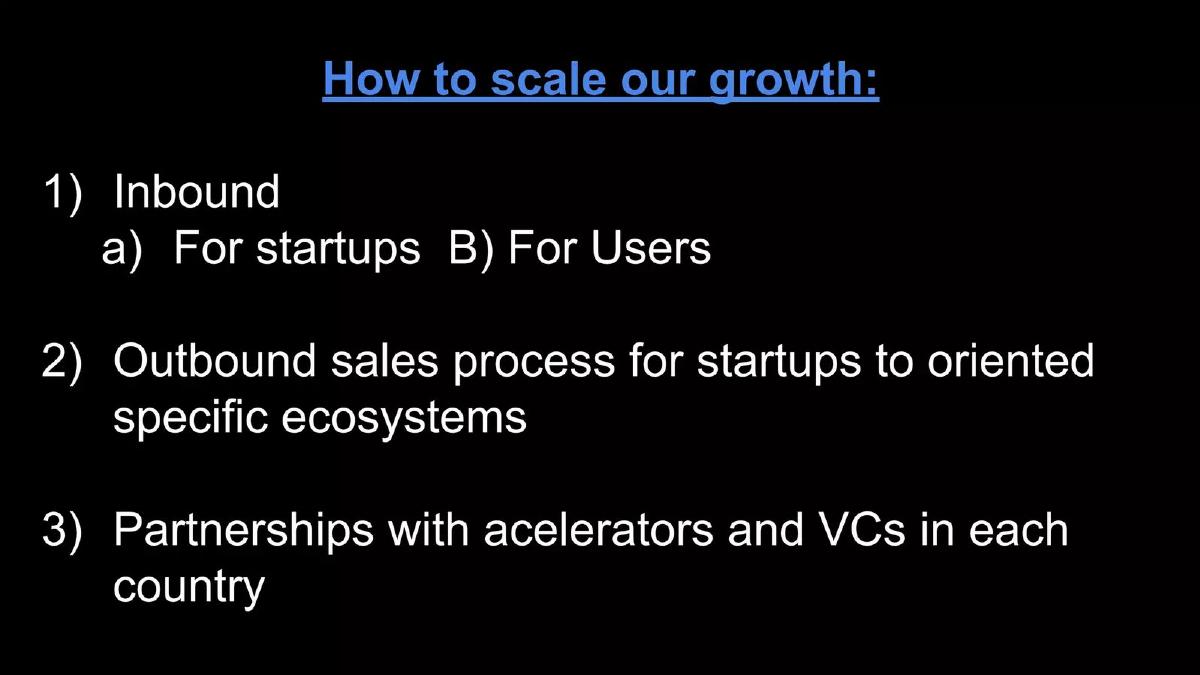
Under the heading 'How to scale our growth,' the deck lists three channels:
Inbound marketing for both startups and individual users. · Outbound sales processes targeting specific startup ecosystems. · Partnerships with accelerators and VCs in various countries.
This suggests a B2B2B approach, leveraging existing startup aggregators to find customers.
Slide 7: Competitive Landscape
Archgroup compares itself against three alternatives in a table format: Isolated Country Manager: Strengths include being easy to start, but weaknesses include difficulty in management and manager burnout. Local Partner: Strengths include small investment, but weaknesses include loss of control over operations and branding. Traditional expansion process: Strengths include being controlled and secure, but weaknesses include being slow and not scalable.Archgroup positions itself as the middle ground that maintains control while remaining scalable.
Slide 8: The Team
Andres Melero (CEO): Cited as having his second startup and accelerator experience. · Raquel Mosquera (CCO): Focused on product creation and sales in the Latam market with accelerator experience. · Yaznaia Jaramillo (COO): Highlighted for her experience as a manager at Groupon and Mindvalley.
The team appears to have the operational background necessary for a service-based expansion platform.
Slide 9: Traction Chart
This slide features a line graph titled 'Monthly Growth Rate in Customers.' It shows a steady climb over five months, starting near zero and ending at 27 customers. The slide explicitly states a 'monthly growth Rate in customers is 60%.' It also reiterates the '+2000' user affiliates and '14' users working, though the terminology remains slightly ambiguous compared to slide 5.
Slide 10: Current Status and Goals
The final slide provides a snapshot of the business: $17K USD monthly revenue and a presence in 9 countries. It also lists goals for the 'Metavallon program,' which include integrating tools into a unique platform, leveraging customer acquisition, and team training. This suggests the deck may have been prepared for an accelerator application or demo day rather than a standard VC seed round.
What Archgroup Does Well
Archgroup excels at defining a clear, transparent pricing model. In an industry (international expansion) often plagued by opaque consulting fees, a flat $1000/month rate is a strong hook for cash-strapped startups. The deck also does a good job of showing immediate traction, proving that there is a market for this 'lean' expansion model across nine different countries. The competitive analysis is also logical, identifying the specific pain points of traditional hiring versus local partnerships.
What is Missing from the Deck
The most significant omission is a clear 'Ask.' There is no mention of how much money the company is looking to raise, the valuation, or the specific milestones they intend to reach with new capital. Furthermore, the deck is light on technical details. While it mentions a 'platform,' the slides don't show the interface or explain how the 'trackable settings' actually work. Finally, the revenue math is slightly inconsistent; if they have 27 paying customers at $1000/month, one would expect $27K in revenue, yet slide 10 reports $17K. This suggests either heavy discounting, a recent churn event, or that the $1000 fee is a target rather than a historical average.
What Founders Should Copy
Founders should emulate the clarity of the 'Expansion as a Service' framing. It takes a complex service and makes it sound like a scalable software product. The use of a simple competitive matrix to highlight the 'Weaknesses' of current industry standards is also an effective way to position a new entrant. Additionally, the focus on a single, high-growth metric (60% monthly growth) provides a clear narrative of momentum that is easy for investors to digest.
Frequently asked questions
- What is Archgroup's primary value proposition?
- Archgroup offers 'Expansion as a Service,' allowing startups to expand into new markets from their local office. They aim to make the process faster and more efficient by providing a platform with trackable settings for remote teams and processes, effectively acting as a lean alternative to traditional, costly expansion methods.
- How does Archgroup generate revenue?
- According to slide 5, the company charges a monthly fee of $1000 USD. They offer three customized options: Cultural Product Adaptation, Sales and Customer Acquisition, and Full Stack Expansion Growth. Slide 10 notes their current monthly revenue is $17K USD.
- What is the current scale of the business?
- As of the deck's creation, Archgroup has 27 paying customers and a presence in 9 countries. They also claim to have a database of over 2000 users and have completed 27 new projects. Their customer growth rate is cited at 60% per month.
- Who are the key members of the leadership team?
- The team consists of CEO Andres Melero (2nd startup, accelerator experience), CCO Raquel Mosquera (Latam market sales, accelerator experience), and COO Yaznaia Jaramillo (former manager at Groupon and Mindvalley). Their collective experience is centered on startup scaling and operations.
- What is missing from this pitch deck?
- The deck omits a formal 'Ask' slide detailing how much capital they are raising and how it will be used. It also lacks a detailed breakdown of unit economics (CAC/LTV), a technology roadmap for the platform, and a specific timeline for their expansion goals.