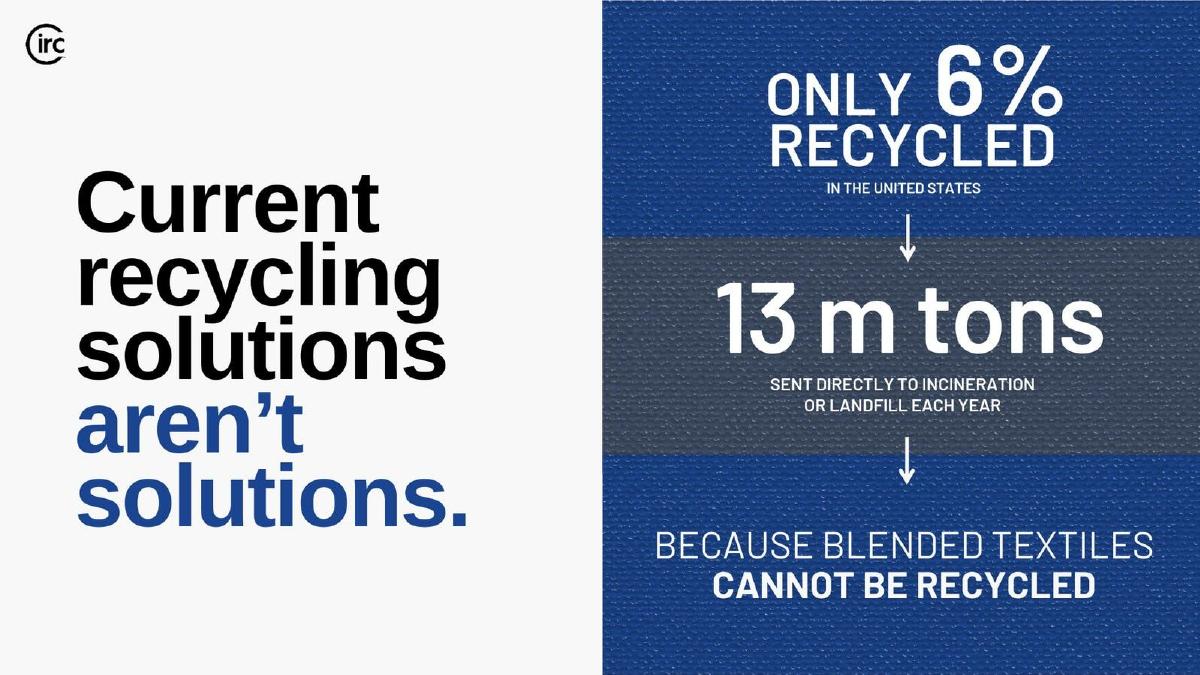
Circ’s Series B deck is a masterclass in identifying a specific, massive bottleneck in a global supply chain. By focusing on polycotton blends—the most common yet hardest-to-recycle textile—Circ positions its patented hydrothermal technology as the only viable solution for brands facing regulatory and supply pressures. The deck highlights a 40 million ton annual gap in recycled bottle supply, arguing that the current industry reliance on plastic bottles for 'recycled' clothing is unsustainable. With a clear value proposition of lower input costs and higher margins compared to virgin materials…
Key takeaways
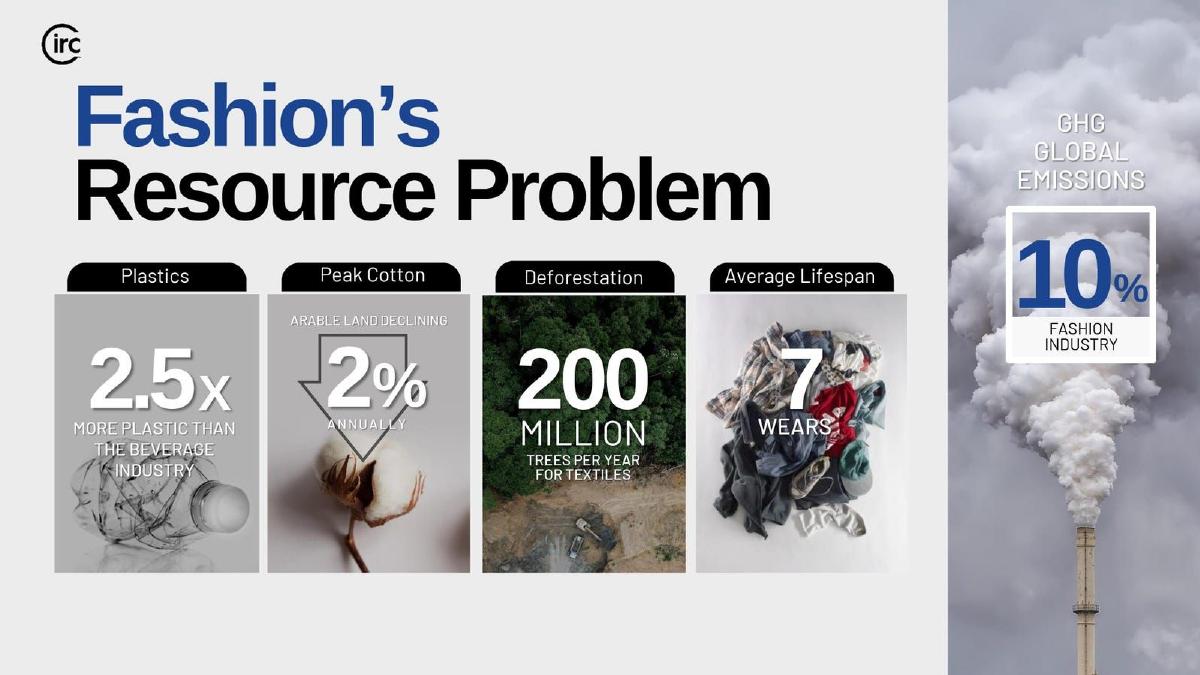
- The fashion industry accounts for 10% of global greenhouse gas emissions, according to Slide 2.
- Circ identifies a 40 million ton annual gap in recycled bottle supply, highlighting that current recycling methods are insufficient for the 50 million tons of polyester used in clothing each year (Slide 6).
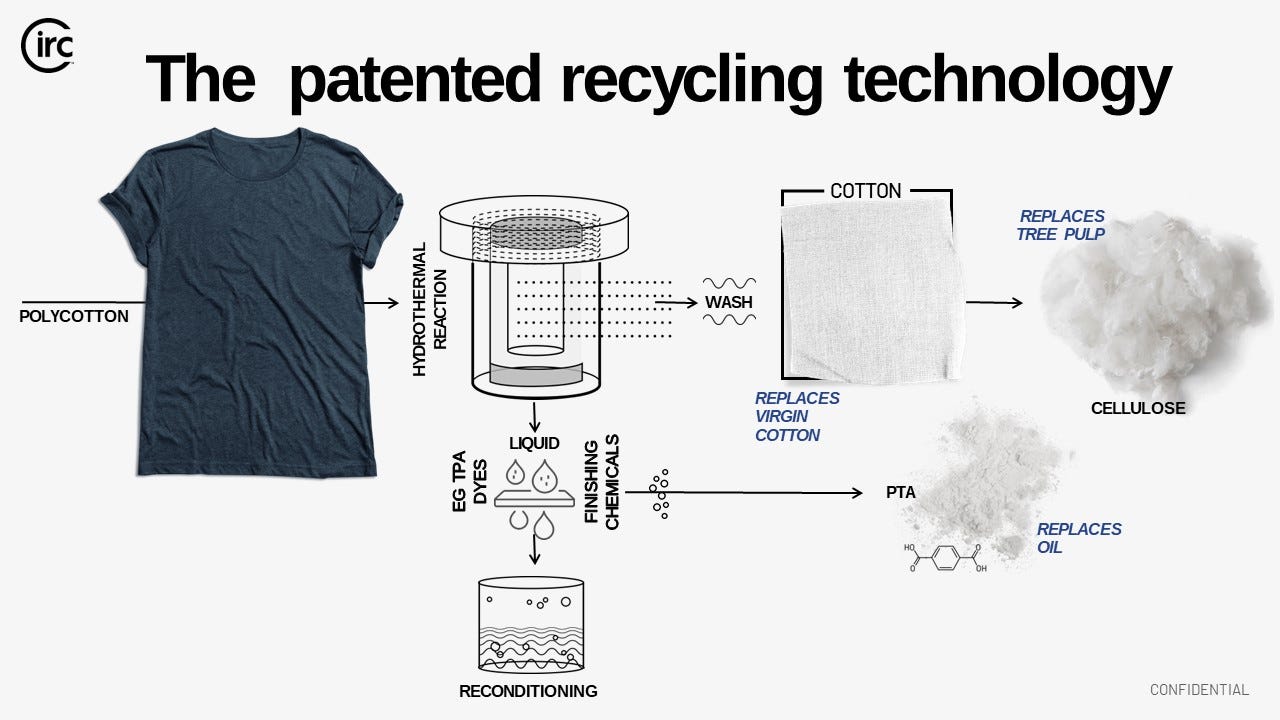
- The company's patented technology uses a hydrothermal reaction to separate polycotton into cellulose and PTA, replacing tree pulp and oil respectively (Slide 1).
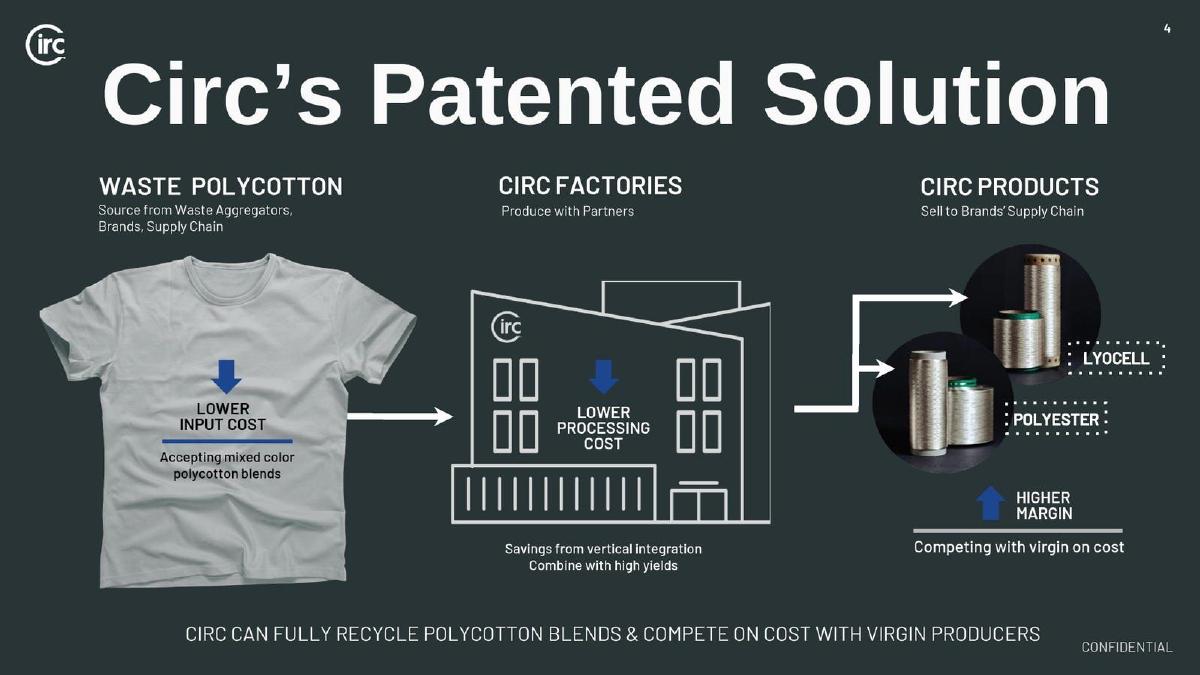
- Circ claims their process allows them to compete with virgin producers on cost by utilizing mixed-color polycotton waste as a low-cost input (Slide 4).
- Branded recycled fiber currently commands a 200% price premium, creating a significant margin opportunity for Circ's outputs (Slide 6).
- The deck lists Patagonia as a primary partner, alongside 12 other redacted or categorized brand partners including a 'Top 3 US Retailer' and 'Marubeni' (Slide 8).
- Arable land for cotton is declining by 2% annually, creating a 'Peak Cotton' crisis that necessitates recycled alternatives (Slide 2).
- The deck omits a traditional 'Ask' slide, financial projections, and a team biography section, focusing almost entirely on technology and market fit.
The Macro Problem: Fashion's Resource Exhaustion
Slide 2: The Environmental Toll
Circ opens its narrative by framing the fashion industry as a primary driver of global environmental degradation. Slide 2, titled 'Fashion’s Resource Problem,' provides four key metrics to establish the scale of the crisis. First, it notes that the industry produces 2.5x more plastic than the beverage industry. Second, it highlights 'Peak Cotton,' stating that arable land is declining by 2% annually. Third, it points to deforestation, claiming 200 million trees are harvested per year for textiles. Finally, it notes the average lifespan of a garment is just 7 wears. The slide concludes with a massive anchor metric: the fashion industry is responsible for 10% of global greenhouse gas emissions.
Slide 6: The Failure of Bottle-to-Fiber Recycling
One of the most strategic slides in the deck is Slide 6, 'Bottles are not the solution.' This slide addresses a common industry shortcut: using recycled PET bottles to create 'sustainable' polyester. Circ points out a massive supply-demand imbalance: 50 million tons of polyester are used in clothing annually, but only 10 million tons of plastic bottles are recycled. This creates a 40 million ton gap. The slide also notes that regulatory and supply pressures are creating price premiums—25% for generic recycled fiber and a staggering 200% for branded recycled fiber. This sets the stage for Circ’s textile-to-textile solution as a financial necessity, not just an environmental one.
The Technology: Hydrothermal Separation
Slide 1: The Patented Recycling Technology
Slide 1 provides a technical schematic of the hydrothermal process. It shows a polycotton T-shirt entering a 'Hydrothermal Reaction' chamber. The process yields two distinct outputs. The solid output is washed to become cotton, which then replaces tree pulp to create cellulose. The liquid output, containing EG, TPA, and dyes, undergoes 'Reconditioning' to become PTA, which replaces oil. This slide is critical because it demonstrates that Circ isn't just downcycling; they are returning garments to their molecular building blocks, allowing for a circular loop that maintains material quality.
Slide 4: Circ’s Patented Solution and Economic Moat
Slide 4 connects the technology to the business model. It outlines a three-step value chain: sourcing waste polycotton from aggregators and brands, processing it in 'Circ Factories' (produced with partners), and selling the resulting Lyocell and Polyester back to the brands' supply chains. The slide emphasizes 'Lower Input Cost' by accepting mixed-color blends and 'Higher Margin' by competing with virgin materials on cost. The core claim here is that Circ can fully recycle polycotton blends—a feat that has historically been the 'holy grail' of textile recycling due to the difficulty of separating natural and synthetic fibers.
Market Validation and Partnerships
Slide 8: The Partner Ecosystem
Validation in a Series B round often comes from the caliber of pilot programs and off-take agreements. Slide 8, 'Circ Partners,' uses a mix of named and anonymous logos to show market breadth. Patagonia is the centerpiece. Other named partners include Marubeni and a generic 'Waste Aggregator.' The slide also lists categories like 'Luxury Brand,' 'Top 5 Apparel Company,' and 'Top 3 US Retailer.' While the anonymity of some partners might be due to NDAs, the sheer volume of categories suggests that Circ has moved beyond the lab and into the supply chains of major global players.
Slide 12: The Visionary Close
The deck concludes on Slide 12 with a high-impact visual of a face split between youth and age, accompanied by the slogan 'Wear the Same Molecules for Life.' The sub-text, 'Because we have all the clothes we need to make all the clothes we’ll ever need,' reinforces the circularity mission. This slide shifts the tone from industrial engineering to consumer-facing impact, suggesting that Circ sees itself as a brand-facing ingredient technology that can change consumer behavior.
What Works in the Circ Pitch Deck
Clarity of the Bottleneck: The deck does an excellent job of explaining why current recycling (bottles) is a dead end. By quantifying the 40 million ton gap, they make the investment in textile-to-textile recycling feel inevitable rather than optional.
Visualizing the Science: Slide 1 manages to make a complex hydrothermal reaction look simple and logical. For investors who aren't chemical engineers, the 'T-shirt in, Cellulose and PTA out' diagram is highly effective.
Economic Framing: Instead of relying solely on 'sustainability' as a selling point, the deck repeatedly mentions 'competing with virgin on cost' and 'lower input costs.' This is essential for a Series B raise where investors are looking for a path to massive scale and profitability.
What is Missing from the Circ Pitch Deck
Unit Economics: While the deck claims to be cost-competitive with virgin materials, it provides no data to back this up. There is no mention of the cost per ton of output or the CAPEX required to build a 'Circ Factory.' At Series B, investors usually expect to see a clear breakdown of the 'Green Premium' or lack thereof.
Management Team: The provided slides do not include a team slide. In deep-tech and industrial scaling, the pedigree of the engineering and operations leadership is a primary factor in the investment decision. The absence of this information in the shared deck is a significant omission.
Financial Projections and Use of Funds: There is no slide detailing the $30M ask or how it will be deployed. Usually, a Series B deck would outline milestones such as 'Facility 1 Completion' or '10k Tons Annual Capacity.' The deck is very heavy on 'Why' and 'How,' but light on 'When' and 'How Much.'
Founder Takeaways: Lessons from Circ
Focus on the hardest problem: Circ didn't try to recycle pure cotton or pure polyester; they went after polycotton blends. By solving the hardest part of the waste stream, they created a much stronger competitive moat. Founders should identify the 'impossible' bottleneck in their industry and center their pitch around solving it.
Use 'The Gap' to create urgency: Slide 6 is the most powerful slide in the deck because it uses a massive supply gap to prove that the current market leaders (recycled bottle fiber producers) cannot meet demand. If you can show that the status quo is mathematically impossible, your solution becomes the only logical path forward.
Ingredient Branding: By partnering with Patagonia and positioning their outputs as 'Lyocell' and 'Polyester' that brands can buy, Circ is following the 'Intel Inside' model. Founders in the materials space should focus on how their product fits into existing supply chains rather than trying to build a new consumer brand from scratch.
Frequently asked questions
- What is Circ's core technology?
- Circ uses a patented hydrothermal reaction process. As shown on Slide 1, this process takes polycotton waste and breaks it down into two primary streams: a solid cellulose product that replaces tree pulp and virgin cotton, and a liquid stream that is reconditioned into PTA (purified terephthalic acid) to replace petroleum-based polyester.
- Why does Circ claim that plastic bottles are not the solution for fashion?
- Slide 6 explains that while the fashion industry uses 50 million tons of polyester annually, only 10 million tons of plastic bottles are currently recycled. This leaves a 40 million ton gap. Furthermore, regulatory and supply pressures are driving up the cost of bottle-derived recycled fiber, making Circ's textile-to-textile recycling more economically viable.
- How does Circ plan to compete with virgin material prices?
- According to Slide 4, Circ achieves cost competitiveness through three levers: lower input costs by accepting mixed-color polycotton waste, lower processing costs through vertical integration and high yields, and higher margins by producing Lyocell and Polyester that compete directly with virgin materials on quality.
- Who are Circ's main partners?
- Slide 8 prominently features Patagonia. It also lists Marubeni and a 'Waste Aggregator.' Several other partners are listed by category rather than name, including a 'Top 5 Apparel Company,' a 'Luxury Brand,' and a 'Top 3 US Retailer,' suggesting broad industry interest across different market segments.
- What metrics are missing from the Circ pitch deck?
- The deck is light on hard financial data. It lacks a slide on current revenue, specific unit economics (cost per kg of output), a detailed five-year financial forecast, and a breakdown of how the $30M Series B funds will be spent. It also lacks a team slide, which is unusual for a Series B pitch.