Beam Dental’s Series E deck is a concise, data-driven argument for the modernization of dental insurance. By positioning themselves as the only 'digitally native' player in the space, the company demonstrates a clear structural cost advantage, showing admin labor costs dropping from 10.5% in 2019 to a projected 5.3% in 2022. The deck effectively bridges the gap between a consumer wellness product (the smart toothbrush) and a B2B insurance platform, showing that over 50% of revenue is managed via digital distributors like Gusto and Rippling. While the deck lacks explicit financial projections…
Key takeaways
- Beam positions itself as a 'digital-first dental insurance' provider focused on preventive care (Slide 1).
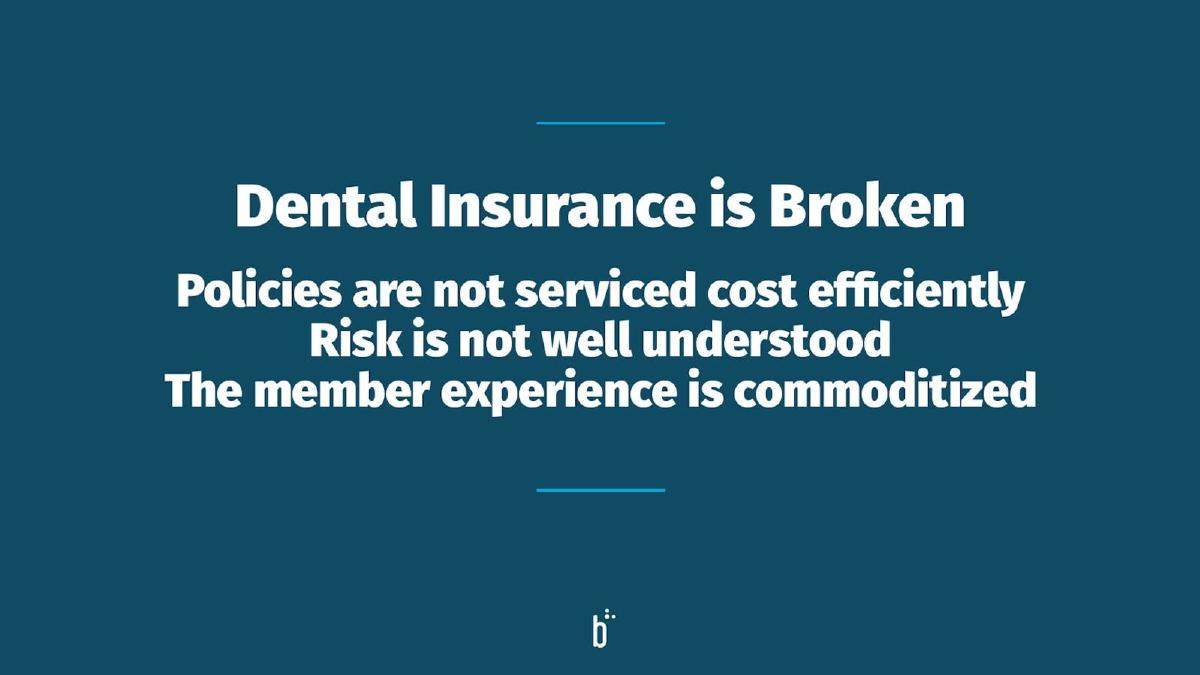
- The core problem identified is that dental insurance is 'broken' due to inefficient servicing and poorly understood risk (Slide 2).
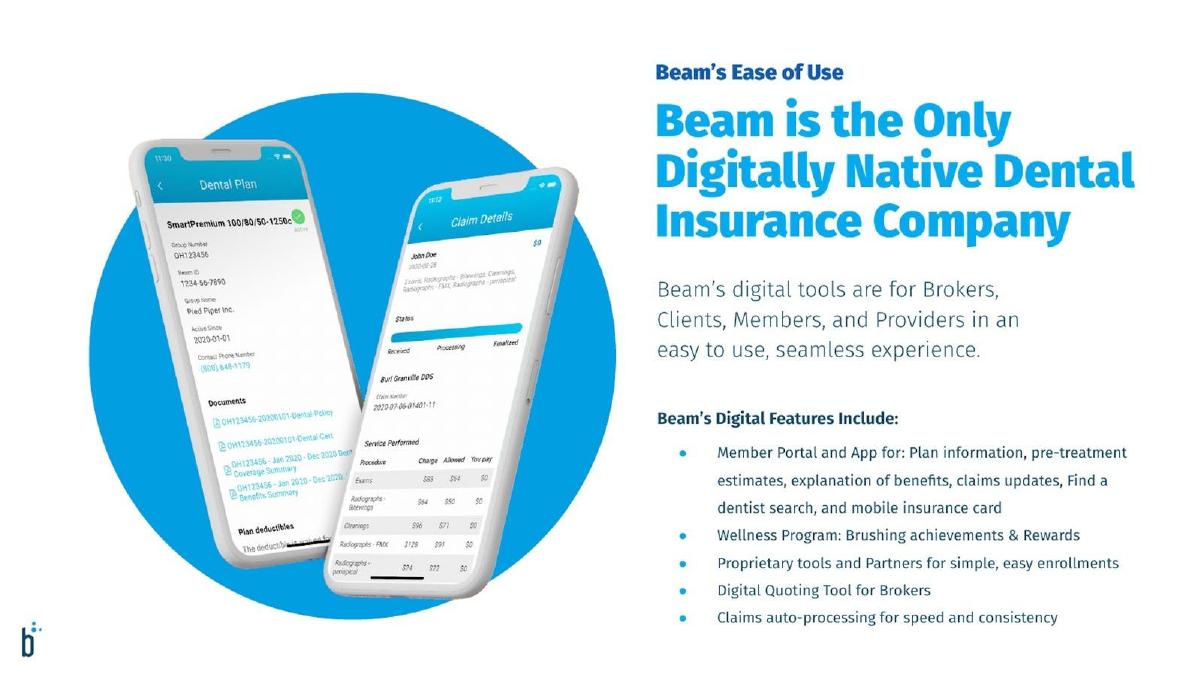
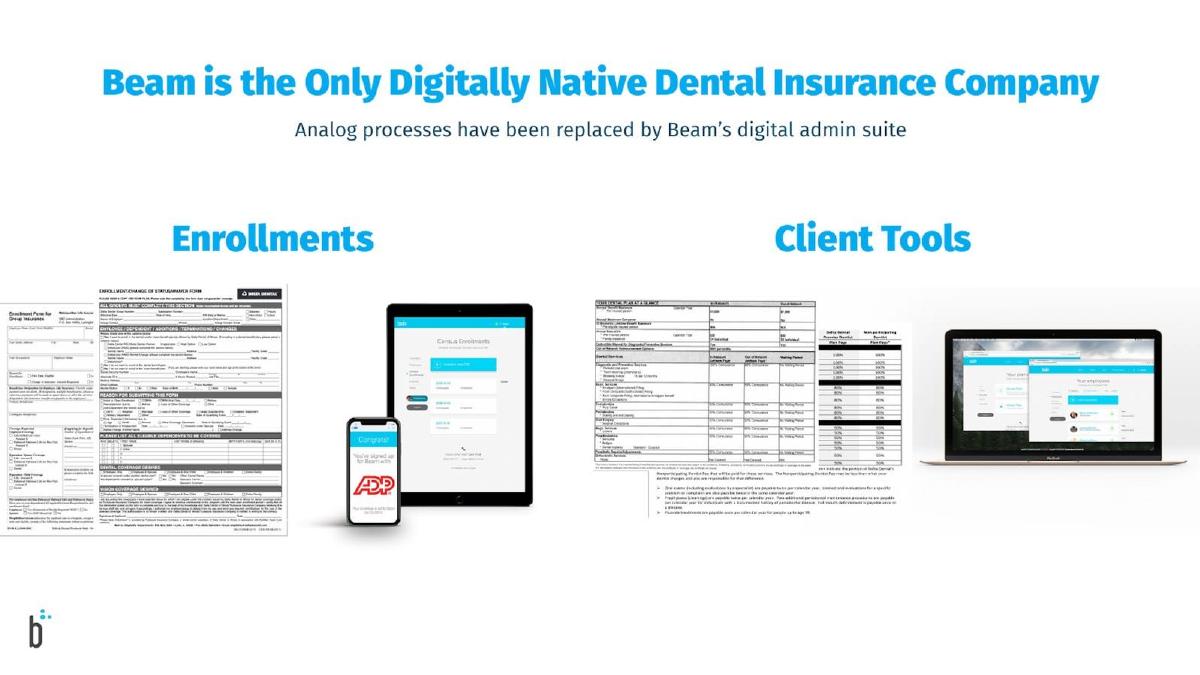
- Beam claims to be the 'Only Digitally Native Dental Insurance Company,' offering automated claims processing and digital quoting for brokers (Slide 3).
- The company demonstrates a massive structural cost advantage, with admin labor at 5.3% of dental premium compared to an industry range of 16-20% (Slide 4).
- A smart toothbrush and wellness program are used to interweave preventive care directly with the insurance product (Slide 5).
- Over 50% of Beam's revenue is managed through digital platforms and distributors (Slide 6).
- The leadership team features deep experience from major incumbents and fintechs including MetLife, Nationwide, and PayPal (Slide 7).
- The deck omits a specific breakdown of the $80M funding request and detailed long-term revenue projections (Slides 1-13).
The Digital Transformation of Dental Insurance
Beam Dental’s Series E pitch deck is a lean, 13-slide presentation that focuses heavily on operational efficiency and digital integration. In an industry often characterized by legacy systems and manual paperwork, Beam positions itself as the technological outlier. The deck, used to raise $80M in 2021, serves as a blueprint for how 'insurtech' companies can move beyond mere lead generation to fundamental structural improvements in the insurance stack.
Slide 1: The Vision
The deck opens with a clean, branded title slide. It defines Beam as a "Digital-first dental insurance focused on easy, smart, preventive care." This immediately sets the stage for a two-pronged value proposition: a better user experience ("easy") and a better risk model ("preventive care").
Slide 2: The Problem Statement
Slide 2 uses a high-contrast dark background to deliver a blunt message: "Dental Insurance is Broken." The company identifies three specific pain points: policies are not serviced cost-efficiently, risk is not well understood, and the member experience is commoditized. By highlighting these three areas, Beam sets up the specific solutions it will detail later: automation for efficiency, IoT (the toothbrush) for risk, and a digital app for experience.
Slide 3: The Digitally Native Solution
Beam claims the title of the "Only Digitally Native Dental Insurance Company" on Slide 3. The slide lists features for four distinct stakeholders: Brokers, Clients, Members, and Providers. Key features mentioned include a digital quoting tool for brokers, claims auto-processing for speed, and a member portal for pre-treatment estimates. This slide is crucial because it shows that Beam isn't just a consumer app; it is a full-stack insurance infrastructure that services the entire ecosystem.
Slide 4: The Structural Cost Advantage
This is arguably the most important slide in the deck. It provides a line graph showing "Beam's Admin Labor % of Dental Premium." The data points show a steady decline: 10.5% in 2019, 9.5% in 2020, 6.8% in 2021, and a projected 5.3% in 2022. Crucially, it overlays an "Industry Range" of 16-20%. This visual proof of efficiency justifies the "insurtech" moniker by showing that their technology leads to a 3x to 4x improvement in administrative overhead compared to incumbents.
Slide 5: Preventive Care and IoT
Slide 5 introduces the physical component of the business: the smart toothbrush. The slide describes a "dental wellness program" that is "closely interwoven" with the insurance product. The visual shows a mobile app tracking morning and evening brushing sessions. This isn't just a gimmick; in the context of the earlier problem slide ("Risk is not well understood"), the toothbrush is presented as a data-gathering tool that incentivizes behavior which lowers the cost of claims.
Slide 6: Digital Distribution and Traction
Slide 6 addresses how Beam gets to market. It states that Beam manages "over 50% of its revenue on digital platforms." A bar chart shows growth in revenue managed by digital admins, supported by a gallery of logos including Gusto, Rippling, Zenefits, and Namely. This demonstrates that Beam has successfully integrated into the modern HR tech stack, allowing them to scale without a massive, traditional feet-on-the-street sales force.
Slide 7: Leadership and Expertise
The final content slide, Slide 7, focuses on the team. It describes the leadership as "Seasoned" and "Founder led." The slide lists executives with backgrounds from LendingClub, Nationwide, Hertz, PayCor, MetLife, and PayPal. By highlighting experience in both legacy insurance (MetLife, Nationwide) and disruptive fintech (LendingClub, PayPal), Beam signals to investors that they have the domain expertise to navigate regulations and the technical chops to build a modern platform.
What Beam Dental Does Well
The deck excels at focusing on a single, powerful narrative: efficiency through technology . Many insurtech decks get bogged down in the complexities of reinsurance and actuarial tables. Beam avoids this by focusing on the "Admin Labor" metric. This is a clear, understandable proxy for how much better their software is than the competition's manual processes.
Furthermore, the integration of the smart toothbrush is handled well. Rather than presenting it as a consumer electronics play, they frame it as a "Unique Commitment to Members' Preventive Care." This keeps the focus on the insurance business model while explaining why their data might be superior to that of a traditional insurer who only hears from a member when something goes wrong.
What is Missing from the Deck
Despite its clarity, the deck leaves several critical questions unanswered for a Series E investor. First, there is no mention of Loss Ratios . In insurance, administrative efficiency is only half the battle; if the claims payouts (loss ratio) are too high, the business won't be profitable regardless of how low the admin costs are. The deck assumes the investor will take it on faith that the wellness program improves the loss ratio.
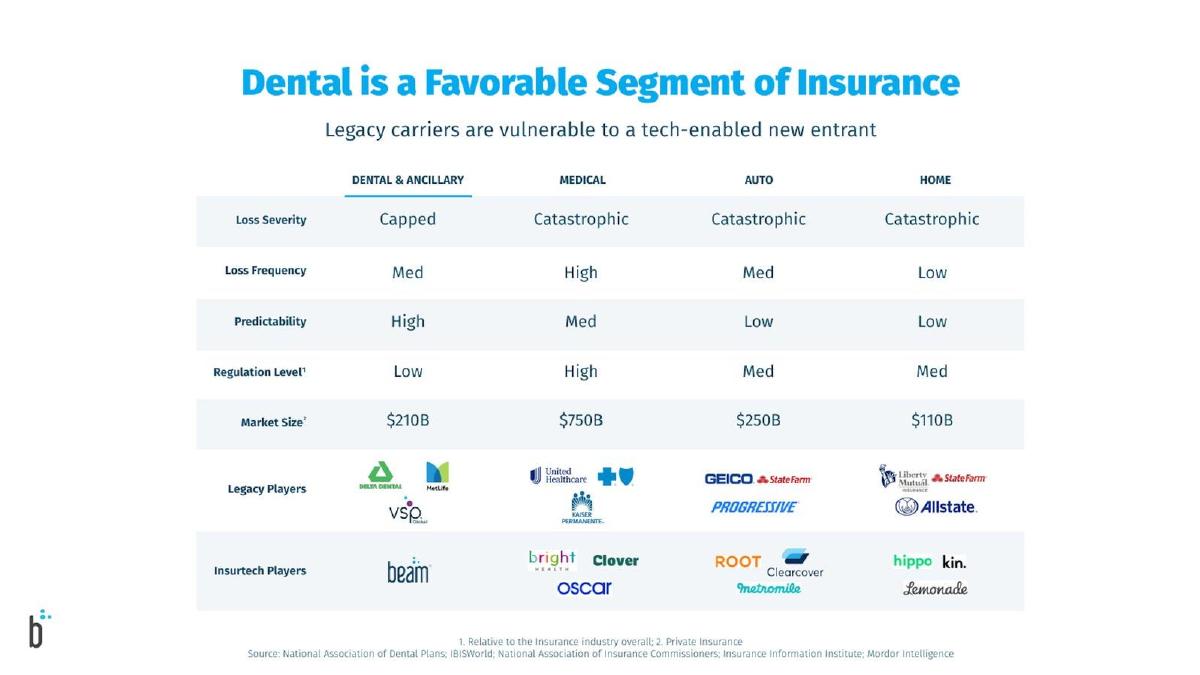
Second, there is no Competitive Landscape slide. While they mention the "Industry Range" for costs, they do not name specific competitors or explain how they win against giants like Delta Dental or UnitedHealthcare beyond just being "digital." At a Series E stage, investors typically want to see a deep dive into market share and win rates against specific incumbents.
Finally, there is no Financial Summary or Use of Funds . While we know from reported facts that they raised $80M, the deck itself does not state how much they are seeking or what that capital will be used for (e.g., geographic expansion, new product lines like vision or life insurance, or marketing spend).
Founder Takeaways: How to Apply This to Your Deck
1. Find your 'Structural Advantage' metric: Beam didn't just say they were better; they showed that their admin costs were 5.3% vs. the industry's 20%. If you are building a tech-enabled version of a traditional business, find the one operational metric where technology gives you an unfair advantage and chart it against the industry average.
2. Leverage the 'Ecosystem' slide: Slide 6 is a masterclass in showing distribution. By listing partners like Gusto and Rippling, Beam proves they aren't fighting for customers in a vacuum. They are riding the wave of other successful platforms. If your product integrates with major industry players, show those logos prominently to prove your scalability.
3. Balance 'Disruption' with 'Domain Expertise': The team slide is carefully balanced. They have the 'disruptors' (fintech) and the 'incumbents' (insurance). For founders in highly regulated industries, showing that you have hired veterans from the companies you are trying to disrupt is a powerful way to de-risk the investment.
4. Keep it visual and concise: With only 13 slides, Beam doesn't waste time. Each slide has one job. Founders often try to cram too much into a single slide. Beam’s approach—one slide for the problem, one for the cost advantage, one for the distribution—ensures the message isn't lost in the noise.
Frequently asked questions
- What is Beam Dental's primary competitive advantage according to the deck?
- Beam’s primary advantage is its 'structural cost advantage.' By being digitally native, they have engineered the cost out of dental insurance. Slide 4 shows their administrative labor costs are significantly lower than the industry average, reaching 5.3% compared to the 16-20% seen in traditional firms. This efficiency allows for better pricing or higher margins.
- How does Beam use hardware in its insurance model?
- Beam integrates a smart toothbrush into its wellness program. As shown on Slide 5, the brush tracks 'Brushing Activity' and syncs with a mobile app. This data is used to reward members for preventive care, which helps the company better understand and mitigate risk compared to traditional insurers.
- Who are Beam's primary distribution partners?
- Beam relies heavily on digital distribution. Slide 6 lists several high-profile HR and benefits platforms as partners, including Gusto, Rippling, Zenefits, Namely, and Employee Navigator. The company manages over 50% of its revenue through these digital admin platforms.
- Is there a detailed financial roadmap in the deck?
- No. While the deck provides a specific chart regarding administrative labor as a percentage of premium (Slide 4), it does not include a full P&L, revenue growth charts with dollar amounts, or specific loss ratio data. It focuses more on the efficiency of the model than the absolute top-line figures.
- What is missing from the Beam Dental Series E deck?
- The deck is missing a 'The Ask' slide detailing how the $80M will be spent, a formal competition slide comparing features against incumbents like Delta Dental, and a detailed breakdown of their underwriting performance (loss ratios). It also lacks a slide on the specific market size (TAM/SAM/SOM).