The Beacon Pines pitch deck is a concise, 13-slide presentation that prioritizes visual identity and community validation. Developed by Hiding Spot Games, the deck successfully transitioned the project from a crowdfunded indie title to a publisher-backed release. The core strength of the deck lies in its 'Marketing Stats' slide, which showcases $84,548 in Kickstarter funding and 2,772 backers as of March 2021. This data, paired with the team's pedigree—including a #1 iOS game on MetaCritic—presents a compelling case for a publisher to step in and provide the final 'Additional Publisher Suppor…
Key takeaways
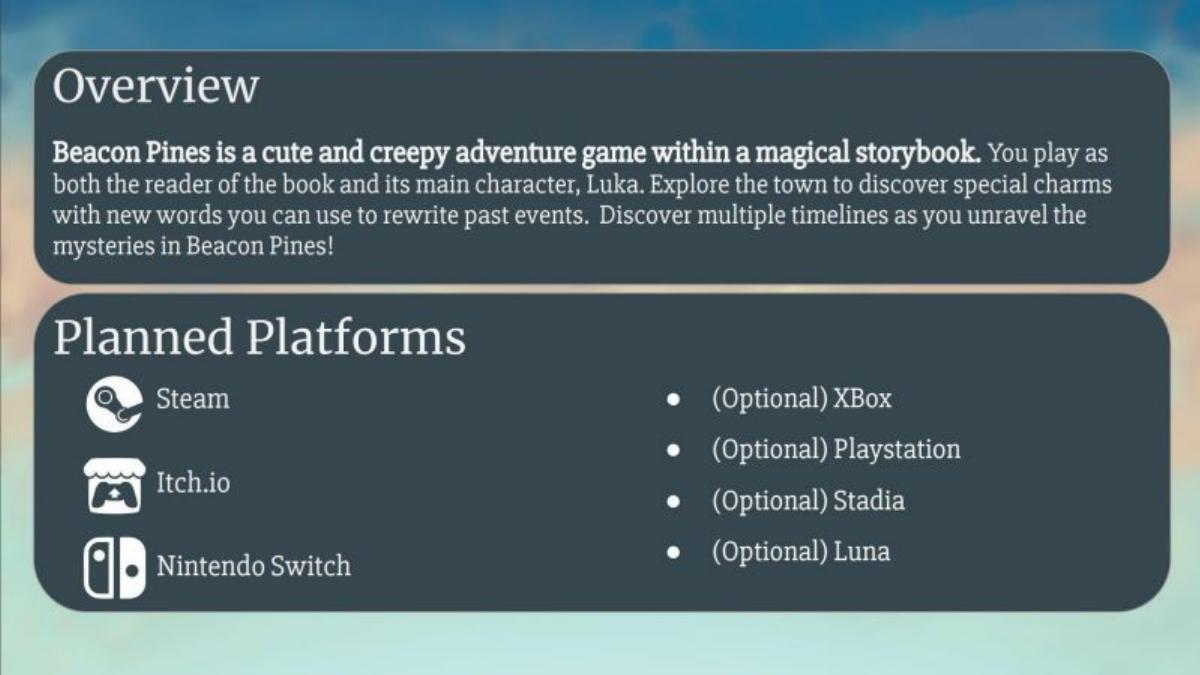
- The game is defined as a 'cute and creepy adventure game' set within a magical storybook on slide 2.
- Steam, Itch.io, and Nintendo Switch are listed as the primary planned platforms, with Xbox and PlayStation noted as optional on slide 2.
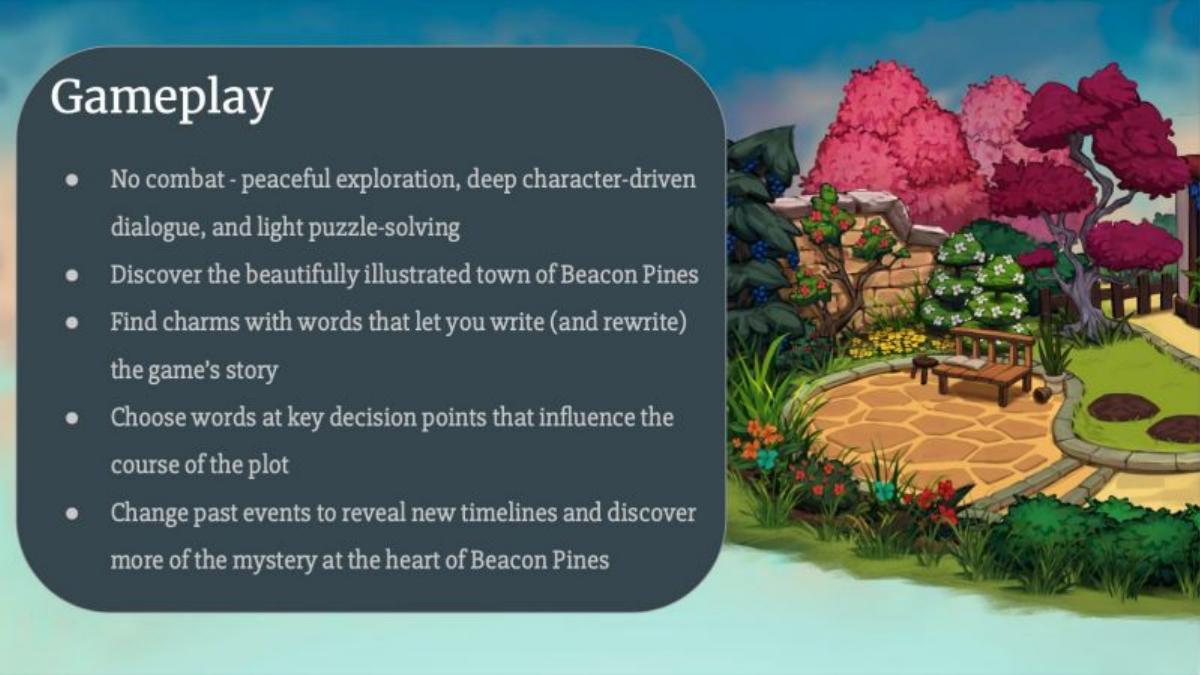
- The core gameplay loop involves finding 'charms' with words to rewrite past events and discover new timelines, as detailed on slide 4.
- The team has significant industry pedigree, noting that their previous game, Flipping Legend, was the #1 iOS game on MetaCritic for 2017 (slide 9).
- As of March 25, 2021, the project had secured $84,548 in Kickstarter funding from 2,772 backers (slide 10).
- Social proof includes 1,097 Twitter followers and 609 Discord users at the time of the pitch (slide 10).
- The 'ask' is framed as 'Additional Publisher Support' covering marketing, event support, and platform relations rather than a specific dollar amount (slide 11).
- The deck concludes with a placeholder for 'Wayward Strand Pitch Deck 2020' on slide 12, suggesting a template or shared publisher interest.
The Visual-First Strategy of Beacon Pines
In the world of indie game publishing, the 'vibe' of a project often speaks louder than a spreadsheet. The Beacon Pines pitch deck is a testament to this philosophy. Spanning 13 slides, the presentation relies heavily on the game's distinct 'cute and creepy' aesthetic to capture interest before moving into the hard data of community validation. For a B2C product in the gaming sector, showing the quality of the asset is the first hurdle; Beacon Pines clears this by using high-resolution character art and environment mockups as the backdrop for almost every slide.
Slide 1: The Hook
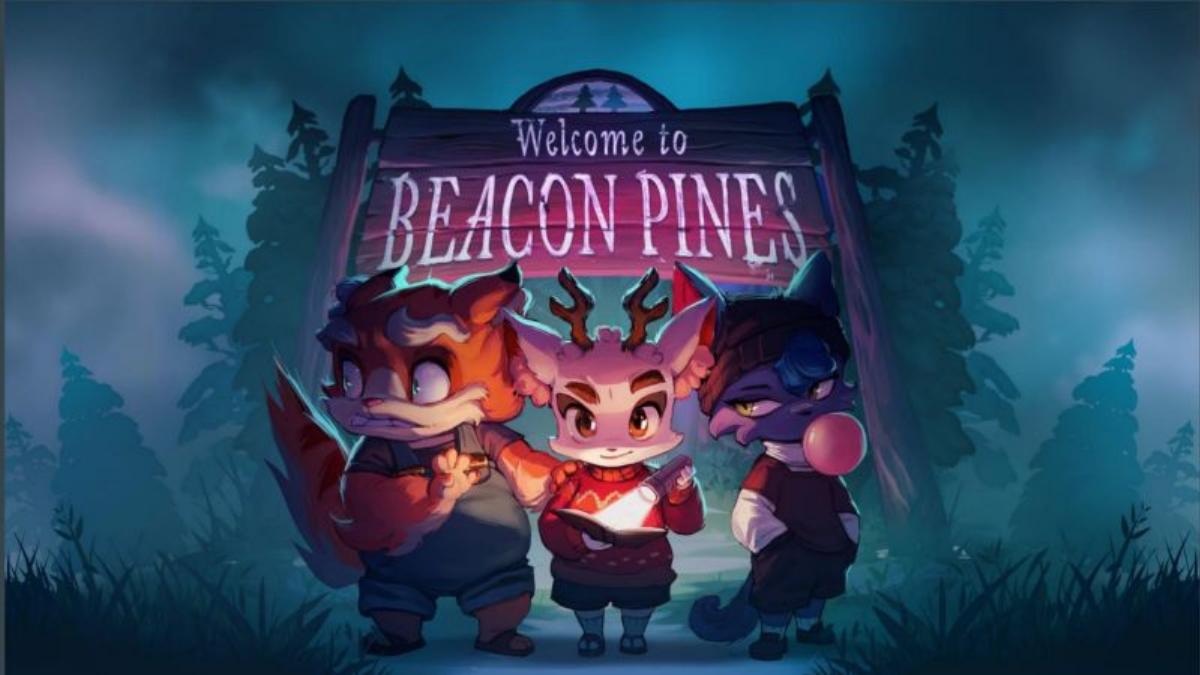
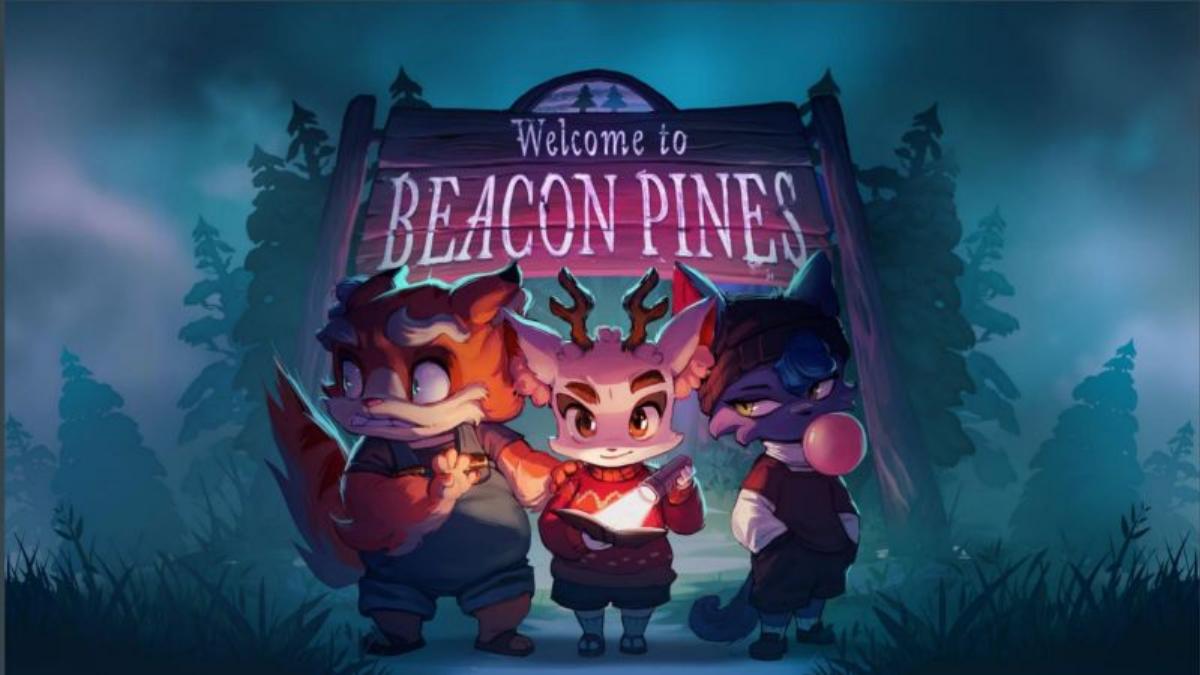
The title slide features the three main characters—Luka, Rolo, and Beck—standing under a 'Welcome to Beacon Pines' sign. There is no text other than the game's logo. This establishes the art style immediately: high-fidelity, hand-drawn illustrations that suggest a narrative-heavy experience. It sets a tone that is simultaneously inviting and slightly ominous, matching the 'creepy' description found later in the deck.
Slide 2: Overview and Platforms
Slide 2 provides the 'Elevator Pitch.' It defines Beacon Pines as a "cute and creepy adventure game within a magical storybook." This slide introduces the core mechanic: playing as both the reader and the character Luka to rewrite past events using 'special charms.' Below the summary, the 'Planned Platforms' section lists Steam, Itch.io, and Nintendo Switch as primary targets. Interestingly, it categorizes Xbox, Playstation, Stadia, and Luna as '(Optional),' signaling to a potential publisher where their resources (specifically porting) might be most needed.
Slide 3: The Trailer
This is a simple placeholder slide for a video link. In a live pitch or a digital send-ahead, the trailer is the most critical asset for a game. The slide features the Kickstarter and Steam logos, reinforcing that the game is already 'live' in the public consciousness.
Slide 4: Gameplay Mechanics
Slide 4 breaks down the player experience into five bullet points. It explicitly states there is "No combat," focusing instead on "peaceful exploration, deep character-driven dialogue, and light puzzle-solving." This clearly defines the genre and target audience (fans of cozy games or narrative adventures). The mention of 'charms' that influence the plot provides the 'hook' that separates this from a standard visual novel.
Slides 5, 6, and 7: Visual Proof
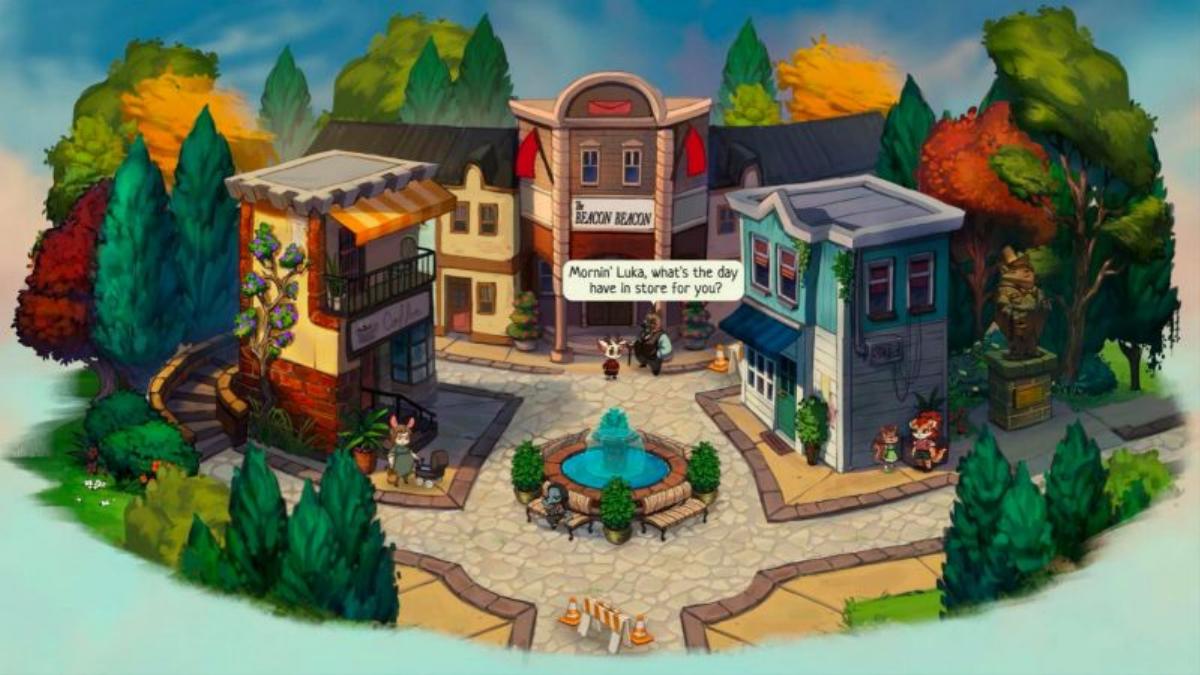
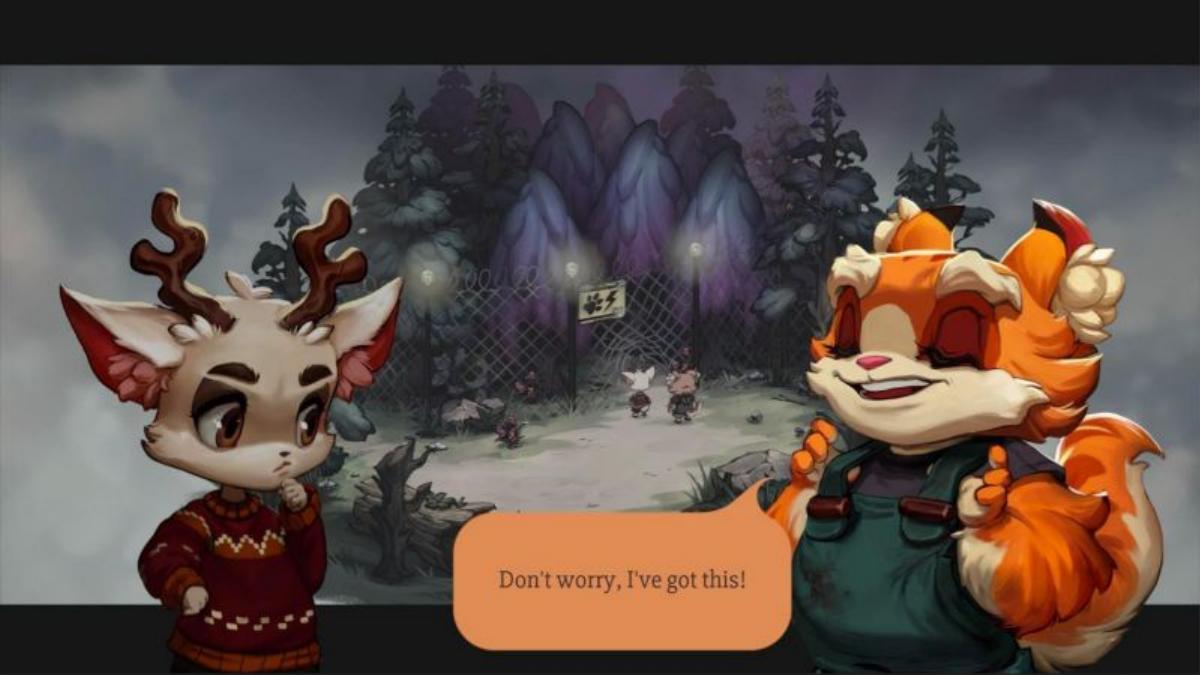
These three slides are dedicated to showing the game in action. Slide 5 shows the town square, demonstrating the isometric-style environment art. Slide 6 shows a dialogue sequence between Luka and Rolo, highlighting the character portraits and UI. Slide 7 is perhaps the most important of the trio, showing the 'storybook' interface where the player chooses a word (in this case, 'Ponder') to change the text on the page. This is a direct visual explanation of the unique mechanic mentioned on slide 2.
Slide 8: The Team - Hiding Spot Games
The 'Team' slide is a masterclass in establishing credibility. It doesn't just list names; it lists wins. It notes that their previous game, Flipping Legend , was the "#1 iOS game on MetaCritic for all of 2017" and won at the Google Indie Game Festival . It also mentions Ephemerid , which won a 2015 IGF award for excellence in audio . By highlighting Matt Meyer’s 11+ years of experience and the specific roles of the four-person team, the deck argues that this is a low-risk group of veterans, not a first-time hobbyist crew.
Slide 9: Marketing Stats (The Traction Slide)
Dated March 25, 2021, this slide provides the quantitative proof that an audience exists. The highlights include:
Kickstarter Funding: $84,548 · Backers: 2,772 · Discord: 609 users · Twitter: 1,097 followers
The Steam section lists a "Demo Launch - January 26 2021" but leaves the 'Total Wishlists' and 'Demo Downloads' fields blank. While seemingly an omission, in the context of a live pitch, these were likely intended to be filled with the most up-to-date numbers or discussed verbally. The Kickstarter success is the 'hero' metric here.
Slide 10: Additional Publisher Support
Instead of a slide titled 'The Ask' with a dollar amount, Beacon Pines uses 'Additional Publisher Support.' This is a tactical choice for indie devs. They aren't just asking for cash; they are asking for a partner. The list includes Marketing and Outreach, Event Support, Platform Relations, and Customer Support. It also reiterates Console Porting and Localization as optional areas where a publisher could add value. This tells the publisher exactly what the 'work' will be if they sign the project.
Slide 11: Links and Contact
A standard closing slide with links to the website, Kickstarter, Twitter, Trailer, and Discord. It keeps the lines of communication open and provides all necessary due diligence links in one place.
Slide 12: Wayward Strand Placeholder
The final slide in the provided sequence is a cover for 'Wayward Strand Pitch Deck 2020.' This appears to be a reference to another game published by Fellow Traveller (the eventual publisher of Beacon Pines). Its inclusion suggests this deck was part of a broader portfolio review or used a successful peer's deck as a structural template.
What Beacon Pines Does Well
The Beacon Pines deck succeeds because it understands the Indie Game Publisher's Dilemma : publishers want games that are unique enough to stand out but proven enough to sell. By lead-loading the deck with high-quality art, the founders prove the 'unique' part. By following up with Kickstarter data and MetaCritic rankings from previous titles, they prove the 'proven' part. The transition from the 'creepy' aesthetic to the 'hard' numbers of 2,772 backers creates a narrative of inevitable success that a publisher would want to join.
What is Missing from the Deck
While effective for a publisher pitch, this deck would struggle in a traditional VC environment. It lacks:
Financial Projections: There is no mention of expected unit sales, pricing strategy, or Revenue Share models. · Budget Breakdown: The deck doesn't specify how the $84k from Kickstarter was spent or how much additional capital is required to reach the finish line. · Competitor Analysis: There is no 'Market Map' or comparison to similar titles like 'Night in the Woods' or 'Oxenfree,' which would help an investor understand the market size. · Timeline: There is no alpha/beta/gold roadmap.
What Founders Should Copy
Founders in the creative or B2C space should emulate the 'Proof of Pedigree' approach used on slide 8. If you have won awards or achieved high rankings in the past, these should be the foundation of your 'Why Us' argument. Additionally, the 'Service-Based Ask' on slide 10 is a brilliant way to frame a request for funding. By listing specific needs like 'Platform Relations' and 'Localization,' you show that you understand the business of your industry, not just the craft of your product. Finally, the use of 'In-Engine' visuals to explain mechanics (Slide 7) is far more effective than a wall of text explaining how a game works.
Frequently asked questions
- How much money did Beacon Pines raise through this deck?
- The deck itself does not state a specific funding goal from publishers. However, slide 10 records that the project had already raised $84,548 through Kickstarter from 2,772 backers by March 25, 2021. The deck was likely used to secure a publishing deal with Fellow Traveller to cover the remaining development and distribution costs.
- What is the unique selling point of the game according to the deck?
- The primary differentiator is the 'word charm' mechanic. According to slides 2 and 4, players collect charms with words that allow them to rewrite the game's story at key decision points. This creates a branching narrative where players explore multiple timelines within a 'magical storybook' setting, blending traditional adventure gameplay with a meta-narrative structure.
- Who are the key people behind the project?
- The team, Hiding Spot Games, is led by Matt Meyer, a founder and developer with over 11 years of experience. The core team listed on slide 9 includes artist Ilse Harting, writer Brent Calhoun, and marketing lead Tim Garris. Their collective experience includes winning a Google Indie Game Festival award and an IGF award for excellence in audio.
- What platforms was the game targeting?
- Slide 2 identifies Steam, Itch.io, and Nintendo Switch as the confirmed platforms. It lists Xbox, PlayStation, Stadia, and Luna as 'Optional' platforms. This suggests the developers were seeking publisher assistance specifically for console porting and localization, which is explicitly mentioned as a need on slide 11.
- Is there a roadmap or timeline included in the deck?
- No, the deck lacks a specific development roadmap or release schedule. It focuses on the current state of the game (demo launched January 26, 2021) and the traction gained via Kickstarter. The absence of a timeline suggests this deck was intended for publishers who would help define the final production schedule.