Bauz Razors is a pre-production hardware startup pitching an adjustable razor blade designed to prevent hair and skin buildup. The 12-slide deck identifies a significant environmental and economic problem, citing EPA estimates of 2 billion razor blades discarded annually. The company seeks $1,000,000 in seed funding to move from its current prototype stage into manufacturing and inventory purchasing. While the deck clearly defines the mechanical solution and the founder's background in business development, it lacks a formal team slide, detailed unit economics, and a specific timeline for mar…
Key takeaways
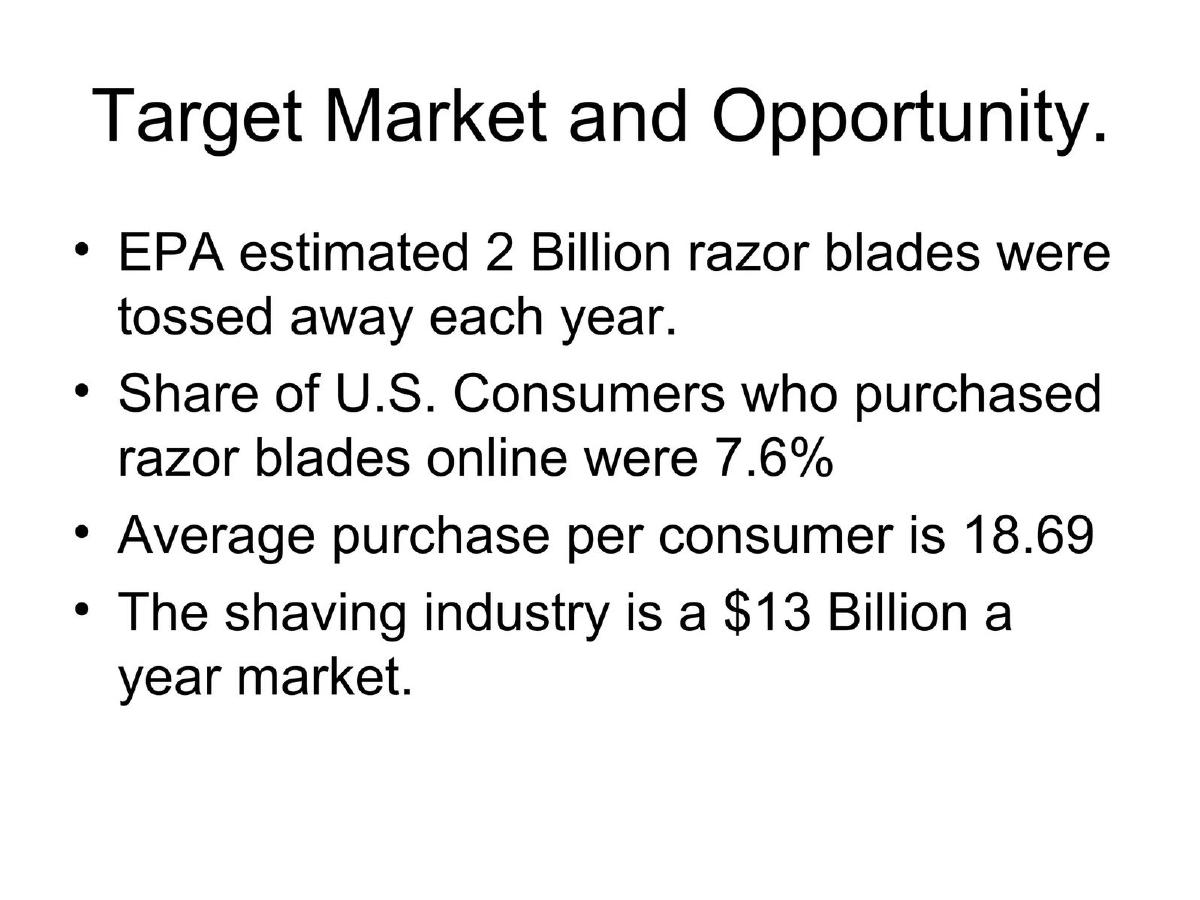
- The company identifies a $13 billion annual shaving industry market on slide 3.
- The core product is an adjustable razor blade that allows for easier rinsing and cleaning, as described on slide 4.
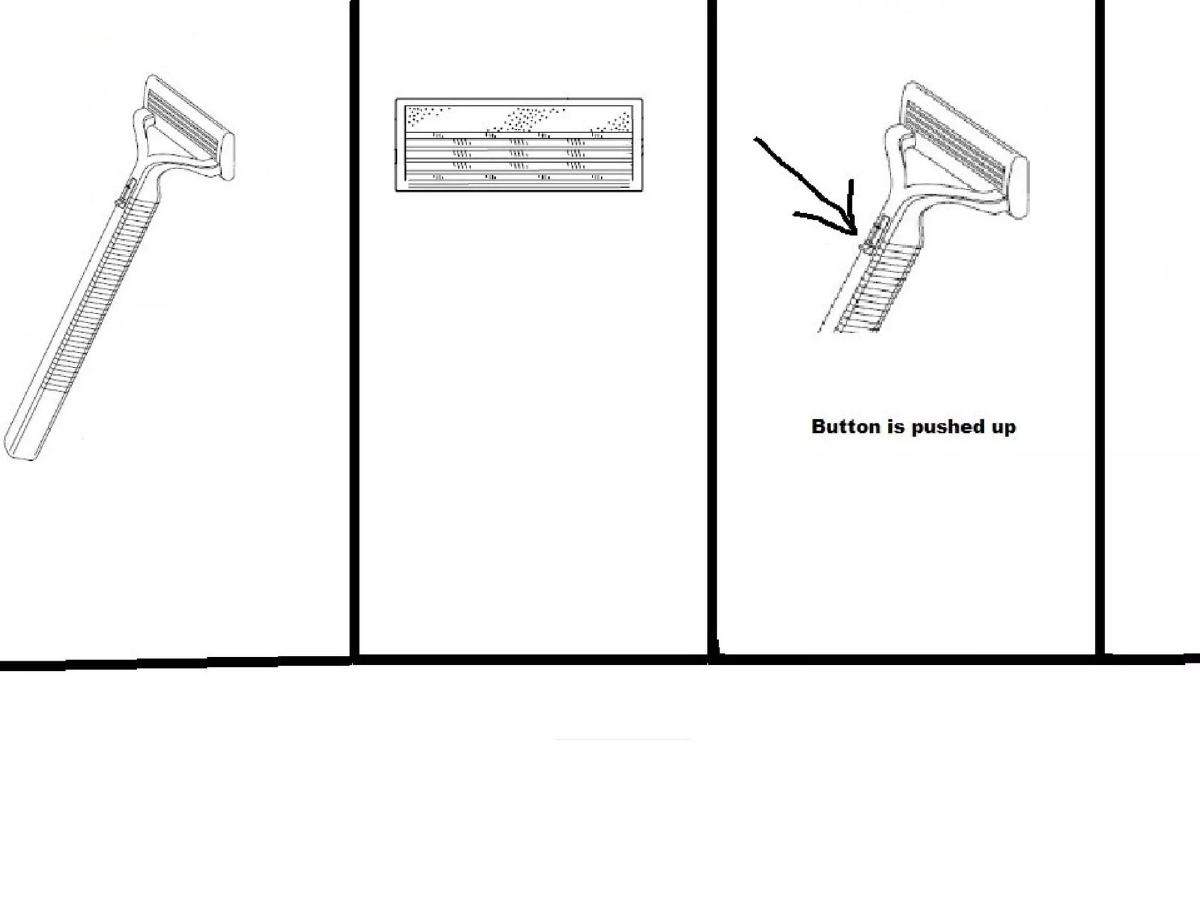
- Slide 6 provides a visual diagram showing a button mechanism used to adjust the blade position.
- The founder has personally invested approximately $23,000 into legal fees, engineering, and prototyping, according to slide 9.
- The revenue model consists of two channels: direct-to-consumer via a website and wholesale to retailers, per slide 5.
- The investment ask is $1,000,000 to fund product development, packaging, and the first production run, as stated on slide 12.
- Market validation is based on the $1 billion sale of Dollar Shave Club and the $750 million valuation of Harry’s, cited on slide 7.
- The deck omits a dedicated team slide, instead providing a brief founder bio within the 'Sales Strategy' section on slide 8.
Bauz Razors Pitch Deck Analysis
The Bauz Razors pitch deck is a 12-slide presentation focused on a mechanical innovation in the personal grooming space. The deck follows a traditional problem-solution format, though it leans heavily on the success of previous industry disruptors to justify its potential. It is clearly a seed-stage pitch, as the company has not yet entered mass production.
Slide 1: Title Slide
The deck opens with a minimalist title slide featuring the company name, Bauz Razors , and a clear one-sentence value proposition: "Adjustable razor blade that unclogs hair." This immediately identifies the product category and the specific pain point it addresses.
Slide 2: The Problem
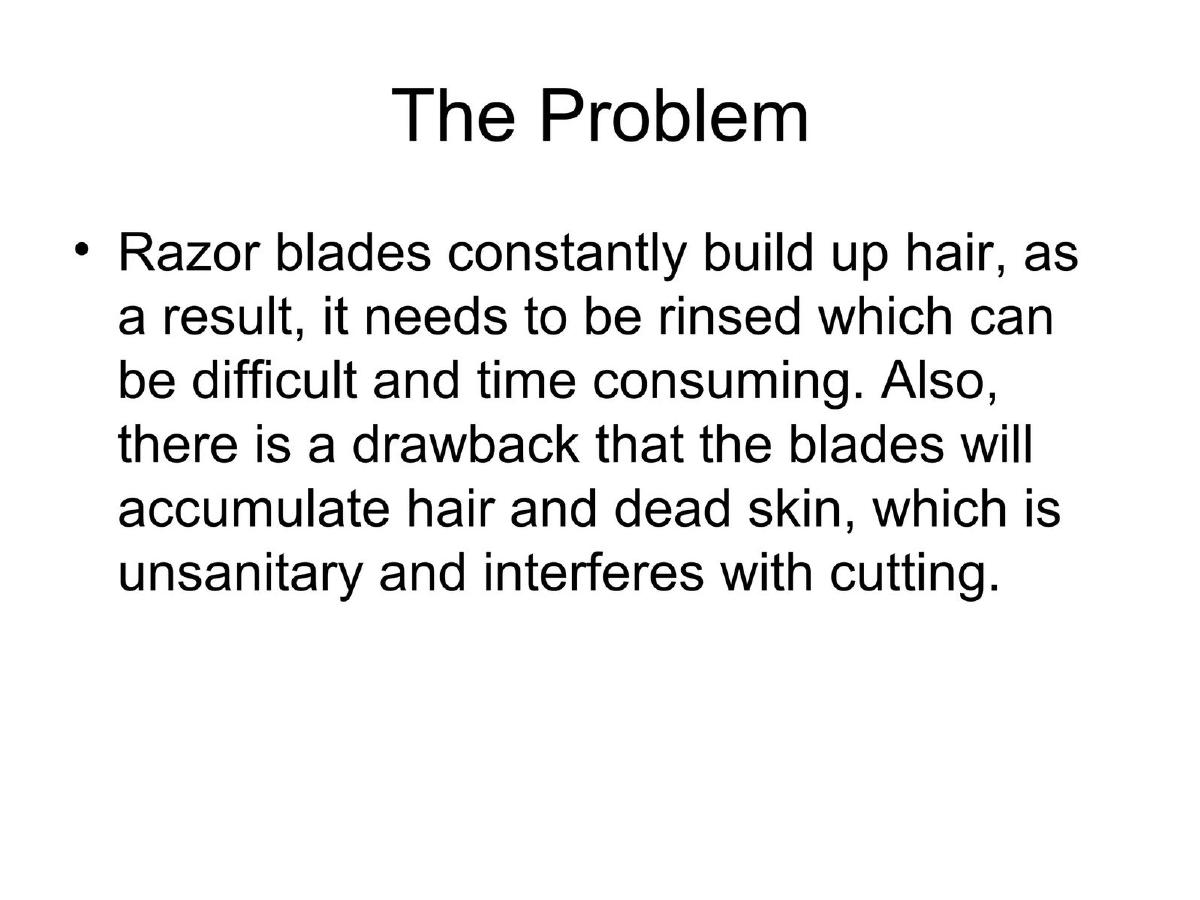
The problem slide focuses on the hygiene and efficiency issues of standard razors. It notes that hair and dead skin buildup is "unsanitary" and "interferes with cutting." The slide argues that current rinsing methods are "difficult and time consuming," setting the stage for a mechanical solution that simplifies maintenance.
Slide 3: Target Market and Opportunity
This slide provides macro-level data to justify the venture. It cites an EPA estimate that 2 billion razor blades are discarded annually, suggesting an environmental angle. It also lists the shaving industry as a $13 billion a year market . Interestingly, it notes that only 7.6% of consumers purchased blades online, which may be dated data depending on when the deck was produced, but it points toward a large remaining brick-and-mortar opportunity. The average purchase per consumer is cited as 18.69 , though the slide does not specify if this is a dollar amount or a unit count.
Slide 4: The Solution
The solution is described as a blade that allows water to flow through easily for rinsing. The founder claims to have "invented a function" that allows for temporary adjustment of the blade position. The slide promises that this will eliminate the need for "tapping the blade in the sink" and will ultimately save the consumer money by preserving the "sharp integrity of the blade."
Slide 5: Revenue Model
The revenue model is straightforward and bifurcated into two streams: Direct to Consumer (DTC) via a website and Wholesale to retailers. There is no mention of a subscription model, which is notable given the success of competitors like Dollar Shave Club in that specific area.
Slide 6: Product Visuals
This slide contains a three-panel black-and-white line drawing. It shows a standard-looking razor, a close-up of the blade head, and a final panel with an arrow pointing to a toggle on the handle. The text "Button is pushed up" indicates how the user interacts with the device to facilitate cleaning. This is the only technical diagram in the deck.
Slide 7: Traction and Validation
Rather than providing internal metrics (which the company likely lacks at this stage), this slide uses market proxies. It mentions that Harry’s is valued at $750 Million and that Dollar Shave Club sold to Unilever for $1 Billion . This is intended to prove that the category is capable of producing massive exits, though it does not provide evidence of Bauz Razors' own market fit.
Slide 8: Sales Strategy
This slide serves as a pseudo-team slide. The founder describes their background in Business Development , specifically in securing accounts with retail stores, hotels, and grocery stores. The narrative focuses on the founder's ability to handle distribution and retail placement "all by myself."
Slide 9: Financials
This slide details the founder's personal skin in the game. It states that $23,000 has been spent to date on lawyer fees, freelance engineers, animators, and prototypes. This is a transparency slide intended to show that the project has moved past the mere "idea" phase.
Slide 10: Video Demonstration
This slide features a placeholder for a video demonstration. The still image shows a 3D render of a razor. In a live pitch, this would be the moment the founder demonstrates the mechanical movement of the blades.
Slide 11: Competition
The competition slide lists major incumbents: Gillette, Schick, Dollar Shave Club, Paceshaver, and Harry’s . The founder asserts that "nothing like this exists in the market," positioning the adjustable cleaning mechanism as a unique competitive advantage that makes the product more efficient and eco-friendly.
Slide 12: Investment
The deck concludes with the ask. The founder is seeking $1,000,000 in seed money. The funds are earmarked for hiring another engineer, creating a "more functional design," packaging, and the "first run on production." A curious typo appears at the bottom: "Marketing.0," which likely intended to list marketing as a fourth category for fund allocation.
What Bauz Razors Does Well
The deck is highly focused on a single, relatable problem. By concentrating on the "clogging" issue, the founder avoids the trap of trying to solve every problem in the shaving industry at once. The inclusion of the founder's personal financial contribution ($23,000) provides a level of credibility regarding their commitment to the project. Furthermore, the clear distinction between DTC and wholesale revenue streams shows an understanding of the diverse ways hardware products must reach consumers.
What is Missing from the Deck
The most significant omission is a Team Slide . While the founder mentions their background in business development, there is no mention of a technical co-founder, despite the product being a mechanical hardware invention. Relying on "freelance engineers" for a $1 million seed round is a significant risk for investors. Additionally, the deck lacks Unit Economics . There is no mention of the manufacturing cost per unit, the intended retail price, or the projected margins. Finally, the Traction slide only lists the successes of other companies; it provides no data on patent status, pre-orders, or results from prototype testing.
What a Founder Should Copy
Founders should emulate the clear problem-solution link found in slides 2 and 4. The deck doesn't use buzzwords; it describes a physical annoyance (clogged hair) and a physical solution (a button that moves the blades). The use of market validation through exits (slide 7) is also a standard and effective way to show the "size of the prize," provided it is backed up by a unique product. Lastly, the specific breakdown of the ask (slide 12) is a good practice, as it tells investors exactly what their capital will buy: engineering hours and physical inventory.
Final Thoughts on the Bauz Razors Deck
Bauz Razors is a classic "inventor's pitch." It is built around a specific mechanical improvement to a common household object. While the market opportunity is undeniably large, the deck's reliance on a single founder and the lack of concrete financial projections make it a high-risk proposition. To move to the next level, the founder would need to supplement this deck with a detailed manufacturing plan and evidence of intellectual property protection for the "adjustable" function mentioned on slide 4.
Frequently asked questions
- What is the primary problem Bauz Razors aims to solve?
- According to slide 2, the primary problem is that razor blades constantly build up hair and dead skin. This accumulation is described as unsanitary, time-consuming to rinse, and harmful to the blade's cutting effectiveness. The deck also notes the environmental impact on slide 3, stating that 2 billion blades are tossed away each year.
- How does the Bauz Razors technology work?
- The technology involves a function that allows the user to temporarily adjust the position of the blade. Slide 4 explains that this adjustment allows water to flow through and rinse the blade without compromising shave effectiveness. Slide 6 illustrates this with a diagram showing a 'button' on the razor handle that is pushed up to trigger the cleaning mode.
- What is the company's current stage of development?
- Bauz Razors is in the development and prototyping stage. Slide 9 confirms that $23,000 has been spent on prototypes and freelance engineers. Slide 12 further clarifies that the requested $1,000,000 is 'seed money' intended to create a more functional design and fund the first production run of inventory.
- What is the founder's professional background?
- The founder's background is in Business Development. Slide 8 states they have experience helping startups and businesses secure accounts with retail stores, hotels, restaurants, and grocery stores. The founder claims to understand the 'ins and outs of distribution' and how to get products onto store shelves.
- Who are the main competitors identified in the deck?
- Slide 11 lists five primary competitors: Gillette, Schick, Dollar Shave Club, Paceshaver, and Harry’s. The deck claims that 'nothing like this exists in the market' and that there are currently no direct alternatives to their adjustable, unclogging blade design.