Baramin’s 2015 deck is a masterclass in establishing industrial credibility through physical asset transparency. By detailing their ownership of the entire value chain—from the 'La Huiche' and 'Grecia' mines to milling plants in Linares and Nanchital—they position themselves not just as a supplier, but as a strategic infrastructure partner for the oil and gas industry. The deck leans heavily on logistical proximity to the USA (83% of exports) and the Caribbean, using precise mileage data to prove efficiency. While it lacks traditional startup metrics like CAC or LTV, it excels in demonstratin…
Key takeaways
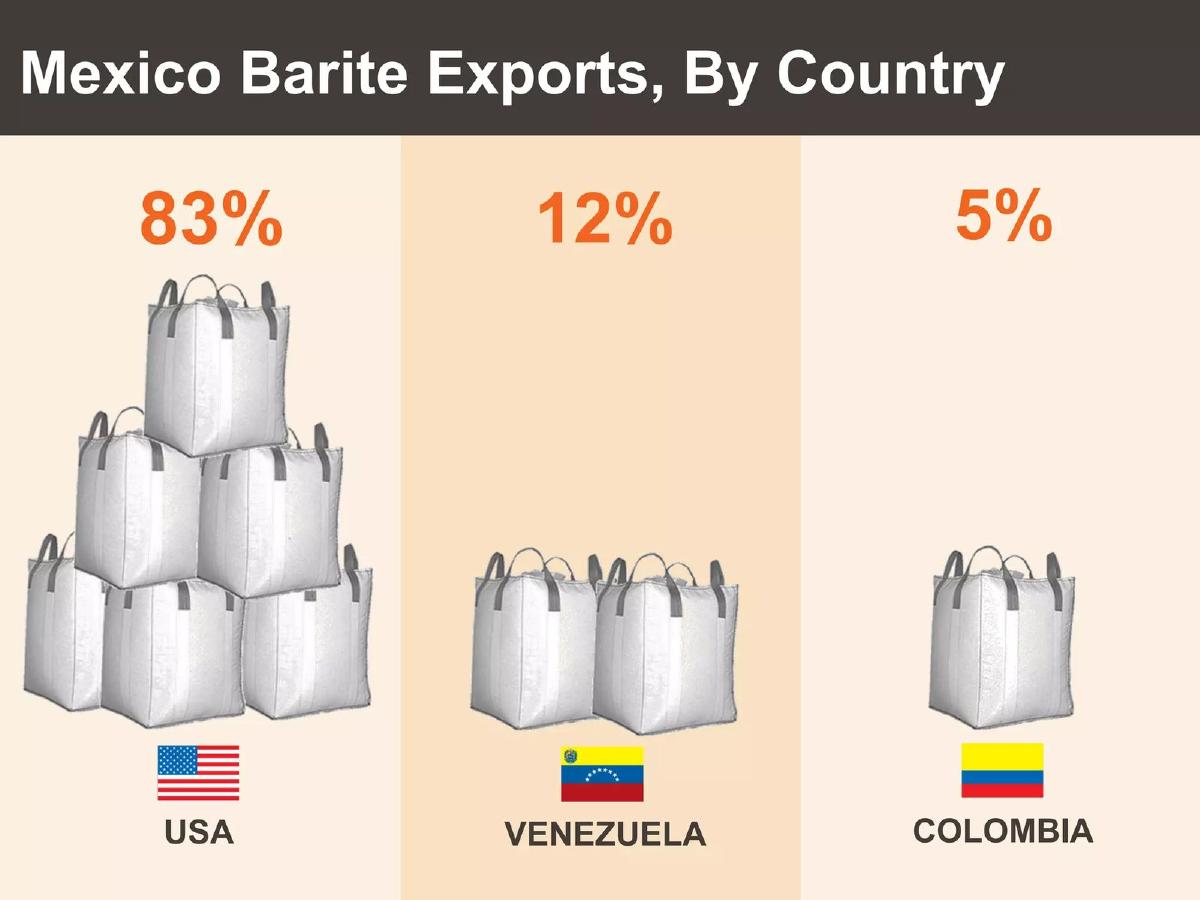
- Mexico serves as the primary hub, with 83% of barite exports directed to the USA as of slide 2.
- The company emphasizes vertical integration by owning its own mines in Northeast Mexico, specifically the La Huiche and Grecia sites (slides 8-10).
- Logistical efficiency is a core value proposition, citing a 280-mile distance from the La Huiche mine to the closest export ports (slide 9).
- Baramin demonstrates significant scale with a total monthly milling capacity of 36,000 metric tons across two plants (slides 11-12).
- The company highlights long-term stability, claiming over 60 years of experience in extracting and distributing barite (slide 6).
- Technical compliance is established by meeting API 13A specifications and producing barite with specific gravities of 4.10 and 4.20 (slides 5 and 13).
- The deck identifies Altamira Port as a strategic asset with 17 operational berths and 11 shipping lines for global distribution (slide 15).
- There is a total absence of financial 'ask' details, revenue projections, or a specific management team slide in the provided sequence.
Introduction and Market Context
The Baramin pitch deck, presented at the Oilfield Minerals & Markets Forum in Houston in 2015, is a focused industrial briefing. Unlike software-as-a-service (SaaS) decks that focus on user growth, this deck focuses on geopolitics, logistics, and physical assets . The title slide establishes the company as a representative of Mexico’s reliability in the barite sector, immediately framing the company within a larger macroeconomic context.
Slide 2-3: Market Distribution and Geography
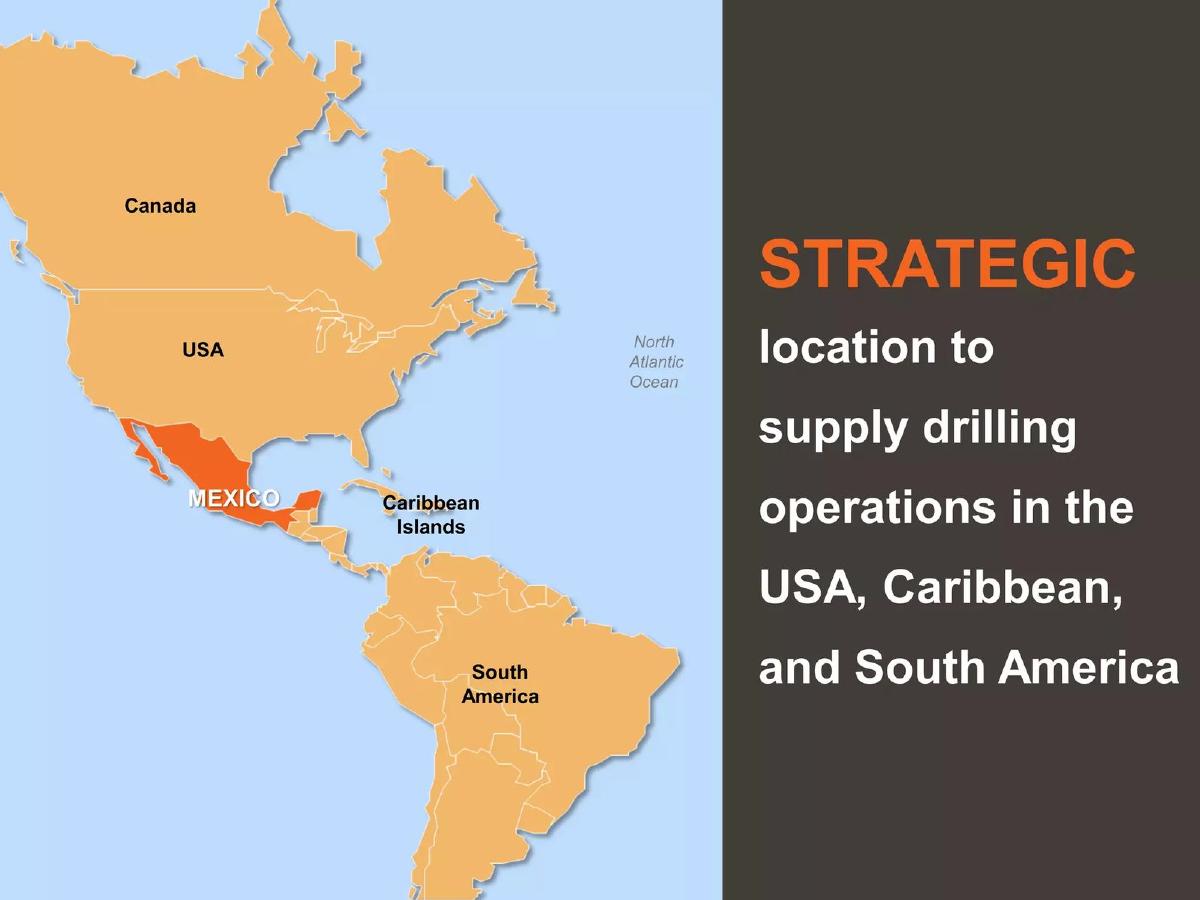
Slide 2 uses a simple visual of 'jumbo bags' to illustrate export destinations. The dominance of the USA market (83%) is the most critical data point here. It tells an investor that Baramin is essentially a satellite supplier to the massive US energy sector. Slide 3 reinforces this with a map, highlighting Mexico’s 'strategic location' to serve the USA, Caribbean, and South America. The orange-shaded regions on the map clearly define their target footprint, emphasizing geographical proximity as a competitive moat against overseas suppliers (like those in China or India).
Slide 4-5: Service Flexibility and Quality Standards
Slide 4 addresses the supply chain 'pain point' of inventory management. By offering daily, weekly, or monthly deliveries in smaller quantities, Baramin positions itself as a flexible partner that can help customers reduce warehousing costs. Slide 5 introduces the technical 'must-haves.' In the oilfield mineral business, API 13A specification is the industry standard set by the American Petroleum Institute. By highlighting this, Baramin moves from being a 'mining company' to a 'certified industrial supplier.'
Operational Infrastructure
Slide 6-7: Institutional History and Footprint
Slide 6 claims over 60 years of experience. For a commodity business, longevity equals reliability. The visual of large silos branded with the Baramin logo provides 'social proof' of their industrial scale. Slide 7 provides a high-level map of their operations across Mexico, showing a distributed network of mines and plants. This suggests a level of redundancy; if one facility faces issues, others can potentially pick up the slack.
Slide 8-10: The Mines (La Huiche and Grecia)
Ownership of the source material is a major differentiator. Slides 8, 9, and 10 focus on the 'La Huiche' and 'Grecia' mines. The deck provides specific mileage: La Huiche is 124 miles from Monterrey and 280 miles to the port. Grecia is slightly further at 186 miles from Monterrey. Why does this matter? In the mineral business, logistics is often the highest cost component . Providing exact distances allows a sophisticated investor to calculate freight costs and verify the company's margin potential.
Slide 11-12: Milling Capacity
The deck moves from extraction to processing. The Linares Milling Plant (Slide 11) and Nanchital Milling Plant (Slide 12) represent the value-add stage of their business. The metrics are impressive: a combined 36,000 MT of monthly milling capacity and 300,000 MT of stockyard capacity. The mention of '17 hectares available for growth' at the Nanchital plant is a subtle 'future-proofing' statement, indicating that they can scale operations without needing to acquire new land.
Quality Control and Export Logistics
Slide 13-15: Technical Precision and Global Reach
Slide 13 shows a laboratory setting, reinforcing the 'API 13A' claim from earlier. Specifying gravities of 4.10 and 4.20 is critical because different drilling environments require different mineral densities. Slides 14 and 15 focus on the 'exit strategy' for the product. The Tampico and Altamira ports are presented as world-class facilities. The details on Altamira (17 berths, 40-foot deep channel) prove that Baramin can utilize large-scale shipping vessels, which is necessary for maintaining low per-unit shipping costs.
Slide 16: The Human Element
The final slide shows a team of six workers in safety gear in front of a mining headframe. While it lacks a 'Management Team' slide with CVs, this image humanizes the industrial operation and signals a culture of safety and teamwork.
What Works in This Deck
Vertical Integration: The deck successfully tracks the product from the ground (mines) to the processor (mills) to the customer (ports). This reduces third-party dependency and usually implies better margins. · Logistical Transparency: By providing exact mileage to ports and cities, the founders demonstrate a deep understanding of their operational overhead. · Market Alignment: Focusing on the 83% export rate to the USA makes the investment case easy to understand for North American investors looking for energy-adjacent opportunities. · Asset Heavy: The use of real photography of silos, plants, and labs makes the business feel 'real' and substantial, which is vital for industrial fundraising.
What is Missing
The Financial Ask: There is no slide indicating how much money is being raised or what the valuation is. · Revenue and Margins: While capacity is mentioned, actual sales volume and profitability are absent. We don't know if these plants are running at 10% or 90% capacity. · Competitive Analysis: The deck assumes a vacuum. It does not mention other Mexican barite producers or how Baramin competes with global giants in the space. · Management Pedigree: There are no bios for the leadership team. In a 60-year-old company, understanding the current leadership's vision is crucial. · Unit Economics: The cost to extract versus the selling price per ton is the most important metric in mining, and it is completely missing here.
Founder Takeaways
If you are building a 'hard' business (manufacturing, mining, logistics), follow Baramin's lead in visualizing the supply chain . Use maps and mileage to prove your location is a strategic advantage, not just a coordinate. However, ensure you supplement these physical facts with the 'soft' side of the business: who is leading the company and what the financial trajectory looks like. A deck that shows you have the capacity to produce 36,000 MT is good, but a deck that shows you have orders for 36,000 MT is what closes the round.
Frequently asked questions
- What is Baramin's primary product and market?
- Baramin produces barite, a mineral primarily used as a weighting agent in drilling fluids for the oil and gas industry. Their primary market is the United States, which receives 83% of their exports, followed by Venezuela at 12% and Colombia at 5%. They position themselves as a reliable regional supplier for the Americas.
- How does Baramin prove its operational capacity?
- The deck provides specific industrial metrics: the Linares plant has a 16,000 MT monthly capacity, and the Nanchital plant adds 20,000 MT. Furthermore, they maintain a combined stockyard ore capacity of 300,000 MT. This data suggests they can handle large-scale, consistent demand from major oilfield service companies.
- What are the key logistical advantages mentioned?
- Baramin focuses on proximity and infrastructure. They highlight the short distances between their mines, milling plants, and the ports of Tampico and Altamira. Specifically, they note that Altamira port has a 40-foot deep channel and regular service from 11 shipping lines, facilitating bulk and jumbo bag container shipments.
- Does the deck include a team or leadership slide?
- The provided slides do not include a formal 'Team' slide listing executives or their backgrounds. However, slide 16 features a photograph of workers at a facility, and slide 6 mentions 60 years of company experience, which serves as a proxy for institutional knowledge rather than individual founder pedigree.
- What financial information is missing from this pitch?
- The deck is entirely devoid of financial performance data. There are no mentions of annual revenue, EBITDA, cost per ton, or profit margins. Additionally, the 'Ask'—how much capital they are seeking and what the use of funds will be—is not present in this 16-slide selection.