Tagove’s 10-slide deck from 2016 is an exercise in extreme minimalism. Rather than explaining the 'how' of their live video and co-browsing technology in depth, the deck focuses almost entirely on 'who' and 'how much.' By leading with a jump from $7k to $20k MRR (Slide 3) and showcasing a $400k booked revenue figure (Slide 4), the founders establish immediate financial credibility. The inclusion of heavy-hitting financial logos like Citibank and Standard Bank (Slide 5) serves as a proxy for security and scalability. While the deck lacks traditional sections like market size, competition, or a…
Key takeaways
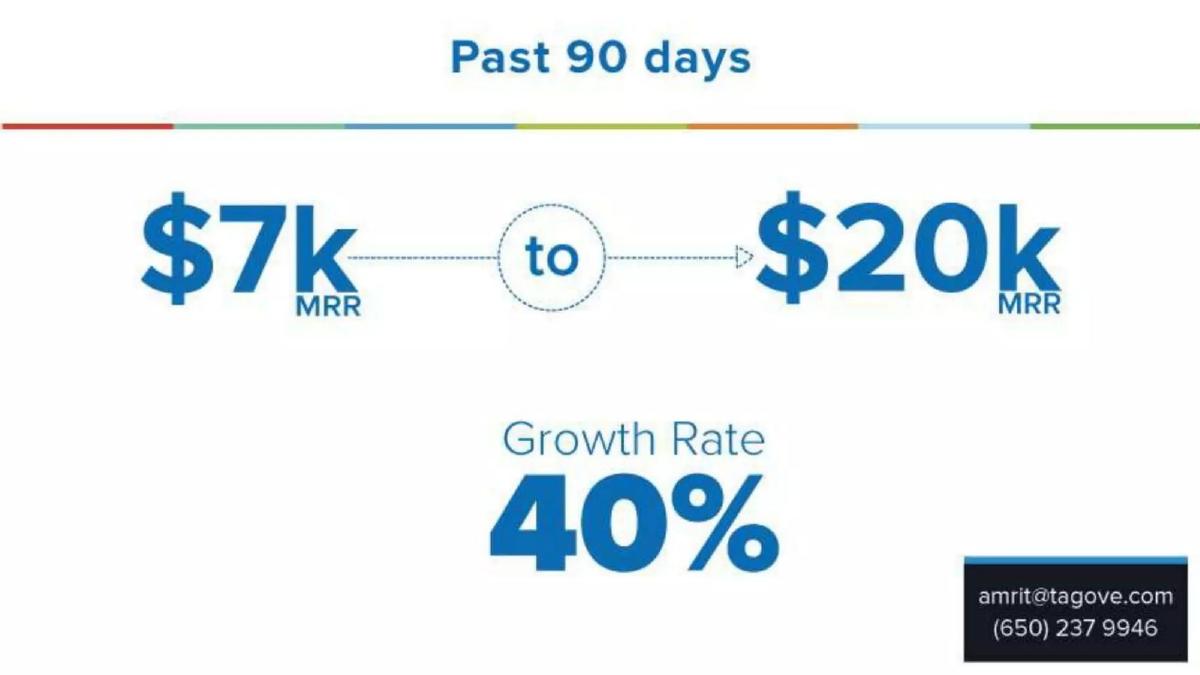
- The deck reports a significant revenue jump from $7k MRR to $20k MRR over a 90-day period (Slide 3).
- A 40% growth rate is highlighted as a primary traction metric (Slide 3).
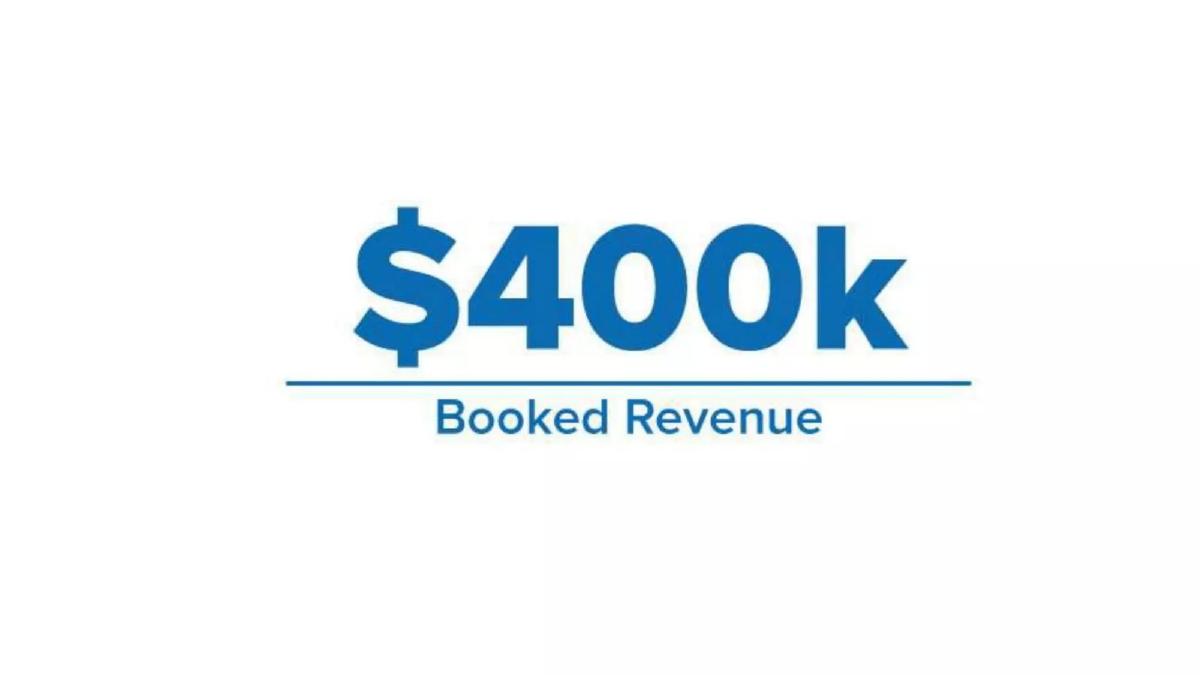
- The company claims $400k in booked revenue, indicating a strong pipeline or contract value beyond current MRR (Slide 4).
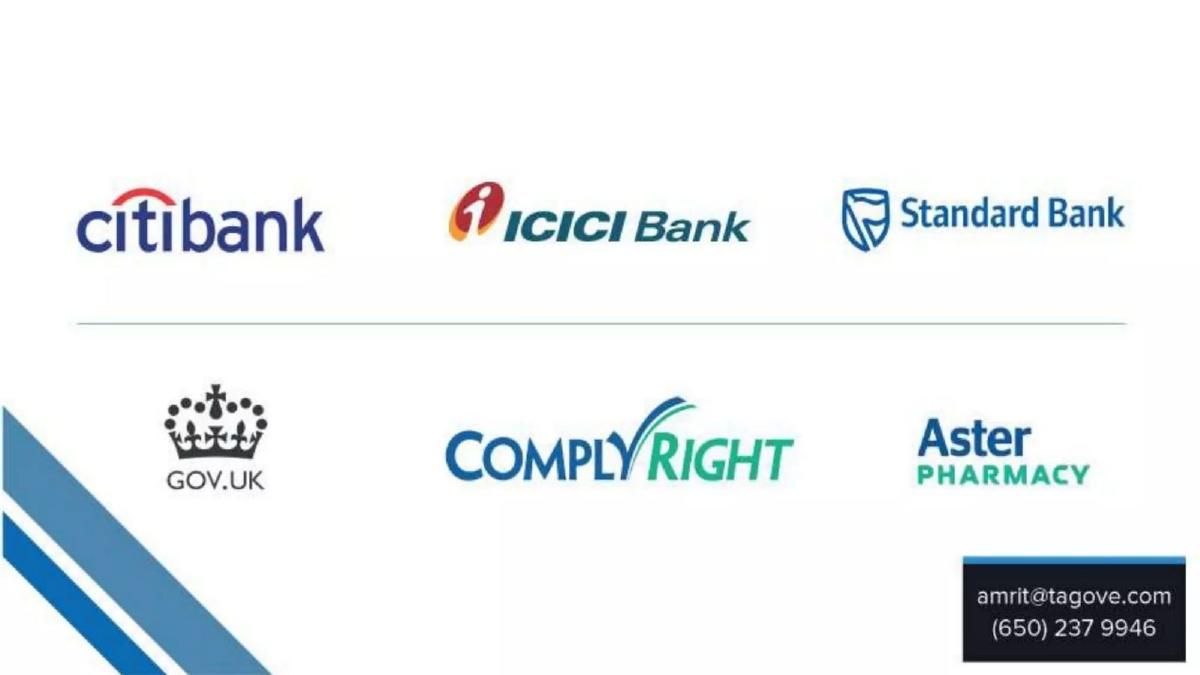
- Enterprise validation is a core theme, featuring logos from Citibank, ICICI Bank, Standard Bank, and GOV.UK (Slide 5).
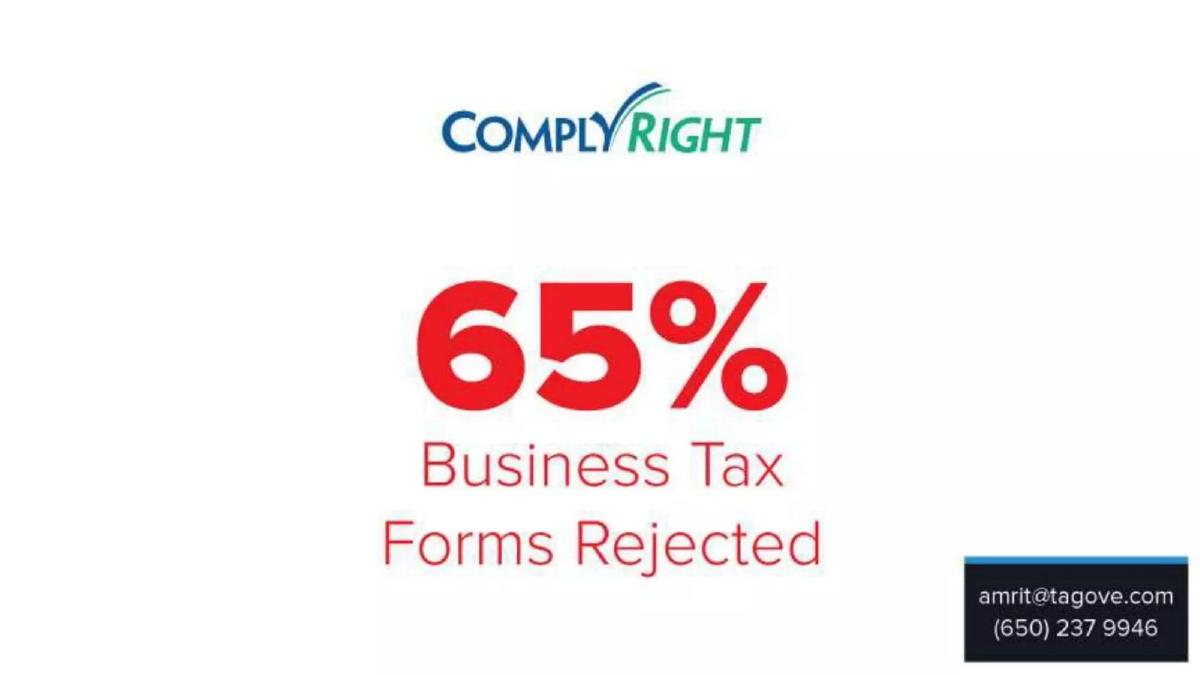
- A specific case study for 'ComplyRight' mentions a 65% business tax form rejection rate as the problem being solved (Slide 6).
- The solution is visualized through a split-screen interface showing a 'Visitor' and 'Agent' view with video chat capabilities (Slide 7).
- The deck claims a '+50% Success Rate' as of January 2017 (Slide 8).
- The team slide is unconventional, featuring a single photo of two individuals labeled simply as '$ales' and 'Engineer' (Slide 9).
Introduction: The Power of Brevity in Enterprise SaaS
The Tagove pitch deck from 2016 is a fascinating artifact of the 'traction-first' school of fundraising. At just 10 slides, it bypasses the traditional storytelling arc—problem, solution, market, competition—in favor of a relentless focus on growth metrics and enterprise logos. According to catalogue facts, Tagove raised $51,100,000 in 2016, a staggering amount for a deck that provides so little technical or strategic detail. This suggests that the deck served as a high-level visual aid for a series of conversations where the underlying technology and market dynamics were already understood by the investors.
The Hook: Identity and Connection
Slide 1: Title Slide The deck opens with the Tagove logo and the tagline: "Connecting you to your online customers." It is clean, minimalist, and professional. The inclusion of the URL at the bottom establishes the company as a web-first entity.
Slide 2: The Relationship Model This slide uses simple iconography to show a 'Team' on the left and a 'Customer' on the right, connected by the Tagove chat bubble. It is a conceptual slide that defines the company's purpose: bridging the gap between a business and its users. Notably, the contact information for 'Amrit' appears here, a detail that persists on almost every subsequent slide, ensuring the founder is always reachable.
The Meat: Traction and Revenue
Slide 3: The 90-Day Sprint This is arguably the most important slide in the deck. It shows a clear trajectory: $7k MRR growing to $20k MRR in just 90 days. Below this, the "Growth Rate 40%" is displayed in large, bold text. For an investor, this slide answers the most critical question: Does this product have momentum? The tripling of monthly recurring revenue in a single quarter is a powerful signal of product-market fit.
Slide 4: The Pipeline Following the MRR slide, Tagove presents a single figure: "$400k Booked Revenue." This is a strategic inclusion. While $20k MRR is impressive growth, it only represents $240k in annual run rate. By showing $400k in booked revenue, the founders are signaling that they have signed contracts waiting to be implemented or recognized, suggesting the future is even brighter than the current MRR indicates.
Validation: The Enterprise Proof Point
Slide 5: Logo Wall For a startup in the 'Other' or 'SaaS' category, the quality of customers is often more important than the quantity. Tagove displays logos for Citibank, ICICI Bank, Standard Bank, GOV.UK, ComplyRight, and Aster Pharmacy. The presence of three major banks and a national government (UK) suggests that the platform has passed rigorous security and compliance audits—a major hurdle for any live chat or co-browsing software.
Slide 6: The Specific Problem Instead of a broad 'Problem' slide, Tagove uses a specific case study. Using the ComplyRight logo, they state: "65% Business Tax Forms Rejected." This slide contextualizes the product. It isn't just for 'chatting'; it's for solving complex, high-friction administrative problems that cost businesses money and time.
The Product: Visualizing the Solution
Slide 7: Product Interface This slide provides a split-screen view of the software in action. On the left is the 'Visitor' view, showing a clean chat interface on a website. On the right is the 'Agent' view, showing a dashboard with video feed, chat history, and tools. This is the only slide that explains what the product actually looks like, emphasizing the 'one-click' and 'no download' nature mentioned in the company's self-description.
Slide 8: Success Metrics Tagove highlights a "+50% Success Rate" as of January 2017. While 'success rate' is a somewhat vague term without a defined denominator, in the context of the previous tax form slide, it likely refers to the completion rate of forms or the resolution of support tickets. It reinforces the idea that the product delivers a tangible ROI.
The Team and The Close
Slide 9: The Lean Team The team slide is highly unconventional. It features a photo of two men sitting on a leather sofa. They are labeled simply as "$ales" and "Engineer." There are no names, no LinkedIn profiles, and no mention of past exits or prestigious degrees. This approach frames the company as a lean, execution-focused machine. It tells the investor: "We build, and we sell."
Slide 10: The Summary The final slide repeats the core metrics: $20k MRR, 40% Growth, and $400k Booked Revenue. It leaves the investor with the financial highlights and the contact information, serving as a summary of the 'why now' for the investment.
What Works in the Tagove Deck
The primary strength of this deck is its extreme focus on traction . By repeating the $20k MRR and 40% growth figures, the founders ensure that these numbers are the primary takeaway. The social proof provided by the banking and government logos is also exceptionally strong; it immediately mitigates concerns about the product's enterprise readiness. Finally, the specific problem slide (Slide 6) is much more effective than a generic 'customer support is hard' slide because it points to a quantifiable pain point (65% rejection rate) that the product helps solve.
What is Missing from the Tagove Deck
This deck is a 'teaser' deck, not a comprehensive one. It is missing several elements that are usually mandatory for a $51M later-stage round:
Market Size: There is no mention of the Total Addressable Market (TAM). Investors need to know if this can become a billion-dollar business. · Competition: The live chat and co-browsing space was crowded in 2016 (Intercom, LiveChat, etc.). Tagove does not explain how it wins against these incumbents. · Business Model: There is no explanation of pricing tiers or unit economics (CAC/LTV). · The Ask: The deck never states how much money they are looking for or what the milestones for the next 18 months are. · Detailed Team Bios: While the '$ales/Engineer' slide is quirky, it lacks the professional depth usually required to vet a founding team for a large round.
What Founders Should Copy
Founders should emulate Tagove's clarity of metrics . If you have a growth rate of 40%, you should put it in 100-point font, just as they did on Slide 3. Additionally, the persistent contact info on every slide is a small but effective way to ensure that if a slide is shared in isolation, the investor knows who to call. Finally, the use of a specific case study (Slide 6) to illustrate the problem is a great way to move from abstract concepts to concrete value propositions. If your product solves a specific, high-cost problem, lead with the data for that problem.
Frequently asked questions
- What is the primary value proposition of Tagove according to the deck?
- Based on the visual cues in Slide 7 and the intro, Tagove provides a live engagement platform that connects agents and visitors via video chat and co-browsing. The goal is to reduce friction in complex processes, such as the 65% tax form rejection rate mentioned on Slide 6, by allowing real-time visual assistance without requiring software downloads.
- How does Tagove demonstrate market traction?
- Tagove uses three specific financial metrics: a growth rate of 40%, a current MRR of $20k (up from $7k in 90 days), and a total of $400k in booked revenue. These figures appear on Slide 3, Slide 4, and are reiterated on the final Slide 10 to ensure they are the lasting impression for the investor.
- Who are Tagove's target customers?
- The deck heavily implies an enterprise and government focus. Slide 5 displays logos for Citibank, ICICI Bank, Standard Bank, and GOV.UK. This suggests the platform is designed for high-compliance industries like banking and government services where secure, real-time customer support is critical.
- What is missing from this pitch deck?
- This deck omits several standard components: there is no market sizing (TAM/SAM/SOM), no competitive landscape analysis, no business model/pricing slide, and no specific 'Ask' detailing how much capital is being raised or how it will be spent. It functions more as a high-level traction teaser than a comprehensive business plan.
- What does the team slide reveal about the company structure?
- Slide 9 shows a very lean operation. By labeling the two founders simply as '$ales' and 'Engineer,' the deck emphasizes a focus on the two most critical functions of an early-stage SaaS company: building the product and selling it. However, it lacks names, titles, or prior experience, which is unusual for a later-stage raise.