Ebb Carbon’s Series A deck is a masterclass in translating complex geochemistry into a digestible investment narrative. By framing their technology as an acceleration of the Earth’s natural carbon regulation cycle, the company bypasses the 'science fiction' stigma often associated with geoengineering. The deck effectively highlights a dual-value proposition: carbon removal and ocean de-acidification, which appeals to both climate-focused and impact-driven investors. While the deck is visually sparse on financial modeling and specific go-to-market milestones, it successfully anchors its valuat…
Key takeaways
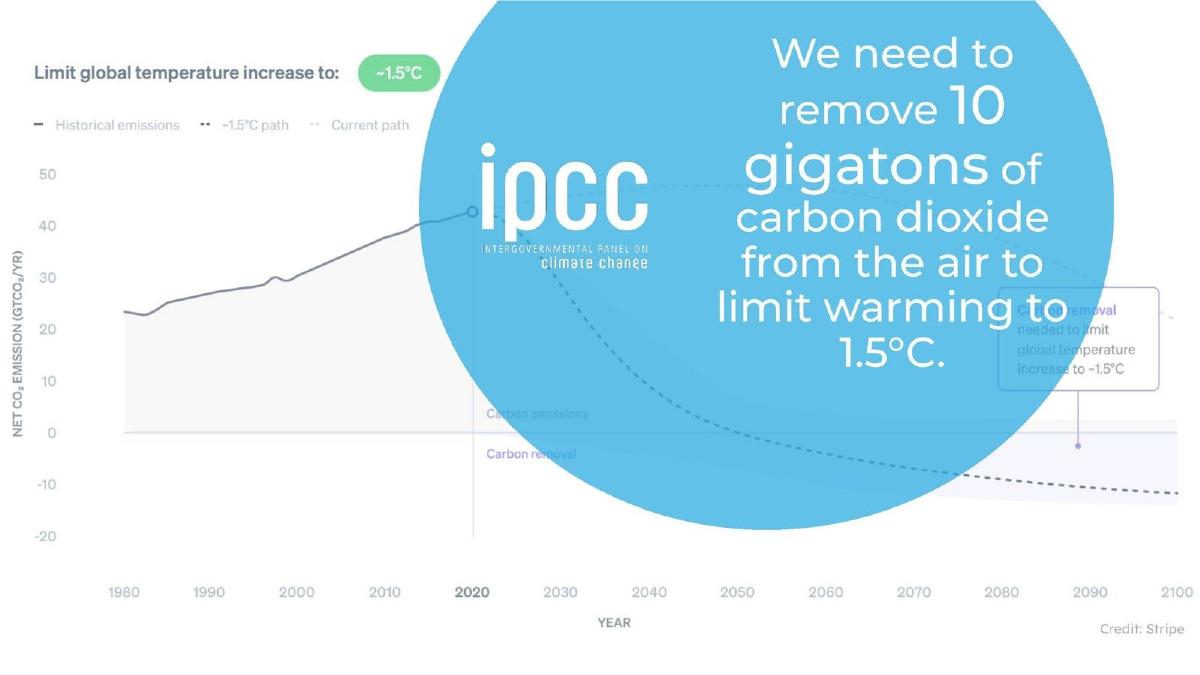
- The deck frames the problem using IPCC data, stating a global need to remove 10 gigatons of CO2 to limit warming to 1.5°C (Slide 2).
- Ebb Carbon positions its technology as an electrochemical acceleration of natural ocean alkalization, which normally takes millions of years (Slide 4).
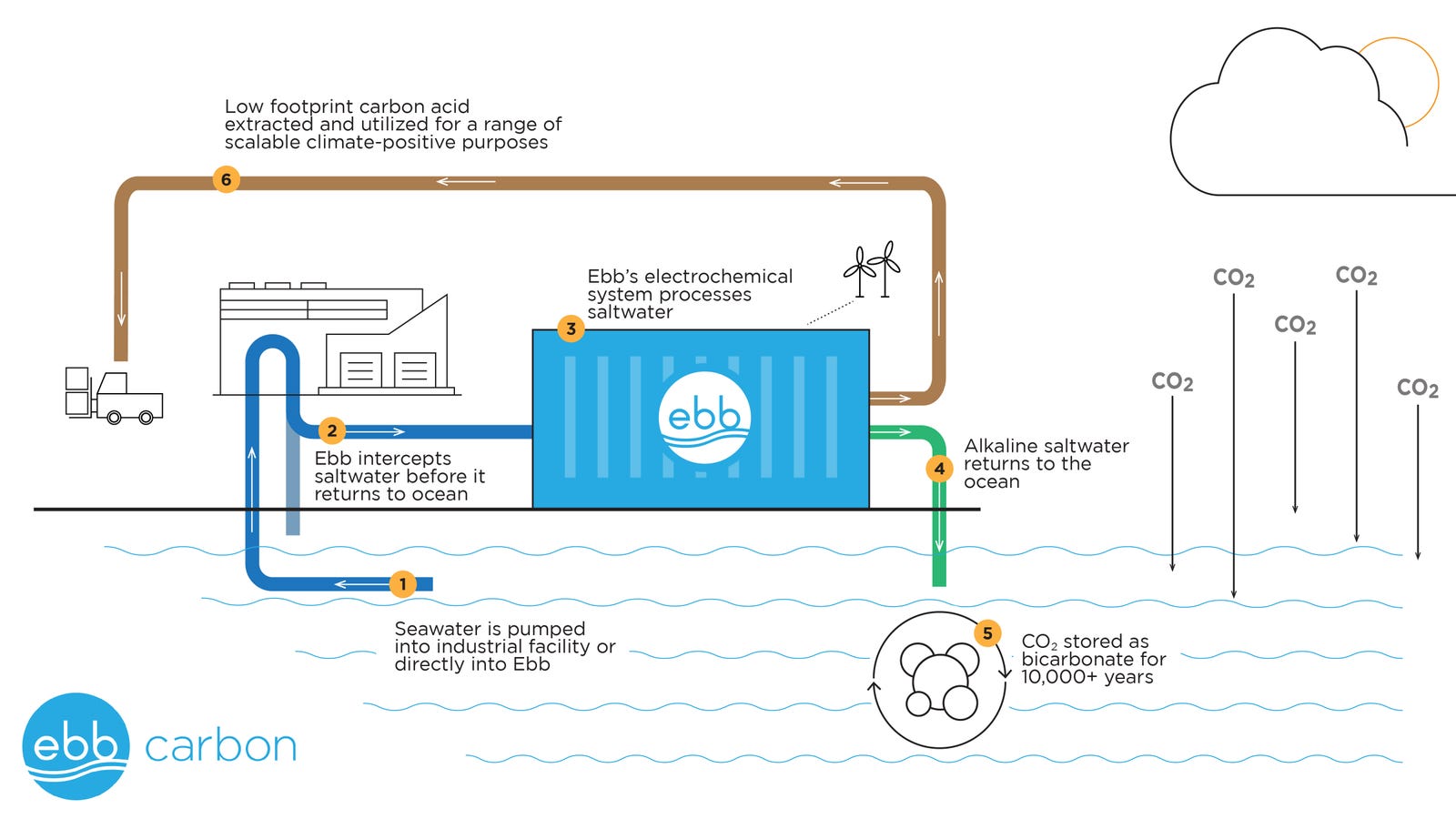
- The process produces a 'low footprint carbon acid' as a byproduct for climate-positive purposes (Slide 1).
- A core financial claim is the target to reach carbon removal costs of less than $100/ton of CO2 within 5 years (Slide 6).
- The technology promises long-term permanence, storing CO2 as bicarbonate in the ocean for over 10,000 years (Slide 6).
- The go-to-market strategy relies on 'intercepting' saltwater from existing industries like desalination and aquaculture to improve their brine discharge and yields (Slide 5).
- The team slide emphasizes a multidisciplinary approach, listing chemists, engineers, physicists, and oceanographers, though it lacks specific names or past company logos (Slide 7).
- The deck omits a specific 'Ask' slide, financial projections, or a detailed breakdown of the $20M Series A allocation.
Executive Summary: The Blue Carbon Opportunity
Ebb Carbon’s Series A deck, used to raise $20M in 2024, focuses on the massive scale of the ocean as a carbon sink. The narrative is built on the urgency of the climate crisis and the technical feasibility of accelerating natural processes. By targeting the $100/ton threshold, Ebb Carbon positions itself as a viable long-term player in the Carbon Dioxide Removal (CDR) market. The deck is light on business operations but heavy on the environmental and chemical logic that underpins their value proposition.
Slide 1: The Process Diagram
The deck opens with a technical illustration titled 'How the Ebb Carbon acidity reduction system works.' This slide is crucial for establishing the physical reality of the technology. It outlines a six-step loop: (1) Seawater is pumped in, (2) Ebb intercepts the water, (3) An electrochemical system processes it using renewable energy (indicated by wind turbine icons), (4) Alkaline saltwater returns to the ocean, (5) CO2 is stored as bicarbonate for 10,000+ years, and (6) A byproduct of 'low footprint carbon acid' is extracted for industrial use. This visual simplifies a complex chemical process into a circular, manageable industrial flow.
Slide 2: The Macro Problem
Slide 2 establishes the 'Why Now.' Using data credited to Stripe and the IPCC, it shows a graph of net CO2 emissions. The slide features a large blue circle stating, 'We need to remove 10 gigatons of carbon dioxide from the air to limit warming to 1.5°C.' By citing the IPCC, Ebb Carbon aligns itself with global scientific consensus, framing their mission not just as a business opportunity, but as a planetary necessity. The inclusion of 'Credit: Stripe' is a subtle nod to one of the most influential early buyers in the CDR market, signaling Ebb’s awareness of the current buyer landscape.
Slide 3: The Mission Statement
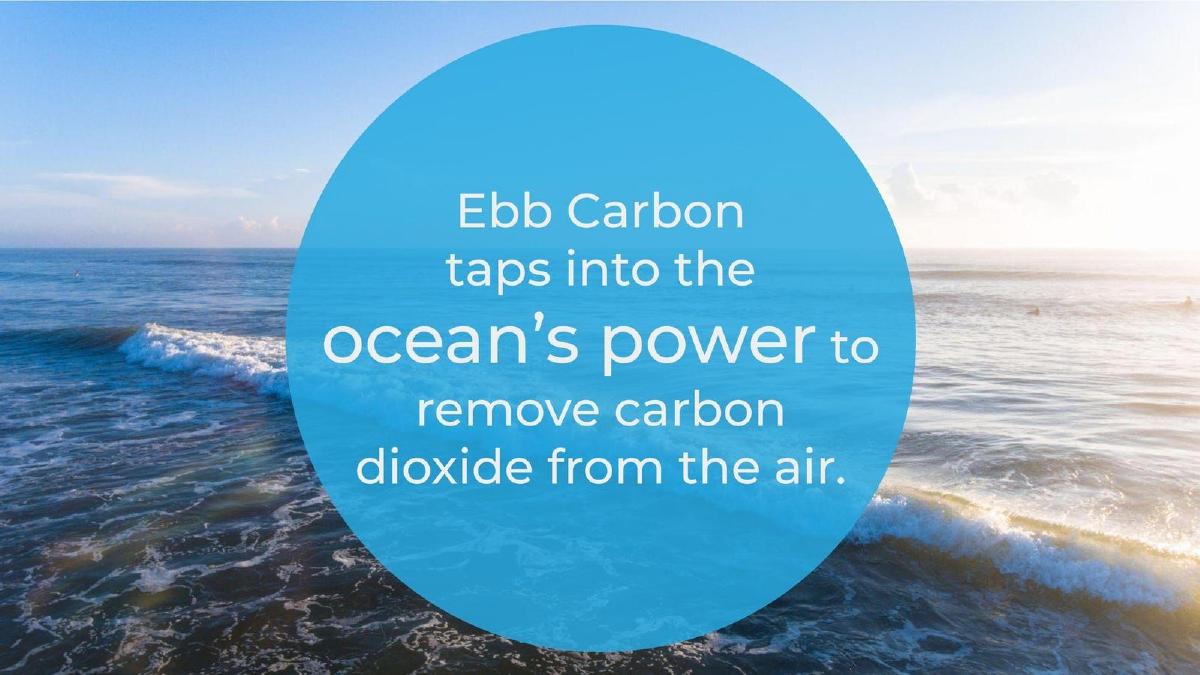
This is a transition slide featuring a high-resolution image of the ocean. The text reads: 'Ebb Carbon taps into the ocean’s power to remove carbon dioxide from the air.' This slide serves to pivot from the global problem to Ebb’s specific solution, emphasizing the 'power' of the ocean as the primary lever for change.
Slide 4: Biomimicry and Acceleration
Slide 4 provides the scientific justification for the technology. It explains that the Earth naturally regulates ocean chemistry through alkalization, but this process 'happens naturally over millions of years.' Ebb’s value proposition is the use of electrochemistry to 'accelerate this process.' This framing is brilliant for risk mitigation; it suggests the company isn't doing something 'unnatural,' but rather speeding up a proven geological cycle to meet the pace of human-induced climate change.
Slide 5: Strategic Partnerships and Integration
One of the most 'business-focused' slides in the deck, Slide 5 explains how Ebb Carbon intends to scale. It lists five partnership categories: Desalination (improving brine discharge), Aquaculture (improving yields), Industrial (improving water quality), Brownfield (repurposing sites), and Research Labs . This demonstrates a 'parasitic' (in a positive sense) growth strategy—leveraging existing infrastructure to reduce the need for new coastal permits and massive construction projects. It shows investors that the company has a clear path to deployment that doesn't rely on building everything from scratch.
Slide 6: The Competitive Advantage
Slide 6 summarizes the core 'Advantages' in five pillars: Permanence (10,000+ years), Scalable (utilizing the ocean's surface area), Restorative (reducing acidity for coral and shellfish), Cost Competitive (sub-$100/ton in 5 years), and Additional (100% additional carbon removal). The $100/ton figure is the most important metric for a Series A investor, as it represents the 'holy grail' price point where carbon removal becomes broadly affordable for corporate net-zero commitments.
Slide 7: The Team
The final slide in the provided sequence introduces the 'Ebb Carbon' team. It features 12 headshots and describes the group as 'leading scientists and climate technology veterans,' including chemists, engineers, physicists, and oceanographers. While the slide lacks the 'logo soup' of previous employers (like Google, Tesla, or SpaceX) often seen in Silicon Valley decks, the diversity of scientific disciplines listed reinforces the complexity of the problem they are solving.
What Works in the Ebb Carbon Deck
Scientific Credibility: The deck does an excellent job of explaining 'Ocean Alkalinity Enhancement' without getting bogged down in equations. By comparing their process to the Earth's natural cycle (Slide 4), they make a complex electrochemical concept feel safe and logical.
Dual-Impact Narrative: Most carbon removal companies focus solely on CO2. Ebb Carbon highlights a secondary, equally important benefit: de-acidification (Slide 6). This 'Restorative' angle provides a hedge against fluctuating carbon prices by offering a tangible service to aquaculture and marine conservation efforts.
Infrastructure Efficiency: Slide 5 is the strongest strategic slide. It addresses the 'NIMBY' (Not In My Backyard) and permitting risks associated with coastal construction by proposing to piggyback on existing industrial water users. This suggests a faster, cheaper route to market than standalone carbon removal plants.
What is Missing from the Ebb Carbon Deck
Financial Projections: There is no mention of current revenue, projected EBITDA, or the specific unit economics of a single deployment. While they mention a $100/ton target, they don't show the 'path to get there' via a cost curve.
The 'Ask' and Use of Proceeds: A standard Series A deck usually concludes with a slide detailing how much capital is being raised and exactly how it will be spent (e.g., '50% R&D, 30% Team, 20% Pilot Plant'). This information is absent from the provided slides.
Competitive Landscape: The deck operates in a vacuum. It does not mention other ocean-based CDR methods (like kelp sinking or direct ocean capture) or land-based Direct Air Capture (DAC) competitors like Climeworks or Carbon Engineering. Investors need to know why Ebb’s electrochemical approach is superior to these alternatives.
Regulatory and Permitting Roadmap: Ocean-based interventions are notoriously difficult to permit due to international maritime laws and local environmental regulations. The deck omits how Ebb plans to navigate the complex legal landscape of discharging processed water back into the ocean.
Founder Takeaways: How to Emulate Ebb Carbon
Use 'Natural' Anchors: If your technology is disruptive or 'heavy' engineering, find a natural analog. Ebb’s use of the 'natural alkalization' story (Slide 4) makes their electrochemical hardware feel like a tool for restoration rather than an invasive machine.
Highlight Co-Benefits: In the impact space, having a single revenue stream (carbon credits) is risky. By showing how your tech helps other industries (like aquaculture in Slide 5), you demonstrate a more resilient business model that can survive even if the voluntary carbon market hits a lull.
Visual Simplicity: Ebb Carbon uses a very clean, blue-and-white aesthetic that feels 'clean' and 'oceanic.' The diagrams are professional but not overly busy. Founders should aim for this level of clarity, especially when the underlying science is dense.
Focus on the $100 Target: For any CDR or hardware startup, the $100/unit cost is a psychological barrier for investors. If you can credibly claim a path to that number (as Ebb does on Slide 6), you immediately move into the 'top tier' of investable climate tech companies.
Frequently asked questions
- What is Ebb Carbon's primary technology?
- Ebb Carbon uses an electrochemical process to accelerate ocean alkalization. As shown on Slide 1 and Slide 4, the system intercepts saltwater, processes it to remove acid, and returns alkaline water to the ocean. This increases the ocean's capacity to absorb CO2 from the air, converting it into stable bicarbonate.
- How does Ebb Carbon plan to scale its operations?
- Instead of building entirely new coastal infrastructure, Ebb Carbon intends to partner with existing industries. Slide 5 identifies five key sectors: Desalination, Aquaculture, Industrial, Brownfield sites, and Research Labs. By integrating with these facilities, they can process existing water streams to improve water quality while removing carbon.
- What are the projected costs for their carbon removal?
- According to Slide 6, Ebb Carbon aims to be 'Cost Competitive' by bringing the cost of their carbon removal credits to less than $100 per ton of CO2 within a five-year timeframe. This is a critical benchmark for the voluntary and compliance carbon markets.
- How long is the carbon stored using this method?
- The deck claims high permanence for its solution. Slide 6 states that the excess CO2 removed from the air is stored as bicarbonate in the ocean for more than 10,000 years, making it a durable sequestration method compared to biological solutions like reforestation.
- What is missing from the Ebb Carbon Series A deck?
- The deck is notably missing traditional venture capital slides, including a detailed competitive landscape, a specific use of proceeds for the $20M raised, and a slide detailing the founders' specific professional backgrounds or previous exits. It also lacks a clear revenue model beyond the mention of carbon credits.