DryMerge’s 8-slide deck is a study in brevity, focusing on the friction of existing no-code tools versus the simplicity of natural language processing. The deck relies heavily on the founders' technical pedigree—citing experience at Stripe, AWS, Meta, and Cerebras—to validate their ability to build a complex integration engine. With only 23 paid subscribers at the time of the pitch, the deck successfully shifted the narrative from current revenue to the massive total addressable market of 100 million knowledge workers. It avoids dense financial modeling in favor of a clear product vision: aut…
Key takeaways
- The deck consists of only 8 slides, prioritizing high-level messaging over granular operational detail.
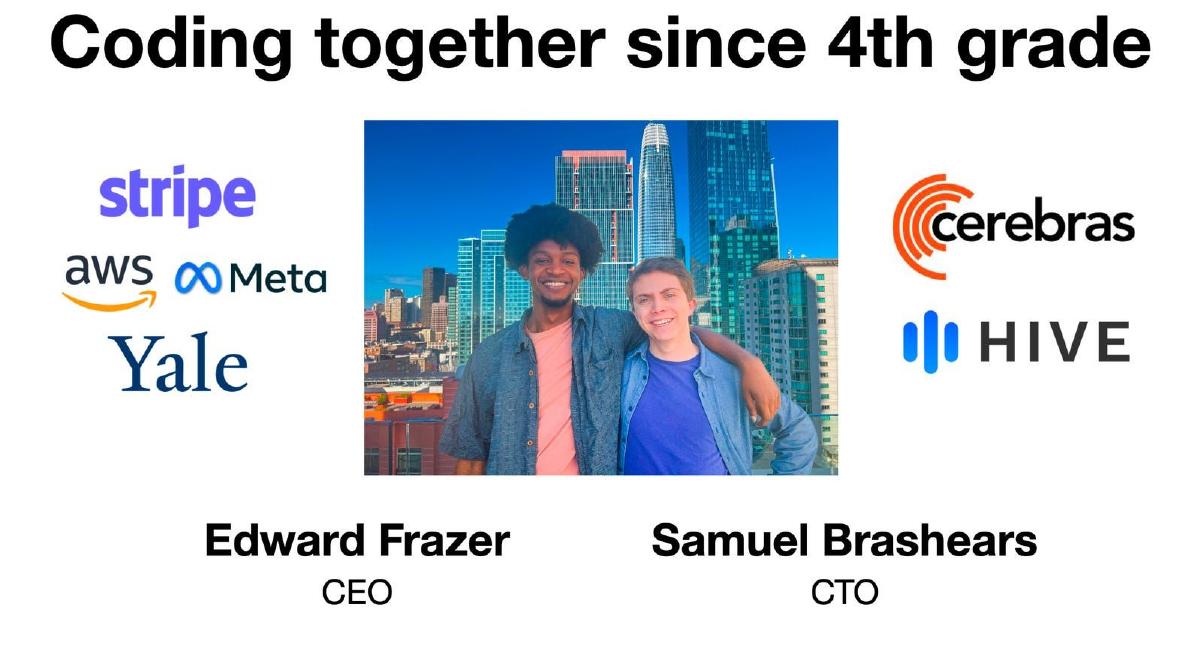
- Slide 2 establishes founder-market fit by highlighting that the duo has been 'coding together since 4th grade' and features logos from Stripe, AWS, and Meta.
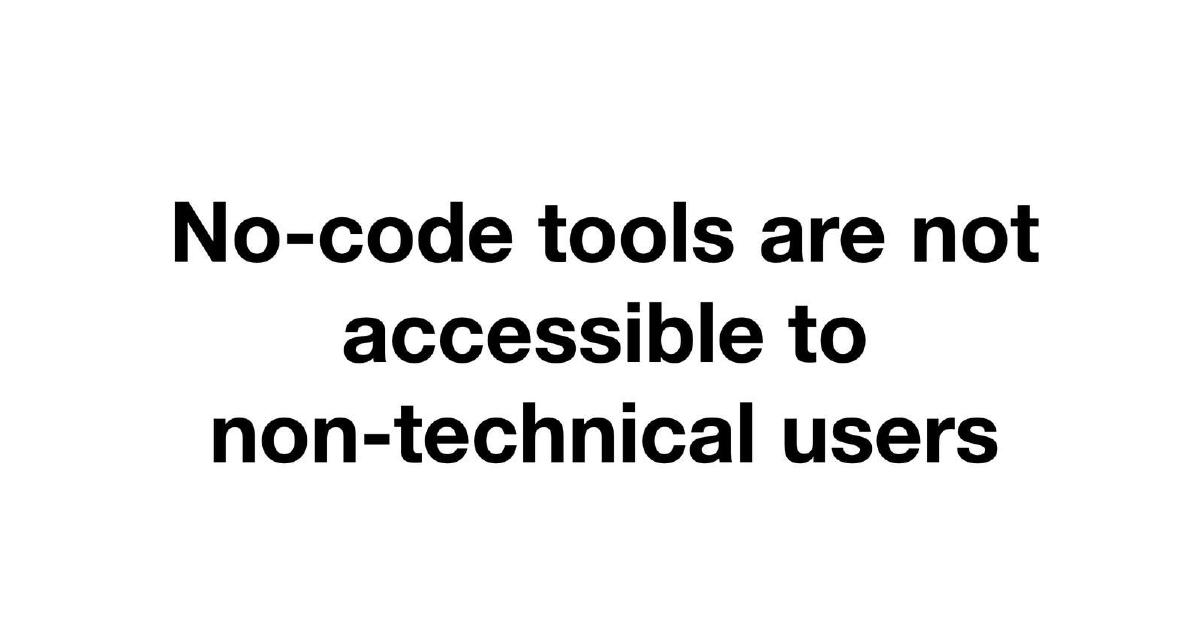
- The problem is defined on Slide 3 as a lack of accessibility in current no-code tools for non-technical users.
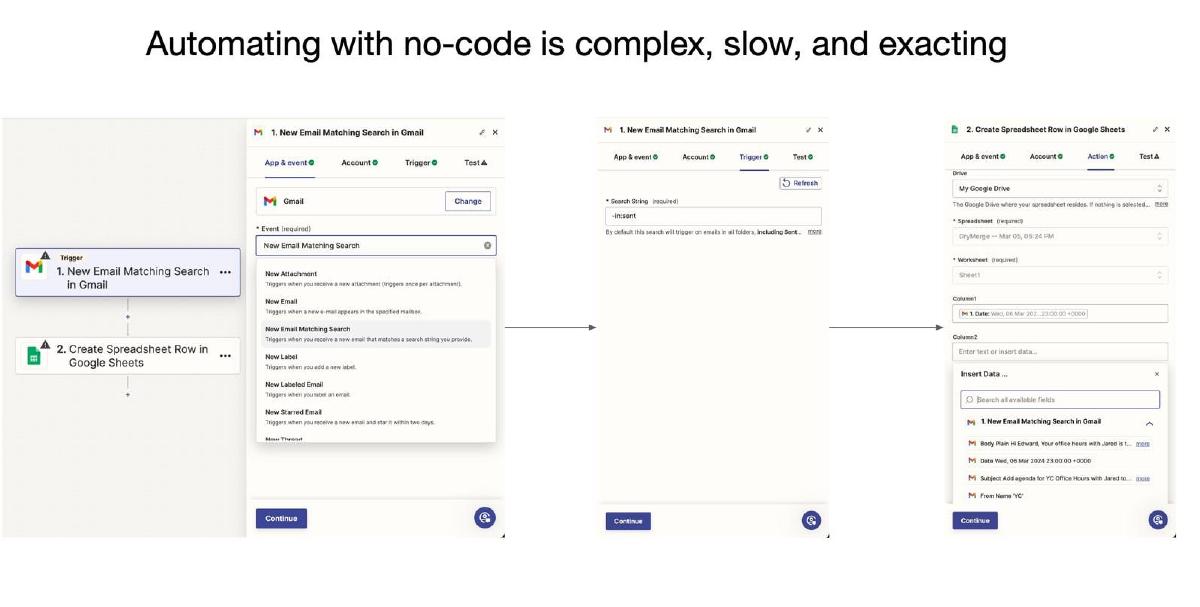
- Slide 4 uses screenshots to demonstrate that existing no-code automation is 'complex, slow, and exacting.'
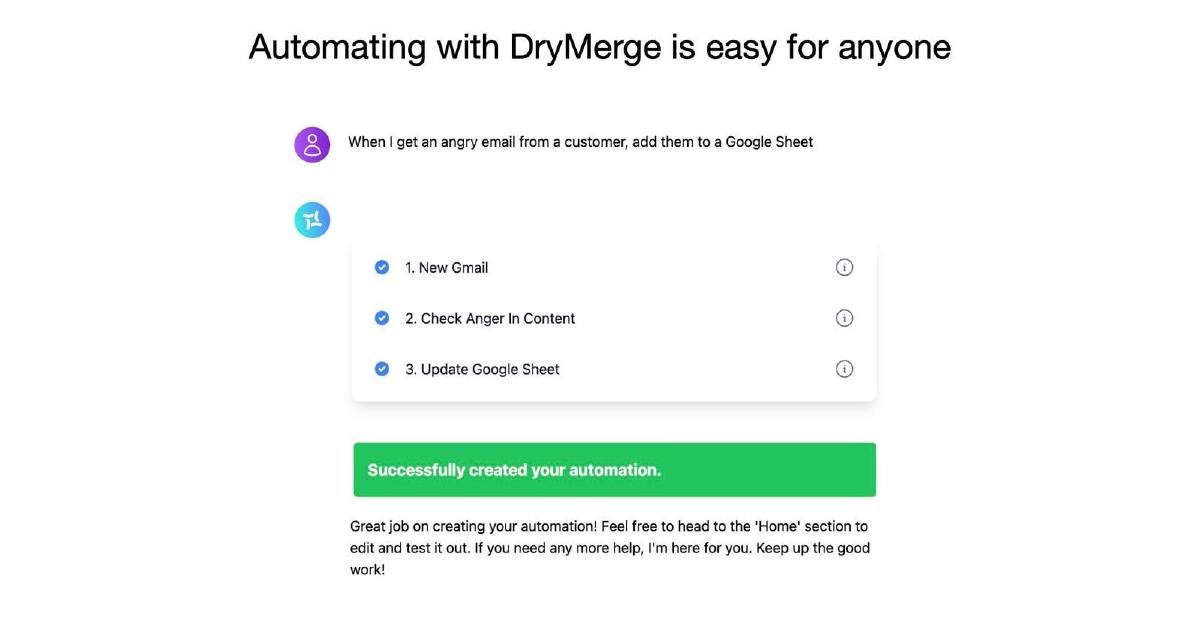
- Slide 5 presents the solution as a simple text prompt: 'When I get an angry email from a customer, add them to a Google Sheet.'
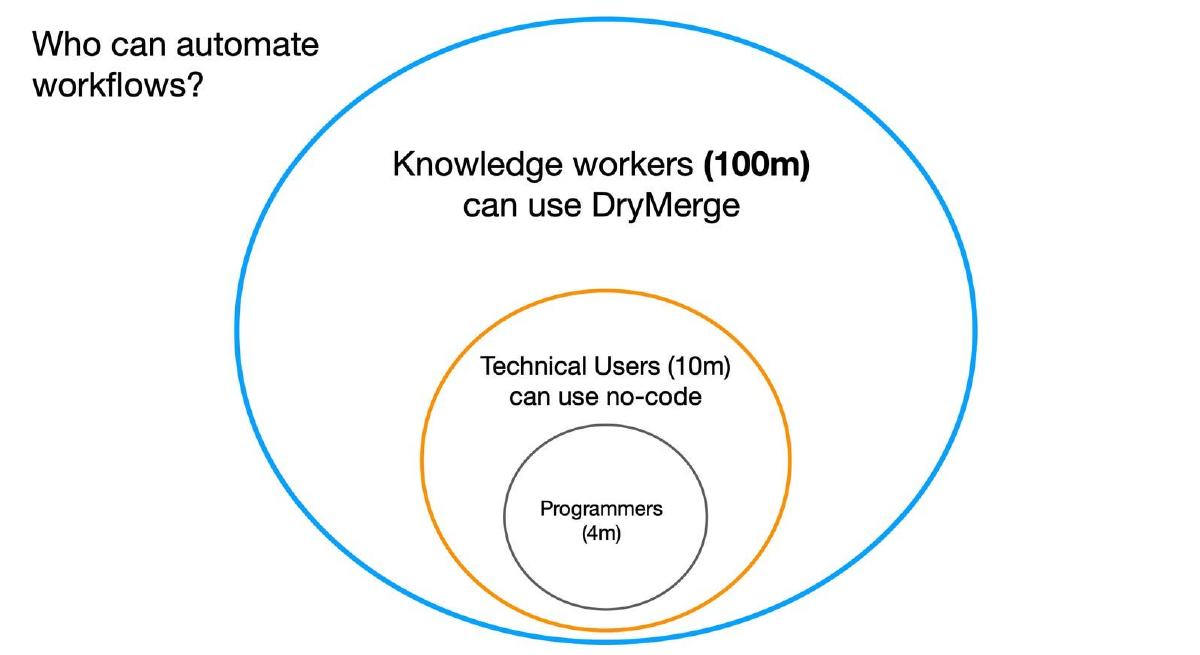
- The market size is visualized on Slide 6, targeting 100 million knowledge workers compared to only 4 million programmers.
- Slide 7 reports early traction of 648 users and 23 paid subscriptions since launch.
- The final slide explicitly asks for $2M to reach 5,000 subscribers and integrate with the top 100 SaaS products.
Introduction: The Power of Brevity in Seed Fundraising
DryMerge, a North American enterprise software startup, raised $2.2M in 2024 using an 8-slide pitch deck that is notable for what it excludes. In an era of 20-page data-heavy decks, DryMerge opted for a high-level narrative focused on the friction of current automation tools and the pedigree of its founding team. The deck serves as a bridge between the 'no-code' movement and the 'AI-agent' era, positioning plain English as the ultimate interface for software integrations.
Slide 1: The Vision Statement
The title slide is minimalist, featuring the DryMerge logo and the tagline: "Automate work with plain English." This immediately identifies the company's category (automation) and its unique selling proposition (natural language interface). It avoids jargon like 'LLM-orchestration' or 'API-aggregator,' opting instead for a benefit-driven headline that any knowledge worker can understand.
Slide 2: Founder-Market Fit
Slide 2 is perhaps the most critical slide in the deck for a seed-stage company. Titled "Coding together since 4th grade," it humanizes the founders, Edward Frazer (CEO) and Samuel Brashears (CTO), while simultaneously flashing high-tier technical credentials. The inclusion of logos from Stripe, AWS, Meta, Yale, Cerebras, and Hive signals to investors that this team has the engineering muscle to handle the complexities of multi-app API integrations. In seed rounds, investors are often buying the team first, and this slide executes that perfectly.
Slide 3: The Problem Definition
Slide 3 presents a single, bold statement: "No-code tools are not accessible to non-technical users." This challenges the existing market leaders in the automation space (like Zapier or Make) by suggesting that their 'no-code' promise remains unfulfilled. It sets up the 'villain' of the story: the complexity that still prevents the average office worker from automating their tasks.
Slide 4: The 'Before' State (Friction)
To prove the point made on the previous slide, Slide 4 is titled "Automating with no-code is complex, slow, and exacting." It shows three screenshots of a traditional no-code interface. The images depict a multi-step process for connecting Gmail to Google Sheets, involving triggers, search strings, and field mapping. The visual clutter of these screenshots is intended to overwhelm the viewer, reinforcing the idea that 'no-code' is still too much like programming for the average person.
Slide 5: The 'After' State (The Solution)
Slide 5 provides the counter-narrative: "Automating with DryMerge is easy for anyone." It shows a clean, chat-like interface where a user types: "When I get an angry email from a customer, add them to a Google Sheet." Below the prompt, the system shows a simple three-step confirmation: 1. New Gmail, 2. Check Anger In Content, 3. Update Google Sheet. This slide effectively demonstrates the product's ability to interpret intent and handle conditional logic (sentiment analysis) without the user needing to configure a single 'if/then' statement manually.
Slide 6: Market Opportunity
Slide 6 uses a nested circle diagram to define the Total Addressable Market (TAM). It segments the workforce into three tiers: Programmers (4m) , Technical Users who can use no-code (10m) , and Knowledge workers who can use DryMerge (100m) . By framing the product this way, DryMerge isn't just competing for the 10 million current no-code users; they are claiming to unlock a market that is 10x larger. This is the 'venture scale' hook that justifies a $2.2M seed round.
Slide 7: Early Traction
Slide 7 provides the raw numbers since launch. The deck lists "648 users chatted," "260 users created automations," and "23 paid subscriptions." While 23 paid subscribers is a small number for a company raising millions, the conversion rate from 'chatted' to 'created' (roughly 40%) suggests a strong initial product hook. The transparency here is notable; the founders are not hiding behind vague 'growth percentages' but are showing the actual scale of their beta phase.
Slide 8: The Ask and Milestones
The final slide, Slide 8, outlines the use of funds. They are "Raising $2M to: Expand Engineering & Marketing, Integrate with top 100 SaaS products, Reach 5000 Subscribers." This provides a clear roadmap for the next 12-18 months. The goal of 5,000 subscribers gives investors a specific metric to measure success against in the next round of funding.
What DryMerge Did Well
Pedigree Front-Loading: By putting the team slide second, they neutralized any doubts about their ability to build a complex AI product. The 'coding since 4th grade' narrative suggests a level of co-founder stability that investors value. · Visual Contrast: The juxtaposition of the cluttered Slide 4 against the clean Slide 5 is a classic 'infomercial' tactic that works exceptionally well for software. It makes the solution feel inevitable. · TAM Expansion: They didn't just say 'we are better Zapier.' They argued that they are expanding the market to the 90% of knowledge workers who find Zapier too hard.
What Is Missing from the Deck
Unit Economics: There is no mention of the Cost of Goods Sold (COGS), which is significant for AI startups using expensive LLM tokens for orchestration. · Competitive Landscape: The deck ignores other 'AI-first' automation competitors. While it attacks traditional no-code, it doesn't explain why DryMerge wins against other emerging natural language automation tools. · Retention Data: While they show how many people created an automation, they don't show how many people are still using those automations 30 days later. In SaaS, usage stickiness is often more important than initial creation. · Business Model Details: The deck mentions 'paid subscriptions' but doesn't disclose the price point or the tier structure.
Founder's Guide: What to Copy
The 'Plain English' Test: If your product is complex, your pitch deck shouldn't be. Copy DryMerge's ability to explain a technical product in a single sentence. · The Pedigree Slide: If you have worked at 'Big Tech' or top-tier startups, use those logos prominently. It acts as a shorthand for technical due diligence. · The Three-Circle TAM: Use the nested circle approach to show how your product doesn't just steal market share but expands the total market by lowering the barrier to entry. · Direct Ask: Don't be vague about what the money is for. DryMerge's final slide is a perfect example of tying a dollar amount to specific, measurable milestones (100 integrations, 5000 subscribers).
Frequently asked questions
- Is 8 slides enough for a Seed round pitch deck?
- Yes, if the team pedigree and product-market fit are clear. DryMerge uses a minimalist approach to focus the investor's attention on the 'plain English' value proposition. By omitting secondary details like competition or detailed financial projections, they keep the narrative focused on the technical feasibility and the massive scale of the knowledge worker market.
- How does DryMerge handle low traction numbers in their deck?
- Slide 7 shows only 23 paid subscriptions. However, by placing this after the slide showing a 100-million-person market, the founders frame these 23 users as a successful proof-of-concept rather than a finished business. The focus is on the conversion funnel (648 chatted to 260 created) rather than the absolute dollar amount.
- Why did the founders lead with their team slide so early?
- In highly competitive technical fields like AI-driven automation, the 'who' is often more important than the 'what' at the seed stage. By placing the team on Slide 2 with logos like Stripe and Cerebras, they immediately establish the technical credibility required to build a natural language interface for complex APIs.
- What is the primary competitive advantage highlighted in the deck?
- The deck argues that existing 'no-code' tools are actually 'low-code' and still too difficult for the average worker. DryMerge’s advantage is the removal of the UI barrier, replacing complex drag-and-drop workflows with a single text box, as shown in the contrast between Slide 4 and Slide 5.
- What key information is missing from the DryMerge deck?
- The deck lacks a formal competitor analysis, a detailed business model (pricing tiers), a go-to-market strategy beyond 'marketing,' and a roadmap for specific technical milestones. It relies on the 'top 100 SaaS products' goal to imply the product's future utility.