Banxware’s 13-slide deck is a highly professional example of a FinTech infrastructure pitch. It identifies a clear friction point in traditional business lending—manual processes and rigid repayment structures—and proposes a fully automated, embedded alternative. The deck excels at demonstrating traction, citing over EUR 13m in processed loan volume and partnerships with 4 out of 5 of Germany’s largest Payment Service Providers (PSPs). While it lacks a specific slide for unit economics or a detailed breakdown of the $113M ask, the strength of the founding team—featuring veterans from Ratepay,…
Key takeaways
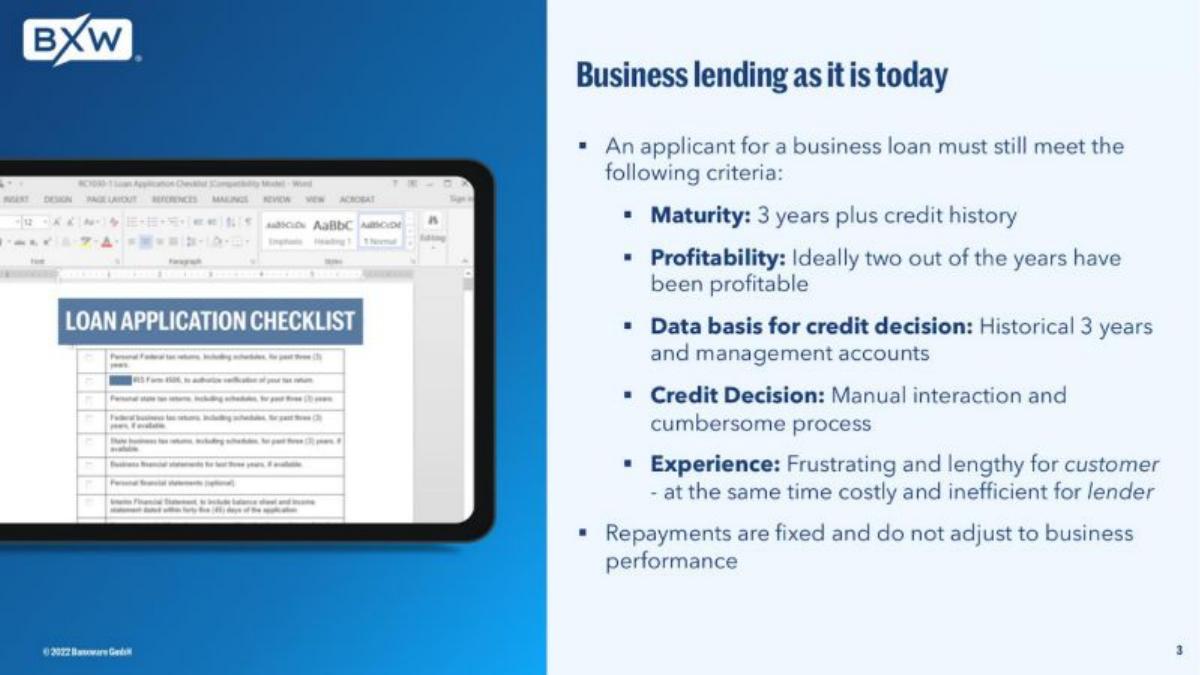
- Traditional lending requires 3 years of credit history and manual interaction, creating a 'costly and inefficient' process for lenders (Slide 3).
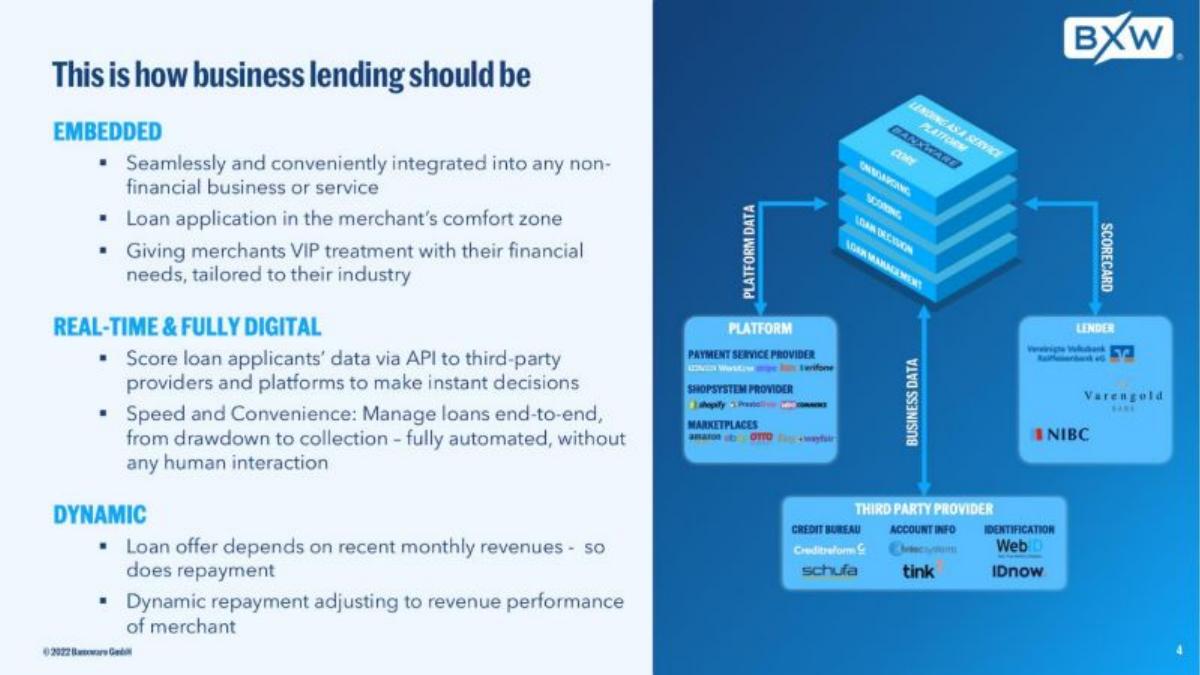
- Banxware's solution is 'Embedded, Real-Time & Fully Digital, and Dynamic,' adjusting repayments based on merchant revenue performance (Slide 4).
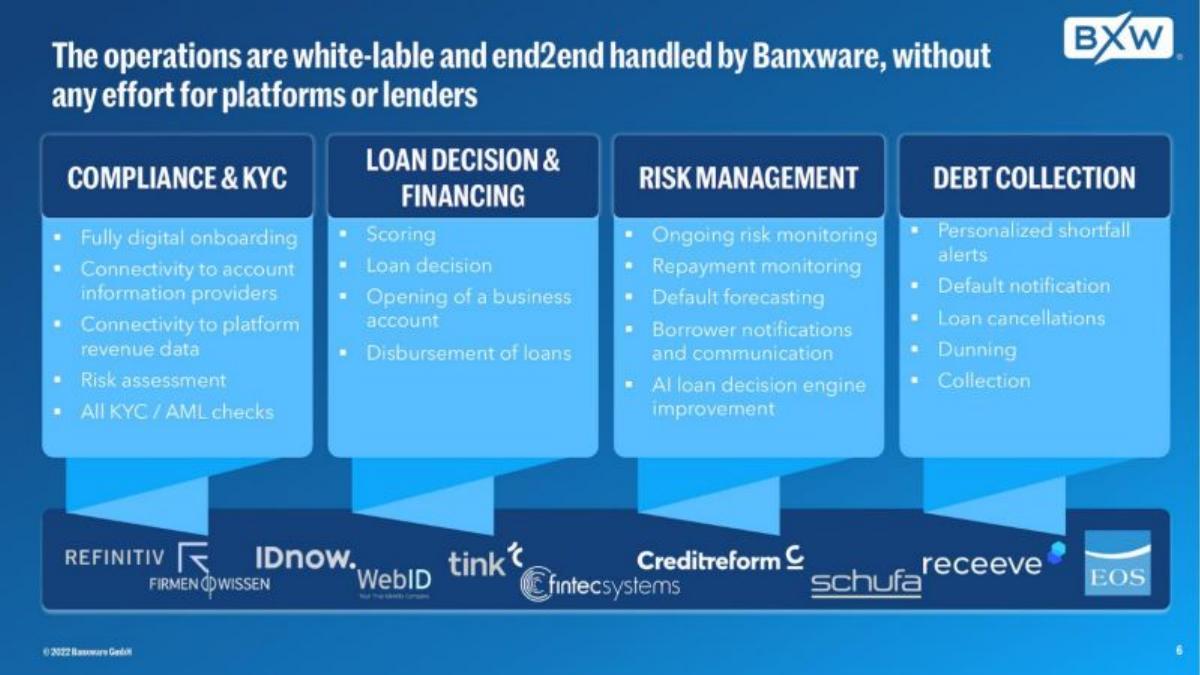
- The platform handles the entire value chain white-label, including KYC, risk management, and debt collection (Slide 6).
- The business model relies on a 'Growth Cycle' where revenue-based lending drives more business back to the partner platform (Slide 7).
- Banxware achieved a EUR 100m loanbook commitment from VVRB early in its formation (Slide 8).
- As of the deck's creation, the company had processed approximately EUR 13m via its platform (Slide 9).
- The team is comprised of 25 FTEs, with approximately 50% dedicated to technology roles (Slide 11).
- The founders possess deep domain expertise, including a former FinTech Counsel to the German Finance Ministry and a former Group Lead at Klarna (Slide 11).
Banxware Pitch Deck Teardown: The Infrastructure of Embedded Finance
Banxware’s 2022 pitch deck is a clinical example of how to present a B2B2B (Business-to-Business-to-Business) model. The company acts as the connective tissue between capital providers, digital platforms, and small-to-medium enterprises (SMEs). With a total raise of $113M, this deck serves as a blueprint for infrastructure startups looking to prove that they can handle the 'heavy lifting' of regulated industries.
Slide 1-2: The Vision and the Hook
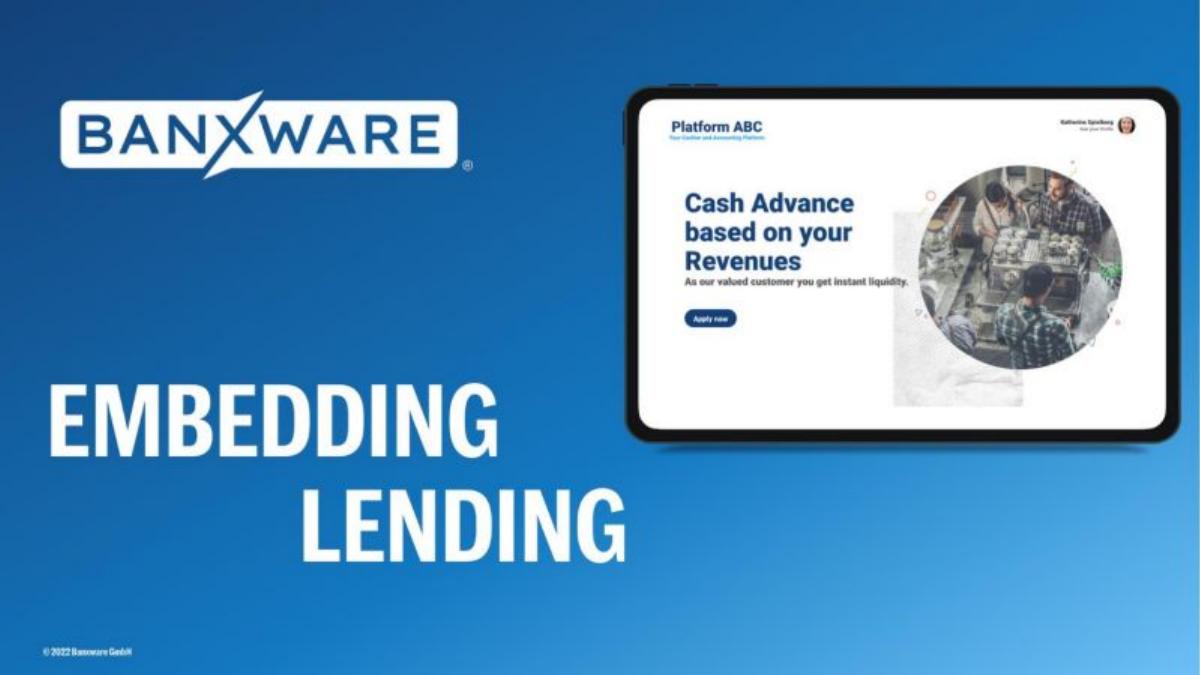
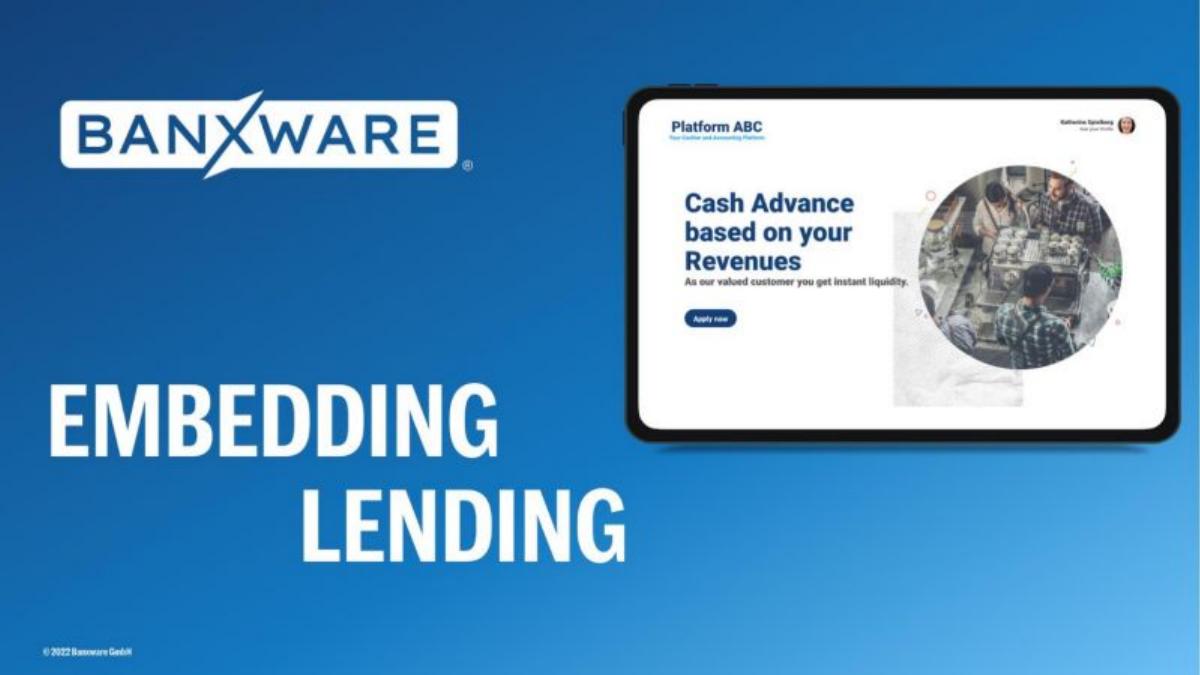
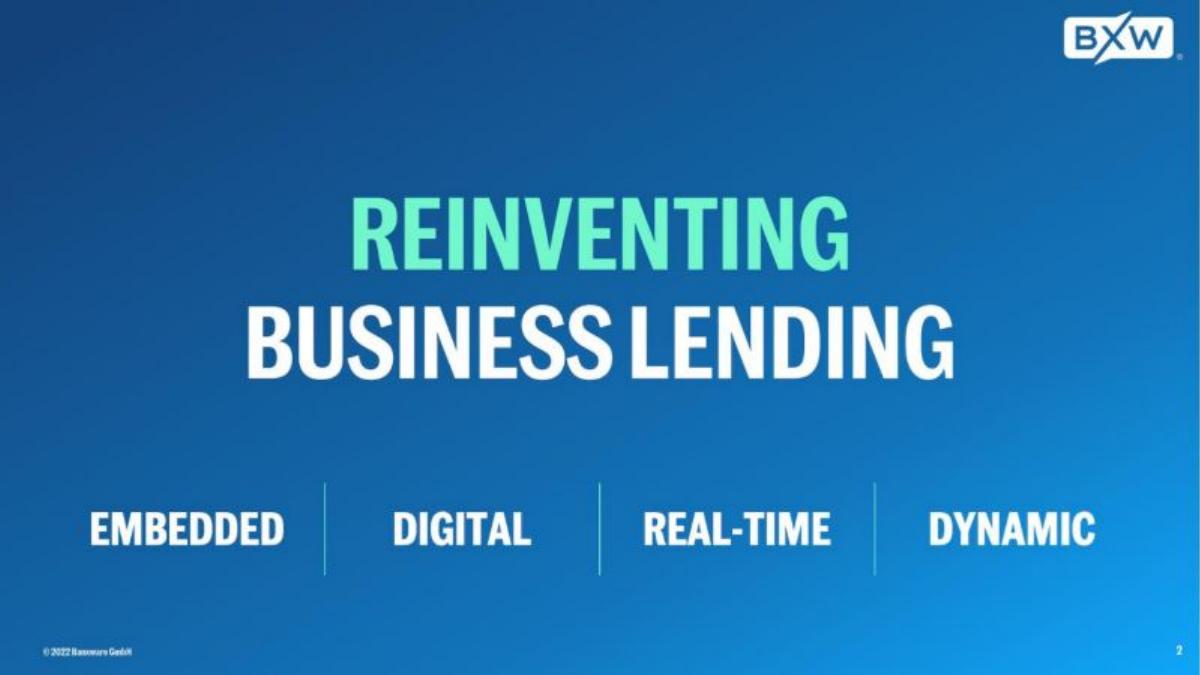
The deck opens with a clean title slide featuring a tablet mockup of 'Platform ABC' offering a 'Cash Advance based on your Revenues.' This immediately grounds the abstract concept of 'Embedding Lending' in a tangible user interface. Slide 2 reinforces this with four pillars: Embedded, Digital, Real-Time, and Dynamic. By defining these terms early, Banxware sets the criteria by which the rest of the deck should be judged.
Slide 3: The Problem – Business Lending Today
Slide 3 is a classic 'anti-hero' slide. It lists the frustrations of traditional lending: the need for 3 years of history, manual interactions, and fixed repayments that don't care if a business had a bad month. The inclusion of a screenshot of a 'Loan Application Checklist' in a Word document effectively visualizes the 'cumbersome process' they are disrupting. This slide establishes the 'why' by highlighting the inefficiency for both the customer and the lender.
Slide 4-5: The Solution and Product Experience
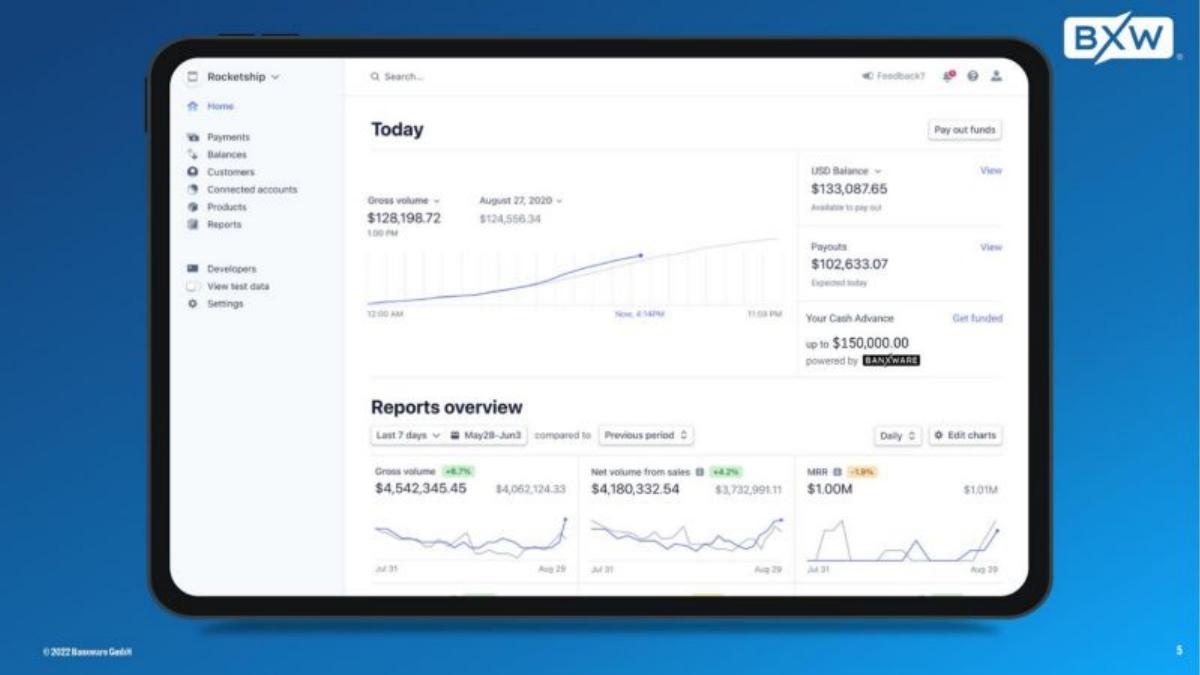
Slide 4 introduces the 'Lending as a Service Platform.' It uses a stack diagram to show how Banxware sits between the Platform (Shopify, Amazon, etc.), the Third Party Providers (Tink, Schufa), and the Lenders (NIBC, Varengold). This is a critical slide because it explains the ecosystem play. Slide 5 follows up with a high-fidelity mockup of a dashboard called 'Rocketship,' showing a 'Your Cash Advance' module powered by Banxware. This proves the 'embedded' claim—the user never leaves their primary business tool to get funding.
Slide 6: The Operational Stack
For FinTech investors, the 'how' is as important as the 'what.' Slide 6 breaks down the operations into four buckets: Compliance & KYC, Loan Decision & Financing, Risk Management, and Debt Collection. By listing logos like Refinitiv, IDnow, and Creditreform at the bottom, Banxware signals that they aren't building every single component from scratch; rather, they are the orchestrator of a best-in-class financial stack. This reduces perceived execution risk.
Slide 7: The Win-Win-Win Model
This is arguably the most important strategic slide in the deck. It explains the incentives for all three parties:
Platforms: Increase competitiveness and merchant Customer Lifetime Value (CLV). · Merchants: Access to capital to accelerate growth. · Lenders: Access to a 'digital-savvy' audience they couldn't reach otherwise.
The 'Growth Cycle' diagram on the left shows how lending creates a virtuous loop: more capital leads to more revenue on the platform, which drives more business back to the platform, and so on.
Slide 8-9: Traction and Milestones
Slide 8 uses a large upward arrow to track milestones from 2020 to 2021. Key data points include the formation of the company, a EUR 100m loanbook commitment from VVRB, and the launch of partnerships with major names like Lieferando (Just Eat Takeaway) and PAYONE. Slide 9, 'Where we stand,' provides the hard numbers: EUR 13m processed and 4 out of 5 of Germany's largest PSPs signed. This is a high-density traction slide that proves product-market fit.
Slide 10: The Roadmap
The 'What's next' slide focuses on three areas: extending market presence (internationalization), broadening the value chain (SPV setups), and enhancing tech. The map of Europe suggests a clear path to becoming a continental leader rather than just a local German player. The mention of 'SPV setup' is a sophisticated nod to investors that the company plans to move from being a pure software play to having more control over the credit box.
Slide 11: The Team
In a Seed or Series A round, the team slide is often the deciding factor. Banxware’s team is exceptionally strong. Miriam Wohlfarth is described as 'The face of Germany's Fintech scene' and founder of Ratepay. The other founders bring experience from Klarna, Finleap, and PPRO. The slide also includes a breakdown of the 25 FTEs, showing a healthy 50% tech split and a 10:15 female-to-male gender ratio. This level of transparency and pedigree is rare and highly persuasive.
Slide 12: Social Proof
The final content slide is a collage of press clippings and awards, including a Forbes feature and a '100 million euros for loans' headline. While often considered 'fluff,' in the world of regulated finance, brand recognition and public trust are valuable assets that can lower the cost of capital.
What Works in the Banxware Deck
Clarity of Ecosystem: The deck does a fantastic job of explaining a complex three-sided market. By using flowcharts and stack diagrams, they make it clear exactly where they sit in the value chain.
Pedigree: The team slide is a masterclass in 'founder-market fit.' They don't just list titles; they list specific achievements (e.g., 'FinTech Counsel German Finance Ministry') that are directly relevant to the business they are building.
Tangible Product: The use of mockups (Slides 1, 5, and 9) prevents the deck from feeling like a theoretical exercise. Investors can see exactly what the end-user sees.
What is Missing from the Banxware Deck
Unit Economics: There is no mention of take rates, margins, or the cost of customer acquisition (CAC). While this may have been in a separate data room, its absence in the main deck leaves the question of profitability unanswered.
Competitive Landscape: The deck operates as if Banxware has no competitors. A slide addressing other embedded finance players (like Stripe Capital or YouLend) would have helped define their unique edge.
The Ask: The deck ends without a specific 'Ask' slide. It doesn't state how much they are looking to raise or what the specific valuation expectations are. While the catalogue facts state they raised $113M, the deck itself is silent on the terms of the round.
Founder Takeaways: What to Copy
The 'Win-Win-Win' Framework: If you are building a platform or marketplace, use Slide 7 as a template. Clearly articulating why every participant in your ecosystem benefits is the fastest way to prove your business model is sustainable.
Visualizing the 'Old Way': Slide 3’s use of a boring Word document to represent the status quo is a brilliant psychological trick. It makes the competitor (traditional banks) look obsolete without saying a word.
Milestone Arrows: The large upward-sloping arrow on Slide 8 is a great way to show momentum. It forces the reader’s eye to follow the company’s growth trajectory and makes the progress feel inevitable.
Focus on Infrastructure: If you are a FinTech founder, don't just say you are 'compliant.' List your partners and your stack as Banxware did on Slide 6. It shows you understand the regulatory burden and have already solved for it.
Frequently asked questions
- What is Banxware's core product offering?
- Banxware provides 'Lending as a Service.' It is a white-label infrastructure that allows non-financial platforms (like marketplaces or PSPs) to offer instant, revenue-based cash advances to their merchants. According to slide 6, they handle everything from digital onboarding and KYC to AI-driven risk management and automated debt collection, requiring zero operational effort from the platform partner.
- How does Banxware differentiate itself from traditional bank loans?
- Slide 3 highlights that traditional loans require three years of profitability and manual credit decisions. Banxware, as shown on slide 4, uses real-time API data from platforms to make instant decisions. Crucially, their repayments are 'dynamic,' meaning the amount a merchant pays back fluctuates based on their monthly revenue performance rather than being a fixed monthly cost.
- What level of traction did Banxware have at the time of this deck?
- The company showed significant early momentum. Slide 9 states they were live with two products on six platforms and had processed approximately EUR 13m. They also claimed to have signed 4 out of 5 of Germany's largest Payment Service Providers. Slide 8 notes they exceeded EUR 10m in processed volume in 2021, shortly after their EUR 4m Seed round.
- Who are the key people behind Banxware?
- The team is a major selling point. Slide 11 lists founders Miriam Wohlfarth (founder of Ratepay), Jens Röhrborn (20+ years in payments/legal), Fabian Heiß (former Head of Business Unit at Finleap), Nicolas Kipp (former Chief Risk Officer at Ratepay), and Diogo Simões (former Group Lead at Klarna). This represents a high concentration of senior leadership from Europe's most successful FinTechs.
- What are the company's plans for the capital raised?
- While the deck does not have a specific 'Use of Funds' slide, slide 10 outlines 'What's next.' This includes international expansion across Europe, broadening the lending value chain by setting up Special Purpose Vehicles (SPVs) to control loan acceptance, and accelerating tech development to minimize risk while maintaining speed.