Baker Technologies' 2014 Series A deck is a masterclass in 'de-risking' a controversial industry for institutional investors. By explicitly stating they 'don't touch the plant' on slide 8, Baker positioned itself as a pure-play SaaS company rather than a high-risk cannabis operator. The deck relies heavily on visual storytelling, using only 11 slides to move from the 'dirty' imagery of the legacy market to a sleek, OpenTable-style consumer interface. While the deck is light on detailed unit economics and competitive analysis, it successfully leverages a 69% month-over-month growth rate (slide…
Key takeaways
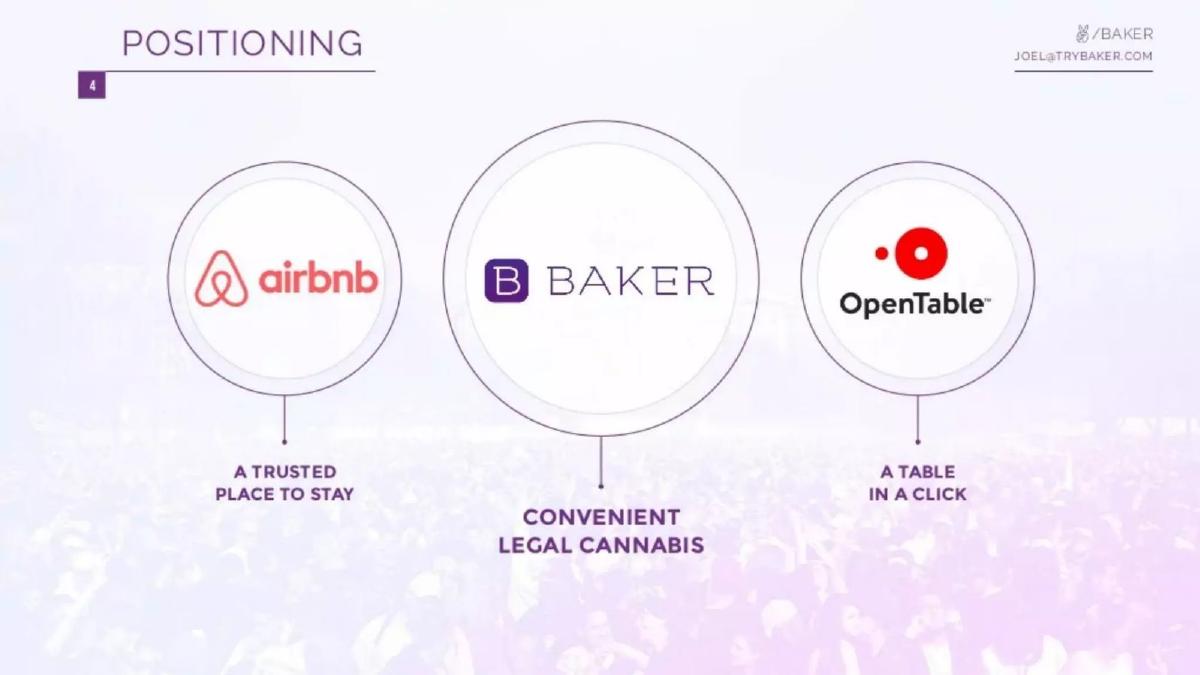
- The deck uses a 'Positioning' slide (Slide 4) to anchor the product against familiar tech giants like Airbnb and OpenTable.
- Baker addresses the regulatory 'gray area' by explicitly labeling themselves as 'SaaS, not Cannabis' on Slide 8.
- Traction is presented as a steep growth curve with a 69% month-over-month growth rate noted on Slide 7.
- The business model includes a monthly licensing fee ranging from $99 to $499 per month (Slide 8).
- Market size projections show a massive jump from $2.7 billion in 2014 to a forecasted $40 billion by 2020 (Slide 9).
- The deck omits a formal 'Ask' slide, failing to specify the exact dollar amount or use of funds within the presentation itself.
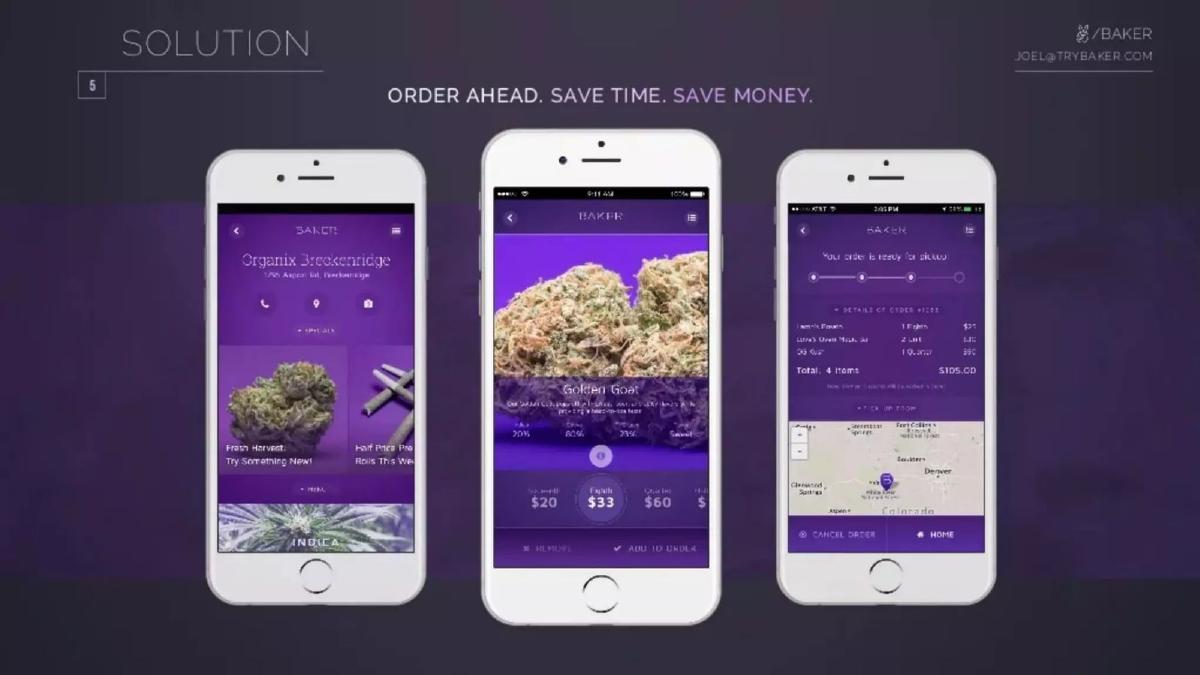
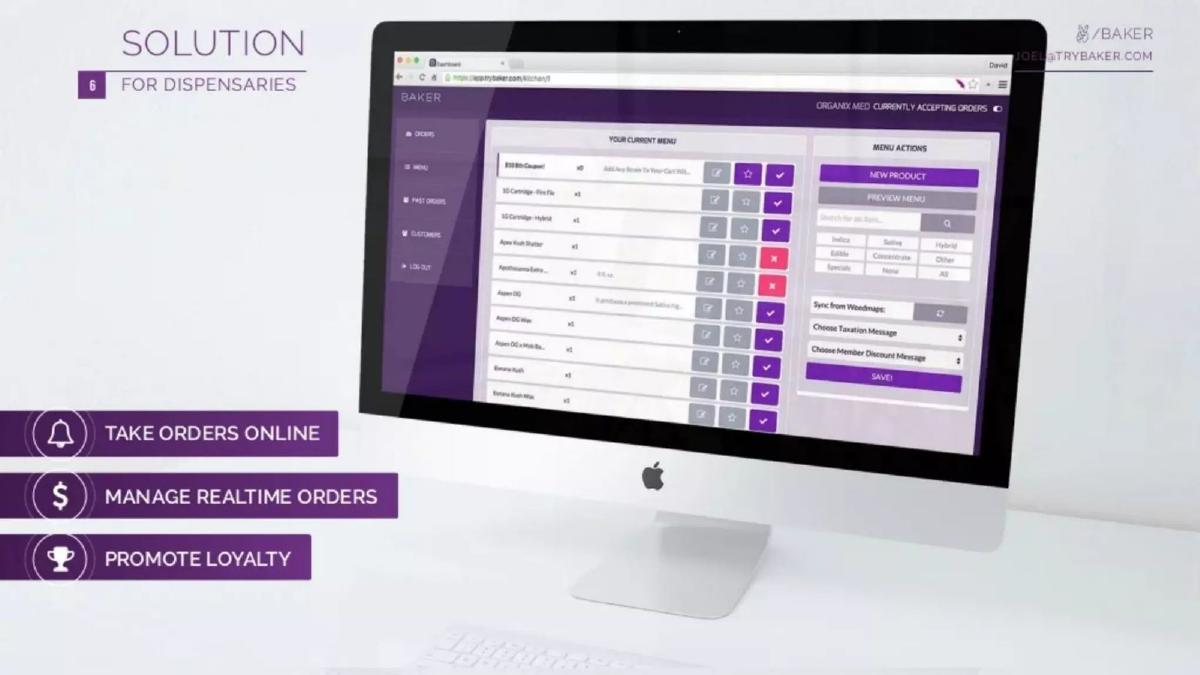
- Product slides (Slides 5 and 6) show both the consumer-facing mobile app and the B2B dispensary dashboard.
- The team slide (Slide 10) emphasizes functional roles (Growth, Product, Tech, Sales) and corporate backgrounds like Salesforce.
The 11-Slide Strategy for a $12.5M Series A
Baker Technologies entered the market at a pivotal moment in 2014. As legalization spread across the United States, the 'Green Rush' was in full swing, but institutional capital remained hesitant due to federal regulations. Baker’s deck is a specific response to that hesitation. It is short, visually driven, and focuses on professionalizing an industry that, at the time, was still associated with 'wrong images' (as noted on slide 3).
The deck consists of 11 slides. It follows a classic narrative arc: Problem, Positioning, Solution, Traction, Business Model, Market, and Team. However, its brevity means it leaves out several deep-dive data points that modern founders might be expected to provide. Let's walk through the slides to see how they built their case.
The Hook: Problem and Positioning (Slides 1-4)
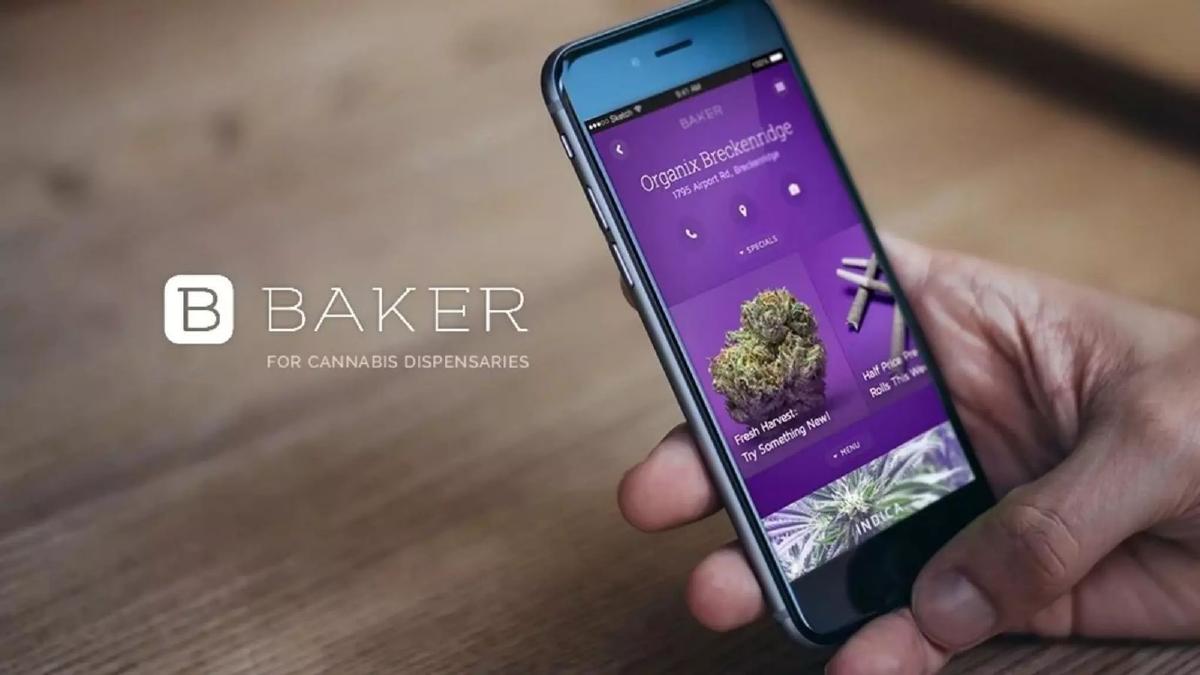
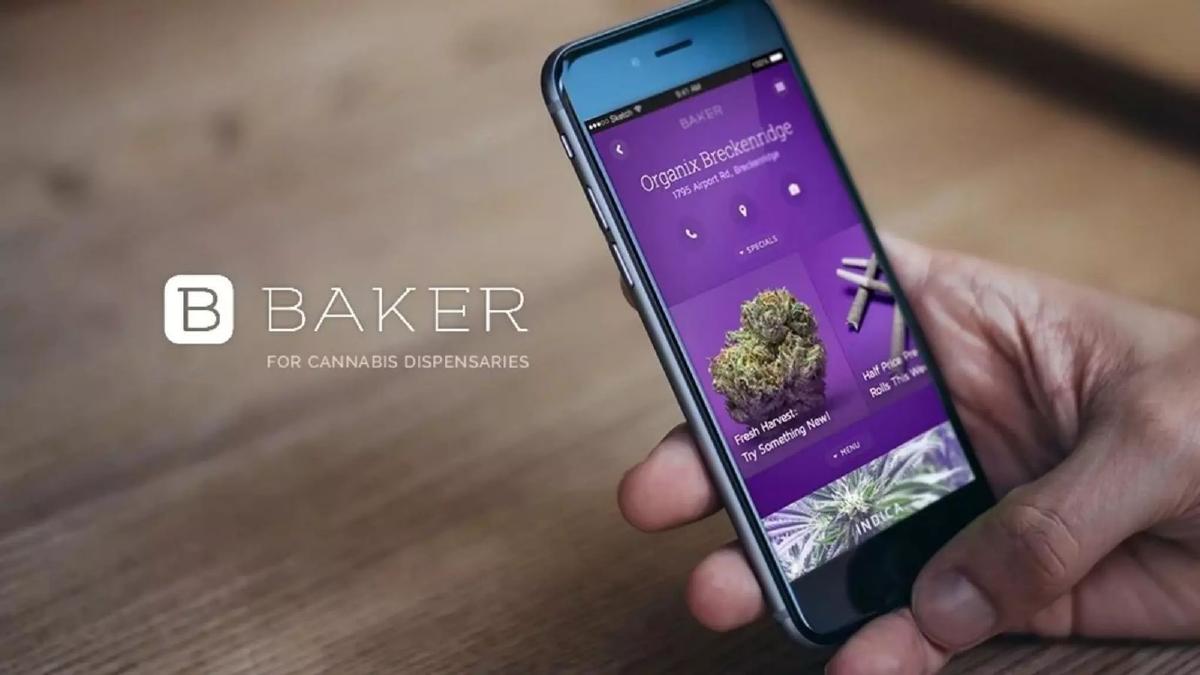
Slide 1: Title The cover slide is minimalist. It features a high-quality photo of a smartphone running the Baker app, showing a dispensary menu. The tagline 'FOR CANNABIS DISPENSARIES' immediately qualifies the audience. The design is clean, using a purple color palette that feels premium rather than counter-culture.
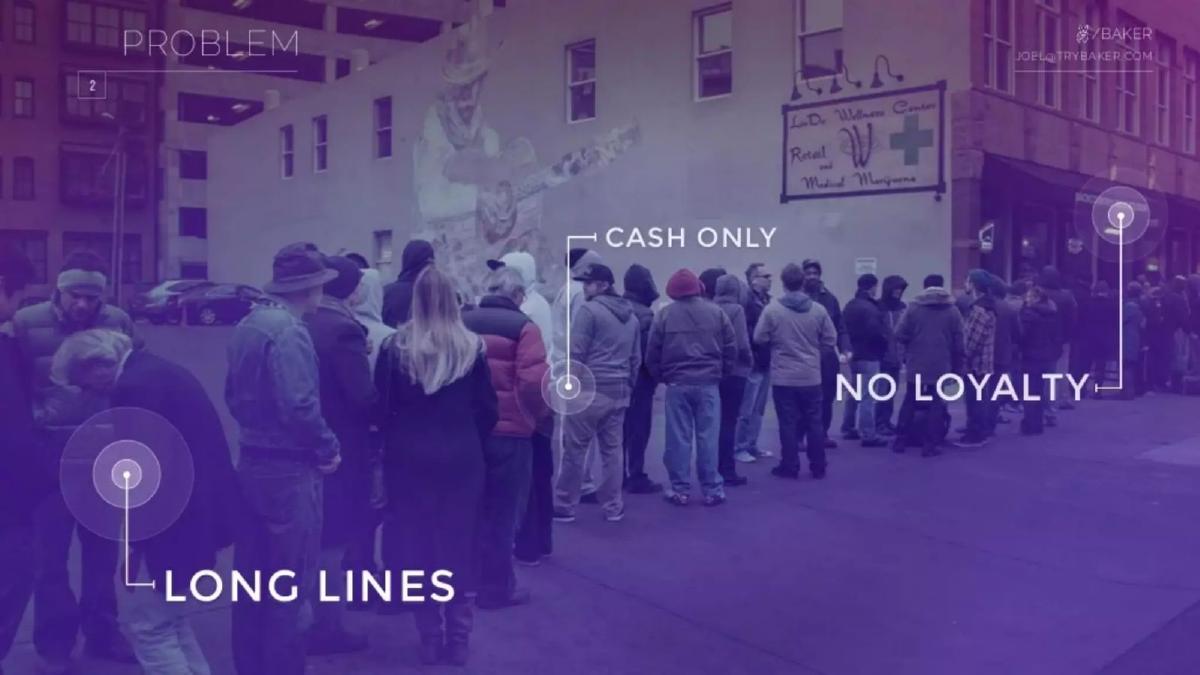
Slide 2: Problem - The Retail Experience This slide uses a photo of a long line outside a dispensary. Three callouts identify the pain points: 'LONG LINES,' 'CASH ONLY,' and 'NO LOYALTY.' By focusing on these operational inefficiencies, Baker frames the problem as a retail logistics issue rather than a cannabis-specific issue. This makes the solution feel more like standard e-commerce software.
Slide 3: Problem - The Image Gap Baker takes a bold step here by addressing the stigma of the industry directly. The slide states 'CANNABIS EVOKES THE WRONG IMAGES' over a photo of a woman smoking. This signals to investors that Baker intends to be the 'adult in the room,' rebranding the experience for a 'modern audience' (as mentioned on slide 11).
Slide 4: Positioning This is a classic 'X for Y' slide. Baker places its logo between Airbnb and OpenTable. The text links them: 'A TRUSTED PLACE TO STAY,' 'CONVENIENT LEGAL CANNABIS,' and 'A TABLE IN A CLICK.' This anchors the investor’s mind in high-valuation, successful marketplace and booking platforms.
The Product: B2C and B2B Solutions (Slides 5-6)
Slide 5: Solution - Consumer Facing The slide shows three mobile screens with the header 'ORDER AHEAD. SAVE TIME. SAVE MONEY.' The UI looks remarkably similar to a modern food delivery app, showing product details for 'Golden Goat' (a cannabis strain) and a checkout screen with a map. This proves the product is built and functional.
Slide 6: Solution - For Dispensaries Crucially, Baker shows the other side of the marketplace. The B2B dashboard is shown on an iMac. Three value propositions are listed: 'TAKE ORDERS ONLINE,' 'MANAGE REALTIME ORDERS,' and 'PROMOTE LOYALTY.' This slide demonstrates that Baker is a full-stack operational tool for the merchant, not just a directory for the consumer.
The Proof: Traction and Economics (Slides 7-8)
Slide 7: Traction This is the 'money slide.' It shows a line graph of 'CLIENT REVENUES' from May to October. The graph shows a significant inflection point when the product went from 'BETA' to 'LIVE' in July. The slide prominently features a '69%' figure for 'MoM Growth.' While the Y-axis lacks specific dollar amounts, the percentage growth is the primary signal for a Series A round.
Slide 8: Business Model This slide is the most important for regulatory de-risking. It features a large icon of a cannabis leaf with a strike through it, accompanied by the text: 'WE DON'T "TOUCH THE PLANT"' and 'SaaS, not Cannabis.' This is a direct message to VC compliance departments. The revenue model is listed as a 'Monthly Licensing Fee' of '$99/mo - $499/mo.' It also teases a future 'SHARE OF REVENUES' model, citing that Seamless/GrubHub charge more than 12%.
The Scale: Market and Team (Slides 9-11)
Slide 9: Opportunity Baker presents a market growth forecast for 'LEGAL CANNABIS SALES IN THE US.' The figures scale from '$1.2Bn' in 2012 to '$2.7Bn' in 2014, then jump to '$10Bn' in 2018 and '$40Bn' by 2020. The visual representation uses growing circles to emphasize the explosive CAGR (Compound Annual Growth Rate) of the industry.
Slide 10: Team The team slide features four individuals: Joel Milton (Growth), David Champion (Product), Roger Obando (Tech), and Carter Davidson (Sales). The 'pedigree' markers are clear: mentions of Colgate, Cambridge, Duke, and University of Virginia. Most notably, Carter Davidson is described as having 'Left Salesforce to run sales for Baker,' which adds significant enterprise software credibility to the startup.
Slide 11: Closing The final slide repeats the mission: 'BAKER EXISTS TO MAKE SAFE CANNABIS CONSUMPTION ACCESSIBLE TO THE MODERN AUDIENCE.' It provides contact information for Joel Milton.
What Works in the Baker Deck
The deck is exceptionally disciplined. It does not get bogged down in the complexities of cannabis botany or specific state-by-state regulations. Instead, it focuses on the universal language of SaaS: growth rates, monthly recurring revenue (MRR) potential, and user experience.
The 'Don't Touch the Plant' messaging is the deck's strongest strategic element. In 2014, this was the 'magic phrase' that allowed mainstream investors to participate in the cannabis industry without violating federal money laundering or drug trafficking laws. By framing the business as a licensing play, Baker transformed a high-risk venture into a standard tech investment.
The visual design also works in its favor. By using high-end photography and a sophisticated UI, Baker distances itself from the 'stoner' stereotypes that plagued the industry's early days. This professionalization is a key part of their value proposition to dispensaries who want to attract higher-spending, mainstream customers.
What is Missing from the Baker Deck
For a $12.5 million raise, the deck is surprisingly light on financial depth. There are several glaring omissions that would typically be required in a Series A teardown:
The Ask: There is no slide stating how much money they are raising or how they plan to spend it. While the catalogue facts state they raised $12.5 million, the deck itself is silent on the terms. · Competition: The deck assumes a vacuum. It does not mention other POS (Point of Sale) integrators or cannabis-specific platforms like Weedmaps or Leafly, both of which were active at the time. · Unit Economics: While we see a 69% growth rate, we don't see the cost to acquire a dispensary (CAC) or how long those dispensaries stay on the platform (Churn). · Regulatory Roadmap: The deck mentions they don't touch the plant, but it doesn't explain how they handle the complex integration with state-mandated 'seed-to-sale' tracking systems (like Metrc), which is a significant technical hurdle in this sector.
What Founders Should Copy
Founders in 'gray market' or highly regulated industries should study slide 8. The ability to isolate the 'tech' from the 'regulated activity' is a powerful way to expand your investor pool. If you can prove that your business model is immune to the specific legal risks of your industry, you significantly lower the barrier to entry for capital.
Additionally, the 'Positioning' slide (Slide 4) is a great example of how to use existing mental models to explain a new product. By saying 'We are OpenTable for Cannabis,' you save five minutes of explanation. It immediately tells the investor that you are a booking/ordering layer that adds value to both the merchant and the end-user.
Finally, the focus on 'Professionalization' is a winning strategy for any fragmented, legacy industry. Whether you are building for construction, trucking, or cannabis, showing that you can bring 'Salesforce-level' talent and 'Airbnb-level' design to a 'dirty' industry is a compelling narrative for VCs looking for the next big category leader.
Frequently asked questions
- How did Baker address the legal risks of the cannabis industry in their deck?
- Baker addressed legal risks by positioning themselves as a technology layer rather than a retailer. On slide 8, they use the phrase 'We don't touch the plant,' clarifying that they are a SaaS provider. This distinction is crucial for investors who may be prohibited by their own charters from investing in businesses that directly handle federally illegal substances.
- What was the primary growth metric used to convince Series A investors?
- The primary metric was a 69% month-over-month growth rate in client revenues, as shown on slide 7. The chart visualizes a sharp upward trajectory starting from their 'Live' date in July, moving through October. This high-growth signal is often the most important factor in a Series A round to prove product-market fit.
- How does Baker compare its user experience to other industries?
- On slide 4, Baker uses an 'X for Y' positioning strategy. They compare their service to Airbnb ('A trusted place to stay') and OpenTable ('A table in a click'). By doing this, they frame 'Convenient Legal Cannabis' as a standard consumer utility rather than a niche or illicit activity.
- What are the specific revenue streams mentioned in the business model?
- According to slide 8, Baker generates revenue through a monthly licensing fee of $99 to $499 per month. They also mention a 'Share of Revenues' model marked as 'Coming Soon,' comparing their potential take-rate to Seamless and GrubHub, which they state charge more than 12%.
- What is missing from this pitch deck that a typical Series A deck would include?
- The deck is missing a detailed competitive landscape, a clear breakdown of how the $12.5 million would be spent (Use of Funds), and specific unit economics like Customer Acquisition Cost (CAC) or Lifetime Value (LTV). It relies more on the 'land grab' narrative of a burgeoning market.