Béa Fertility’s 9-slide deck is a masterclass in positioning a low-cost alternative within a high-barrier industry. By focusing on the 'access gap'—noting that fewer than 5% of people with infertility access treatment (Slide 2)—the company frames its at-home ICI kit not just as a product, but as a systemic solution. The deck relies on a direct cost-efficacy comparison, showing that while their treatment is significantly cheaper ($1,500 vs. $12,500 for IUI), the efficacy remains competitive at 50% over six cycles (Slide 6). Despite omitting a formal 'Ask' slide or detailed financial projection…
Key takeaways
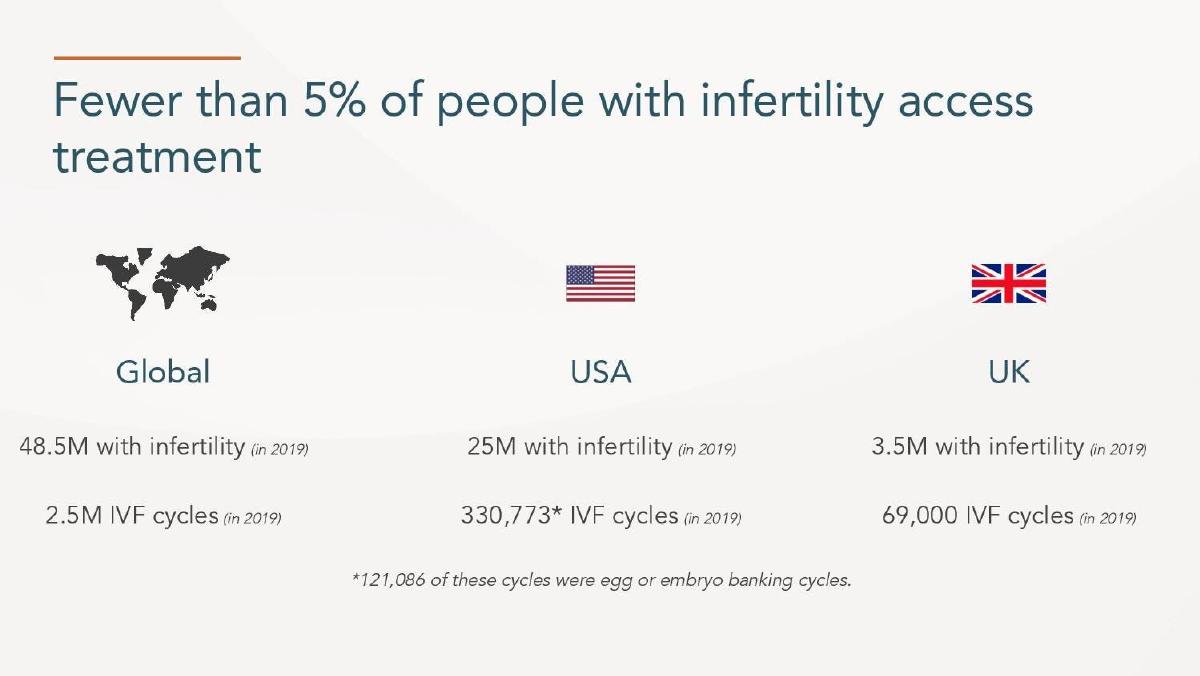
- The deck identifies a massive underserved market, stating 48.5M people faced infertility globally in 2019 while only 2.5M IVF cycles occurred (Slide 2).
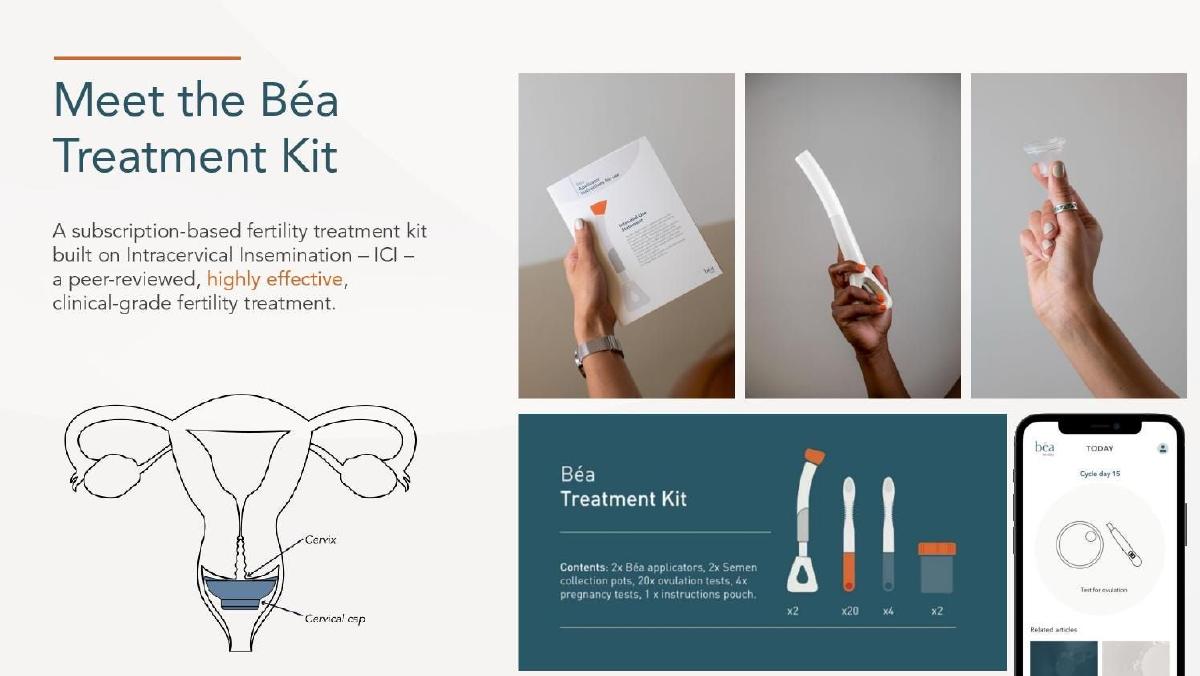
- Béa positions its product as a 'subscription-based fertility treatment kit' to ensure recurring engagement through the conception journey (Slide 4).
- The product design is highlighted through high-quality photography, emphasizing a non-clinical, user-friendly aesthetic for at-home use (Slide 4).
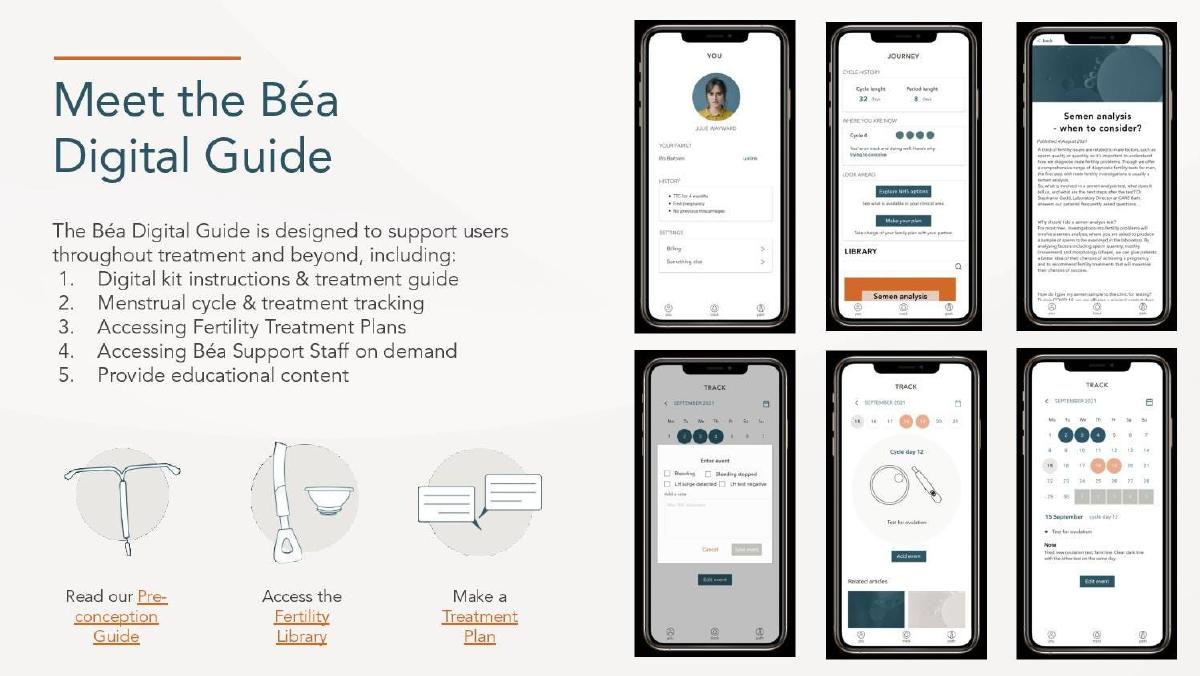
- A digital-first approach is central to the value proposition, including cycle tracking and on-demand access to support staff (Slide 5).
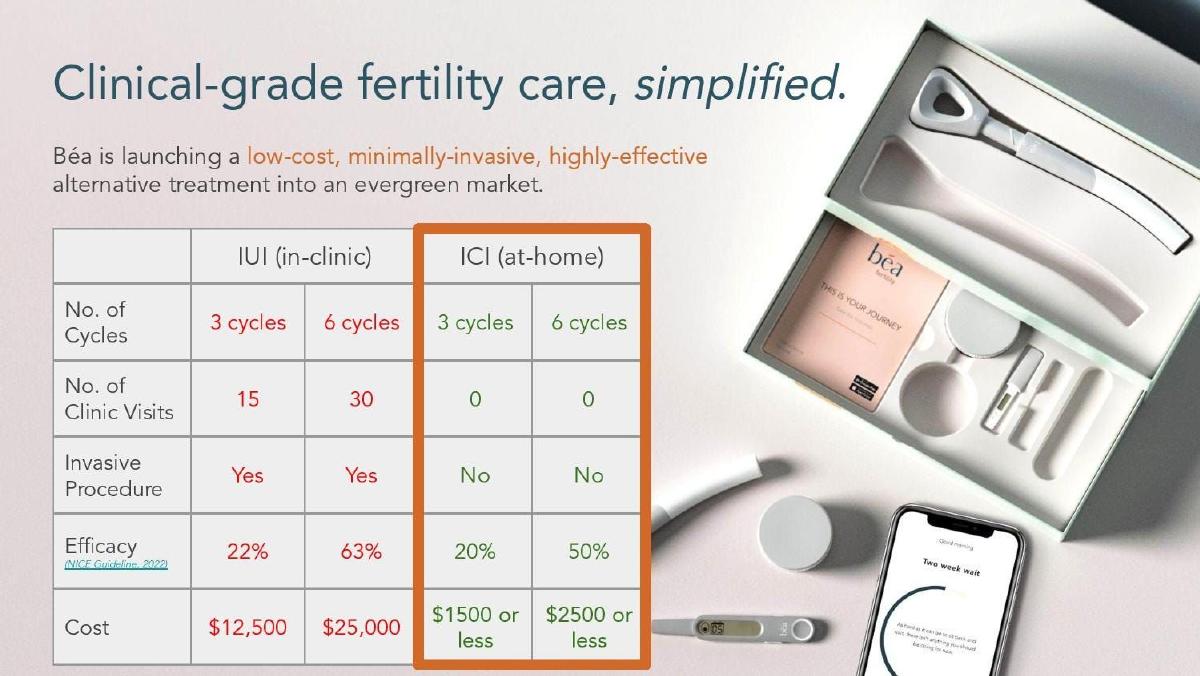
- The competitive matrix uses a 'cycles to success' metric, claiming 50% efficacy over 6 cycles for ICI compared to 63% for in-clinic IUI (Slide 6).
- Price disruption is the primary hook, offering a 3-cycle treatment for $1,500 or less, compared to $12,500 for traditional IUI (Slide 6).
- The team slide emphasizes institutional credibility, featuring logos from Sanofi, IBM, the NHS, and the World Health Organization (Slide 8).
- The deck lacks a specific funding ask, valuation, or roadmap, functioning more as a high-level vision and product summary (Slides 1-9).
The Strategy of the Access Gap
Béa Fertility’s deck is a concise 9-slide presentation that prioritizes emotional resonance and economic logic over dense technical specifications. Raising $3.2M in a Seed round (as reported by Business Insider) requires proving that a medical device can scale like a consumer product. Béa achieves this by framing infertility not just as a medical condition, but as an accessibility crisis. By highlighting that fewer than 5% of those struggling with infertility receive treatment, they immediately expand the Total Addressable Market (TAM) beyond those currently in clinics to the 95% who are priced out.
Slide 1: Title and Social Proof
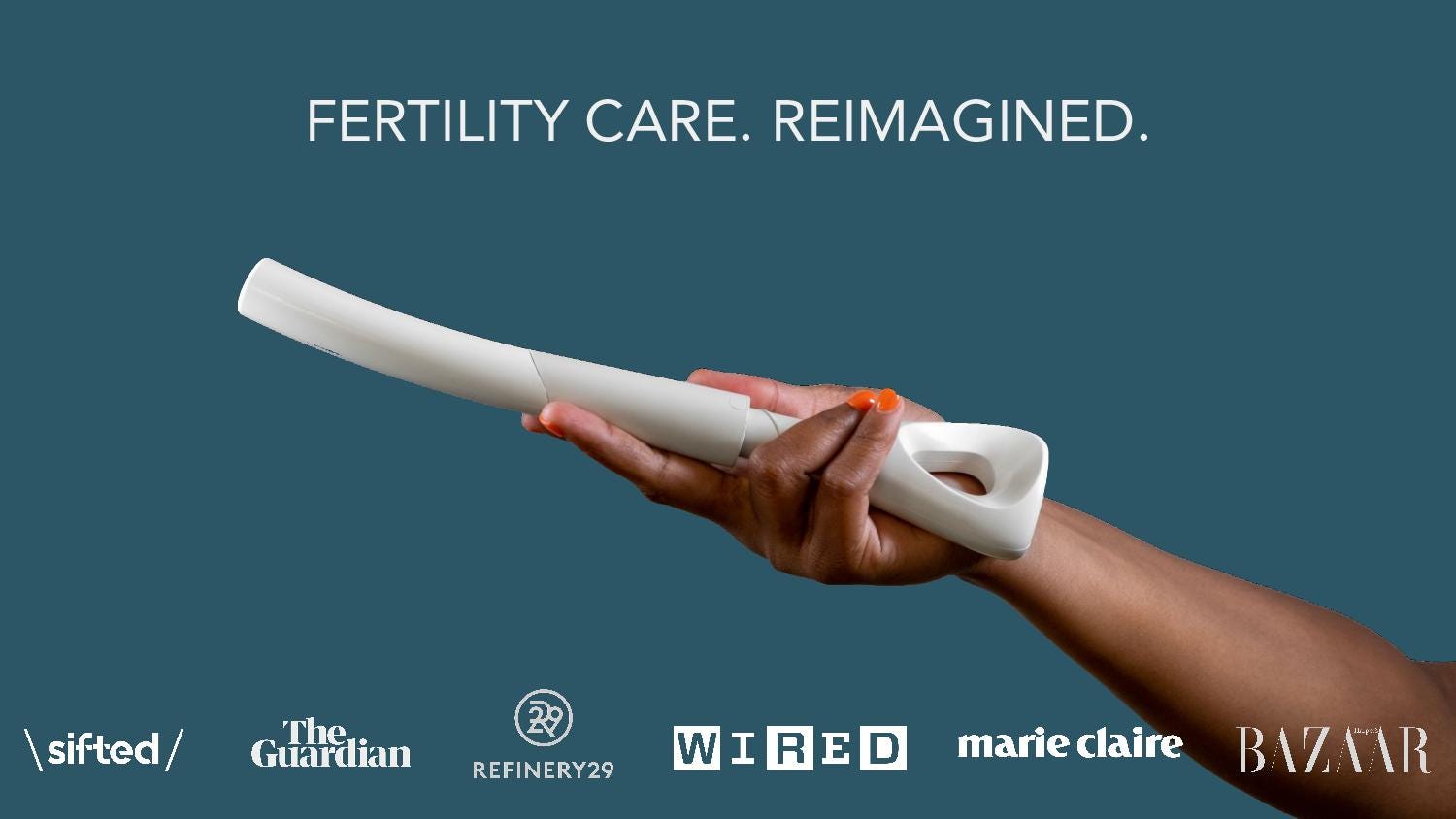
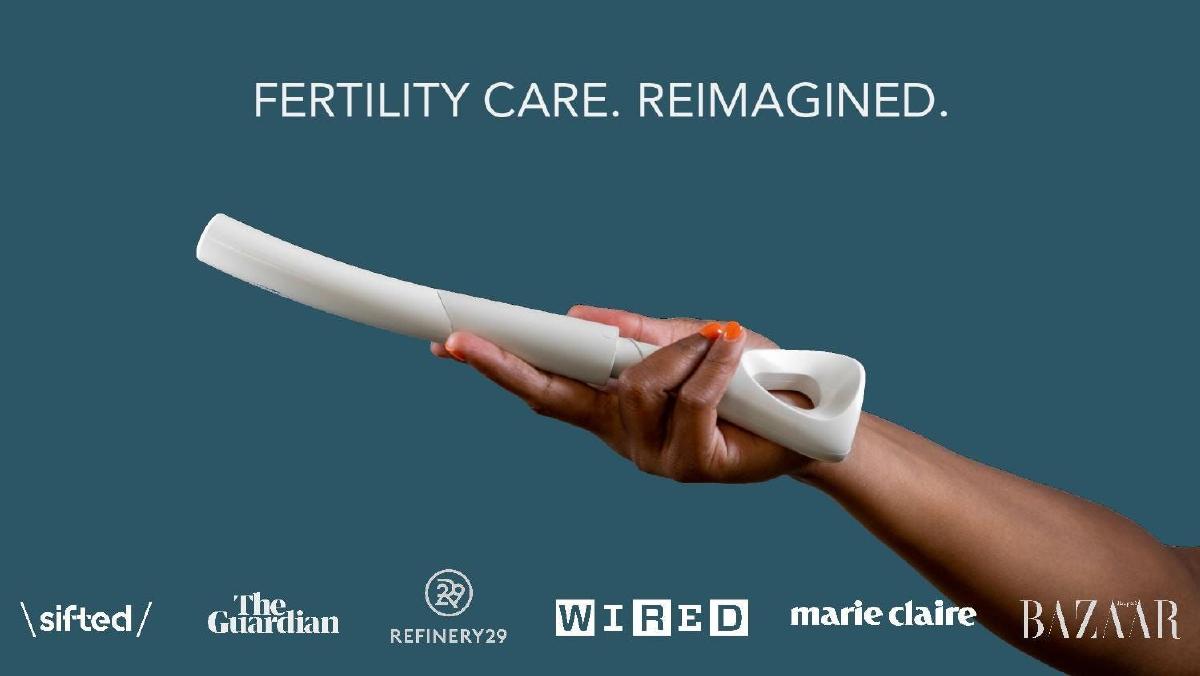
The cover slide is minimalist, featuring the brand name and the tagline "FERTILITY CARE. REIMAGINED." The central image is a hand holding the Béa applicator, which looks more like a high-end consumer electronic than a medical tool. Crucially, the bottom of the slide features a row of high-authority media logos: Sifted, The Guardian, Refinery29, Wired, Marie Claire, and Bazaar. This immediate social proof signals to investors that the brand already has significant cultural and media momentum.
Slide 2: The Macro Problem
Slide 2 establishes the scale of the problem using 2019 data. It notes 48.5M people globally with infertility, contrasted against only 2.5M IVF cycles. By breaking this down into the USA (25M infertility / 330,773 IVF cycles) and the UK (3.5M infertility / 69,000 IVF cycles), the deck argues that the current medical infrastructure is failing to meet demand by a massive margin. The headline, "Fewer than 5% of people with infertility access treatment," is the core thesis of the entire business.
Slide 3: The Emotional Burden
Healthcare investing is often driven by the 'pain' being solved. Slide 3 states that "Over 50% of women report infertility to be the most upsetting time of their entire life." The slide uses a somber illustration and text that emphasizes that access to care "should not depend on wealth and geographic location." This transitions the pitch from a cold data exercise to a mission-driven venture, which is often a requirement for attracting ESG-focused or healthcare-specialist VCs.
Slide 4: The Hardware Solution
Slide 4 introduces the "Béa Treatment Kit." It is described as a "subscription-based fertility treatment kit built on Intracervical Insemination (ICI)." The slide includes a cross-section diagram of the female reproductive system to show how the cervical cap functions. It also lists the physical contents: 2x applicators, 2x semen collection pots, 20x ovulation tests, 4x pregnancy tests, and instructions. The photography emphasizes the product's sleek, white, minimalist design, distancing it from the intimidating aesthetic of hospital equipment.
Slide 5: The Software Ecosystem
Recognizing that hardware alone rarely commands high multiples, Slide 5 introduces the "Béa Digital Guide." This app provides digital instructions, cycle tracking, treatment plans, and "on-demand" access to support staff. By including features like a "Fertility Library" and educational content, Béa positions itself as a comprehensive platform rather than a one-off kit provider. This is a key play for building long-term user data and engagement.
Slide 6: The Economic Disruption
This is the most important slide in the deck. It features a direct comparison table between in-clinic IUI and at-home ICI. The metrics are devastating for the status quo: 15-30 clinic visits for IUI versus 0 for Béa. The cost comparison is the clincher: $12,500 for 3 cycles of IUI versus "$1,500 or less" for Béa. Most importantly, it addresses the efficacy concern head-on, citing a 20% efficacy for 3 cycles of ICI compared to 22% for IUI. This slide argues that Béa offers roughly the same outcome for 12% of the cost and 0% of the travel time.
Slide 7: Market Trends and Comparables
Slide 7 contextualizes Béa within the broader "FemTech" and at-home health movement. It cites a 15% annual growth forecast for FemTech through 2031. It also lists successful at-home or digital-first comparables in other sectors: Maven and Tia (Women's Health), Invisalign and Dandy (Dental), Babylon and Teladoc (General Practice), and Lyra and Big Health (Mental Health). This "X for Y" logic helps investors understand the potential exit trajectory by looking at established unicorns in adjacent spaces.
Slide 8: The Team and Investors
The team slide is heavy on institutional pedigree. CEO Tess Cosad is noted for experience with Sanofi; CPO George Thomas comes from Trouva and IBM; Medical Director Dr. Hannah Allen is an NHS GP and former Associate Medical Director at Babylon. The advisors include a Medical Director from Maven Clinic and a former Chief Medical Officer from the WHO. The investor column lists Octopus Ventures and Jam Jar Investments, which are top-tier European funds, signaling that the company has already passed significant due diligence hurdles.
Slide 9: Clinical Validation
The final slide is a quote from a Consultant OBGYN at Barts Health NHS Trust: "I am convinced ICI has the potential to fill a gap in an evidence-based approach to infertility." Ending on a note of clinical validation is a strategic choice for a medical device company, as it preempts the 'does this actually work?' question that lingers over at-home health solutions.
What Béa Fertility Does Well
The deck is exceptionally strong at comparative positioning . By placing their $1,500 kit directly next to a $12,500 clinical procedure, the value proposition becomes self-evident. They don't need to explain why people want the product; the math does the talking. Additionally, the aesthetic consistency of the deck—using a muted, professional color palette and high-quality lifestyle photography—helps build the 'premium yet accessible' brand identity necessary for a D2C medical product.
What Is Missing from the Deck
The most notable omission is a Financial Roadmap . There are no projections for revenue, unit economics (CAC/LTV), or specific sales targets. While the kit is mentioned as "subscription-based," the deck doesn't explain how that subscription is structured or what the margins are on the hardware. Furthermore, there is no 'Ask' slide . The deck does not state how much they are raising in this specific round or how the funds will be allocated (e.g., R&D, marketing, or regulatory expansion). Finally, there is no mention of the regulatory pathway (FDA/CE) which is usually a primary concern for healthcare investors.
Founder Takeaways: The Power of the Table
Founders should study Slide 6. Many startups try to hide their weaknesses or downplay competitors. Béa does the opposite: they list the competitor's efficacy (22%) and their own (20%) honestly. By showing that their efficacy is slightly lower but their cost is 90% lower, they create a 'no-brainer' scenario for the 95% of the market that cannot afford the 2% extra efficacy of a clinic. Honest comparison tables build more trust with investors than 'all-green' checkmark grids that feel biased.
Frequently asked questions
- What is the primary clinical method used by Béa Fertility?
- Béa Fertility utilizes Intracervical Insemination (ICI). According to Slide 4, this is a peer-reviewed, clinical-grade fertility treatment. The kit is designed to allow users to perform this procedure at home, bypassing the need for the 15 to 30 clinic visits typically required for in-clinic Intrauterine Insemination (IUI).
- How does Béa Fertility compare its pricing to traditional treatments?
- Slide 6 provides a direct comparison: a 3-cycle treatment with Béa costs '$1,500 or less,' whereas a 3-cycle in-clinic IUI treatment costs approximately $12,500. For 6 cycles, Béa estimates a cost of '$2,500 or less' compared to $25,000 for traditional clinical paths.
- What is included in the Béa Treatment Kit?
- As detailed on Slide 4, the kit contains two Béa applicators, two semen collection pots, 20 ovulation tests, four pregnancy tests, and an instructions pouch. This hardware is paired with a digital guide for tracking and support.
- Who are the key investors mentioned in the deck?
- Slide 8 lists several prominent venture capital firms, including Q Ventures, Calm/Storm, Octopus Ventures, and Jam Jar Investments. The presence of these logos suggests the company had already secured significant institutional backing prior to this specific deck iteration.
- Does the deck explain the regulatory status of the device?
- The deck does not explicitly state the current FDA or CE mark status, but it leans heavily on clinical credibility. Slide 9 features a quote from a Consultant OBGYN at Barts Health NHS Trust, and Slide 8 highlights a Medical Director with experience at the NHS and Babylon Health.