Backbone’s 19-slide Series A deck is a masterclass in ecosystem positioning. Rather than pitching a simple hardware peripheral, the company framed its product as the essential interface for the $86.3B mobile gaming market. By highlighting the technical superiority of modern smartphones over the Nintendo Switch and the fragmentation of cloud services like Xbox Game Pass and PlayStation Remote Play, Backbone presented itself as the unifying 'Backbone' of mobile gaming. The deck relies heavily on high-quality product photography and strategic partnerships, notably with Microsoft, to validate its…
Key takeaways
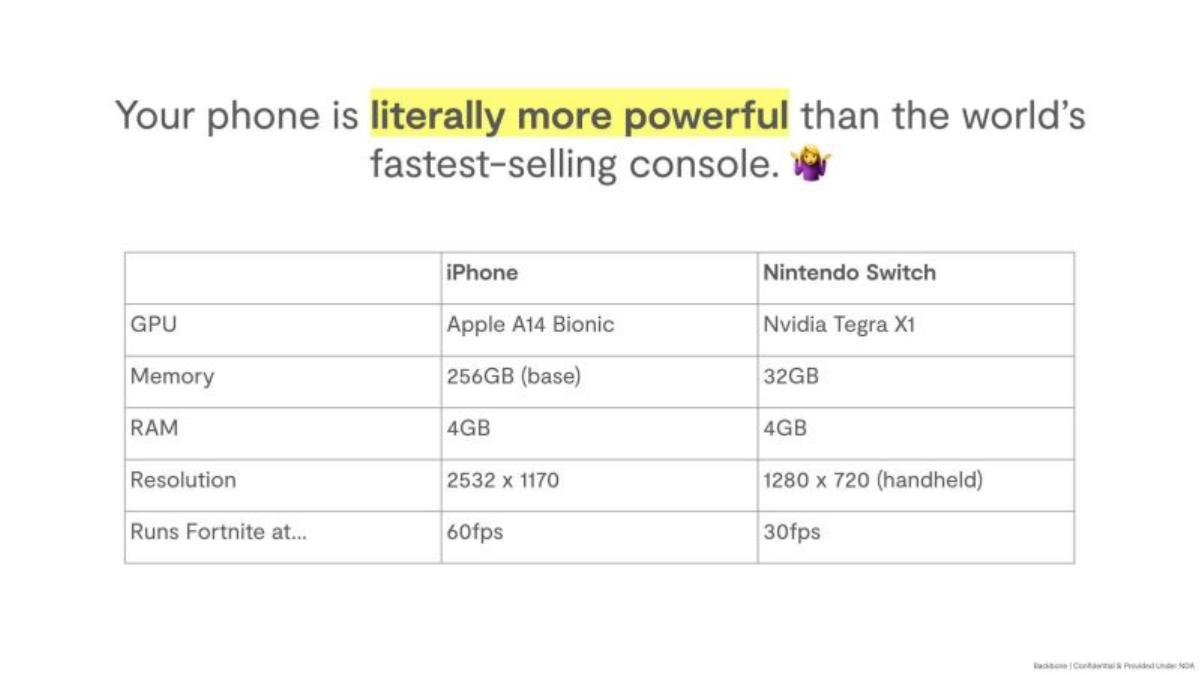
- The deck positions the iPhone as technically superior to the Nintendo Switch, noting it runs Fortnite at 60fps compared to the Switch's 30fps (Slide 3).
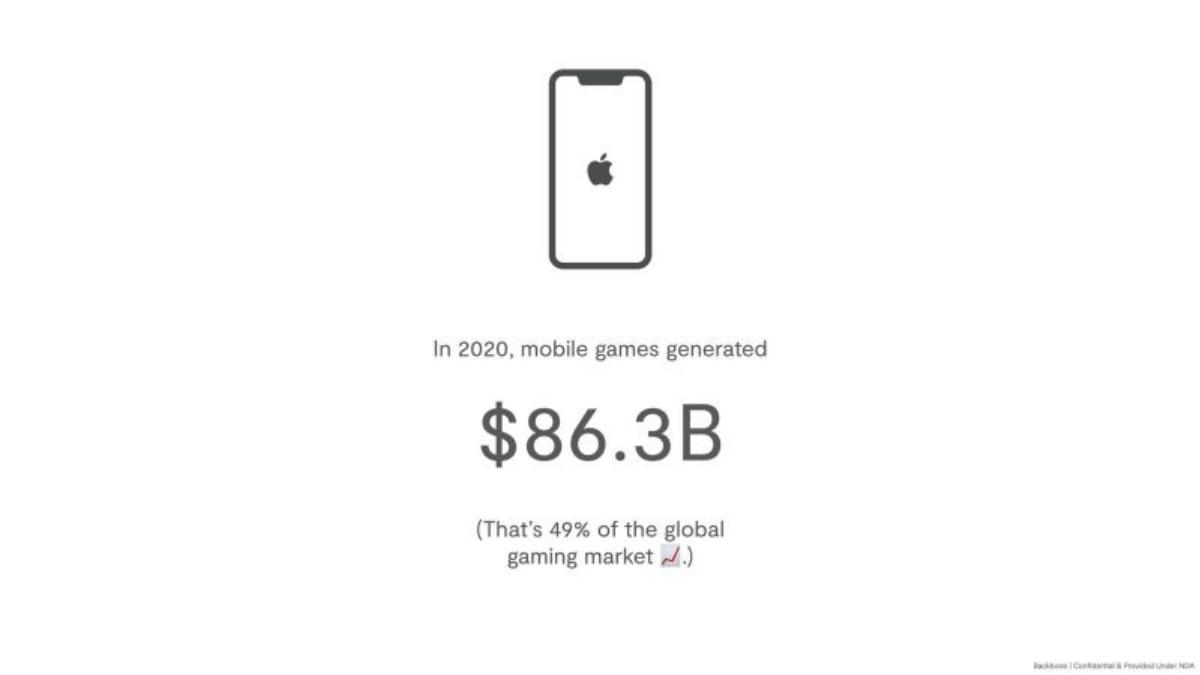
- Backbone leverages a massive TAM by citing that mobile games generated $86.3B in 2020, representing 49% of the global gaming market (Slide 4).
- The company identifies a 'fun' gap in the market, claiming that while tech giants are building the 'Netflix of Gaming,' none are optimizing the actual player experience (Slide 7).
- A strategic partnership with Xbox is used as a primary validation point for their 'Partner tie-ups' core offering (Slide 14).
- The product is positioned as a 'neutral third party' that optimizes the reach of services like Apple Arcade, Stadia, and GeForce Now (Slide 17).
- The deck uses a recurring 'Core Offerings' framework to transition between hardware (Devices), ecosystem (Partners), and recurring revenue (Backbone+) (Slides 10, 13, 18).
- Backbone uses high-profile media validation, featuring a quote from TechCrunch's Editor-in-Chief calling it 'the way of the future' (Slide 9).
- The deck completely omits a team slide, financial projections, and a specific 'Ask' or use of funds.
The Vision: Turning the iPhone into the Next Xbox
Backbone’s pitch deck begins not with a product feature, but with a bold hardware-agnostic claim. By leveraging the existing hardware in the pockets of billions, they bypass the traditional console manufacturing struggle. The deck is visually sparse, relying on high-contrast text and premium product renders to convey a sense of 'Apple-level' design quality.
Slides 1-3: The Hardware Arbitrage
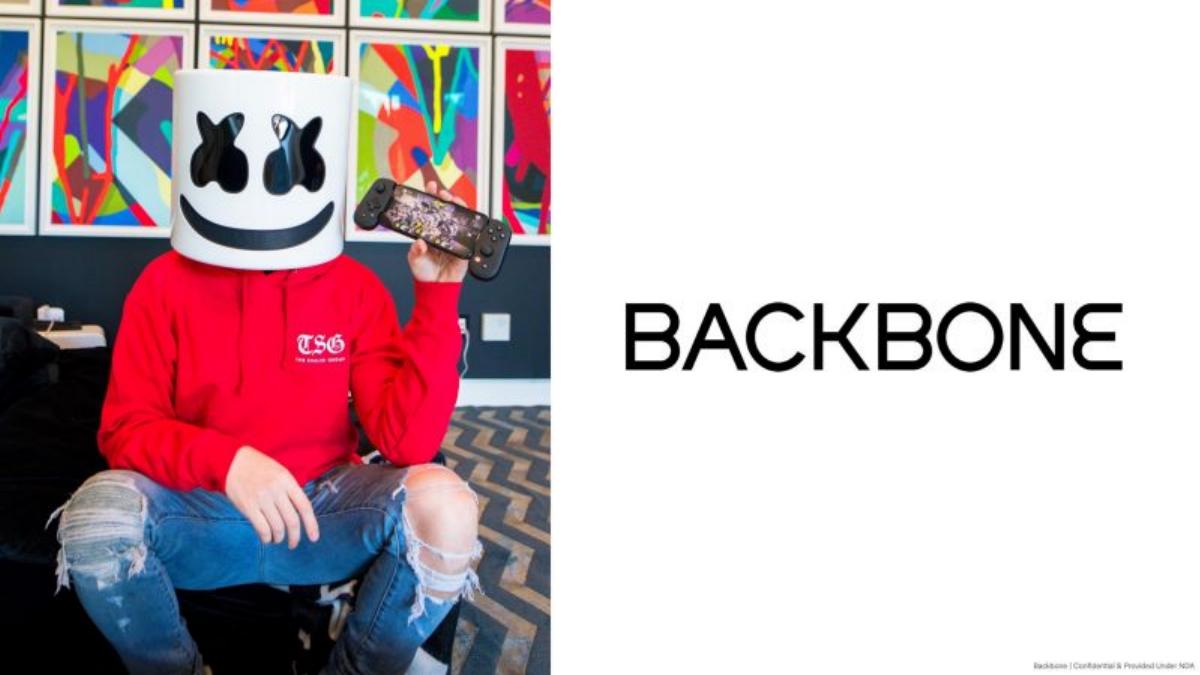
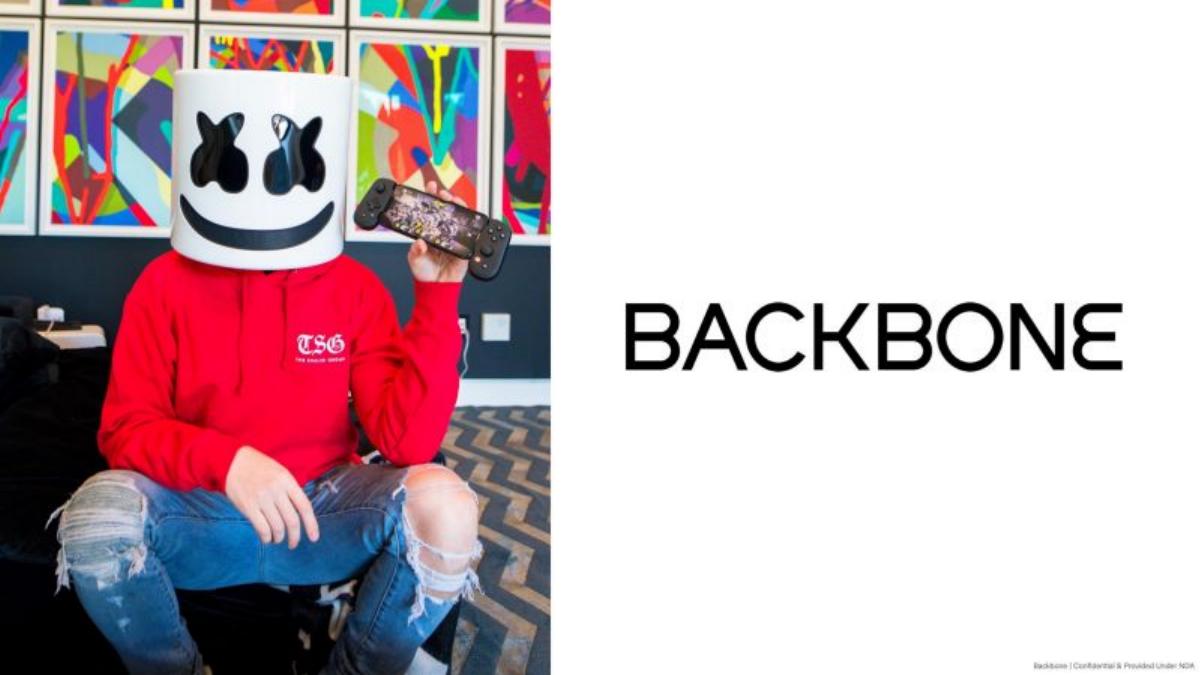
Slide 1 features the artist Marshmello holding the Backbone device. This immediately signals cultural relevance and high-profile backing without saying a word. The branding is clean, and the 'Confidential' footer suggests this is a late-stage or highly controlled Series A document.
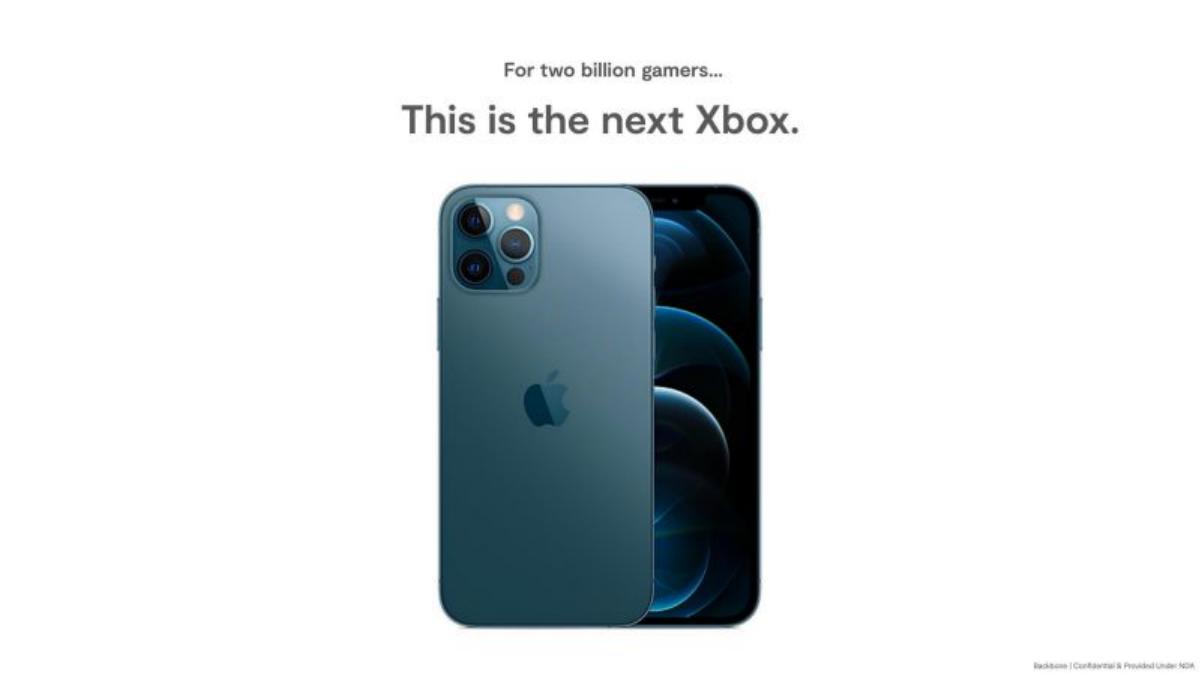
Slide 2 introduces the core thesis: 'For two billion gamers... This is the next Xbox.' By showing a standard iPhone, Backbone is telling investors that they aren't just selling a controller; they are unlocking a console that already exists. This is a powerful 'Trojan Horse' strategy.
Slide 3 provides the technical 'Why Now.' It compares the iPhone (Apple A14 Bionic) to the Nintendo Switch (Nvidia Tegra X1). The slide notes that the iPhone has 256GB base memory vs. the Switch's 32GB and runs Fortnite at 60fps compared to the Switch's 30fps. This data point is crucial because it reframes the smartphone from a 'casual gaming device' to a 'technically superior console' that simply lacks a physical interface.
Slides 4-7: Market Fragmentation as an Opportunity
Slide 4 establishes the TAM (Total Addressable Market). It states that in 2020, mobile games generated $86.3B , which accounted for 49% of the global gaming market . This justifies why a Series A investor should care about a mobile-first peripheral.
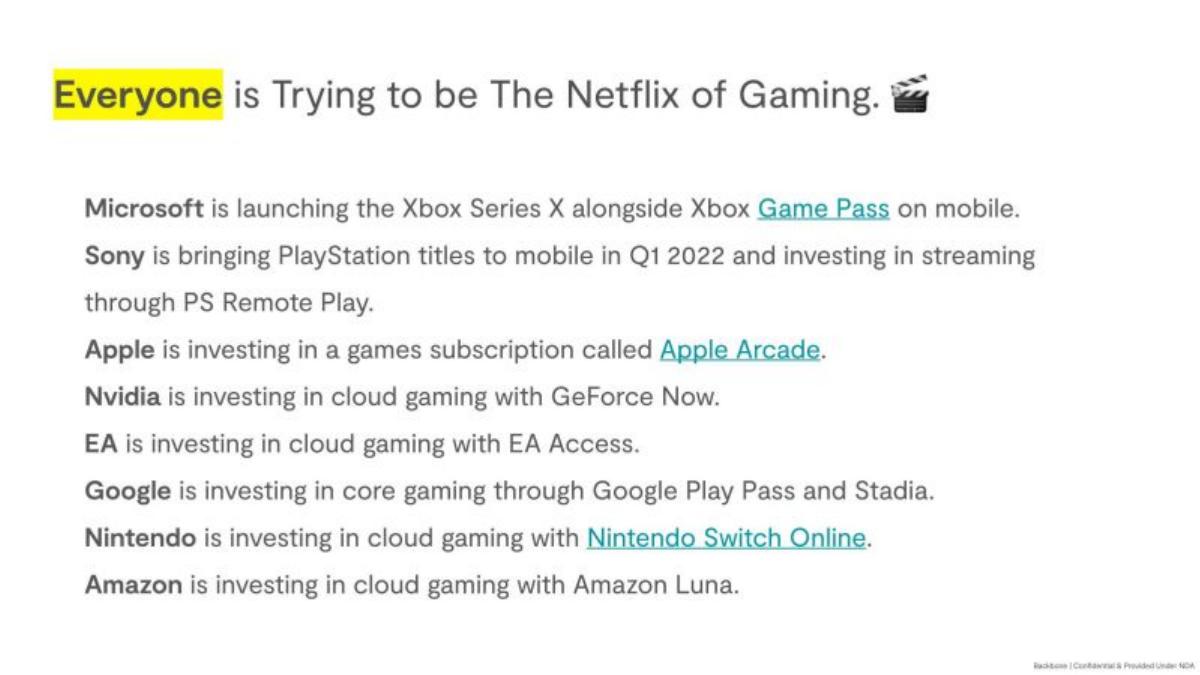
Slide 5 and 6 highlight the 'Cloud Wars.' Backbone lists Microsoft, Sony, Apple, Nvidia, EA, Google, Nintendo, and Amazon as all investing in mobile gaming subscriptions. Slide 6 specifically uses the phrase 'Everyone is Trying to be The Netflix of Gaming.' This sets up the 'Conflict' in the narrative: the market is flooded with content and services, but the user experience is fragmented.
Slide 7 delivers the 'Gap' in the market: 'But nobody is thinking about how to actually make the experience of playing these games fun.' This is the pivot from the 'Problem' to the 'Backbone Solution.'
Slides 8-12: The Product and the Platform
Slide 8 introduces the brand as the 'one place for all the things we play,' showing the Backbone logo above the icons for Xbox Game Pass, PlayStation Remote Play, and Apple Arcade. This positions Backbone as a meta-platform—an aggregator of aggregators.
Slide 9 uses third-party validation from Matthew Panzarino, Editor-in-Chief of TechCrunch, who calls Backbone 'the way of the future for mobile gaming.' Using a quote from a respected tech journalist is a standard but effective way to build credibility before diving into product specifics.
Slide 10 introduces the 'Core Offerings' framework: Devices, Partner tie-ups, and Backbone+ . This is the most important slide for understanding their business model. It shows that the company is thinking about hardware as a customer acquisition cost (CAC) play for a larger ecosystem and subscription revenue.
Slides 11 and 12 are pure product beauty shots. Slide 11 shows the hardware alone, emphasizing its sleek, expandable design. Slide 12 shows the device in action, running what appears to be Halo (via Xbox Remote Play). This visual proof of 'AAA gaming on a phone' is the 'Aha!' moment of the deck.
Slides 13-17: Partnerships and Neutrality
Slide 13 repeats the 'Core Offerings' slide, a common rhetorical device to keep the investor oriented as the deck moves into the second pillar: Partnerships.
Slide 14 highlights their June partnership with Xbox. This is a massive validation point. If Microsoft—the creator of the Xbox—is partnering with Backbone to bring their games to mobile, it proves the 'Next Xbox' claim from Slide 2 wasn't just hyperbole.
Slide 15 shows the Backbone software interface. It looks like a native console UI, featuring 'Xbox Remote Play' and 'Call of Duty Mobile.' This demonstrates that Backbone is building a software layer that sits on top of iOS, creating a 'walled garden' experience for gamers.
Slide 16 and 17 reinforce their role in the ecosystem. Slide 16 quotes the 'Xbox Boss' (Phil Spencer) saying he wants to reach 2 billion gamers. Slide 17 then positions Backbone as the 'independent and neutral third party' that optimizes the ability for these services to reach those players. This 'Switzerland' positioning is a classic platform play.
Slides 18-19: The Subscription Play
Slide 18 returns to the 'Core Offerings' for the final time, highlighting 'Backbone+.' This is the subscription service that provides the recurring revenue VCs crave. While the slide doesn't detail the pricing or features of Backbone+, it signals that the company is not just a 'one-and-done' hardware seller.
Slide 19 ends with a final high-quality render of the device running a variety of games (Doom, Minecraft, Genshin Impact). It’s a 'Vision' slide that leaves the investor with the image of a complete, polished ecosystem.
What Works in This Deck
The 'Next Xbox' Hook: Reframing a peripheral as a 'console' is a brilliant piece of positioning. It moves the product from a 'nice-to-have accessory' to a 'platform enabler.' · Technical Comparison: Slide 3 is the strongest slide in the deck. It uses objective specs to prove that the phone is already a better console than the Switch, removing the 'mobile games are just for kids' bias. · Ecosystem Neutrality: By showing logos for Xbox, PlayStation, and Steam together, Backbone positions itself as the only winner regardless of which cloud service wins the 'Netflix of Gaming' war. · Visual Consistency: The deck feels like a product from a company that cares about design. For a hardware company, the aesthetic of the deck is a proxy for the quality of the device.
What is Missing
The Team: There is no team slide. While the catalogue facts mention celebrity investors, the actual operators and their backgrounds (likely ex-Apple, Oculus, or gaming veterans) are absent. · Unit Economics: There is no mention of the Bill of Materials (BOM), retail price, or margins. For a hardware-led Series A, investors usually want to see that the hardware is at least break-even or profitable. · Traction Metrics: The deck is surprisingly light on numbers. There are no 'units sold,' 'active users,' or 'retention' figures for the Backbone+ app. · The Ask: The deck ends abruptly without a call to action or a slide explaining how the $40M will be spent (e.g., Android expansion, international retail, R&D).
What Founders Should Copy
The 'Why Now' Slide: Use a technical comparison table like Slide 3 to show why your solution is finally possible or superior due to external hardware/software trends. · The 'Core Offerings' Anchor: If you have a complex business model (Hardware + SaaS + Partnerships), use a recurring 'roadmap' slide to guide the investor through each pillar. · Third-Party Validation: Don't just say your product is good; find a quote from a major industry publication or a partner (like the Xbox boss) that validates your market position. · Minimalist Storytelling: Backbone proves you don't need 50 words per slide. If your product is visual, let the images do the heavy lifting and keep the text to one 'power statement' per slide.
Frequently asked questions
- What is Backbone's primary business model according to the deck?
- Backbone utilizes a multi-layered business model referred to as 'Core Offerings' on Slide 10. This includes hardware sales ('Devices'), strategic ecosystem integration ('Partner tie-ups'), and a software subscription layer called 'Backbone+.' This transition from pure hardware to a hardware-enabled SaaS model is a key feature of their Series A strategy.
- How does Backbone differentiate itself from console manufacturers?
- Instead of competing with consoles, Backbone positions itself as an enabler for them. Slide 2 explicitly states 'This is the next Xbox,' referring to an iPhone. Slide 3 provides a technical comparison showing that an iPhone's A14 Bionic chip and higher resolution (2532 x 1170) outperform the Nintendo Switch, making the phone the superior platform if given the right interface.
- Who are the key investors mentioned in the Backbone Series A?
- According to the catalogue facts, the $40M round was led by Index Ventures. The round also featured a significant roster of celebrity investors, including Kevin Hart, The Weeknd, Post Malone, Amy Schumer, and Marshmello. Marshmello is also featured prominently on the title slide of the deck.
- What market problem does Backbone claim to solve?
- Backbone addresses the fragmentation of the mobile gaming experience. Slide 6 lists eight major companies (Microsoft, Sony, Apple, etc.) trying to be the 'Netflix of Gaming.' Slide 7 argues that 'nobody is thinking about how to actually make the experience of playing these games fun,' positioning Backbone as the physical and digital 'place for all the things we play' (Slide 8).
- Is there a specific 'Ask' or valuation in the deck?
- No. The 19-slide deck provided does not include a slide detailing the amount of capital being raised, the valuation, or the specific use of funds. It functions more as a high-level vision and product-market fit deck, likely supplemented by a separate data room for financials.