Charlie's pitch deck outlines a vision for a 'Social Selling Community' that leverages word-of-mouth marketing (WOMM) to drive e-commerce sales. The company positions itself as a hybrid of a marketplace and a network marketing platform, where individual influencers (called 'Charlies') earn commissions by promoting brands to their personal networks. The deck relies heavily on third-party industry data to validate the power of social recommendations, citing that 92% of people trust recommendations from friends and family over advertising. While the deck provides a clear user flow for both influ…
Key takeaways
- The platform targets millennial women in the U.S. to act as 'Charlies,' earning commissions through a business system provided by the company (Slide 1).
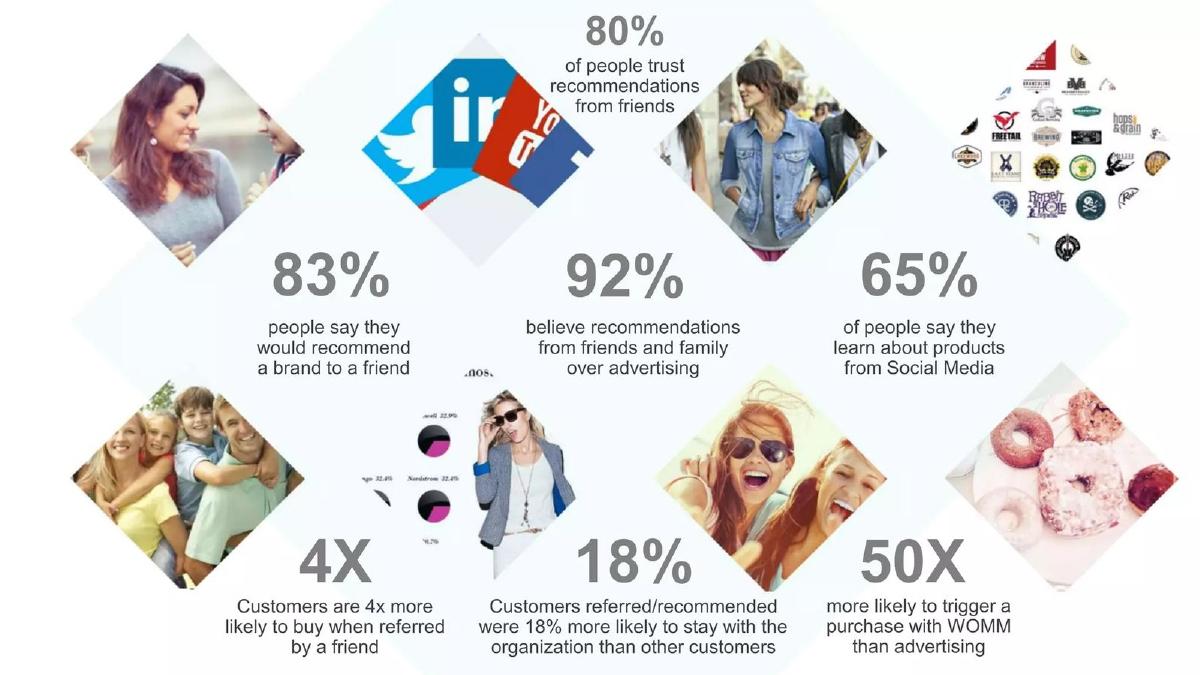
- Industry data highlights that word-of-mouth marketing is 50x more likely to trigger a purchase than traditional advertising (Slide 2).
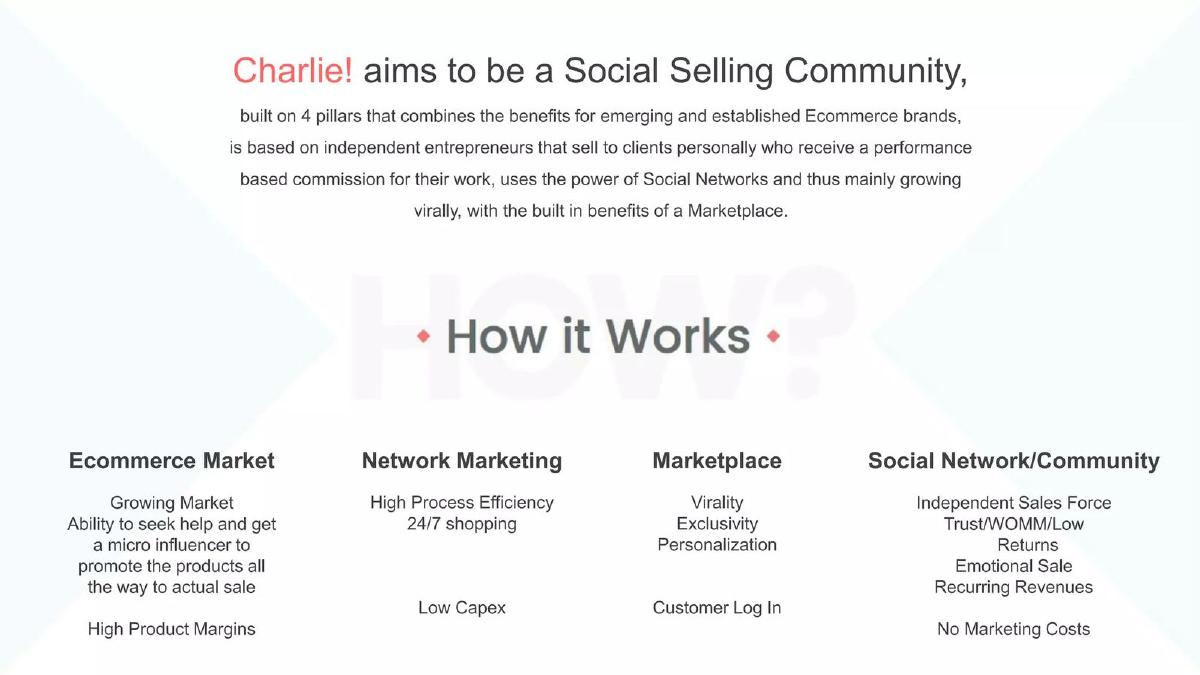
- The business model is built on four pillars: Ecommerce Market, Network Marketing, Marketplace, and Social Network/Community (Slide 4).
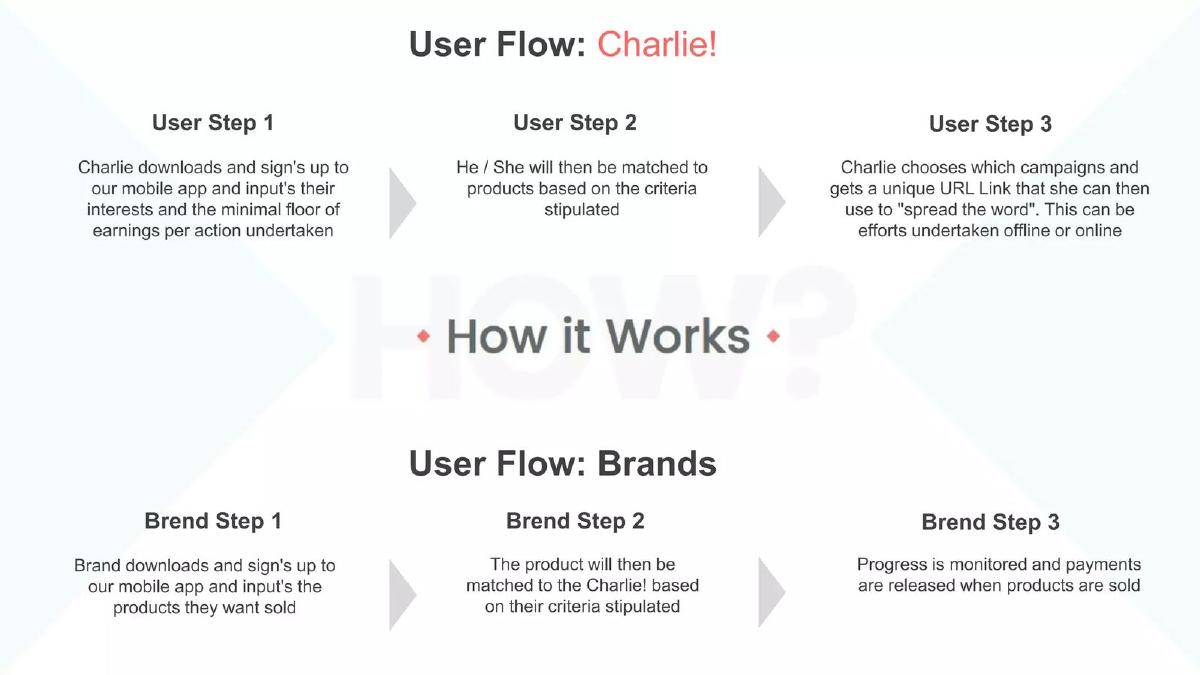
- The user flow requires influencers to set a 'minimal floor of earnings per action' and brands to match with influencers based on stipulated criteria (Slide 5).
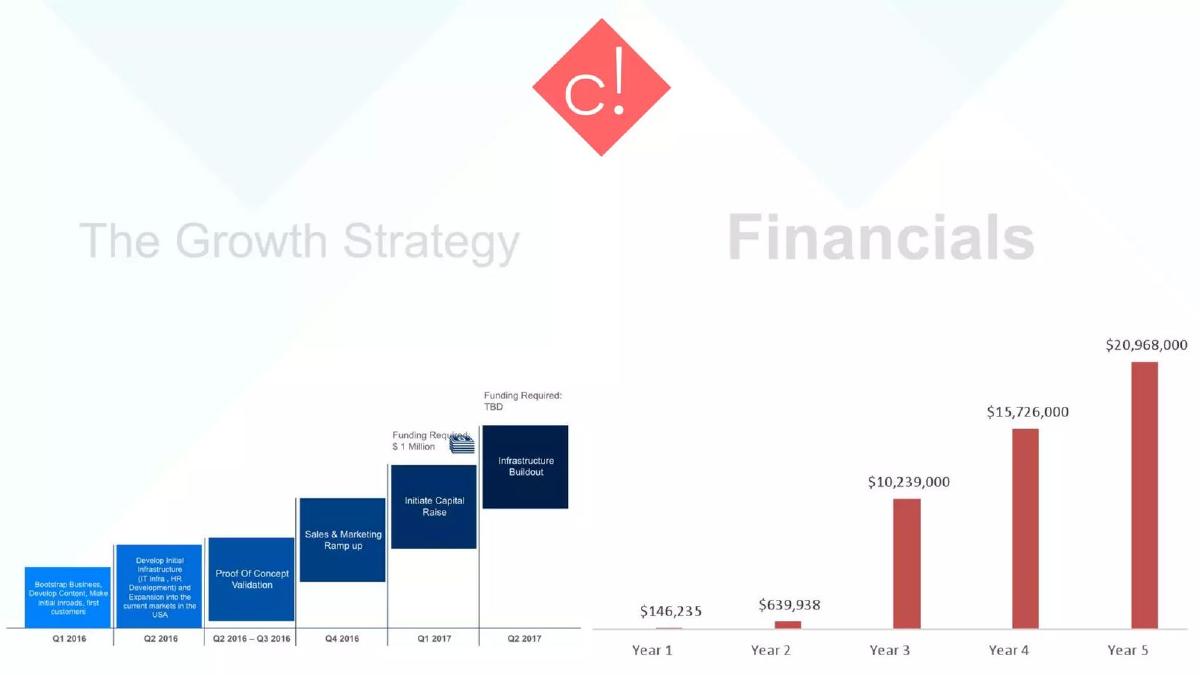
- Charlie planned a $1 million capital raise for Q1 2017 to transition from proof-of-concept to sales and marketing ramp-up (Slide 6).
- Financial projections show a significant revenue leap from $639,938 in Year 2 to $20,968,000 by Year 5 (Slide 6).
- The deck identifies two distinct competitive landscapes: sales-focused affiliate networks and marketing-focused influencer collaboration platforms (Slides 8 and 9).
- There is no mention of the founding team, their backgrounds, or any existing brand partnerships in the 9-slide presentation.
Charlie Pitch Deck Teardown
The Charlie pitch deck, titled "Charlie pitch deck new v3," is a 9-slide presentation that attempts to bridge the gap between traditional affiliate marketing and modern influencer culture. The company, also referred to as "Get Me Charlie," positions itself as a solution for emerging brands that lack the resources to build their own influencer networks. By framing their influencers as "Charlies"—specifically millennial women—the company leans into the demographic most active in social commerce.
Slide 1: The Vision and Mission
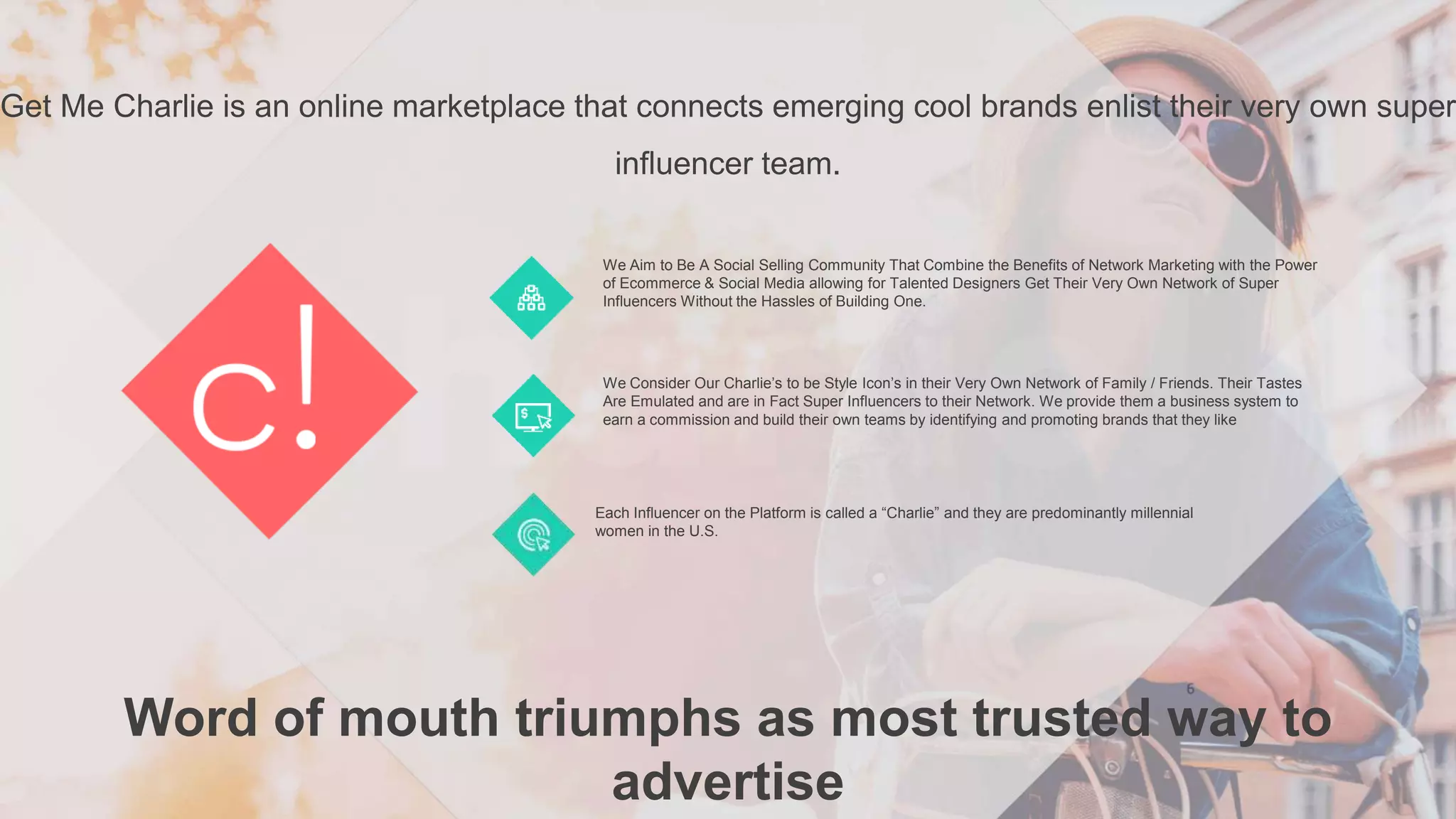
The opening slide introduces "Get Me Charlie" as an online marketplace. It defines the core mission: combining network marketing with e-commerce and social media. The slide identifies the primary user base as "millennial women in the U.S." who are considered "Style Icon's" within their own networks of family and friends. The slide uses the term "super influencers" to describe these individuals, suggesting that personal trust outweighs follower count. The tagline at the bottom, "Word of mouth triumphs as most trusted way to advertise," sets the stage for the market validation that follows.
Slide 2: Market Validation through Data
Slide 2 is a collage of statistics intended to prove the efficacy of word-of-mouth marketing (WOMM). Key figures cited include: 92% of people believe recommendations from friends and family over advertising, and customers are 4x more likely to buy when referred by a friend. Most notably, the slide claims WOMM is 50X more likely to trigger a purchase than advertising. While these stats are compelling, they are generic industry figures rather than data specific to Charlie’s own platform performance.
Slide 3: Defining Social Selling
This slide attempts to define "Social Selling" as an evolution of e-commerce. It lists eleven attributes, such as "Personal Contact," "Expert Advice," and "Emotional Attachment to Shop." The slide argues that social selling makes the internet more "personal." However, this slide is largely conceptual and doesn't explain how the Charlie platform specifically facilitates these attributes better than existing social networks like Instagram or Pinterest.
Slide 4: The Four Pillars of the Business Model
Charlie breaks its operations down into four pillars: Ecommerce Market , Network Marketing , Marketplace , and Social Network/Community . Under these pillars, the deck lists benefits like "High Product Margins," "Low Capex," and "No Marketing Costs." The claim of "No Marketing Costs" is particularly bold, likely referring to the brand's perspective, as the influencers act as the marketing engine. This slide is the closest the deck gets to a formal business model, though it remains high-level.
Slide 5: User Flow for Charlies and Brands
Slide 5 provides a step-by-step process for both sides of the marketplace. For the "Charlie" (influencer), the process involves downloading the app, inputting interests and a "minimal floor of earnings per action," and then sharing unique URL links. For the "Brend" (a misspelling of Brand on the slide), the process involves signing up, listing products, and monitoring progress. The mention of a "minimal floor of earnings" suggests a bidding or negotiation mechanism within the app, which is a specific functional detail that adds clarity to the product.
Slide 6: Growth Strategy and Financial Projections
This slide is split between a timeline and a bar chart. The timeline shows a "Bootstrap" phase in Q1 2016, leading to a "Proof of Concept Validation" in mid-2016. It notes a $1 Million funding requirement for Q1 2017. The financial chart projects revenue starting at $146,235 in Year 1 and skyrocketing to $20,968,000 by Year 5. The jump from Year 2 ( $639,938 ) to Year 3 ( $10,239,000 ) represents a 1,500% increase, which is an extraordinary claim that requires significant supporting evidence not found in the rest of the deck.
Slide 7: Industry Overview: E-Commerce
Slide 7 returns to macro-economic data, quoting eMarketer reports. It notes that e-commerce sales will eclipse $3.5 trillion within five years and that U.S. e-retail sales will reach $548.22 billion by 2019. While this confirms that Charlie is playing in a large and growing market, the slide is text-heavy and feels like a filler that could have been summarized in a single graphic to make room for more company-specific data.
Slides 8 & 9: Competitive Landscape
The final two slides categorize competitors into "Sales competitors" and "Marketing competitors." Slide 8 lists platforms like Universal Avenue and Boostinsider, along with a logo cloud of affiliate networks like Rakuten, Amazon, and ShareASale. Slide 9 focuses on influencer collaboration and support platforms, naming FameBit, IZEA, Mavrck, and Traackr. By separating these, Charlie acknowledges that it competes both for brand marketing budgets and for the actual point-of-sale transaction. However, the deck does not include a "Competitive Advantages" or "Why We Win" section to differentiate itself from these established players.
What Charlie Does Well
Clear Target Audience: The deck identifies a very specific niche—millennial women in the U.S.—which helps investors visualize the brand identity and the likely look and feel of the platform. · User Flow Clarity: Slide 5 does a good job of explaining how the two sides of the marketplace interact. The mention of "unique URL links" and "earnings per action" makes the technical implementation feel grounded. · Market Context: The deck successfully argues that traditional advertising is losing trust and that social recommendations are the future of retail, using strong (if generic) statistics to back this up.
What is Missing from the Charlie Pitch Deck
The Team: There is no team slide. Investors fund people, especially at the seed stage. The absence of founder bios, relevant experience, or even names is a major red flag. · Current Traction: The timeline on Slide 6 mentions a "Proof of Concept Validation" and "initial inroads" in 2016. However, there are no actual numbers—no user counts, no brand names, and no GMV figures—to prove that the concept was actually validated. · Use of Funds: While the deck asks for $1 million, it doesn't explain how that money will be allocated between engineering, sales, marketing, or operations. · Unit Economics: For a marketplace, understanding the take rate, customer acquisition cost (CAC), and lifetime value (LTV) is essential. The deck provides total revenue projections but no insight into the margins or the cost of acquiring a new "Charlie." · Product Visuals: The deck mentions a mobile app several times, but there are no screenshots or mockups of the user interface.
Founder Lessons: What to Copy and What to Avoid
Copy the Pillar Approach: Slide 4's breakdown of the business into four pillars is a good way to explain a complex, multi-sided business model. It allows you to address different value propositions (efficiency for brands, income for influencers) in a structured way.
Avoid Generic Data Overload: Slides 2 and 7 rely entirely on third-party data. While this is fine for setting the scene, it shouldn't take up 22% of your deck. Founders should prioritize their own data—even if it's just from a small pilot—over industry reports that any competitor could cite.
Avoid Unexplained Revenue Jumps: If your revenue projections show a 15x increase in a single year (as seen between Year 2 and Year 3 on Slide 6), you must provide a slide explaining the "inflection point." Is it a new market entry? A viral loop? A partnership? Without an explanation, these numbers look like guesswork.
Proofread for Professionalism: The misspelling of "Brand" as "Brend" twice on Slide 5 is a small but distracting error that can undermine a founder's attention to detail in the eyes of an investor.
Frequently asked questions
- What is the core value proposition of Charlie?
- Charlie aims to democratize influencer marketing by allowing 'emerging cool brands' to enlist a team of 'super influencers' without the hassle of building their own network. For the influencers, it provides a 'business system' to earn commissions by promoting brands they like to their friends and family, essentially turning personal social circles into a decentralized sales force.
- How does the platform match brands with influencers?
- According to the user flow on slide 5, influencers (Charlies) sign up and input their interests and a minimum earnings floor. Brands sign up and list products they want to sell. The platform then matches products to influencers based on the criteria stipulated by both parties, providing the influencer with a unique URL to track sales.
- What are the biggest gaps in this pitch deck?
- The most notable omission is the team slide; investors cannot evaluate the founders' ability to execute. Additionally, there is no evidence of current traction (users, brands, or GMV) despite the deck mentioning a 'Proof of Concept Validation' phase in 2016. The deck also lacks a detailed breakdown of how the $1 million investment will be spent.
- Is the market opportunity clearly defined?
- The deck provides extensive third-party data from eMarketer regarding the growth of e-commerce, projecting U.S. e-retail sales to reach $548.22 billion by 2019. While this shows a large macro-market, it doesn't specifically quantify the 'Social Selling' or 'Influencer Marketing' sub-sectors that Charlie actually operates within.
- What is the revenue model for Charlie?
- While not explicitly detailed in a 'Business Model' slide, slide 4 and 5 indicate a commission-based structure. Influencers receive a 'performance-based commission,' and payments are released when products are sold. This implies Charlie likely takes a percentage of the transaction or a fee from the brand for facilitating the match and sale.