The ChangeJar pitch deck is a masterclass in minimalist visual storytelling, though it leaves significant analytical gaps. Founded in 2014, the Ottawa-based startup targets the 65 billion small retail transactions currently dominated by cash due to high credit card fees. The deck uses a progressive disclosure format, slowly building the case for a 'mobile cash' platform that eliminates fees and chargebacks for merchants. While it boasts impressive early traction with 7,000+ committed locations (Slide 14), the deck completely omits a business model, financial projections, and a specific fundin…
Key takeaways
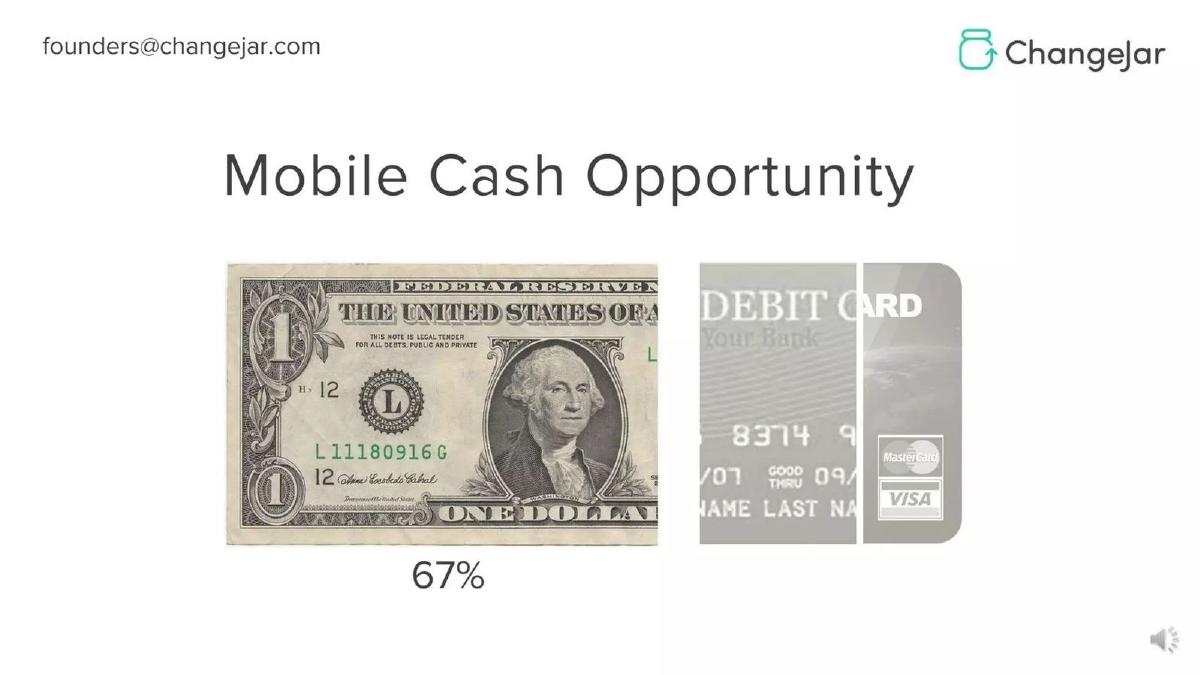
- The deck identifies a massive market gap where 67% of small retail transactions are still cash-based (Slide 5).
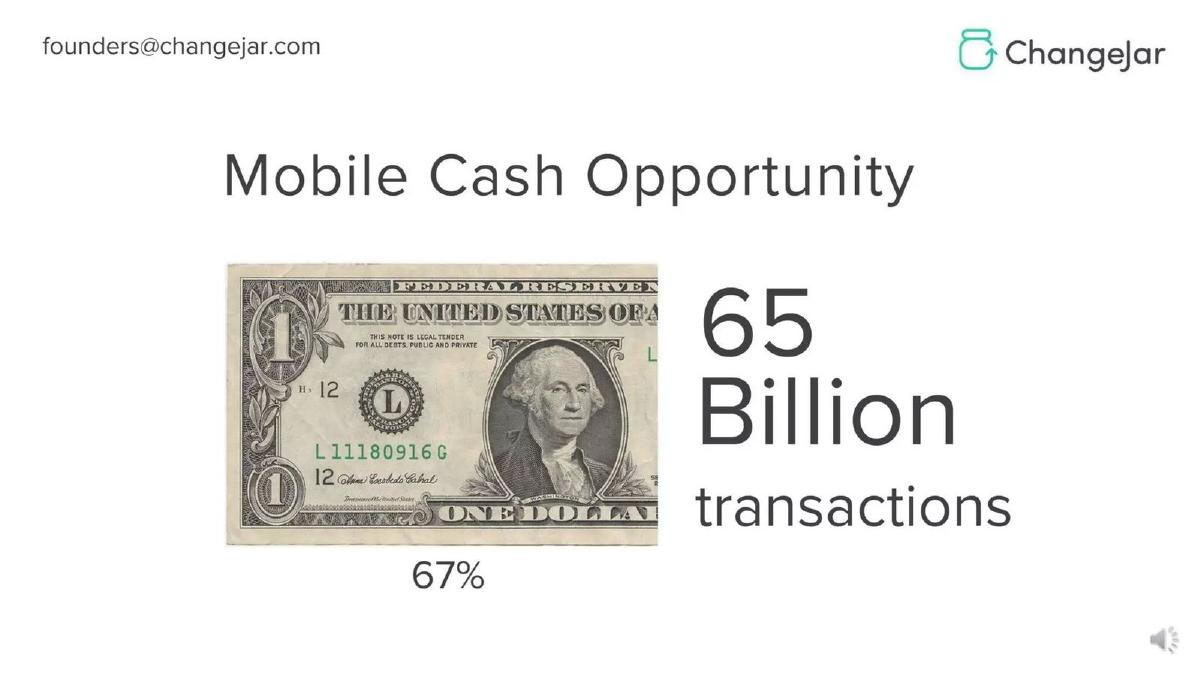
- It quantifies the total addressable market at 65 billion transactions annually (Slide 6).
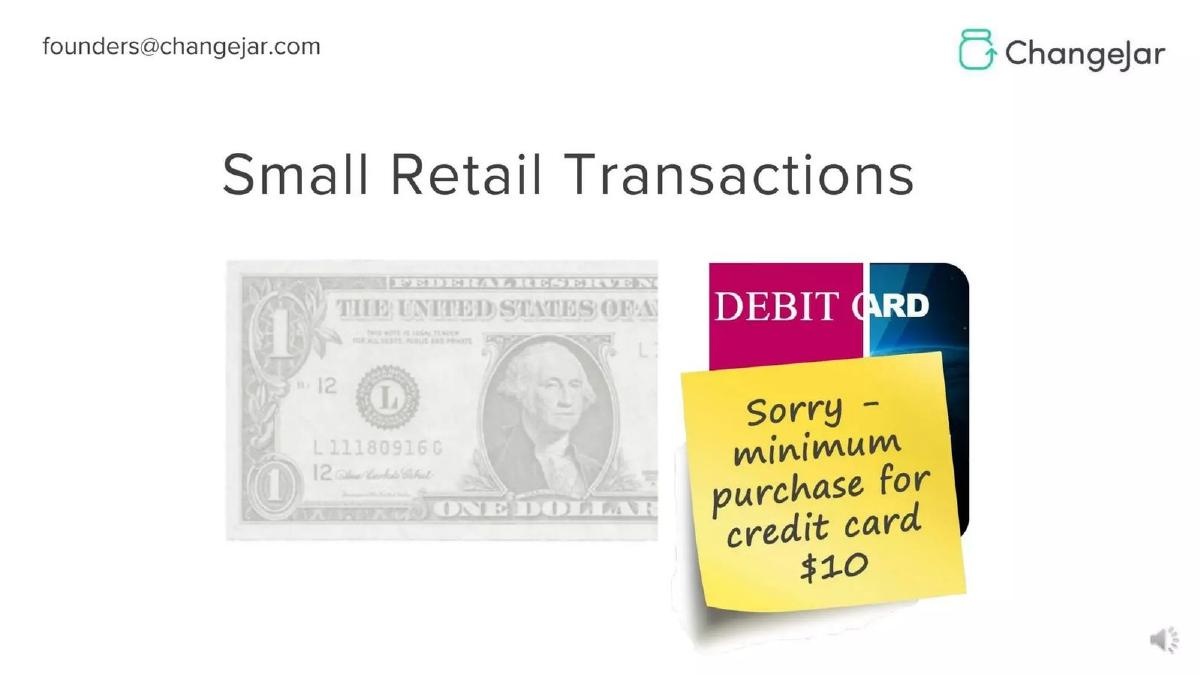
- The solution positions itself as a 'mobile cash platform' to bypass the $10 credit card minimums common in retail (Slide 4).
- Merchant value propositions are centered on the total removal of transaction fees and chargebacks (Slide 12).
- The startup claims significant early-stage B2B interest with 7,000+ locations committed and 6,000+ in the pipeline (Slide 14).
- Strategic partnerships are hinted at through logos of Square, Shopkeep, and TouchBistro (Slide 13).
- The team slide highlights deep industry experience with logos from Cognos, McDonald's, and Corsa (Slide 15).
- The deck is entirely devoid of a 'The Ask' slide, leaving investors without a target raise amount or valuation.
The Minimalist Narrative: ChangeJar’s 2014 Seed Deck
ChangeJar’s pitch deck is a product of its time, leaning heavily into the 'clean' aesthetic popularized by early mobile-first startups. At 16 slides, it moves quickly, but it uses a technique called progressive disclosure—where information is dripped out one click at a time—to build a narrative. While this works well for a live presentation, it leaves the deck feeling sparse as a standalone document. The company, founded in 2014 in Ottawa, positions itself not just as another wallet, but as a specific solution for the 'change' problem in retail.
Slides 1-4: Defining the Friction
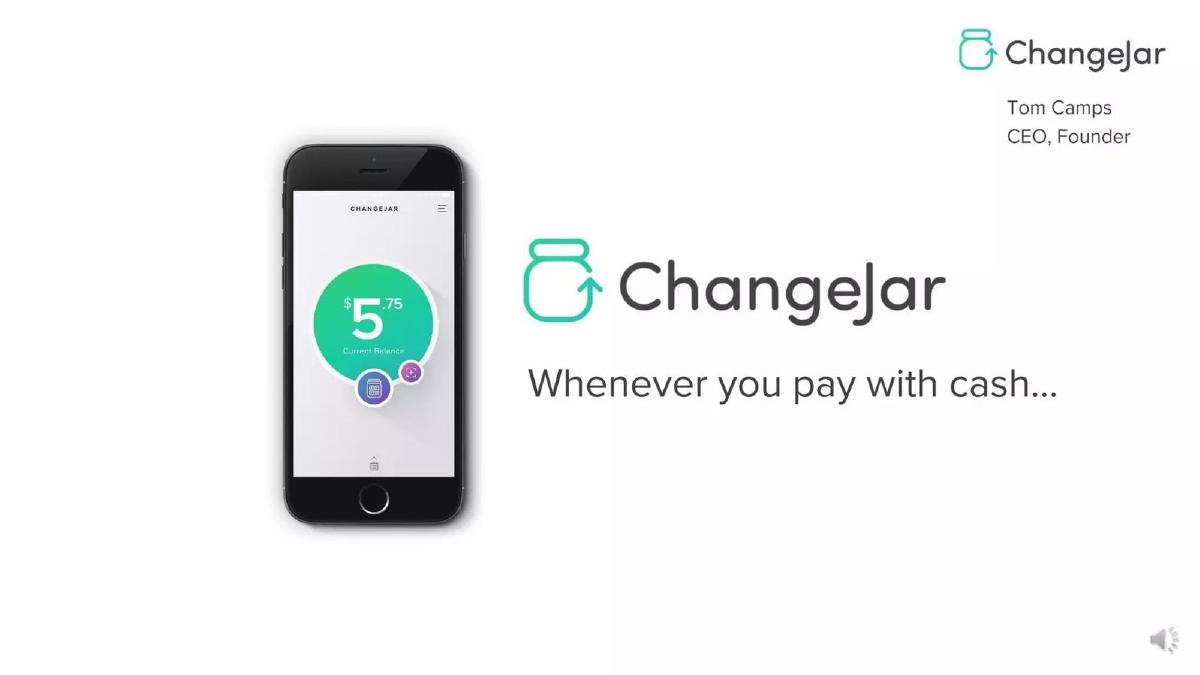
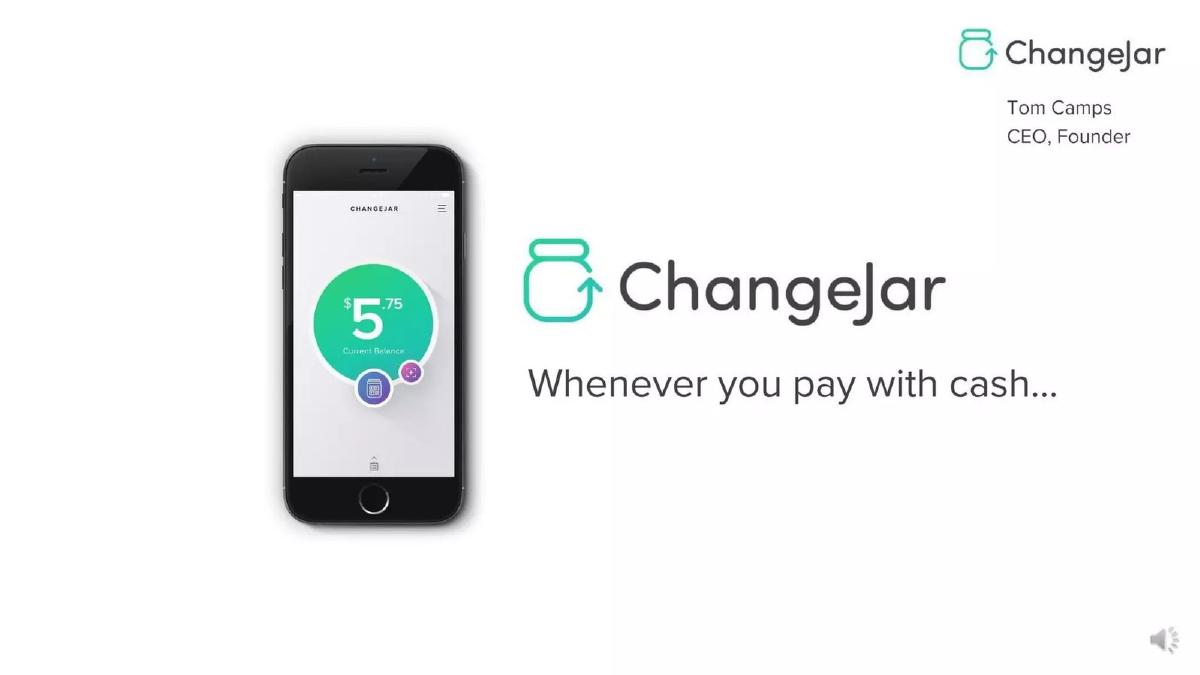
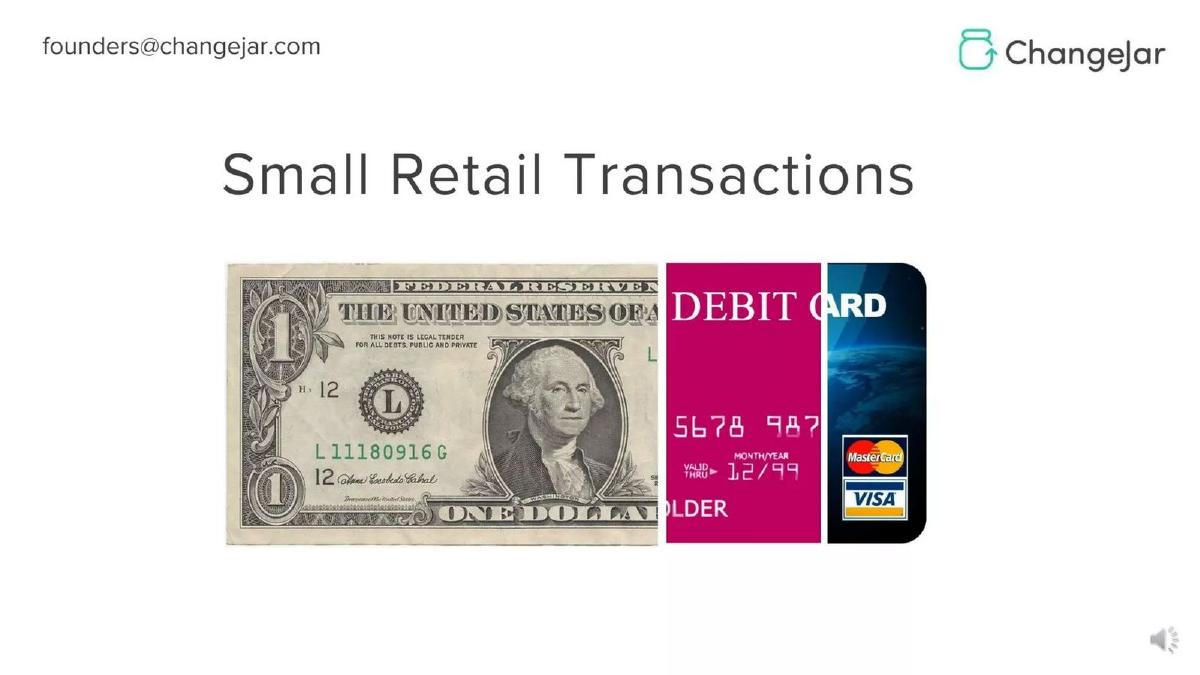
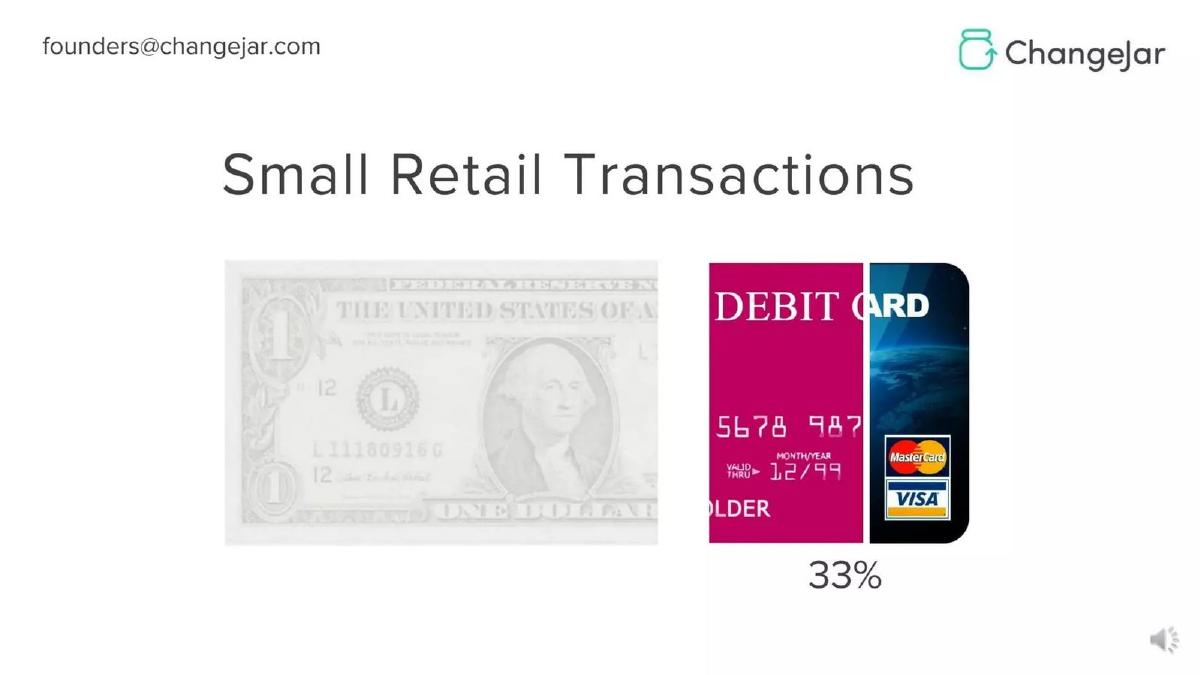
The deck opens with a simple title slide (Slide 1) featuring a smartphone mockup and the tagline 'Whenever you pay with cash...' This immediately sets the context. Slides 2 through 4 function as a single logical unit. Slide 2 shows a dollar bill next to a debit card under the heading 'Small Retail Transactions.' Slide 3 introduces a '33%' figure under the debit card, implying its current market share for these small buys. Slide 4 delivers the punchline: a yellow sticky note over the cards that reads 'Sorry - minimum purchase for credit card $10.' This is a relatable pain point for both consumers and merchants, and using a visual metaphor like a sticky note is an effective way to communicate a 'real world' problem.
Slides 5-7: The Mobile Cash Opportunity
Once the problem of card friction is established, the deck pivots to the opportunity. Slide 5 highlights that 67% of small retail transactions are still cash. Slide 6 quantifies this as a '65 Billion transactions' market. This is a classic TAM (Total Addressable Market) play, though the deck doesn't cite the source for these figures. Slide 7 introduces the company's mission statement: 'The mobile cash platform for small retail payments.' By using the term 'mobile cash' rather than 'mobile wallet,' ChangeJar attempts to differentiate itself from the broader FinTech market, suggesting it is a digital extension of physical currency rather than a replacement for a bank account.
Slides 8-10: Product and Merchant Interface
Slide 8 shows the consumer-facing app with a 'Load & Pay' callout. The UI is simple, showing a 'Current Balance' of $5.75. This reinforces the idea of micro-transactions. Slide 9 and 10 transition to the merchant side, showing a tablet-based POS interface. The UI on Slide 9 shows a 'ChangeJar Merchant' app with a keypad for entering transaction amounts (e.g., $7.06) and a 'Cash In' section. This suggests the merchant can both accept payments and potentially 'load' change onto a customer's phone, acting as a two-way terminal for digital cash.
Slides 11-12: The Merchant Value Proposition
These slides address the 'Why now?' for retailers. Slide 11 features a large 'No Fees' icon. For small merchants, transaction fees on a $2 coffee can eat a significant portion of the margin. Slide 12 adds 'No Chargebacks' to the list. Because the system is modeled after cash (which is final once handed over), ChangeJar promises to eliminate the administrative and financial burden of disputed credit card charges. This is a strong B2B hook, but it raises an immediate question that the deck never answers: if there are no fees, how does ChangeJar generate revenue?
Slides 13-14: Traction and Ecosystem
Slide 13 displays the logos of Square, Shopkeep, TouchBistro, Quickie, and Payment Source under the headline '7000+ locations committed.' This is a significant claim for a seed-stage company. It implies that ChangeJar isn't trying to replace the merchant's existing POS system but rather integrate with it. Slide 14 adds '6000+ in pipeline,' bringing the total potential footprint to 13,000 locations. This slide is the 'meat' of the deck, providing the social proof necessary to convince an investor that the 'mobile cash' concept has actual market pull.
Slides 15-16: The Team and The Close
Slide 15 introduces the 'Experienced Team.' CEO Tom Camps is backed by VP Engineering Neal Stansby and Senior Architect Rob Nielsen. The logos at the bottom—Cognos, BOLDstreet, Chipworks, and McDonald's—are impressive. Having a Director (Dave Hederson) with a McDonald's background is particularly relevant for a startup targeting high-volume, small-ticket retail. Slide 16 serves as the closing slide, repeating the mission statement and the traction numbers, and providing a contact email. Notably, there is no 'Ask' slide. We don't know if they are looking for $500k or $5M, nor do we know what the milestones for the next 18 months are.
What Works in the ChangeJar Deck
Clarity of Problem: The use of the '$10 minimum' sticky note is excellent. It identifies a specific, annoying, and universal retail experience that cards haven't solved. It makes the 'Why' of the product immediately obvious without requiring a wall of text.
Visual Consistency: The deck uses a consistent color palette (mint green and white) and high-quality mockups. It feels like a professional product even if the company is in its early stages. The minimalist design prevents 'cognitive overload' for the investor.
B2B Focus: By highlighting 'No Fees' and 'No Chargebacks,' the deck speaks directly to the merchant's bottom line. Most mobile wallets focus on consumer rewards, but ChangeJar focuses on merchant cost-savings, which is often a more sustainable path to adoption in the payments space.
What is Missing from the ChangeJar Deck
The Business Model: This is the most glaring omission. If the merchant pays no fees, where does the money come from? Does ChangeJar take a spread on the 'Load' phase? Do they sell data? Do they charge a SaaS fee to the merchant? An investor cannot evaluate the viability of the business without understanding the revenue engine.
Competitive Analysis: In 2014, the mobile payments space was already crowded. Square, LevelUp, and even early versions of Apple Pay were in the market. ChangeJar fails to explain why a merchant would choose them over an integrated solution from a larger provider, other than the fee structure.
The Ask and Use of Funds: A pitch deck is a tool to raise money. By omitting the 'Ask,' the founders miss the opportunity to set the terms of the conversation. Investors need to know how much capital is required to reach the next 13,000 locations and what the projected burn rate looks like.
Unit Economics: There is no mention of the cost to acquire a merchant (CAC) or the lifetime value (LTV) of a user. While these are often estimated in a seed deck, having no data on the economics of a single transaction makes the '65 Billion transactions' slide feel like a vanity metric.
What a Founder Should Copy
The 'Problem' Slide Strategy: Copy the way Slide 4 uses a real-world artifact (the sticky note) to illustrate a digital problem. It is much more effective than a bulleted list of 'Market Pain Points.'
Traction Presentation: If you have commitments from partners or large numbers of locations, present them simply as ChangeJar did on Slide 14. Big numbers in a large font, supported by recognizable logos, create immediate credibility.
Narrow Positioning: Instead of being a 'Global Payment Solution,' ChangeJar positioned itself as 'The mobile cash platform for small retail.' Founders should copy this 'niche-down' approach. It is easier to win a specific, underserved segment (small cash transactions) than to fight for the entire market at once.
Final Thoughts
ChangeJar’s deck is a strong example of narrative-driven pitching. It identifies a massive, un-digitized market and presents a clean, simple solution. However, as a fundraising document, it is incomplete. The lack of a business model and a clear funding ask suggests this deck was likely used as a visual aid for a spoken pitch rather than a document intended to be read in isolation. For a founder today, the takeaway is clear: use ChangeJar's visual simplicity, but don't forget to show the math.
Frequently asked questions
- What is the core problem ChangeJar is solving?
- ChangeJar targets the friction in small retail transactions where credit and debit cards are inefficient. Slide 4 highlights the common '$10 minimum' for card purchases, while Slide 11 and 12 focus on the merchant's pain points: high transaction fees and the risk of chargebacks. By digitizing 'change,' they aim to capture the 67% of small transactions that remain cash-based.
- How does ChangeJar's solution work for the consumer?
- According to the product mockups on Slide 8, the solution is a 'Load & Pay' mobile app. Consumers can accumulate the value of physical change from cash transactions into a digital balance (shown as $5.75 on the UI) and then use that balance for future mobile payments at participating merchants.
- What evidence of traction does the deck provide?
- The deck shows strong top-of-funnel interest. Slide 14 states that the company has 7,000+ locations committed and another 6,000+ in the pipeline. Slide 13 also displays logos of major POS and payment players like Square and TouchBistro, suggesting integration or partnership potential, though the exact nature of these relationships isn't defined.
- Who are the key people behind ChangeJar?
- The team is led by CEO and Founder Tom Camps. Slide 15 highlights an 'Experienced Team' with backgrounds at BOLDstreet Wireless, Cognos, and Chipworks. Notably, the board of directors includes individuals with ties to Corsa and McDonald's, providing the startup with significant corporate and retail credibility.
- What are the biggest missing elements in this pitch deck?
- This deck is missing three critical components: a business model, a competitive landscape analysis, and a formal 'Ask.' It never explains how ChangeJar makes money if it doesn't charge fees, it doesn't mention competitors like LevelUp or Square Cash, and it fails to state how much capital they are seeking to raise.