Chadex, self-described as 'The Charity Advertising Exchange,' utilizes a minimalist, image-heavy deck designed for a live demo day presentation. The deck relies heavily on emotional imagery and high-level statements rather than granular data. It reports a monthly turnover of £5,500 and claims to be 'already profitable' on slide 6. The company seeks £250,000 to expand its team and platform reach. While the deck succeeds in establishing a clear mission—leveraging advertising to fund global charitable efforts—it lacks critical details regarding its business model, competitive landscape, and spec…
Key takeaways
- The company identifies as 'CHADEX The Charity Advertising Exchange' on slide 2.
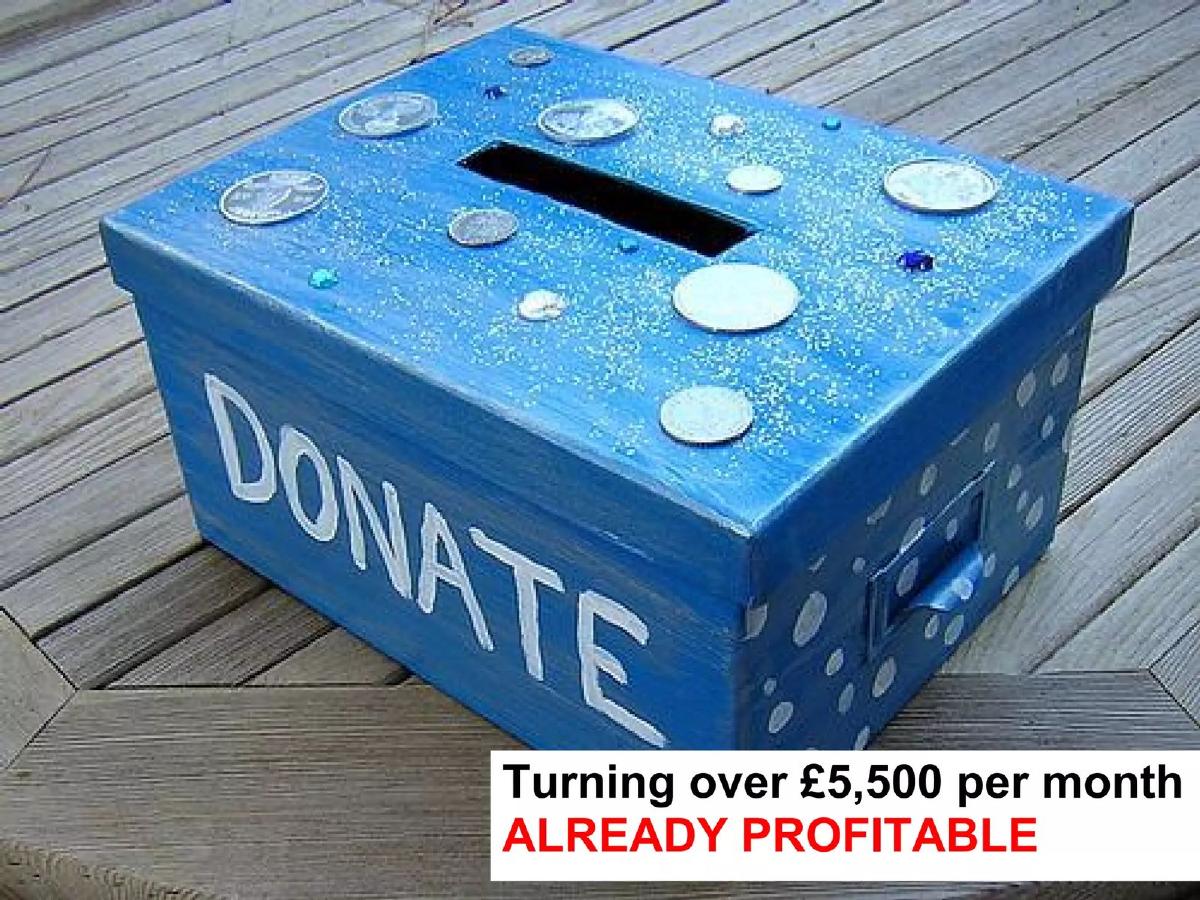
- Chadex claims a current monthly turnover of £5,500 and states they are 'ALREADY PROFITABLE' on slide 6.
- The fundraising target is exactly £250,000 to build out the team and platform, as stated on slide 8.
- The deck references a 2010 Comic Relief initiative as a proof of impact point on slide 4.
- The team slide (slide 7) features seven individuals but provides no names, titles, or professional backgrounds.
- The 'Simple 3 step process' mentioned on slide 3 is illustrated by a complex engine image with no text explaining the steps.
- The company claims the potential to change 'hundreds of millions of lives' on slide 5.
- There is a total absence of a competitor analysis, market sizing (TAM/SAM/SOM), or a product roadmap.
The Narrative-First Demo Day Approach
The Chadex deck is a classic example of a 'Demo Day' presentation. It is designed to be projected on a large screen while a founder speaks, rather than being read as a standalone document. With only 9 slides and very little text, the burden of proof lies entirely on the speaker. For an analyst, this creates a challenge: the deck is high on vision and low on mechanics. It relies on the 'Charity Advertising Exchange' concept to be self-explanatory, which is a risky assumption in the crowded AdTech and PhilTech sectors.
Slide 1: The Hook
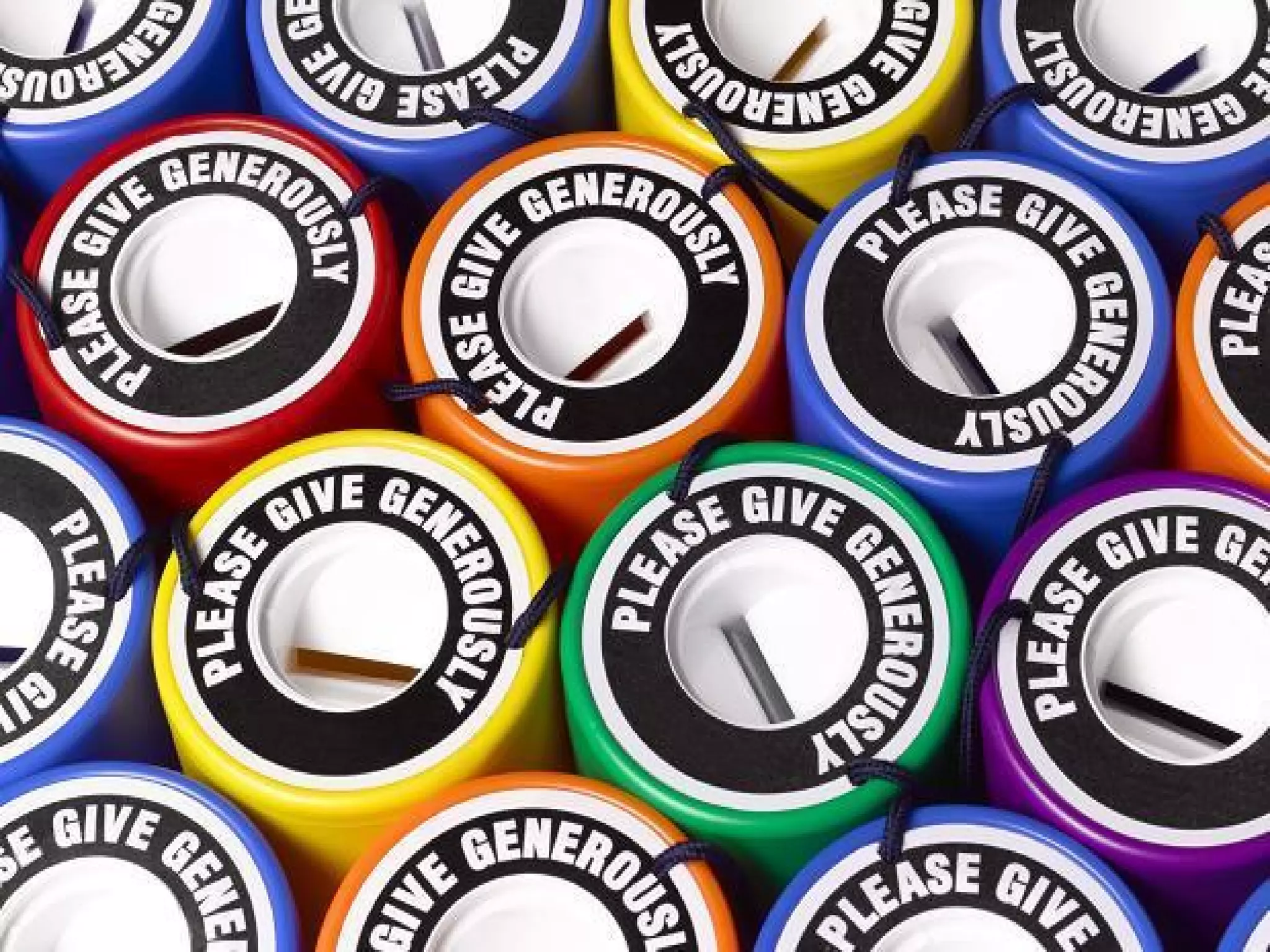
The opening slide features a collage of colorful charity collection tins labeled 'Please Give Generously.' There is no text on this slide. It sets an immediate thematic tone of traditional philanthropy, perhaps suggesting that the current way of giving is fragmented or outdated, though this is purely visual subtext.
Slide 2: The Identity
Slide 2 introduces the company name: CHADEX The Charity Advertising Exchange . The background image shows a digital 'Donate' button on a chalkboard. This slide establishes the brand and the sector. It bridges the gap between the physical collection tins of the previous slide and the digital nature of an 'exchange.'
Slide 3: The Process (Missing)
This slide is titled 'Simple 3 step process' but the image is a highly complex, detailed internal combustion engine. There is no text describing what the three steps are. In a live setting, the founder likely explains the 'engine' of the business here. As a standalone slide, it is confusing; it uses a visual metaphor for complexity to represent simplicity, which is a counter-intuitive design choice.
Slide 4: The Proof of Concept
Slide 4 moves into social proof and impact. It features a photo of a man with two children in front of a vehicle marked 'ICR.' The text states: '2010 Comic Relief provided Sarune with food and water.' This suggests the founders have a history in the nonprofit space or that the platform is already facilitating these types of outcomes. It anchors the business in real-world results, even if the link between the 2010 event and the current 'Exchange' is not explicitly mapped out.
Slide 5: The Vision
Following the specific example of one child, slide 5 zooms out to the macro vision. Over a photo of a child washing with clean water, the text reads: 'CHADEX could change hundreds of millions of lives.' This is the 'Big Hairy Audacious Goal' (BHAG) slide. It is designed to show the potential scale of the impact if the exchange succeeds.
Slide 6: The Traction
This is the most important slide for an investor. Over an image of a handmade donation box, the text states: 'Turning over £5,500 per month' and 'ALREADY PROFITABLE' in red capital letters. This provides a concrete floor for the valuation. While £5,500 is a modest figure for a global exchange, the claim of profitability at such an early stage suggests a lean operation and a validated revenue model.
Slide 7: The Team
The team slide shows seven headshots against a dark grey background. The CHADEX logo is central. There are no names, no LinkedIn links, and no descriptions of past successes. While it shows the company has a significant headcount (or at least a significant group of advisors/contributors), the lack of credentials is a major omission for a deck intended for external investors.
Slide 8: The Ask
Slide 8 presents the fundraising requirements. Over a 'Children in Need' billboard, the text reads: 'We're raising £250,000 to build out our great team and to help charities all over the world benefit from the CHADEX platform.' The ask is clear, though the 'how' remains vague. The use of a well-known charity's mascot (Pudsey Bear) in the background reinforces the sector but does not clarify if there is a formal partnership with that specific organization.
Slide 9: The Conclusion
The final slide is a 'Thank You' featuring a child holding a cardboard sign. There is no contact information, no website URL, and no call to action. This reinforces the 'Demo Day' theory, where the founder would likely be standing on stage ready for Q&A immediately following this slide.
What Chadex Does Well
The deck is visually consistent and stays strictly on-message. It avoids the 'wall of text' trap that kills many early-stage presentations. By highlighting profitability early (Slide 6), they immediately answer the 'is this just a hobby?' question that often plagues social enterprise startups. The emotional arc—from the problem of traditional giving to the specific impact on one life, to the potential impact on millions—is a well-structured narrative for a short pitch.
What is Missing from the Deck
The omissions in this deck are significant. There is no Market Size analysis; investors need to know the total addressable market for a 'Charity Advertising Exchange.' There is no Competitor Analysis ; the deck acts as if no one else is trying to monetize advertising for good, which is not the case. Most importantly, the Product Mechanics are absent. We know it is an exchange, but we don't know if it's a programmatic ad platform, a social media plugin, or a B2B CSR tool. Finally, the Team Credentials are a black box. In early-stage investing, the 'who' is often more important than the 'what,' and this deck provides no data on the 'who.'
Founder's Takeaway
If you are building a deck for a live 3-minute pitch, the Chadex model of high-impact imagery and single-metric traction slides is effective. However, this deck would fail as an email attachment. A founder should copy the clarity of the 'Ask' (Slide 8) and the 'Traction' (Slide 6), but must ensure that the 'Team' slide includes at least one sentence of credibility for each key member. Furthermore, if you promise a '3 step process,' you must actually list the steps; using a complex image of an engine to represent simplicity is a metaphor that likely confused more people than it enlightened.
Frequently asked questions
- What is the core product of Chadex?
- Based on slide 2, the product is 'The Charity Advertising Exchange.' While the deck does not provide a technical breakdown, the name suggests a marketplace or platform that connects advertisers with charitable causes or uses advertising revenue to fund donations. Slide 3 promises a 'Simple 3 step process' but fails to describe those steps, leaving the exact mechanics of the exchange to the presenter's verbal commentary.
- What is the current financial status of the company?
- According to slide 6, Chadex is generating £5,500 in monthly turnover. The slide also explicitly states the company is 'ALREADY PROFITABLE.' However, the deck does not provide a breakdown of expenses, margins, or how that turnover is distributed between the exchange and the charities it supports.
- How does the company plan to use the requested funds?
- Slide 8 specifies a fundraising goal of £250,000. The primary stated uses for this capital are to 'build out our great team' and to help charities globally benefit from the platform. There are no specific allocations mentioned for marketing, R&D, or geographic expansion beyond the general mention of 'all over the world.'
- Who is behind Chadex?
- Slide 7 displays headshots for seven team members. Two larger photos appear at the top, likely representing the founders, with five smaller photos below. Notably, the slide contains no text, omitting names, previous experience, or specific roles within the company. This makes it impossible to verify the team's expertise from the deck alone.
- What evidence of impact does the deck provide?
- Slide 4 references a 2010 Comic Relief project that provided food and water to an individual named Sarune. Slide 5 follows this with a claim that Chadex could change hundreds of millions of lives. The deck uses these emotional touchpoints to bridge the gap between their current small-scale turnover and their large-scale social ambitions.