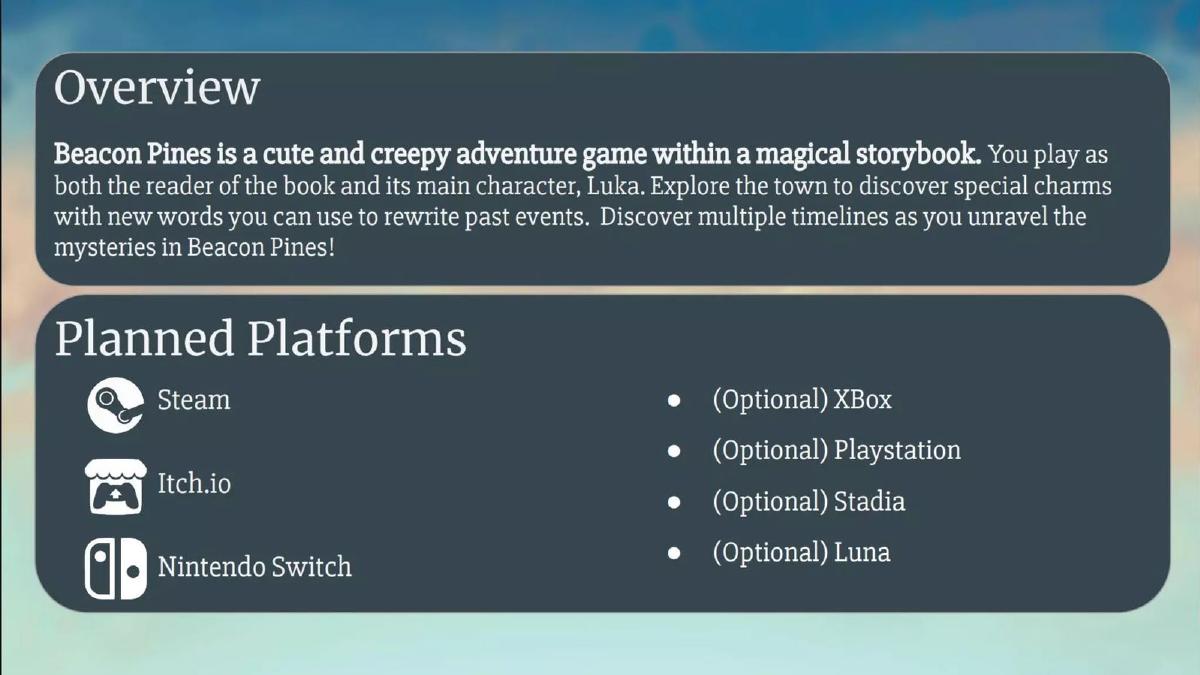
Beacon Pines presents a 13-slide deck (7 analyzed here) that leans heavily into the game's unique aesthetic and narrative mechanics. Developed by Hiding Spot Games, the deck bypasses traditional problem/solution slides to focus on the 'vibe' and mechanics of a 'cute and creepy' adventure. The deck is anchored by significant community validation, citing $84,548 in Kickstarter funding from 2,772 backers as of March 2021 (Slide 5). While it lacks traditional financial projections or a detailed team breakdown in the provided slides, it effectively uses in-game screenshots to demonstrate product r…
Key takeaways
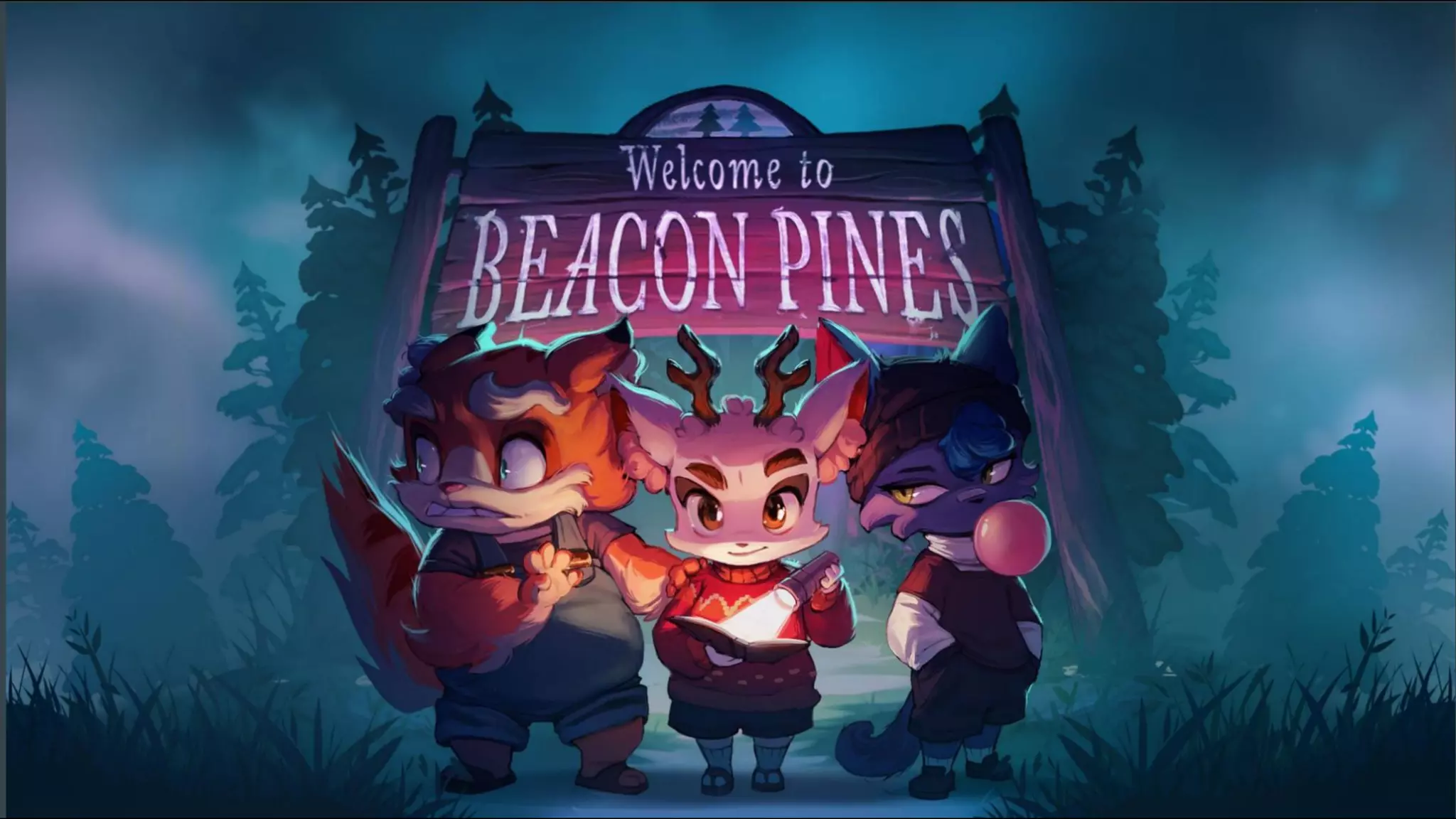
- The deck leads with high-quality key art to immediately establish the game's 'cute and creepy' tone (Slide 1).
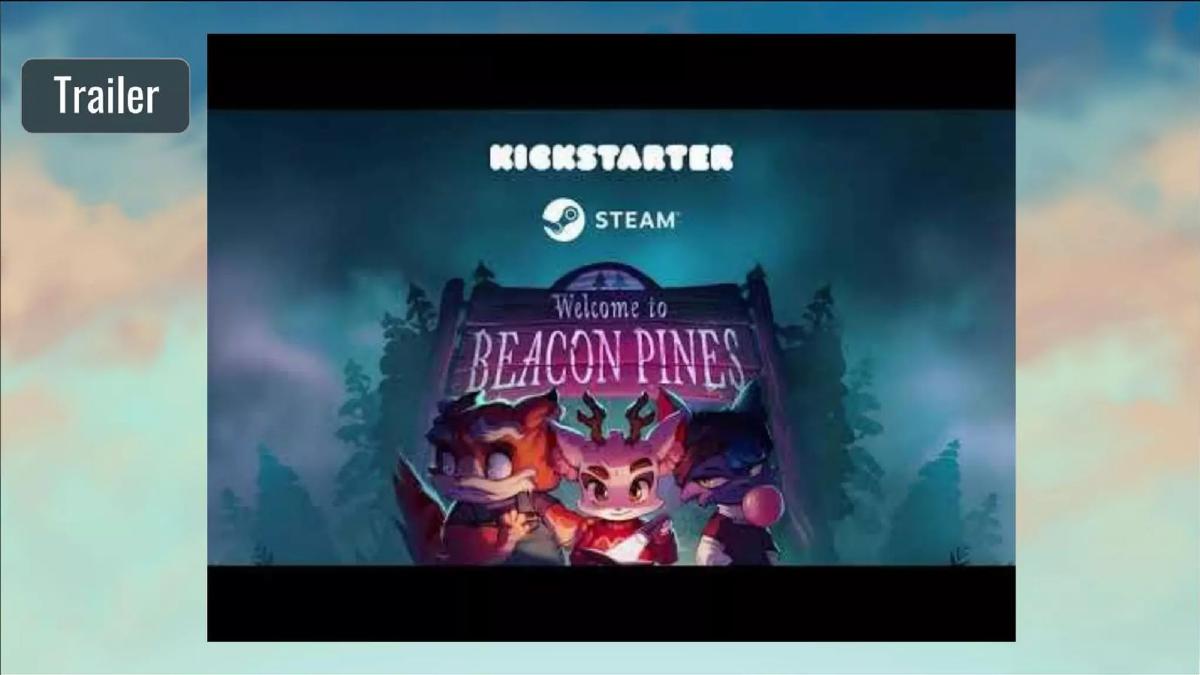
- A dedicated trailer slide indicates the importance of motion and sound in pitching interactive media (Slide 2).
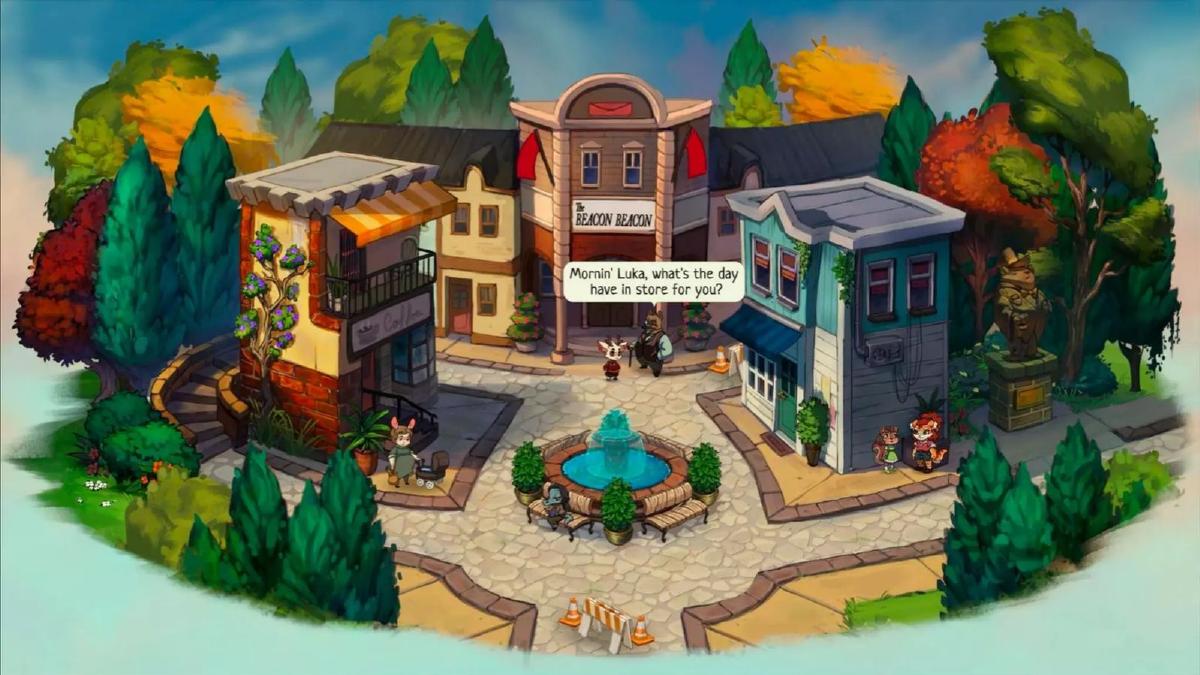
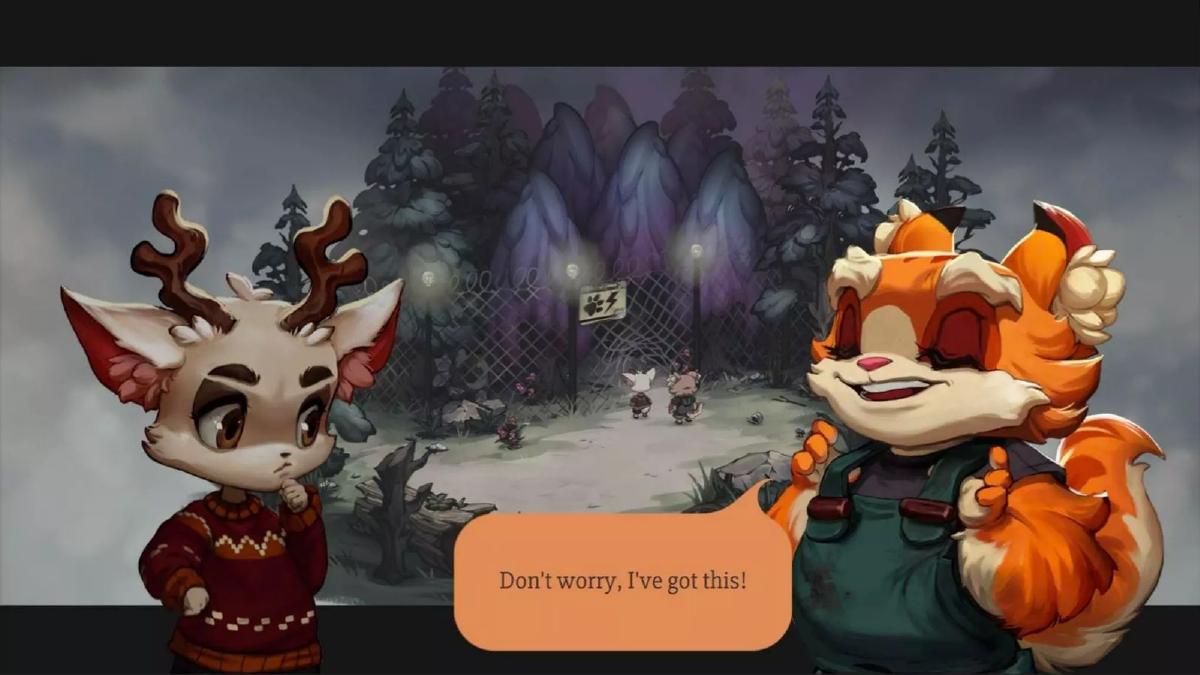
- In-game screenshots demonstrate a high level of environmental and character design polish (Slide 3).
- The 'Chronicle' mechanic is visually explained through a screenshot of a storybook interface, showing how players interact with the narrative (Slide 4).
- Traction is quantified through Kickstarter success, showing $84,548 raised from 2,772 backers (Slide 5).
- The deck includes specific marketing stats as of March 25, 2021, though several Steam-related fields are left blank (Slide 5).
- Community engagement is tracked across Discord (609 users) and Twitter (1,097 followers) to show early audience interest (Slide 5).
- The deck concludes with a comprehensive list of links for due diligence, including the developer's website and the game's trailer (Slide 6).
The Visual Language of Indie Game Pitching
Beacon Pines, developed by Hiding Spot Games, utilizes a pitch deck that functions more like a look-book than a corporate strategy document. This is a common and often necessary approach in the gaming industry, where the 'product' is an emotional and aesthetic experience. The deck relies on the strength of its art assets to do the heavy lifting, assuming that a picture is worth a thousand words of market analysis.
Slide 1: Title and Tone
The opening slide is a full-bleed illustration featuring the three main characters under a 'Welcome to Beacon Pines' sign. There is no text other than the game's title. This slide serves to immediately establish the genre—a narrative adventure with an anthropomorphic cast—and the tone, which balances 'storybook cute' with a darker, atmospheric lighting. In gaming, the quality of the 'Key Art' is a proxy for the quality of the final product, and this slide sets a high bar.
Slide 2: The Trailer Call-to-Action
Slide 2 is a simple placeholder for a trailer. It features the Steam and Kickstarter logos. In a live pitch, this is where the founder would stop talking and let the video play. For a deck sent via email, this is a crucial nudge to the investor to engage with the game's movement and sound. The inclusion of the Kickstarter logo here reinforces that this isn't just a concept; it is a project that has already seen public support.
Slide 3: Environmental Storytelling
This slide shows a town square in the game. It demonstrates the isometric perspective and the hand-painted art style. A dialogue bubble ('Mornin' Luka, what's the day have in store for you?') shows the narrative interface. This slide answers the 'What is it?' question by showing the actual gameplay environment, proving that the assets are not just concept art but functional game levels.
Slide 4: The Core Mechanic (The Chronicle)
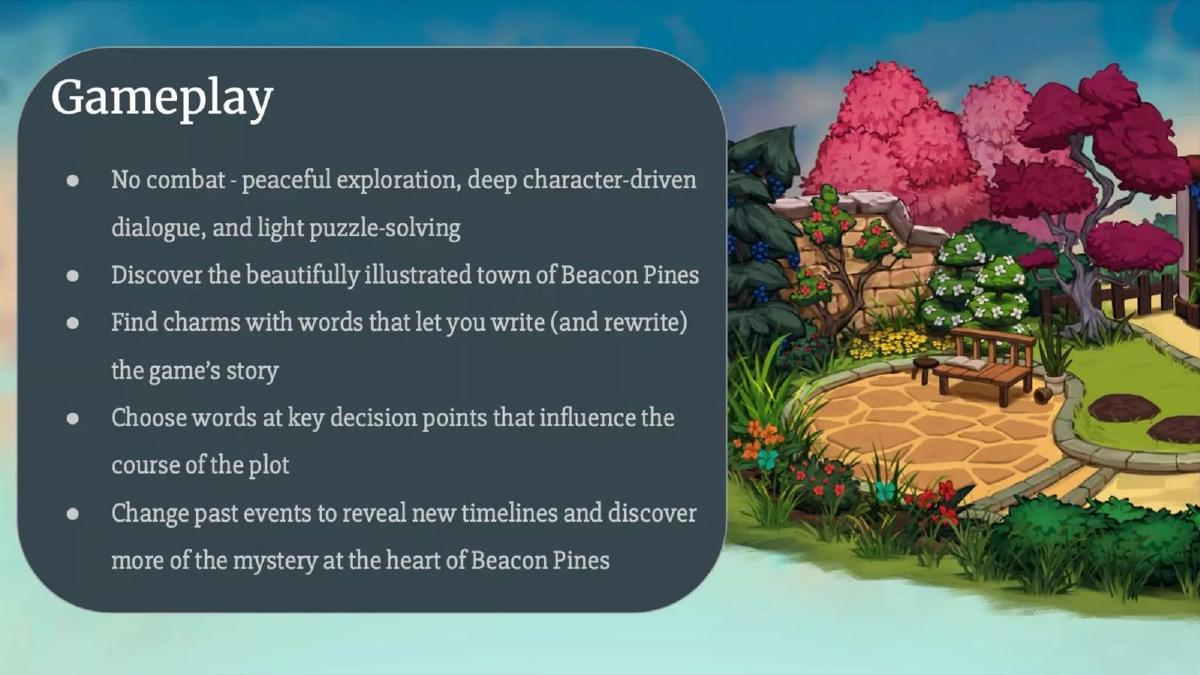
Slide 4 is perhaps the most important 'product' slide. It shows a storybook with a branching narrative choice: 'Hide,' 'Ponder,' or 'Chill.' This illustrates the game's unique selling point—the ability to change the past by finding 'charms' (words) to plug into the story. By showing the UI (User Interface) rather than explaining the logic in text, the founders demonstrate that the game's hook is integrated into the visual experience.
Slide 5: Marketing Stats and Traction
This is the 'Business' slide. It provides a snapshot of the project's health as of March 25, 2021. The standout figure is the Kickstarter funding: $84,548 raised from 2,772 backers . This is a powerful validation metric. However, the slide has several notable omissions. The fields for 'Total Wishlists,' 'Demo Downloads,' and 'Last 31 days Wishlists' are left blank. In the world of Steam publishing, wishlists are the primary predictor of launch day success. Leaving these blank in a static deck is a significant oversight, as it leaves the investor guessing about the game's current momentum on the world's largest PC gaming platform. The slide also notes 609 Discord users and 1,097 Twitter followers , which are modest but respectable numbers for an indie title in development.
Slide 6: The Call to Action and Links
The final slide in this set provides a directory of links. It features the 'Hiding Spot Games' logo and the 'Beacon Pines' sign again. Providing direct links to the Kickstarter, Twitter, and Trailer is a standard but essential practice. It allows an interested party to immediately dive into the community sentiment and see how the developers interact with their audience.
Slide 7: The 'Best Pitch Deck' Placeholder
This slide is an external advertisement/placeholder from the source and is not part of the Beacon Pines company pitch.
What Works in the Beacon Pines Deck
Aesthetic Consistency: The deck feels like the game. Every slide uses the same fonts, color palettes, and art style found in the software. This creates a sense of brand maturity and professional polish that is often lacking in early-stage indie pitches.
Proof of Concept: The inclusion of in-game screenshots with UI elements (Slide 3 and 4) proves that the team has moved past the 'idea phase' and has a working build. This reduces the perceived execution risk for an investor.
Crowdsourced Validation: The Kickstarter numbers are the 'North Star' of this deck. Reaching nearly $85k from a community of almost 3,000 people is a clear signal that the art style and premise have 'viral' potential within the indie gaming niche.
What is Missing
The 'Ask': None of the provided slides state how much money the studio is looking for or what the funds will be used for (e.g., porting to consoles, localization, marketing). A pitch deck without an 'Ask' is just a presentation.
Team Pedigree: While the studio logo is present, the individuals behind the game are not. Investors in the gaming space often bet on the 'leads'—the lead programmer, the lead artist, and the writer. Without their bios, the deck relies entirely on the art, which is risky if the team lacks a track record of shipping titles.
Roadmap and Budget: There is no timeline for release or a breakdown of how the Kickstarter funds have been spent versus what is still needed. A slide showing the development milestones (Alpha, Beta, Release) would provide much-needed context to the 'Marketing Stats' slide.
Unit Economics: While difficult for a single-purchase indie game, a slide discussing the target price point and a comparison to 'Similar Titles' (Comps) would help an investor understand the potential Return on Investment (ROI).
Founder's Playbook: What to Copy
Show, Don't Tell: If you are building a visual product, follow Slide 4's example. Don't write a paragraph about your 'unique branching narrative system.' Show a screenshot of the player making a choice. It is faster to digest and more convincing.
Lead with Traction: If you have a successful crowdfunding campaign, put those numbers front and center. It is the hardest form of validation to get, and it carries more weight than any 'market size' slide you could invent.
Centralize Your Links: Slide 6 is a great template for a 'Next Steps' slide. By providing a one-stop shop for all social and development links, you make the due diligence process as frictionless as possible for the investor.
Final Thoughts
The Beacon Pines deck is a strong creative pitch that successfully sells the 'dream' of the game. However, as a fundraising document, it is incomplete. It lacks the hard financial data and team background necessary to close a professional investment round. For a founder, this deck is a great example of how to build interest and 'vibe,' but it should be supplemented with a more rigorous business appendix that addresses the 'Ask,' the team, and the path to profitability.
Frequently asked questions
- Why does this deck lack a traditional 'Problem' slide?
- In game development pitching, the 'problem' is often a lack of a specific type of entertainment or a gap in a genre. Beacon Pines chooses to show rather than tell, using its unique art style and narrative mechanics to imply its value proposition. For creative projects, the 'solution' is the art itself, making traditional business problem statements less relevant than aesthetic differentiation.
- How significant is the Kickstarter data on Slide 5?
- It is the most critical piece of business evidence in the deck. Raising over $84,000 from nearly 2,800 individuals proves market demand and provides a 'built-in' marketing department of advocates. For an indie publisher or investor, this significantly de-risks the project by showing that a paying audience already exists before the full launch.
- What is the significance of the blank fields on the Marketing Stats slide?
- Slide 5 lists 'Total Wishlists,' 'Demo Downloads,' and 'Last 31 days Wishlists' but leaves the figures blank. This suggests the deck may have been a template used for live presentations where those numbers were spoken, or it was an internal draft. In a final investor-facing deck, leaving these blank is a missed opportunity to show momentum.
- How does the deck handle gameplay mechanics?
- Slide 4 uses a screenshot of the game's storybook interface to explain the 'Chronicle' mechanic. By showing the words 'Hide,' 'Ponder,' and 'Chill' as selectable charms, the founders explain a complex narrative branching system without using a single bullet point of text, which is highly effective for visual learners.
- Is the team slide missing, and does it matter?
- In the 7 slides provided, there is no team slide. For an indie game, the 'team' is often the studio brand (Hiding Spot Games, Slide 6). However, investors usually want to see the pedigree of the lead developers. If the full 13-slide deck omits this, it is a major weakness, as the ability to execute on high-quality art is tied to individual experience.