The BottlesTonight pitch deck is a study in brevity, consisting of only seven slides. It focuses heavily on the visual 'vibe' of the nightlife industry while providing just enough data to validate the business model. By highlighting a significant inefficiency in the market—60% unsold tables—and projecting a jump from $287,056 to $1,000,000 in sales, the deck makes a compelling case for a mobile-first solution. While it lacks traditional sections like a detailed competition slide or a specific 'Ask' for the funding round, its clarity on the problem and the team's composition helped it secure $…
Key takeaways
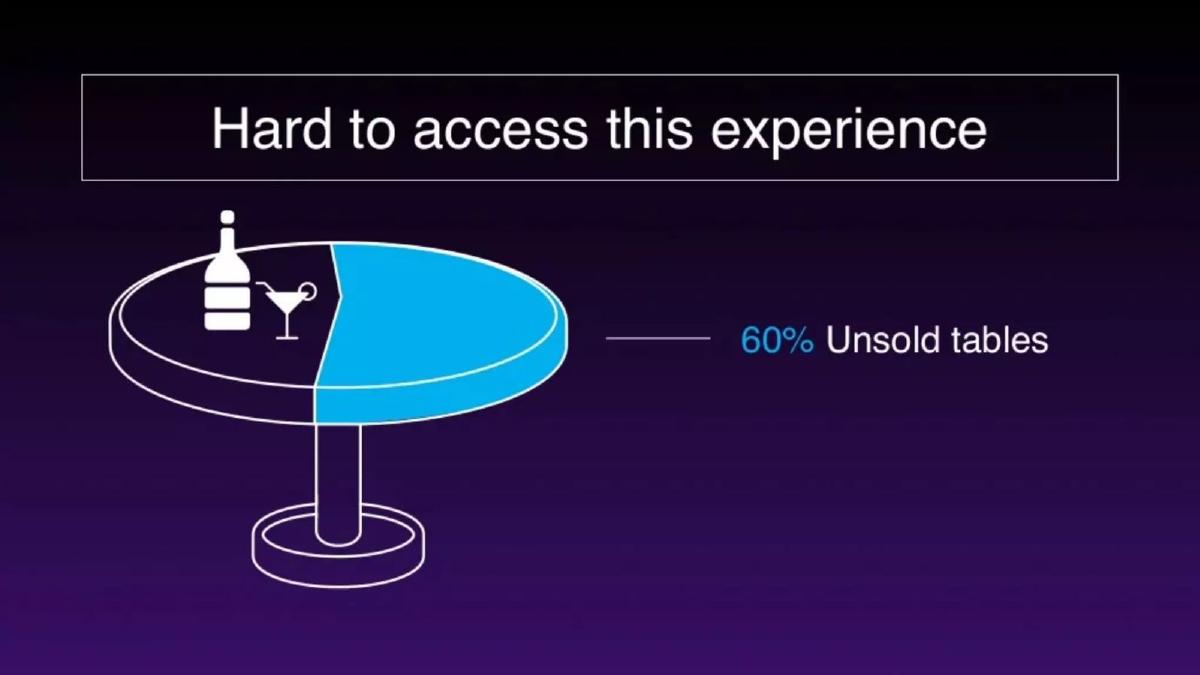
- The deck identifies a massive inventory inefficiency, stating that 60% of nightclub tables go unsold (Slide 4).
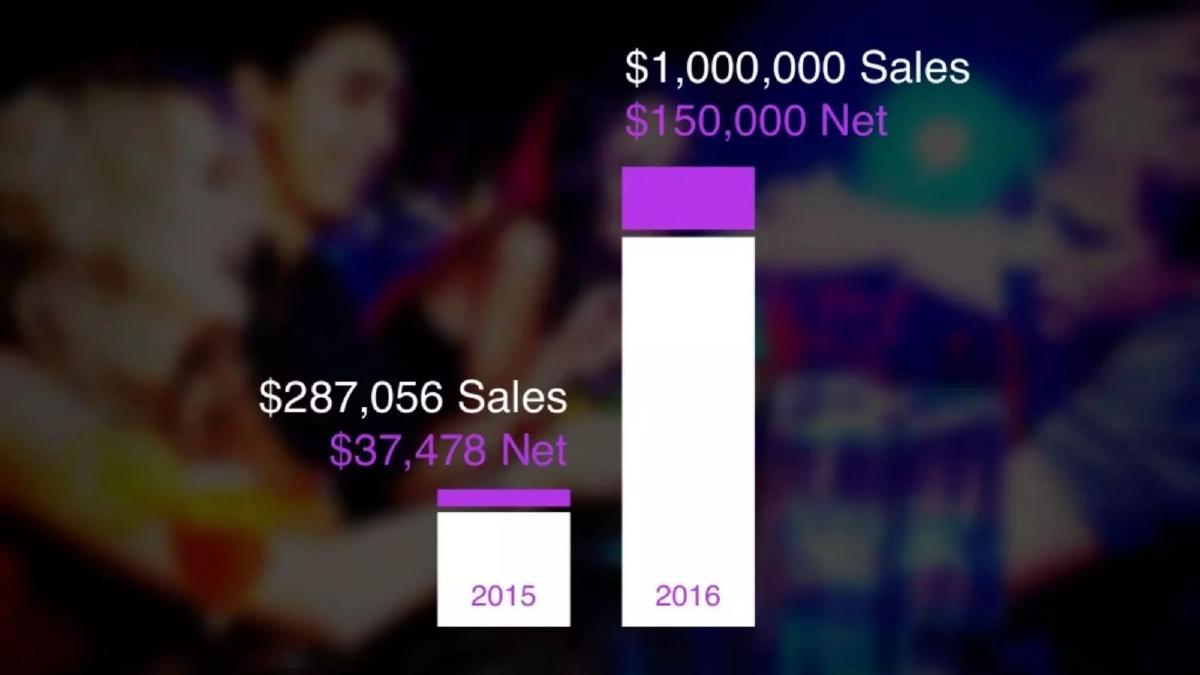
- Revenue growth projections are aggressive, moving from $287,056 in sales ($37,478 net) in 2015 to a projected $1,000,000 in sales ($150,000 net) in 2016 (Slide 2).
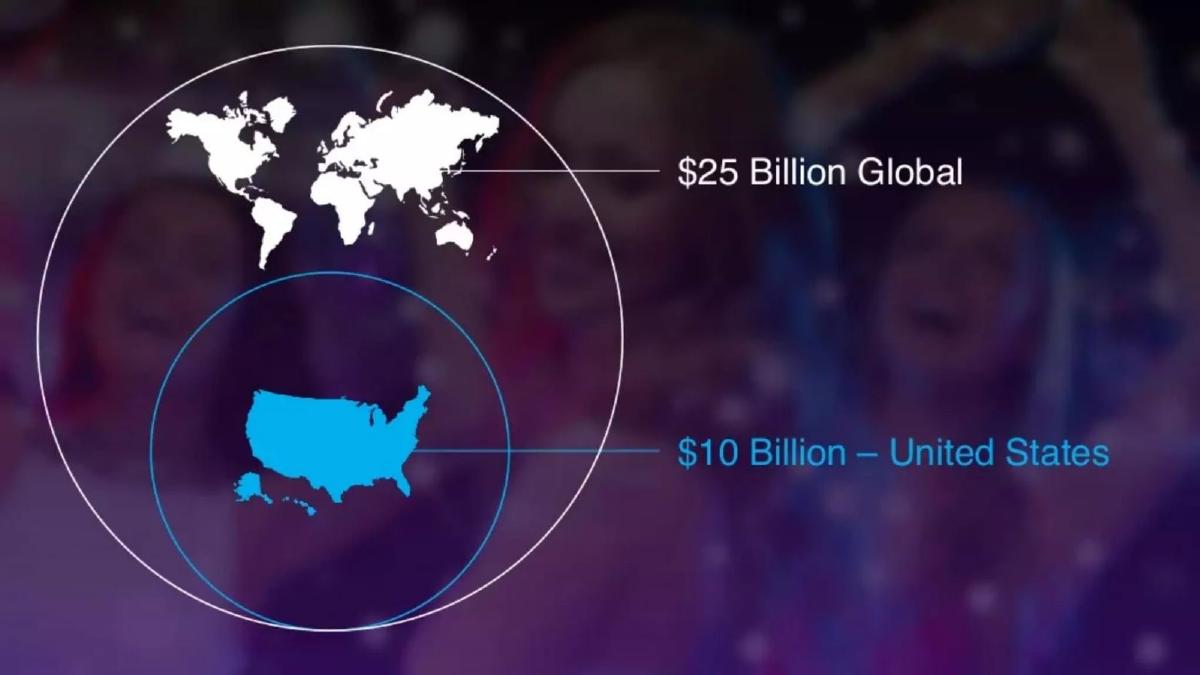
- The Total Addressable Market is clearly defined as $25 Billion globally and $10 Billion in the United States (Slide 6).
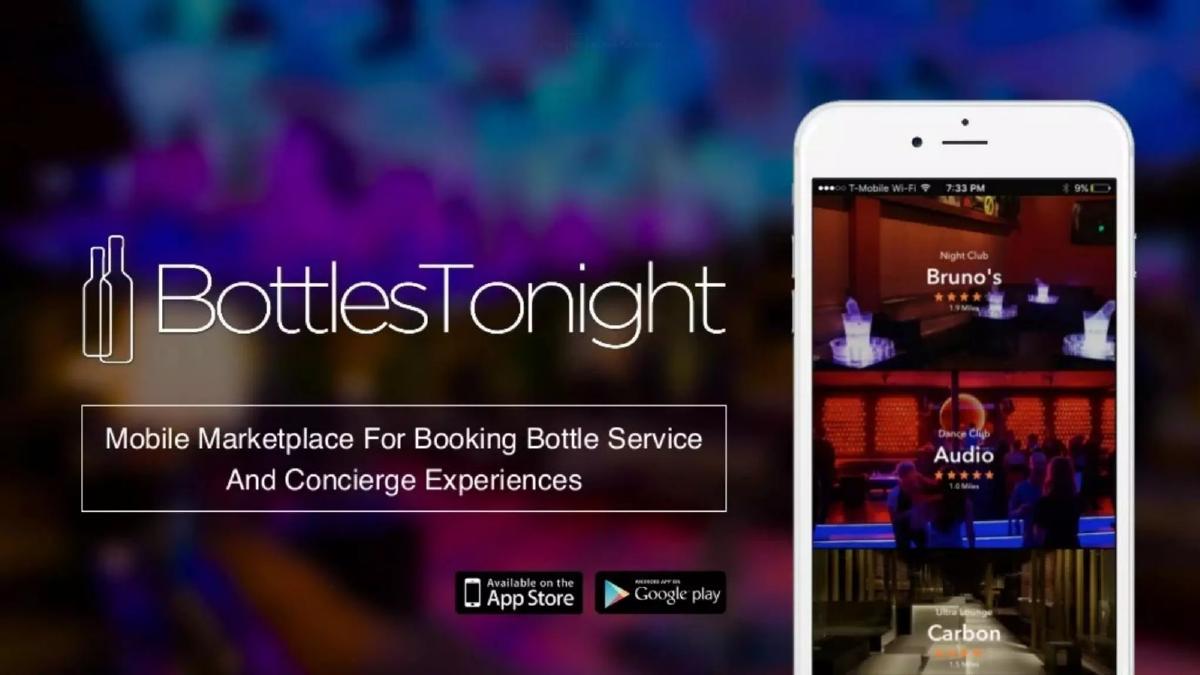
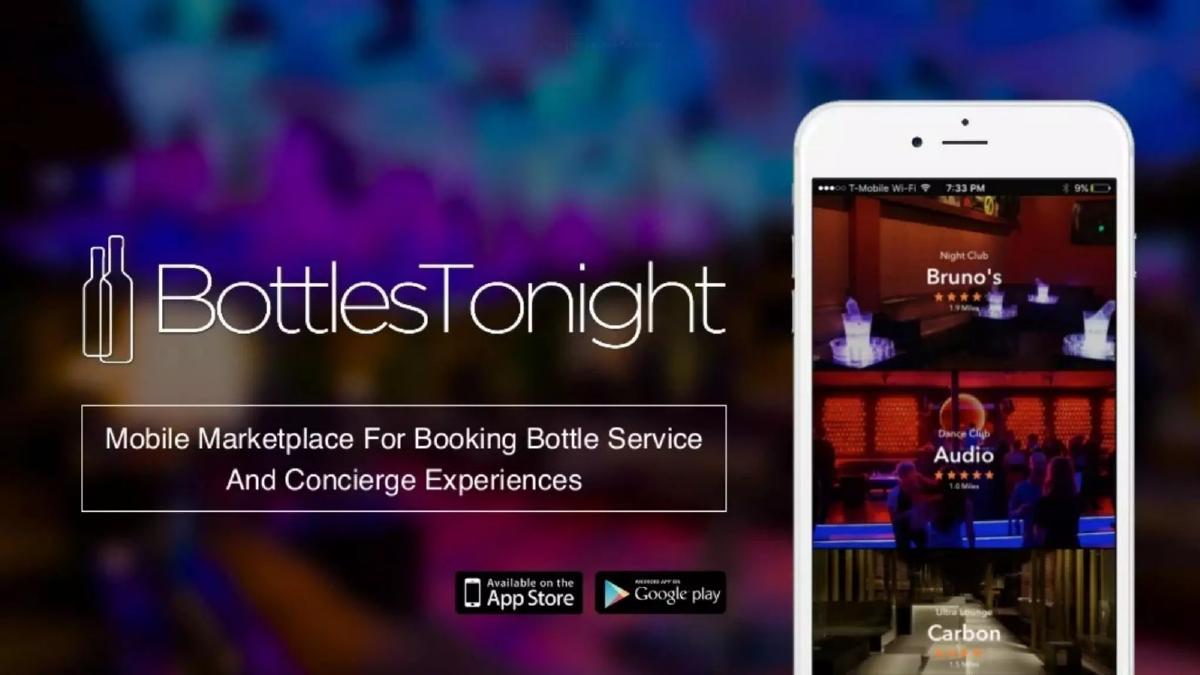
- The product is positioned as a 'Mobile Marketplace For Booking Bottle Service And Concierge Experiences' (Slide 1).
- The team is heavily weighted toward execution, featuring four developers/designers and three sales professionals alongside the CEO (Slide 7).
- The deck relies on lifestyle imagery to communicate the user experience rather than text-heavy feature lists (Slide 3).
- There is no explicit 'Ask' slide detailing how much capital is being raised or how it will be spent (Omission).
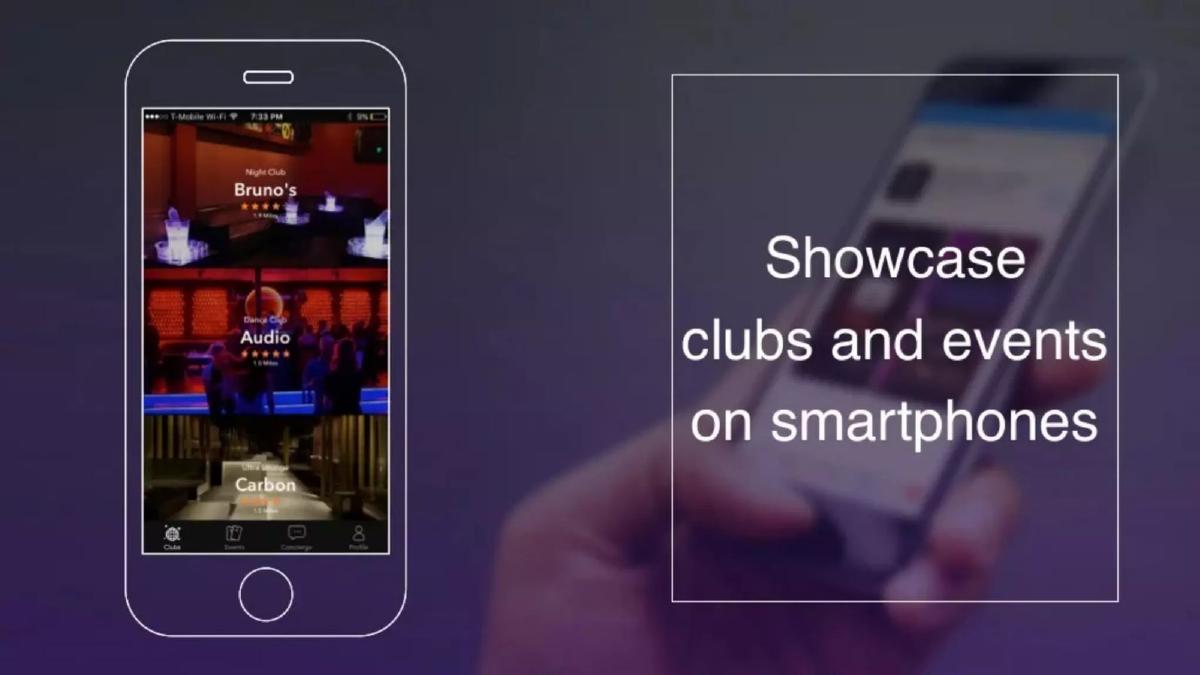
- The deck omits a competitor analysis, relying instead on the claim of being a unique 'Showcase' for clubs on smartphones (Slide 5).
The 7-Slide Seed Strategy
The BottlesTonight pitch deck is an exercise in extreme brevity. At just seven slides, it bypasses the traditional narrative structure of many Silicon Valley decks in favor of a high-impact, visual-first approach. In 2013, the 'X for Y' trend was at its peak, and BottlesTonight clearly positioned itself as the 'HotelTonight for bottle service.' By focusing on the perishable nature of nightclub inventory, the founders created a sense of urgency and a clear path to revenue.
Slide 1: The Hook
The cover slide establishes the brand identity immediately. It features the logo—a minimalist outline of two bottles—and a clear one-sentence value proposition: "Mobile Marketplace For Booking Bottle Service And Concierge Experiences." The inclusion of App Store and Google Play badges, along with a high-resolution mockup of the app on an iPhone, signals that the product is live and functional, not just a concept. The background imagery is blurred but evocative of a nightlife setting, setting the tone without distracting from the text.
Slide 2: Traction and Projections
Moving straight to financials on slide two is a bold move that suggests the founders believe their numbers are their strongest asset. The slide uses a simple bar chart to compare two years. For 2015, the deck reports "$287,056 Sales" and "$37,478 Net." For 2016, it projects a leap to "$1,000,000 Sales" and "$150,000 Net." This slide is critical because it demonstrates a working business model where the company takes a roughly 13-15% cut of the gross sales. It validates that people are willing to book high-ticket items through a mobile app.
Slide 3: The Experience
Slide three contains no text at all. It is a collage of lifestyle photography showing groups of young, attractive people enjoying bottle service in a club environment. Two smartphone outlines frame photos of the app in use and the resulting 'VIP' experience. This slide serves to sell the 'dream' or the end-state of the service. In the nightlife industry, the product isn't just the alcohol; it's the status and the social experience, which this slide communicates effectively through imagery.
Slide 4: The Problem (The 60% Gap)
The problem slide is arguably the most important in the deck. It uses a simple graphic of a table with a bottle and glass, with a large blue section of a pie chart indicating "60% Unsold tables." The header simply reads, "Hard to access this experience." This identifies a massive inefficiency in the market. For a venue, an unsold table is a 100% loss of potential revenue for that night. By quantifying the 'waste' in the industry, BottlesTonight justifies its existence as a necessary liquidation channel for club owners.
Slide 5: The Solution
The solution slide mirrors the cover slide's aesthetic, featuring a hand holding a smartphone with the app open. The text is simple: "Showcase clubs and events on smartphones." This slide emphasizes the discovery aspect of the platform. It’s not just a booking tool; it’s a marketing gallery for venues to reach a mobile-first demographic that might not have a direct relationship with a club promoter.
Slide 6: Market Size
To prove the venture is venture-scale, slide six tackles the Total Addressable Market (TAM). It uses a concentric circle graphic to show two tiers: "$25 Billion Global" and "$10 Billion – United States." While the source of these figures isn't cited on the slide, they provide the necessary 'big number' to convince investors that a 15% take rate on this market could result in a massive company. The use of a map of the US and a world map provides a quick visual reference for the scale of the opportunity.
Slide 7: The Team
The final slide introduces the people behind the platform. John Rushworth is identified as the CEO, with his email, cell phone, and AngelList handle provided for direct contact. The rest of the team is divided into two clear functional groups. The technical side includes Andy (Backend), Eliel (iOS), Rachel (Designer), and Jay (Web developer). The growth side is represented by three sales professionals: Taylor, Angad, and Carter. This 4:3 ratio of product to sales is a healthy sign for a seed-stage marketplace, indicating they have the resources to both build the tech and pound the pavement to sign up venues.
What Works in This Deck
The primary strength of the BottlesTonight deck is its visual clarity . In an industry as aesthetic-driven as nightlife, a text-heavy deck would have felt out of place. By using high-quality mockups and lifestyle photography, the founders show they understand their brand. Furthermore, the quantification of the problem on slide 4 is excellent. Investors love 'perishable inventory' plays (like Groupon or Uber) because the value proposition to the merchant is undeniable: making something from nothing.
The financial transparency on slide 2 is also a major plus. Many seed decks hide their actual revenue behind 'growth percentages' or 'user engagement' metrics. By putting the exact dollar amounts of their sales and net profit front and center, BottlesTonight demonstrates a level of maturity and operational success that sets them apart from 'idea-stage' startups.
What Is Missing
Despite its successes, the deck has several glaring omissions that likely required significant follow-up conversations with investors. First, there is no competitor slide . In 2013, the nightlife booking space was becoming crowded with players like Tablelist and various local promoter apps. Failing to acknowledge the competition can sometimes signal a lack of market awareness to an investor.
Second, the deck lacks a unit economics slide. While we see the total net profit, we don't know the Customer Acquisition Cost (CAC) or the Lifetime Value (LTV) of a user. In a marketplace, knowing how much it costs to get a user to book their first bottle is vital for understanding how the $260,000 in funding will be used to scale.
Finally, there is no 'Ask' slide . The deck ends abruptly with the team. A standard pitch deck should conclude with a slide detailing how much money is being raised, the milestones that capital will help achieve, and the current runway. Without this, the deck feels more like a company profile than a fundraising tool.
What a Founder Should Copy
Founders should emulate the 'One Idea Per Slide' rule that BottlesTonight follows perfectly. Each slide has a singular focus: the market size, the problem, the team. This prevents the 'wall of text' syndrome that kills investor interest. Additionally, the use of real product mockups (Slide 1 and 5) is a best practice. It proves the product is real and gives the investor a sense of the user interface without requiring a live demo.
The direct contact information on the team slide is another smart move. By including a cell phone number and a direct email, the CEO removes all friction for an interested investor to reach out. In the fast-moving world of seed funding, being accessible is a competitive advantage.
Final Thoughts
BottlesTonight managed to raise $260,000 with a deck that many would consider 'incomplete' by modern standards. However, its success lies in its ability to communicate a simple, lucrative arbitrage opportunity: clubs have empty tables, and people have smartphones. By focusing on that one core truth and backing it up with early revenue figures, they proved that a great business case doesn't need fifty slides to be understood.
Frequently asked questions
- How much did BottlesTonight raise with this deck?
- According to the catalogue facts from pitchdeckhunt.com, BottlesTonight raised $260,000 in a Seed round in 2013. The deck itself does not state the amount raised, which is a common omission in decks used for initial conversations or those uploaded to public galleries after the round closes.
- What is the core problem BottlesTonight solves?
- The deck identifies a supply-side problem in the nightlife industry. Slide 4 explicitly states that there are '60% Unsold tables.' The app acts as a yield management tool, allowing clubs to liquidate this unsold inventory to mobile users at a discount, similar to how HotelTonight operates for the lodging industry.
- What are the financial projections shown in the deck?
- Slide 2 shows a bar chart comparing 2015 and 2016. For 2015, it lists $287,056 in Sales with $37,478 Net. For 2016, it projects a significant increase to $1,000,000 in Sales with $150,000 Net. This suggests a net margin of approximately 13-15% on the gross transaction value.
- Who is on the BottlesTonight founding team?
- The team slide (Slide 7) lists John Rushworth as CEO. The supporting team includes Andy (Backend engineer), Eliel (iOS engineer), Rachel (Designer), and Jay (Web developer). The business side is supported by three sales team members: Taylor, Angad, and Carter. This indicates a strong focus on both product development and venue acquisition.
- Is there a competitive analysis in the deck?
- No, the deck completely omits a competitive landscape or 'magic quadrant' slide. It focuses entirely on its own value proposition and the market size. While this keeps the deck lean, it leaves investors to wonder how the company differentiates itself from traditional promoters or other booking platforms like Tablelist.