The BoxC pitch deck is a masterclass in 'show, don't tell.' In just 13 slides, the company identifies a massive friction point—the 15-30 day shipping delay for Chinese sellers—and presents a solution that cuts that time to 3-5 days without requiring US-based inventory. The deck relies heavily on traction metrics, citing a 70% monthly growth in shipments and a pipeline of over 500 sellers. While it lacks a traditional financial forecast or a detailed breakdown of the 'Ask,' the strength of the team and the clear domain expertise of their advisors provided enough confidence for a $725,000 raise…
Key takeaways
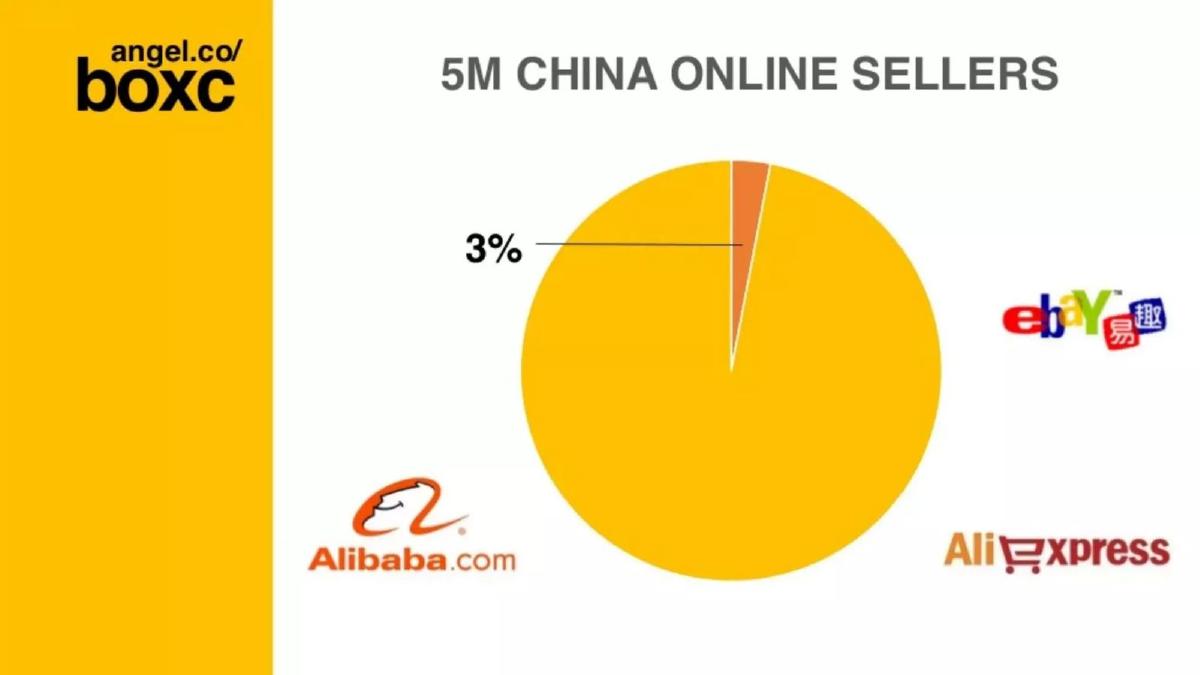
- The deck identifies a massive market of 5M China online sellers, with only 3% currently reaching global markets effectively (Slide 2).
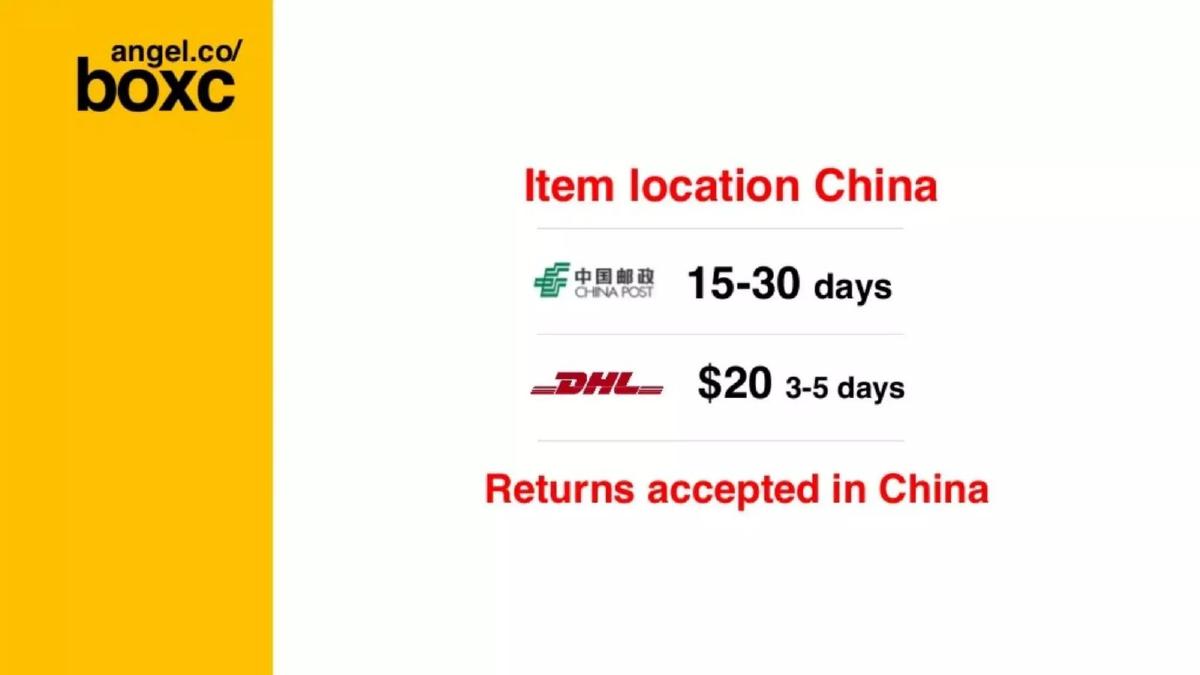
- BoxC highlights a critical pain point: traditional China Post shipping takes 15-30 days, while express options like DHL cost $20 (Slide 3).
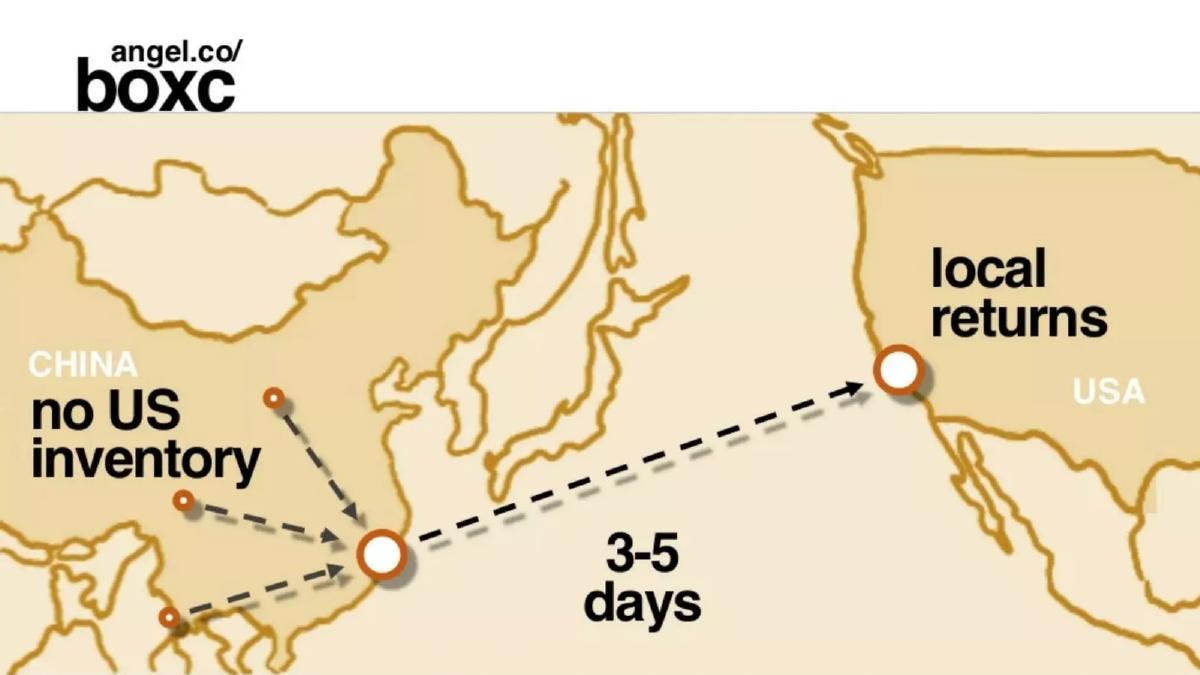
- The value proposition is clear: 3-5 day shipping with local US returns and no US inventory required (Slide 4).
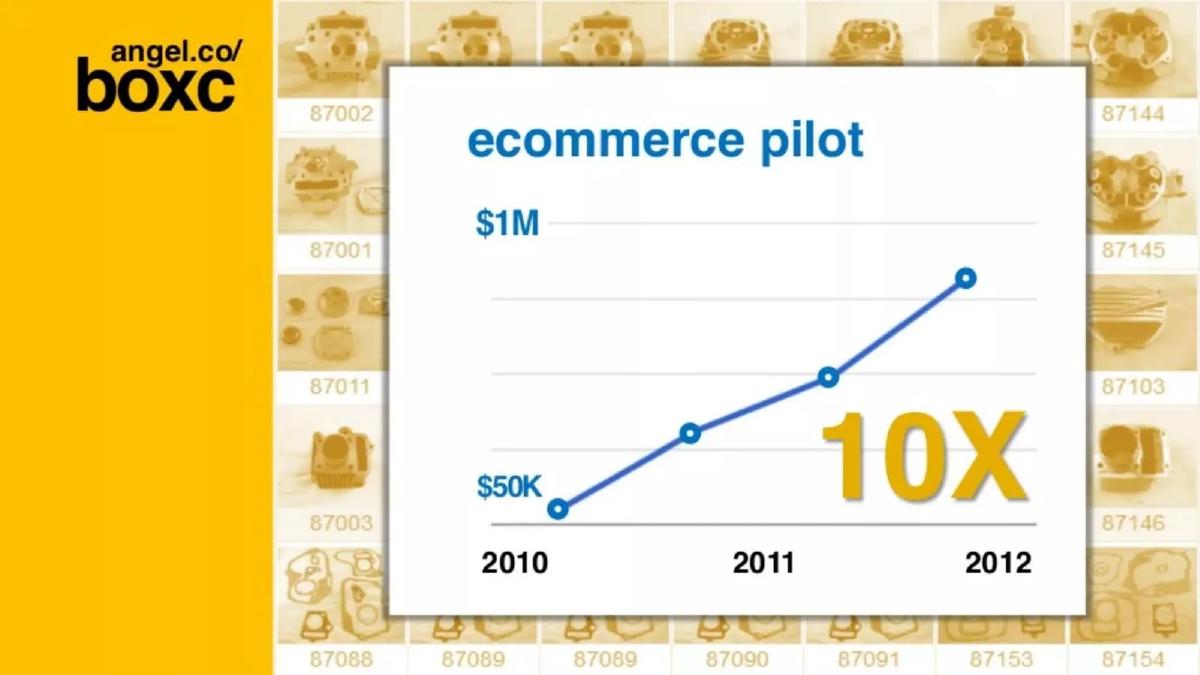
- Traction is the deck's strongest suit, showing a 10x revenue increase in an e-commerce pilot from 2010 to 2012 (Slide 5).
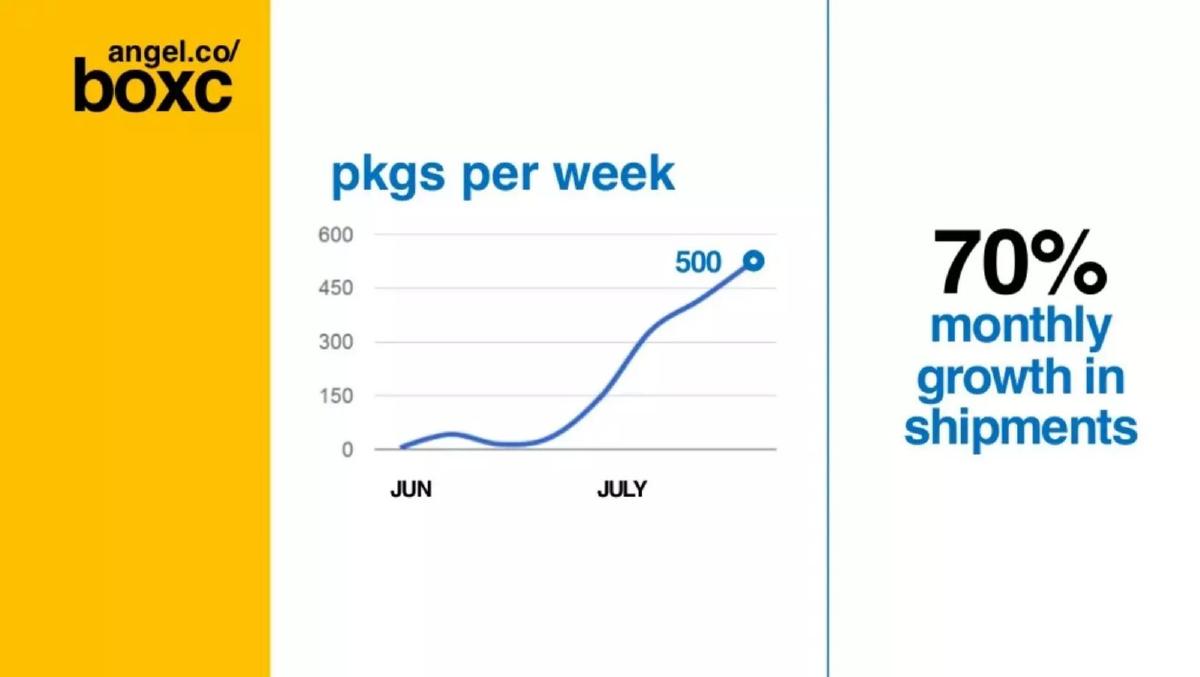
- Recent growth is aggressive, with a reported 70% monthly growth in shipments and reaching 500 packages per week by July (Slide 6).
- The business model implies high LTV, with annual shipping revenue per seller ranging from $2,000 to $20,000 (Slide 8).
- The team and advisors are positioned as 'domain experts,' with specific mentions of high-profile tech figures like Benjamin Ling and Max Skibinsky (Slide 10).
- The deck concludes with a vague 'We are raising soon' rather than a specific dollar amount or valuation (Slide 11).
The Minimalist Approach to Logistics
The BoxC pitch deck from 2013 is a fascinating example of the 'Traction-First' philosophy. At a time when cross-border e-commerce was beginning to explode, BoxC didn't spend time on flashy graphics or complex diagrams. Instead, they used 13 slides to demonstrate a clear market inefficiency and their proven ability to exploit it. The deck is characterized by high-contrast yellow and white branding and a focus on hard numbers over adjectives.
The Problem: The Great Shipping Wall of China
Slide 1: Title The deck opens with a simple, lowercase tagline: "virtual presence for overseas online retailers." This immediately tells the investor that BoxC isn't just a shipping company; it is an infrastructure layer that makes a foreign company look and act like a local one.
Slide 2: Market Size BoxC identifies "5M CHINA ONLINE SELLERS." A pie chart shows that only 3% are currently captured by major platforms like eBay, Alibaba, and AliExpress in a way that facilitates global trade. This implies a massive, untapped 'long tail' of sellers who need a better way to reach Western consumers.
Slide 3: The Pain Point This is the most effective slide in the deck. It contrasts the two existing options for Chinese sellers: China Post (15-30 days) or DHL ($20 for 3-5 days). It also notes that "Returns accepted in China" is a major deterrent for US buyers. The slide sets up a 'Goldilocks' problem: one option is too slow, the other is too expensive, and neither handles returns well.
The Solution: Speed Without Inventory
Slide 4: The Value Proposition BoxC presents its solution via a map. They offer 3-5 day shipping from China to the USA with "local returns" and, crucially, "no US inventory." This is a massive operational advantage for sellers who don't want the risk or expense of warehousing goods in the United States before they are sold.
Traction: The 70% Growth Story
Slide 5: E-commerce Pilot To prove the model, BoxC shows a revenue chart from a pilot program. Revenue grew from $50,000 in 2010 to $1,000,000 in 2012. Labeling this as a "10X" increase provides a clear historical growth trajectory that predates the current fundraise.
Slide 6: Recent Momentum While Slide 5 shows years, Slide 6 shows weeks. It tracks "pkgs per week" from June to July, showing a climb to 500 packages per week. The headline metric here is "70% monthly growth in shipments." This demonstrates that the business is currently accelerating, not just growing steadily.
Slide 7: The Pipeline A simple text slide states "500+ sellers in pipeline." This suggests that the 70% growth rate is sustainable because there is a backlog of customers waiting to be onboarded.
Slide 8: Unit Economics BoxC provides a range for "annual shipping revenue per seller": $2,000 to $20,000. By combining this with the pipeline slide, an investor can quickly do the math: 500 sellers x $2,000 (minimum) = $1,000,000 in potential near-term ARR. This is a clever way to show revenue potential without a formal spreadsheet.
The Team and The Ask
Slide 9: The Team The team slide is unconventional. It shows five founders (Nicholas, Michael, David, Justin, and Ravi) positioned on a map between China and the US. This visually reinforces their cross-border capability, though the lack of last names or professional bios is a notable omission that would usually be a red flag in a seed deck.
Slide 10: Domain Experts BoxC compensates for the informal team slide by showcasing their advisors. Listing Richard Metzler, Benjamin Ling, Max Skibinsky, and Ed Roman provides significant institutional credibility. Benjamin Ling, in particular, is a well-known investor and former executive at Google and Facebook, which signals to other investors that this deal has already been vetted by 'smart money.'
Slide 11: The Ask The deck ends with a very soft ask: "We are raising soon." There is no mention of the $725,000 target or the valuation. In the context of 2013, this was often a tactic to create FOMO (fear of missing out) among angel investors before a formal round opened.
Slide 12 & 13: Vision and Logo The deck closes with a map labeled "[borderless ecommerce]" and the final BoxC logo. It leaves the investor with the impression of a company building a global utility, not just a shipping tool.
What Works in This Deck
The Contrast: Slide 3 perfectly encapsulates the market gap. By showing the extreme disparity between China Post and DHL, BoxC makes their existence feel inevitable. Any investor who has ever waited a month for an eBay package from China instantly understands the value proposition.
The Momentum: The deck uses two different time scales (years and weeks) to prove that they have both a solid foundation and current explosive growth. The "70% monthly growth" is the 'hook' that gets a second meeting.
The Simplicity: There is almost no 'fluff.' Every slide contains a specific number or a specific geographic claim. This makes the deck very easy to digest in under two minutes.
What Is Missing
Product Depth: The catalogue description mentions a "single API" and handling "customs, duties, taxes, and dangerous items pre-screening." None of this technical complexity is shown in the deck. An investor might wonder if BoxC is a software company or just a freight forwarder with a nice website.
Competition: The deck ignores competitors. While they mention Alibaba and eBay as platforms, they don't address other logistics aggregators or the threat of Amazon Global Logistics. Investors generally want to see that a founder knows who they are fighting.
Financial Specifics: There is no mention of margins. Shipping is a low-margin business; without seeing the take-rate or the cost of goods sold, it's impossible to tell if that $20,000 in revenue per seller is actually profitable.
What a Founder Should Copy
The 'Pain Point' Slide: Copy the structure of Slide 3. If you can show that the current market options are either 'Too Slow' or 'Too Expensive,' you have created a logical vacuum that only your product can fill.
The Pipeline Metric: If your current revenue is low, show your pipeline (Slide 7). It proves market demand and suggests that your growth is limited by your capacity (which the investment will fix) rather than a lack of customers.
Visual Consistency: The use of a single accent color (yellow) and a consistent map motif makes the deck feel professional despite its simplicity. It looks like a brand, not a school project.
Frequently asked questions
- How much did BoxC raise with this deck?
- According to the catalogue data, BoxC raised $725,000 in 2013 following this presentation. The deck itself does not state the amount, simply noting on Slide 11 that they 'are raising soon.' This suggests the deck was used to build momentum and secure meetings before the formal terms were finalized.
- What is the core problem BoxC solves?
- BoxC addresses the 'logistics gap' for Chinese e-commerce sellers. As shown on Slide 3, sellers previously had to choose between slow, cheap shipping (15-30 days) or fast, expensive shipping ($20 for 3-5 days). BoxC provides the speed of express shipping (3-5 days) with the added benefit of local US returns, which is a major trust factor for American consumers.
- Is there a detailed financial model in the deck?
- No. The deck omits traditional financial projections, P&L statements, and burn rate details. Instead, it focuses on top-line growth metrics: a 10x increase in pilot revenue (Slide 5), 70% monthly shipment growth (Slide 6), and a pipeline of 500+ sellers (Slide 7).
- Who are the key people behind BoxC?
- The deck lists Nicholas, Michael, David, Justin, and Ravi as the core team, though it does not provide their last names or specific titles (Slide 9). It compensates for this by listing well-known 'domain experts' and advisors, including Richard Metzler, Benjamin Ling, Max Skibinsky, and Ed Roman (Slide 10).
- What is missing from this pitch deck?
- The deck is missing several standard slides: a competitive landscape analysis, a detailed product/technology breakdown (how the API works), a specific 'Use of Funds' slide, and a formal 'Ask' with a dollar amount. It relies almost entirely on the 'Traction' and 'Team' pillars of a pitch.